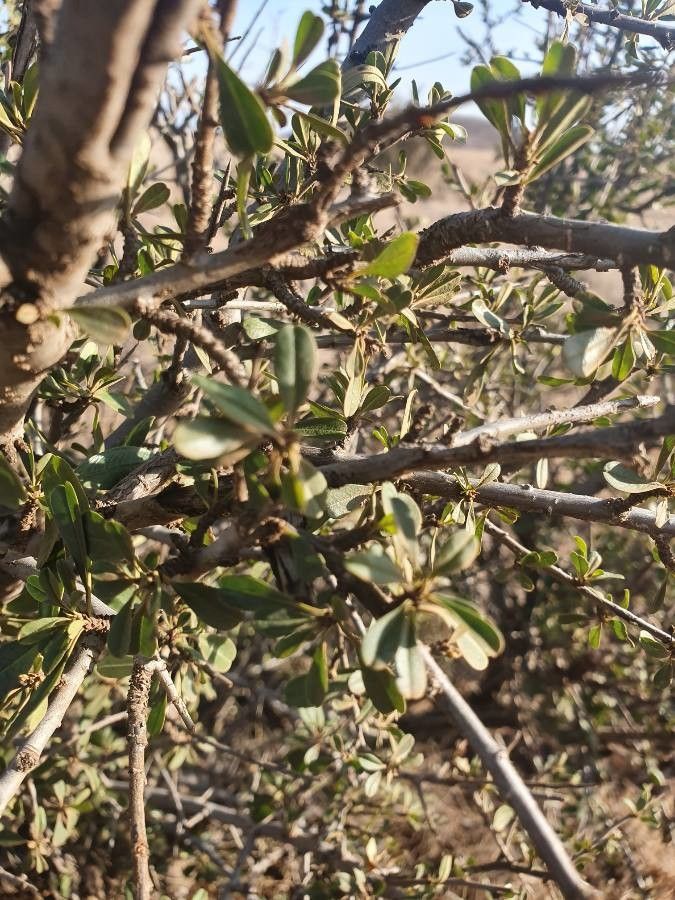
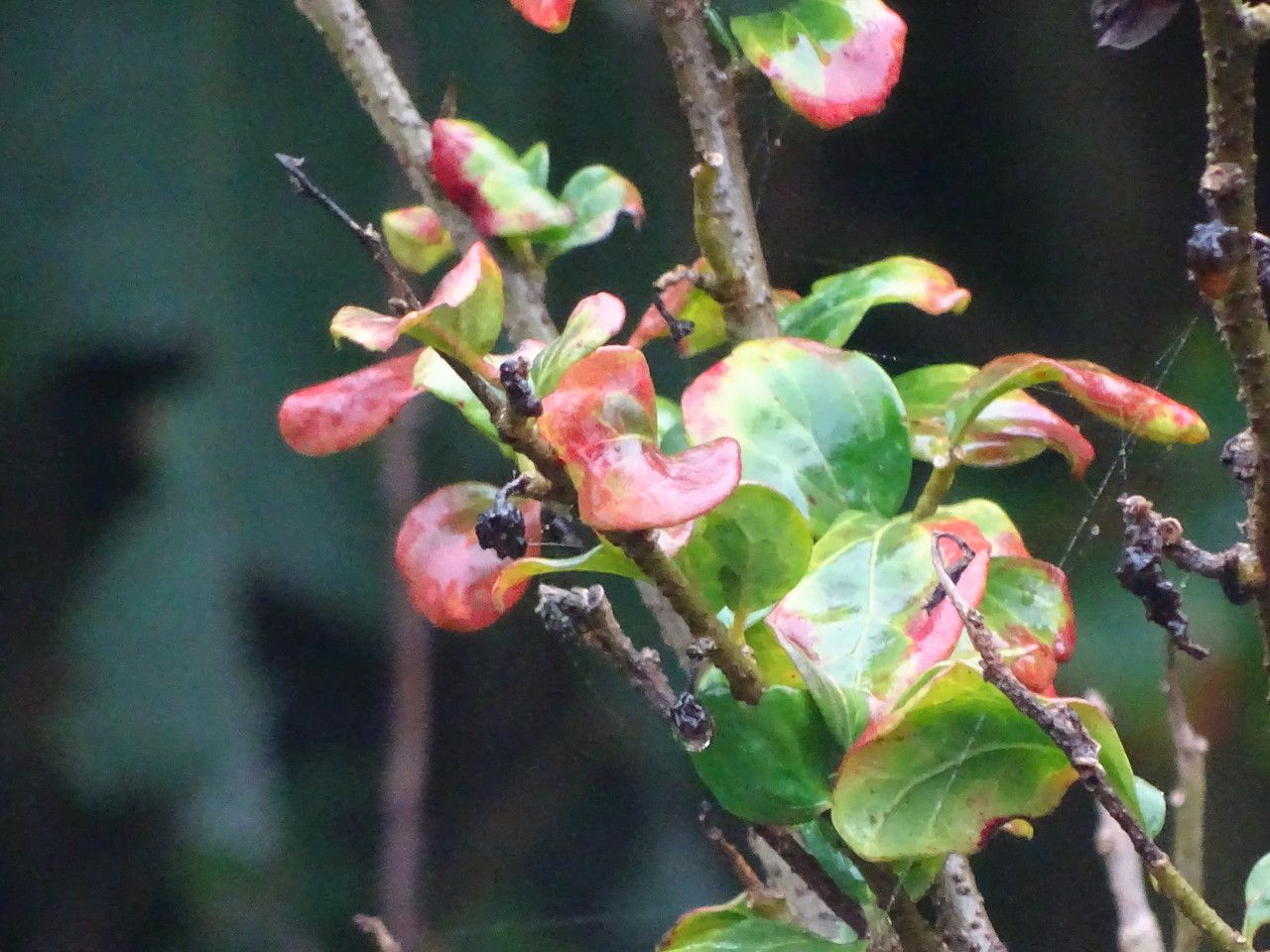
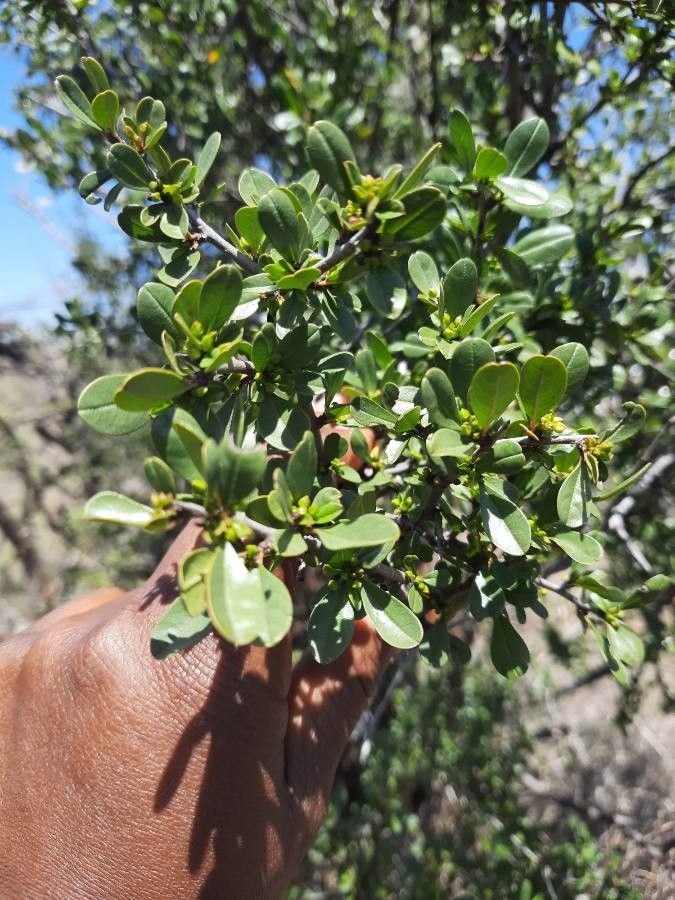
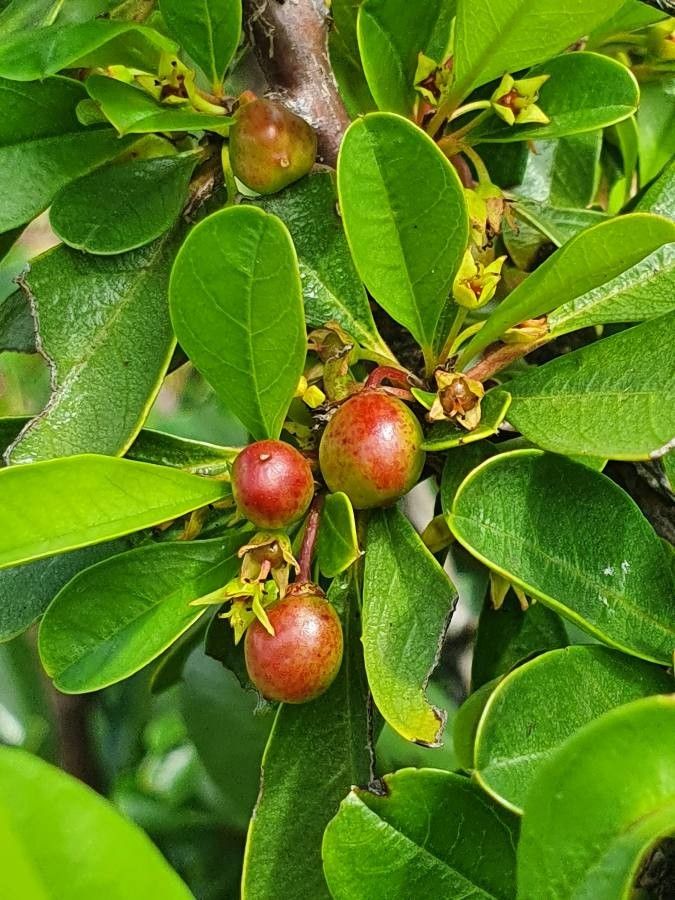
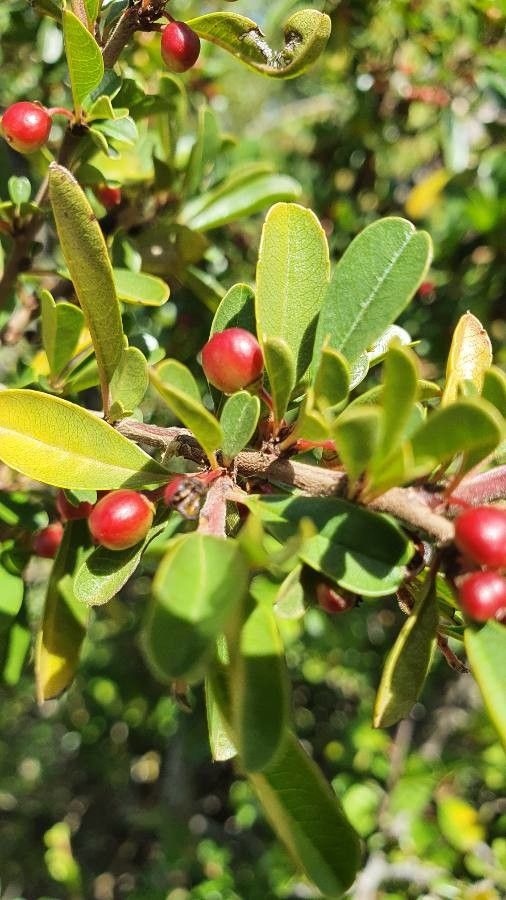
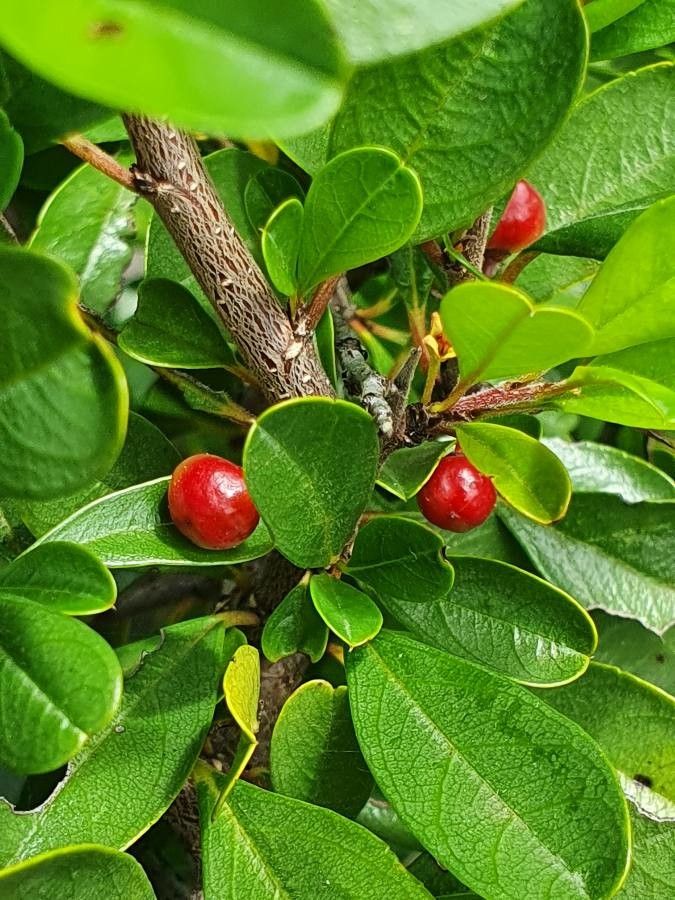
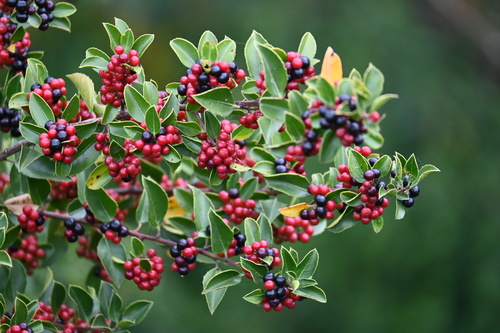
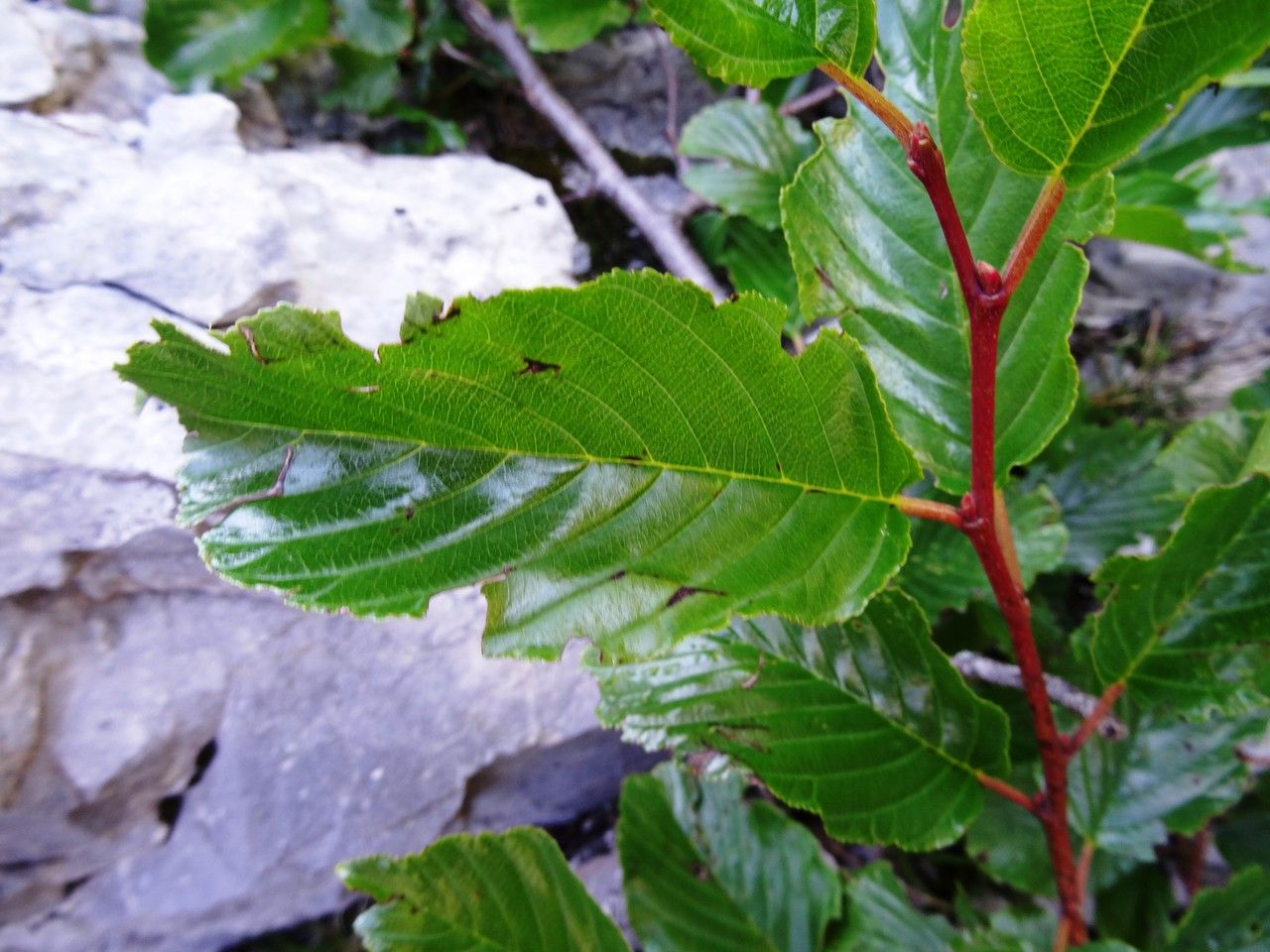
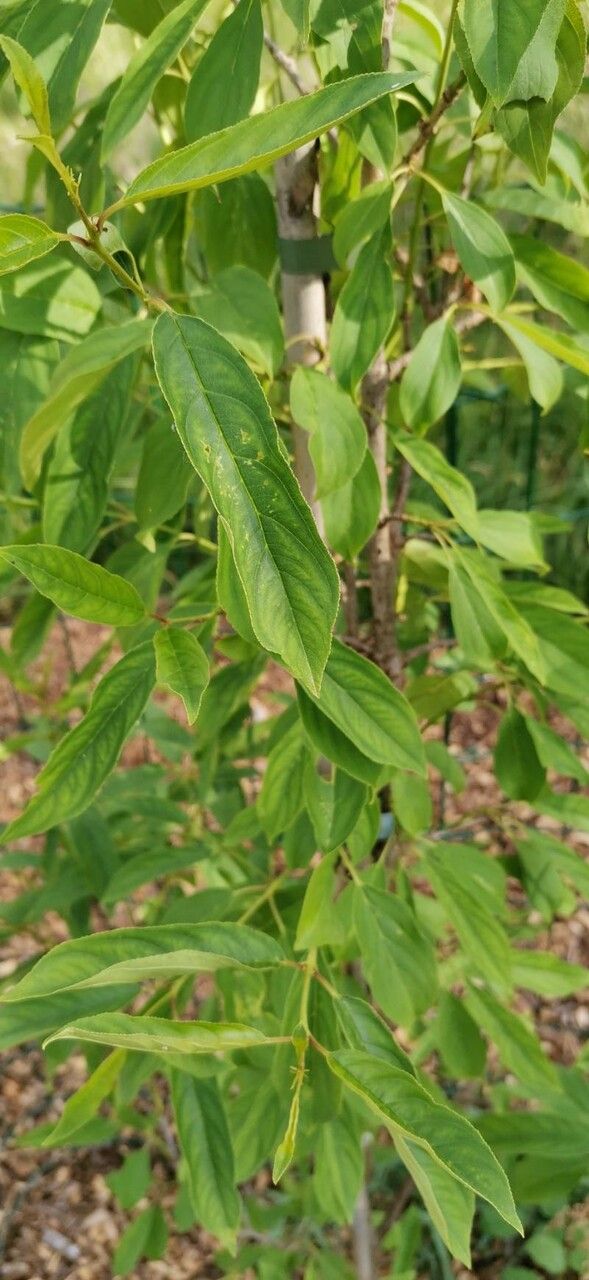
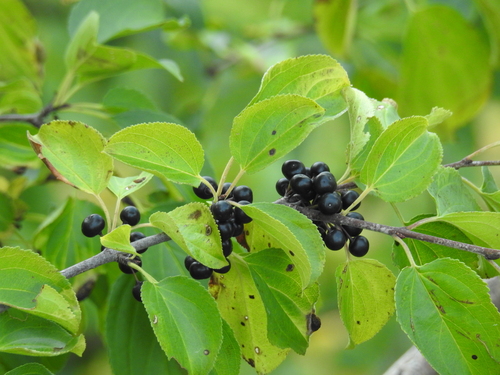
Rhamnus staddo, commonly known as the Staddo Buckthorn, is a deciduous shrub belonging to the Rhamnaceae family. Native to Europe and western Asia, this plant can grow up to 3 meters in height. It features a dense, bushy growth habit with dark green leaves that turn yellow in autumn. The small, greenish-yellow flowers bloom from May to June.
The Staddo Buckthorn produces small black berries that are poisonous to humans if ingested but serve as a food source for birds and other wildlife. The plant thrives in well-drained soil and prefers full sun or partial shade.
In traditional medicine, Rhamnus staddo has been used as a laxative due to its high anthraquinone content. It also possesses anti-inflammatory properties, making it useful for treating skin conditions such as eczema.
Overall, Rhamnus staddo is an attractive shrub with ornamental appeal due to its dense foliage and vibrant autumn color. Additionally, it provides ecological benefits by offering sustenance to wildlife, particularly birds, during winter months when other food sources may be scarce.
Botanical profile.
- Genus
- Rhamnus
- Family
- Rhamnaceae
Other names.