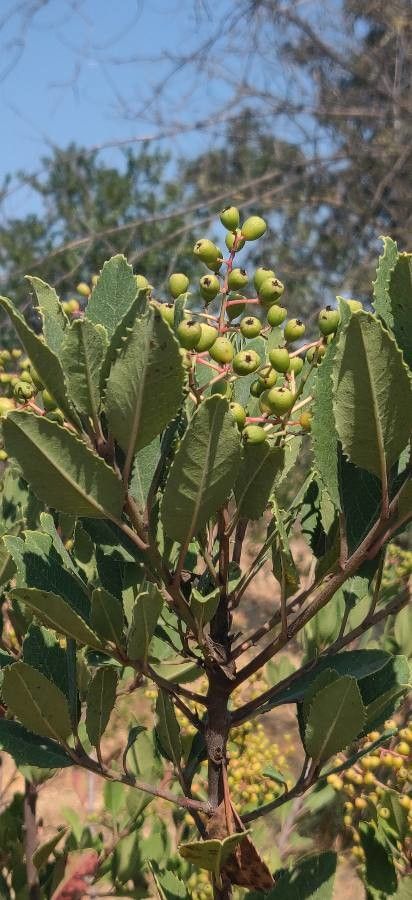
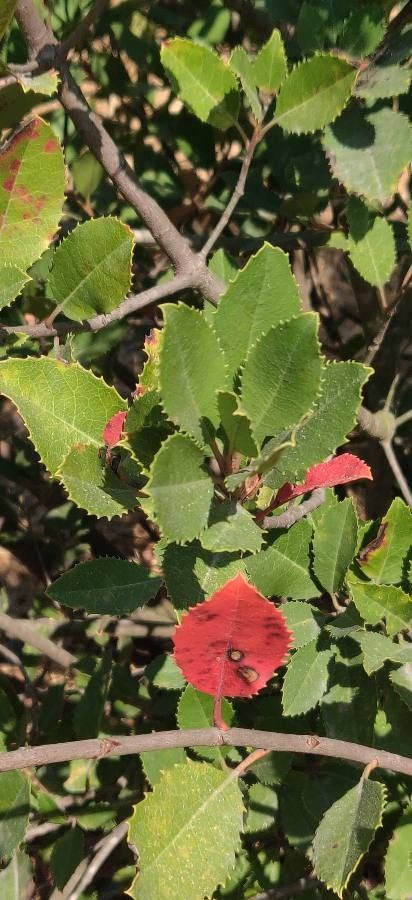
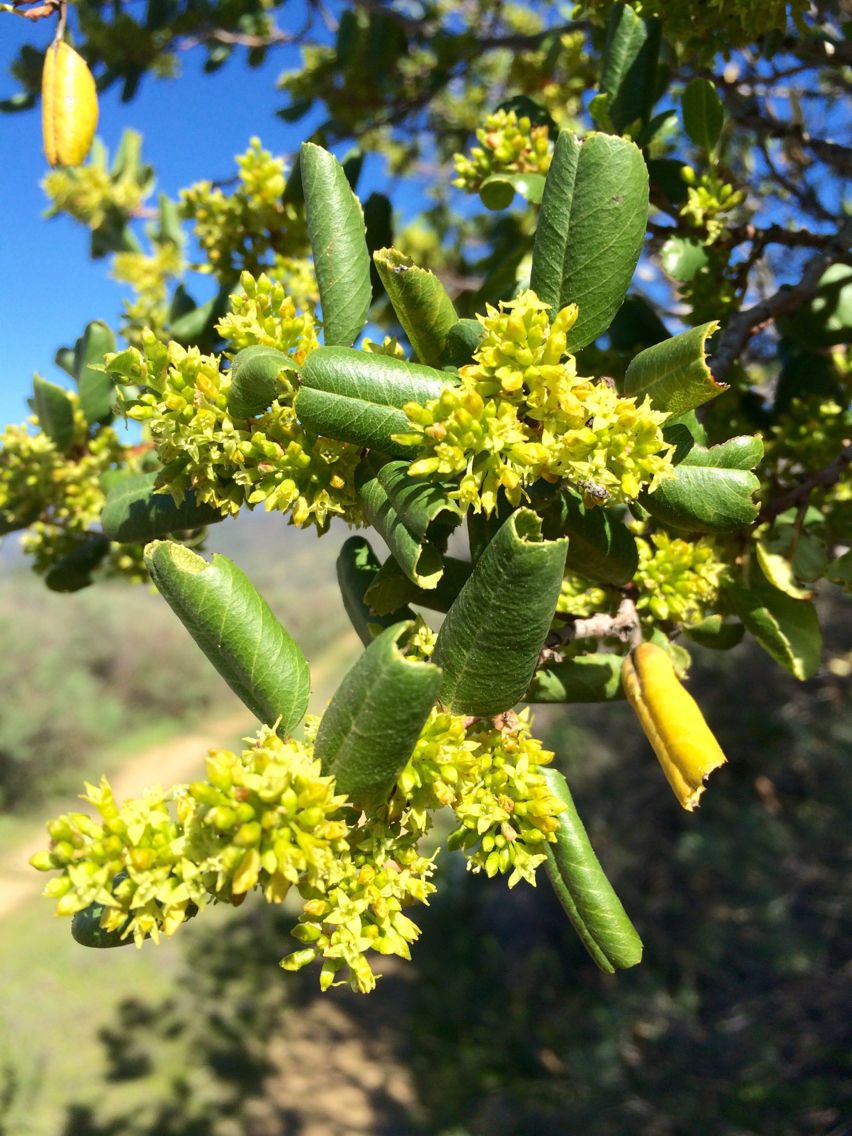
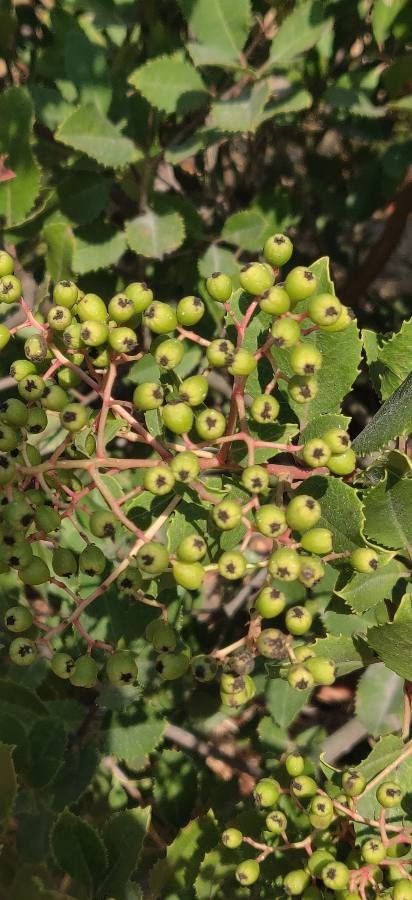
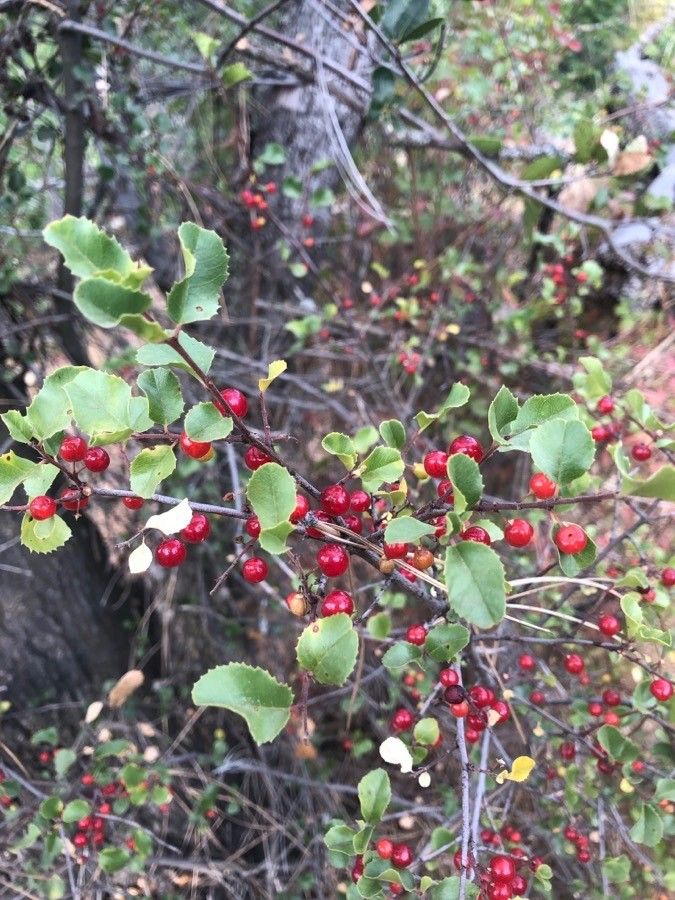
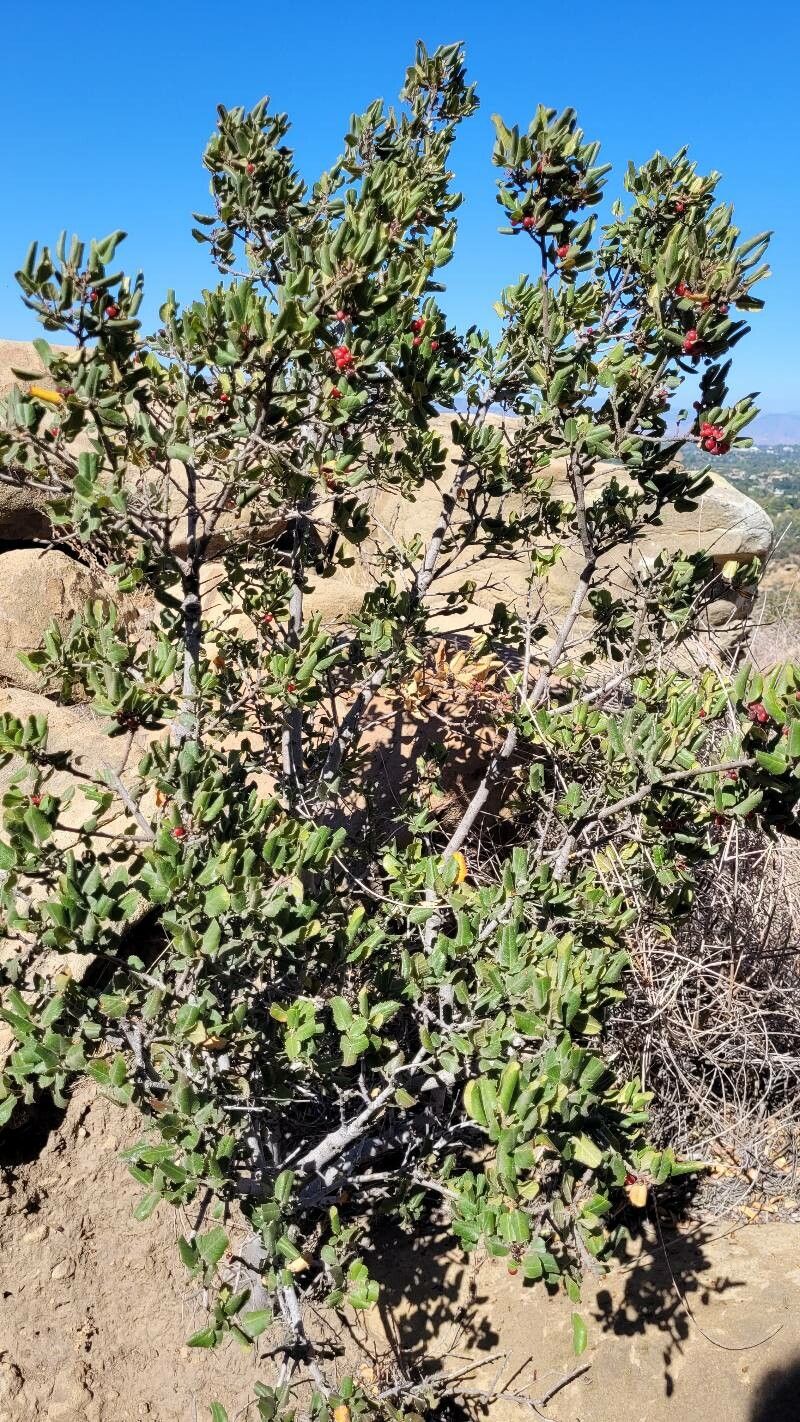
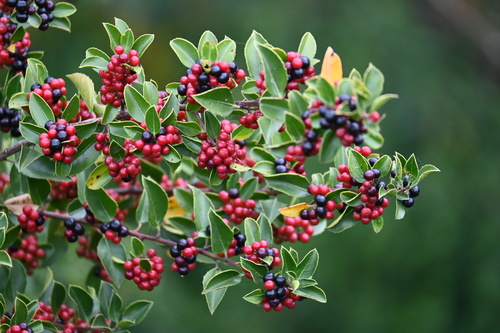
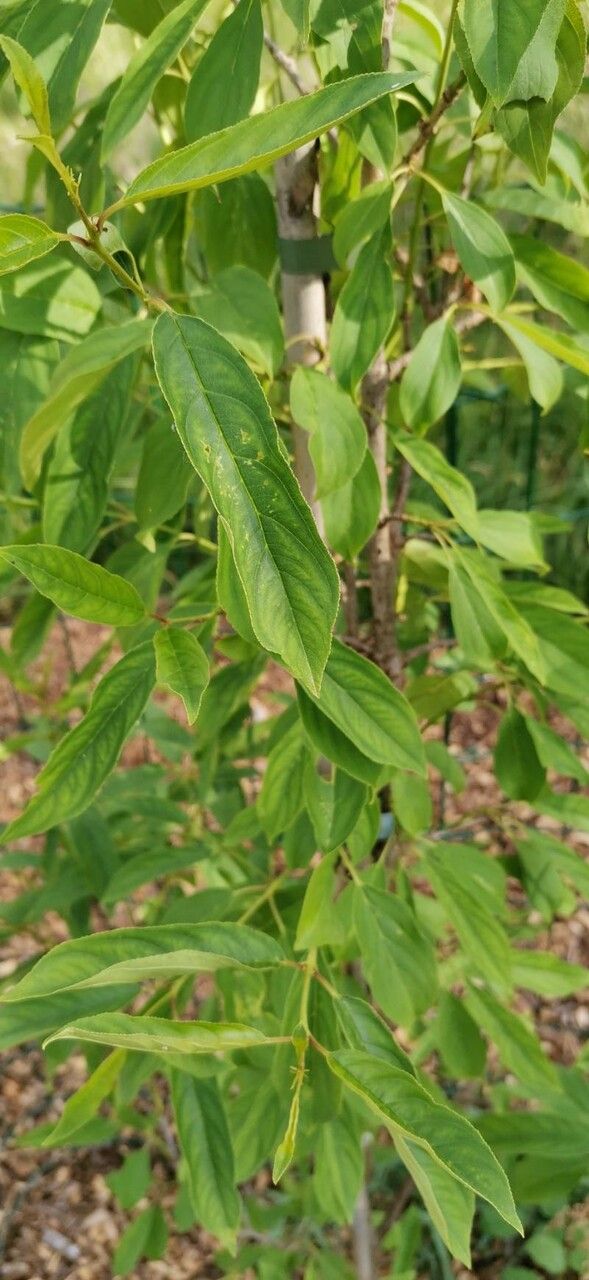
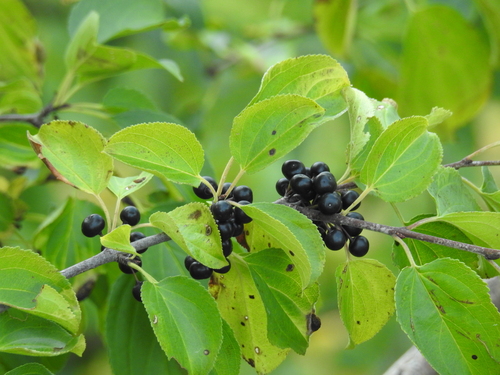
Rhamnus ilicifolia, commonly known as hollyleaf redberry, is a shrub or small tree native to California and Baja California. Belonging to the Rhamnaceae family, this plant can grow up to 20 feet tall. It features glossy, dark green leaves that resemble holly leaves and produces small white flowers that bloom in the spring. The fruit of Rhamnus ilicifolia is a red berry that ripens in the fall and persists through winter.
This plant is commonly found in chaparral, coastal sage scrub, and oak woodland habitats throughout its range. Native Americans have used Rhamnus ilicifolia for medicinal purposes, such as treating stomach ailments.
The berries of this plant serve as an important food source for birds, including quail and thrushes, during the winter months when other food sources are scarce.
While Rhamnus ilicifolia can be grown in gardens or landscapes due to its attractive foliage and berries, it is important to note that it contains toxic compounds, which can cause gastrointestinal distress if ingested by humans or pets.
Hollyleaf Redberry has strong resistance to disease and is generally not prone to diseases. Regarding care, this plant is fairly low-maintenance. When planted outdoors it needs only minimal watering, and larger plants typically do not require pruning. Smaller plants, however, should be pruned after they have bloomed. Hollyleaf Redberryt is well suited for anyone with outdoor space, such as a garden or deck, and does not require much experience in plant care.
How to keep Rhamnus Ilicifolia.
Light
Hollyleaf Redberry flourishes optimally in regions where the sun's rays in the early morning or late afternoon penetrate the tree canopy, steering clear of total darkness. This plant also has the ability to withstand harsh noontime sunlight, but constant exposure should be avoided. Being exposed too much can affect its development, while total darkness might result in less lively leaf coloring.
Temperature
Hollyleaf Redberry hails from the tropics, locales well-known for their warmth and humidity. Therefore, this plant is capable of thriving in hot and humid conditions. It is not fond of abrupt changes in temperature and favors a consistent temperature setting. It is hence crucial to keep indoor temperature variations in check. Usually, the plant isn't resilient to colder climates and needs elevated temperatures to grow adequately. In the event the surrounding temperature nose-dives excessively, the plant's growth may halt or it may even perish.
Fertilizer
For the maintenance of Hollyleaf Redberry, fertilization plays a pivotal role. Routine nourishment throughout the growth period is essential for maintaining the vibrancy of the leaves and promoting overall development. If fertilization is overlooked, it can lead to unhealthy leaves, reduced aesthetic value, and the possibility of inhibited or fragile growth that's susceptible to damage.
Botanical profile.
- Plant Type
- Shrub
- Life Cycle
- Perennial
- Genus
- Rhamnus
- Family
- Rhamnaceae
- Hardiness Zone
- 9-11
- Mature Height
- 3.96 m
- Mature Spread
- 1.52 m to 2.44 m
- Leaf Color
- Green, Blue
- Leaf Type
- Evergreen
- Flower Color
- Yellow, Green
- Flower Size
- 1.02 cm to 1.52 cm
- Bloom Time
- Mid spring, Late spring
- Planting Time
- Spring, Summer, Autumn
- Harvest Time
- Mid summer, Late summer, Early fall
- Native Area
- Mexico
Other names.