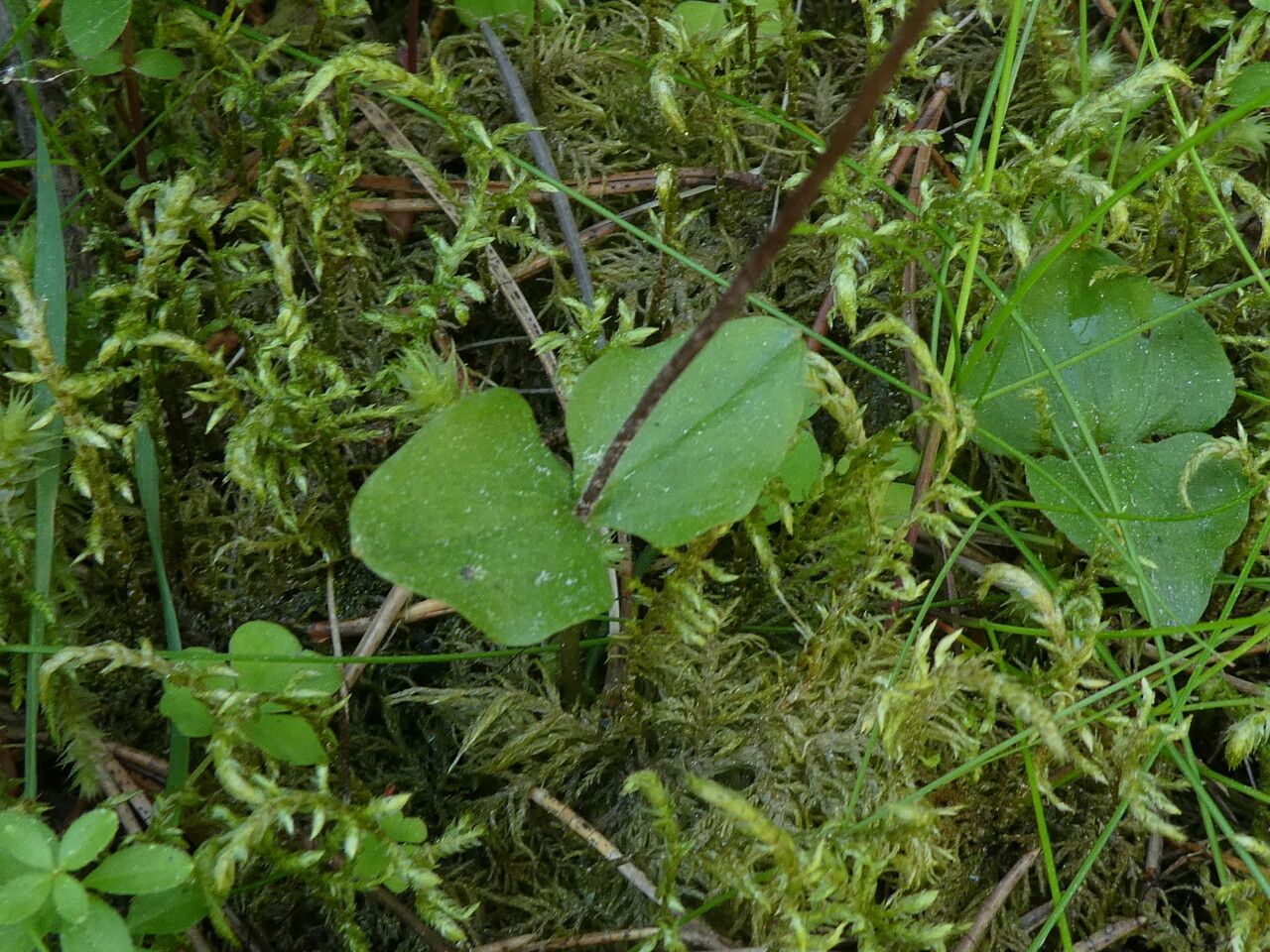
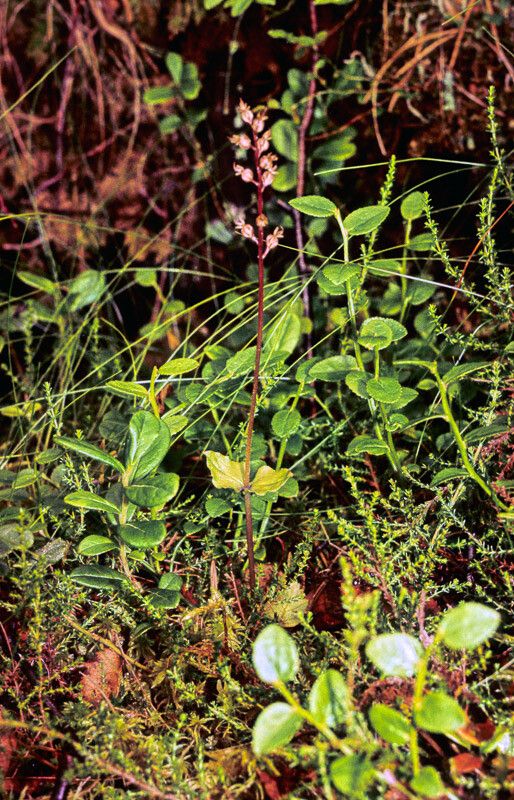
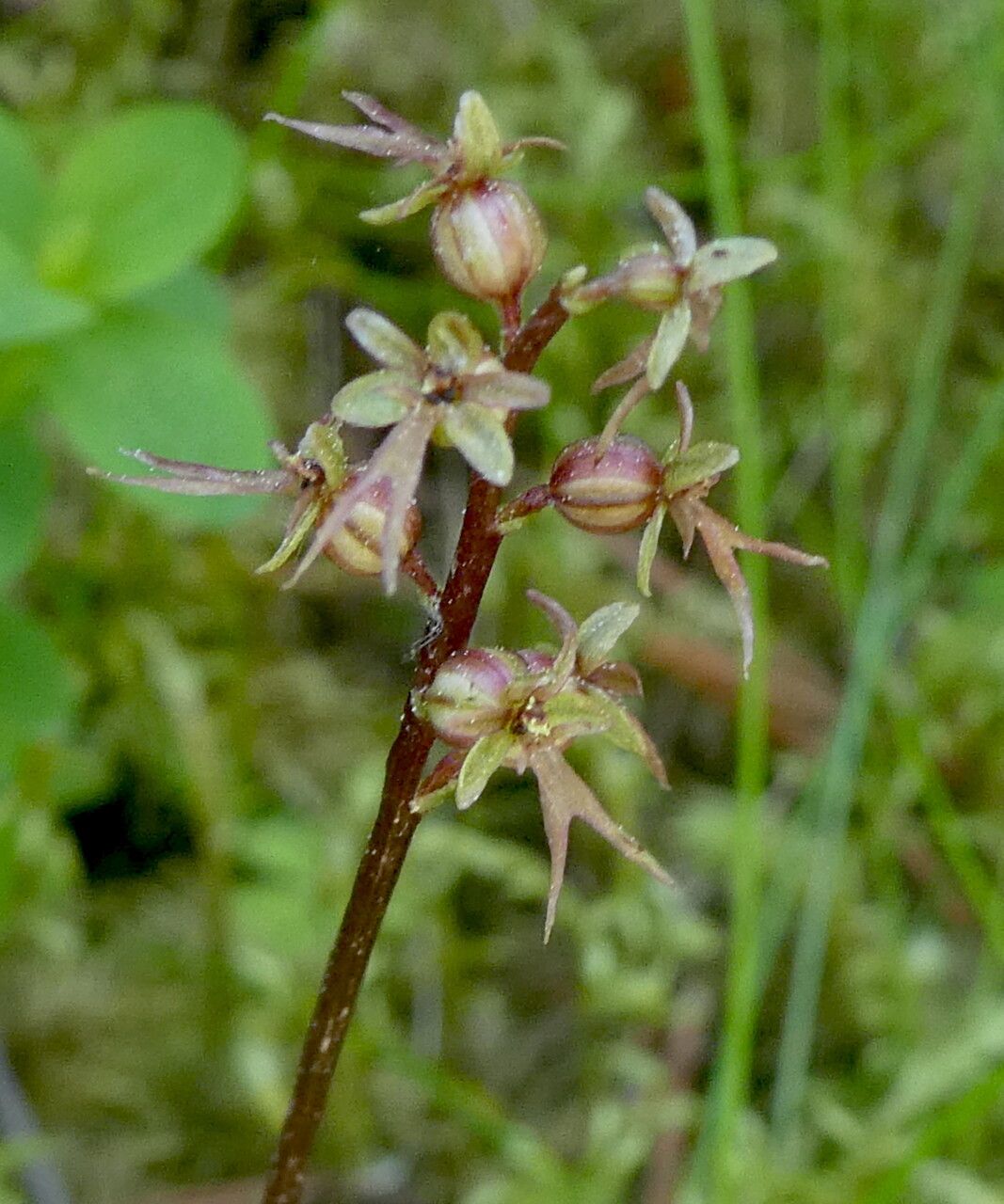
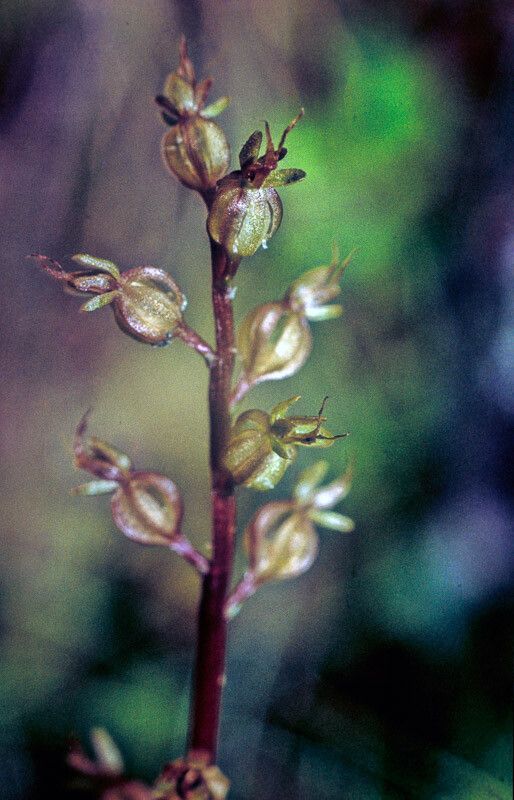
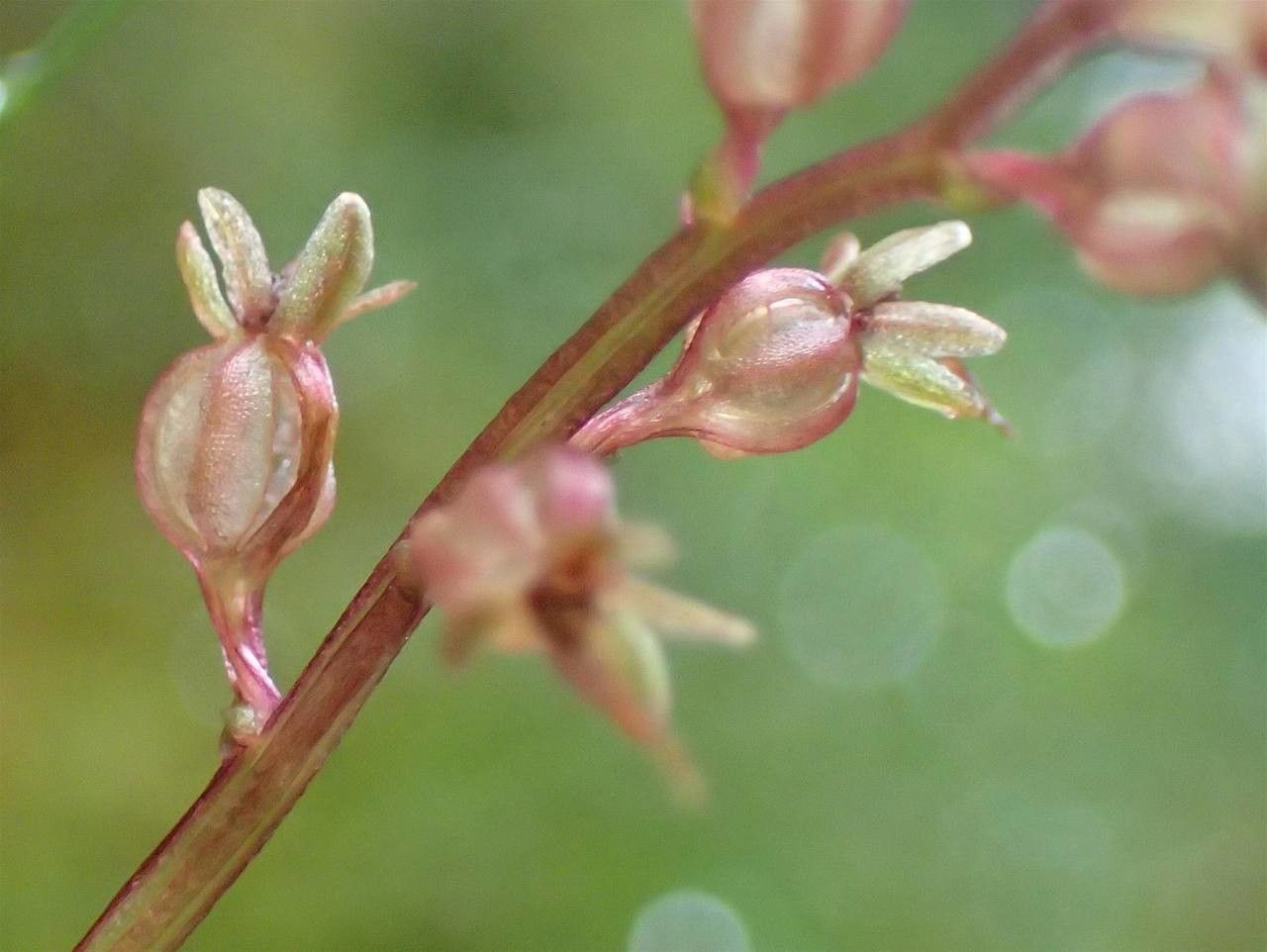
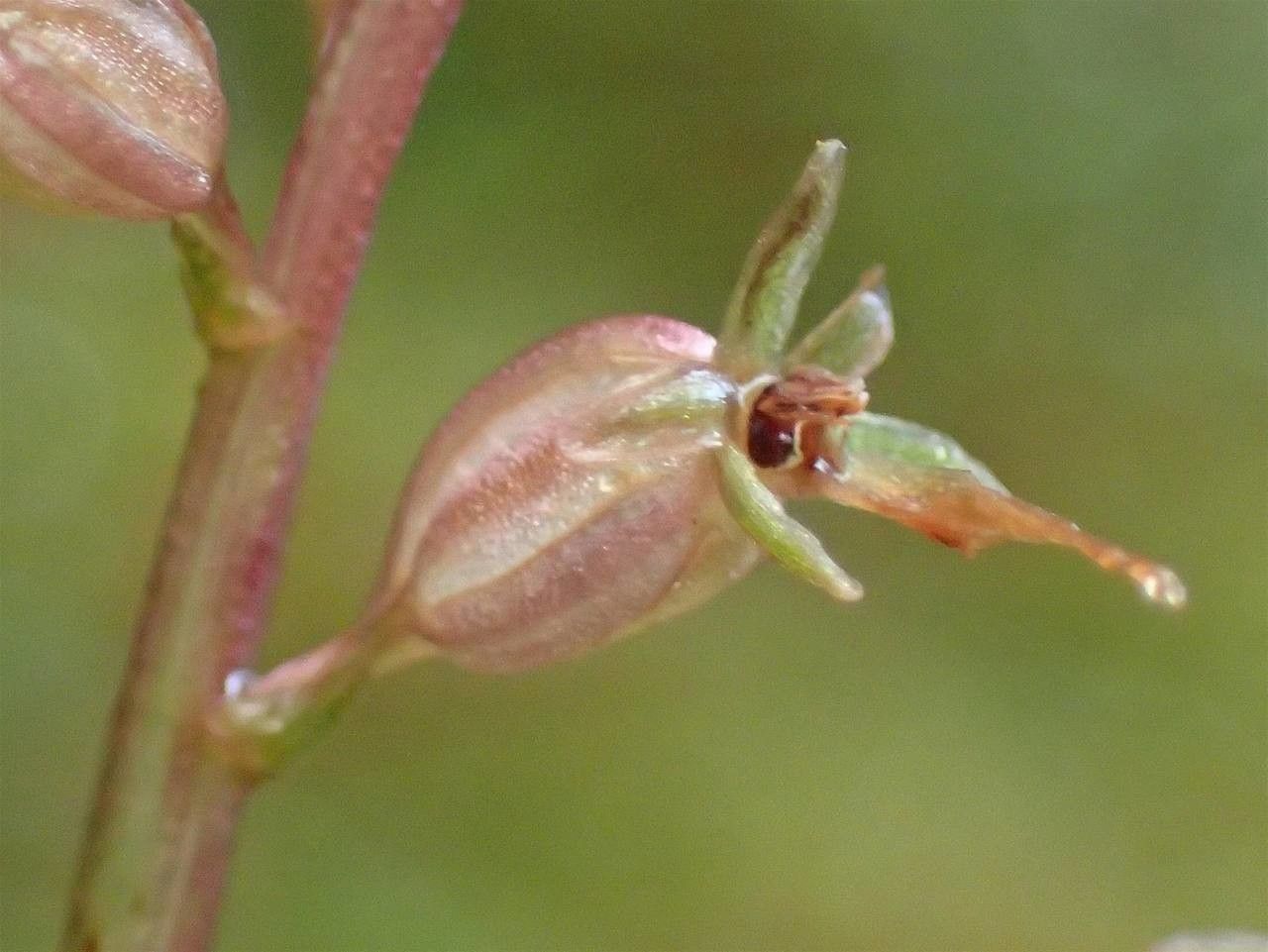
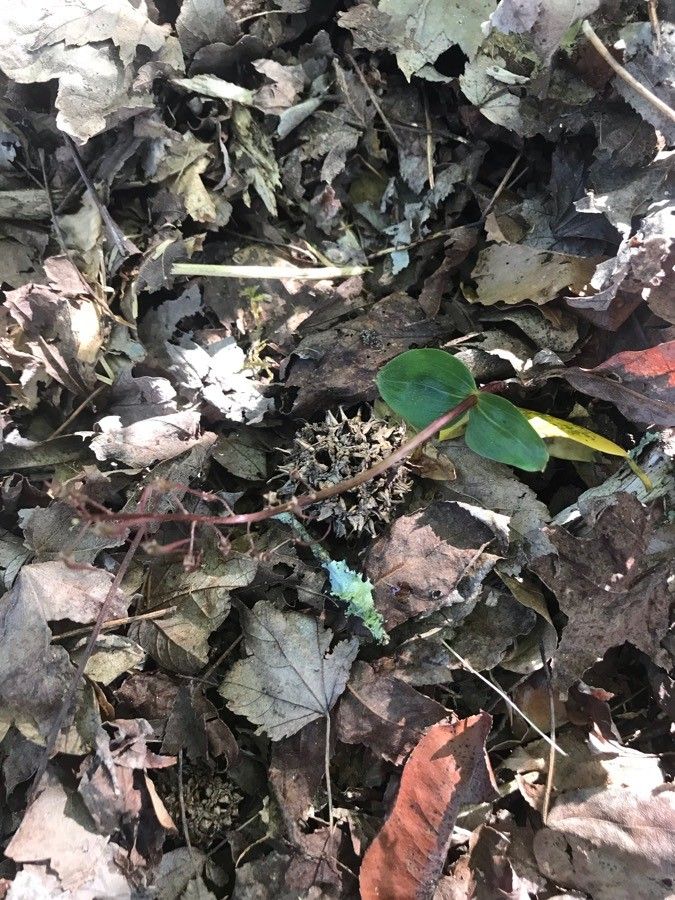
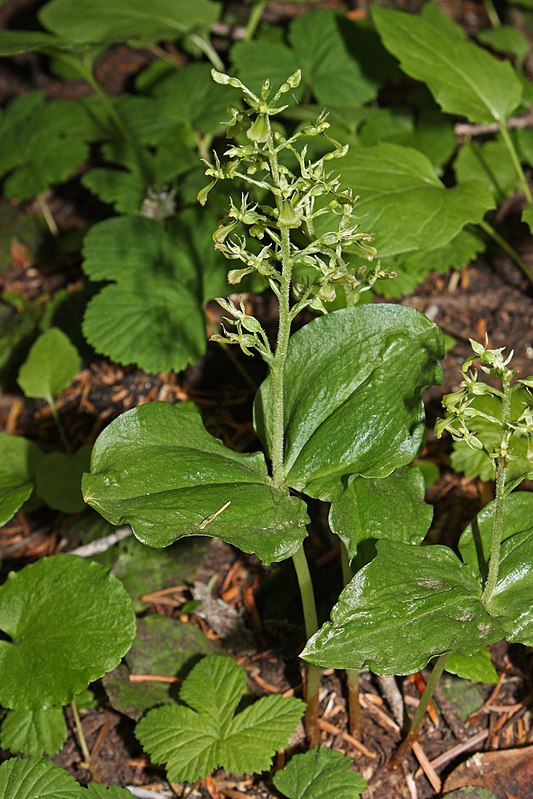
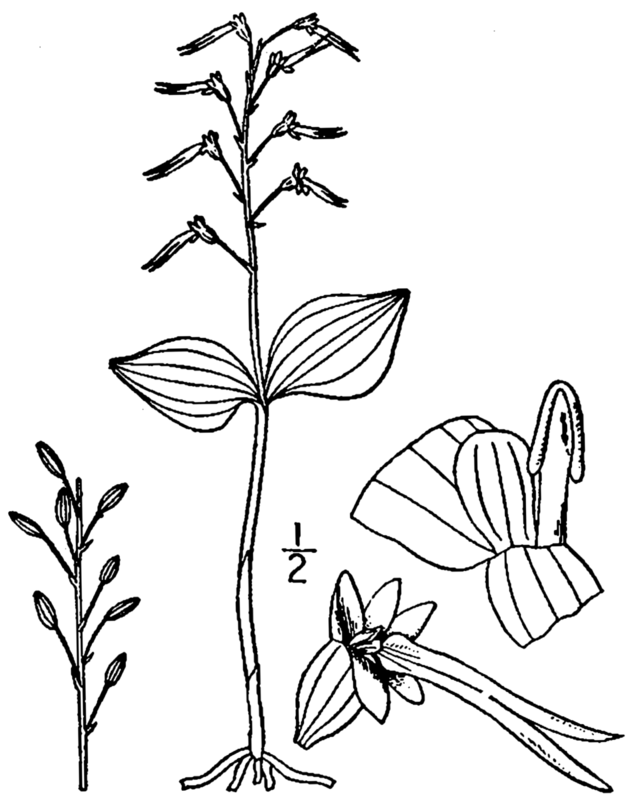
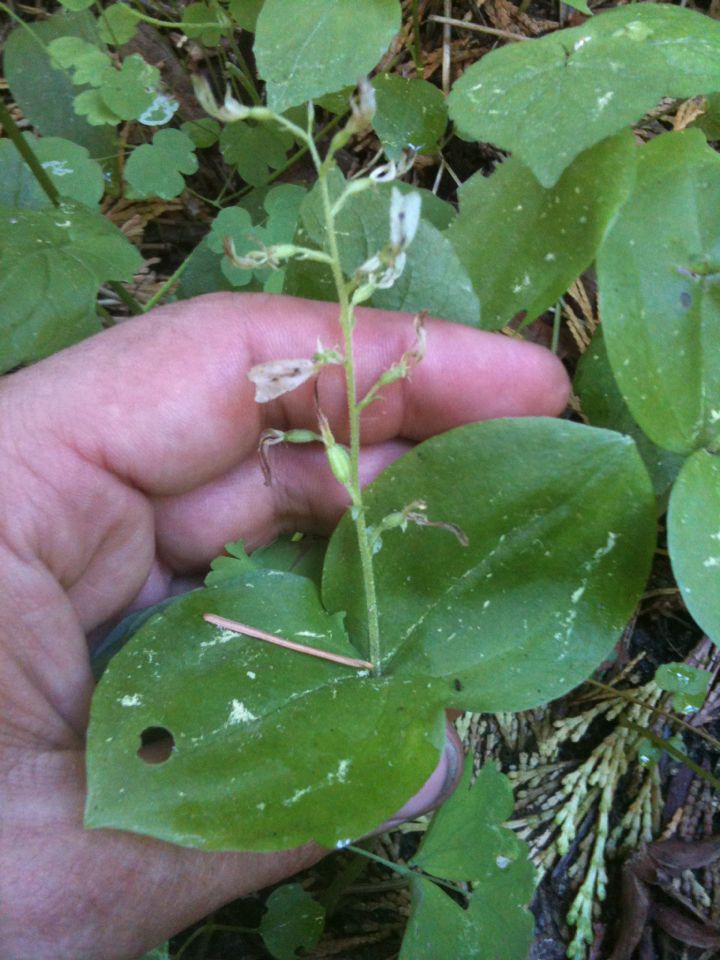
Neottia cordata, the lesser twayblade or heartleaf twayblade, is an orchid of upland bogs and mires that rarely exceeds 15 cm (5.9 in) in height. It was formerly placed in the genus Listera, but molecular phylogenetic studies have shown that Neottia nidus-avis, the bird's-nest orchid, evolved within the same group.It is never very common but may be frequently overlooked because of its small size and a tendency to grow underneath heather on sphagnum moss. The single erect flower-stem is often tinged red and is clasped near the base by a pair or ovate-orbicular glossy green leaves. The small flowers which look deceptively simple in structure for an orchid, are purple-green in colour with a somewhat swollen calyx.
Heart-leaved twayblade usually has strong resistance to disease and is affected by relatively few insect pests. Its care is considered difficult because it needs a high-humidity yet well-ventilated environment with few harmful pathogens. Too much watering can cause root rot. Although anyone can grow Heart-leaved twayblade, keeping it healthy and getting it to flower again requires more cultivation experience.
How to keep Neottia Cordata.
Light
The heart-leaved twayblade thrives in full sun but will also tolerate lower light levels, even complete shade. Native to environments with variable sunlight, it adjusts to those conditions. Excessive light can scorch the leaves, while too little light can impede growth.
Temperature
Heart-leaved twayblade can tolerate a wide range of temperatures, but its range may still be restricted by different combinations of water availability and heat. It performs best in warm summer climates with sufficient rainfall or watering. Extended periods of cloudy, rainy weather or prolonged high temperatures can increase the chance of Heart-leaved twayblade dying. In winter, adequate protection from cold can improve the plant's survival.
Fertilizer
One fertilizer application in spring is typically sufficient for Heart-leaved twayblade, though repeated feedings can maximize growth. Feed roughly every month to six weeks. Fertilization improves the leaves' appearance and function, helping maintain even color and a healthy texture. It also encourages root development and increased nutrient absorption for the plant's long-term health.
Pruning
The heart-leaved twayblade, known for its heart-shaped leaves, should be pruned from early to late spring as it begins to emerge from dormancy. Use sharp, sterilized scissors to remove any dead foliage, but be careful not to over-prune. This will help ensure healthy growth and flowering while improving air circulation and reducing the risk of pests.
Botanical profile.
- Plant Type
- Herb
- Life Cycle
- Perennial
- Genus
- Neottia
- Family
- Orchidaceae
- Hardiness Zone
- 3-7
- Mature Height
- 8 cm to 20 cm
- Mature Spread
- 5 cm to 10 cm
- Leaf Color
- Dark Green
- Leaf Type
- Deciduous
- Flower Color
- Green, Brown
- Flower Size
- 0.25 cm to 0.51 cm
- Bloom Time
- Early summer, Mid summer
- Planting Time
- Spring, Summer
- Harvest Time
- Late summer, Early fall
- Native Area
- Turkey, Sweden, Austria, Slovakia, Croatia, Slovenia, Belarus, Russia, Germany, Iceland, Estonia, Romania, Latvia, Netherlands, France, Czech Republic, Bulgaria, Poland, Ukraine, Serbia, Lithuania, Norway, Italy, Spain, Switzerland, Denmark, Japan, Finland, Ireland, United Kingdom
Other names.
Reader questions.
How should I water my Heart-leaved twayblade plant in the best way?
The watering of the Heart-leaved twayblade depends on its growth phase. During active growth, water the soil and occasionally water the leaves if it's warm. In winter or cool and wet weather, only water the soil. If the roots and leaves are dry or discolored, the plant needs more water. If it receives too much water, it will become mushy and limp. Use a pot with good drainage and water the plant multiple times per week during the growing season. The size of the pot determines the frequency of watering. Rainwater or distilled water that matches the air temperature is best for this plant.
What are the sunlight requirements for Heart-leaved twayblade?
Heart-leaved twayblade requires full sun exposure to thrive, which means it should receive above 6 hours of sunlight daily. However, it can also grow in partial sun, with about 3-6 hours of sunlight, and even in full shade. The ability to adapt to varying light conditions stems from its natural habitat that offers diverse sunlight exposure. However, care should be taken to watch how sunlight moves through your garden, choosing spots that provide a balanced exposure for the plants. Note that excessive light can cause leaf burn, while insufficient light might limit growth.
What is the Heart-leaved twayblade?
The Heart-leaved twayblade, with its botanical name Neottia cordata, is a species recognized for its distinct characteristics, though specific details about its essentials or symptoms were not provided in the data.
What should I do if I give too much or too little water to my Heart-leaved twayblade plant?
To keep your Heart-leaved twayblade plant thriving, it's important to balance its water needs. While they need frequent watering during active growth, it's crucial to avoid keeping the soil excessively moist. Overwatering can lead to root rot, making the plant mushy. To address this, remove any roots showing signs of rot with sterile pruning shears and then repot the plant in a container with good drainage using a fast-draining potting mix. However, excessive repotting may not be beneficial, so it's important to find the right watering rate. If the plant starts to shrivel and feel dry to the touch, it might be underwatered. In that case, increase watering frequency as the soil could be drying out faster than expected.
How does artificial lighting support Heart-leaved twayblade growth?
Indoor plants like Heart-leaved twayblade require adequate lighting for optimal growth, especially when natural sunlight is not sufficient, such as in winter or less sunny spaces. Artificial lighting, like LED lights, can be customized to provide the specific wavelengths needed by your plants. For full sun plants, 30-50W/sq ft of artificial light is needed; partial sun plants require 20-30W/sq ft, and full shade plants need 10-20W/sq ft. The light source should be placed 12-36 inches above the plant, mimicking natural sunlight, and should be on for 8-12 hours per day to promote faster and healthier growth.
How frequently do I need to water my Heart-leaved twayblade?
During the active growth stage in the spring and summer months, water your Heart-leaved twayblade once or twice per week. Increase watering to three times per week or more during hot and dry weather. In winter, water your Heart-leaved twayblade, but not as much. Two to three times per month should be sufficient during the coldest months. If you keep your Heart-leaved twayblade indoors during winter, note that indoor locations may cause the soil to dry out faster, so you may need to water more frequently. Gradually reduce watering from summer to winter, adjusting to a reduced schedule in the fall.
What are the symptoms of inadequate lighting for Heart-leaved twayblade?
When Heart-leaved twayblade is grown in conditions with inadequate lighting, several symptoms may occur. These include smaller new leaves compared to mature ones, leggy or sparse growth giving a stretched appearance, quicker leaf drop to conserve resources, slower or halted growth as the plant enters a survival mode, pale new leaves indicating a lack of chlorophyll and nutrients, chlorosis where leaves turn yellow due to chlorophyll breakdown from excessive light, sunscald visible as pale or necrotic spots from intense sunlight, leaf curling as a defense to minimize water loss, wilting due to increased water loss from transpiration in high sunlight, and leaf scorching characterized by brown, crispy leaf edges.
What do I need to think about when watering my Heart-leaved twayblade during different seasons and stages of growth?
When planning the watering schedule for your Heart-leaved twayblade, it's important to consider two growth phases. The first phase is the active growth period, which occurs in spring and summer. During this time, the plant needs to be watered multiple times per week. The second phase is the rest period, which happens for about two to three months each year during winter. During this period, the Heart-leaved twayblade requires significantly less water and fertilization. Watering once or twice per month is sufficient. In the fall, it's recommended to gradually reduce the watering frequency from multiple times per week to once or twice per month, in preparation for the winter rest period.
What solutions are available for managing sunlight exposure for Heart-leaved twayblade?
To manage sunlight exposure for optimal growth of Heart-leaved twayblade, gradual relocation to sunnier spots is advised, ensuring at least 6 hours of direct sunlight daily. For indoor plants, consider using artificial light if relocation isn't feasible. Keep a lamp on for at least 8 hours daily or use grow lights. For outdoor plants, avoid sudden changes in light exposure to prevent sunburn. Reducing obstructions, such as pruning trees, can also help increase sunlight. For smaller plants, transplanting them during their dormant period to a location with better sunlight and drainage can promote healthier growth. Keep in mind that parts of the plant affected by insufficient sunlight may not recover fully, but new growth should be healthy following these adjustments.
How do I water my Heart-leaved twayblade differently when I keep it indoors?
The Heart-leaved twayblade prefers a humid growing environment, but most indoor locations lack the necessary moisture. As a result, the plant and its soil can dry out quickly indoors. To prevent this, you can use a humidifier in the room where you grow the Heart-leaved twayblade and water it more often. However, be mindful that the plant still needs proper air circulation to avoid excessive moisture and potential diseases. Including a fan in the room can help maintain the necessary air circulation.