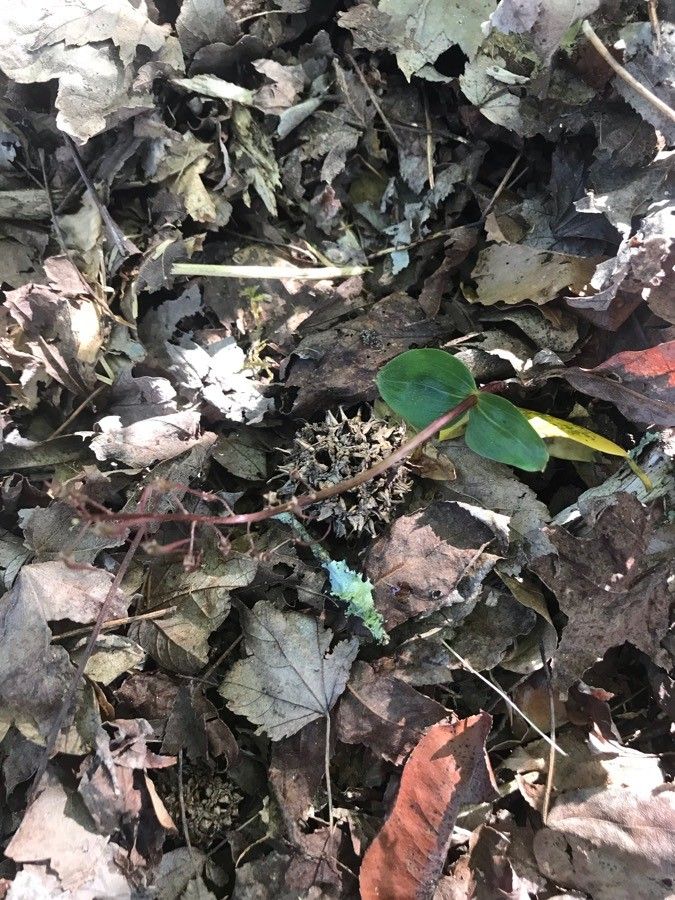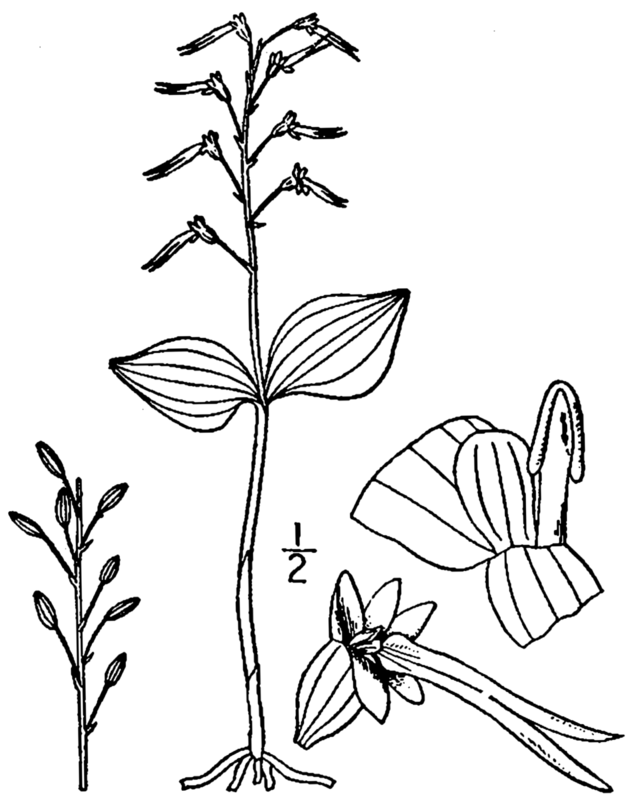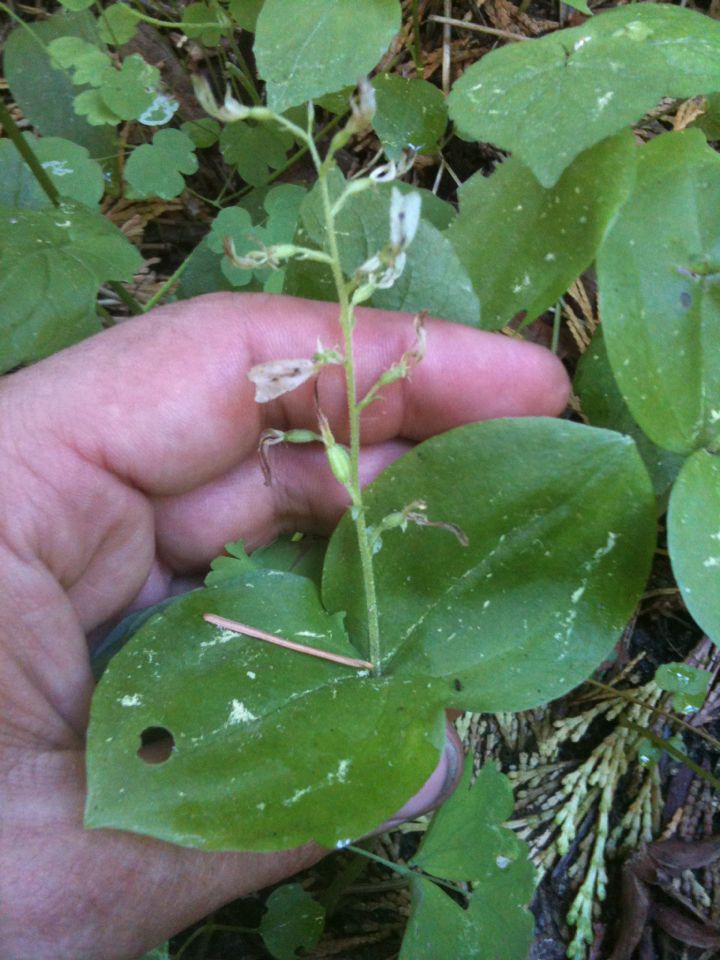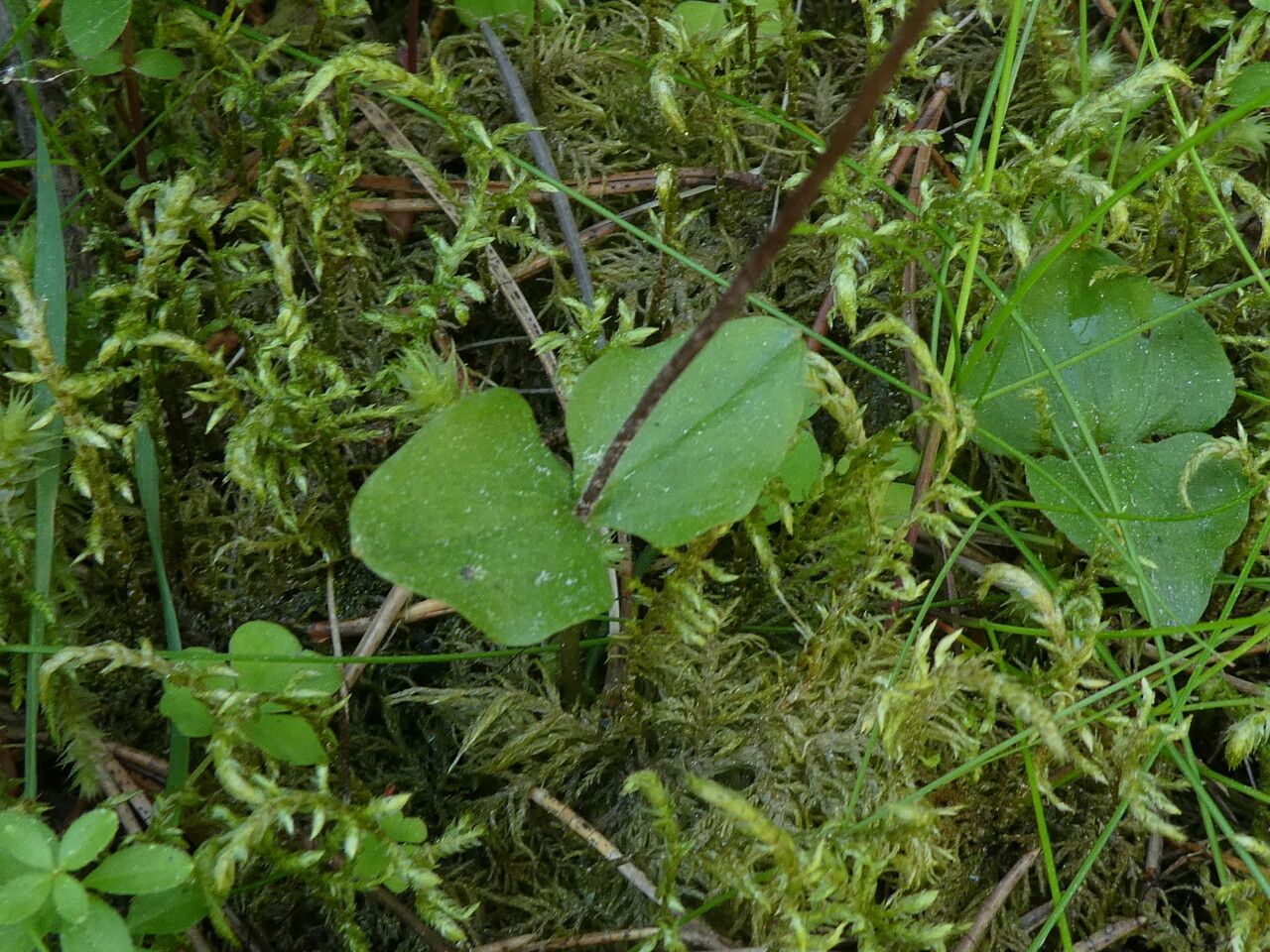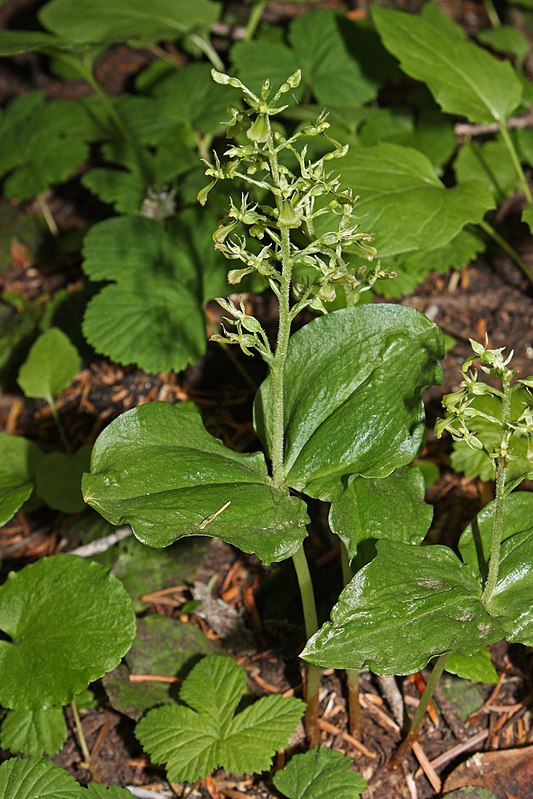
Neottia banksiana is a species of orchid known by the common name northwestern twayblade. It was formerly placed in the genus Listera, but molecular phylogenetic studies have shown that Neottia nidus-avis, the bird's-nest orchid, evolved within the clade formerly containing only Listera species, so all species of Listera have been formally moved to Neottia, the older genus. Some continue to refer to this species by its previous genus; older scientific names include Listera banksiana and Listera caurina.Neottia banksiana is native to northwestern North America from Alaska through the Pacific Northwest to the Grand Teton Range of Wyoming and to Mendocino County, California. It can be found in moist, dim habitat, such as mountain forest understory. It is a rhizomatous perennial herb growing erect 10 to 30 centimetres (4 to 12 in) tall. It has one pair of green oval leaves each up to 7 centimetres (3 in) long near the base of the stem. The inflorescence is a small raceme of green or yellow-green flowers. Each has usually 3 lance-shaped sepals, 2 similar petals, and one petal known as the lip, which is longer and rounded at the end.
The Northwestern twayblade typically shows strong resistance to disease and is affected by relatively few insect pests. Its care is regarded as difficult because it needs high humidity combined with good ventilation and minimal presence of harmful pathogens. Overwatering can cause root rot. Anyone can grow Northwestern twayblade, but keeping it healthy and getting it to bloom again requires more cultivation experience.
How to keep Neottia Banksiana.
Light
Northwestern twayblade is found in habitats such as forest understories or rocky areas that provide natural shade. It prefers Full Shade but can tolerate Partial Sun.
Water
The Northwestern twayblade, an orchid, flourishes in humid environments and needs regular weekly watering. It prefers well-draining soil that retains moisture while preventing root rot. Its moderate size and attractive foliage make it a popular choice for indoor cultivation.
Fertilizer
One fertilization in spring is generally adequate for Northwestern twayblade, though additional feedings can enhance growth. Feed about once a month to every six weeks. Fertilizing improves leaf appearance and function, helping maintain uniform color and a healthy texture. It also encourages root development and nutrient uptake for the plant's long-term health.
Pruning
The Northwestern twayblade is characterized by its small greenish flowers and distinctive two-leaf structure. To promote growth, improve air circulation, and prevent disease, prune the plant by removing dead leaves from early to late spring. For the best results, use clean, sharp tools to ensure effective maintenance and keep the plant robust and attractive.
Botanical profile.
- Plant Type
- Herb
- Life Cycle
- Perennial
- Genus
- Neottia
- Family
- Orchidaceae
- Hardiness Zone
- 3-7
- Mature Height
- 10 cm to 30 cm
- Mature Spread
- 5 cm to 10 cm
- Leaf Color
- Green
- Leaf Type
- Deciduous
- Flower Color
- Green
- Flower Size
- 0.51 cm to 0.76 cm
- Bloom Time
- Early summer, Mid summer
- Planting Time
- Spring
- Harvest Time
- Late summer, Early fall