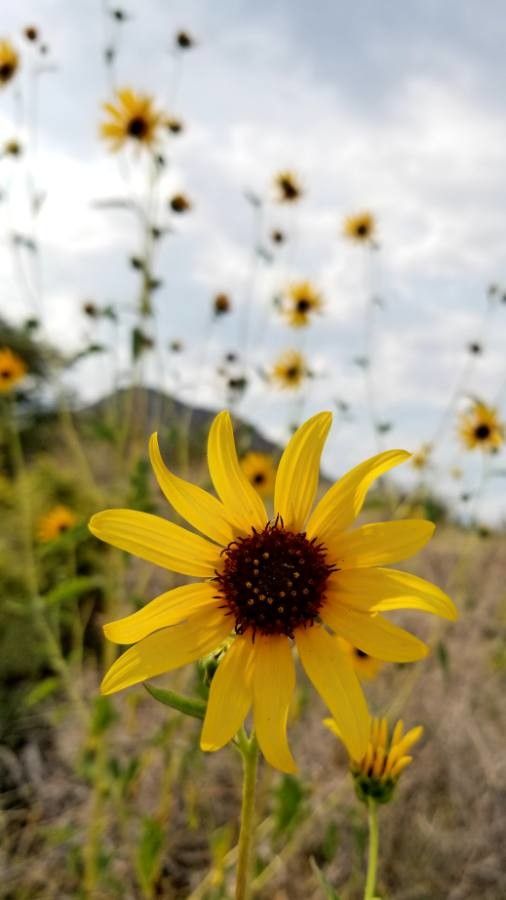
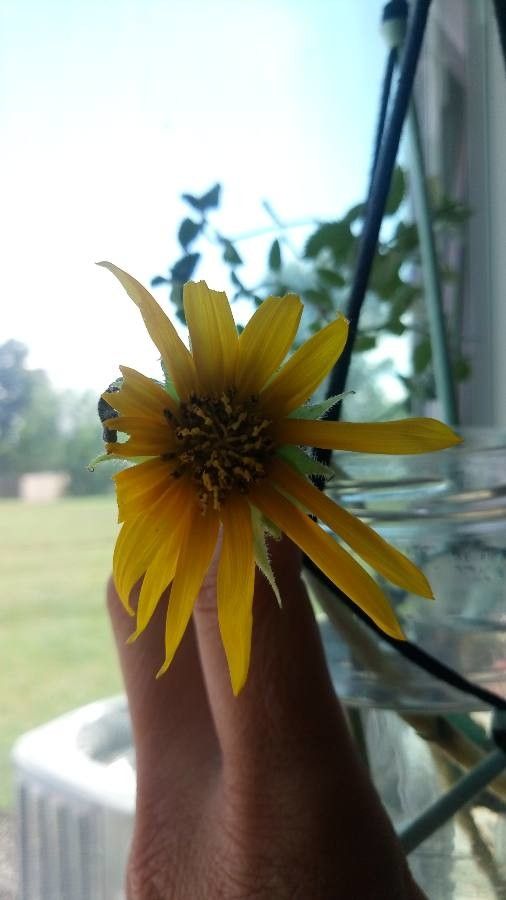
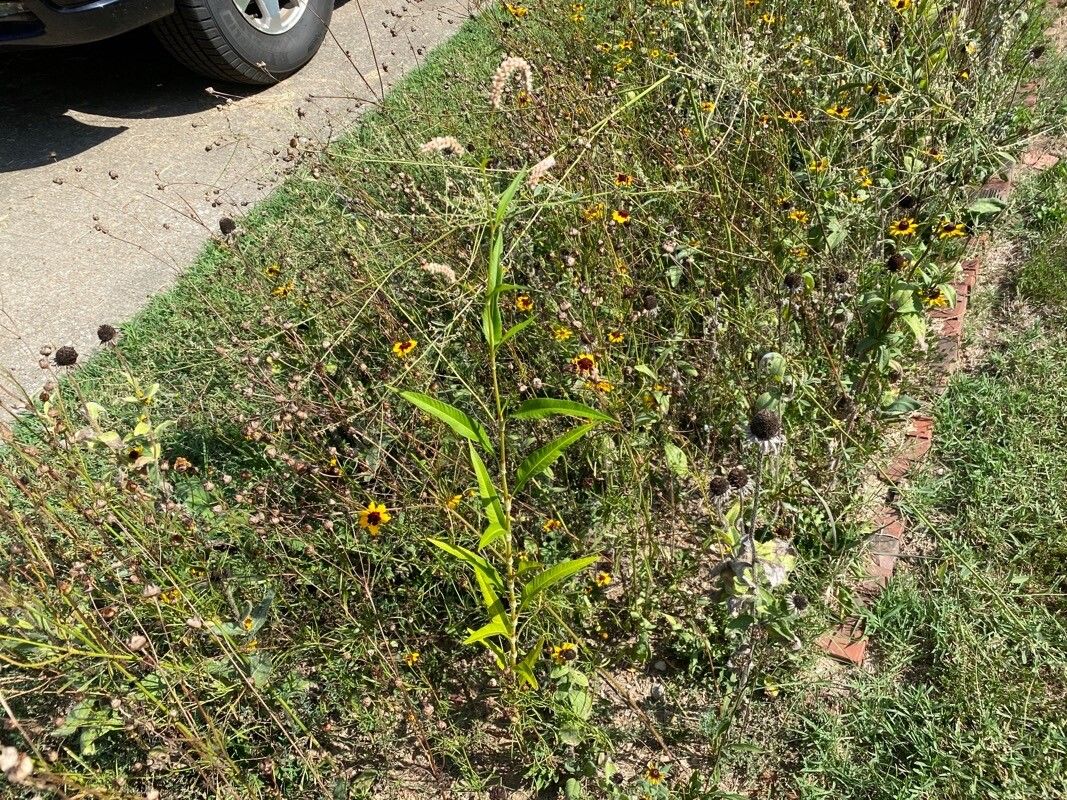
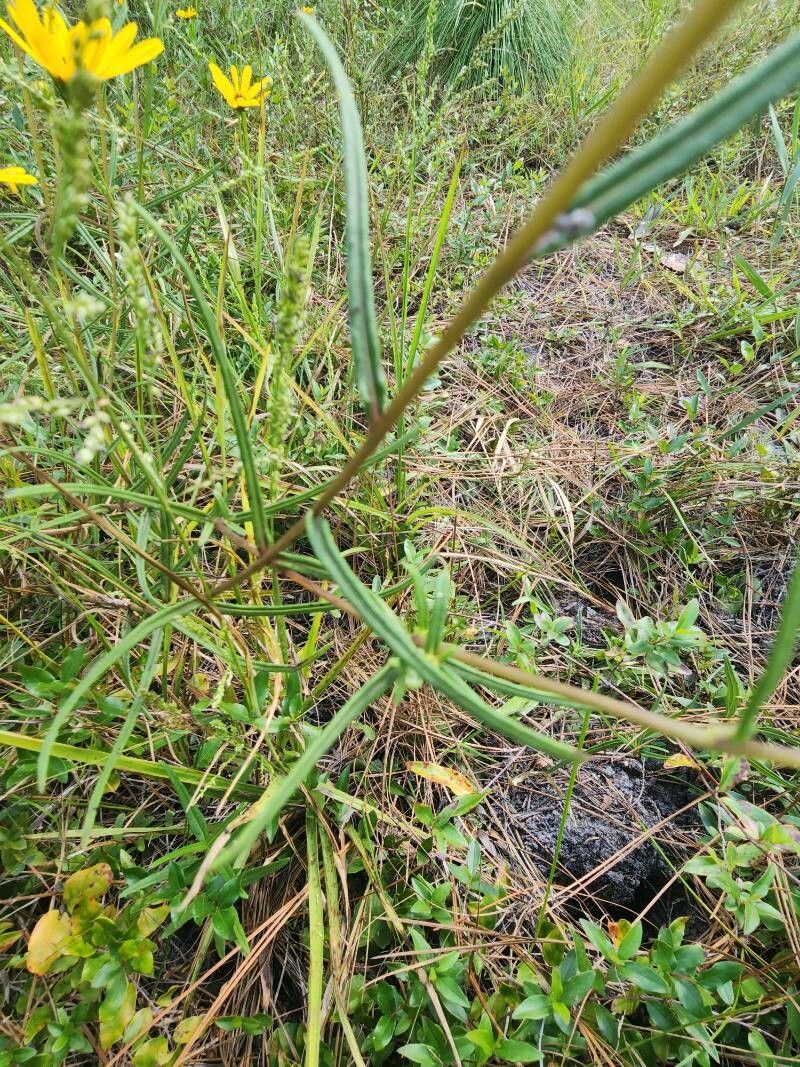
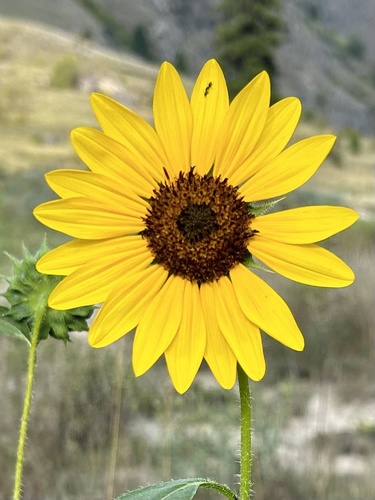
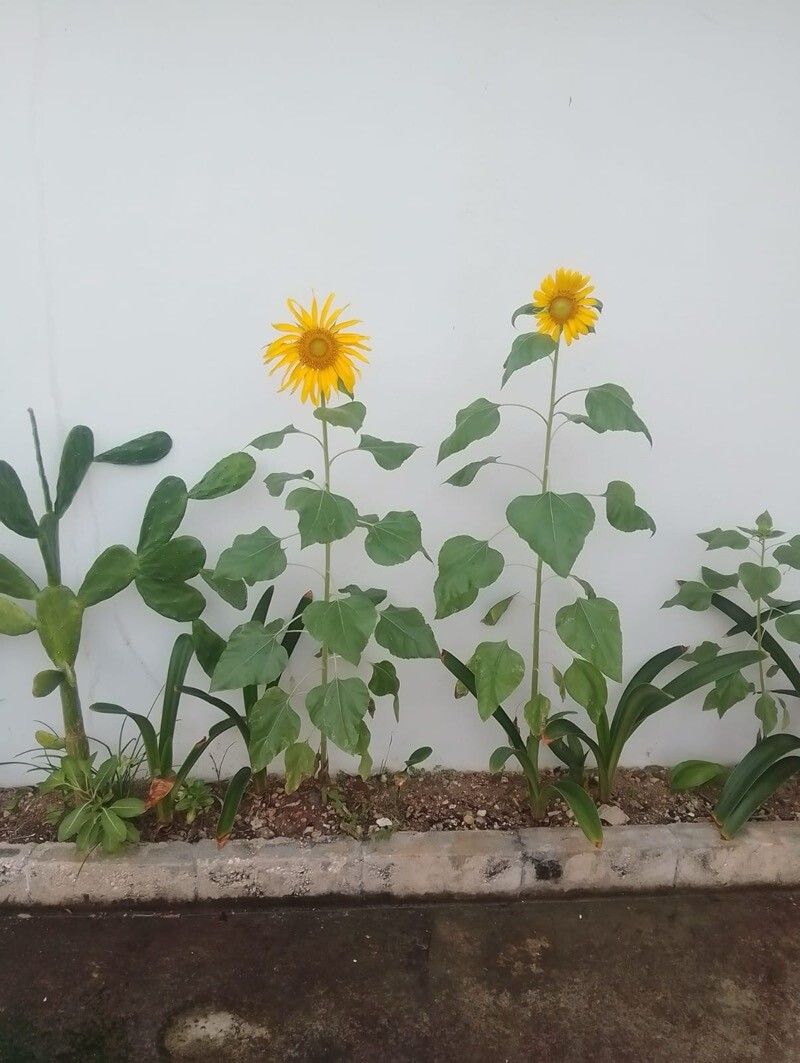
Helianthus californicus is a North American species of sunflower known by the common name California sunflower. It is native to California in the United States and Baja California in Mexico, where it grows in many types of habitats.Helianthus californicus is an erect perennial herb growing from a network of tough, woody roots with small rhizomes. It is a sprawling, gangly plant, sending a thin stem to heights between one and three meters (3–10 feet) or more. The lance-shaped leaves may be 20 centimeters (8 inches) long and are smooth or slightly toothed along the edges. The inflorescence holds several flower heads. Each head is supported by a base covered in long, pointed phyllaries that bend back as the head ages and develops fruit. The flower head has a fringe of golden yellow ray florets, each two to three centimeters (3⁄4–1+1⁄4 in) long, and a center filled with curly yellow and brown disc florets. The achene is about five millimeters (1⁄4 in) long.
The California sunflower is fairly disease-resistant and generally not prone to illnesses. However, it can be vulnerable to pests and diseases present in its environment. These problems are usually not serious. For care, the plant needs moderate maintenance. It should be pruned regularly to preserve a tidy appearance and encourage healthy growth. Fertilizing can also help boost flowering. The California sunflower is suitable for anyone with outdoor space, such as a garden or patio, and does not require extensive experience in plant care. It may need more attention when grown indoors.
How to keep Helianthus Californicus.
Light
The California sunflower is a sun-loving herbaceous perennial that comes from open habitats and commonly thrives in meadows and grasslands. It prefers full sun but can also tolerate partial sun.
Water
The California sunflower, native to California, flourishes in environments with moderate moisture and appreciates regular watering. It requires weekly irrigation but can endure short periods of dryness. As an outdoor plant, the California sunflower benefits from natural rainfall, which reduces the need for additional watering during peak growing seasons.
Temperature
California sunflower can adjust to a wide range of temperatures, but its distribution may nonetheless be limited by various combinations of moisture and heat. It performs best in warm summer climates with adequate rainfall or watering. Extended periods of cloudy, rainy weather or prolonged high temperatures can raise the chance of the California sunflower dying. In winter, suitable protection from cold can increase the plant's survival rate.
Fertilizer
The best time to fertilize a California sunflower is in early spring, as it comes out of dormancy and begins active growth. Fertilizing supplies essential nutrients needed for healthy development. Although the California sunflower requires relatively little fertilizer, applying it annually can improve its survival and encourage better, longer-lasting flowers.
Pruning
This perennial plant can grow up to 3 meters (10 feet) tall and produces yellow blooms. Prune the California sunflower in early spring to remove dead stems, promote new growth, and improve airflow. Regular pruning encourages a bushier shape, extends the blooming period, and enhances the plant's overall health, ensuring a vibrant garden display.
Botanical profile.
- Plant Type
- Herb
- Life Cycle
- Perennial
- Genus
- Helianthus
- Family
- Asteraceae
- Hardiness Zone
- 7-10
- Mature Height
- 0.91 m to 1.83 m
- Mature Spread
- 0.61 m to 1.22 m
- Leaf Color
- Green, Dark Green
- Leaf Type
- Deciduous
- Flower Color
- Yellow, Gold
- Flower Size
- 5.08 cm to 10.16 cm
- Bloom Time
- Mid summer, Late summer, Early fall
- Planting Time
- Spring, Summer
- Harvest Time
- Early fall, Mid fall
- Native Area
- Mexico
Other names.
Reader questions.
What are the sunlight requirements for a California sunflower?
California sunflowers, or Helianthus californicus, thrive in areas that receive full sun, which means they need more than 6 hours of sunlight daily. However, they can also grow in partial sun conditions, with about 3-6 hours of sunlight. It's important to observe the movement of sunlight through your garden carefully to find the optimal spots that offer a good balance of light and shade, ensuring the plants are happy and healthy.