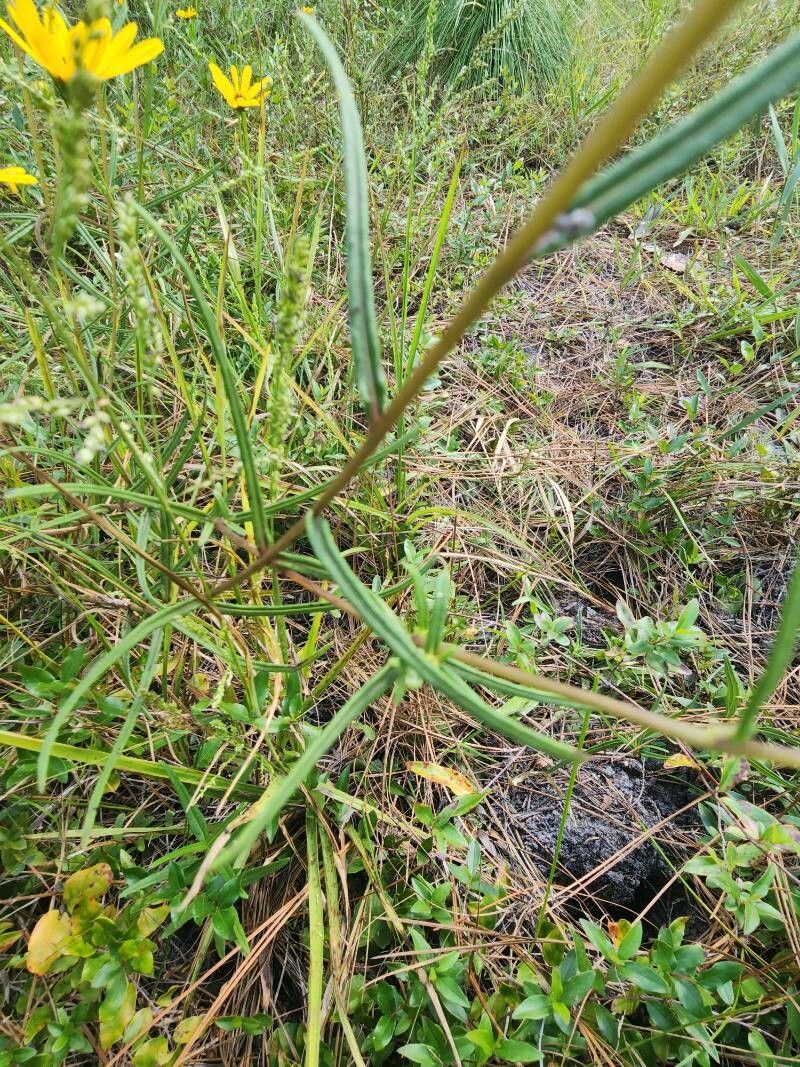
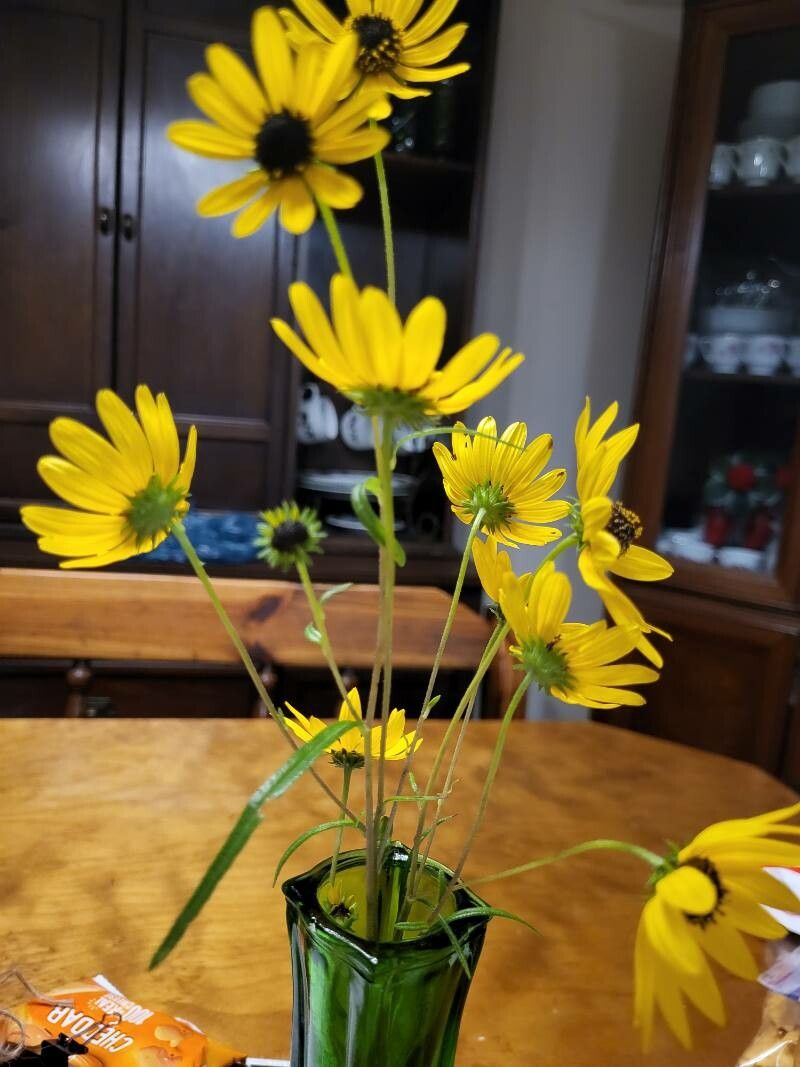
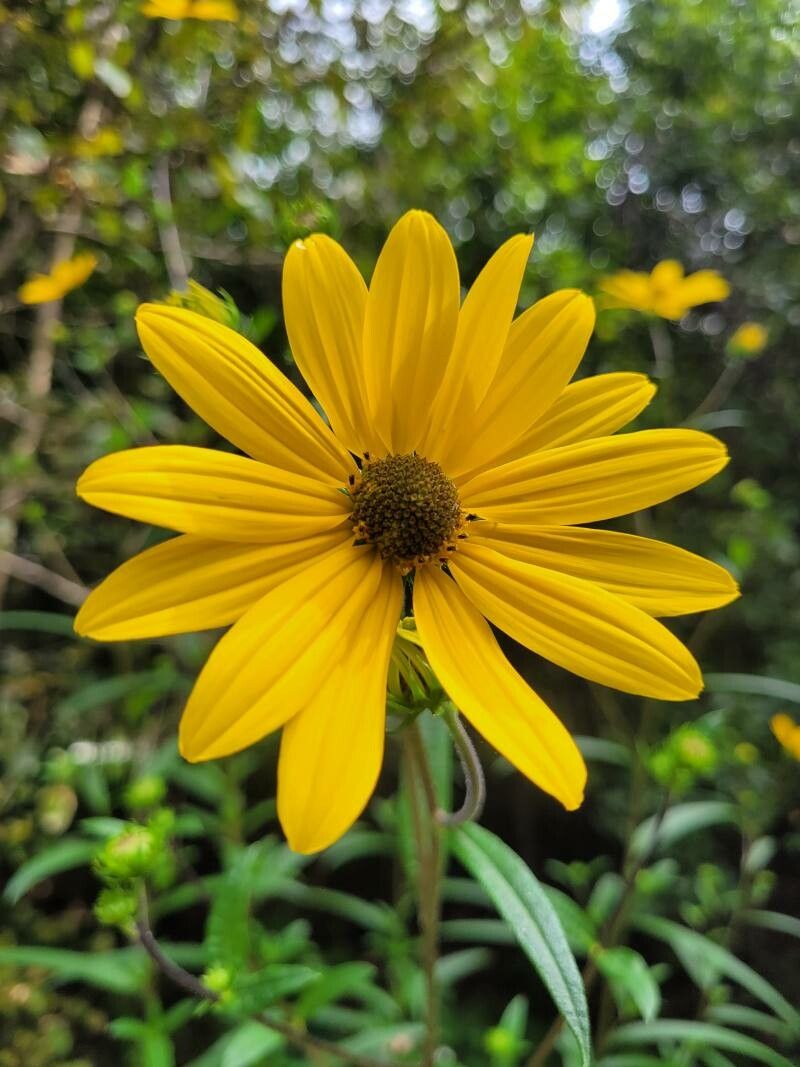
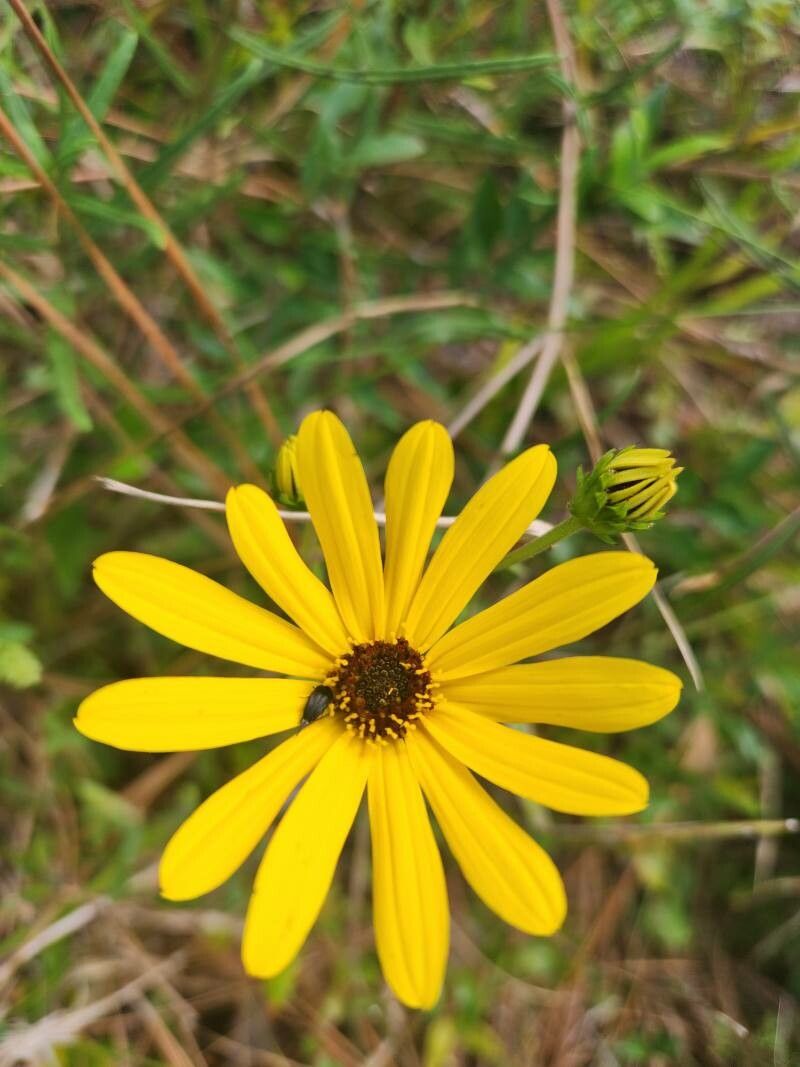
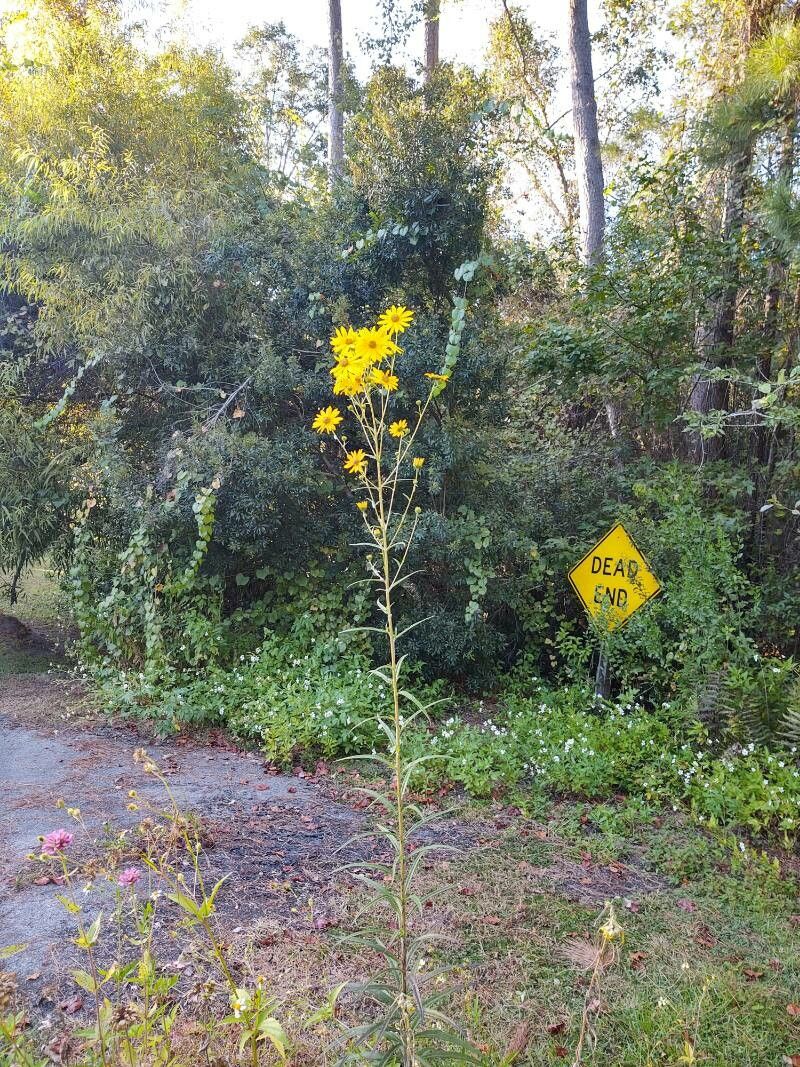
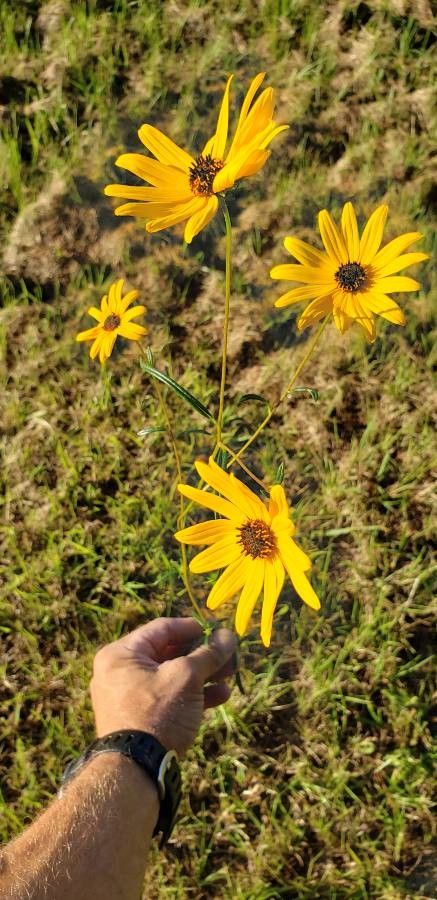
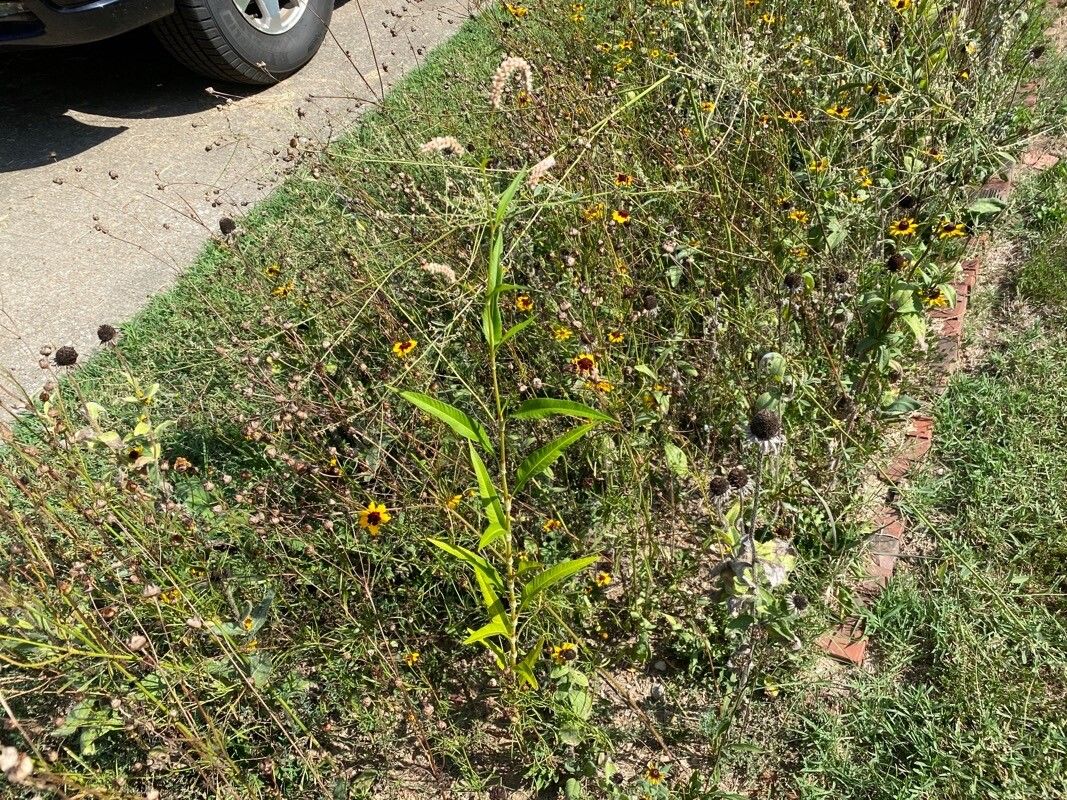
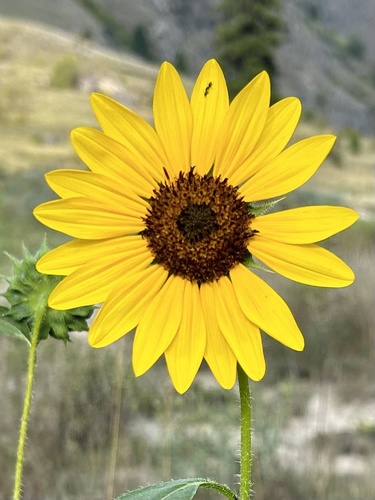
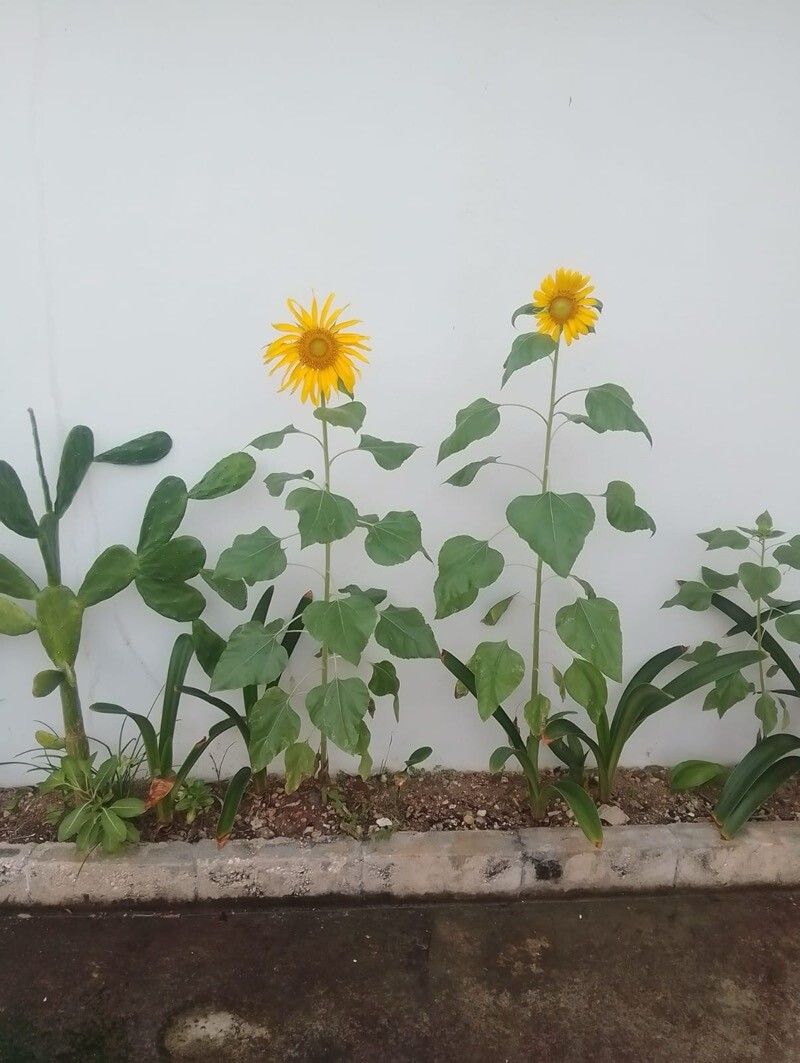
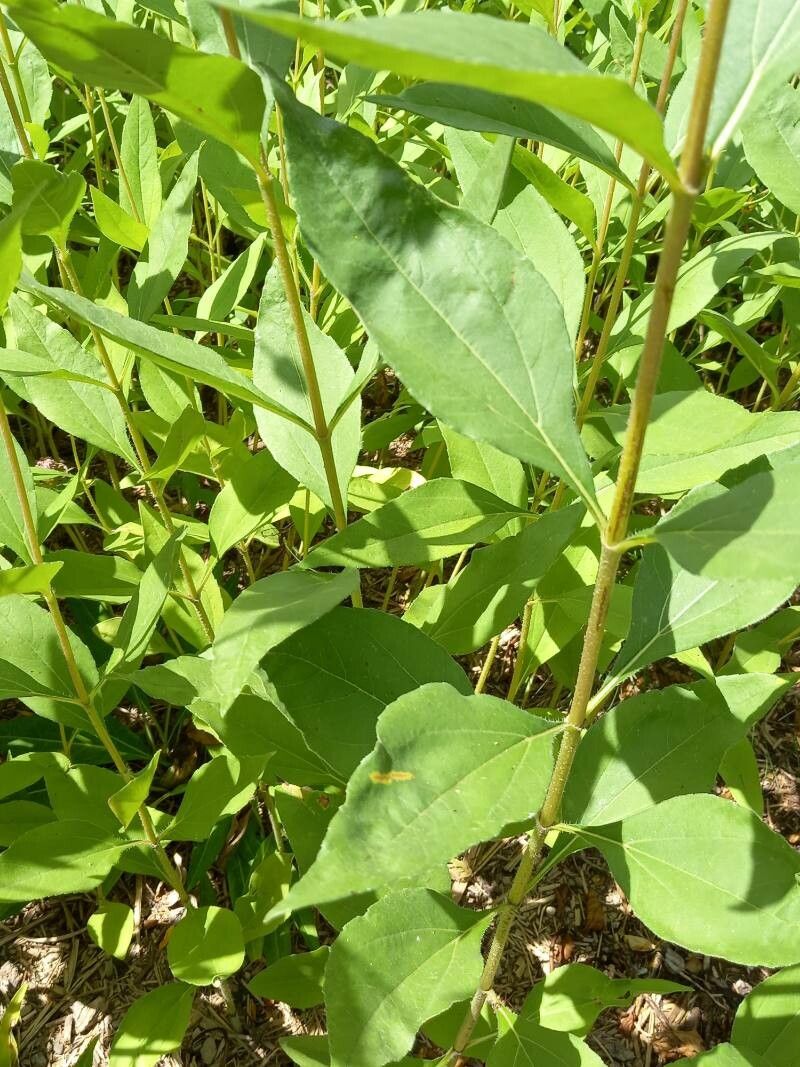
Helianthus angustifolius, commonly known as the swamp sunflower, is a perennial species from the Asteraceae family. Native to the southeastern United States, this plant can grow up to 6 feet tall. It features narrow leaves measuring up to 10 inches long and yellow flowers with dark centers that bloom in late summer or early fall.
Swamp sunflowers thrive in moist soil and can tolerate wet conditions, making them ideal for wetland restoration projects. Additionally, their nectar-rich flowers attract pollinators such as bees and butterflies.
Historically, Native Americans have used swamp sunflowers for medicinal purposes, treating ailments like fever, coughs, and skin conditions. The seeds of Helianthus angustifolius are also edible and have been incorporated into traditional cuisine.
Overall, Helianthus angustifolius is a striking native plant with numerous ecological benefits, making it an excellent addition to any garden or restoration project.
Swamp sunflower is fairly resistant to diseases and usually does not easily get sick. However, it can be affected by pests and diseases present in its environment. These problems tend to be minor. As for care, the plant needs moderate maintenance. It should be pruned regularly to preserve a tidy appearance and healthy growth. Fertilizing can also help stimulate flowering. Swamp sunflower is well suited to anyone with outdoor space, like a garden or patio, and does not require extensive care experience. It may demand more attention when grown indoors.
How to keep Helianthus Angustifolius.
Light
Swamp sunflower usually does well in moderate sunlight but can tolerate stronger sun. Native to naturally bright habitats, insufficient light can hinder its healthy development, while adequate exposure produces lusher foliage and more vivid blooms. Its growth stages are consistently linked to light exposure.
Water
The swamp sunflower flourishes in moist conditions, needing regular moisture but not waterlogging. To support its lush growth and vibrant blooms, it should be watered weekly. This plant is best grown outdoors and requires well-drained soil to ensure its roots get both the oxygen and water they need for optimal health and flowering.
Temperature
The swamp sunflower needs a native growing environment with temperatures from 32 to 95 ℉ (0 to 35 ℃). It favors conditions between 41 and 95 ℉ (5 to 35 ℃) and requires adequate moisture. In summer, temperatures above 95 ℉ (35 ℃) can suppress flowering and cause wilting. In winter it can tolerate air temperatures below freezing so long as the soil does not freeze.
Fertilizer
One fertilizer application in spring is generally enough for Swamp sunflower, though repeated feedings can optimize growth. Feed roughly once a month to once every six weeks. Fertilizing improves the leaves' appearance and function, helping maintain even color and a healthy texture. It also promotes root development and nutrient uptake for long-term plant health.
Pruning
The swamp sunflower is a tall perennial that thrives in sunny areas, featuring bright yellow flowers and narrow leaves. To encourage better growth, prune the plant by cutting back one-third of its height in early to late spring. Removing spent blooms, or deadheading, can help extend its flowering period. Additionally, trim any dead or overcrowded stems to maintain the plant's health and vibrancy.
Pot & Repot
When repotting Swamp sunflower, select a pot 1-2 inches (2.5–5.1 cm) larger with good drainage. Use a well-draining potting mix. Repot in spring or fall, ensuring the root ball sits slightly below the rim of the pot. Water thoroughly after repotting and place it in a warm spot with indirect sunlight.
Botanical profile.
- Plant Type
- Herb
- Life Cycle
- Perennial
- Genus
- Helianthus
- Family
- Asteraceae
- Hardiness Zone
- 4-9
- Mature Height
- 1.52 m to 2.44 m
- Mature Spread
- 1.22 m
- Leaf Color
- Green
- Leaf Type
- Deciduous
- Flower Color
- Yellow
- Flower Size
- 2.54 cm to 7.62 cm
- Bloom Time
- Mid summer, Late summer, Early fall
- Planting Time
- Spring, Autumn
- Harvest Time
- Fall
- Native Area
- US and Canada
Other names.
Reader questions.
How should I water my Swamp sunflower?
To properly water the Swamp sunflower, it is recommended to use filtered water at room temperature. Tap water can contain harmful particles that may affect the plant's health. The water temperature should be warm or at least room temperature since the Swamp sunflower is accustomed to warm conditions, and cold water can be a shock to its system. Instead of overhead watering, it is best to apply the filtered room temperature water directly to the soil until it is completely soaked. This helps to moisturize the roots and facilitate their spread through the soil, ensuring they can absorb the necessary nutrients.
Why do I have to put fertilizer on my Swamp sunflower?
The main structure of the Swamp sunflower is comprised of its leaves. One impactful way to ensure the leaves look great and function properly is through fertilization. Proper fertilization will promote consistent color and a healthy texture in the leaves. Fertilization also benefits the root system of the Swamp sunflower by promoting the growth of new roots and maintaining existing ones. This not only keeps the plant healthy in the present but also improves its ability to absorb soil nutrients in the future.
What are the sunlight requirements for Swamp Sunflower?
Swamp Sunflower, or Helianthus angustifolius, thrives best under conditions of partial to full sun exposure. Partial sun refers to about 3-6 hours of sunlight per day, while full sun means the plant should receive more than 6 hours of sunlight daily. It's important to observe how sunlight moves through your garden to find spots that offer a balance of light and shade, ensuring the well-being of your plants. Swamp Sunflower can flourish with moderate solar exposure but also tolerates more intense sunlight, indicative of its origins in naturally lit environments. Insufficient sunlight may impede its growth, whereas adequate sunlight encourages lush growth and vibrant blooms.
What are the ideal growing temperatures for the Swamp Sunflower?
The Swamp Sunflower (Helianthus angustifolius) thrives in a temperature range from 32°F to 95°F (0°C to 35°C), with an optimal range of 41°F to 95°F (5°C to 35°C). It requires adequate moisture to grow well. During the summer, when temperatures exceed 95°F (35°C), the plant may stop flowering and exhibit wilting. However, in winter, it can withstand temperatures below freezing as long as the soil does not freeze. Despite its strong cold resistance, if temperatures are expected to fall below -30°C, it is important to take measures to protect the plant from cold by covering it with soil or straw and ensuring the soil is moist before the first freeze of autumn.
What do I do if I give my Swamp sunflower too much or too little water?
To keep your Swamp sunflower healthy, it's important to avoid both overwatering and underwatering. Overwatering is a more common issue and can cause wilting, yellowing leaves, and diseases like root rot, mold, and mildew that can be fatal to the plant. While underwatering is less common for the Swamp sunflower due to its drought tolerance, it's still possible and can result in brittle, brown leaves. It's crucial to recognize the signs of overwatering early on as some diseases may become irreversible if not addressed promptly. If you notice signs of overwatering, reduce your watering schedule and consider using a well-draining potting mix if the soil isn't draining well. Conversely, if you see signs of underwatering, simply increase watering until the symptoms improve.
When should I fertilize my Swamp sunflower for optimal growth?
If you grow your Swamp sunflower outdoors, it will send out new growth in early spring. This is a signal to start fertilizing. Typically, one application of fertilizer in the spring is sufficient. However, if you want to maximize growth, you can fertilize multiple times throughout the spring and early summer. In this case, feed the Swamp sunflower every month to a month and a half.
How can artificial lighting be used for Swamp Sunflower indoors?
Indoor Swamp Sunflowers require sufficient lighting to grow optimally, especially in conditions where natural sunlight is inadequate, such as during winter or in less sunny spaces. Artificial lights, such as LEDs which can be tailored to provide specific wavelengths, offer a vital solution. For plants requiring full sun, 30-50W per square foot is recommended; partial sun plants benefit from 20-30W per square foot, and full shade plants need 10-20W per square foot. The artificial light source should be placed 12-36 inches above the plant to mimic natural sunlight, and the lighting should last for about 8-12 hours per day to simulate natural daylight hours.
How should Swamp Sunflowers be cared for in low temperature conditions?
Swamp Sunflower is cold-tolerant and grows best when temperatures are above 5°C. It should be protected if temperatures drop below -25°C, as exposure to temperatures lower than -30°C can lead to a reduced sprouting rate or even no sprouting come spring. In such scenarios, it's advisable to remove any parts of the plant that have failed to sprout in spring. This preemptive action helps in maintaining the health and aesthetics of the plant during the growing season.
How frequently should I water my Swamp sunflower plant?
To determine if your Swamp sunflower needs water when it's in a pot, stick your finger in the soil. If the top two to three inches are dry, it's time to water it. The same goes for when you grow it outdoors in the ground. Check the first few inches of soil, and if it's dry, it's time to water. In the spring and early fall, you'll typically water it about once per week using this method. During extremely hot weather, you may need to water it twice a week or more. However, it's worth noting that mature, well-established Swamp sunflowers can withstand drought.
When is it not a good idea to add fertilizer to my Swamp sunflower?
During the late fall and winter, your Swamp sunflower goes into a dormant phase and stops producing new growth. As a result, it is best to avoid fertilizing it during this time. In spring and summer, if you decide to fertilize multiple times, start reducing the amount of fertilizer as summer approaches because the growth rate of your Swamp sunflower will also slow down. In general, it is not recommended to fertilize your Swamp sunflower when the weather is abnormally hot or when the soil is excessively dry. Doing so can unnecessarily stress your Swamp sunflower and lead to premature death.
What are the symptoms of inadequate light for Swamp Sunflower?
Swamp Sunflower shows several symptoms when it doesn't receive enough light, particularly when grown indoors. These symptoms include smaller new leaves, leggy or sparse growth, accelerated leaf drop, slowed or ceased growth, paler new leaves, chlorosis (yellowing leaves due to chlorophyll breakdown), sunscald (damage from intense sun leading to pale or necrotic spots), leaf curling (a defense mechanism against excess sunlight), wilting (loss of turgor pressure leading to drooping), and leaf scorching (browned, dry edges due to excessive light). These symptoms indicate the plant's struggle with light conditions, affecting its health and development.
What steps should be taken if the Swamp Sunflower is exposed to high temperatures?
In high temperatures, especially above 35°C and particularly when exceeding 38°C, the Swamp Sunflower may show signs of stress such as lighter colored leaves, curling, susceptibility to sunburn, or in severe cases, wilting and drying out. To mitigate these effects, it's recommended to prune away sunburned and dry parts of the plant. Relocating the plant to a shaded area or using a shade cloth can provide protection from the harsh midday and afternoon sun. Additionally, watering the plant in the morning and evening will help keep the soil moist, which is crucial for the plant’s survival in hot conditions.