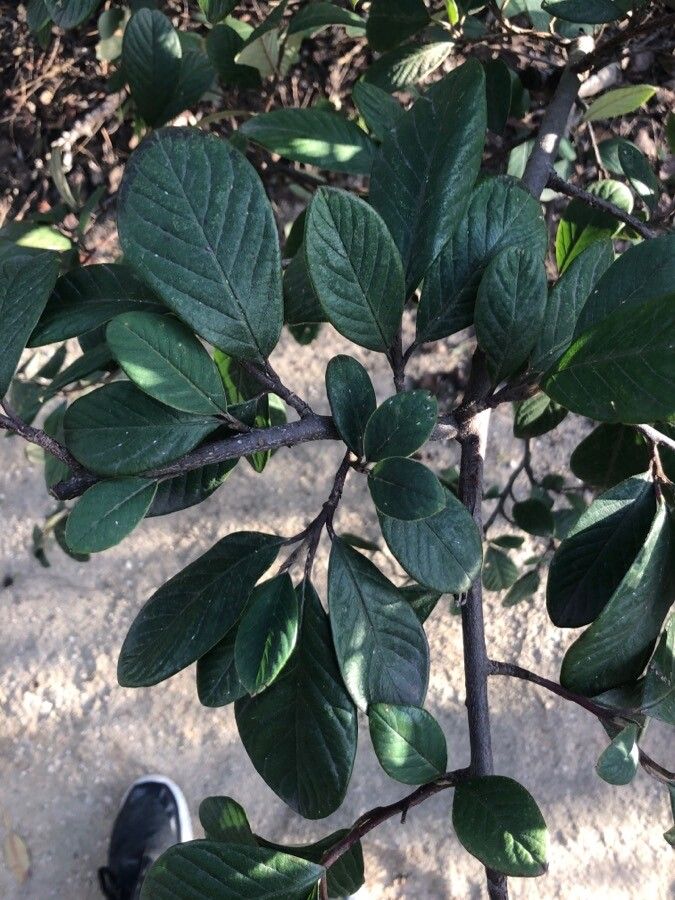
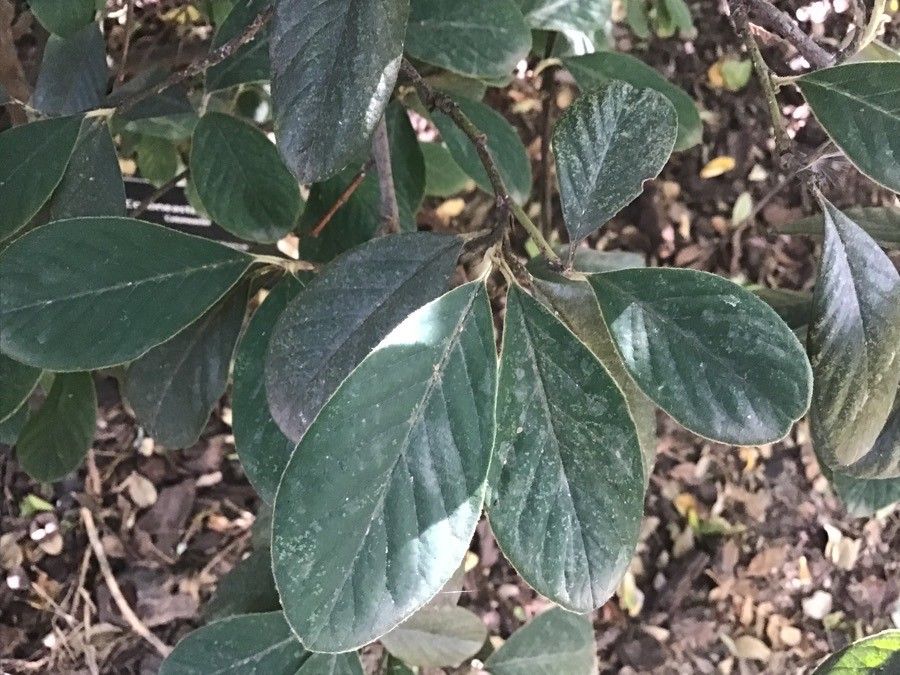
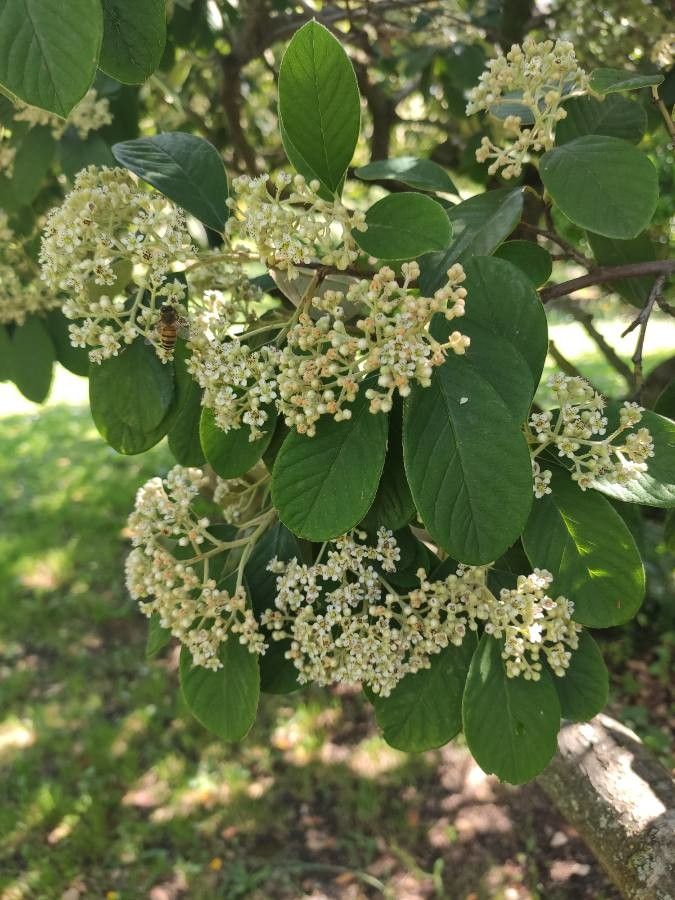
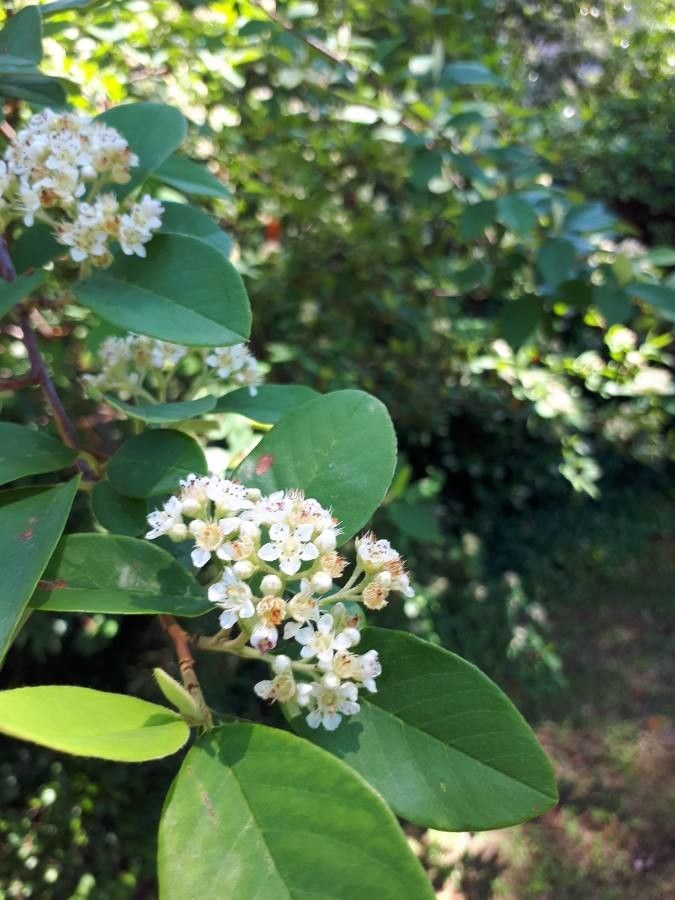
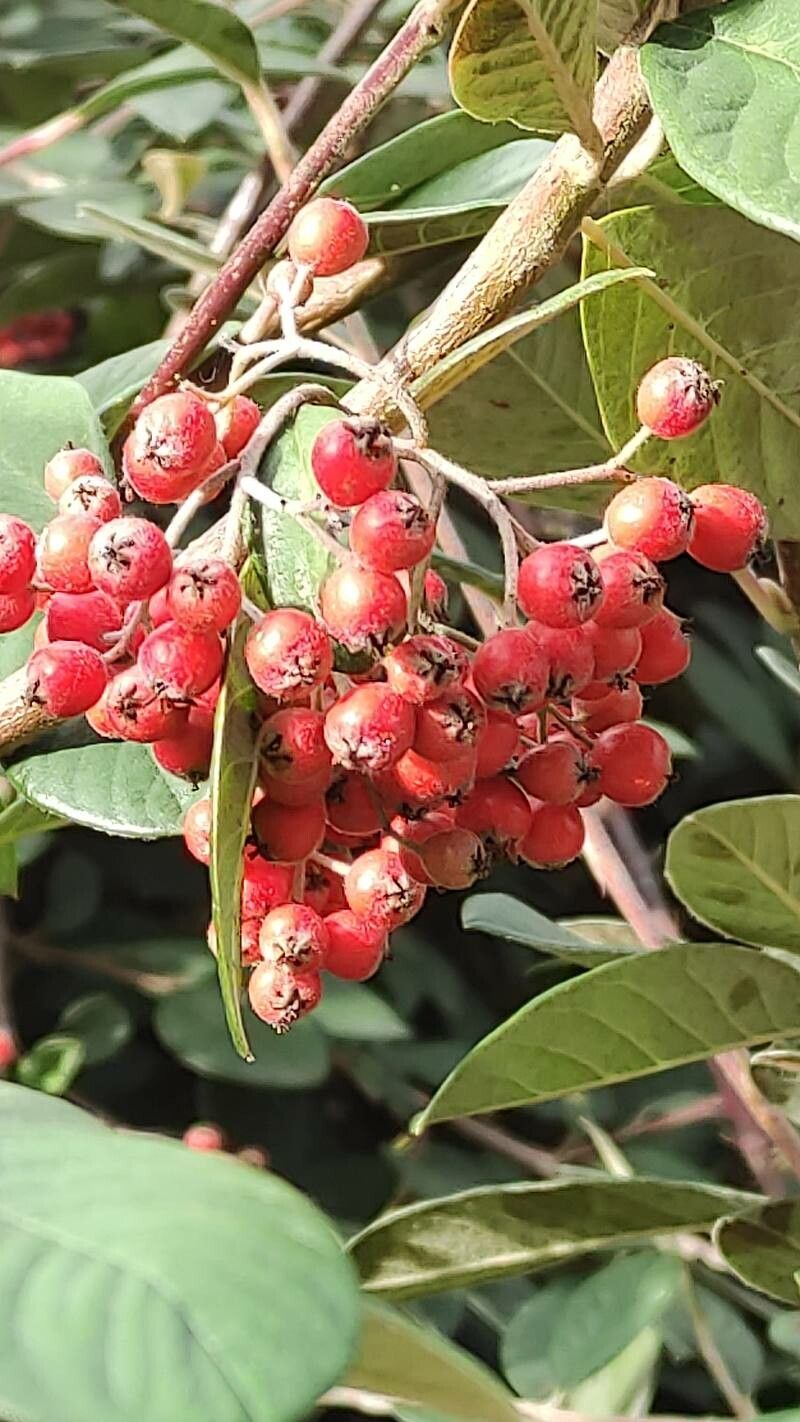
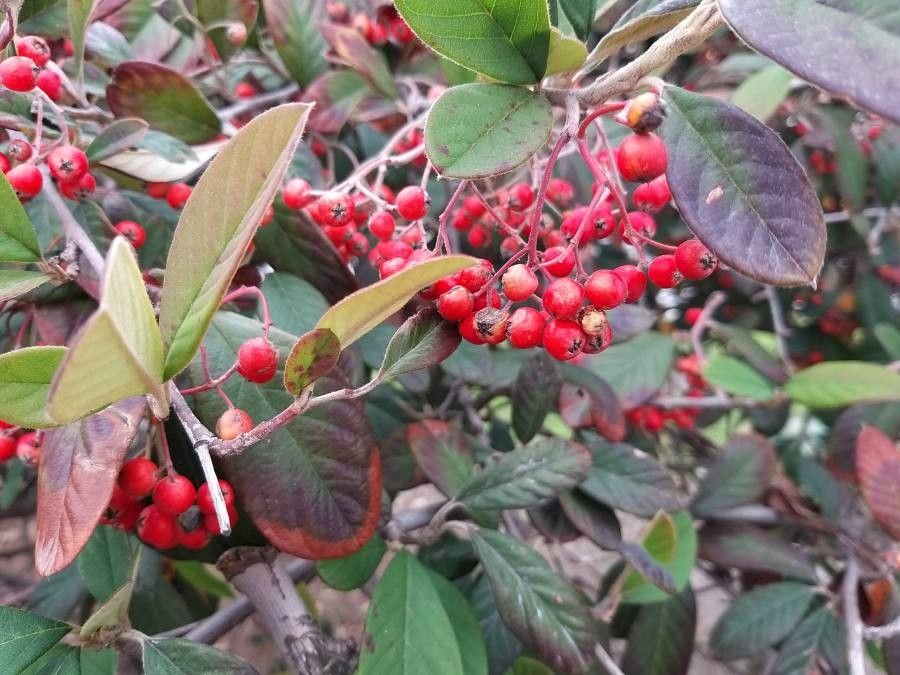
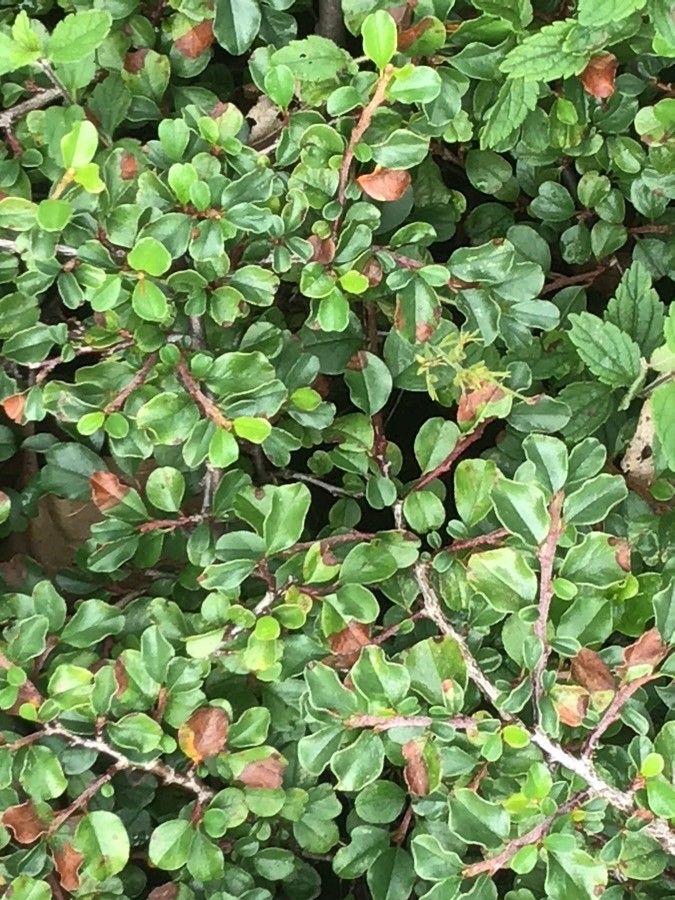
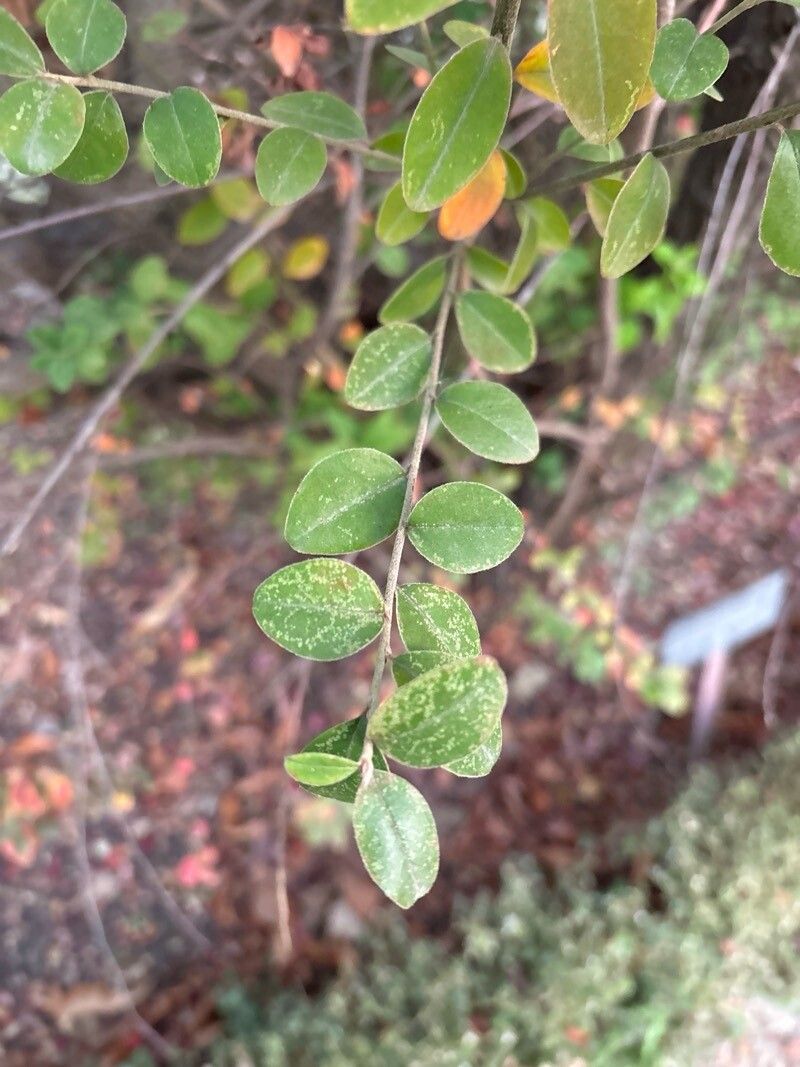
Cotoneaster lacteus, the late cotoneaster or milkflower cotoneaster, is a species of flowering plant in the genus Cotoneaster of the family Rosaceae, native to the Yunnan Province of China. It is a large evergreen shrub growing to 4 m (13 ft) tall and wide. Clusters of white flowers are followed by masses of small, globose, red fruits (pomes) in autumn. Unusually for this genus, the fruits are avoided by birds, hence garden escapes are rare, and the fruit persists on the plant throughout the winter.The Latin specific epithet lacteus refers to the milk-white flowers.Cotoneaster lacteus may be grown as a hedge. It has gained the Royal Horticultural Society's Award of Garden Merit.
Milkflower cotoneaster shows strong resistance to disease and is usually not susceptible to illnesses. Regarding care, this plant is fairly low-maintenance. When grown outdoors it needs only minimal watering, and larger specimens typically do not require pruning. However, smaller plants should be trimmed after they have finished blooming. Milkflower cotoneaster is well suited for anyone with an outdoor area, such as a garden or a deck, and does not demand much gardening experience.
How to keep Cotoneaster Lacteus.
Light
Milkflower cotoneaster comes from open habitats, such as sunny meadows and the edges of forests, which offer plenty of light. It performs best in Full Sun but will also tolerate Partial Sun, adapting to different light conditions.
Humidity
This plant will thrive in moderate humidity, which is probably the level in your home. However, misting it a few times a week can be very beneficial. Make sure the room has good ventilation.
Temperature
Milkflower cotoneaster is highly adaptable to a wide range of climate conditions, handling both searing summers and frosty winters. It still has an optimal temperature range for growth. If temperatures become too high, the plant is susceptible to heat and humidity stress, which can cause its death. In areas where temperatures reach the lower limit of its cold tolerance, providing insulation to protect the plant is important.
Fertilizer
Timing is essential for feeding Milkflower cotoneaster. Apply fertilizer in early spring and continue monthly until early summer. Fertilizer promotes attractive blooms and supplies energy during both dormant and active growth phases.
Botanical profile.
- Plant Type
- Shrub
- Life Cycle
- Perennial
- Genus
- Cotoneaster
- Family
- Rosaceae
- Hardiness Zone
- 6-7
- Mature Height
- 3.96 m
- Mature Spread
- 3.96 m
- Leaf Color
- Green
- Leaf Type
- Evergreen
- Flower Color
- White
- Flower Size
- 0.51 cm to 1.02 cm
- Bloom Time
- Late spring, Early summer
- Planting Time
- Spring, Summer, Autumn
- Harvest Time
- Late summer, Fall
Other names.