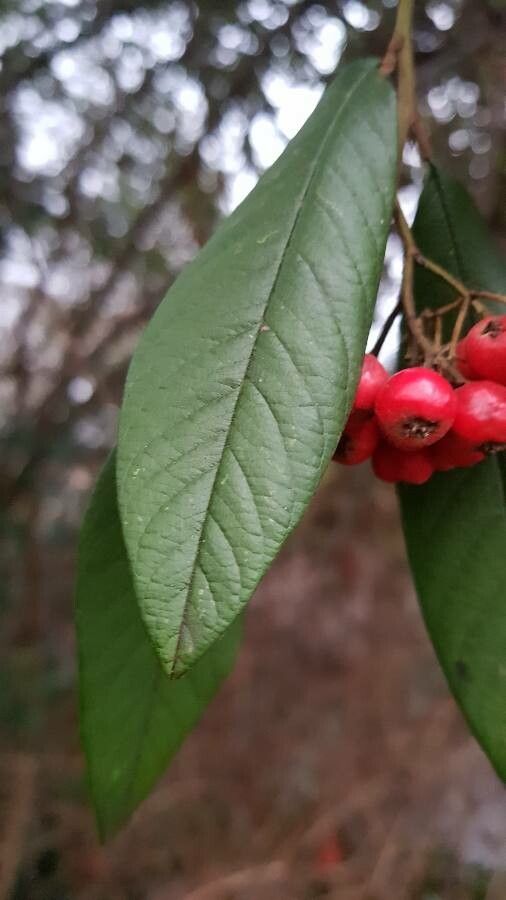
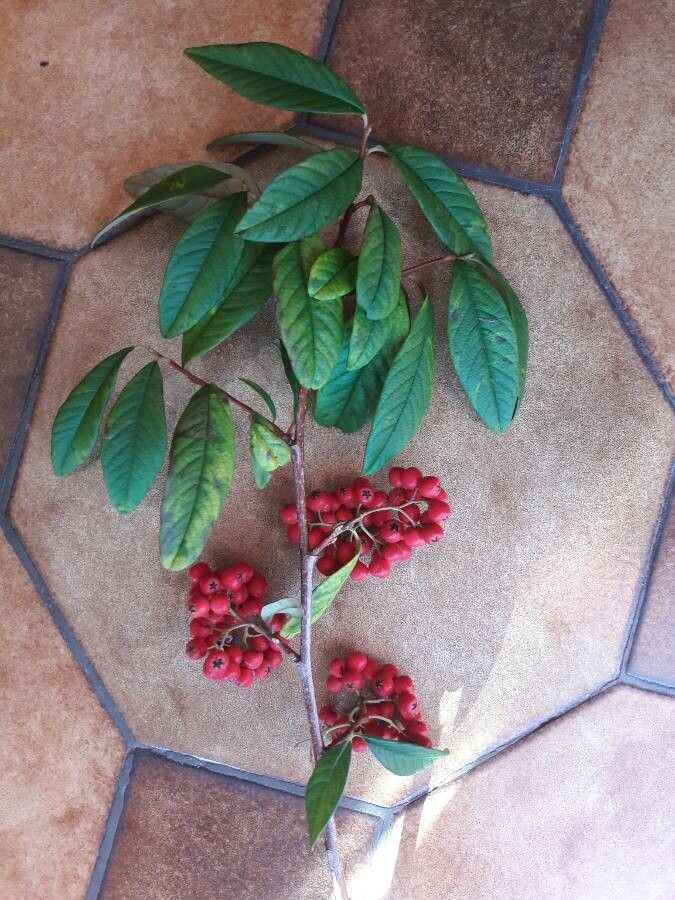
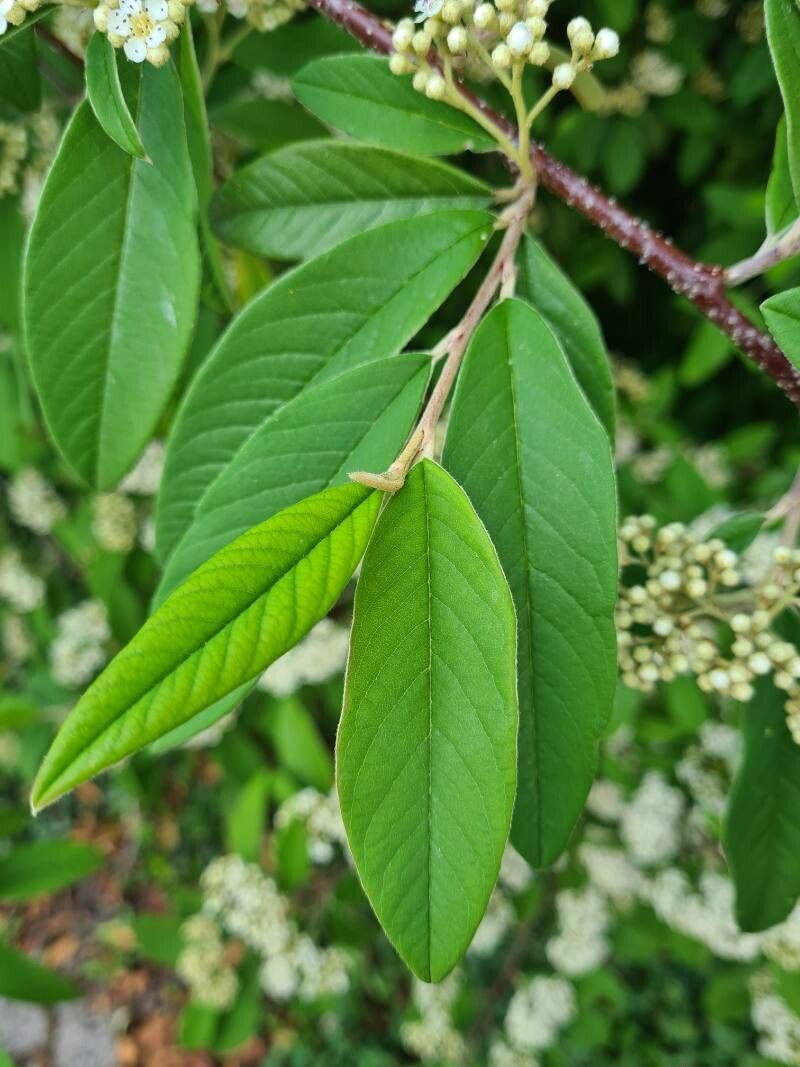
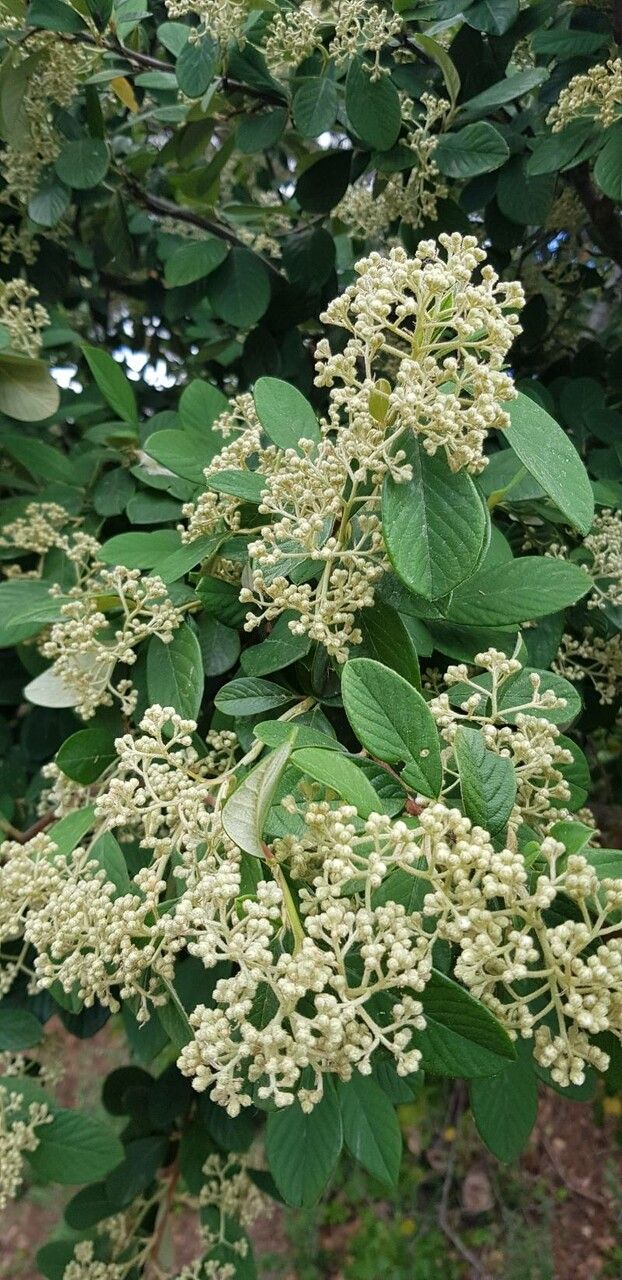
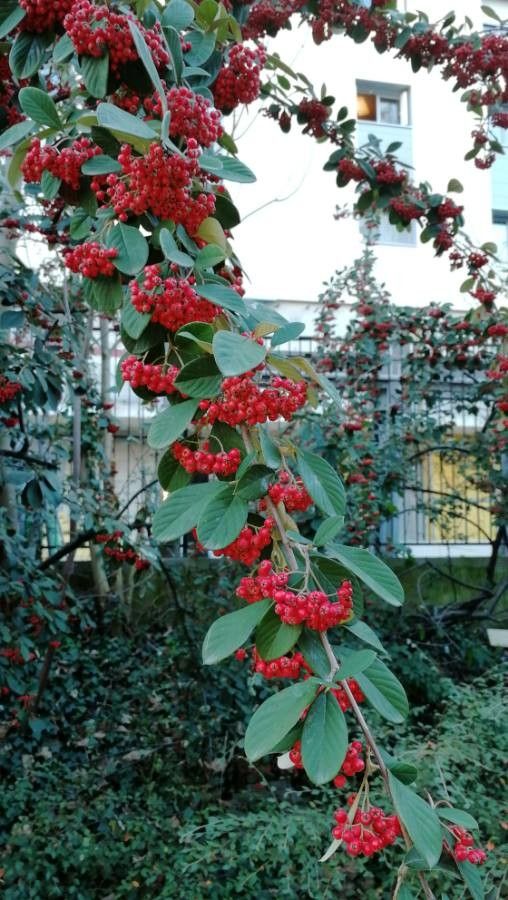
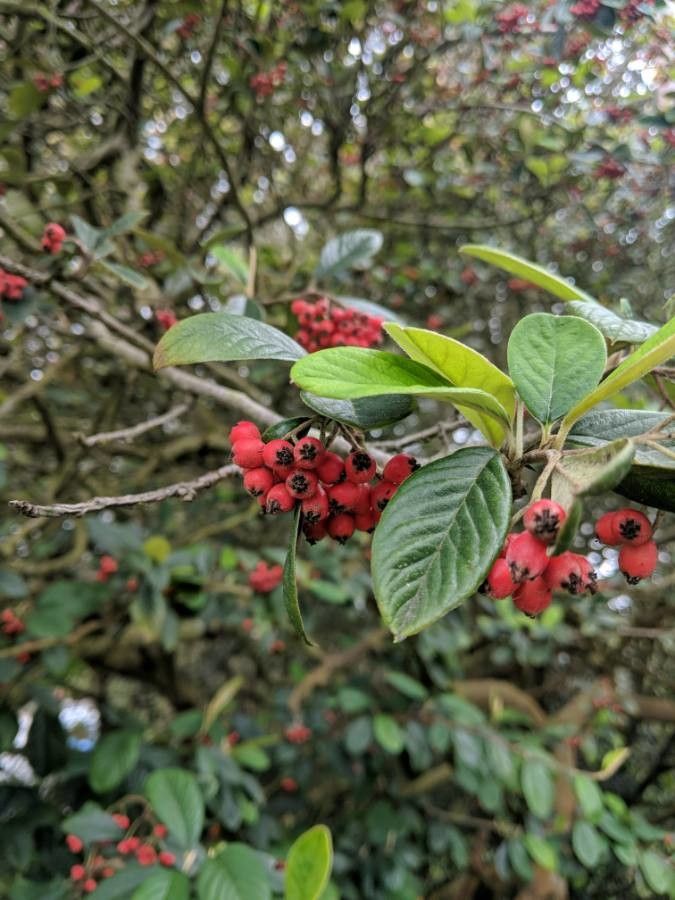
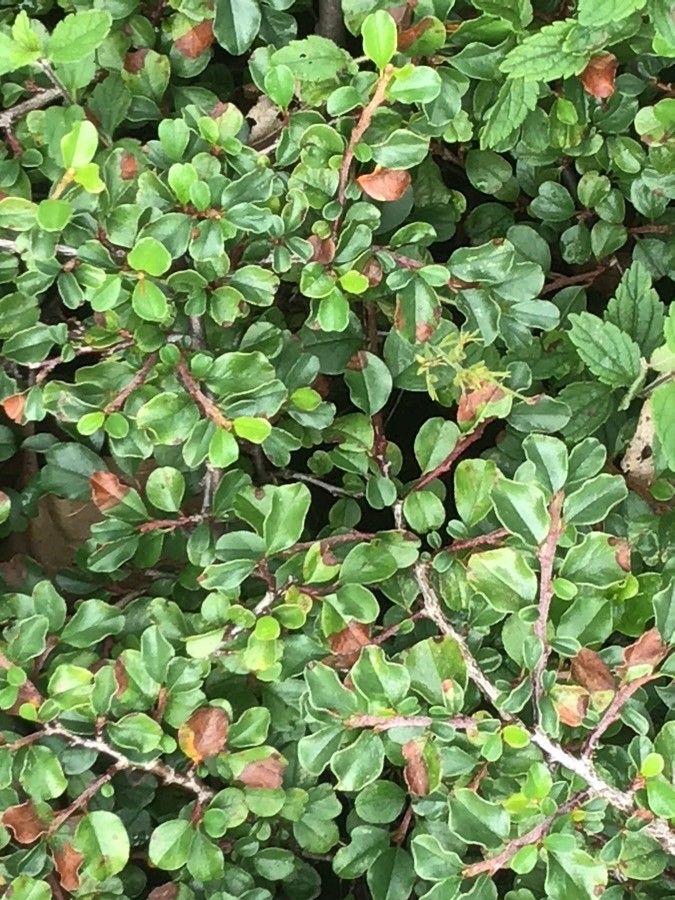
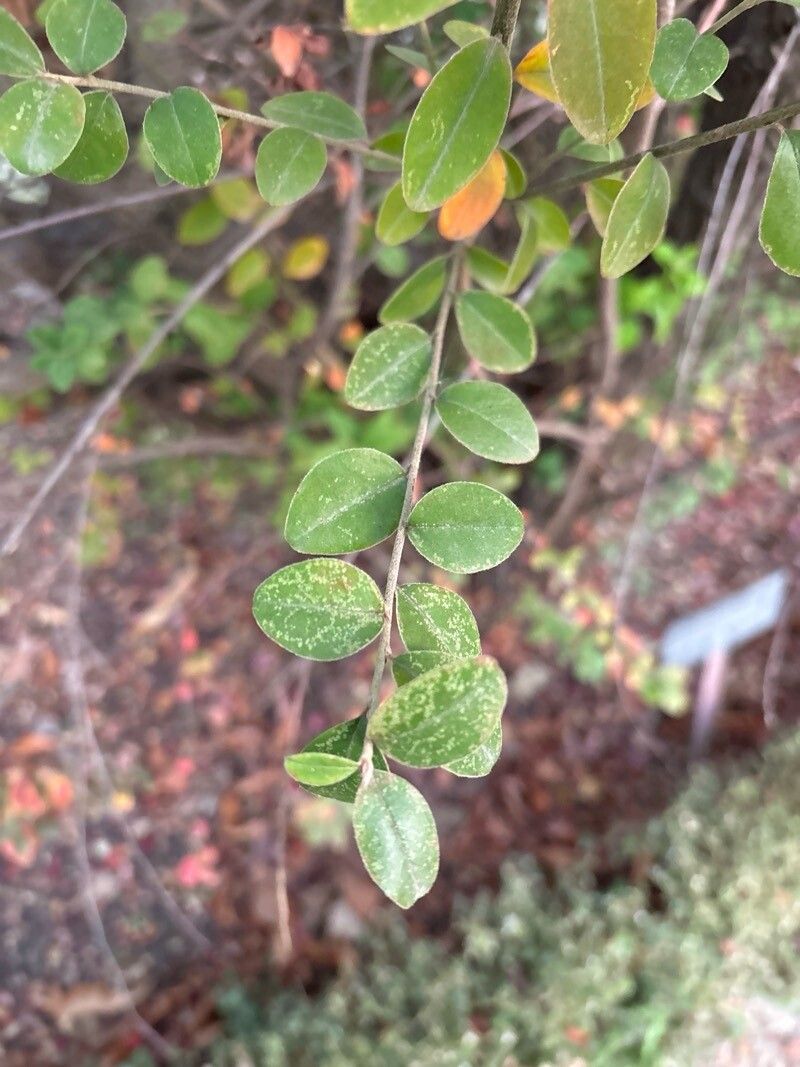
Cotoneaster frigidus, the tree cotoneaster, is a species of flowering plant in the genus Cotoneaster of the family Rosaceae, native to the Himalayas. It is a deciduous tree or shrub growing to 10 metres (33 ft). White flowers are followed by masses of small, globose, red fruits (pomes) in autumn, persisting into winter if not eaten by birds.It is widely grown in parks and gardens in temperate regions. The more compact cultivar 'Cornubia' (syn. C. × watereri 'Cornubia') has gained the Royal Horticultural Society's Award of Garden Merit. It grows to 6 metres (20 ft).
The Himalayan tree cotoneaster has strong disease resistance and is generally not susceptible to diseases. In terms of care, this plant is fairly low-maintenance. When planted outdoors it needs only minimal watering, and larger specimens typically do not require pruning. Smaller plants should be pruned after they have finished blooming. The Himalayan tree cotoneaster is suitable for anyone with an outdoor area, such as a garden or deck, and does not require much experience in plant care.
How to keep Cotoneaster Frigidus.
Light
The Himalayan tree cotoneaster does best with plentiful sunlight but will also do well in moderate light. Originating from high-altitude habitats, it needs ample light for healthy growth. Yet too much or too little light can cause reduced growth and vitality.
Water
The Himalayan tree cotoneaster hails from cooler regions and prefers moderate moisture, although it can withstand short periods of drought. Water the plant every two weeks, but allow the soil to dry out slightly between waterings. It thrives with consistent hydration and benefits from mulching, which helps retain moisture and mimics its natural habitat.
Temperature
Himalayan tree cotoneaster is naturally found in temperatures between 50 and 95°F (10 to 35℃), reflecting its native Himalayan environment. During winter, adjustments to maintain a cool climate may be necessary. Monitor temperatures regularly to promote optimal growth.
Fertilizer
The timing of fertilizing Himalayan tree cotoneaster is important. Apply fertilizer in early spring and continue monthly until early summer. Fertilizer aids in producing attractive blooms and supplies energy during both dormant and active growth phases.
Pruning
Pruning the Himalayan tree cotoneaster between early and late winter can enhance its decorative qualities. Key techniques involve removing dead and crossing branches, thinning crowded areas to improve air circulation, and performing a light annual trim. Pruning during dormancy minimizes stress and promotes healthy growth in the spring, ensuring the plant thrives.
Botanical profile.
- Plant Type
- Tree, Shrub
- Life Cycle
- Perennial
- Genus
- Cotoneaster
- Family
- Rosaceae
- Hardiness Zone
- 6-9
- Mature Height
- 6.1 m
- Mature Spread
- 4.57 m
- Leaf Color
- Dark Green
- Leaf Type
- Evergreen, Deciduous
- Flower Color
- White
- Flower Size
- 0.51 cm to 1.02 cm
- Bloom Time
- Late spring, Early summer
- Planting Time
- Spring, Autumn
- Harvest Time
- Late summer, Early fall, Mid fall
- Native Area
- Nepal, Bhutan, India, China
Other names.
Reader questions.
How should I water my Himalayan tree cotoneaster?
Your Himalayan tree cotoneaster is not very particular about how you water it. You can use any common watering tool, such as cans, hoses, or even cups. Regardless of the tool you choose, it's important to water the soil directly. Make sure to evenly moisten all areas of the soil to provide water to the entire root system. Using filtered water is recommended to avoid harmful particles that may be present in tap water. Water at or slightly above room temperature is also beneficial, as water that is too cold or hot can shock the plant. However, the Himalayan tree cotoneaster generally responds well to any kind of water.
Why should I put fertilizer on my Himalayan tree cotoneaster?
Regular fertilization is important for all types of Himalayan tree cotoneasters. It helps the plant grow healthier and stronger, making it more resistant to difficult growing conditions, diseases, and pests. Keeping the foliage intact is crucial to the plant's overall attractiveness. To achieve this, follow a specific fertilization schedule for your Himalayan tree cotoneaster. This will result in leaves with vibrant color and a lush appearance.
What are the sunlight requirements for Himalayan tree cotoneaster?
Himalayan tree cotoneaster thrives best with ample sun exposure, preferring locations that receive full sun, or above 6 hours of direct sunlight daily. It can also grow well under partial sun conditions, which means about 3-6 hours of sunlight daily. It's essential to observe the movement of sunlight through your garden to find spots that offer the right balance of light and shade, ensuring the plant's health and happiness.
What are the essential care requirements for Himalayan tree cotoneaster?
The Himalayan tree cotoneaster, or Cotoneaster frigidus, thrives in temperatures ranging from 50 to 95°F (10 to 35°C), which reflects its native environment in the Himalayas. Maintaining a cool climate during winter is crucial, so regular monitoring of temperatures is recommended to ensure optimal growth. Thanks to its strong cold resistance, special frost protection measures are typically not necessary. However, if winter temperatures are expected to drop below -25°C, it's important to provide cold protection by wrapping the trunk and branches with non-woven fabric or cloth. To prevent drought and water scarcity during winter and early spring, it's advised to water the plant abundantly before the first freeze in autumn, ensuring the soil remains moist and enters a frozen state.
What should I do if I give my Himalayan tree cotoneaster too much or too little water?
Outdoor plants, especially newly planted ones or seedlings, are prone to lack of watering. So, it's important to consistently water them for a few months until the roots are established. Once established, Himalayan tree cotoneaster can mostly rely on rain. When you plant a Himalayan tree cotoneaster in a pot, overwatering becomes more likely. If you accidentally overwater your plant, act quickly to fix it. First, stop watering immediately to minimize the impact. Then, take the plant out of the pot to check its roots. If you don't find any root rot, you can put it back in the pot. However, if you do see signs of root rot, trim the affected roots and consider using a fungicide. Finally, repot the plant in well-draining soil. On the other hand, if you underwater the Himalayan tree cotoneaster, the leaves will droop, dry out, and fall off. Simply water the plant more frequently to fix this issue. Adjust your watering frequency as soon as you notice underwatering.
When should I fertilize my Himalayan tree cotoneaster for best results?
To ensure healthy growth, fertilize your Himalayan tree cotoneaster in late winter or early spring. This provides the necessary nutrients for optimal growth once the weather warms up. In warm climate regions, it is also beneficial to apply fertilizer in early fall. This not only adds nutrients for the upcoming growing season but also helps the tree withstand winter without foliage damage. Early fertilization allows new branches to grow strong enough for cold temperatures.
Can Himalayan tree cotoneaster grow with artificial lighting?
Yes, Himalayan tree cotoneaster can grow with artificial lighting, which is especially beneficial when natural sunlight is insufficient, such as during winter or in less sunny spaces. For optimal growth under artificial light, it's recommended to use LED lights that can provide the specific wavelengths needed by the plants. Full sun plants require 30-50W/sq ft, partial sun plants need 20-30W/sq ft, and full shade plants should have 10-20W/sq ft of artificial light. The light source should be placed 12-36 inches above the plant and kept on for 8-12 hours per day to mimic natural daytime hours.
How should I care for my Himalayan tree cotoneaster in low temperatures?
The Himalayan tree cotoneaster is cold-tolerant and performs best when temperatures remain above 10°C. During winter, it's important to keep the plant above -15°C. If temperatures fall below -25°C, there may not be immediate noticeable changes, but the plant's branches can become brittle and dry by spring, leading to a lack of new shoots. To manage this issue, you should prune away any dead branches that failed to produce new leaves in spring.
How often do I need to water my Himalayan tree cotoneaster?
- Most outdoor plants can grow naturally with rainfall, but if your area lacks rainfall, you should water them every 2 weeks in spring and fall. In the summer, you will need to water more frequently. In winter, when plants grow slower and require less water, you can reduce the amount of watering or even stop altogether. - If you have a young or newly planted Himalayan tree cotoneaster, you should water more often to help it establish and grow. This will also help it become more adaptable and drought tolerant as it matures. - For potted plants, there are two ways to determine the watering frequency for your Himalayan tree cotoneaster. You can follow a predetermined schedule, watering once a week or once every other week. However, this may not always suit the unique conditions of your plant's environment. - Another option is to monitor the soil moisture. Generally, it's best to wait until the top two to four inches of soil (about ⅓ to ½ depth of the pots) have completely dried out before watering again.
When is it not a good idea to fertilize my Himalayan tree cotoneaster?
There are a few times throughout the year when you should avoid fertilizing your Himalayan tree cotoneaster. The first instance is during the early and mid-winter months when the plant is dormant and does not require any nutrients. It is also not advisable to fertilize the plant during late spring and the entire summer due to the hotter and drier weather conditions. These conditions can have a detrimental effect on the cotoneaster's response to fertilization. To prevent any issues, it is recommended to only feed the plant during early spring and early fall.
What symptoms indicate insufficient or excessive sunlight in Himalayan tree cotoneaster?
Symptoms of insufficient sunlight include smaller new leaves, leggy or sparse growth, faster leaf drop, slower or no new growth, and lighter-colored new leaves indicating a lack of chlorophyll. Excessive sunlight can lead to chlorosis (leaves turning yellow), sunscald (damaged leaves or stems from intense exposure), leaf curling (to minimize water loss), wilting (loss of turgor pressure), and leaf scorching (brown, dry edges on leaves). These symptoms reveal the plant's struggle with either too much or too little light.
What do I do if my Himalayan tree cotoneaster experiences high temperatures?
During the summer months, it's best to keep the Himalayan tree cotoneaster below 35°C. If temperatures exceed 38°C, the leaves may lighten in color, become dry and withered at the tips, and the plant may suffer from increased susceptibility to sunburn. To address these issues, trim away sunburned and dried-up parts, move the plant to a shaded location or use a shade cloth to protect it from the midday and afternoon sun. Additionally, water the plant in the morning and evening to maintain soil moisture.