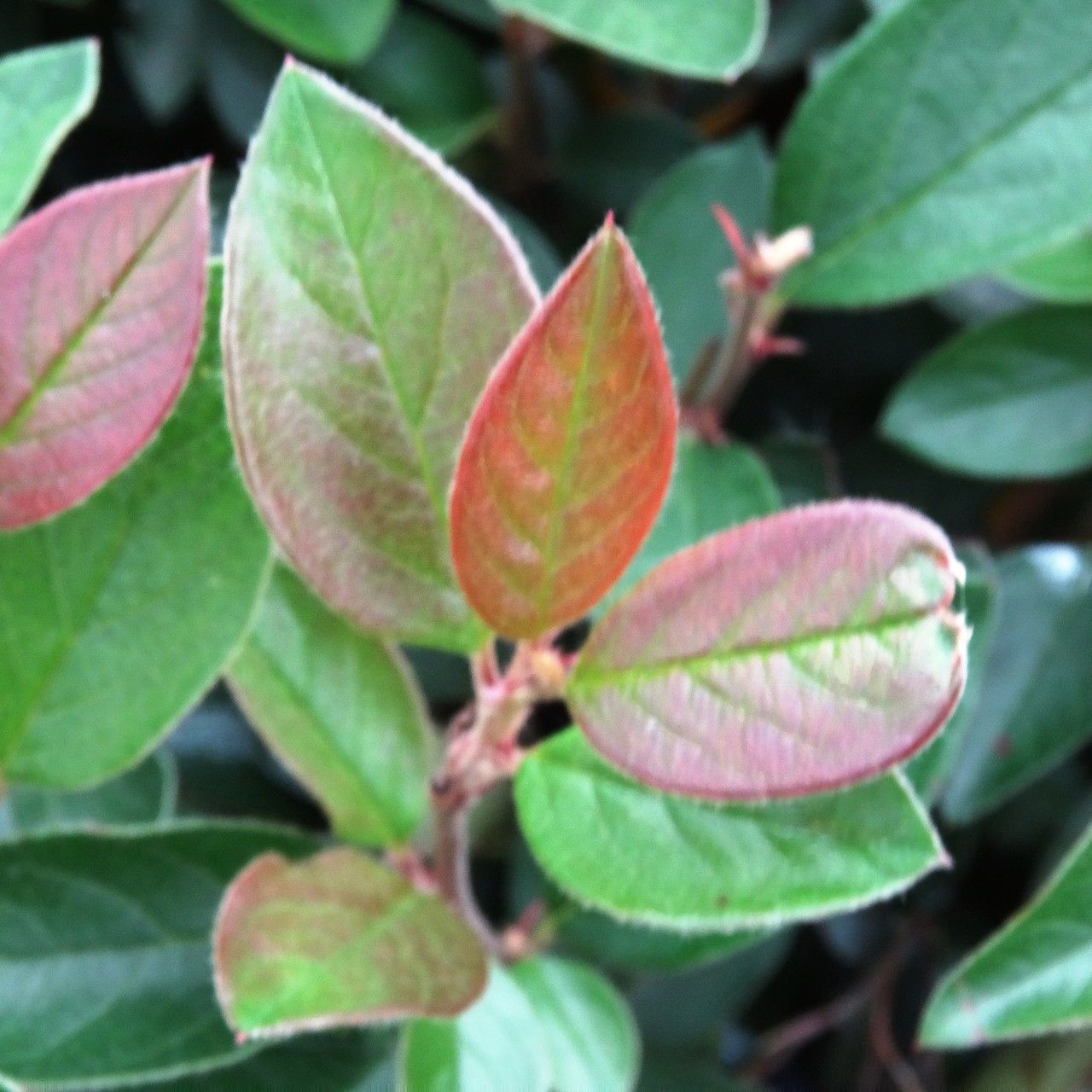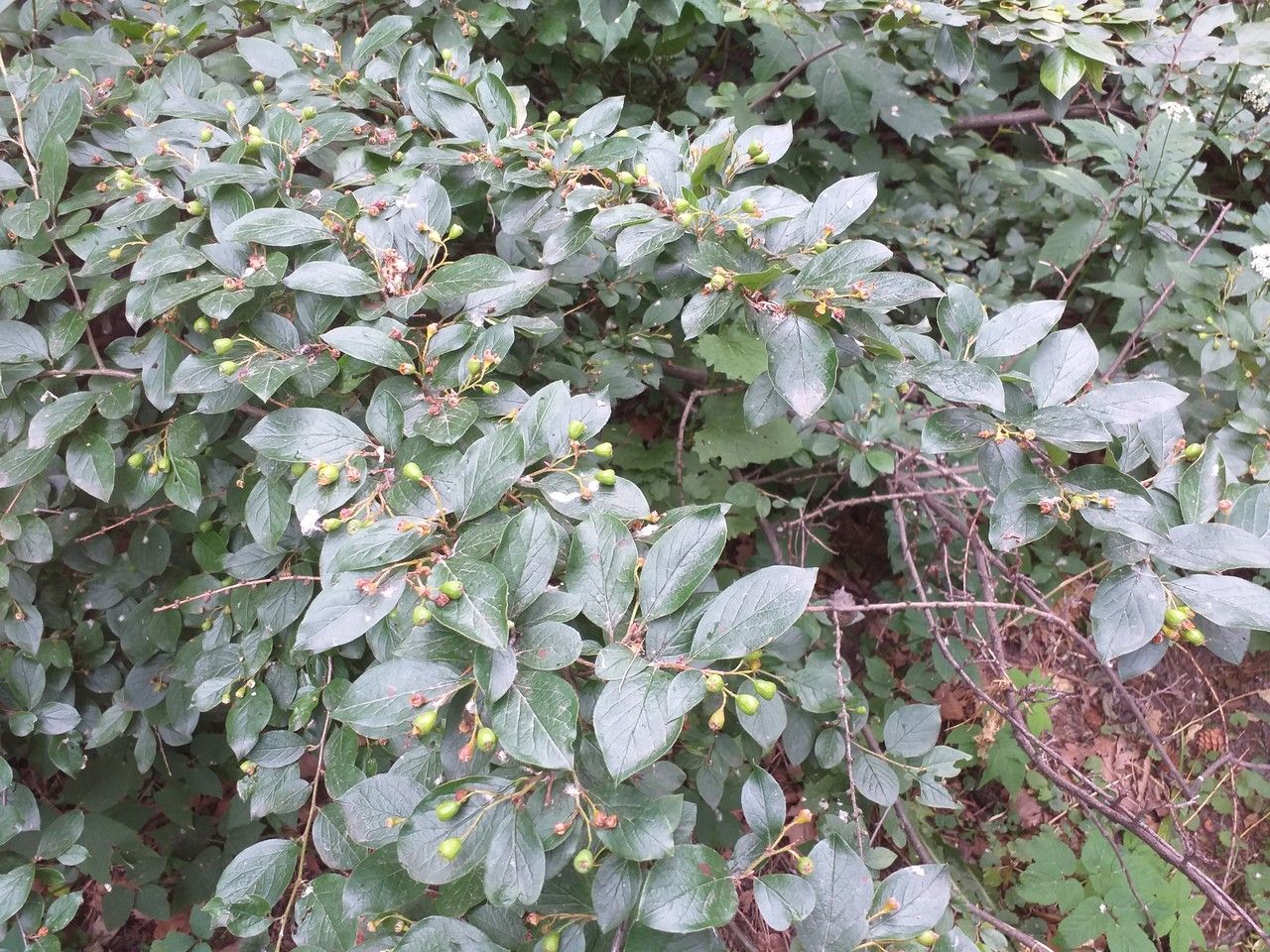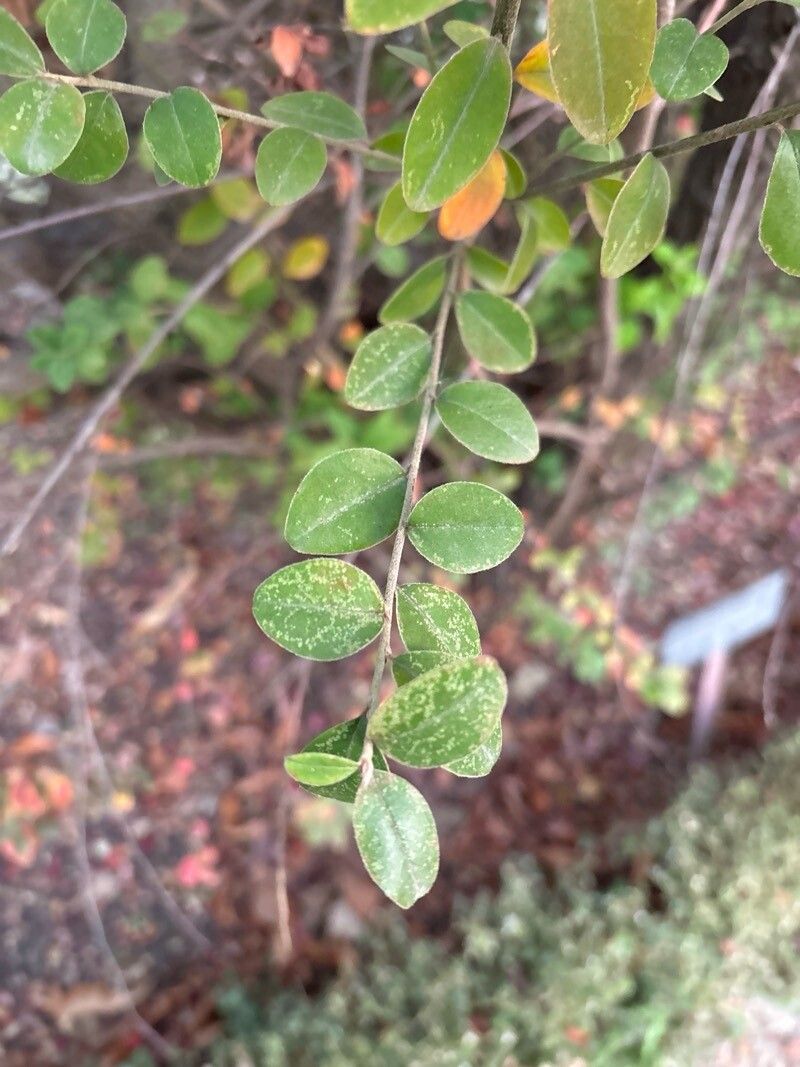
Cotoneaster coriaceus is a deciduous shrub belonging to the Rosaceae family. Native to China, it can reach a height of up to 3 meters. This plant features a dense, spreading habit with arching branches adorned with glossy, dark green leaves. During spring, it produces small white or pink flowers, which are followed by bright red berries in the fall.
Cotoneaster coriaceus is highly regarded as an ornamental plant because of its appealing foliage and vibrant berries. It can be used effectively as a hedge or as an accent plant in gardens and landscapes. The shrub thrives in well-drained soil and full sun but can also tolerate partial shade.
The plant requires minimal maintenance, though occasional pruning may be needed to maintain its shape and size. It is relatively pest-resistant but may be susceptible to fire blight disease.
Overall, Cotoneaster coriaceus is an excellent choice for gardeners seeking an attractive shrub with year-round interest that demands minimal care.
Milkflower cotoneaster shows strong resistance to disease and is usually not susceptible to illnesses. Regarding care, this plant is fairly low-maintenance. When grown outdoors it needs only minimal watering, and larger specimens typically do not require pruning. However, smaller plants should be trimmed after they have finished blooming. Milkflower cotoneaster is well suited for anyone with an outdoor area, such as a garden or a deck, and does not demand much gardening experience.
How to keep Cotoneaster Coriaceus.
Light
Milkflower cotoneaster prefers sunlight for most of the day. It can also do well in sites that receive a moderate amount of sun. Originating from a naturally sunny habitat, it will not thrive if sunlight is either too low or too intense. Steady sun exposure is important for its strong growth.
Water
The milkflower cotoneaster is a plant that thrives in dry areas due to its drought tolerance and ability to store water efficiently. It only needs to be watered every 2-3 weeks, making it an excellent choice for outdoor landscapes focused on water conservation, such as xeriscaping or rock gardens.
Temperature
Milkflower cotoneaster originates from habitats with temperatures between 32 and 77 °F (0 to 25 °C). It favors cooler climates, and during seasonal fluctuations it may need extra care to preserve ideal temperature conditions.
Fertilizer
Timing is essential for feeding Milkflower cotoneaster. Apply fertilizer in early spring and continue monthly until early summer. Fertilizer promotes attractive blooms and supplies energy during both dormant and active growth phases.
Pruning
The Milkflower Cotoneaster is known for its glossy leaves and clusters of white flowers. To maintain a healthy plant, prune it between early and late winter. This will help remove dead branches, shape the plant for better airflow, and encourage growth and flowering. Always use sanitized tools and prune conservatively to minimize stress and prevent disease. For the best results, consult horticultural guidelines and follow recommended practices.
Toxicity
Cotoneaster coriaceus is mildly toxic to humans. The fruit is poisonous and can cause gastroenteritis, but a large quantity would need to be eaten to have this effect.
Further reading →
The toxicity and danger assessments provided are for reference only. We do not assure their accuracy, so it's crucial not to depend on them. Seek professional advice when necessary for accurate guidance.
Botanical profile.
- Plant Type
- Shrub
- Life Cycle
- Perennial
- Genus
- Cotoneaster
- Family
- Rosaceae
- Hardiness Zone
- 3-6
- Mature Height
- 0.91 m to 3.96 m
- Mature Spread
- 3.96 m
- Leaf Color
- Green, White, Gray
- Leaf Type
- Evergreen
- Flower Color
- White
- Flower Size
- 4.06 cm to 6.35 cm
- Bloom Time
- Late spring, Early summer
- Planting Time
- Spring, Summer
- Harvest Time
- Mid summer, Late summer
- Native Area
- China
Other names.
Reader questions.
How should I water my Milkflower cotoneaster plant?
Watering your Milkflower cotoneaster is quite flexible, as it can be done using various common tools like watering cans, hoses, or even cups. When watering, it is important to apply the water directly to the soil and ensure equal moisture for all areas. It is recommended to use filtered water to avoid harmful particles and water that is at or slightly above room temperature to prevent shocking the plant. However, the Milkflower cotoneaster generally responds well to any water you give it.
Why do I have to put fertilizer on my Milkflower cotoneaster?
No matter which type of Milkflower cotoneaster you have, regularly fertilizing it will promote overall health. By providing the proper nutrients, your plant will experience stronger growth and increased resilience to difficult conditions, as well as improved ability to combat diseases and pests. The foliage of your Milkflower cotoneaster is particularly attractive, so it's important to maintain it. To achieve this, establish and stick to a specific fertilization schedule for your Milkflower cotoneaster. This will result in vibrant leaves with deep colors and a lush appearance.
What are the sun requirements for Milkflower cotoneaster?
Milkflower cotoneaster requires full sun exposure for optimal growth, thriving in environments where it can enjoy more than 6 hours of direct sunlight daily. It is also adaptable to partial sun conditions, where it can grow with about 3-6 hours of sunlight. Observing the movement of sunlight through your garden and choosing spots that offer a good balance of light and shade will ensure the best conditions for your Milkflower cotoneaster.
What is the native climate for Milkflower cotoneaster?
Milkflower cotoneaster, botanically named Cotoneaster coriaceus, is native to environments where temperatures vary between 32 to 77 °F (0 to 25 °C). It thrives in cooler climates and requires additional care during seasonal temperature fluctuations to maintain ideal conditions. Despite its high cold tolerance and not needing extra frost protection in winter, it is advisable to water the plant generously before the first freeze of autumn to keep the soil moist and prevent drought and water scarcity during winter and early spring.
What should I do if I give my Milkflower cotoneaster plant too much or too little water?
Outdoor plants, especially newly planted ones or seedlings, are prone to lack of watering. It is important to water enough for a few months while the tree is still small or newly planted. Once the roots are established, Milkflower cotoneaster can rely on rain for most of its water needs. When your Milkflower cotoneaster is planted in pots, overwatering is more likely to happen. If you accidentally overwater your plant, there are steps you can take to remedy the situation. First, stop watering the plant immediately to minimize the impact of overwatering. Then, remove the plant from its pot to inspect the roots. If you find no signs of root rot, you can return the plant to its container. However, if there is root rot, trim away the affected roots and consider applying a fungicide to prevent further damage. Lastly, repot the Milkflower cotoneaster in well-draining soil. In the case of underwatering, simply water the Milkflower cotoneaster more frequently. Underwatering is usually an easy problem to fix. If leaves are drooping, drying out, or falling off, water the plant adequately and the leaves will quickly regain their fullness. It is important to correct your watering frequency as soon as you notice signs of underwatering.
When should I fertilize my Milkflower cotoneaster plant?
To ensure healthy growth, it is recommended to fertilize your Milkflower cotoneaster for the first time in late winter or early spring. This provides the necessary nutrients for its growth once the weather warms up. In warm climate regions, it is beneficial to provide an additional fertilizer feeding in early fall. This not only adds nutrients for the following growing season but also helps the plant survive winter without damage. Fertilizing earlier will give the new branches enough time to grow and withstand the cold.
What are the essential light conditions for Milkflower cotoneaster?
Milkflower cotoneaster flourishes under full sun to partial sun conditions, originating from environments abundant in sunlight. It requires consistent sunlight for robust growth and may not develop as expected if exposed to either too low or excessively high sunlight. In cases where natural sunlight is insufficient, especially during winter or in less sunny locations, artificial lighting such as LED lights can provide the necessary wavelengths of light. For indoor plants, ensure 30-50W/sq ft of artificial light for full sun plants, 20-30W/sq ft for partial sun plants, and 10-20W/sq ft for full shade plants while positioning the light source 12-36 inches above the plant and mimicking natural daylight hours, typically 8-12 hours per day.
How does Milkflower cotoneaster react to low temperatures?
Milkflower cotoneaster is extremely cold-tolerant and can withstand winter temperatures above -35°C without any noticeable damage during the cold months. However, if temperatures fall below this threshold, the branches may become brittle and dry by spring, failing to produce new shoots. The recommended solution for this condition is to prune away any dead branches in spring that have failed to produce new leaves.
How much water does my Milkflower cotoneaster need?
Most outdoor plants can be sustained with natural rainfall. However, if your area receives limited rainfall, it's important to water your plants adequately. During spring and fall, watering every two weeks should suffice. In the summer, more frequent watering is required, while in winter, when growth slows down, less water is needed. In fact, you may not need to water at all during winter. If you have a young or newly planted Milkflower cotoneaster, it's essential to water it more frequently initially to help it establish and grow into a resilient and drought-tolerant plant. For potted Milkflower cotoneasters, there are two main approaches to determine watering frequency. The first is to follow a set schedule, such as once every week or once every other week. However, this method may not account for the specific conditions of your plant's environment. Alternatively, you can gauge watering frequency based on soil moisture. It's generally best to wait until the top two to four inches of soil have completely dried out before providing more water. Keep in mind that during summer, when the plant's water needs are highest, a predetermined schedule may not be sufficient.
When should I not put fertilizer on my Milkflower cotoneaster?
There are specific times throughout the year when it's best not to fertilize your Milkflower cotoneaster. The first instance is during the early and mid-winter when the plant is dormant and doesn't require any feeding. Additionally, it's not recommended to fertilize this plant in late spring and throughout the summer. During this time, the weather is generally hotter and drier, which can negatively affect the plant's response to fertilization. To prevent any problems, it's advisable to stick to a fertilization schedule that involves feeding only in early spring and early fall.
What symptoms indicate light deficiency or too much sunlight in Milkflower cotoneaster?
Symptoms of light deficiency in Milkflower cotoneaster include smaller new leaves, leggy or sparse growth, faster leaf drop, reduced or halted growth, and pale or irregularly colored new leaves. Excessive sunlight can cause chlorosis (yellowing leaves from chlorophyll breakdown), sunscald (pale or necrotic areas on tissue), leaf curling (to minimize water loss), wilting (from loss of turgor pressure), and leaf scorching (brown, dry edges indicating damage). These symptoms reflect the plant's struggle with improper light levels and are critical signs to adjust your plant care routine.
What should I do if Milkflower cotoneaster experiences high temperatures?
Milkflower cotoneaster is susceptible to damage from high temperatures exceeding 25°C, potentially leading to significant leaf drop or, in severe cases, the death of the plant. To manage heat stress, trim away any sunburned and dried-up parts of the plant. Relocate it to a spot with shade during the midday and afternoon sun or use a shade cloth. Ensuring the plant is watered in the morning and evening will help keep the soil moist and reduce temperature-related stress.