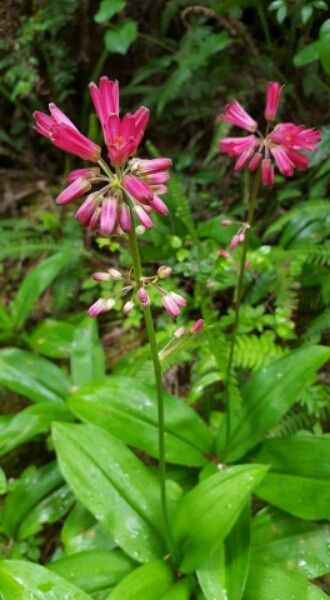
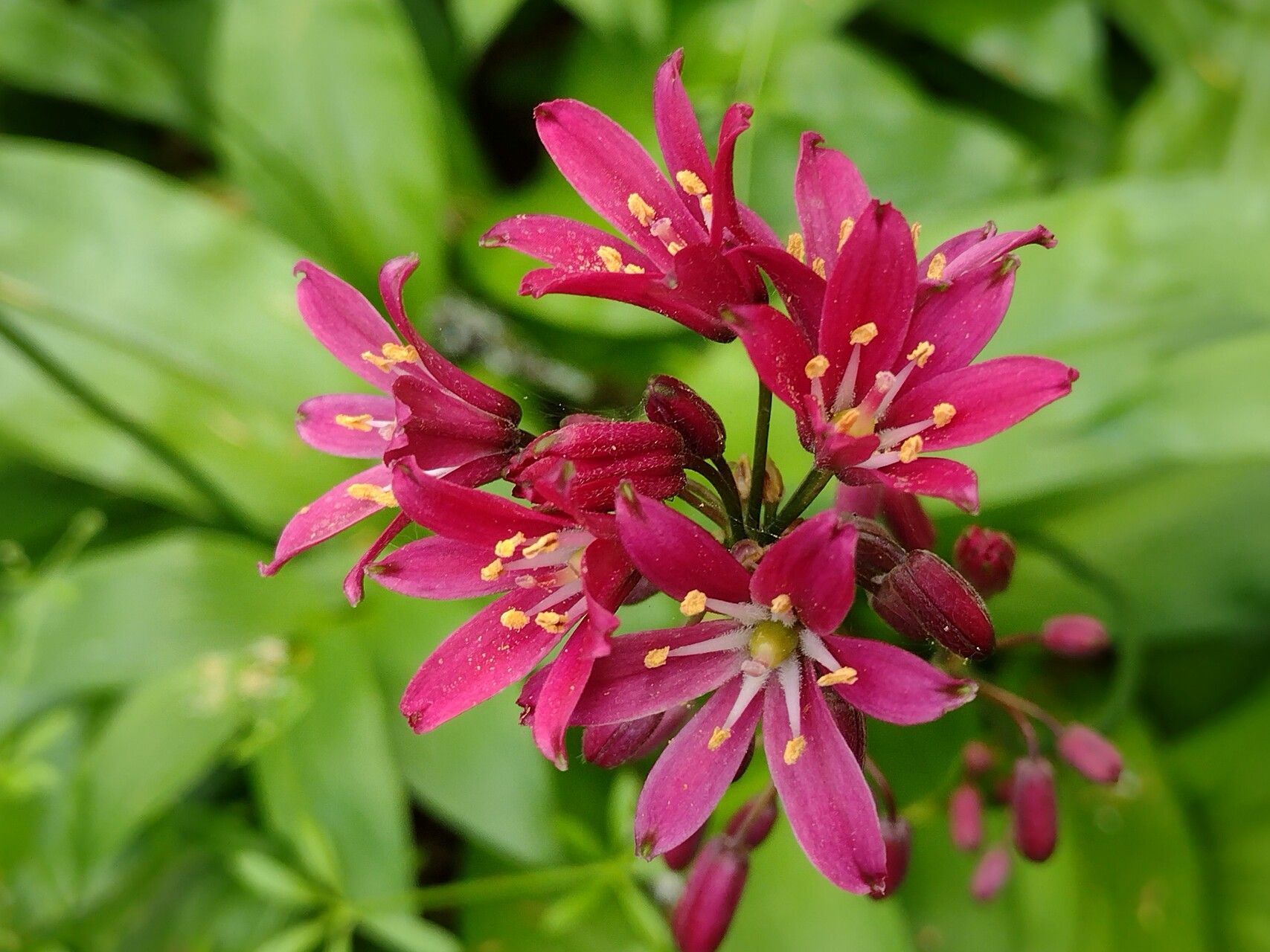
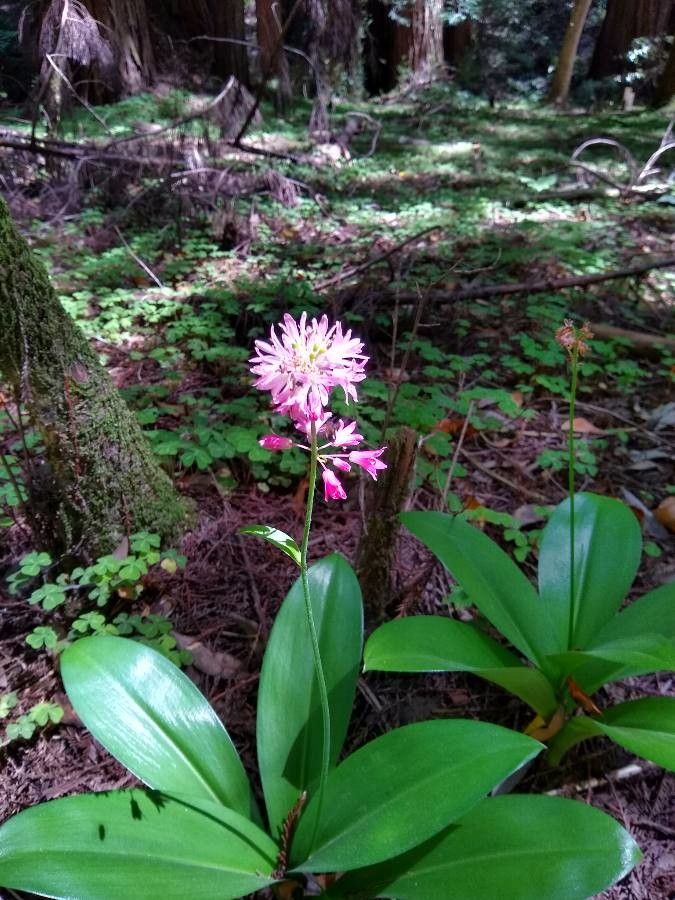
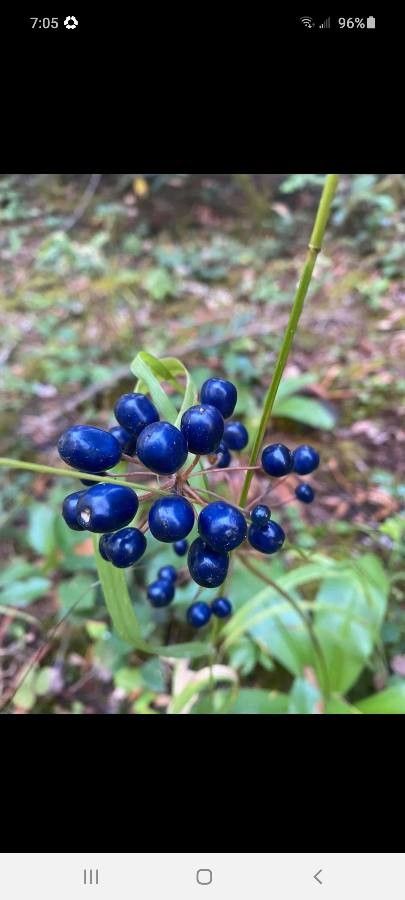
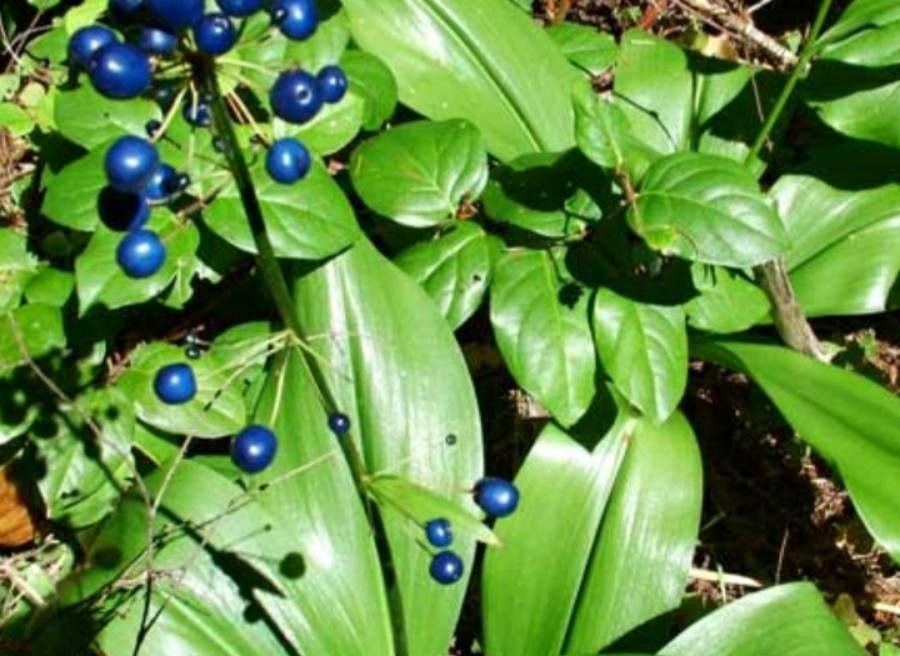
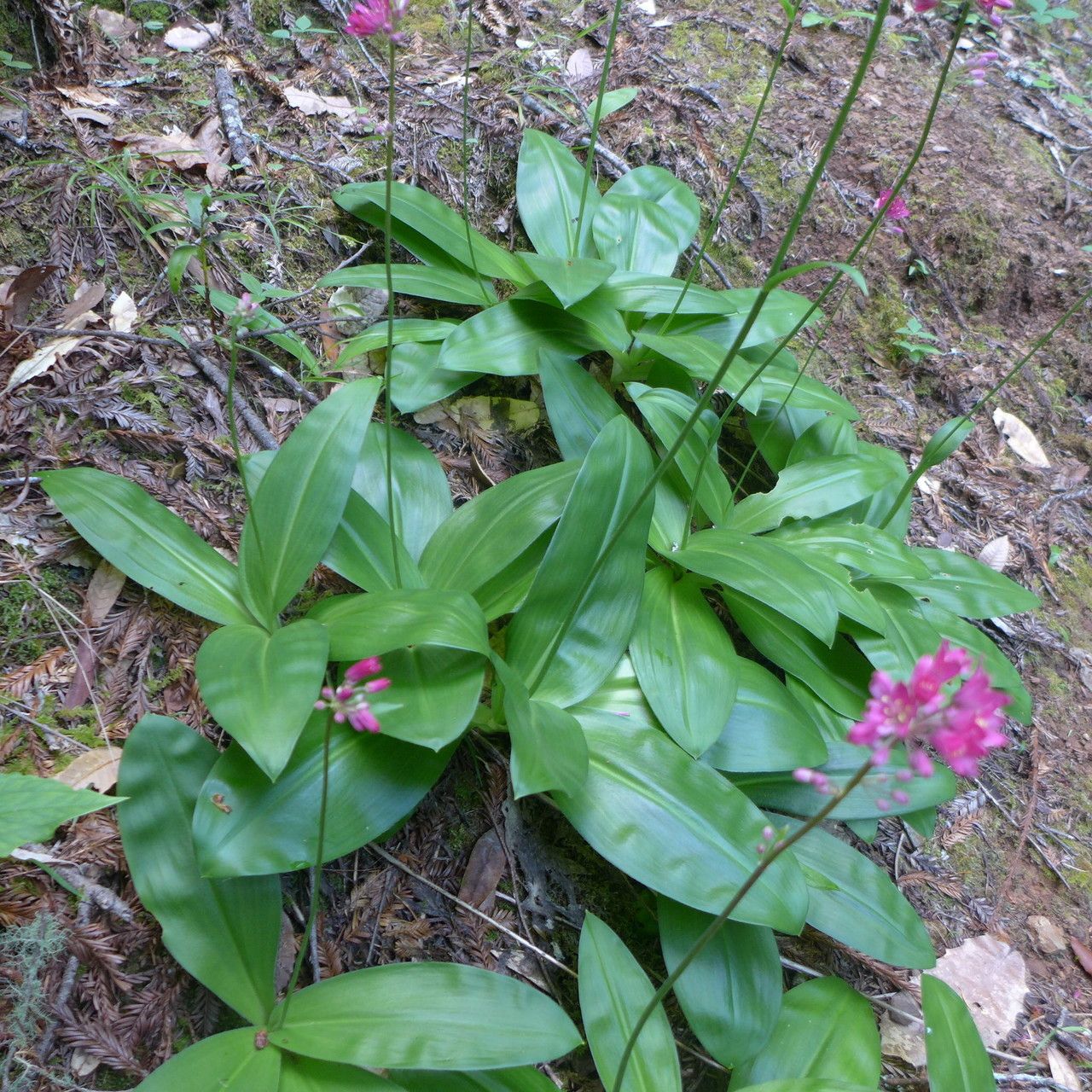
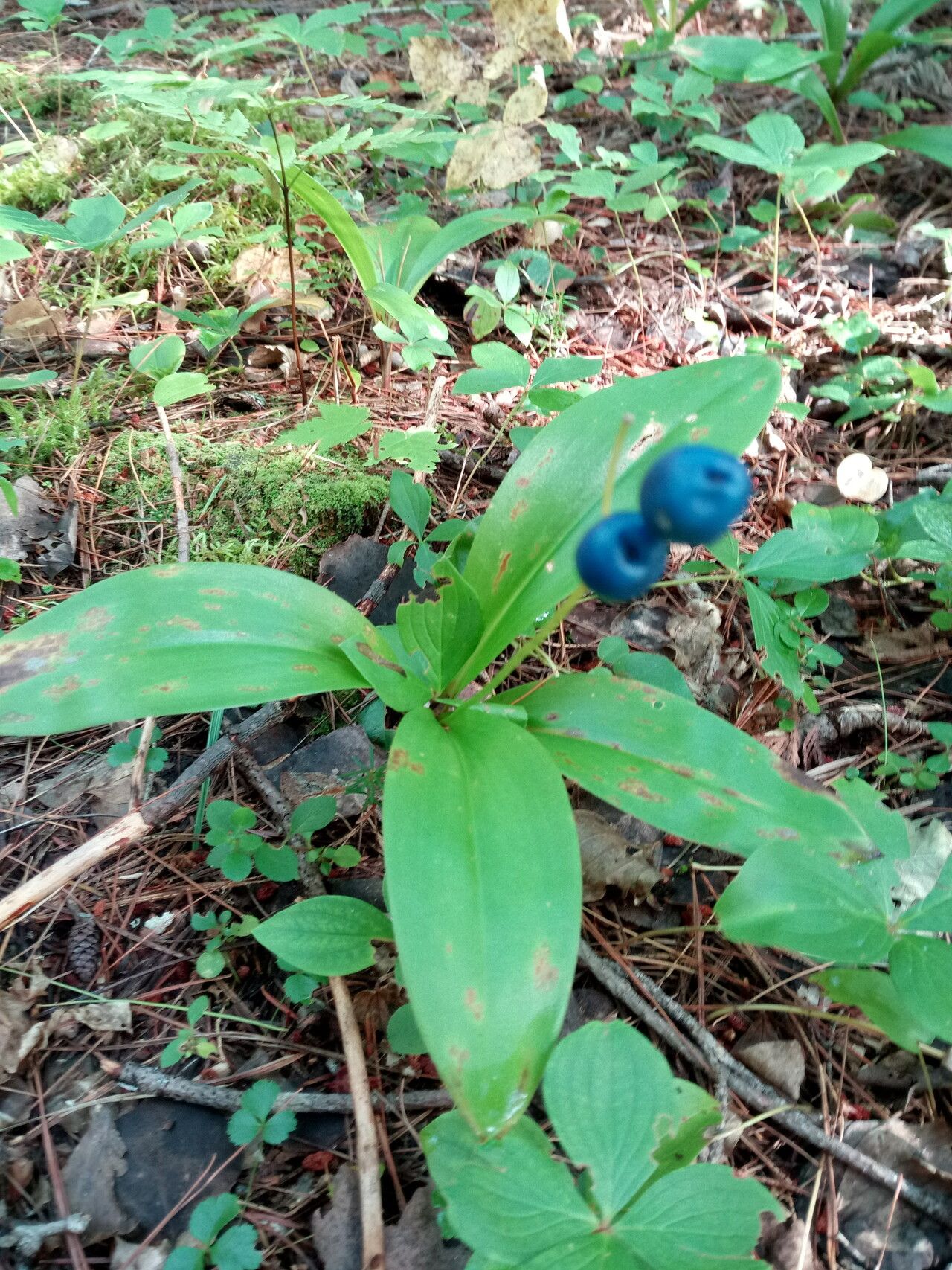
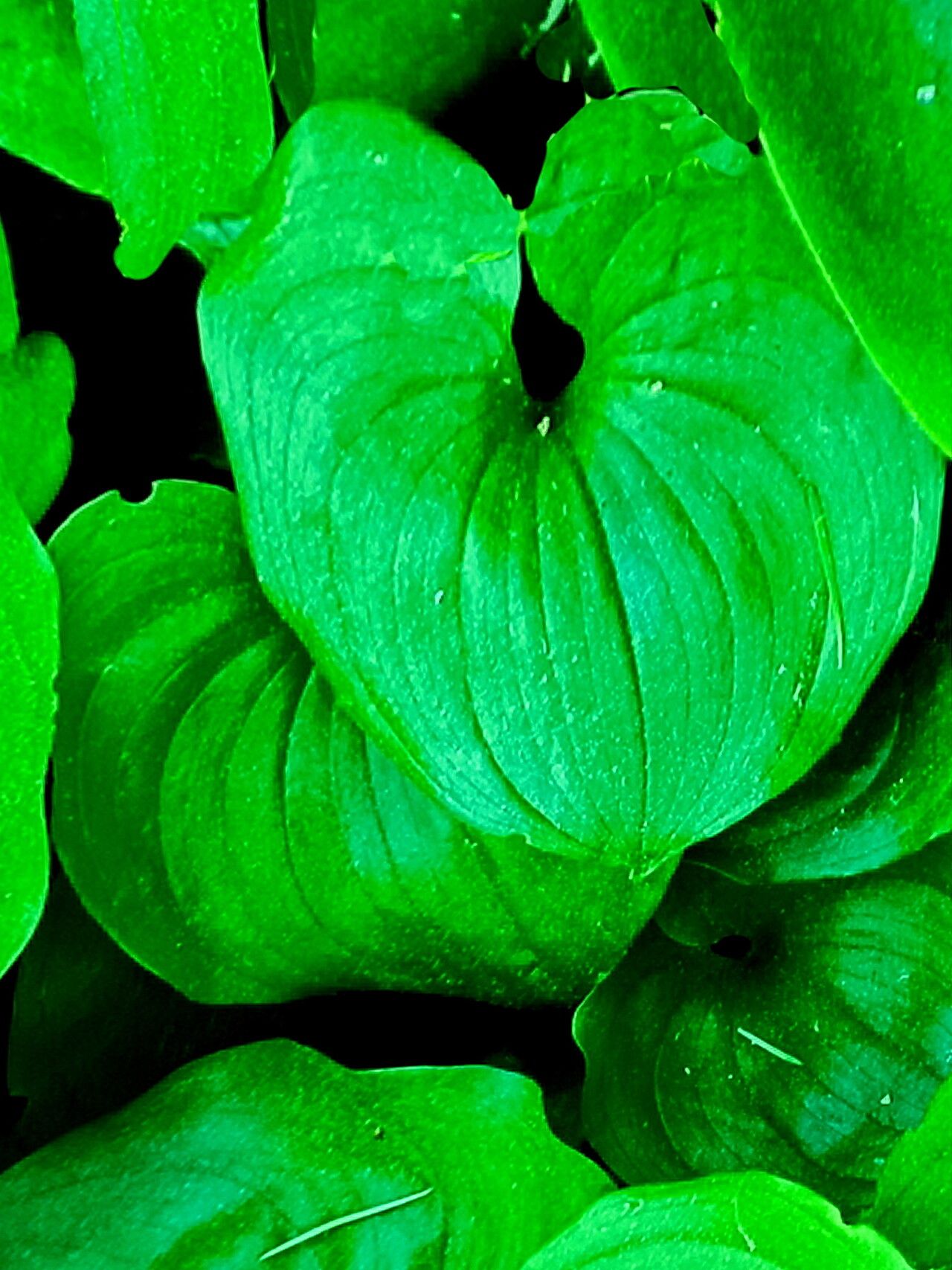
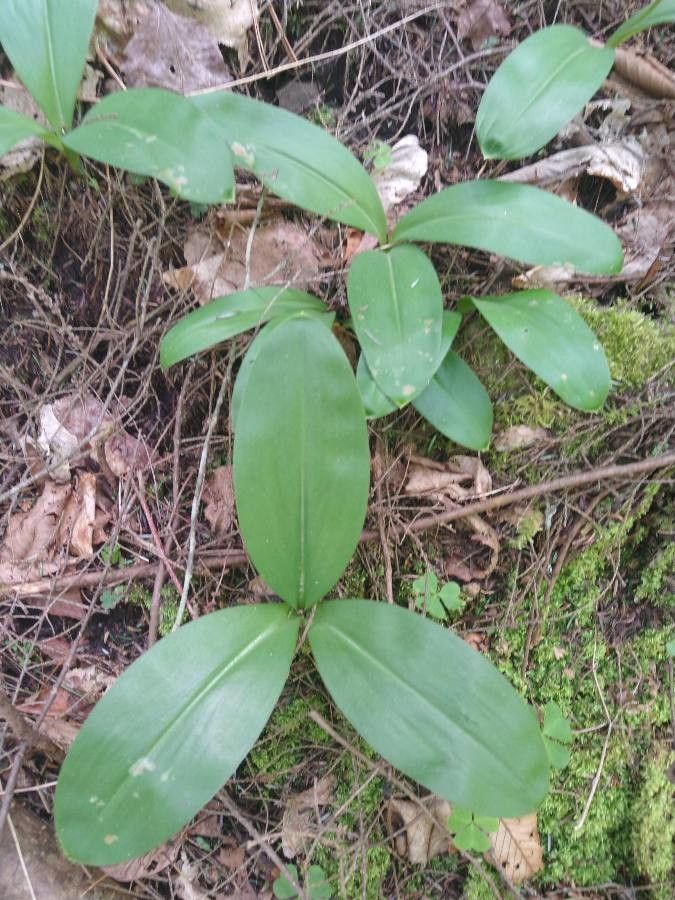
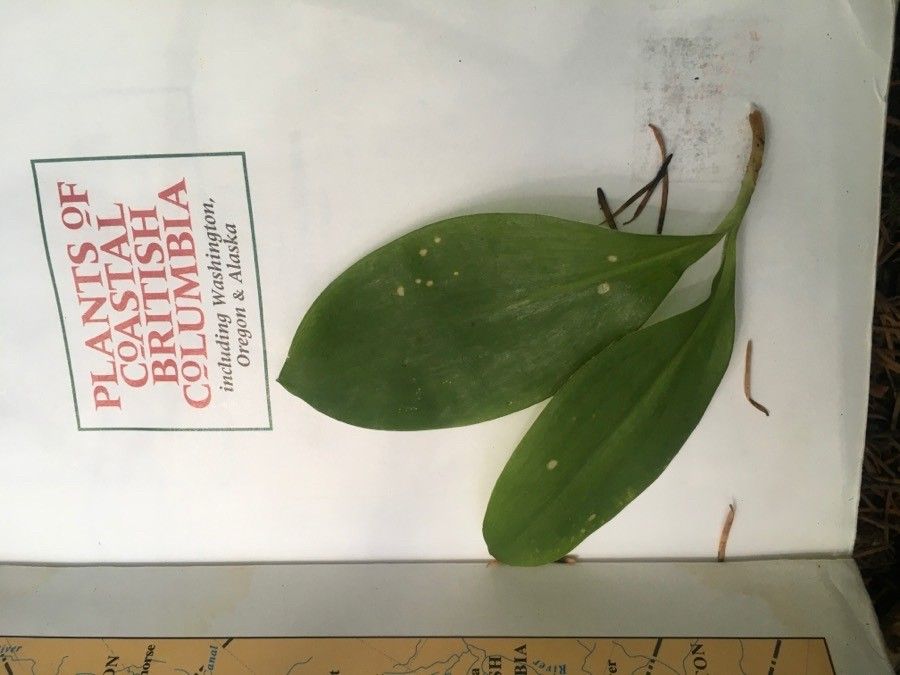
Clintonia andrewsiana, commonly known as Andrews' clintonia or the western bluebead lily, is a perennial herbaceous plant native to the western United States. It belongs to the Asparagaceae family and is distinguished by its glossy, dark green leaves that form a basal rosette. In late spring or early summer, the plant produces tall stalks topped with clusters of small white or pale green flowers. These flowers are succeeded by blue-black berries that resemble beads. Although the berries are edible, they are not typically consumed.
Clintonia andrewsiana thrives in moist, shaded areas such as forests and stream banks at elevations ranging from 1,500 to 8,000 feet. It serves as a crucial food source for wildlife, including deer and bears, which feed on its leaves and berries.
Native American tribes have utilized this plant for medicinal purposes, employing it to treat various ailments, including stomachaches, headaches, wounds, and infections.
Due to its attractive foliage, Clintonia andrewsiana is also a popular ornamental plant. However, it requires specific growing conditions to thrive, including well-drained soil rich in organic matter.
Andrew's clintonia has strong disease resistance and is generally not susceptible to illnesses. However, it can be vulnerable to pests and diseases present in its environment. These infections are generally mild. Regarding care, this plant needs a moderate level of maintenance. It should be pruned regularly to maintain an attractive appearance and healthy growth. Fertilizing can also help encourage flowering. Andrew's clintonia is appropriate for anyone with an outdoor area, such as a garden or patio, and does not demand much care experience. It may require more attention when kept indoors.
How to keep Clintonia Andrewsiana.
Light
Andrew's clintonia is native to habitats such as forest understories or rocky areas that offer natural shade. It prefers full shade but can tolerate partial sun.
Water
Andrew's Clintonia thrives in moist, shaded environments, needing consistent soil moisture and stable humidity. To mimic its natural habitat, it is essential to water it weekly. In outdoor gardens, mulching can help retain moisture, simulating the forest floor conditions where it originally grows.
Temperature
Andrew's clintonia is a plant native to temperate regions and prefers temperatures between 41 and 89.6°F (5 and 32°C). Adjusting temperatures as the seasons change to mimic its natural habitat can help support its growth.
Fertilizer
The best time to fertilize an Andrew's clintonia is in early spring, as it comes out of dormancy and begins active growth. Fertilization supplies essential nutrients needed for healthy development. While Andrew's clintonia has relatively low fertilizer requirements, applying fertilizer annually can improve its survival and encourage better, longer-lasting flowers.
Pruning
Andrew's clintonia features broad, glossy leaves and bell-shaped flowers. To ensure optimal growth, it is best to prune the plant from early to late spring after the last frost. Start by removing dead leaves to improve air circulation and trimming away spent flowers to encourage new growth. Gentle pruning helps maintain the plant's health and enhances its appearance, leading to vibrant blooms.
Botanical profile.
- Plant Type
- Herb
- Life Cycle
- Perennial
- Genus
- Clintonia
- Family
- Liliaceae
- Hardiness Zone
- 4-8
- Mature Height
- 30 cm to 61 cm
- Mature Spread
- 23 cm
- Leaf Color
- Dark Green
- Leaf Type
- Semi-evergreen
- Flower Color
- Pink
- Flower Size
- 1.02 cm to 1.78 cm
- Bloom Time
- Mid spring, Late spring
- Planting Time
- Spring
- Harvest Time
- Mid summer, Late summer
Other names.
Reader questions.
What should I do if I give too much or too little water to my Andrew's clintonia plant?
Overwatering is a common issue for Andrew's clintonia and can cause wilting and yellowing of the stems and leaves. It can also lead to diseases like root rot, mold, and mildew, which can be fatal for the plant. Underwatering is less common but can cause the leaves to become brittle and brown. It's important to recognize the signs of overwatering early and reduce watering immediately. If the soil doesn't drain well, replace it with a loose, well-draining potting mix. If signs of underwatering are present, simply increase the watering frequency until the signs go away.
Why should I put fertilizer on my Andrew's clintonia plant?
The leaves of the Andrew's clintonia are essential for its structure, and fertilization is a key way to make sure these leaves not only look great but also function well. Proper fertilization will support consistent leaf color and a healthy texture. Additionally, fertilization goes beyond the surface, as it helps the plant develop new roots and maintain existing roots below the soil. This means that fertilization not only keeps your plant healthy in the present, but also improves its ability to absorb nutrients from the soil in the future.
What are the sunlight requirements for Andrew's clintonia?
Andrew's clintonia thrives in environments that closely mimic its natural habitat, such as forest understories or rocky areas which provide natural shade. It prefers full shade, meaning it thrives with less than 3 hours of sunlight daily, but can also tolerate partial sun, receiving about 3-6 hours of sunlight. It's important to observe how sunlight moves through your garden to find spots that offer the right balance of light and shade to ensure the plants' health and happiness.
What is Andrew's clintonia and where does it originally come from?
Andrew's clintonia, botanically known as Clintonia andrewsiana, is a plant native to temperate climates. It thrives in temperatures ranging from 41 to 89.6°F (5 to 32°C), indicating its preference for milder weather conditions typical of its original habitat.
How many times do I need to water my Andrew's clintonia plant?
If your Andrew's clintonia plant is in a pot, the most precise way to determine if it needs water is to stick your finger in the soil. If the top two to three inches are dry, it's time to water. If you have your Andrew's clintonia planted outdoors, you can use the same method to test the soil. When the top few inches of soil are dry, it's time to water. In the spring and early fall, you'll typically need to water about once a week using this method. However, during hot weather, you may need to water twice a week or even more. It's important to note that mature, well-established Andrew's clintonia plants can tolerate drought well.
When should I put fertilizer on my Andrew's clintonia plant?
If you plant your Andrew's clintonia outdoors, it will start growing new leaves in early spring. This is the signal to start fertilizing for the year. Usually, one application of fertilizer is enough for your Andrew's clintonia to thrive in the spring. However, if you want to maximize its growth, you can fertilize it multiple times during spring and early summer. In this case, you can feed your Andrew's clintonia once every month to a month and a half.
How can artificial lighting be used for Andrew's clintonia?
Indoor plants, including Andrew's clintonia, require adequate lighting, especially when natural sunlight is insufficient. This is common in winter or in less sunny indoor spaces. Artificial lights are a vital solution, promoting healthier and faster growth. LED lights are preferable for indoor plant lighting because they can provide specific wavelengths needed by plants. Full sun plants require 30-50W/sq ft, partial sun plants need 20-30W/sq ft, and full shade plants like Andrew's clintonia need 10-20W/sq ft of artificial light. The light source should be placed 12-36 inches above the plant to mimic natural sunlight, ensuring plants receive 8-12 hours of light per day.
How should the temperature be adjusted for Andrew's clintonia as seasons change?
To support the growth of Andrew's clintonia, it's beneficial to adjust temperatures to replicate its native temperate habitat as seasons change. The plant has strong cold resistance and does not usually require special frost protection measures during winter unless temperatures are expected to drop below -30°C. In anticipation of the first freeze in autumn, it's recommended to water the plant abundantly, ensuring the soil is moist and enters a frozen state to prevent drought and water scarcity during winter and early spring.
How much water does my Andrew's clintonia plant need?
When watering your Andrew's clintonia, don't be shy about giving it a generous amount of water. Make sure the top two to three inches of soil are dry before watering, and then thoroughly soak the soil. It's important to add enough water so that it flows out of the drainage holes at the bottom of the pot. If you don't see excess water draining, it means you haven't watered enough. However, be cautious not to let water accumulate in the soil, as this can be harmful to the plant. On the other hand, if water is not draining properly, it may indicate poorly draining soil, which is not good for the plant's health. If the plant is outdoors, about 1 inch of rain per week is sufficient.
When is the best time to not give fertilizer to my Andrew's clintonia?
During late fall and winter, your Andrew's clintonia goes dormant and stops producing new growth. During this time, it's best not to fertilize it. In spring and summer, if you choose to fertilize, start reducing the amount as summer approaches because the growth rate of your Andrew's clintonia will slow down. In general, it's not recommended to fertilize your Andrew's clintonia when the weather is unseasonably hot or when the soil is very dry. Fertilizing in these conditions can stress the plant and cause it to die prematurely.
What are the symptoms of insufficient light in Andrew's clintonia?
When Andrew's clintonia is grown indoors or in conditions where it receives insufficient light, it may show several subtle symptoms. These include smaller than usual new leaves, leggy or sparse growth due to longer spaces between leaves or stems, early leaf drop to conserve resources, delayed or halted growth indicating the plant is in survival mode, lighter colored or irregularly patterned new leaves due to lack of chlorophyll, and signs of chlorosis where leaves turn yellow. Overexposure symptoms can include sunscald, leaf curling as a defense mechanism against too much light, wilting from increased water loss, and leaf scorching characterized by crispy leaf edges.
What should be done if Andrew's clintonia experiences temperatures below its tolerance level?
Andrew's clintonia is cold-tolerant and best thrives when temperatures remain above 5°C. In winter, it should be protected to ensure it stays above -25°C. If temperatures fall below -30°C, though there may not be noticeable changes during winter, sprouting may decrease or not occur in spring. In such cases, remove any parts of the plant that have failed to sprout in spring as a solution.