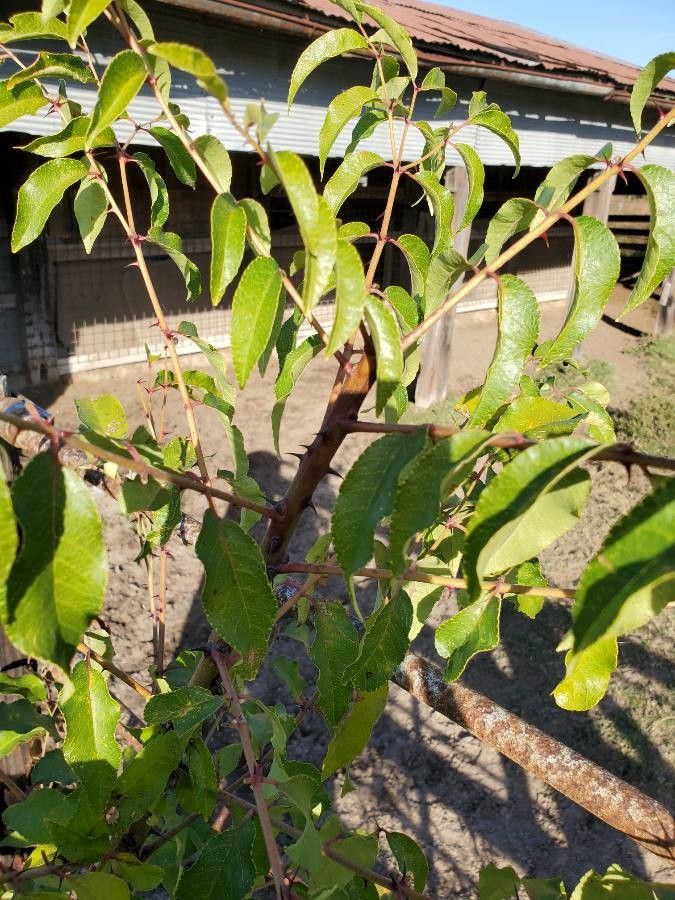
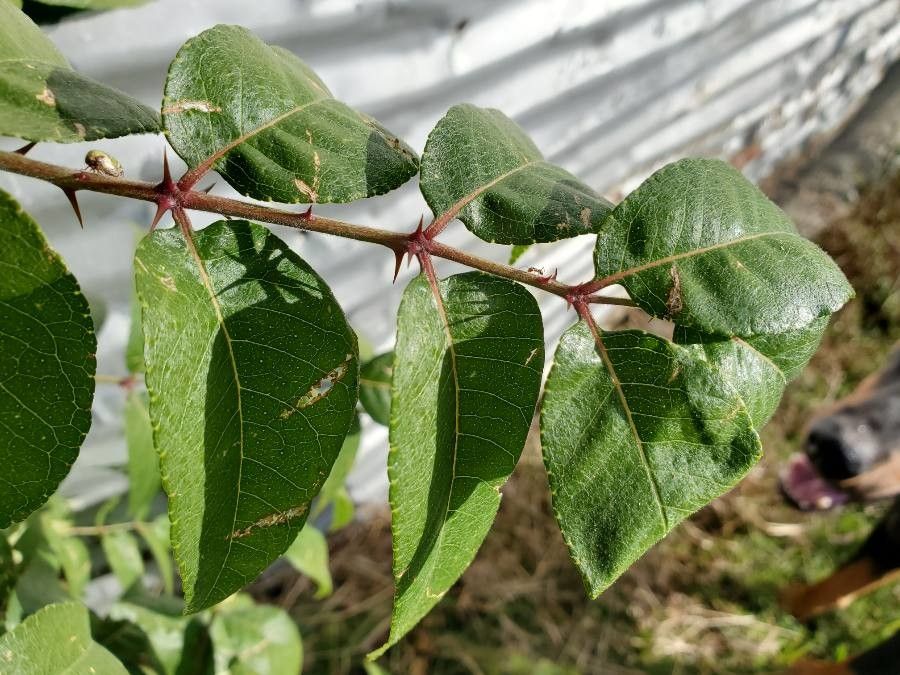
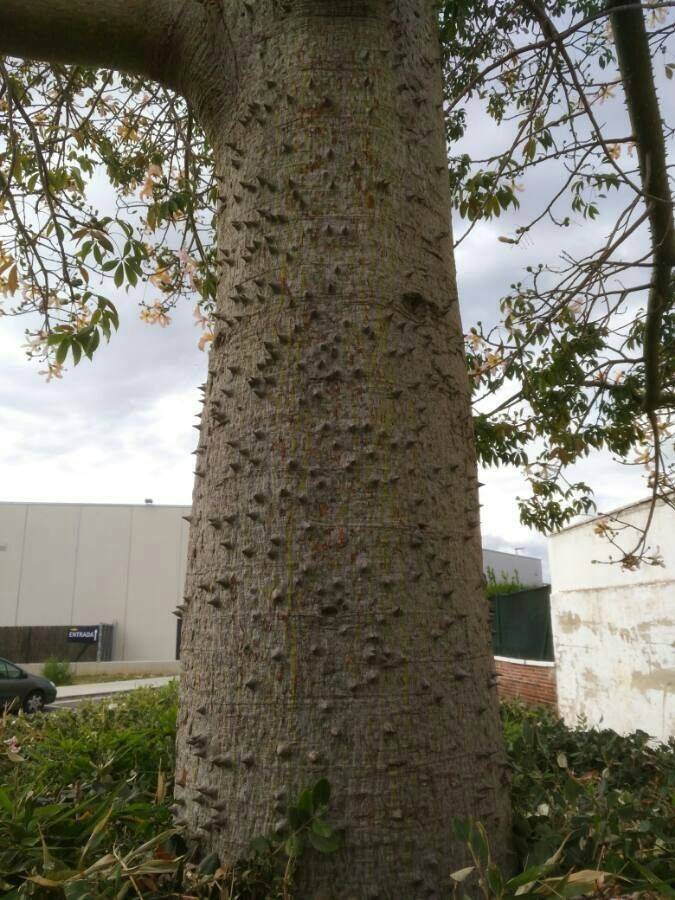
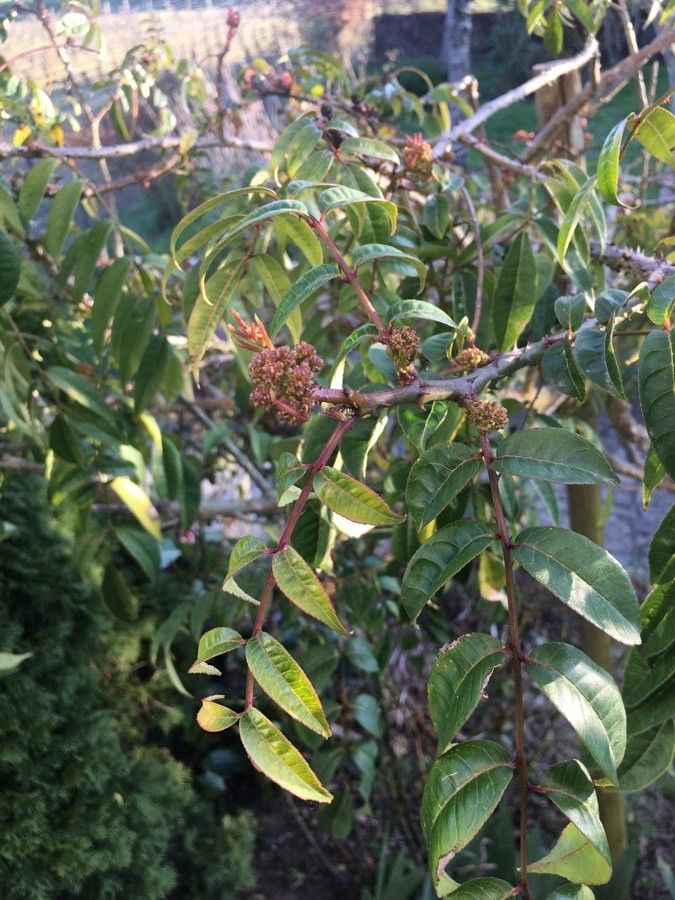
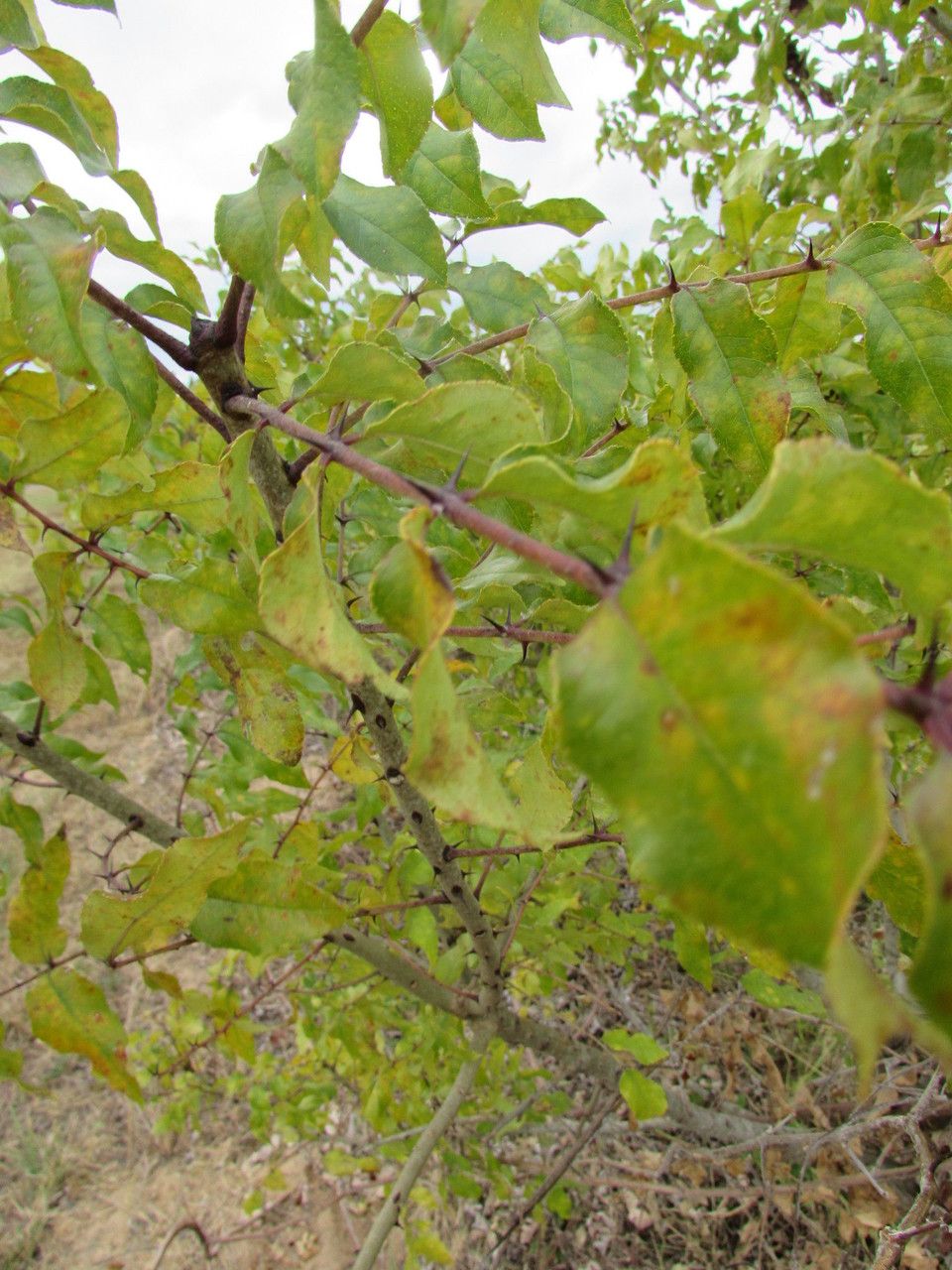
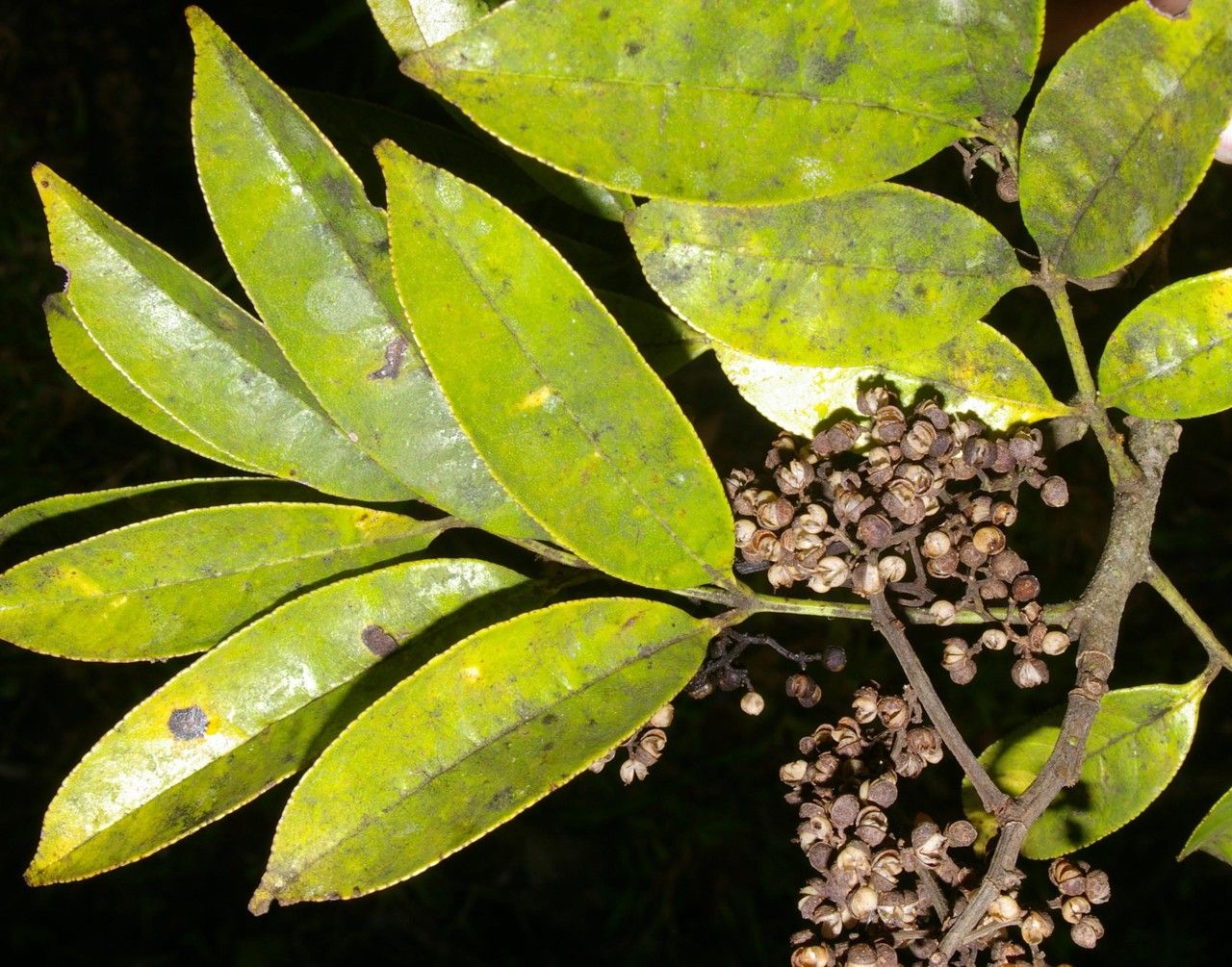
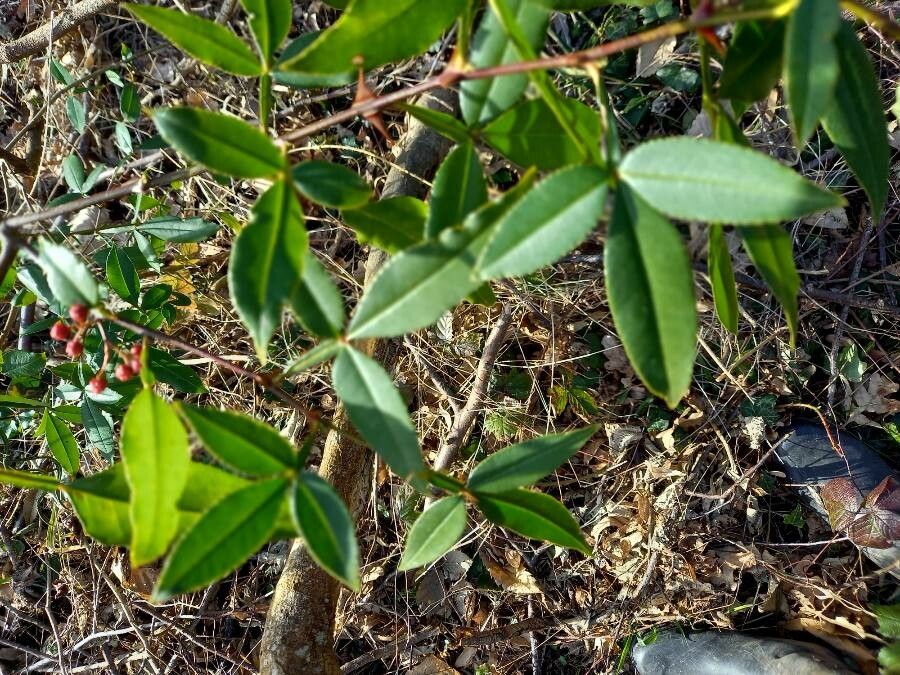
Zanthoxylum clava-herculis, commonly known as Hercules' club or southern prickly ash, is a deciduous shrub or small tree native to the southeastern United States. Typically reaching heights of 20–30 feet, it features a broad, spreading crown. The tree’s bark is grayish-brown and covered in sharp thorns.
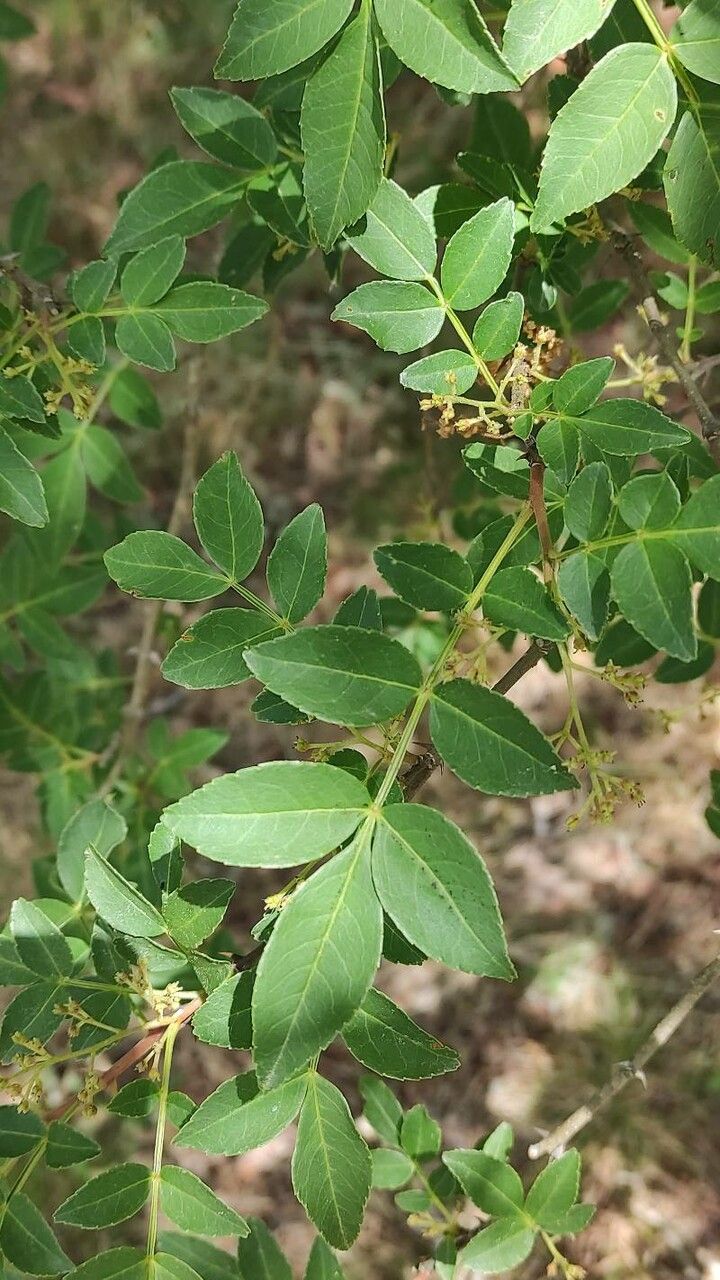
The leaves of Zanthoxylum clava-herculis are compound and arranged alternately, each consisting of 5–11 ovate leaflets with serrated edges. These dark green leaflets contribute to the plant's lush appearance.
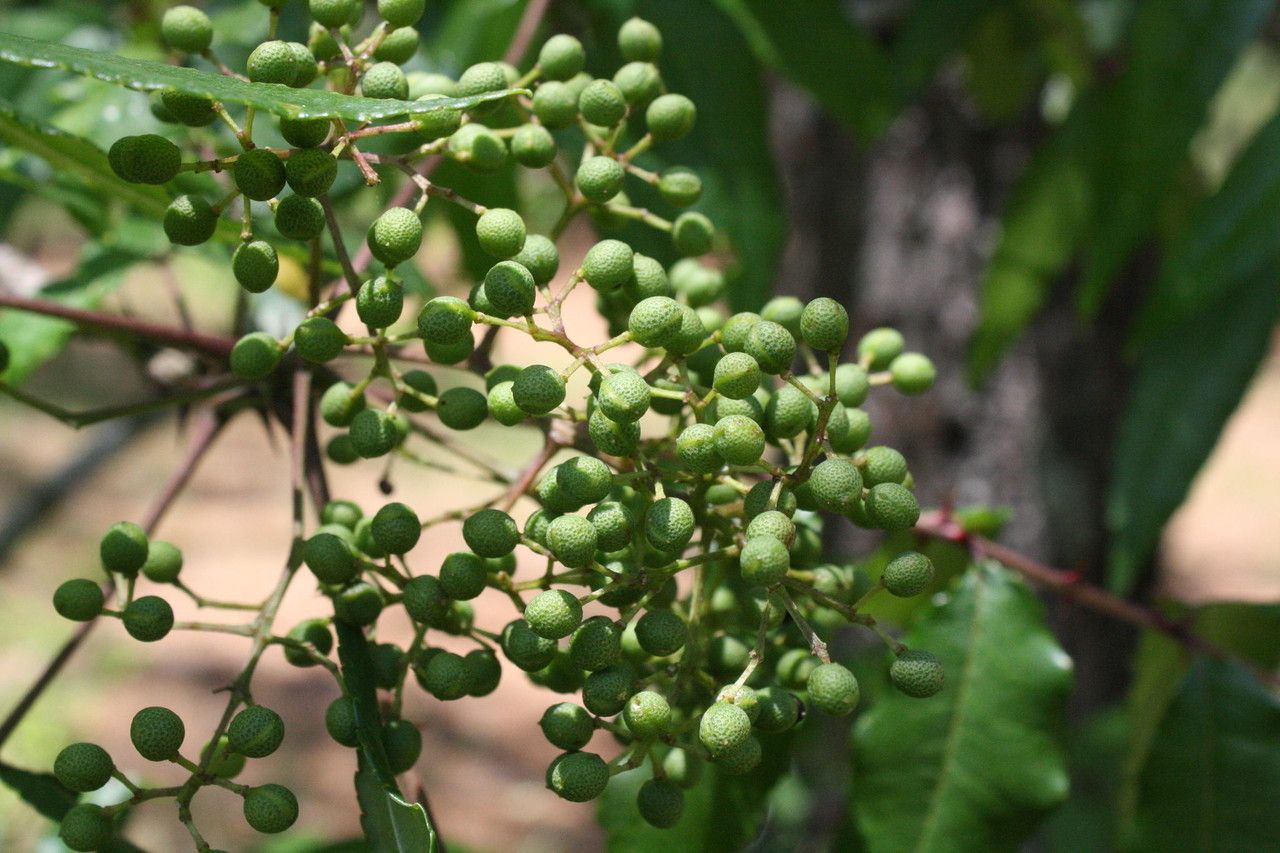
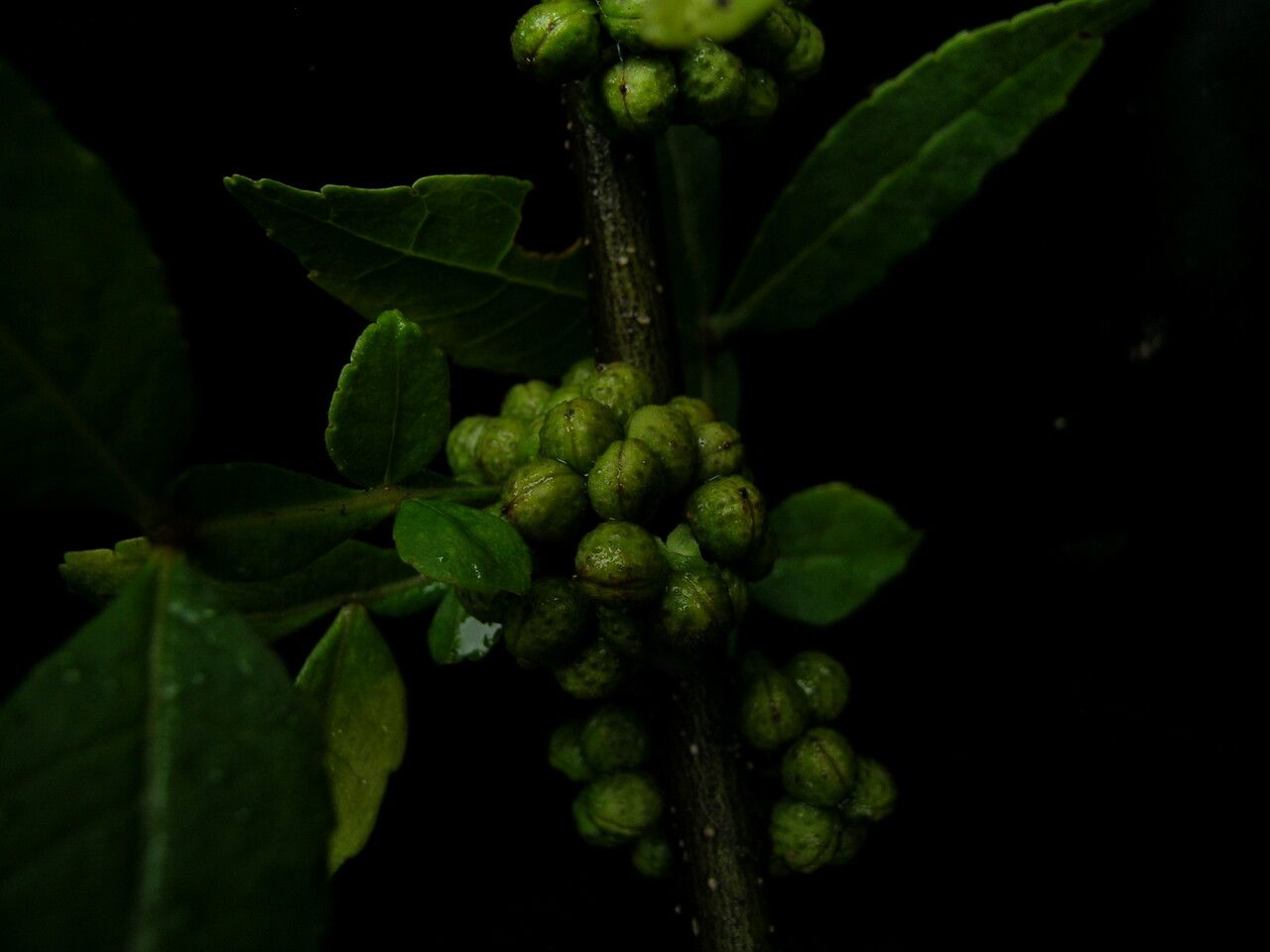
In the spring, Zanthoxylum clava-herculis produces small yellow-green flowers, which later develop into clusters of red berries. These berries, known for their spicy flavor, can serve as a substitute for black pepper.
For centuries, Native Americans have utilized Zanthoxylum clava-herculis for its medicinal properties. The plant contains compounds with anti-inflammatory effects, which have been used to treat various ailments, including arthritis pain and toothaches.
Overall, Zanthoxylum clava-herculis is a fascinating plant, notable for its thorny bark and spicy berries. Its medicinal benefits continue to be recognized and valued in traditional medicine practices today.
Common prickly-ash is resistant to disease and generally not susceptible to illnesses. Regarding care, this plant is fairly low-maintenance. When grown outdoors it needs little watering, and larger specimens usually do not require pruning. Smaller plants, however, should be pruned after they bloom. Common prickly-ash is suitable for anyone with outdoor space, such as a garden or deck, and does not demand much experience in plant care.
How to keep Zanthoxylum Clava Herculis.
Light
Common prickly-ash does best in locations with moderate sunlight, though it can tolerate areas with abundant sun. Light affects its growth; too much or too little exposure can impede development. Originating from habitats with varying light conditions, it adapts through its different growth stages.
Water
Hercules' club is moderately drought-tolerant and thrives in an environment with balanced humidity. For optimal health, it should be watered every 1 to 2 weeks. This deciduous plant sheds its leaves annually, which reduces its water requirements during that period.
Humidity
This plant will thrive in moderate humidity, which is probably the level in your home. However, misting it a few times a week can be very beneficial. Make sure the room has good ventilation.
Temperature
The native habitat of common prickly-ash is cool and moist, with average temperatures ranging from 0 to 32 ℉ (-17.8 to 0 ℃). The plant favors cool conditions and can tolerate temperatures down to -30 ℉ (-34.4 ℃). It is recommended to avoid exposing common prickly-ash to summer temperatures above 90 ℉ (32.2 ℃). In winter, the plant requires a period of dormancy and winter chill to thrive.
Fertilizer
Fertilize your Common prickly-ash in early spring to encourage healthy growth. Regular fertilization supports overall health, producing vigorous growth, greater resilience to harsh conditions, and better resistance to pests and diseases. Stick to a consistent fertilization schedule for your Common prickly-ash to preserve vibrant, deeply colored foliage and a lush appearance.
Pruning
Hercules' club is known for its thorny bark and aromatic leaves. To maintain its health, prune it from early to late winter. This helps to remove dead wood and encourages new growth. Additionally, thinning out overcrowded branches improves airflow and light penetration. Pruning not only promotes a healthier structure but can also enhance flowering and fruiting. For detailed pruning techniques, consult horticultural resources.
Botanical profile.
- Plant Type
- Shrub
- Life Cycle
- Perennial
- Genus
- Zanthoxylum
- Family
- Rutaceae
- Hardiness Zone
- 3-7
- Mature Height
- 10.06 m
- Mature Spread
- 3.05 m to 4.57 m
- Leaf Color
- Green
- Leaf Type
- Deciduous
- Flower Color
- Yellow
- Flower Size
- 2.54 cm
- Bloom Time
- Mid spring, Late spring
- Planting Time
- Autumn
- Harvest Time
- Mid summer
- Native Area
- Mexico
Other names.
Reader questions.
How should I water my Hercules' club plant?
Watering your Hercules' club is not a fussy task. You have several options for watering tools, including watering cans, hoses, and even cups. The key is to make sure the water reaches the soil. It's important to moisten all areas of the soil evenly so that every part of the root system gets the necessary water. Using filtered water is recommended to avoid harmful particles in tap water. Additionally, using water that is at or slightly above room temperature is beneficial, as colder or hotter water can be a bit shocking for the Hercules' club. However, this plant generally responds well to any type of water.
Why should I put fertilizer on my Hercules' club?
No matter which type of Hercules' club you have, regular fertilization is essential for maintaining a healthy plant. Providing the right nutrients leads to stronger growth and improves the plant's ability to withstand tough conditions and resist diseases and pests. The foliage of the Hercules' club is particularly attractive, so it's important to maintain its integrity. This involves establishing and following a regular fertilization schedule tailored to your specific Hercules' club. By doing so, you can encourage the growth of vibrant, lush leaves with deep colors.
How many hours of sunlight does Hercules' club need each day to grow healthy?
To ensure healthy growth, it is important to provide Hercules' club with at least 3–6 hours of sunlight per day. This is the minimum amount required, as plants that can tolerate partial sun can also flourish in full sun. However, these plants are more adaptable because they need less light for photosynthesis, compared to plants that need full sun or partial shade.
What temperature range does the Hercules' club plant prefer?
The Hercules' club plant, also known by its botanical name Zanthoxylum clava-herculis, prefers a temperature range of 59 to 95°F (15 to 35°C). It thrives in temperate regions and can adapt well to various temperature changes throughout the year. Despite its strong cold resistance, it is advisable to protect it from freezing temperatures during colder seasons. While special frost protection measures are usually not necessary, wrapping the trunk and branches with non-woven fabric or cloth is recommended if temperatures are expected to drop below -15°C. To mitigate the risks of drought and water scarcity in winter and early spring, watering the plant abundantly before the first freeze in autumn, ensuring the soil is moist and enters a frozen state, is beneficial.
What should I do if I give too much or too little water to my Hercules' club?
When it comes to outdoor plants, especially newly planted ones or seedlings, they are prone to not being watered enough. It's important to remember to water them adequately for a few months while they are still small or newly planted. Once the roots are established, these plants can generally rely on rainfall. If you have Hercules' club planted in pots, overwatering is more likely to happen. If you accidentally overwater your Hercules' club, you should take immediate steps to fix the situation. First, stop watering the plant right away to minimize the damage caused by overwatering. Then, remove the Hercules' club from its pot to inspect its roots. If you find that none of the roots have developed root rot, you can safely return the plant to its container. However, if you notice signs of root rot, trim away any affected roots and consider applying a fungicide to prevent further damage. Finally, repot the Hercules' club in well-draining soil. On the other hand, if your Hercules' club is underwatered, simply water the plant more frequently. Underwatering is usually an easy problem to fix. When a plant is underwatered, its leaves will droop, dry out, and eventually fall off. However, the leaves will quickly regain their fullness after sufficient watering. So, make sure to adjust your watering frequency as soon as you notice signs of underwatering.
When should I fertilize my Hercules' club plant for the best results?
To ensure healthy growth and resilience, it is recommended to fertilize your Hercules' club twice a year. The first fertilization should take place in late winter or early spring, providing necessary nutrients for the upcoming warm weather. For those residing in warm climate regions, an additional fertilizer feeding during early fall is beneficial. This feeding adds nutrients to the soil, aiding in the following growing season, while also helping the Hercules' club withstand winter cold and prevent foliage damage. By fertilizing earlier, the new branches have ample time to grow and withstand the harsh winter conditions.
What kind of sunlight does Hercules' club need?
Hercules' club thrives when exposed to full or part sun. For optimal performance, it is ideal to provide direct morning light; however, during summer, protection from the strong afternoon sun is necessary. In temperate environments, excessive hot afternoon sun can harm the plant's appearance and health by causing leaf burn.
How does Hercules' club react to low temperatures?
Hercules' club is cold-tolerant and thrives best when temperatures are above 15°C. However, during winter, it is important to ensure the temperature stays above -10°C. If temperatures fall below -15°C, you might not notice any immediate changes during winter, but by spring, the branches may become brittle and dry, and no new shoots will emerge. To counteract this, prune away any dead branches in spring that have failed to produce new leaves.
How often do I need to water my Hercules' club plant?
To ensure healthy growth of outdoor plants, they generally rely on rainfall. However, if your area doesn't receive sufficient rainfall, you should water them every 2 weeks in spring and fall, and more frequently in summer. In winter, when plants grow slower and need less water, it's best to water them sparingly or not at all. Young or newly planted Hercules' club plants may require more frequent watering initially, but mature plants are more adaptable to drought conditions. For potted plants, there are two approaches to determine watering frequency for Hercules' club. One is to follow a set schedule, such as watering once a week or every other week. However, this method may not account for the specific conditions in your growing environment. Alternatively, you can adjust watering frequency based on the moisture level of the soil. Generally, it's recommended to wait until the top two to four inches of soil have completely dried out before watering again. Keep in mind that during summer, when water needs are highest, a predetermined schedule may not be sufficient.
When is it not a good idea to add fertilizer to my Hercules' club plant?
There are specific periods when you should avoid fertilizing your Hercules' club plant for optimal care. The first period is in early and mid-winter when the plant is dormant and doesn't require any feeding. It's also not recommended to fertilize during late spring and summer. These seasons tend to have hotter and drier weather conditions, which can be detrimental to the plant if fertilized. To prevent any problems, it is best to follow a fertilization schedule that involves feeding only in early spring and early fall.
Can the sun cause harm to Hercules' club? How can we prevent sun and heat damage to Hercules' club?
To prevent damage to Hercules' club when moving it outdoors, it is important to be mindful of both direct sunlight and extreme heat. Gradually transitioning the plant from a shaded area to a brighter spot will help prevent sunburns caused by overexposure. However, even plants that are acclimated to the summer sun can be harmed by excessive heat. During a heatwave, it is crucial to keep the soil consistently moist to help plants tolerate the high levels of heat. Additionally, moving container plants to areas with afternoon shade or using a shade cloth can provide protection for sensitive Hercules' club during extreme weather events.
What should I do if the Hercules' club is exposed to high temperatures?
During the summer, Hercules' club should ideally be kept below 35°C. If the temperature rises above 38°C, the leaves may lighten in color, their tips may dry and wither, and the plant can become more susceptible to sunburn. To mitigate this, trim away the sunburned and dried-up parts. Additionally, moving the plant to a shadier location or using shade cloth to protect it from the midday and afternoon sun can help. Ensuring the plant is watered in the morning and the evening will aid in keeping the soil moist, providing further protection against high temperatures.