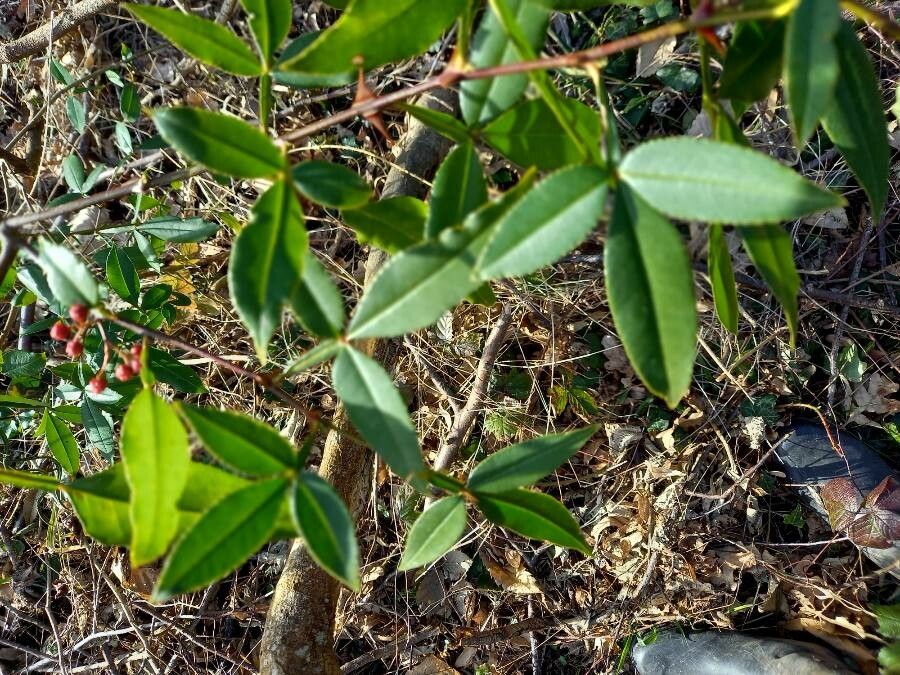
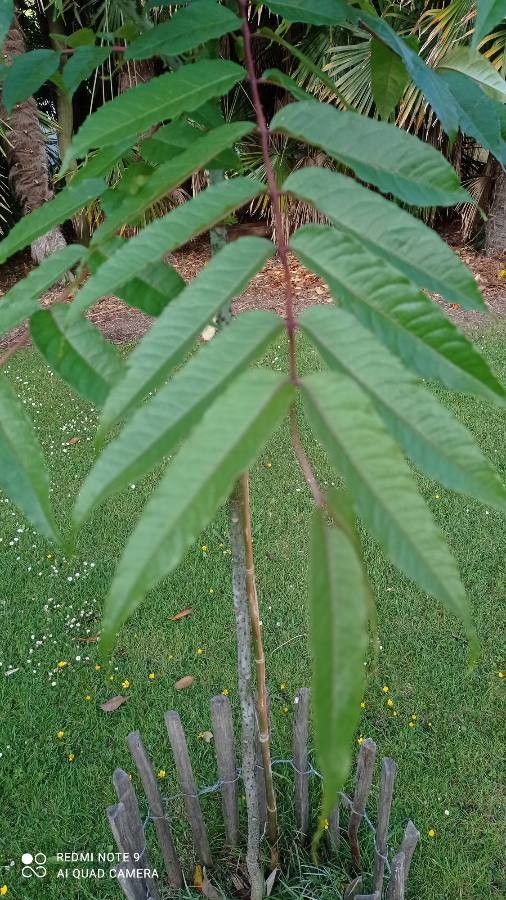
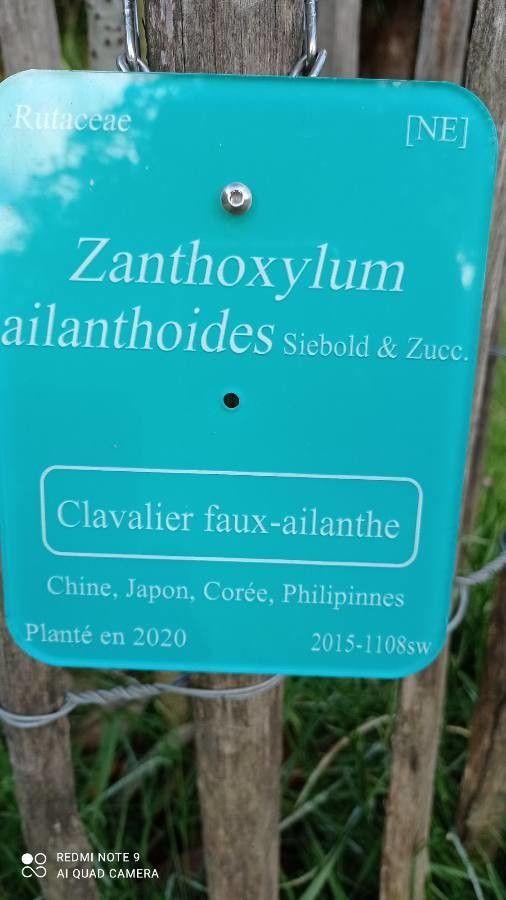
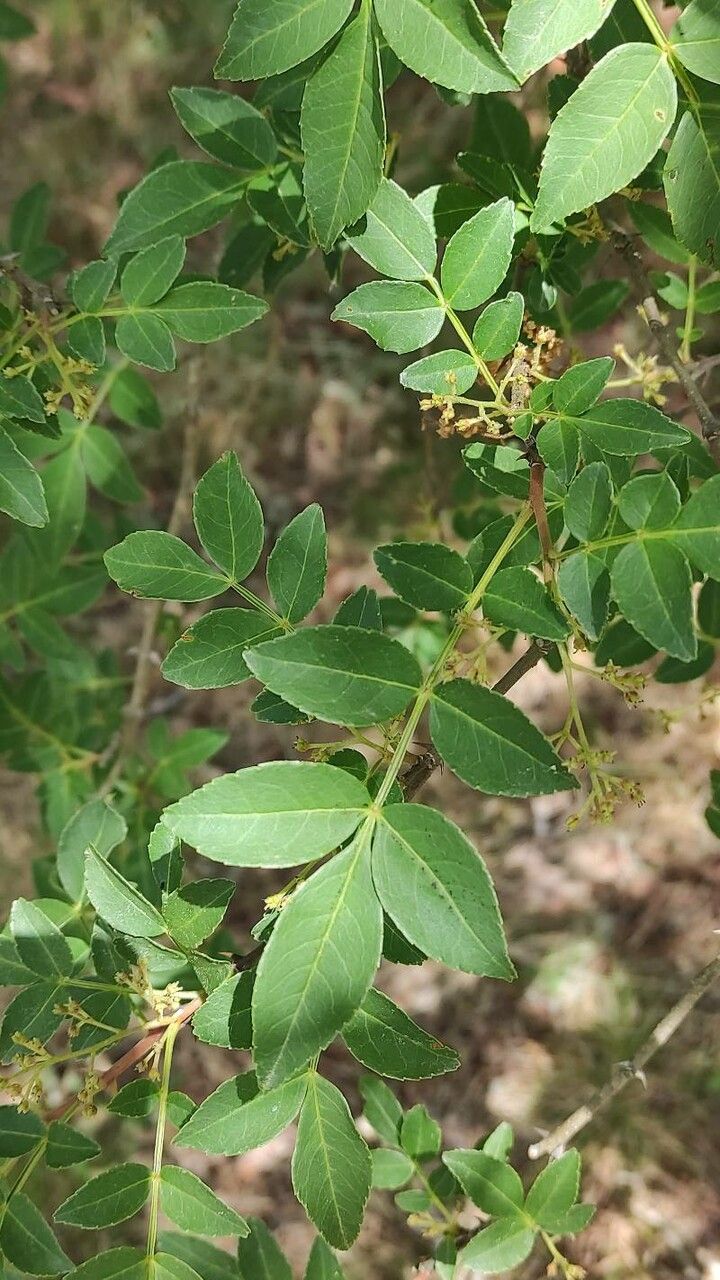
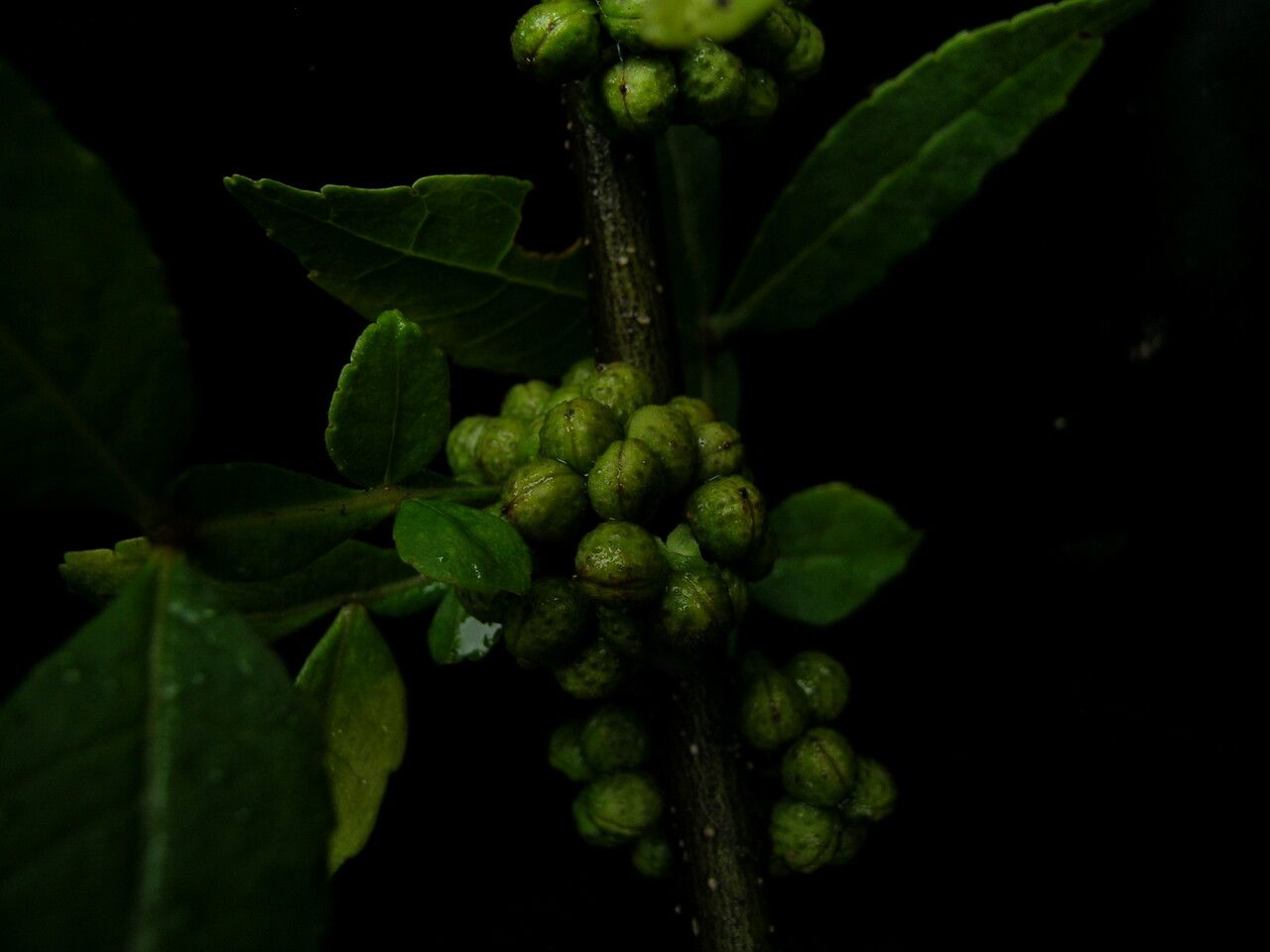
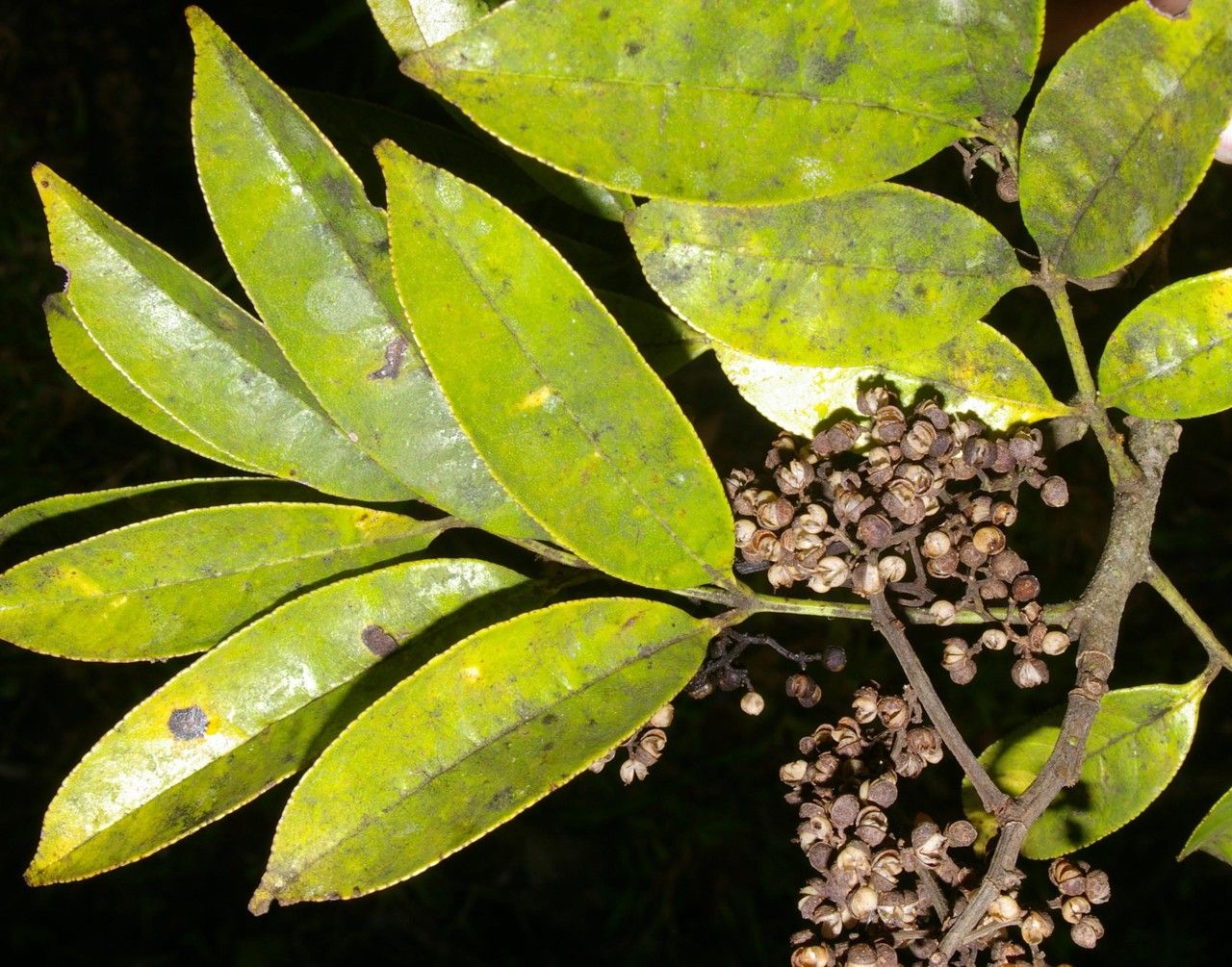
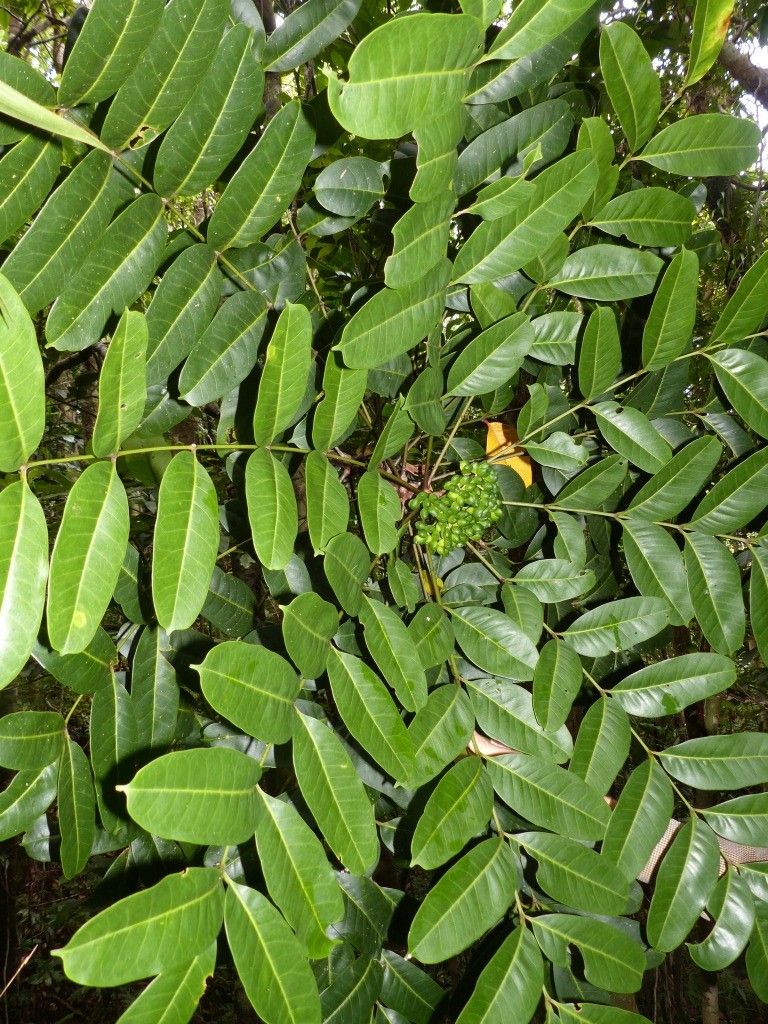
Zanthoxylum ailanthoides, also called ailanthus-like prickly ash, (Chinese: 椿叶花椒; pinyin: chun ye hua jiao, lit. "Ailanthus-leaved pepper", Chinese: 越椒; pinyin: yue-jiao; Wade–Giles: yüeh-chiao, lit. "Yue pepper", 食茱萸 shi zhu yu, lit. "edible shān zhū yú"; Japanese: カラスザンショウ, からすのさんしょう karasu-zanshō, karasu-no-sanshō, lit. "crow prickly ash") is an Asiatic plant of the prickly-ash genus Zanthoxylum, natively occurring in forest-covered parts of southeastern China, Taiwan, Southeast Asia, and Japan from Honshu southward. The piquant fruit serves as a local substitute for the ordinary red-pepper in China before the Columbian exchange. In Taiwan, the young leaves are used in cuisines.Though some refer to the species as "Japanese prickly-ash", that name is confusing since it is sometimes applied to the sanshō which is Z. piperitum. Z. ailanthoides is not normally exploited for human consumption in Japan, unless you count the prehistoric people from the Jōmon period. It is foraged in the wild by the Japanese macaque.A regional nickname is tara, and in fact, its young shoots are often mistaken for the true tara (Aralia elata) by gatherers of wild plants. The Latin name ailanthoides of the species comes from its leaves resembling those of the Ailanthus. Like other genera of plants in the rue family, it serves as the host food plant for the larvae of several Asian swallowtail butterfly species, such as Papilio bianor, Papilio helenus, Papilio protenor, and Papilio xuthus.
Japanese prickly ash is disease-resistant and generally not susceptible to illnesses. In terms of care, the plant is fairly low-maintenance. When grown outdoors it needs little watering, and larger specimens typically do not require pruning. Smaller plants, however, should be pruned after they finish blooming. Japanese prickly asht is suitable for anyone with an outdoor area, such as a garden or deck, and does not demand much care experience.
How to keep Zanthoxylum Ailanthoides.
Light
Japanese prickly ash does best in full sunlight but can tolerate shadier spots. Its native, sun-rich habitat promotes vigorous growth. However, uneven light can cause poor development or possible scorching, showing the plant’s dependence on steady sunlight exposure.
Water
Japanese prickly ash thrives in environments with moderate water and is drought-tolerant. To prevent overwatering, it's best to water the plant every 2-3 weeks. When grown outdoors, Japanese prickly ash benefits from natural rainfall during the growing season, which helps keep it hydrated.
Temperature
Japanese prickly ash naturally grows best in temperatures between 59 and 100.4 °F (15 to 38 ℃). It favors warmer climates. In colder periods, raising the surrounding temperature is recommended to encourage healthier growth.
Fertilizer
The timing of fertilizing Japanese prickly ash is important. Apply fertilizer in early spring and continue doing so monthly until early summer. Fertilizer encourages attractive blooms and supplies energy both during dormancy and in active growth periods.
Pruning
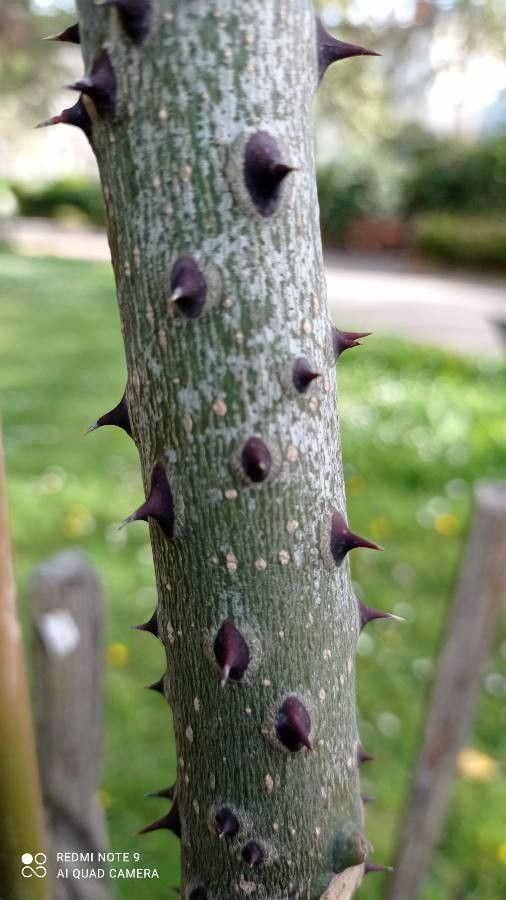
Japanese prickly ash is characterized by its thorny branches, aromatic leaves, and bright red berries. To promote healthy growth and improve fruit production, it's essential to regularly prune the plant in winter. This helps remove dead wood and shape the plant for better air circulation. Consistent maintenance not only supports vigorous growth but also keeps the plant manageable. Remember, timing is key to achieving the best results.
Botanical profile.
- Plant Type
- Tree
- Life Cycle
- Perennial
- Genus
- Zanthoxylum
- Family
- Rutaceae
- Hardiness Zone
- 8-11
- Mature Height
- 14.94 m
- Mature Spread
- 11.89 m
- Leaf Color
- Green, Blue
- Leaf Type
- Evergreen
- Flower Size
- 0.25 cm
- Bloom Time
- Early summer, Mid summer
- Planting Time
- Autumn
- Harvest Time
- Early fall, Mid fall
- Native Area
- Philippines, Japan, South Korea, China
Other names.
Reader questions.
What are the sunlight requirements for Japanese prickly ash?
Japanese prickly ash requires full sunlight for more than 6 hours each day to thrive optimally but can also grow in partial sun, which is about 3-6 hours of sunlight daily. It's essential to monitor how sunlight moves through your garden and find spots that offer a good balance of light and shade to ensure the plant's health. This balance helps in mirroring its natural habitat, which is abundant in sunlight, facilitating robust growth. However, insufficient or unevenly distributed light may hinder growth and could potentially cause scorching.
What are the ideal growing conditions for Japanese prickly ash?
Japanese prickly ash thrives in environments with temperatures ranging from 59 to 100.4 °F (15 to 38 °C), preferring warmer climates. It has some cold tolerance and doesn't generally require additional measures when the temperature is above -5°C. However, for healthier growth, it is advisable to increase the environmental temperature during colder seasons. If the temperature drops below -5°C, temporary protective measures like wrapping the plant with plastic film, fabric, or other materials should be taken, which are to be removed once the temperature rises again.
How should artificial lighting be used for indoor Japanese prickly ash plants?
When natural sunlight is not sufficient, especially during winter or in less sunny areas, artificial lighting becomes crucial for the growth of indoor Japanese prickly ash plants. Optimal growth can be achieved by: 1. Choosing the correct type of artificial light, with LED lights being a popular and effective option as they can be customized to provide specific wavelengths needed by the plants. Full sun plants require 30-50W/sq ft, partial sun plants need 20-30W/sq ft, and full shade plants need 10-20W/sq ft of artificial light. 2. The appropriate distance for the light source is 12-36 inches above the plant to mimic natural sunlight. 3. The duration of artificial light exposure should mimic natural daylight hours, typically 8-12 hours per day for most plant species.
What should I do if the Japanese prickly ash experiences low temperatures?
Japanese prickly ash has moderate tolerance to low temperatures, thriving best above 15°C and should be kept above -5°C during winter. If temperatures fall below -10°C, the leaves may start to droop, and in severe cases, wilt and fall off. To protect it in such conditions, you should trim off the frost-damaged parts and wrap the plant with non-woven fabric or cloth before low temperatures hit again. Constructing a wind barrier to protect it from cold winds is also advisable.
What symptoms indicate a Japanese prickly ash is receiving insufficient light?
Symptoms of insufficient light in Japanese prickly ash include: new leaves growing smaller than previous ones, leggy or sparse growth with longer spaces between leaves or stems, early dropping of older leaves, delayed growth or a complete halt in new leaf production, development of lighter-colored or pale new leaves, chlorosis, or the yellowing of leaves due to chlorophyll breakdown, sunscald manifested as pale, bleached, or necrotic areas on the plant tissue, leaf curling or twisting as a defense mechanism against too much sunlight, wilting from loss of turgor pressure, and leaf scorching appearing as brown, dry edges or patches on leaves due to excessive sunlight.
How do I care for Japanese prickly ash during high temperatures?
During the summer, ensuring Japanese prickly ash is kept below 38°C is crucial. Exposure to temperatures exceeding 43°C can cause the leaves' color to lighten, tips to dry and wither, leaves to curl, and increase susceptibility to sunburn. To mitigate damage, trim away sunburned and dried parts, move the plant to a shaded location or use a shade cloth to protect it from midday and afternoon sun. Additionally, maintain soil moisture by watering the plant in the morning and evening.
What are some strategies to improve light conditions for Japanese prickly ash?
Improving light conditions for Japanese prickly ash involves several strategies: Indoors, gradually move your plant to a sunnier spot each week until it achieves at least 6 hours of direct sunlight daily, primarily using a south-facing window and keeping curtains open during the day. For large or immovable plants, consider using artificial light, keeping a lamp on for at least 8 hours daily or investing in professional grow lights. Outdoors, adapt your plants to sunlight by moving them to sunnier locations gradually over several weeks to avoid sunburn. Note that parts of the plant affected by low light may not recover, but new growth will be healthy. Additionally, reduce obstructions by pruning or removing objects that block sunlight, and consider transplanting smaller plants to brighter locations with good drainage, preferably during their dormant period in late winter or early spring.