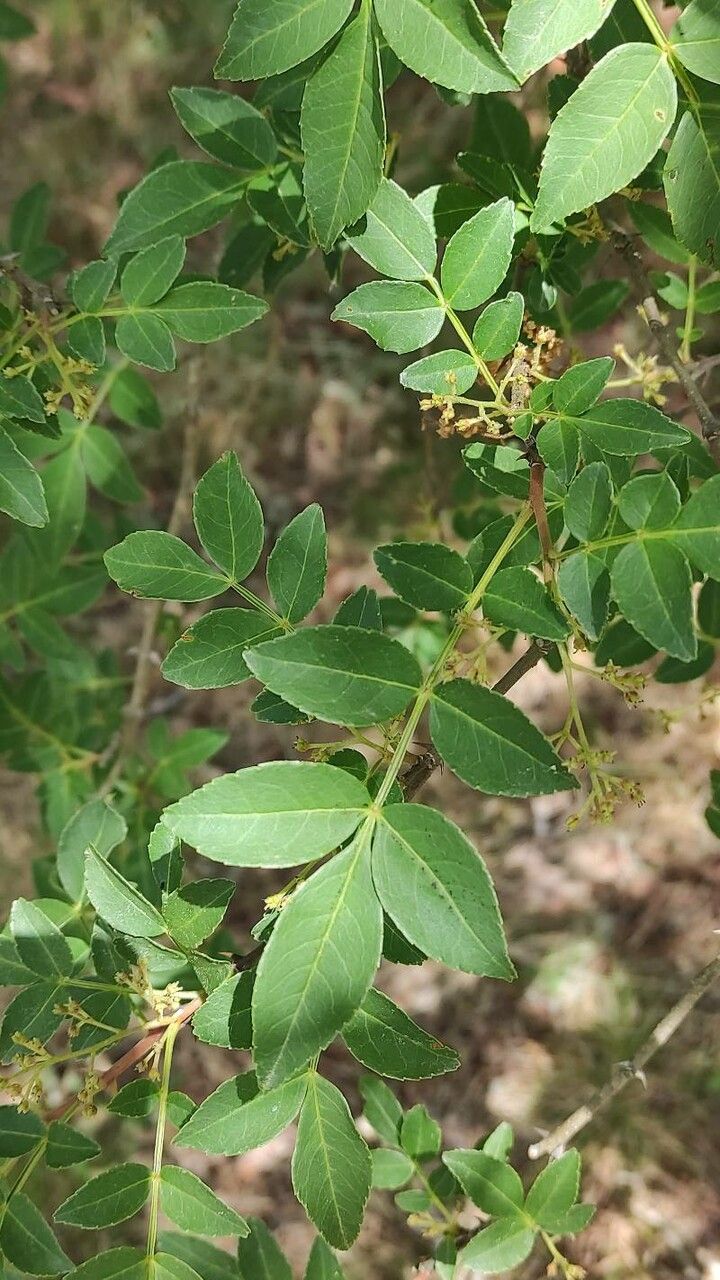
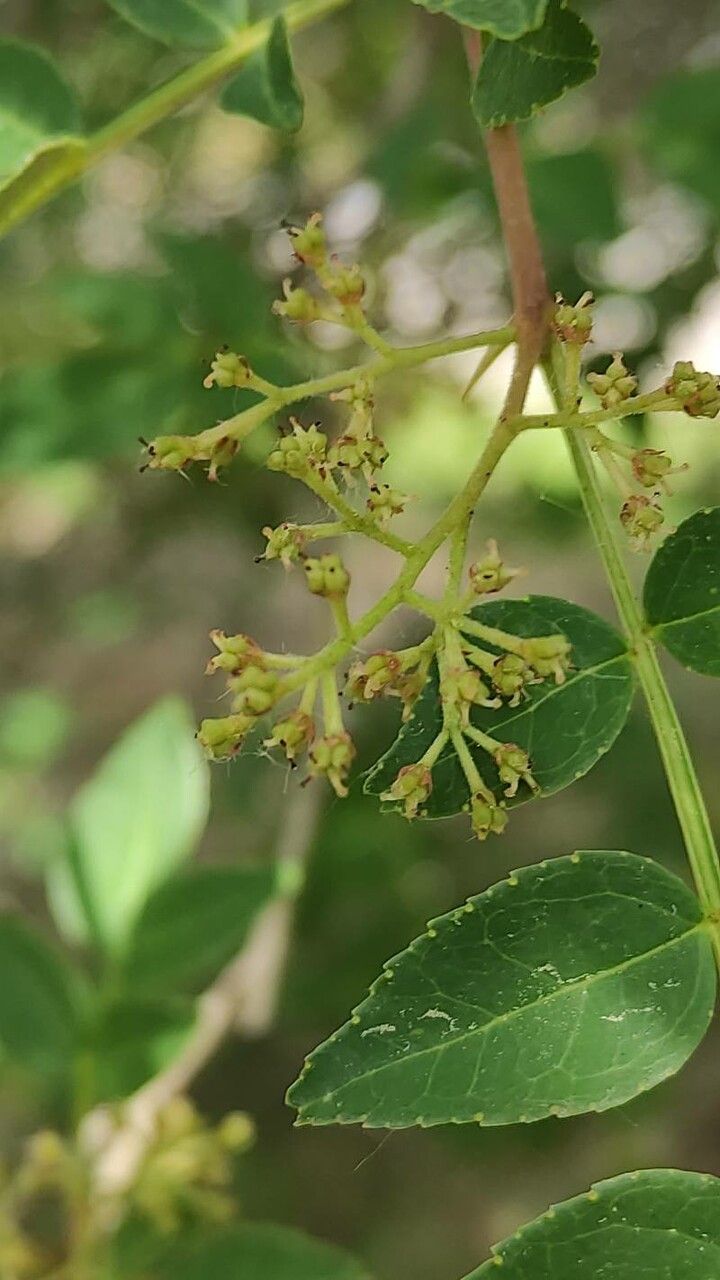
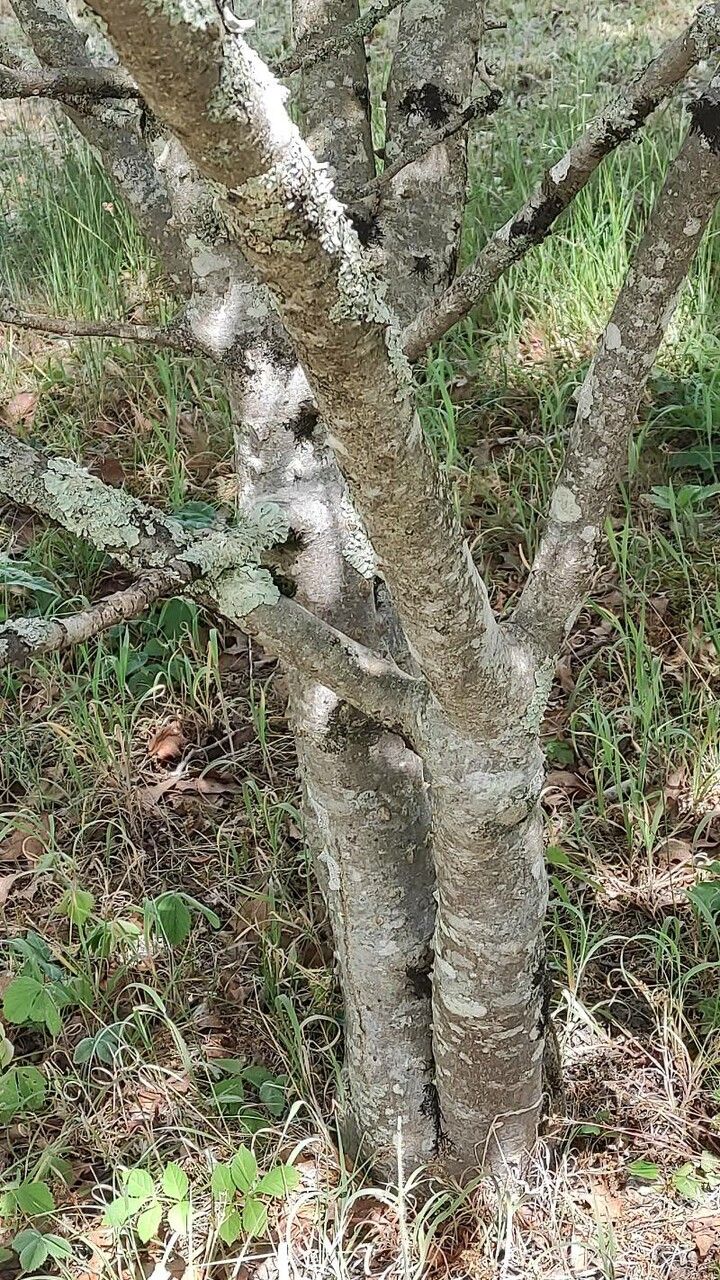
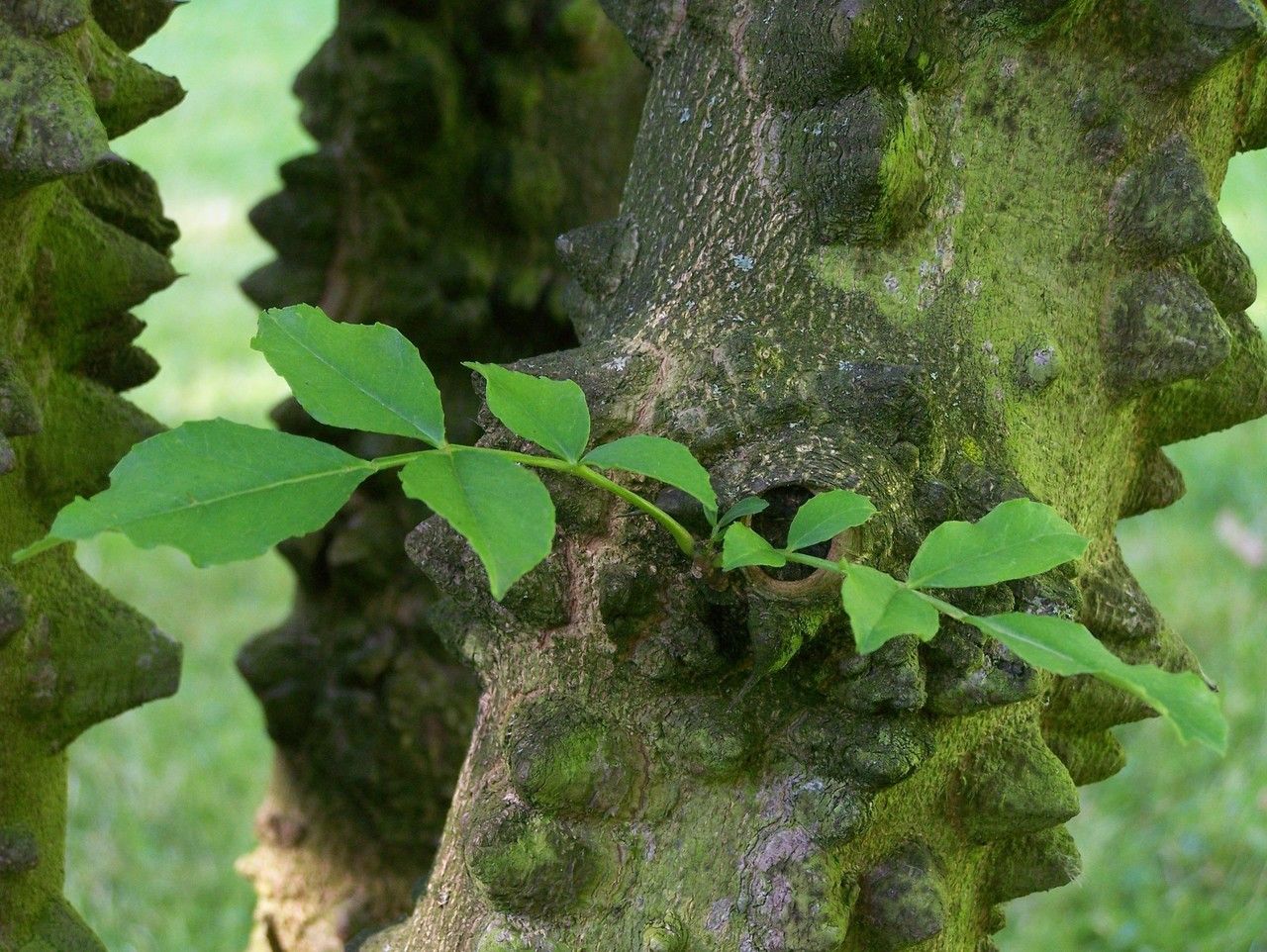
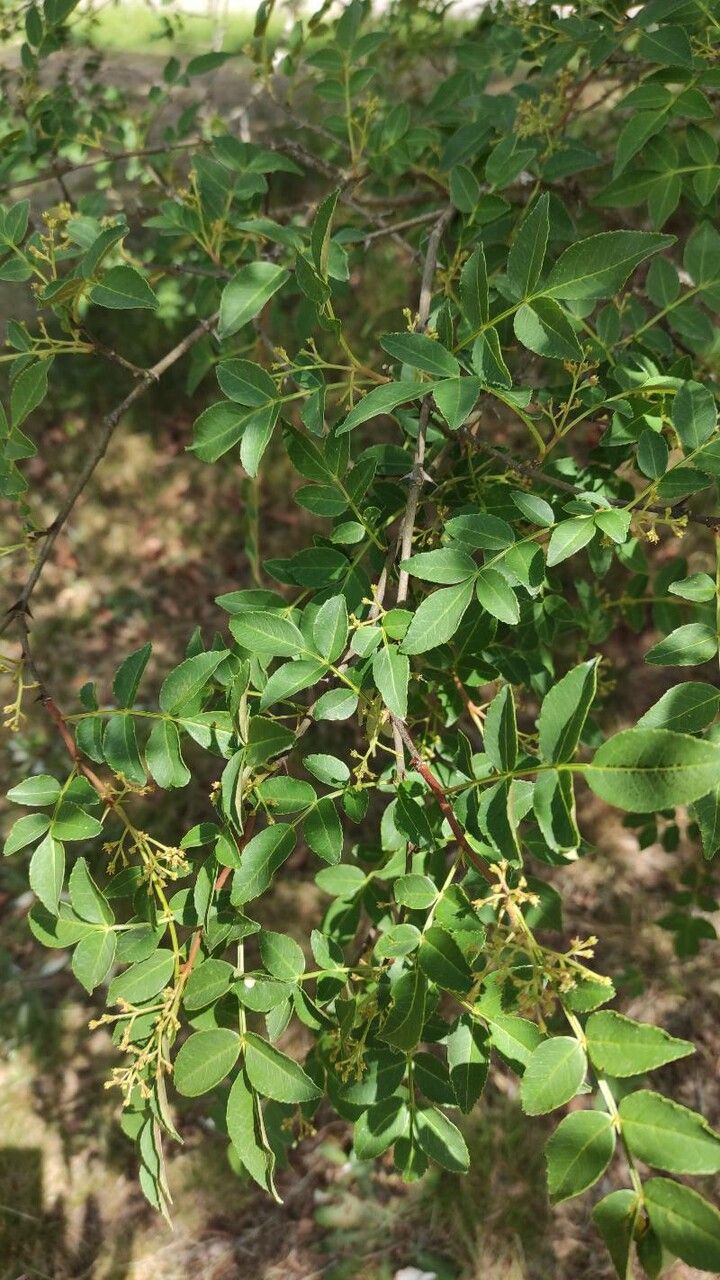
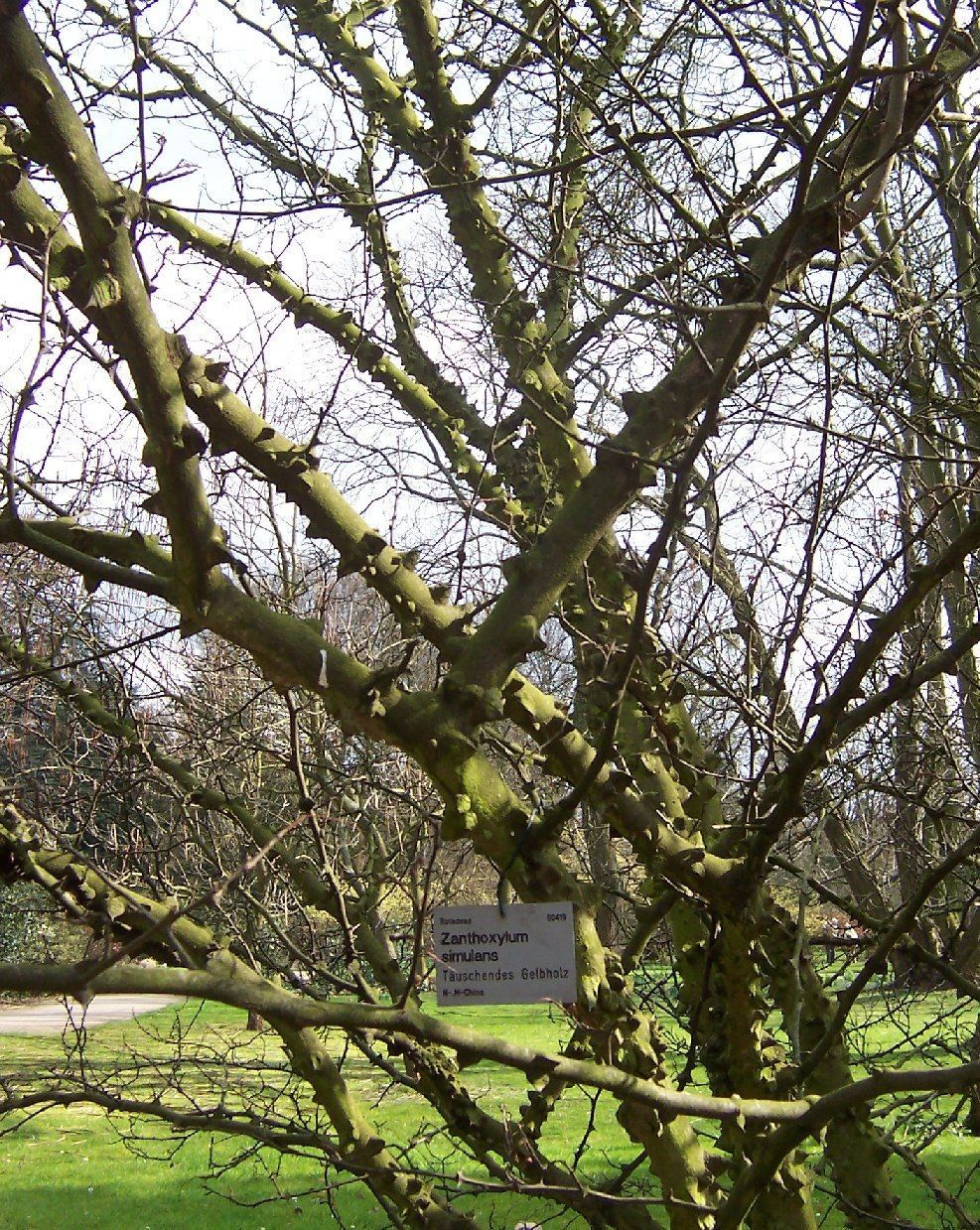
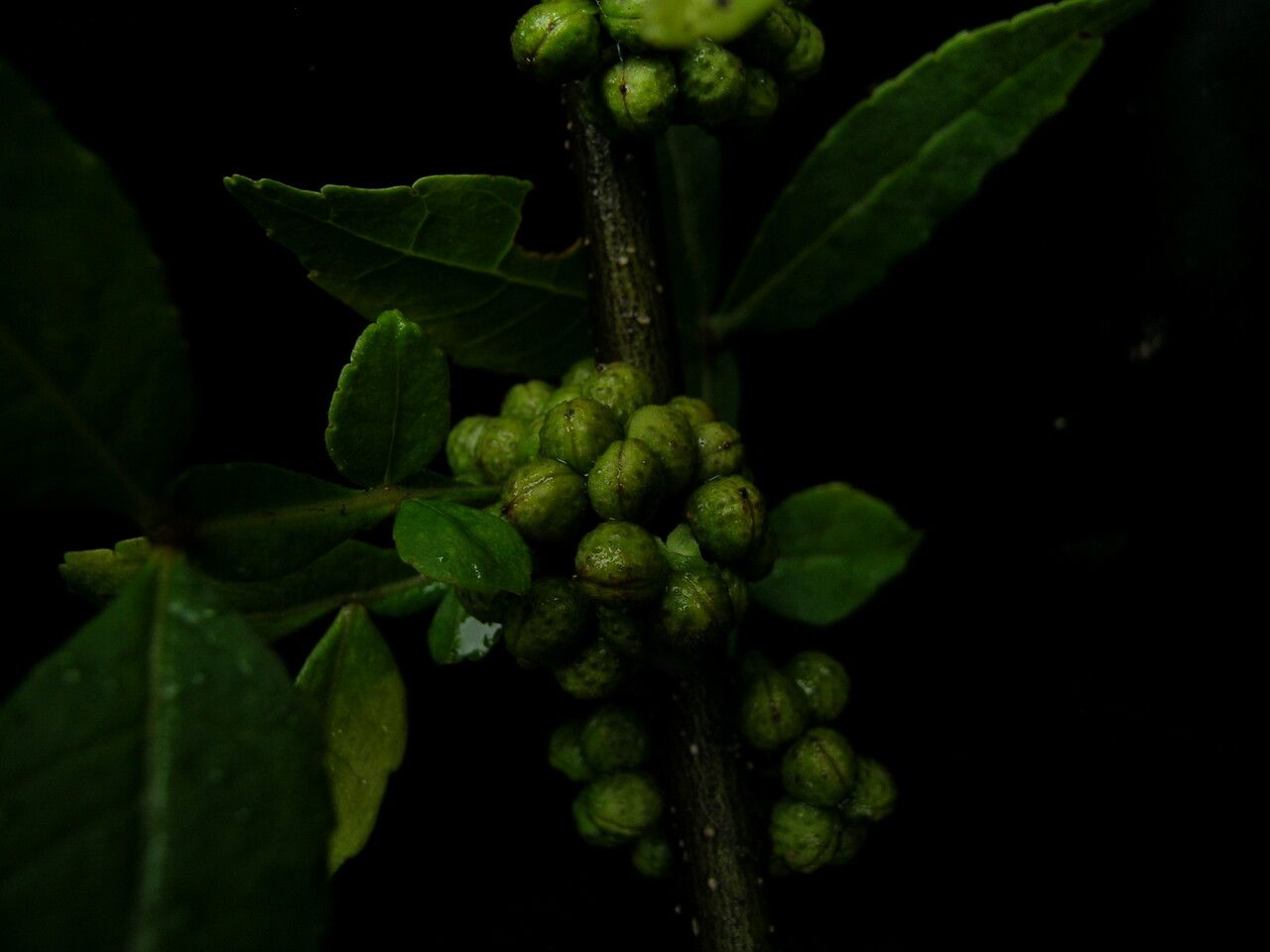
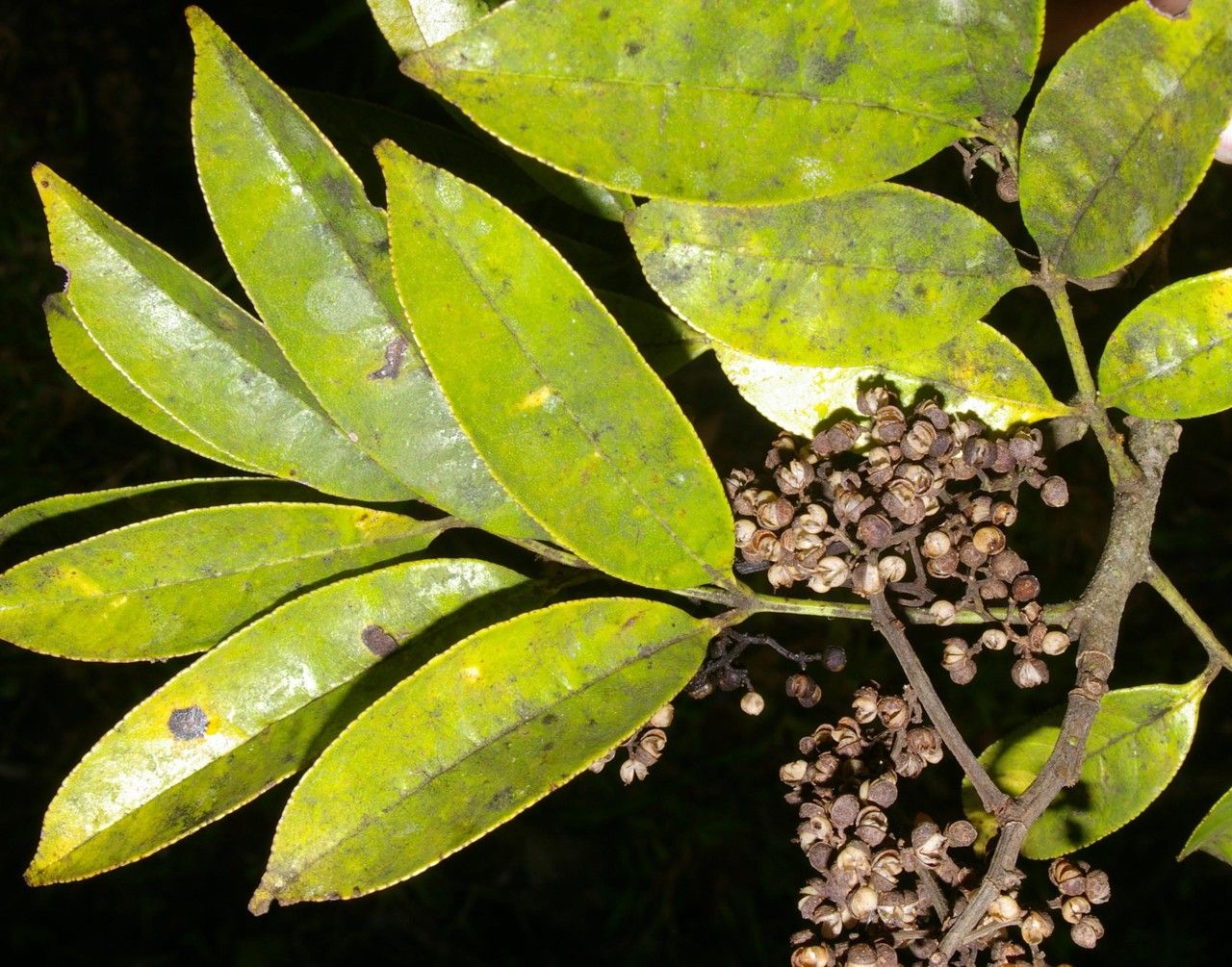
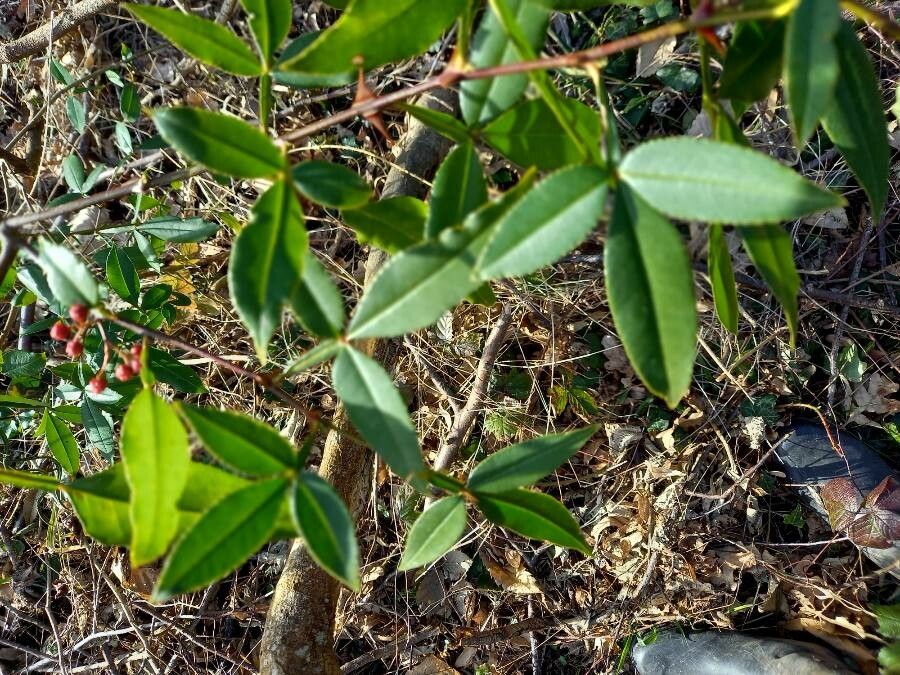
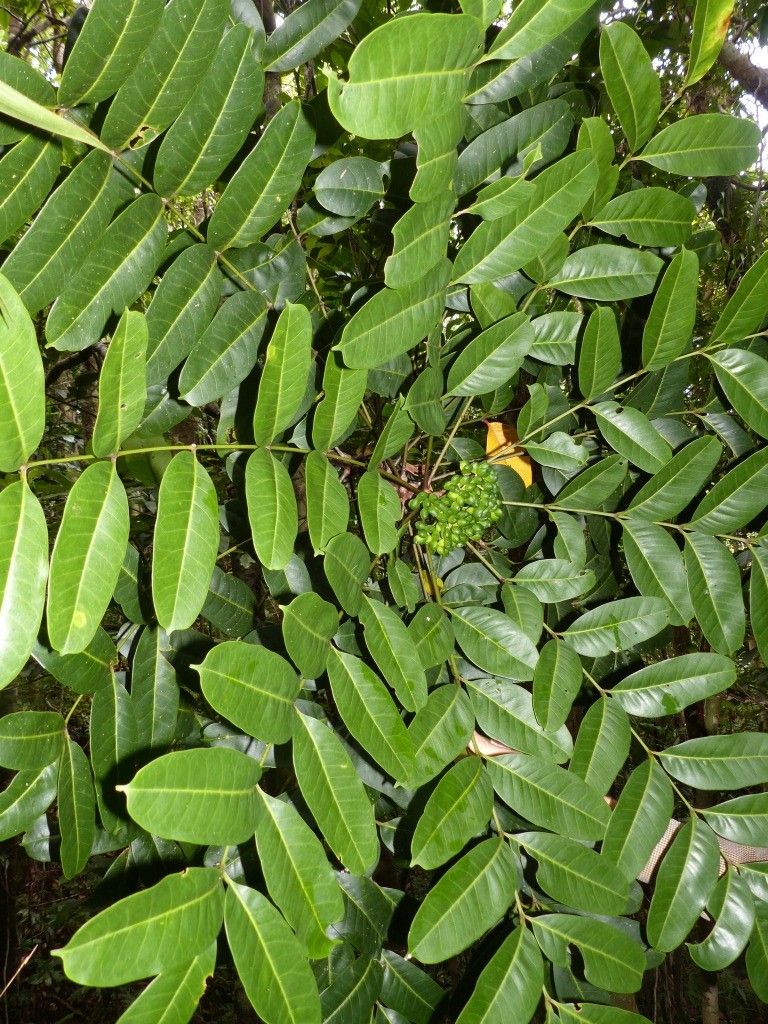
Zanthoxylum simulans, the Chinese-pepper, Chinese prickly-ash or flatspine prickly-ash, is a flowering plant in the family Rutaceae, native to eastern China and Taiwan. It is one of several species of Zanthoxylum from which Sichuan pepper is produced. It is a spreading shrub or small tree growing to 7 m tall. The leaves are 7–12.5 cm long, pinnate, with 7–11 leaflets, the leaflets 3–5 cm long and 1.5–2 cm broad. There are numerous short (3–6 mm) spines on both the stems and the leaf petioles, and large (several cm) knobs on the branches. The flowers are produced in slender cymes, each flower about 4–5 mm diameter. The 3–4 mm berry has a rough reddish brown shell that splits open to release the black seeds from inside.
Szechuan Pepper is fairly disease-resistant and typically does not suffer from many illnesses. Regarding maintenance, this species is fairly easy to care for. When grown outside it needs only occasional watering, and mature specimens usually do not require pruning. Young or smaller plants, however, should be trimmed after flowering. Szechuan Pepper is well suited for anyone who has outdoor space, such as a garden or a deck, and it does not demand extensive gardening experience.
How to keep Zanthoxylum Simulans.
Light
Szechuan pepper does best when it gets a large amount of sunlight each day, though it can tolerate places with less sun. Coming from habitats with abundant sunlight, it typically needs plenty of light to grow healthily. If it receives too little light, it may not flourish; too much light can cause it to wither.
Water
Szechuan pepper excels in environments similar to its native habitat, which features alternating periods of rainfall and dry spells. It is drought-tolerant and typically needs watering only once every three weeks, allowing the soil to dry out between waterings. This species is well-suited to the seasonal moisture changes found in temperate regions.
Humidity
This plant will thrive in moderate humidity, which is probably the level in your home. However, misting it a few times a week can be very beneficial. Make sure the room has good ventilation.
Temperature
Szechuan pepper is highly adaptable to different climate conditions, tolerating both very hot summers and cold winters. Nevertheless, it has a preferred temperature range for proper growth. If temperatures get too high, the plant can experience heat and humidity stress that may kill it. In areas where temperatures reach the lower bounds of its cold tolerance, providing insulation to protect the plant is necessary.
Fertilizer
The Szechuan pepper plant needs adequate nutrients for the best fruit production. Fertilize in early spring to support new growth and bloom development. Regular feeding keeps the plant healthy, produces tastier fruit, and prevents nutrient-deficiency problems such as yellowing leaves and poor fruit yield.
Pruning
Szechuan Pepper is a thorny shrub known for its aromatic leaves and seed pods. For optimal growth, prune it in early spring. This helps remove damaged branches, improve airflow, and promote healthier development. When pruning, concentrate on thinning and shaping the shrub to enhance the yield of its aromatic seeds. Make cuts just above outward-facing buds to ensure both strength and aesthetic appeal.
Botanical profile.
- Plant Type
- Tree, Shrub
- Life Cycle
- Perennial
- Hardiness Zone
- 6-9
- Mature Height
- 7.92 m to 14.94 m
- Mature Spread
- 3.05 m to 6.71 m
- Leaf Color
- Green
- Leaf Type
- Deciduous
- Flower Color
- Yellow
- Flower Size
- 0.51 cm to 0.51 cm
- Bloom Time
- Mid spring, Late spring
- Planting Time
- Spring, Summer, Autumn
- Harvest Time
- Late summer, Early fall, Mid fall
- Native Area
- South Korea, China
Other names.
Reader questions.
What are the sunlight requirements for Szechuan Pepper?
Szechuan Pepper requires full sun, meaning it thrives best with above 6 hours of sunlight daily, but it can also tolerate partial sun, about 3-6 hours of sunlight. It's important to observe how sunlight moves through your garden to find spots that offer the right balance of light and shade, ensuring optimal growth for your plants.
What is Szechuan Pepper?
Szechuan Pepper, known botanically as Zanthoxylum simulans, is a widely used spice in culinary traditions, particularly in Asian cuisine. Despite its name, it's not related to black pepper or chili peppers but is part of the citrus family. The unique aspect of Szechuan pepper is its ability to produce a tingling numbness in the mouth, which enhances the flavors of various dishes.
How does Szechuan Pepper react to different light conditions?
Originating from sunny environments, Szechuan Pepper performs best with ample sunlight exposure. While it can endure less sunny conditions, insufficient sunlight may hinder its growth, and too much exposure can lead to withering. For indoor plants lacking natural sunlight, especially in winter, artificial lighting such as LED lights adjusted to provide 30-50W/sq ft for full sun plants, 20-30W/sq ft for partial sun plants, and 10-20W/sq ft for full shade plants is recommended. The distance and duration of artificial lighting should mimic natural conditions to ensure healthy growth.
What symptoms indicate insufficient or excessive sunlight in Szechuan Pepper?
Symptoms of insufficient sunlight in Szechuan Pepper include small leaves, leggy or sparse growth, faster leaf drop, slower or halted growth, and lighter-colored new leaves. Excessive sunlight can cause chlorosis, sunscald, leaf curling, wilting, and leaf scorching. These symptoms highlight the plant's struggle with light conditions, either failing to receive enough light or being damaged by too much exposure.
How can I address lighting issues for my Szechuan Pepper plant?
To address insufficient sunlight, gradually move your plant to a sunnier location until it receives at least 6 hours of direct sunlight daily. Utilize south-facing windows and keep curtains open during the day. If moving the plant isn't feasible or for additional light, artificial lighting can be used with lamps or professional grow lights for at least 8 hours daily. For outdoor plants, ensure a gradual adaptation to sunnier spots to prevent sunburn. Reducing obstructions and transplanting smaller plants to sunnier locations with good drainage can further alleviate lighting issues. Remember, parts of the plant that have been negatively affected by light conditions may not recover, but new growth should be healthy under improved lighting.