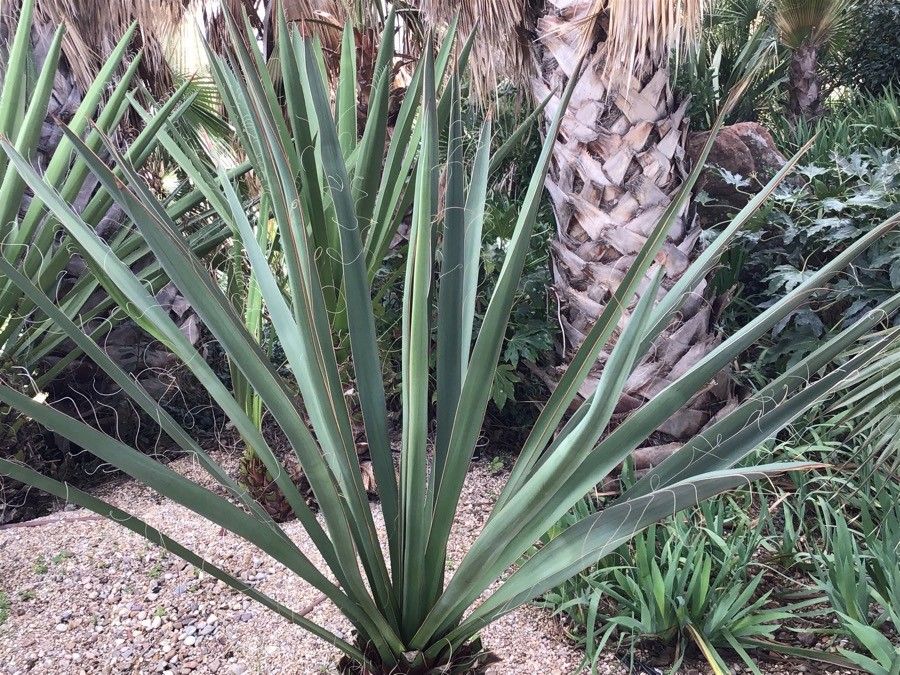
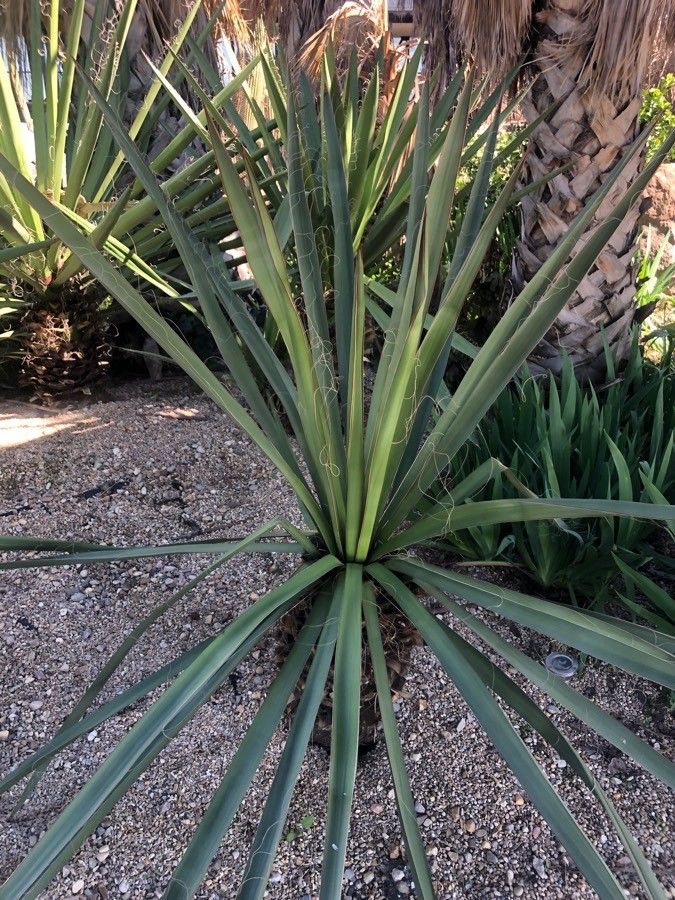
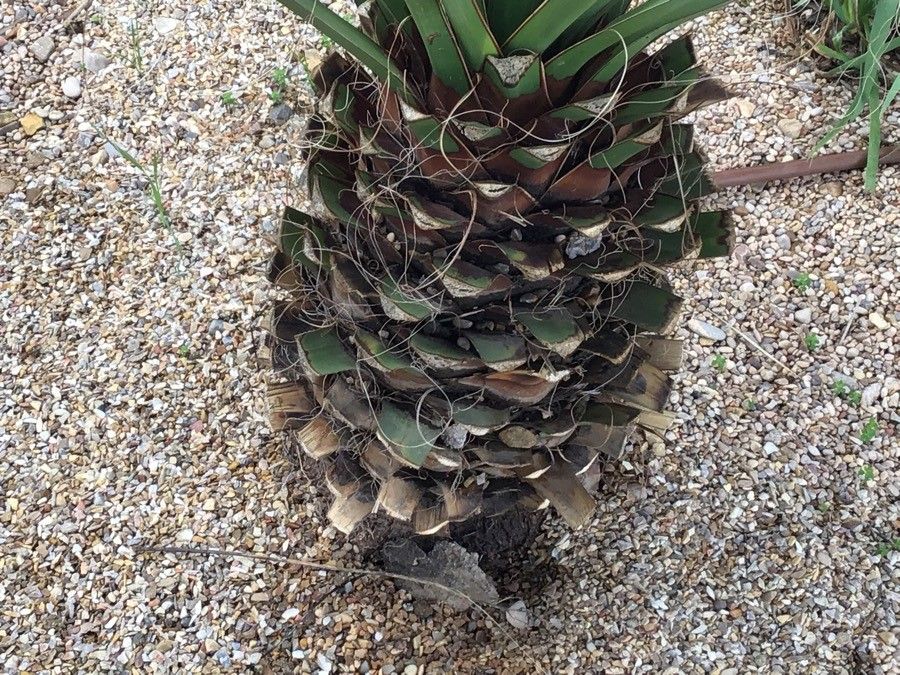
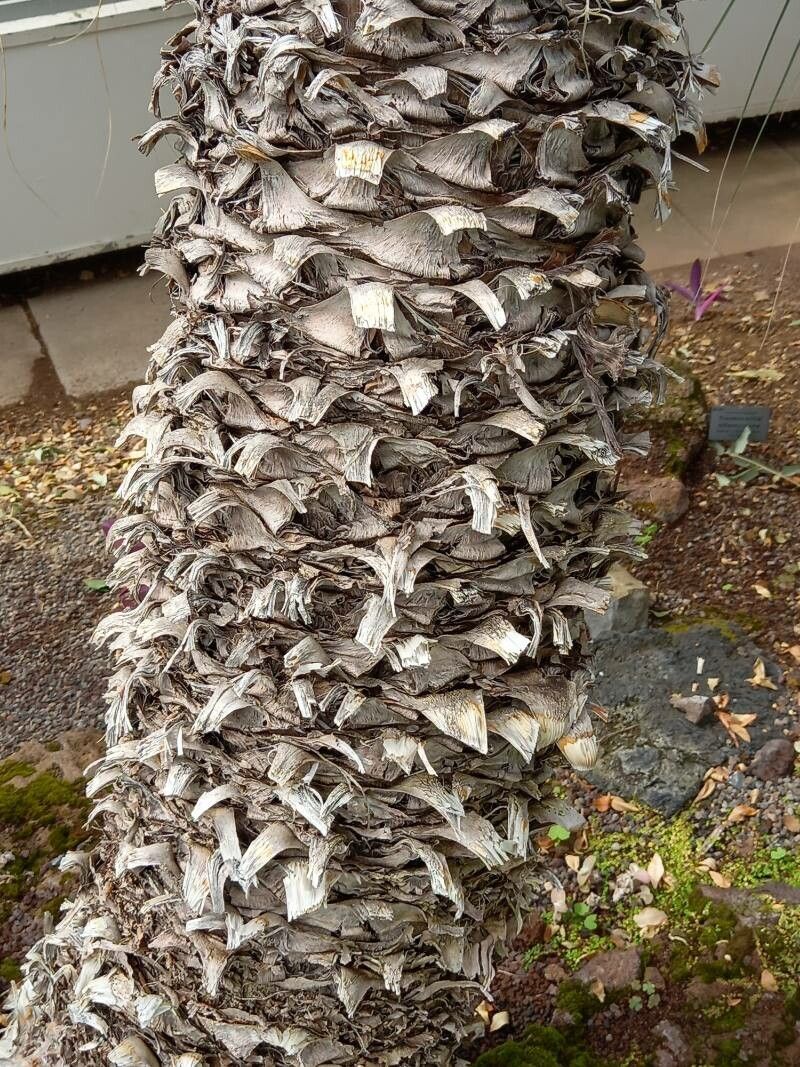
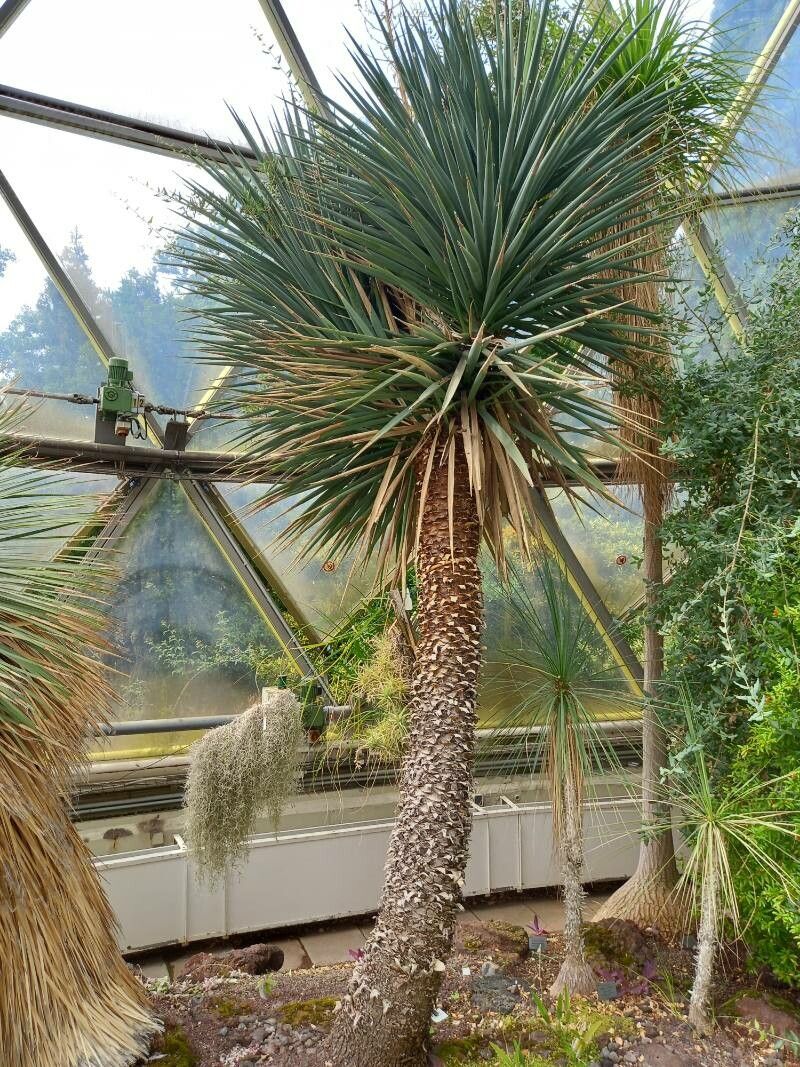
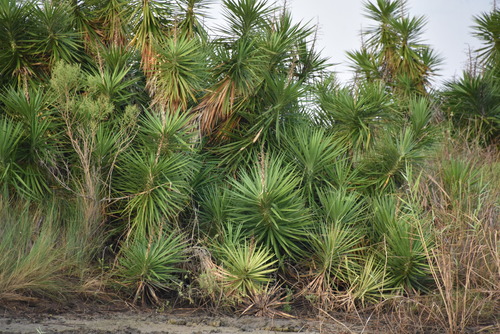
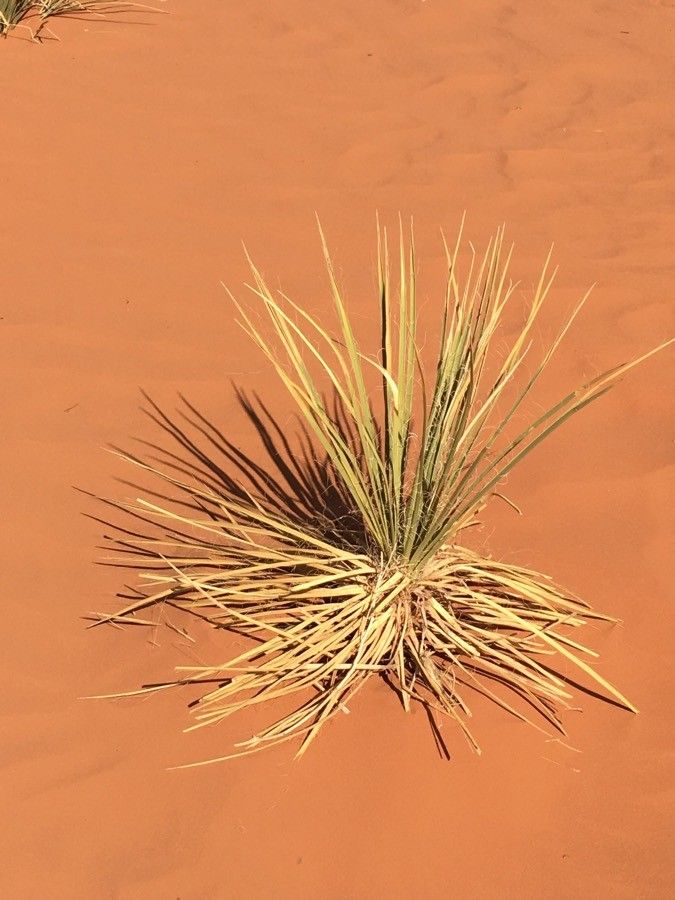
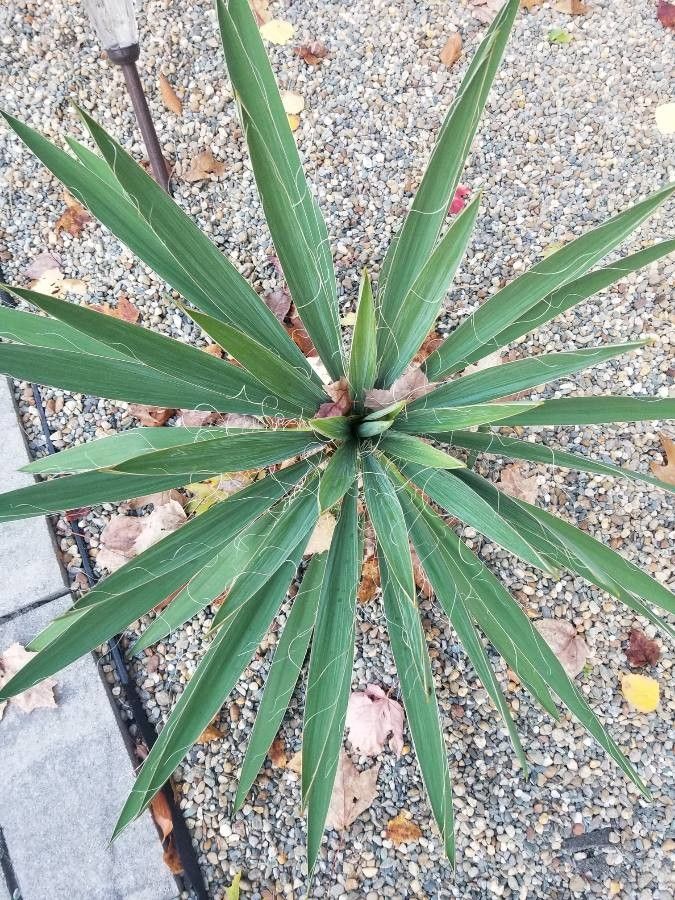
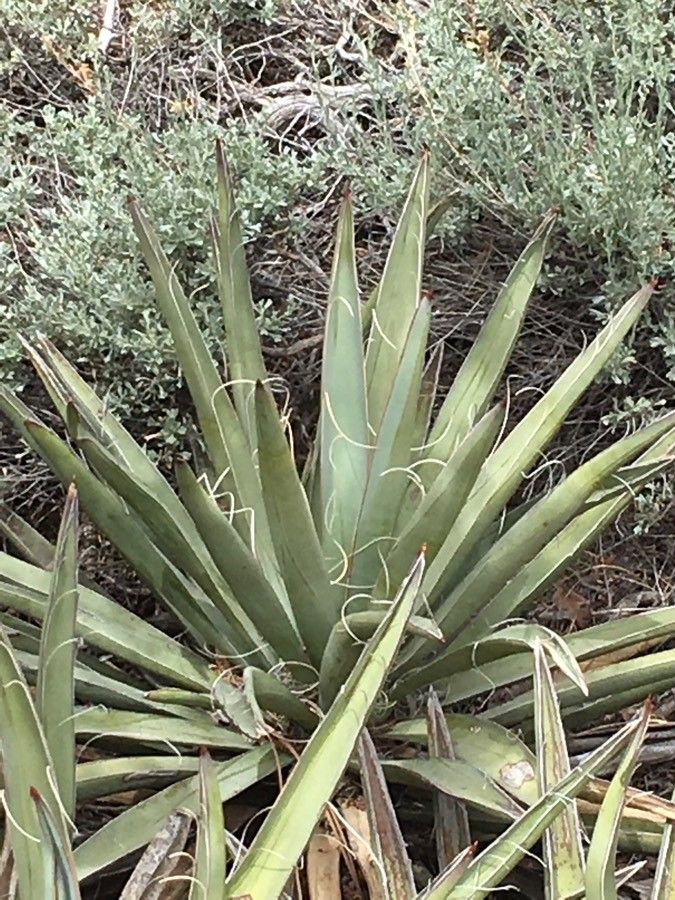
Yucca treculeana, commonly known as the Spanish dagger or Don Quixote's lance, is a large succulent plant native to the Chihuahuan Desert in North America. This slow-growing plant can reach heights of up to 30 feet and spread as wide as 10 feet. Its long, narrow leaves end in sharp tips, which can be hazardous if not handled with care. During the summer months, Yucca treculeana produces white or cream-colored flowers that bloom on tall spikes.
This plant is drought-tolerant and thrives in well-drained soil with full sun exposure. Due to its striking appearance and minimal maintenance needs, it is often used as an ornamental plant in xeriscaping gardens. Furthermore, various parts of Yucca treculeana have been utilized by some Native American tribes for medicinal purposes, such as treating skin conditions or making soap from its roots.
Spanish dagger has moderate disease resistance and is more sensitive to humidity and excessive watering. It is also more prone to disease when it receives little light and is overwatered. Regarding care, Spanish dagger is drought tolerant and can endure long stretches without water. It does not require much fertilizer and only needs occasional pruning. These characteristics make it suitable for people of all experience levels, especially those who prefer to spend less time on plant care and who may be away from home for extended periods. It is a good option for people who do not want to devote a lot of time to maintaining their plants but still want an easy-to-care-for species.
How to keep Yucca Treculeana.
Light
The Spanish dagger needs abundant sunlight for best growth, reflecting its origin in environments dominated by sun. While it can endure periods of reduced light intensity, continuously low light may damage its health. Regular sun exposure is important throughout its different growth stages. Too much sun can cause some stress, but it is generally tolerated well.
Water
The Spanish dagger is well-suited for arid conditions, requiring minimal moisture and exhibiting high drought tolerance. It thrives with infrequent watering, approximately every 2 to 3 weeks, and prefers well-draining soil to avoid water pooling. This makes it an ideal choice for xeriscapes, promoting healthy growth.
Temperature
Spanish dagger is native to areas where temperatures range from 59 to 95 °F (15 to 35 ℃). It thrives within this temperature span and may need small adjustments during extreme seasonal shifts to maintain optimal growth conditions.
Fertilizer
For Spanish dagger, light applications of fertilizer one to two times a year during the growing season are adequate. Do not fertilize in winter or summer when the plant is dormant. Use less fertilizer for recently repotted plants and wait a couple of months after repotting before applying fertilizer. Fertilizing promotes healthy growth and encourages blooms.
Pruning
The Spanish dagger is a plant with sharp, sword-like leaves that benefits from light pruning to remove dead or damaged foliage. The best time to prune it is from late winter to early spring, which helps encourage new growth. By regularly inspecting the plant and removing older leaves, you can improve air circulation and maintain its aesthetic appeal.
Botanical profile.
- Plant Type
- Herb
- Life Cycle
- Perennial
- Genus
- Yucca
- Family
- Asparagaceae
- Hardiness Zone
- 8-10
- Mature Height
- 10.06 m
- Mature Spread
- 1.22 m to 3.05 m
- Leaf Color
- Dark Green
- Leaf Type
- Evergreen
- Flower Color
- Yellow, Green
- Flower Size
- 3.05 cm to 7.62 cm
- Bloom Time
- Mid spring, Late spring
- Planting Time
- Spring, Summer, Autumn
- Harvest Time
- Summer
- Native Area
- Mexico
Other names.
Reader questions.
What are the sunlight requirements for Spanish dagger plants?
Spanish dagger plants thrive in conditions that reflect their native habitats, which are typically dominated by sunlight. They require full sun, defined as over 6 hours of direct sunlight daily, but they can also grow in partial sun, with about 3-6 hours of sunlight. Although these plants are capable of enduring lower light intensities for short periods, prolonged exposure to low light may hinder their health. It's recommended to monitor the sunlight movement through your garden to place them in spots that ensure they receive the adequate balance of light and shade for their requirements.
What are the ideal temperature conditions for the Spanish Dagger?
The Spanish dagger thrives in environments with temperatures ranging from 59 to 95 °F (15 to 35 °C). It prefers this temperature range to maintain optimal growth conditions. Although it has some cold tolerance and generally does not require additional measures when the temperature is above -5°C, precautions should be taken if the temperature is expected to drop below -5°C. In such cases, wrapping the plant with materials like plastic film or fabric can provide necessary cold protection. Once temperatures rise again, these protective coverings should be removed to prevent any potential harm to the plant.
How can artificial lighting be used for Spanish dagger plants indoors?
When natural sunlight is insufficient, especially during winter or in less sunny spaces, artificial lighting becomes crucial for maintaining the health of indoor Spanish dagger plants. LED lights are advisable as they can be tailored to emit specific wavelengths needed for plant growth. Full sun plants require 30-50W/sq ft, partial sun plants 20-30W/sq ft, and full shade plants 10-20W/sq ft of artificial light. The light source should be placed 12-36 inches above the plant, and it's important to mimic the natural daylight duration, usually 8-12 hours per day, to promote optimal growth.
How should I care for a Spanish Dagger during low temperatures?
The Spanish dagger has a moderate tolerance to low temperatures and fares best when kept above 15°C. During winter, ensure the plant remains above -5°C to avoid damage. If the temperature falls below -10°C, the leaves may droop or, in severe cases, wilt and fall off. To mitigate frost damage, you should trim off any affected parts. To prevent future cold damage, wrap the plant with non-woven fabric or cloth, and set up a wind barrier to protect it from cold winds. These measures help ensure the plant's resilience against lower temperatures.
What symptoms indicate inadequate lighting for Spanish dagger plants?
Symptoms of inadequate lighting in Spanish dagger plants include smaller new leaves, leggy or sparse growth, premature leaf drop, reduced or halted growth, lighter-colored new leaves, and signs of chlorosis, where leaves lose their green color. Excessive sunlight exposure can lead to sunscald, leaf curling, wilting, and leaf scorching, indicating too much direct light. These symptoms help identify whether the plant is receiving too little or too much sunlight, guiding adjustments in their care routine.
What steps should be taken if a Spanish Dagger experiences high temperatures?
During the summer, it is crucial to keep the Spanish dagger below 35°C. Should temperatures exceed 41°C, the plant may show signs of stress, such as lighter leaf color, dry and withered leaf tips, curling leaves, and an increased susceptibility to sunburn. To care for the plant under such conditions, trim away any sunburned or dried parts and relocate the plant to a shaded area, especially during the midday and afternoon sun. Utilizing a shade cloth can also be helpful. Moreover, watering the plant in the morning and evening helps keep the soil adequately moist, providing relief from the intense heat.
What solutions can address lighting issues for Spanish dagger plants?
To improve lighting conditions for Spanish dagger plants, gradually introduce them to sunnier spots, achieving at least 6 hours of direct sunlight daily for optimal growth. For indoor plants, if moving them is not feasible, supplementing with artificial light, such as desk, ceiling lamps, or professional grow lights for at least 8 hours daily can be beneficial. Outdoors, ensure gradual acclimatization to prevent sunburn. Address obstructions such as overhanging branches by pruning and consider relocating smaller plants to sunnier locations if necessary. Remember, parts of the plant that have suffered from light deprivation may not recover, but new growth should be healthy following these adjustments.