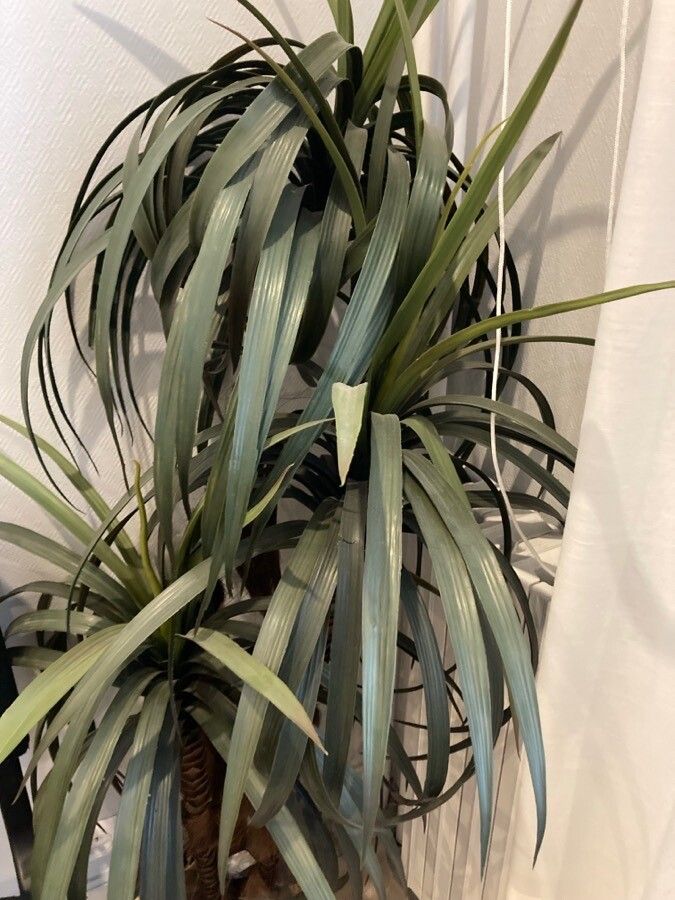
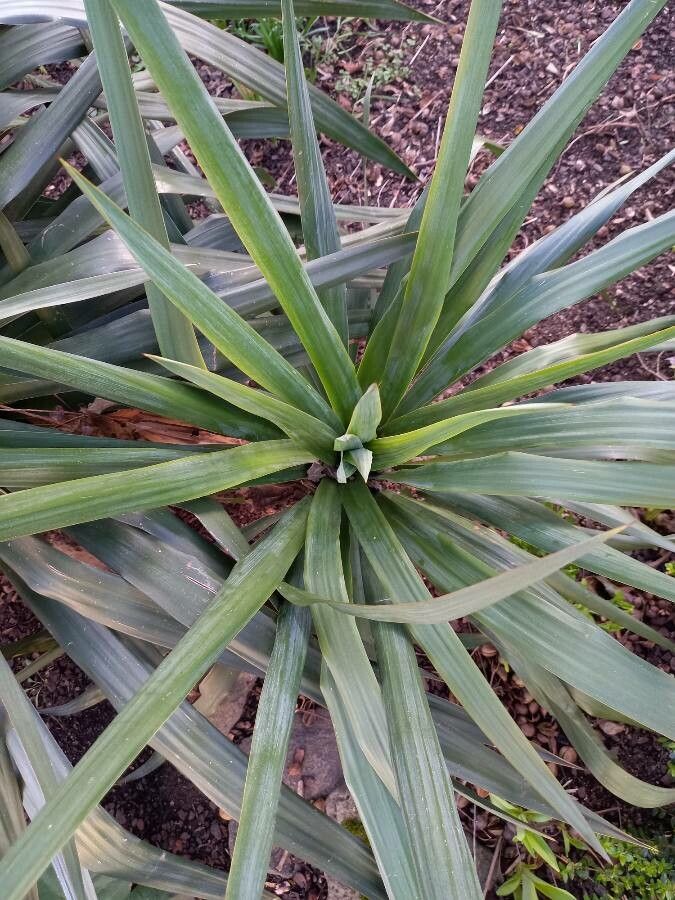
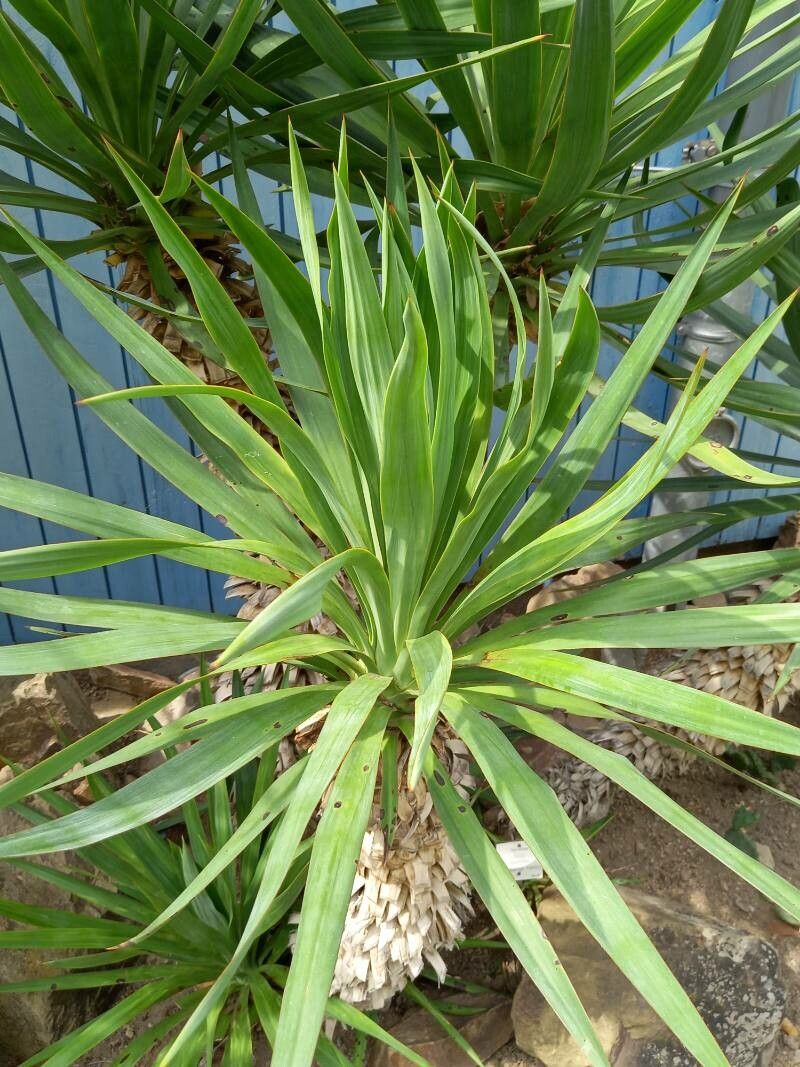
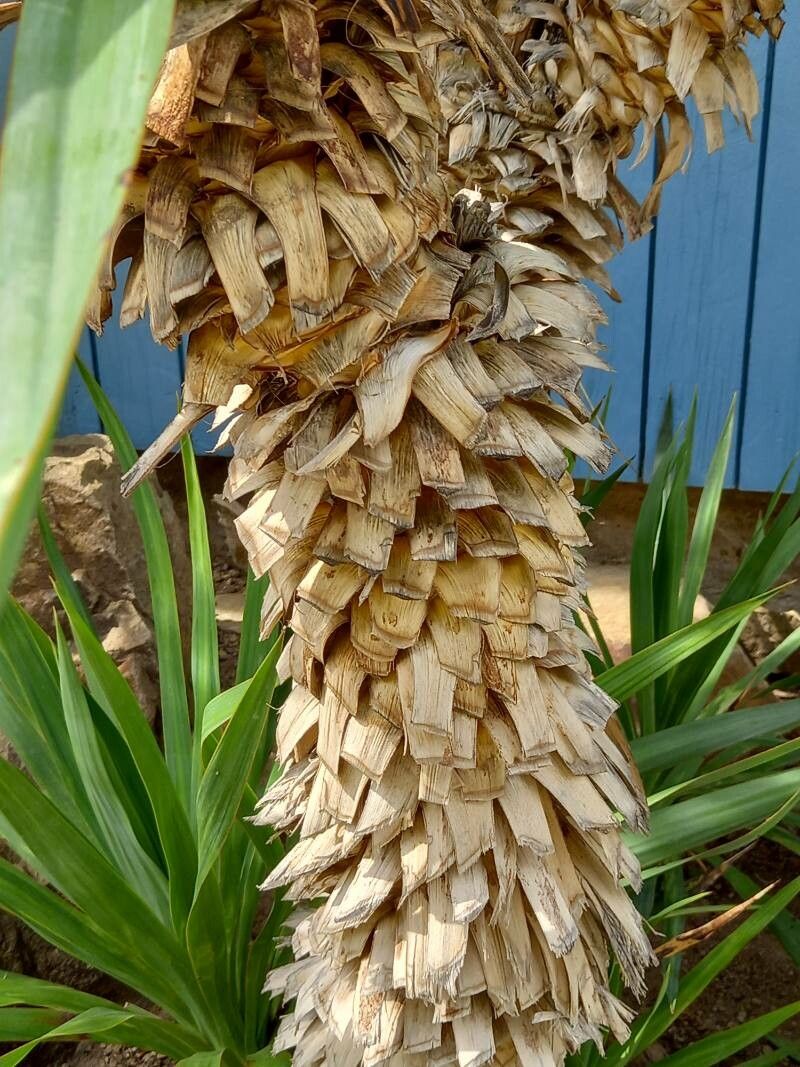
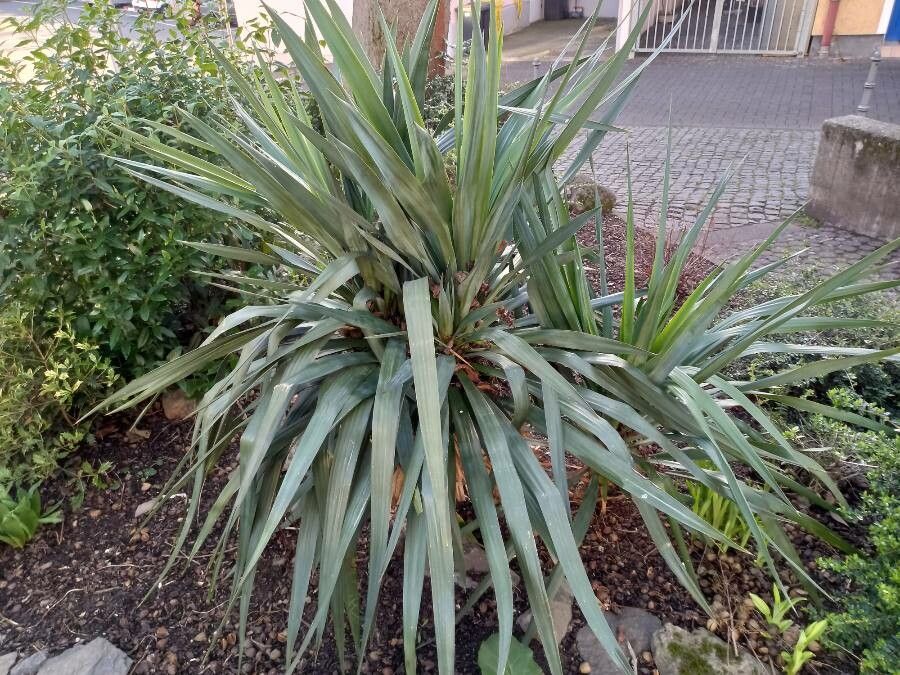
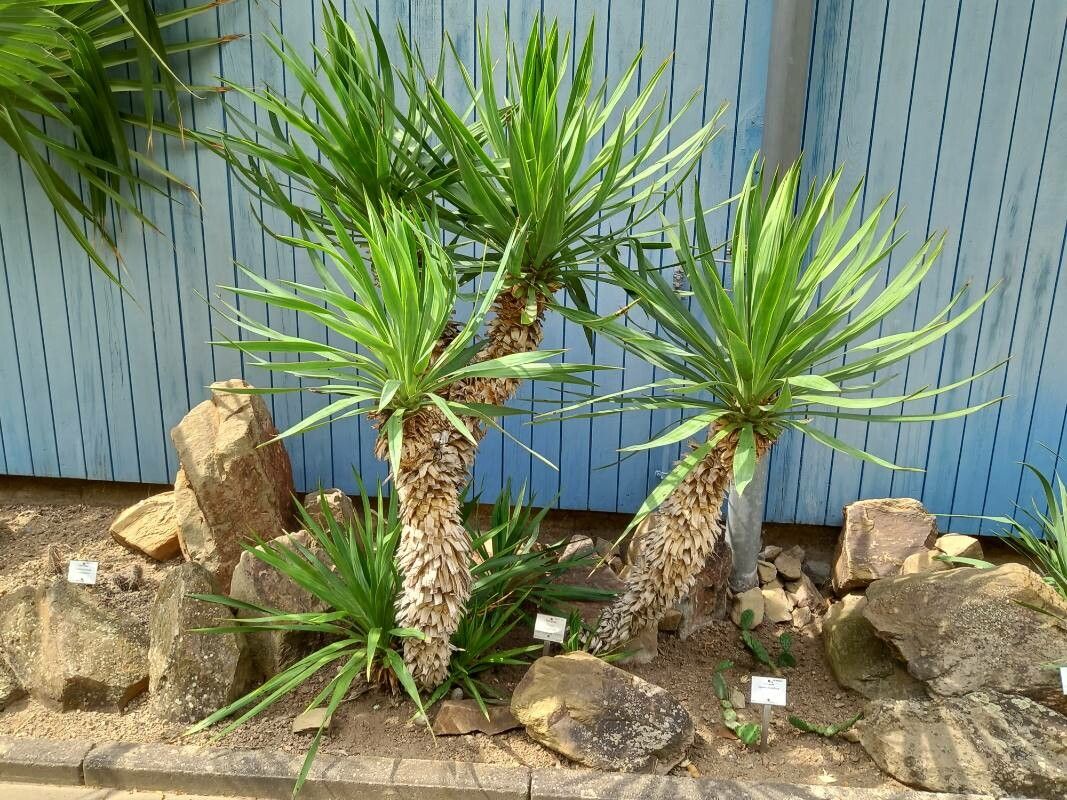
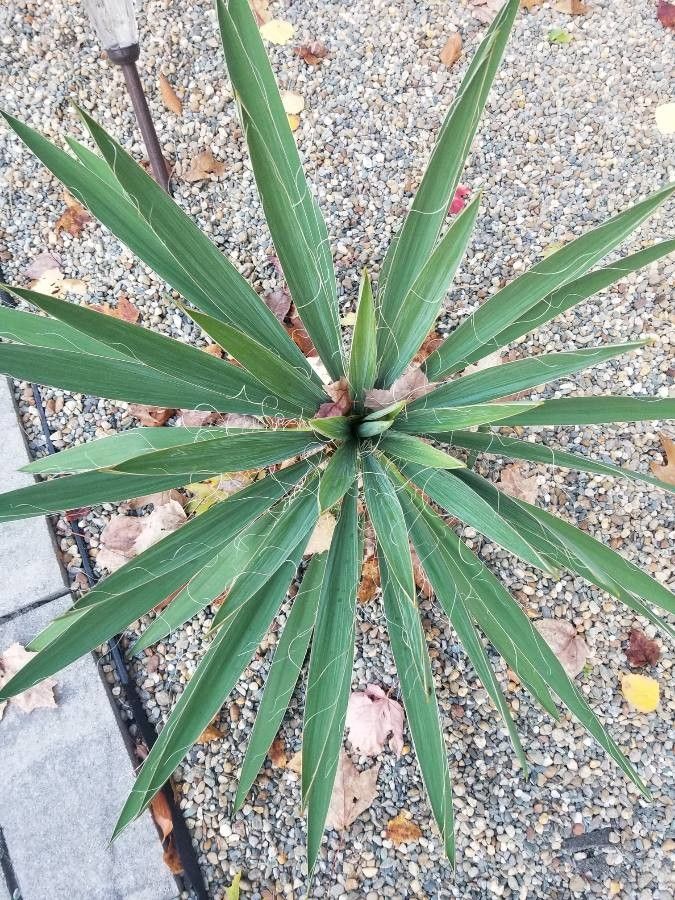
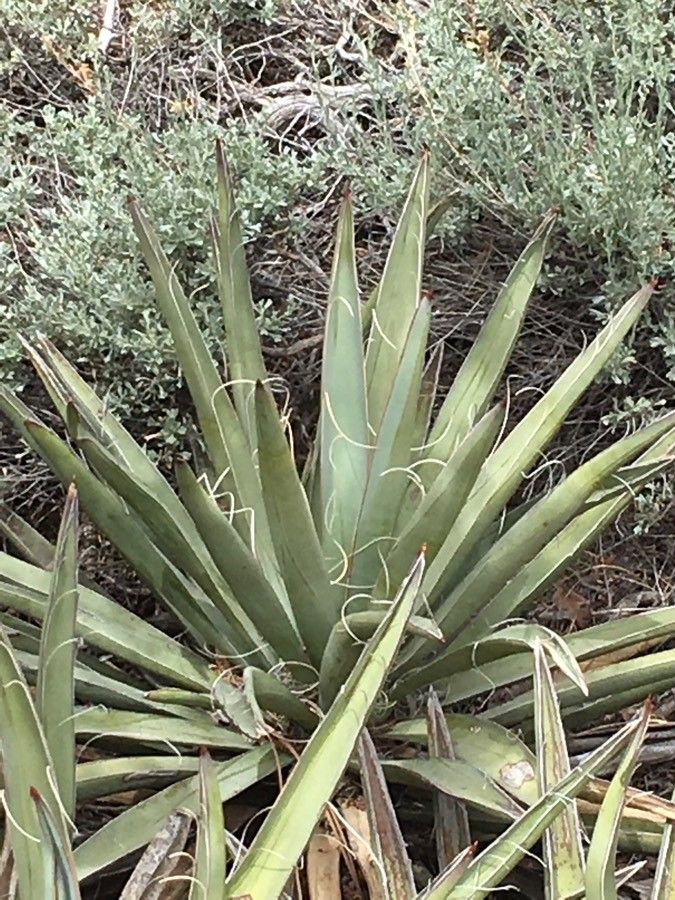
Yucca recurvifolia, commonly known as the curve-leaf yucca, is a perennial plant native to the southeastern United States. This member of the Agavaceae family can grow up to 10 feet tall with a spread of 6 feet. The plant features long, narrow leaves that curve downward and are bluish-green in color. These leaves are stiff and sharply pointed at their tips.
In late spring or early summer, the curve-leaf yucca produces tall spikes of creamy-white flowers that can reach up to 8 feet in height. These bell-shaped flowers have six petals and emit a sweet fragrance that attracts pollinators such as moths.
Drought-tolerant and preferring well-drained soil with full sun exposure, this plant can also tolerate partial shade. It is commonly used as an ornamental plant in landscaping due to its unique appearance, low maintenance requirements, and ability to thrive in hot climates.
The curve-leaf yucca has also been used for medicinal purposes by Native American tribes for centuries due to its anti-inflammatory properties. Its roots were boiled or mashed into poultices to treat wounds or skin irritations.
Overall, Yucca recurvifolia is an attractive ornamental plant that requires minimal care while providing unique visual interest through its distinctive foliage and impressive flower spikes during the blooming season.
Curve-leaf yucca shows strong resistance to disease and is generally not prone to illnesses. As for care, this plant is fairly low-maintenance. Planted outdoors it needs little watering, and larger plants usually do not require pruning. Smaller plants, however, should be pruned after they have finished blooming. Curve-leaf yuccat is suitable for anyone with an outdoor area, such as a garden or deck, and does not demand much gardening experience.
How to keep Yucca Recurvifolia.
Light
Curve-leaf yucca does best with a plentiful supply of sunlight, though it can persist with less exposure. It shows healthier development when strongly lit, while inadequate sunlight may cause stunted growth and reduced vigor. Its native environment receives abundant sun exposure.
Temperature
Curve-leaf yucca, a temperate woody plant, is native to areas with temperatures ranging from 10 to 38 ℃ (50 to 100.4 ℉). Within this temperature range the plant does best in full sunlight and well-drained soil. In winter it can tolerate temperatures as low as 5 ℃ (41 ℉), while in summer it may need extra watering during heatwaves.
Fertilizer
To encourage healthy growth, fertilize your Curve-leaf yucca in early spring. Regular feeding improves overall health, producing vigorous growth, increased tolerance of harsh conditions, and enhanced resistance to pests and diseases. Keep to a consistent fertilization schedule for your Curve-leaf yucca to maintain vibrant foliage with deep color and a lush appearance.
Pot & Repot
When repotting a curve-leaf yucca, select a pot 1–2 inches (2.5–5.1 cm) larger that has good drainage. Use a well-draining potting mix. Repot during spring or fall, making sure the root ball sits just below the rim of the flower pot. After repotting, water deeply and place in a warm spot with indirect sunlight.
Botanical profile.
- Plant Type
- Shrub
- Life Cycle
- Perennial
- Genus
- Yucca
- Family
- Agavaceae
- Hardiness Zone
- 6-12
- Mature Height
- 1.22 m to 1.83 m
- Mature Spread
- 1.83 m to 2.44 m
- Leaf Color
- Green, Blue
- Leaf Type
- Evergreen
- Flower Color
- White
- Flower Size
- 4.57 cm
- Bloom Time
- Early summer, Mid summer
- Planting Time
- Spring, Autumn
- Harvest Time
- Late summer, Early fall, Mid fall
Other names.