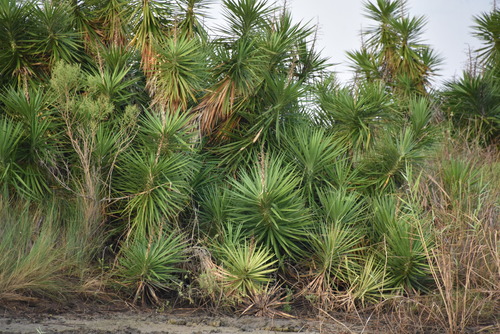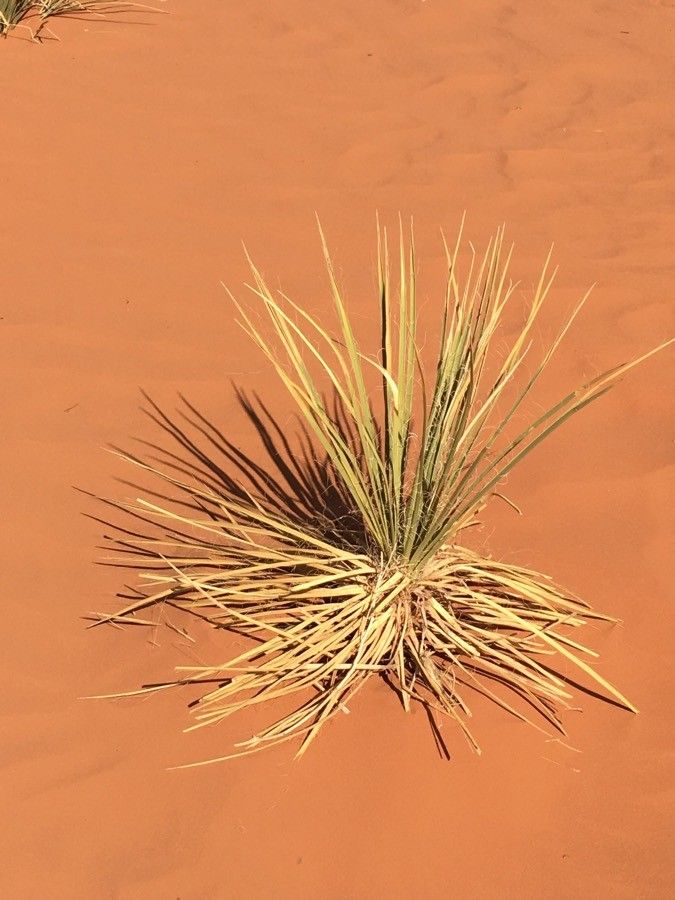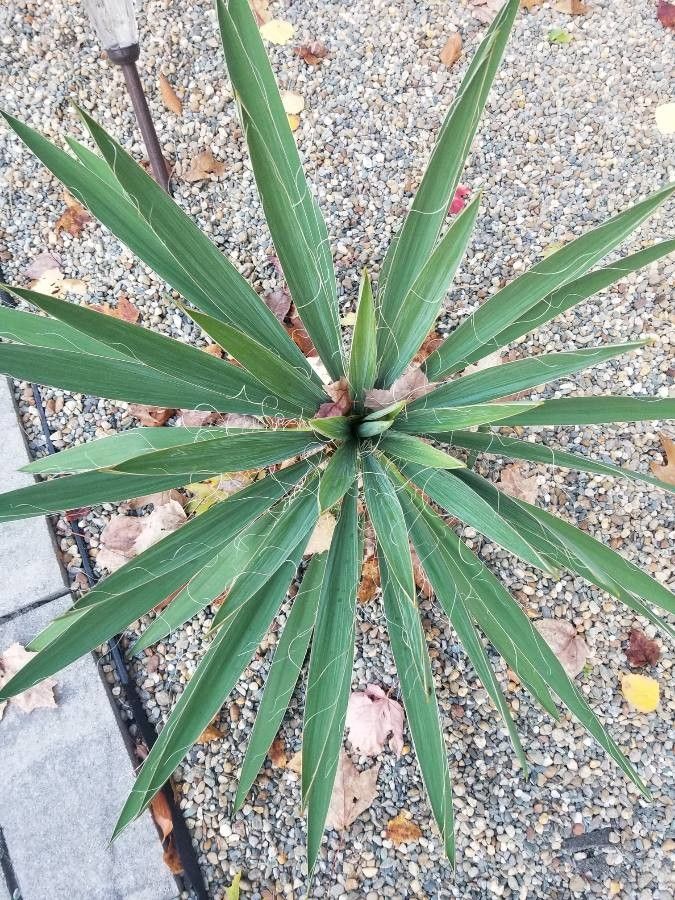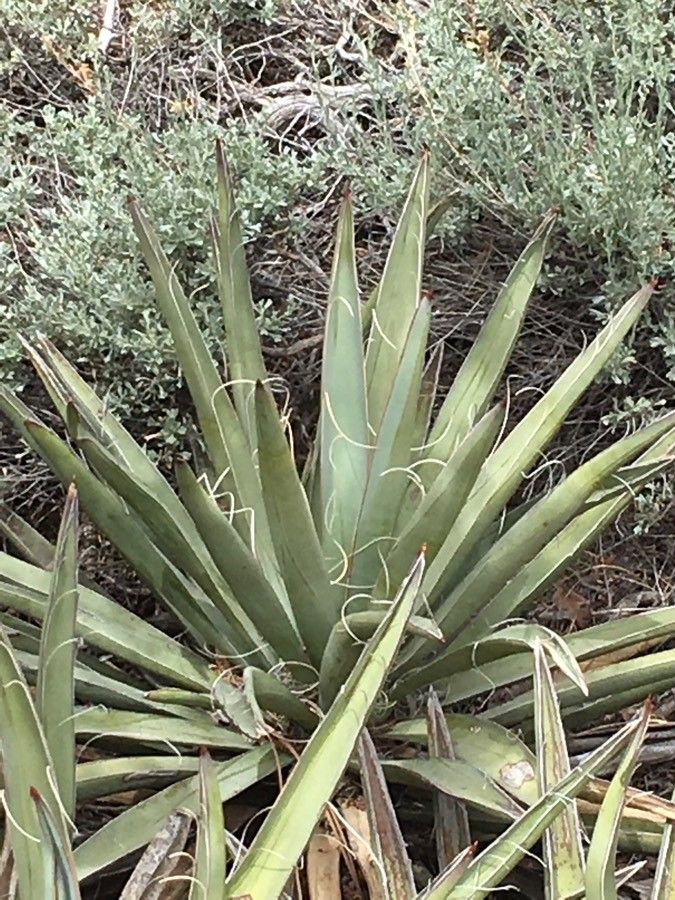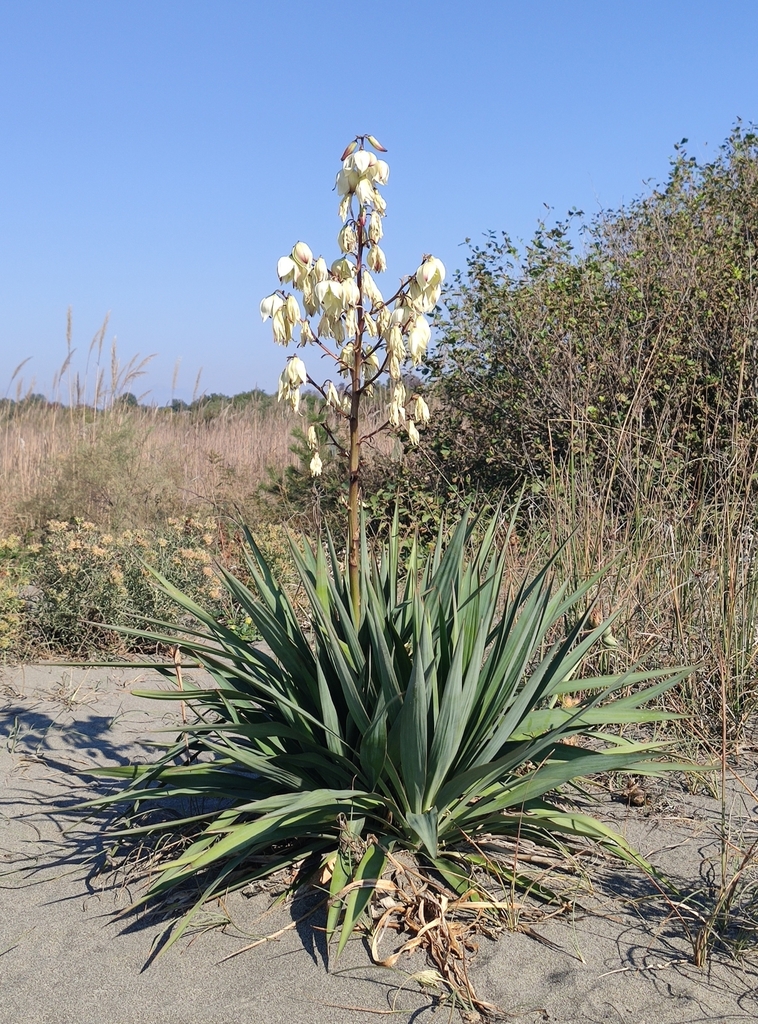
Yucca gloriosa, commonly known as Spanish dagger or mound lily yucca, is a perennial evergreen plant belonging to the Asparagaceae family. Native to the southeastern United States, this plant thrives in sandy soils along coastal areas.
Distinguished by its unique appearance, Yucca gloriosa features long, sword-shaped leaves that grow in a rosette pattern and can extend up to 3 feet in length. These green leaves have sharp tips and edges, making the plant an excellent choice for adding texture and visual interest to any landscape.
During the summer months, Yucca gloriosa produces tall spikes of creamy white flowers that can reach heights of up to 6 feet. These fragrant flowers attract pollinators such as bees, enhancing the biodiversity of your garden.
The Yucca gloriosa is a beautiful succulent that deserves a place in your garden, but it requires special care. Its spines contain saponins, a soap-like compound. While Native Americans used saponins as a natural soap, these compounds can cause skin irritation and are considered toxic. Some tribes even reportedly used saponins as poison for arrow tips. FUN FACT · FROM THE LIBRARY
Yucca gloriosa is a hardy plant that requires minimal care once established. It thrives in full sun but can tolerate some shade and requires well-drained soil with low moisture levels.
This versatile plant is often used for ornamental purposes in landscaping or as an accent piece in gardens or containers. Additionally, its roots have been utilized for medicinal purposes by Native Americans for centuries.
Overall, Yucca gloriosa is an attractive and low-maintenance perennial evergreen, suitable for various landscaping needs. Its unique appearance helps it stand out from other plants, and its ease of care makes it ideal even for those with little gardening experience.
The Spanish dagger is an ornamental plant known for its striking beauty. Its white flowers are exceptionally beautiful and captivating. However, the plant's long, narrow leaves are equally impressive. These leaves, resembling Spanish bayonets, are quite rigid and can easily cause injury if handled carelessly.
Spanish dagger shows strong resistance to disease and is generally not prone to illnesses. In terms of care, this plant is fairly low-maintenance. When grown outdoors it requires little watering, and larger specimens typically do not need pruning. However, smaller plants should be pruned after they have finished flowering. Spanish dagger is suitable for anyone with an outdoor area, such as a garden or deck, and does not demand extensive care experience.
How to keep Yucca Gloriosa.
Light
Spanish dagger does best in places with plentiful sunlight throughout the day. It can also tolerate spots with moderate sun. Its native habitat typically receives ample sunlight. Excessive sun can cause leaf scorching, while insufficient sun can impede its healthy growth.
Water
Adapted to arid climates, the Spanish dagger plant thrives with minimal moisture and has a high tolerance for drought. It requires deep watering every three weeks and benefits from well-draining soil to prevent root rot. During its active growing season, its water needs slightly increase to support its spiky foliage.
Humidity
This plant will thrive in moderate humidity, which is probably the level in your home. However, misting it a few times a week can be very beneficial. Make sure the room has good ventilation.
Temperature
The Spanish dagger is native to warm temperate regions and prefers temperatures from 50 to 100 ℉ (10 to 38 ℃). In winter it can tolerate occasional freezes down to 5 ℉ (-15 ℃) for short periods. To adapt to seasonal temperature changes, it is best to gradually adjust watering and avoid sudden temperature fluctuations.
Fertilizer
To encourage healthy growth, fertilize your Spanish dagger in early spring. Consistent fertilization improves its overall health, producing robust growth, better tolerance of harsh conditions, and increased resistance to pests and diseases. Keep a defined fertilization routine for your Spanish dagger to maintain foliage that is vivid in color and lush in appearance.
Pruning
The Spanish dagger is known for its sword-like leaves and vibrant flower spikes. To enhance its appearance and improve air circulation, it is beneficial to periodically prune it in early spring. This involves removing dead leaves and thinning out crowded areas. However, be careful not to over-prune, as this can cause stress and damage to the plant. Proper pruning encourages healthier growth and helps reduce pest problems.
Pot & Repot
When repotting Spanish dagger, pick a pot 1-2 inches (2.5–5.1 cm) larger that has good drainage. Use a well-draining potting mix. Repot in spring or fall, making sure the root ball is slightly lower than the rim of the flower pot. Water thoroughly after repotting and put it in a warm spot with indirect sunlight.
Botanical profile.
- Plant Type
- Shrub
- Life Cycle
- Perennial
- Genus
- Yucca
- Family
- Asparagaceae
- Hardiness Zone
- 6-12
- Mature Height
- 0.49 m to 1.83 m
- Mature Spread
- 1.22 m
- Leaf Color
- Green, Blue, Yellow, Variegated
- Leaf Type
- Evergreen
- Flower Color
- White, Cream
- Flower Size
- 5.08 cm to 6.35 cm
- Bloom Time
- Early summer, Mid summer
- Planting Time
- Spring, Autumn
- Harvest Time
- Mid summer, Late summer, Early fall
Other names.
Reader questions.
How should I water my Spanish dagger plant?
Misting is a good way to hydrate the leaves without making them too soggy. To prevent root rot, it's important to have good drainage. The plant might be sensitive to fluoride, which is common in the public water supply, and it won't tolerate hard water, especially during its growing stages. To water the plant, use a watering can or sprinkler with purified or distilled water. Make sure to water the entire soil surface evenly to avoid stem rot. To prevent harm to the plant, leaf burn, or stunted growth, use distilled water instead of tap water and occasionally use rainwater if available. If Spanish dagger is planted in a pot, keep the soil moist but not overly soggy. If it's planted outside in a garden, ensure proper drainage and let the soil dry completely before using a sprinkler or garden hose to avoid root rot and yellowing leaves. Some people use hydrogen peroxide occasionally in the water, but it's not recommended for regular use. A filtration system can also be useful for removing nitrates, salt, and lead from the water.
Why do I have to put fertilizer on my Spanish dagger?
No matter what type of Spanish dagger you have, regular fertilization is key to promoting overall plant health. Providing the right nutrients will result in stronger growth and increased resilience to challenging growing conditions. It will also enhance the plant's ability to combat diseases and pests. Since the foliage is a prominent feature of your Spanish dagger, it is important to maintain its integrity. This can be achieved by following a consistent fertilization schedule tailored to your specific Spanish dagger. By doing so, you can expect to see leaves with vibrant colors and a lush appearance.
What are the sunlight requirements for a Spanish dagger?
The Spanish dagger, or Yucca gloriosa, thrives best in full sun conditions, requiring above 6 hours of sunlight daily. However, it can also adapt to partial sun, needing about 3-6 hours of sunlight. It's essential to observe how sunlight moves through your garden to find the perfect spot that offers a balance of light and shade, ensuring the plant's health and happiness.
What temperature conditions are ideal for the Spanish dagger?
The Spanish dagger thrives in warm temperate regions with ideal temperatures ranging between 50 to 100°F (10 to 38°C). It has strong cold resistance, allowing it to tolerate occasional freezes down to 5°F (-15°C) for brief periods. During winter, it generally does not require special frost protection measures. However, in regions where temperatures may fall below -25°C, providing cold protection by wrapping the trunk and branches with non-woven fabric or cloth is advisable. To prepare for winter, it's recommended to water the plant abundantly before the first freeze, ensuring the soil remains moist to prevent drought and water scarcity during the colder months.
What should I do if I give too much or too little water to a Spanish dagger plant?
- Brown tips on the plant are a sign that the plants are not getting enough water. These plants are sensitive to boron and fluoride found in tap water, and if they have too much of these minerals, you might notice drooping leaves. - When the Spanish dagger is underwatered, its stems show wrinkles. The leaves can become brown, crispy, and dry. In such cases, water the plant as soon as possible. - Overwatering can lead to root rot. If this happens, remove any damaged roots from the soil, especially if they appear mushy, fragile, and black. Cut off a larger part of the root to help with these issues. - Overwatering can also cause the leaves to turn brown and fall off early. To help the plant recover, drain any excess water and wait for the soil to dry before watering again. - If you notice signs of root rot, throw away the soil, clean everything thoroughly, and add pebbles to the pot for proper drainage. Also, discard any excess water at the base of the pot if you see tan rings or reddish-brown spots on the leaves.
When should I fertilize my Spanish dagger plant?
To ensure the healthy growth of your Spanish dagger plant, it is recommended to fertilize it in late winter or early spring. This will provide the necessary nutrients for its growth once the weather becomes warm enough. If you live in a warm climate region, it is beneficial to give your Spanish dagger an additional fertilizer feeding in early fall. This will supply nutrients for the following growing season and increase its ability to withstand the winter cold without foliage damage. Fertilizing earlier will also allow the new branches to grow and become stronger before the onset of winter.
Can the Spanish dagger tolerate different lighting conditions?
Yes, the Spanish dagger is versatile in its sunlight needs; it flourishes in locations with abundant sun exposure throughout the day but can also withstand moderate sunlight. Its natural habitat usually receives sufficient sunlight, confirming its ability to adapt to various lighting conditions. However, too much sun can lead to leaf scorching, while insufficient sunlight might inhibit its growth.
How does the Spanish dagger respond to low temperatures?
The Spanish dagger is cold-tolerant, performing best when temperatures are above 10°C. It should be kept above -15°C during winter. If temperatures drop below -25°C, the plant may not show immediate signs of distress; however, by spring, branches may become brittle and dry, and new shoots may fail to emerge. In spring, it's important to prune away any dead branches to encourage healthy growth.
How often should I water my Spanish dagger plant?
The Spanish dagger is a tough plant that can handle drought conditions. If you have it in a pot, water it every 1-2 weeks when the soil is completely dry. Water generously so that it drains out of the pot's holes. Remember to remove any excess water from the saucer after an hour. In the garden, consider the rainfall the plant is already receiving. Avoid overwatering and make sure the roots aren't sitting in water. In tropical areas with frequent rain or monsoons, water once every 2 weeks should be sufficient.
When is the best time to not fertilize my Spanish dagger plant?
There are specific times of the year when you should avoid fertilizing your Spanish dagger plant. Firstly, during the early and mid-winter months, the plant is dormant and does not require any nutrients. Similarly, it is not recommended to fertilize the plant in late spring and throughout the summer. During this period, the weather is typically hotter and drier, which can negatively affect the plant's response to fertilization. To prevent any problems, it is best to stick to a fertilization schedule that focuses on feeding the plant only in early spring and early fall.
How should I use artificial lighting for indoor Spanish dagger plants?
For indoor Spanish dagger plants, adequate lighting is crucial, especially when natural sunlight is insufficient. Artificial lights, such as LED lights, are advisable as they can be customized to provide the necessary wavelengths of light. Full sun plants require 30-50W/sq ft, partial sun plants need 20-30W/sq ft, and full shade plants need 10-20W/sq ft of artificial light. The light source should be placed 12-36 inches above the plant, and for most plants, 8-12 hours of light per day is sufficient to mimic natural sunlight conditions.
What should I do if my Spanish dagger experiences high temperatures?
During summer, the Spanish dagger should be kept below 38°C to ensure its health. Exposure to temperatures above 43°C can lead to the plant's leaves becoming lighter in color, tips drying up and becoming withered, and an increased susceptibility to sunburn. To mitigate these issues, trim away sunburned and dried parts of the plant. It's also beneficial to move the plant to a location with shade from the midday and afternoon sun or to provide shade with a cloth. Ensuring the plant is watered in the morning and evening will help keep the soil moist, further protecting the plant from high temperature stress.