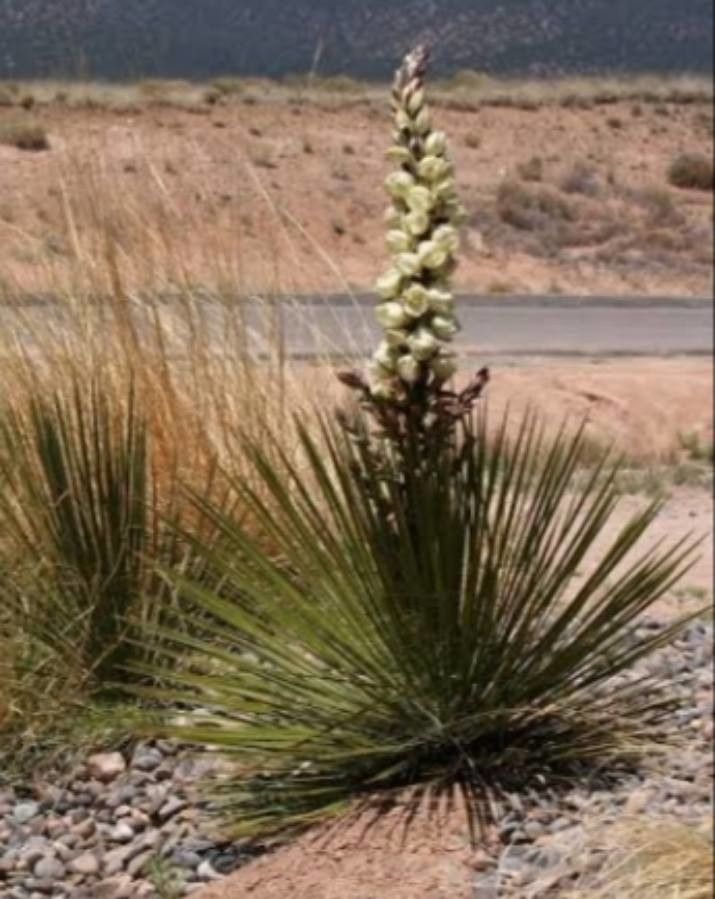
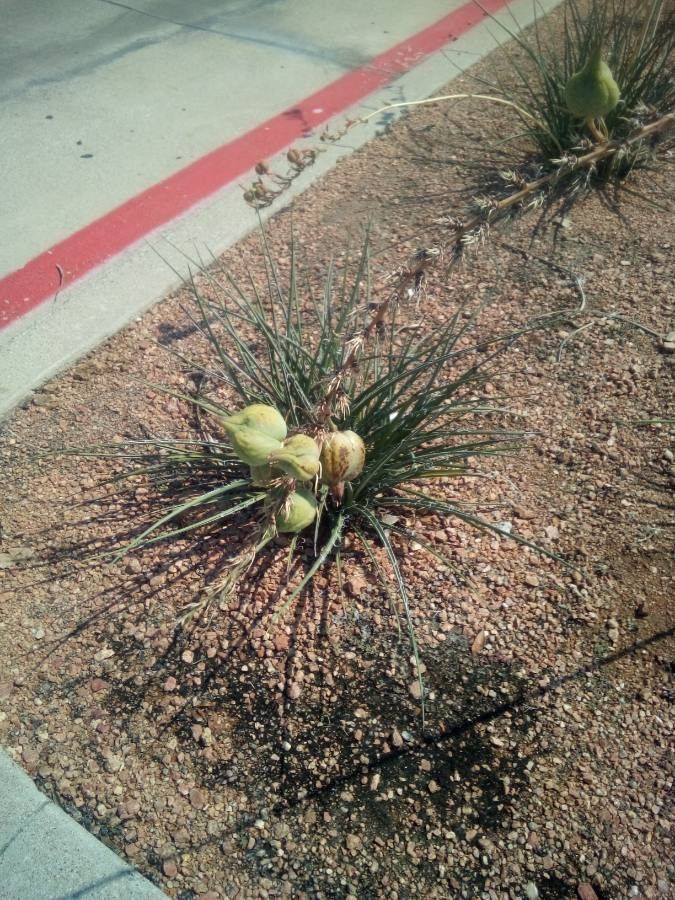
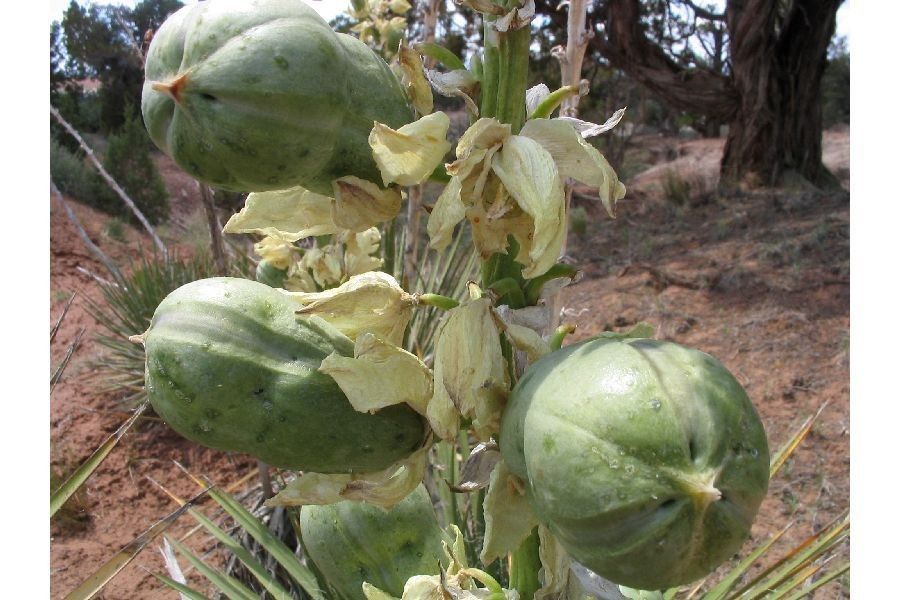
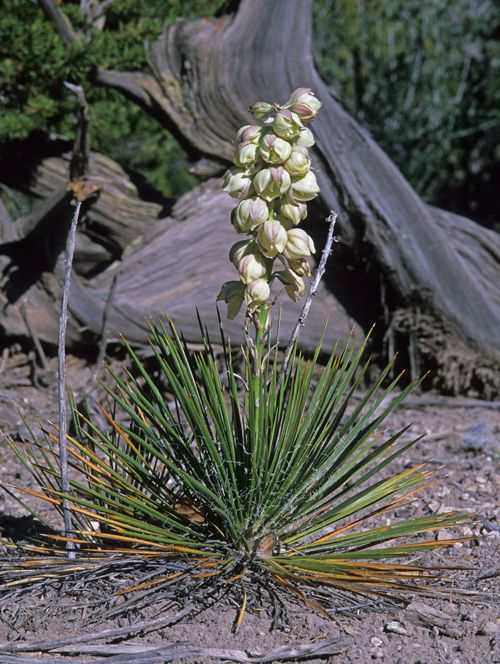
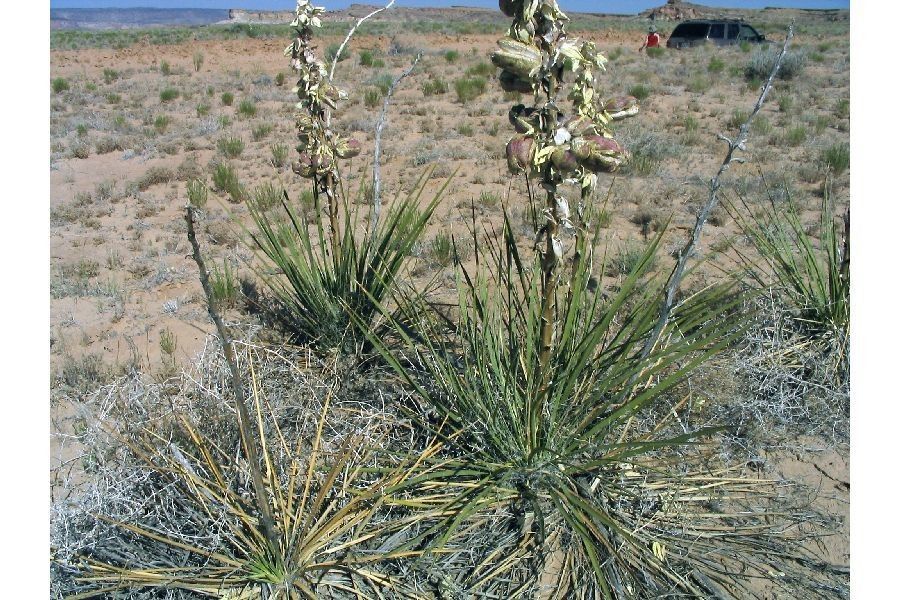
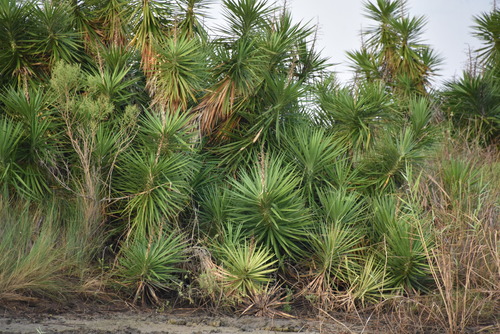
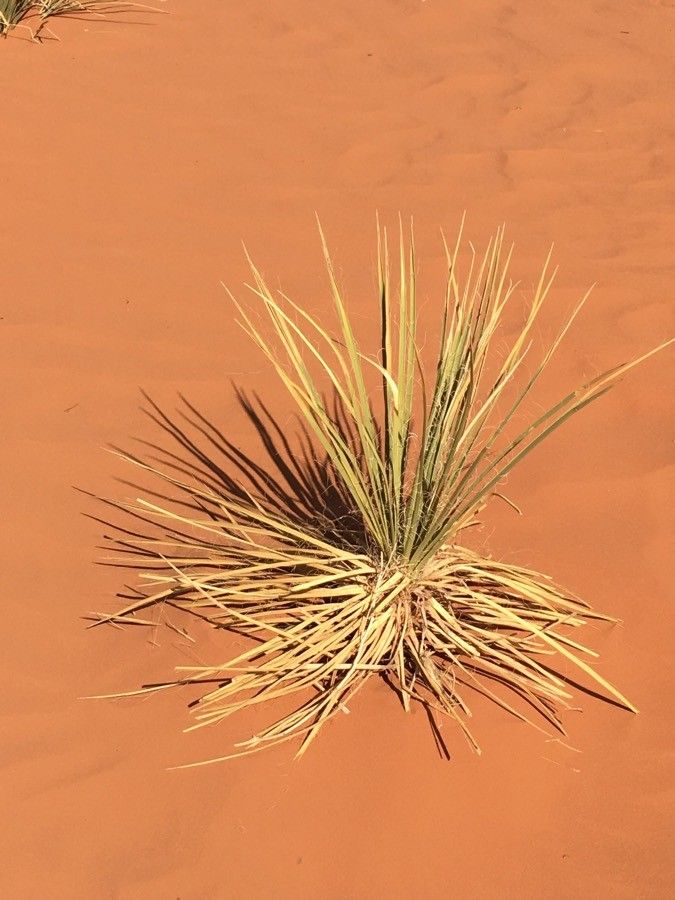
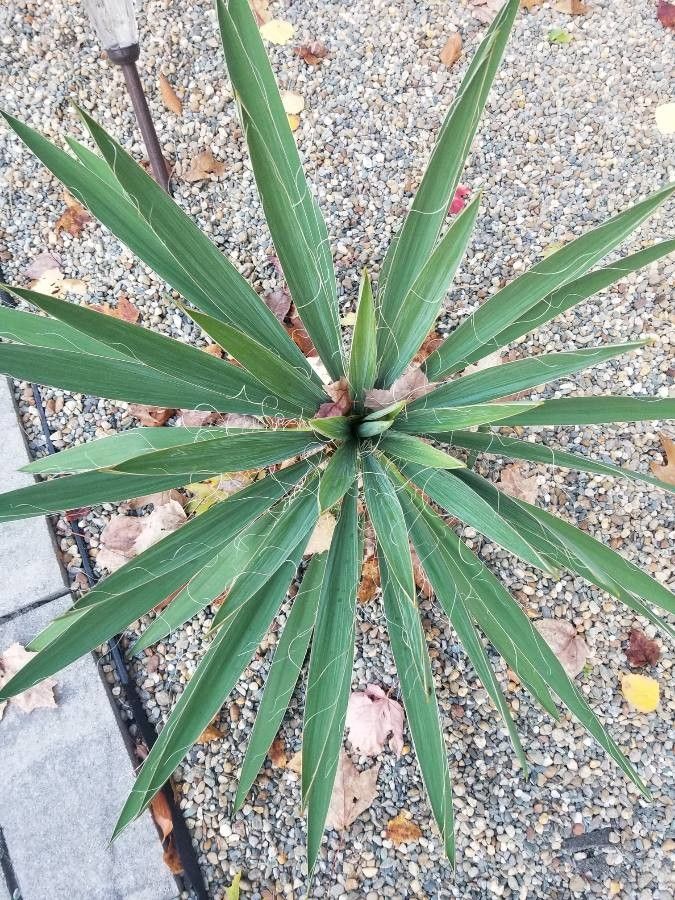
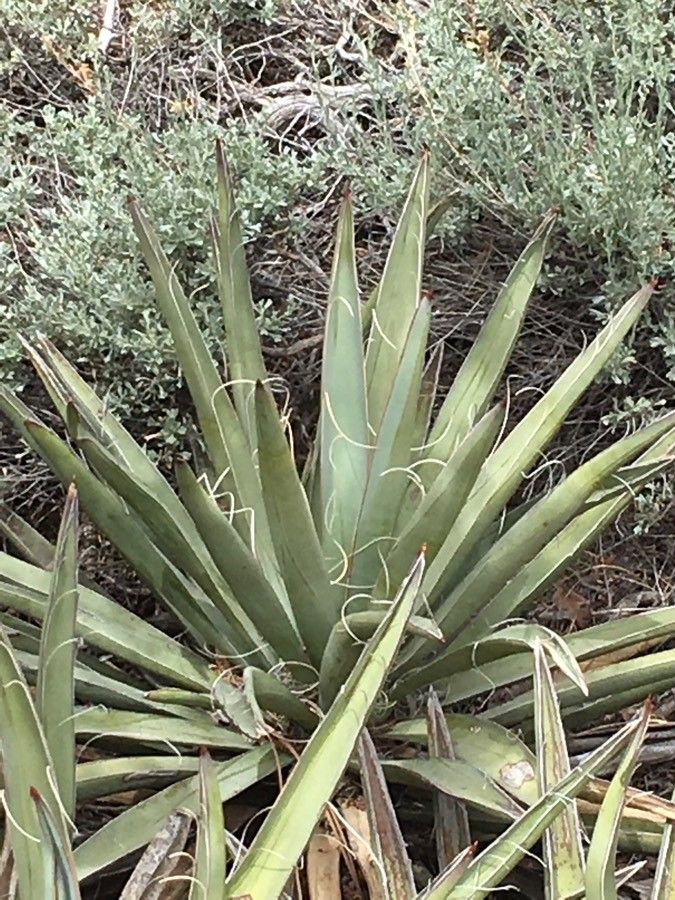
Yucca baileyi is a plant in the family Agavaceae. It is native to Utah, Arizona, New Mexico and Colorado but has been cultivated elsewhere. Much of its native range is within the boundaries of the Navajo (Diné) Reservation, hence the common name "Navajo yucca." The Navajo people make extensive use of yucca fibers to make a wide assortment of useful and ceremonial items. They also use the roots as soap. It is not considered to be threatened, as it has a large range and an overall stable population.Yucca baileyi is a relatively small species, usually acaulescent but sometimes with a short leafy stem. It can produce as many as 15 rosettes. Flowering stalk is up to 150 cm tall, with greenish-white to slightly purplish flowers.
Navajo yucca is relatively resistant to disease and usually does not suffer from illnesses. However, it can be vulnerable to pests and diseases present in its surroundings. Such infections are typically not serious. For care, this plant requires a moderate level of maintenance. It should be pruned regularly to keep a good appearance and support healthy growth. Fertilizing can also help encourage flowering. Navajo yucca is well suited to anyone with outdoor space, such as a garden or patio, and does not demand much care experience. It may need more attention when cultivated indoors.
How to keep Yucca Baileyi.
Light
Navajo yucca is a sun-loving perennial herbaceous plant native to open habitats, frequently flourishing in meadows and grasslands. It prefers full sun but can also tolerate partial sun.
Water
The Navajo yucca thrives in arid regions, thanks to its drought tolerance and ability to retain moisture efficiently through its succulent nature. To mimic its natural habitat, it should be watered minimally, ideally every 2 to 3 weeks. Its growth is adapted to the infrequent rainfall typical of desert climates.
Fertilizer
The best time to fertilize a Navajo yucca is in early spring, as it comes out of dormancy and starts active growth. Fertilizing supplies essential nutrients for healthy growth. Although Navajo yucca has relatively low fertilizer needs, applying fertilizer once a year can improve its survival and encourage better, longer-lasting flowers.
Pruning
The Navajo yucca is characterized by its sword-like leaves and vibrant flowers. It requires minimal pruning for optimal growth. In early spring, remove any dead leaves, and later in the season, cut away spent flower stalks. Use clean, sharp tools to improve airflow, reduce the risk of disease, and maintain the plant's structure.
Botanical profile.
- Plant Type
- Herb, Shrub
- Life Cycle
- Perennial
- Genus
- Yucca
- Family
- Asparagaceae
- Hardiness Zone
- 5-9
- Mature Height
- 30 cm to 91 cm
- Mature Spread
- 0.61 m to 1.22 m
- Leaf Color
- Green Yellow, Yellow Green
- Leaf Type
- Evergreen
- Flower Size
- 5.08 cm to 6.35 cm
- Bloom Time
- Early summer, Mid summer
- Planting Time
- Spring, Summer, Autumn
- Harvest Time
- Late summer, Early fall, Mid fall
Other names.
Reader questions.
What are the sunlight requirements for Navajo yucca?
Navajo yucca requires full sun, which means it thrives in areas that receive above 6 hours of sunlight daily. However, it can also tolerate partial sun conditions, where it would get about 3-6 hours of sunlight. It's important to watch how sunlight moves through your garden to choose spots that offer the right balance of light and shade, ensuring the plants' happiness.
What is the common name of Yucca baileyi?
The common name of Yucca baileyi is Navajo yucca.
What essentials should be known about Navajo yucca?
Navajo yucca is a sun-loving, perennial herbaceous plant that is native to open habitats, usually flourishing in meadows and grasslands. It prefers full sun but can also grow under partial sun conditions. For indoor plants, when natural sunlight is insufficient, artificial lighting can be a vital solution. LED lights are recommended because they can be customized to provide specific wavelengths of light that plants need. The amount of artificial light required varies depending on the plant's sunlight needs: 30-50W/sq ft for full sun plants, 20-30W/sq ft for partial sun plants, and 10-20W/sq ft for full shade plants. The light source should be placed 12-36 inches above the plant, mimicking natural sunlight as much as possible, and most plants will need 8-12 hours of light per day.
What are common symptoms of inadequate sunlight for Navajo yucca?
When Navajo yucca is placed in rooms with inadequate lighting, it may exhibit symptoms such as smaller new leaves, leggy or sparse growth due to longer spaces between leaves or stems, faster leaf drop to conserve resources, slower or no new growth as the plant enters survival mode, and lighter-colored new leaves indicative of insufficient chlorophyll and nutrients. Other symptoms include chlorosis, or yellowing of the leaves due to chlorophyll breakdown; sunscald, which appears as pale or necrotic areas on the plant tissue; leaf curling as a defense against excessive sunlight; wilting from increased water loss; and leaf scorching, characterized by brown, dry edges on leaves.
How can one address insufficient sunlight for Navajo yucca?
To address insufficient sunlight, gradually move your Navajo yucca to sunnier locations, aiming for at least 6 hours of direct sunlight daily. For indoor plants, using a south-facing window or artificial grow lights for at least 8 hours daily can help. When moving plants outdoors, it's crucial to do so gradually to avoid sunburn. Pruning obstructing trees or transplanting smaller plants during their dormant period to areas with better sun exposure and drainage can also improve sunlight access. However, note that parts of the plant already affected by insufficient light may not recover, but new growth should be healthy after increasing light exposure.