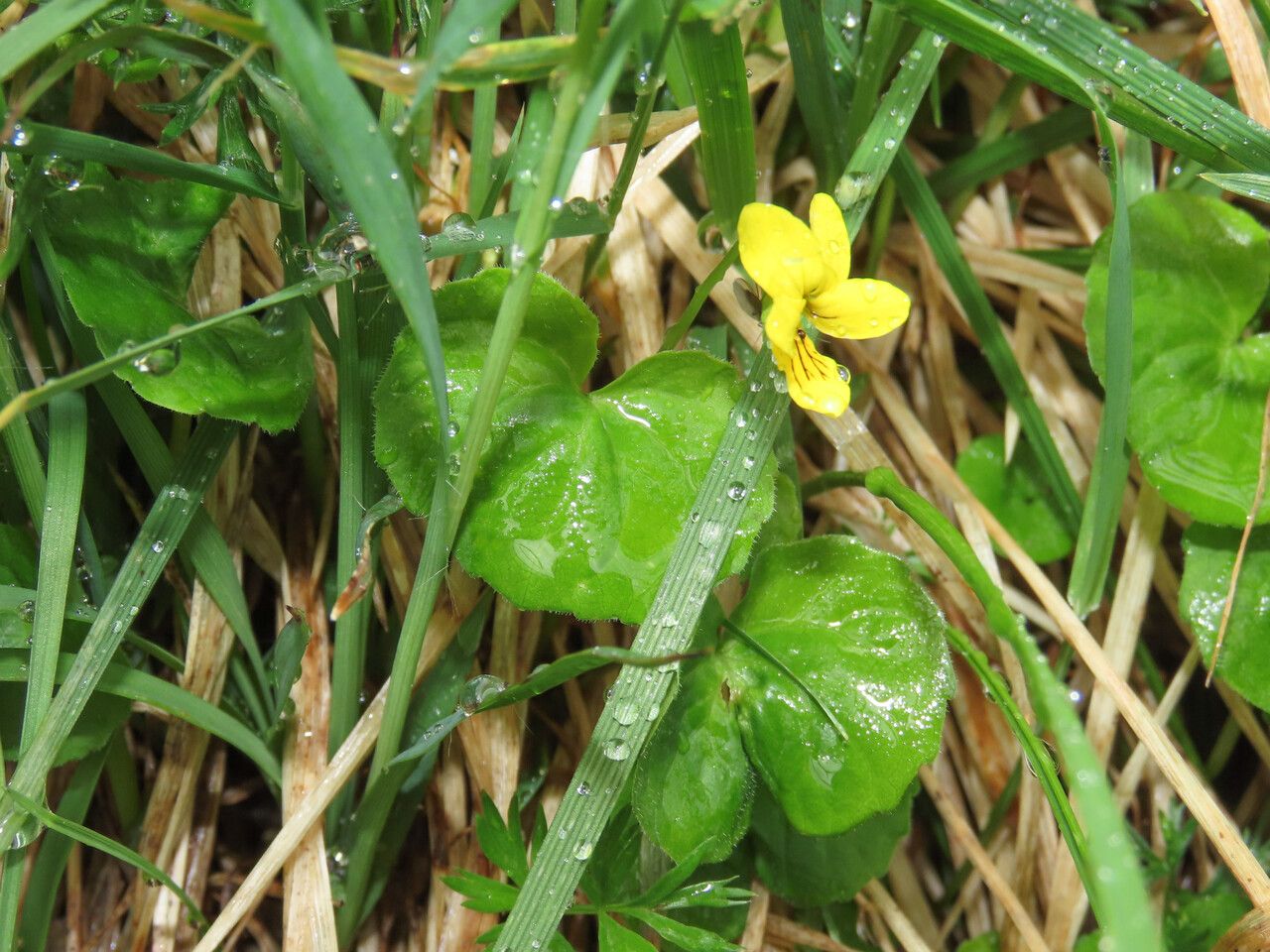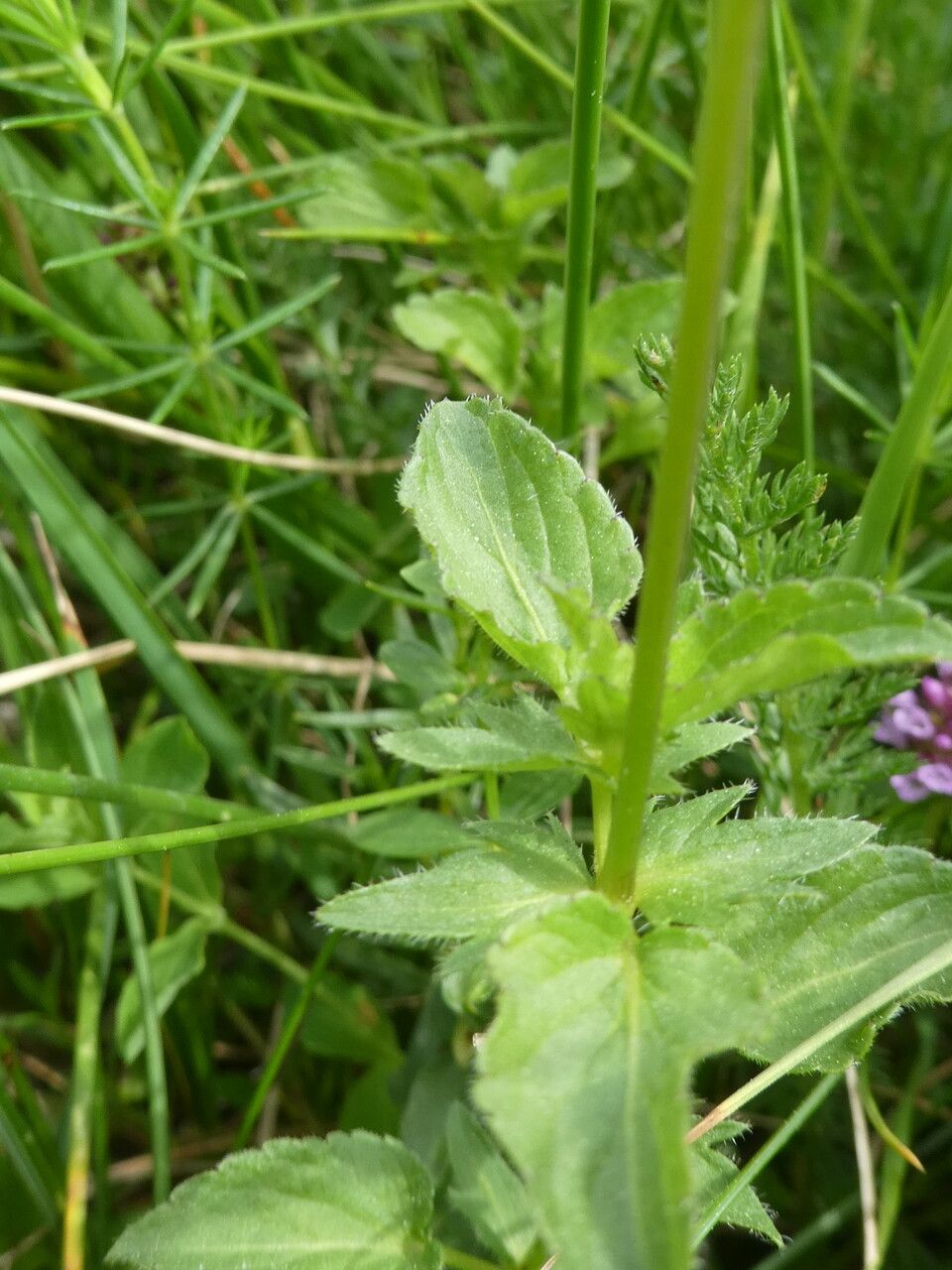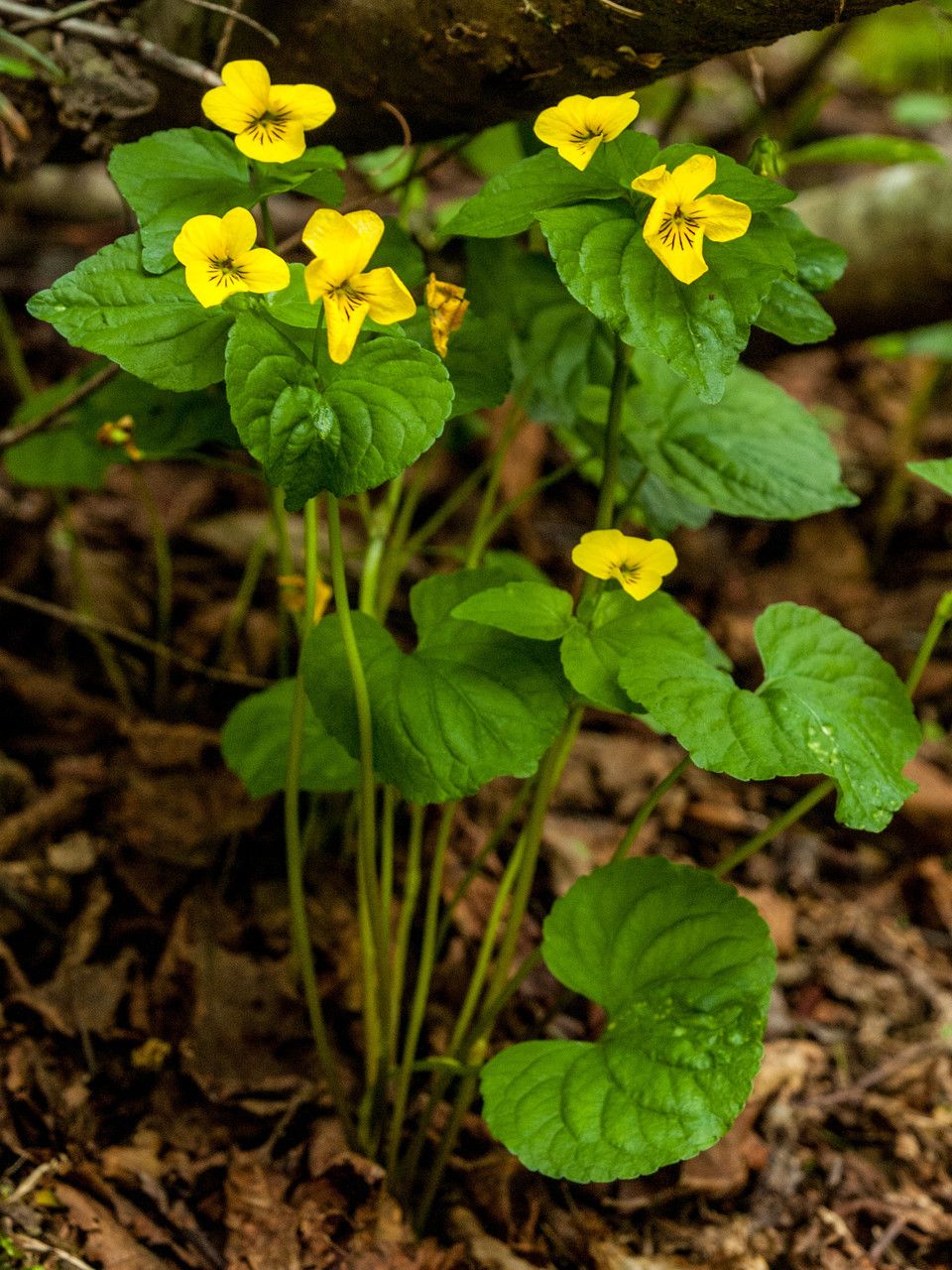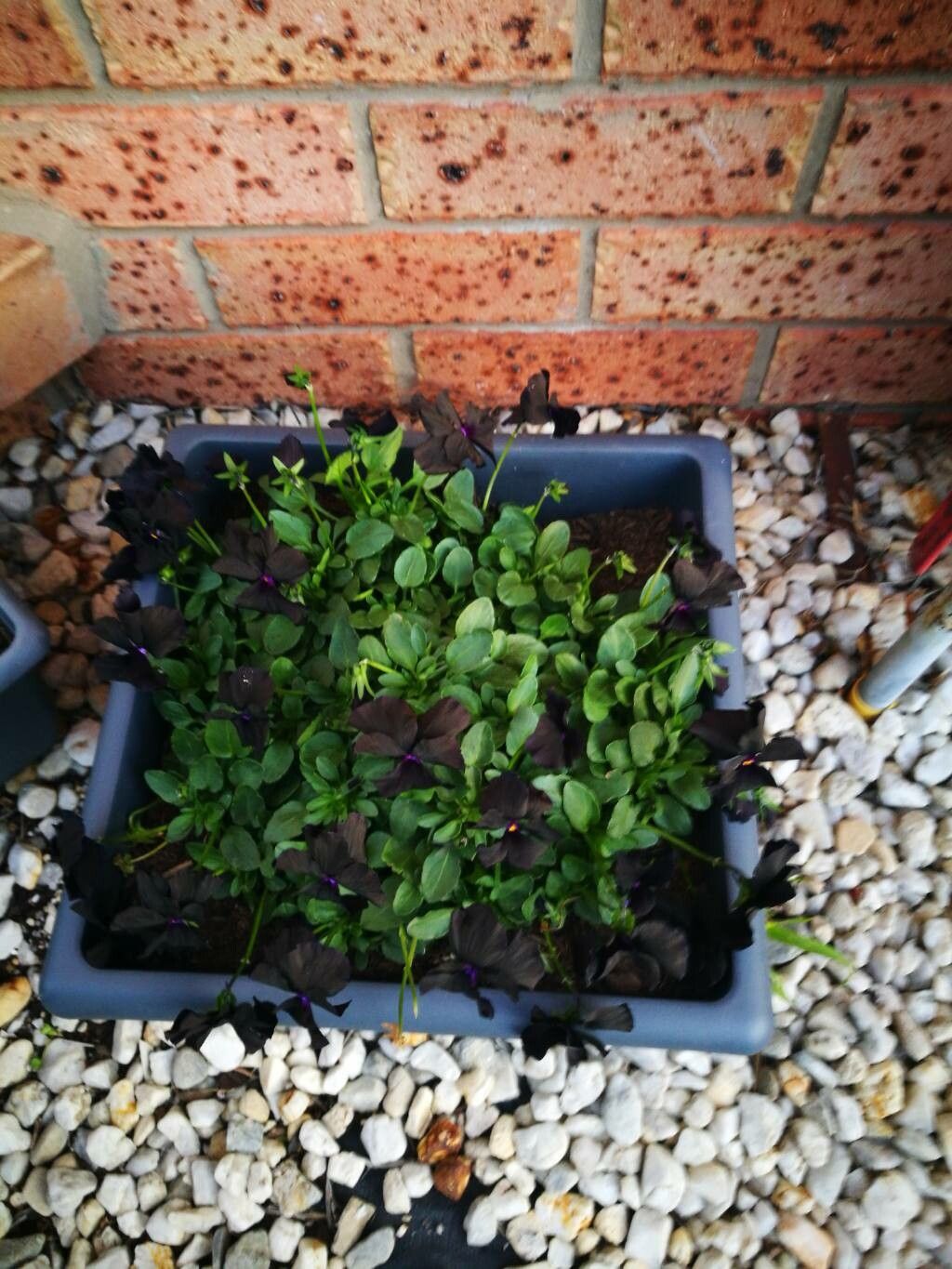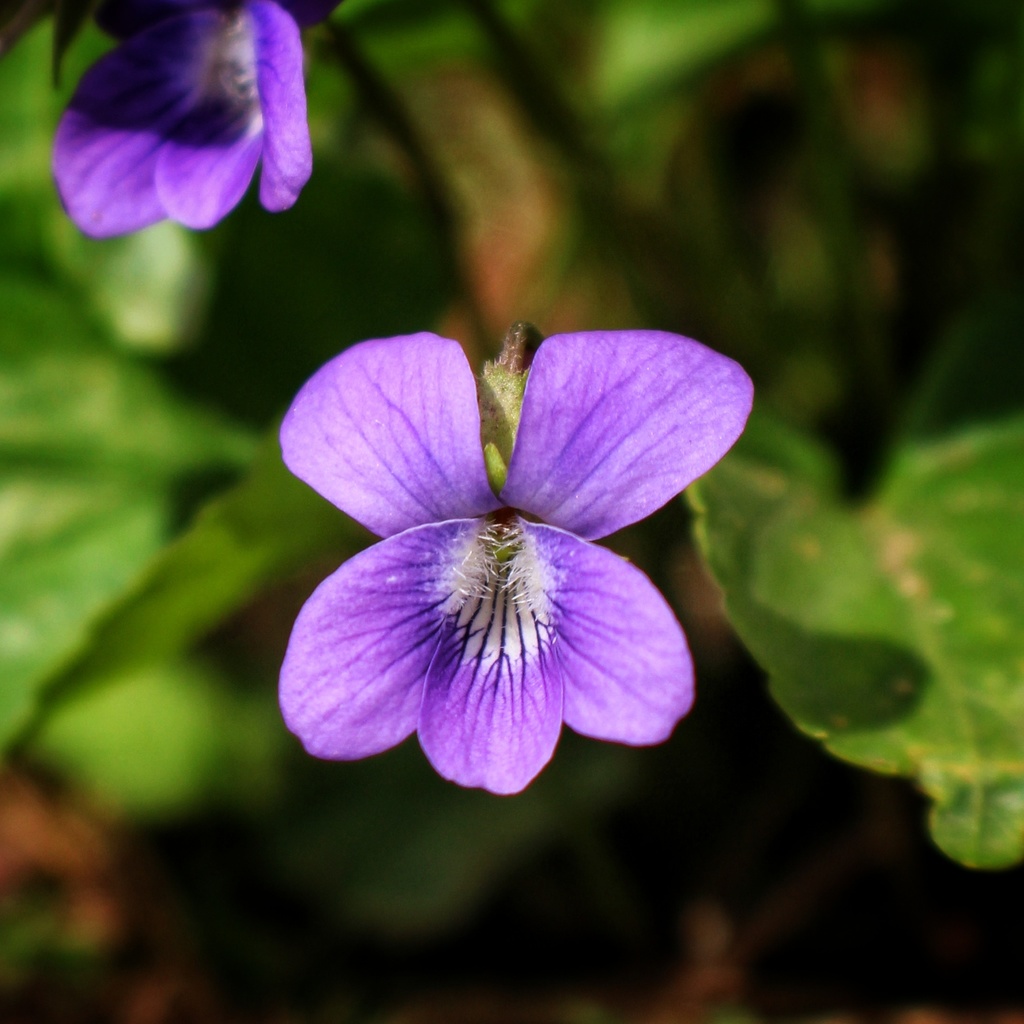
Viola sororia, known commonly as the common blue violet, is a short-stemmed herbaceous perennial plant that is native to eastern North America. It is known by a number of common names, including common meadow violet, purple violet, woolly blue violet, hooded violet, and wood violet. Its cultivar 'Albiflora' has gained the Royal Horticultural Society's Award of Garden Merit. This perennial plant species is distributed in the eastern half of the United States, Canada and a part of Eastern Mexico. Their native habitats are rich, moist woods, and swamps located in the eastern half of the United States and Canada.Self-seeding freely, in lawns and gardens it can be considered a weed by some. Cleistogamous seed heads may also appear on short stems in late summer and early autumn.
Common Blue Violet: This plant is extremely attractive, with heart-shaped leaves and unique, asymmetrical flowers. Its flowers are a rare blue-purple color, making it a favorite in gardens. It is the most widespread species of its genus, hence the name "common blue violet." The word "violet" comes from the Latin "viola."
Common blue violet is fairly resistant to disease and typically not highly susceptible. Still, it can be affected by pests or diseases present in its environment. These problems are generally mild. In terms of care, the plant requires moderate maintenance. Regular pruning is needed to keep it looking good and to support healthy growth. Fertilizing can also help encourage flowering. Common blue violet is suitable for people with outdoor spaces like gardens or patios and does not demand much cultivation experience. It may need more attention if grown indoors.
How to keep Viola Sororia.
Light
The common blue violet flourishes best in partially sun-lit environments. It can tolerate a range of sunlight exposure, from fully bathed in sunlight to entirely shaded places. Nonetheless, extreme exposure or lack of exposure can adversely affect its overall growth and wellbeing.
Water
The common blue violet thrives in a moisture-rich environment with damp soil, needing balanced watering twice a week for optimal growth. This herbaceous perennial adapts well to changing rain patterns, ensuring it stays hydrated throughout its growth cycle without being drought-tolerant or requiring excessive humidity.
Humidity
This plant will thrive in moderate humidity, which is probably the level in your home. However, misting it a few times a week can be very beneficial. Make sure the room has good ventilation.
Temperature
The common blue violet is native to temperate areas, ideally flourishing in a range of 68 to 95 °F (20 to 35 ℃). During the summer months, it is advisable to provide it with shade if the temperature surpasses the optimal range. Concerning winter conditions, it is relatively tolerant of lower temperatures.
Fertilizer
A one-time fertilizer application in the spring is typically adequate for the Common blue violet, though repeated fertilizations can optimize its growth. Aim to fertilize every four to six weeks. Fertilization improves leaf aesthetics and performance, fostering a steady color and robust texture. Moreover, it propels the growth of roots and the intake of nutrients, thereby bolstering the plant's health in the long run.
Pruning
The common blue violet is characterized by its heart-shaped leaves and delicate blue flowers. To promote air circulation, control its spread, and ensure vibrant blooms, it is best to prune this plant from early to late spring by removing dead foliage. Regular pruning also helps to deter pests and diseases, enhancing the plant's overall health and vitality.
Pot & Repot
When transplanting the Common blue violet, pick a container that's 1-2 inches (2.5–5 cm) bigger and has sufficient drainage. It's best to use a potting mix that drains well. Make sure to do the repotting during the spring or fall seasons, making certain that the plant's root ball is set a little below the edge of the planting pot. After the process, water the plant thoroughly and set it in a warm location that receives indirect sunlight.
Toxicity
Wild Violets are not poisonous. The only time that it can be poisonous is if it is not treated well, such as getting higher doses of fertilizer than recommended. But generally, it is considered a safe plant for humans and animals.
Further reading →
The toxicity and danger assessments provided are for reference only. We do not assure their accuracy, so it's crucial not to depend on them. Seek professional advice when necessary for accurate guidance.
Botanical profile.
- Plant Type
- Herb
- Life Cycle
- Perennial, Annual
- Genus
- Viola
- Family
- Violaceae
- Hardiness Zone
- 3-10
- Mature Height
- 5 cm to 49 cm
- Mature Spread
- 15 cm to 25 cm
- Leaf Color
- Green
- Leaf Type
- Deciduous
- Flower Color
- Lavender, Purple, White
- Flower Size
- 1.78 cm
- Bloom Time
- Mid spring, Late spring, Early summer
- Planting Time
- Spring, Winter
- Harvest Time
- Late spring, Early summer, Mid summer
- Native Area
- Mexico
Other names.
Reader questions.
When Should I Water My Common Blue Violet?
Timely and appropriate watering is essential for the health and growth of the common blue violet (Viola sororia). To ensure your plant flourishes, look for signs like limp or wilted leaves, dry soil (check by inserting your finger about an inch into the soil), a duller color in the leaves, or reduced flowering. It's important to balance water supply, as both overwatering and underwatering can have detrimental effects. The optimal time to water your common blue violet is in the morning, allowing the plant to be hydrated throughout the day.
Why do I have to put fertilizer on my Common blue violet?
The leaves of the Common blue violet are a vital part of its overall structure. Fertilization plays a crucial role in keeping these leaves in excellent condition and functioning well. When properly fertilized, the Common blue violet will have leaves that maintain consistent color and a healthy texture. Fertilization also has benefits below the soil's surface. It helps the plant develop new roots and maintains the existing ones. This not only keeps the plant healthy presently but also improves its ability to absorb nutrients from the soil in the future.
What are the sunlight requirements for the Common Blue Violet?
The Common Blue Violet requires partial sun to full sun conditions, meaning it should receive about 3-6 hours of sunlight daily. Locations that provide more than 6 hours of sunlight are suitable for those that can tolerate both full sun and full shade. It's crucial to observe how sunlight moves through your garden to select spots offering the ideal mix of light and shade, ensuring the plants thrive.
What are the ideal growing conditions for Common blue violet?
Common blue violet is native to temperate regions and grows best in temperatures ranging from 68 to 95°F (20 to 35°C). During the summer months, if temperatures exceed this optimal range, it is advisable to provide shade for the plant. In terms of winter care, Common blue violet displays strong cold resistance, typically not requiring special frost protection measures. However, in extremely cold conditions where temperatures might drop below -35°C, protective measures such as covering the plant with soil or straw are recommended. To prepare for winter, it's beneficial to water the plant abundantly before the first freeze of autumn to ensure the soil remains moist and enters the winter in a frozen state, aiding in the prevention of drought and water scarcity for the plant during the colder months.
How Should I Water My Common Blue Violet?
The common blue violet (Viola sororia) requires careful watering that meets its specific needs. The best approach is to water at the plant's base, near the roots, using a watering can with a narrow spout or a hose with a targeting nozzle to avoid wetting the foliage and prevent fungal diseases. Utilizing a moisture meter can guide you to water only when necessary, reducing the risks of overwatering. Aim for deep watering once or twice a week, adjusting based on soil moisture rather than a rigid schedule, and consider bottom-watering to ensure the roots are adequately hydrated without oversaturating the soil.
When should I put fertilizer on my Common blue violet plant?
If you grow your Common blue violet outdoors each year, it will start shooting out new growth in early spring. This is the signal to start fertilizing. Usually, one application of fertilizer in the spring is enough for the Common blue violet to thrive. However, if you want to maximize its growth, you can fertilize it multiple times during the spring and early summer. In this case, you can feed it every month to a month and a half.
How can I ensure the Common Blue Violet thrives in varying lighting conditions?
The Common Blue Violet is adaptable and can flourish in semi-sunlit to fully shaded or fully sun-drenched areas. However, its growth and health could be negatively affected by overexposure or underexposure to sunlight. Consider the use of artificial lighting to supplement natural light, especially in less sunny spaces or during winter. LED lights, customizable to provide specific light wavelengths, are recommended. The intensity of artificial lighting should be adjusted based on the plant's requirements: 30-50W/sq ft for full sun plants, 20-30W/sq ft for partial sun plants, and 10-20W/sq ft for full shade plants. The artificial light source should be placed 12-36 inches above the plant for 8-12 hours daily to mimic natural daylight conditions.
How does Common blue violet respond to low temperatures, and what are the recommended care steps?
The Common blue violet is quite tolerant of cold and ideally should be kept above 0°C during the winter. While it can endure temperatures below -35°C without visible damage during the winter, such extreme cold can lead to a decrease in sprouting, or in some cases, prevent sprouting altogether come springtime. The recommended care for plants affected by very low temperatures is to remove any parts that have failed to sprout in the spring, facilitating healthier growth.
How Much Water Does Common Blue Violet Really Need?
The common blue violet's water needs vary by factors like pot size and plant size, with a general guideline being enough water to moisten the soil to a depth of 4 to 6 inches. For a medium-sized plant in a 6-inch pot, 0.5 to 1 cup of water per session is usually sufficient, though larger plants may require up to 1.5 cups. An adequately hydrated plant will have vibrant foliage and flowers, and the soil should be evenly moist but not waterlogged. Watch out for signs of both under-watering and over-watering, such as wilting or yellowing leaves, and adjust watering accordingly.
When should I not fertilize my Common blue violet?
During late fall and winter, your Common blue violet goes into a dormant phase and stops producing new growth. It's best to avoid fertilizing it during this time. If you choose to fertilize in spring and summer, start reducing the amount as summer approaches because the growth rate of your Common blue violet also slows down. In general, it's not a good idea to fertilize your Common blue violet when the weather is excessively hot or the soil is overly dry. Fertilizing in these conditions can stress the plant and cause it to die prematurely.
What are some symptoms of inadequate lighting in the Common Blue Violet?
Inadequate lighting can cause several symptoms in the Common Blue Violet, such as smaller new leaves, leggy or sparse growth, early leaf drop to conserve resources, halted or delayed growth, pale or irregularly colored new leaves indicating a lack of chlorophyll, chlorosis (yellowing leaves), sunscald from intense light exposure, leaf curling as a defense against excessive sunlight, wilting due to increased water loss, and leaf scorching characterized by brown, dry edges on leaves. These symptoms highlight the importance of providing the plant with adequate light, whether natural or artificial.
What symptoms does the Common blue violet show under high temperatures, and how should they be treated?
Under high temperatures, particularly above 35°C, the Common blue violet may show signs of stress, including leaves becoming lighter in color, prone to curling, susceptible to sunburn, and in severe cases, wilting and drying out completely. To combat these issues, it is advisable to trim away any sunburned or dried-up parts of the plant. Relocating the plant to an area with more shade or using a shade cloth can provide protection from the harsh midday and afternoon sun. Additionally, watering the plant in the morning and evening will help keep the soil moist and support the plant's health during hot weather.