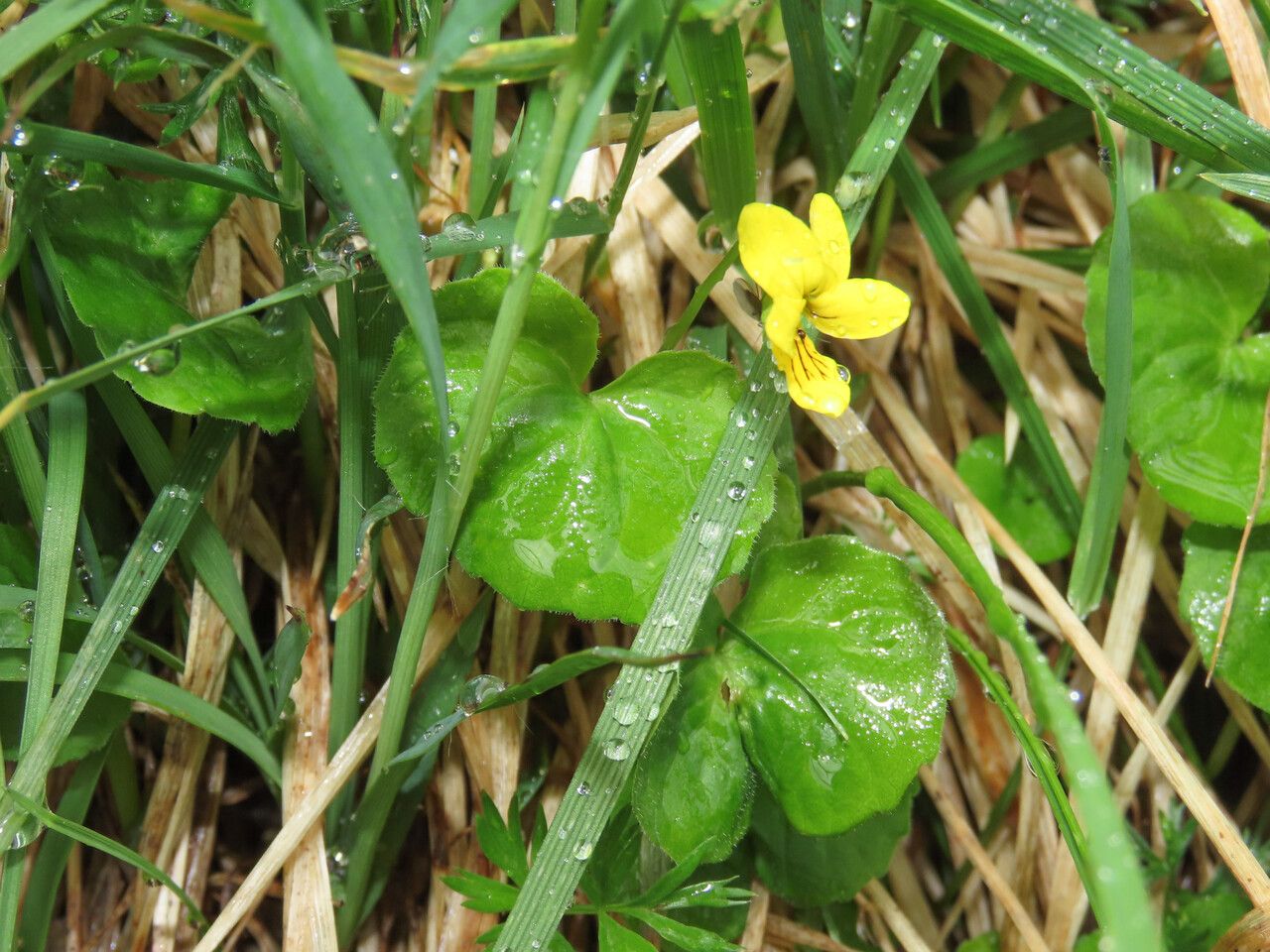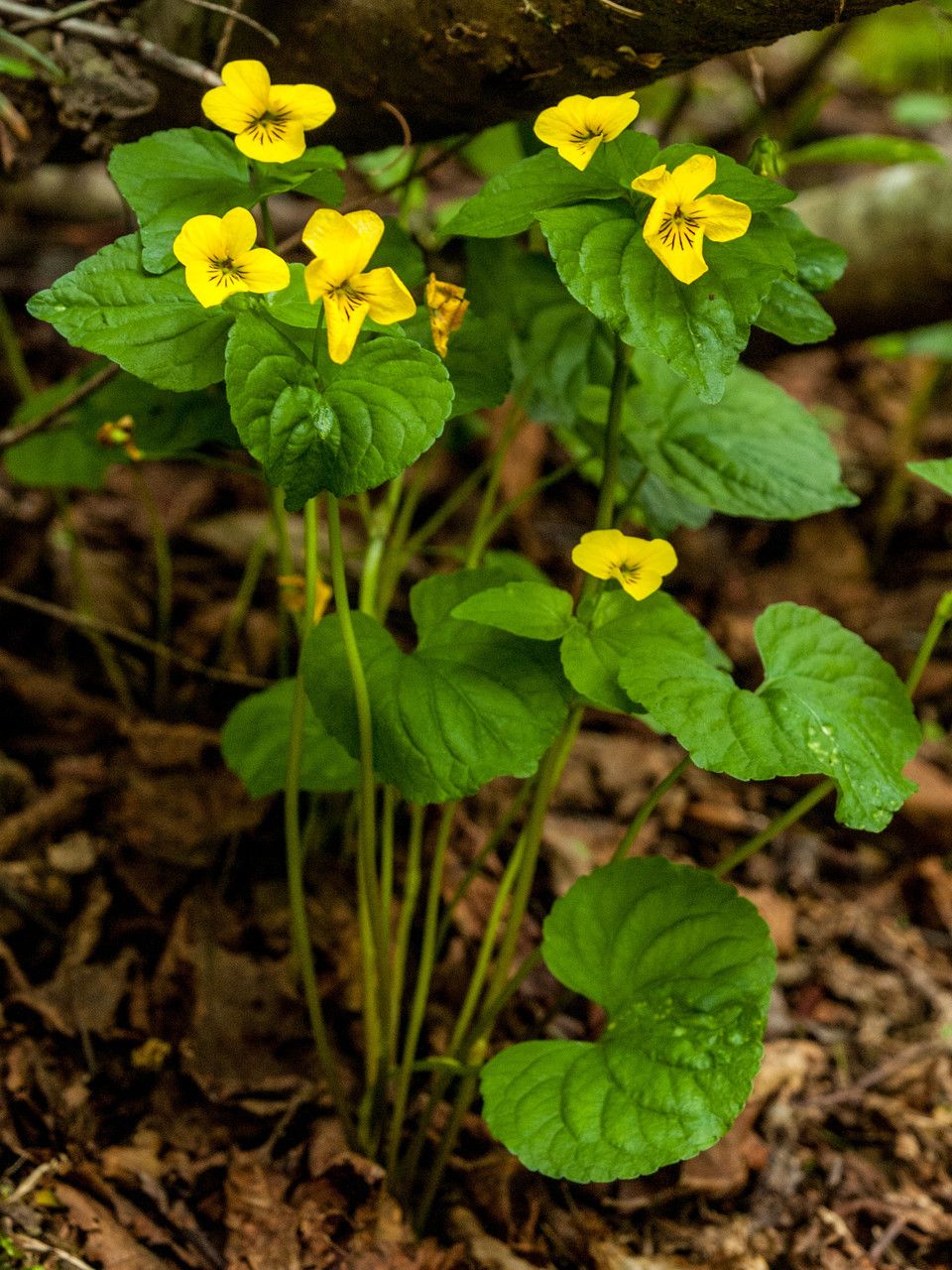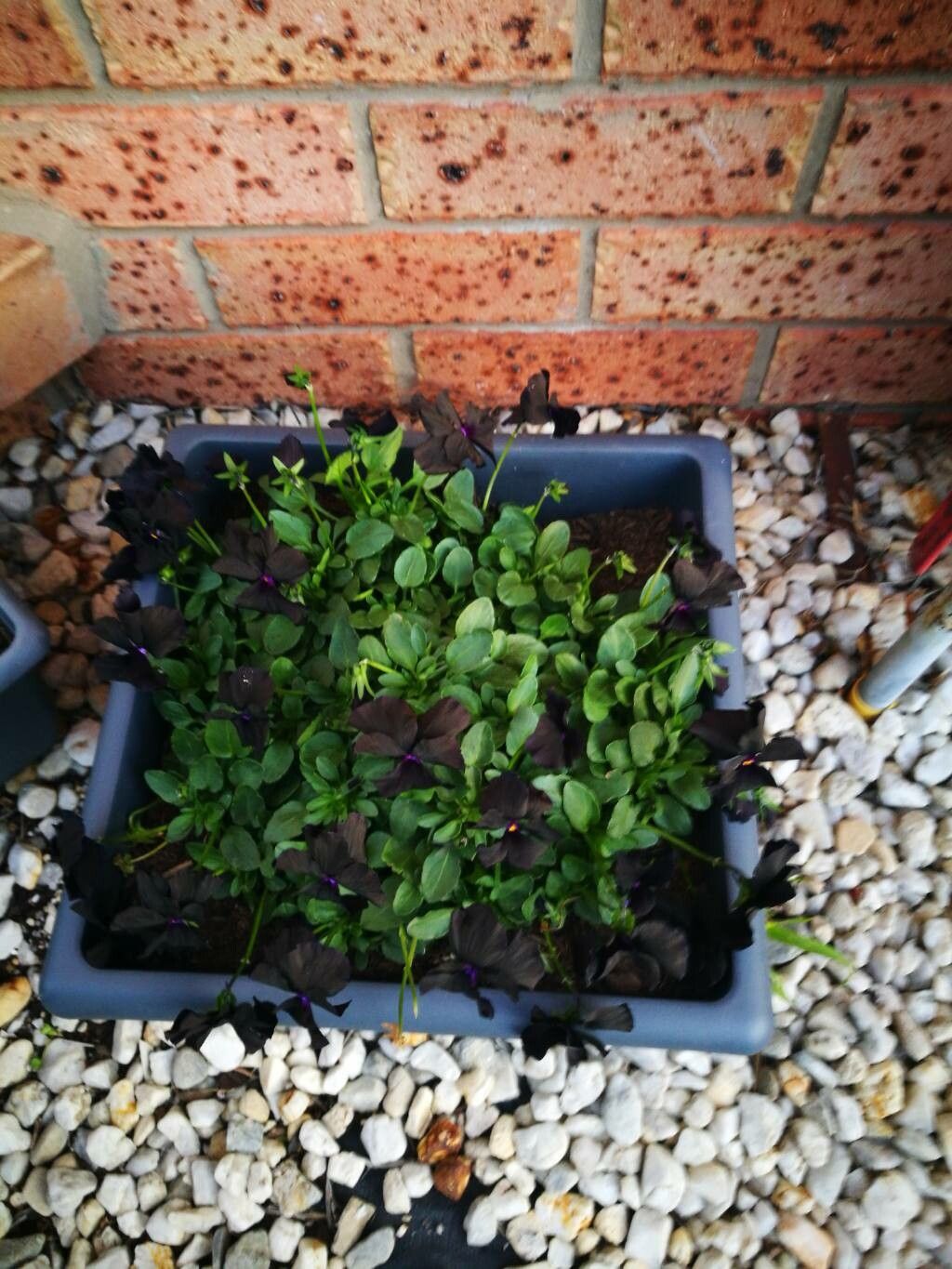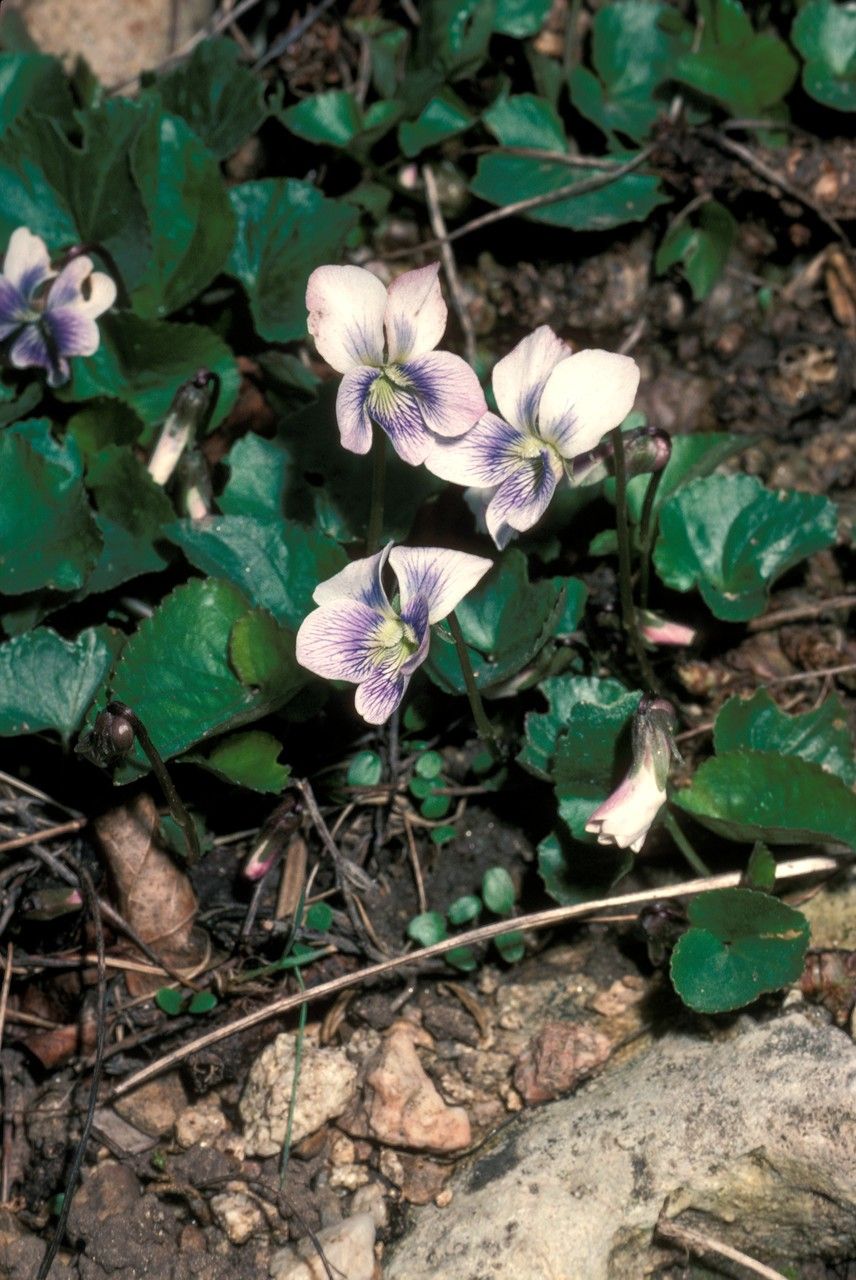
Viola sororia, known commonly as the common blue violet, is a short-stemmed herbaceous perennial plant that is native to eastern North America. It is known by a number of common names, including common meadow violet, purple violet, woolly blue violet, hooded violet, and wood violet. Its cultivar 'Albiflora' has gained the Royal Horticultural Society's Award of Garden Merit. This perennial plant species is distributed in the eastern half of the United States, Canada and a part of Eastern Mexico. Their native habitats are rich, moist woods, and swamps located in the eastern half of the United States and Canada.Self-seeding freely, in lawns and gardens it can be considered a weed by some. Cleistogamous seed heads may also appear on short stems in late summer and early autumn.
Common blue violet is fairly resistant to disease and typically not highly susceptible. Still, it can be affected by pests or diseases present in its environment. These problems are generally mild. In terms of care, the plant requires moderate maintenance. Regular pruning is needed to keep it looking good and to support healthy growth. Fertilizing can also help encourage flowering. Common blue violet is suitable for people with outdoor spaces like gardens or patios and does not demand much cultivation experience. It may need more attention if grown indoors.
How to keep Viola Papilionacea.
Light
The common blue violet flourishes best in partially sun-lit environments. It can tolerate a range of sunlight exposure, from fully bathed in sunlight to entirely shaded places. Nonetheless, extreme exposure or lack of exposure can adversely affect its overall growth and wellbeing.
Temperature
The common blue violet is native to temperate areas, ideally flourishing in a range of 68 to 95 °F (20 to 35 ℃). During the summer months, it is advisable to provide it with shade if the temperature surpasses the optimal range. Concerning winter conditions, it is relatively tolerant of lower temperatures.
Fertilizer
A one-time fertilizer application in the spring is typically adequate for the Common blue violet, though repeated fertilizations can optimize its growth. Aim to fertilize every four to six weeks. Fertilization improves leaf aesthetics and performance, fostering a steady color and robust texture. Moreover, it propels the growth of roots and the intake of nutrients, thereby bolstering the plant's health in the long run.
Pot & Repot
When transplanting the Common blue violet, pick a container that's 1-2 inches (2.5–5 cm) bigger and has sufficient drainage. It's best to use a potting mix that drains well. Make sure to do the repotting during the spring or fall seasons, making certain that the plant's root ball is set a little below the edge of the planting pot. After the process, water the plant thoroughly and set it in a warm location that receives indirect sunlight.
Botanical profile.
- Plant Type
- Herb
- Life Cycle
- Perennial, Annual
- Genus
- Viola
- Family
- Violaceae
- Hardiness Zone
- 3-10
- Mature Height
- 5 cm to 49 cm
- Mature Spread
- 15 cm to 25 cm
- Leaf Color
- Green
- Leaf Type
- Deciduous
- Flower Color
- Lavender, Purple, White
- Flower Size
- 1.78 cm
- Bloom Time
- Mid spring, Late spring, Early summer
- Planting Time
- Spring, Winter
- Harvest Time
- Late spring, Early summer, Mid summer
- Native Area
- Mexico