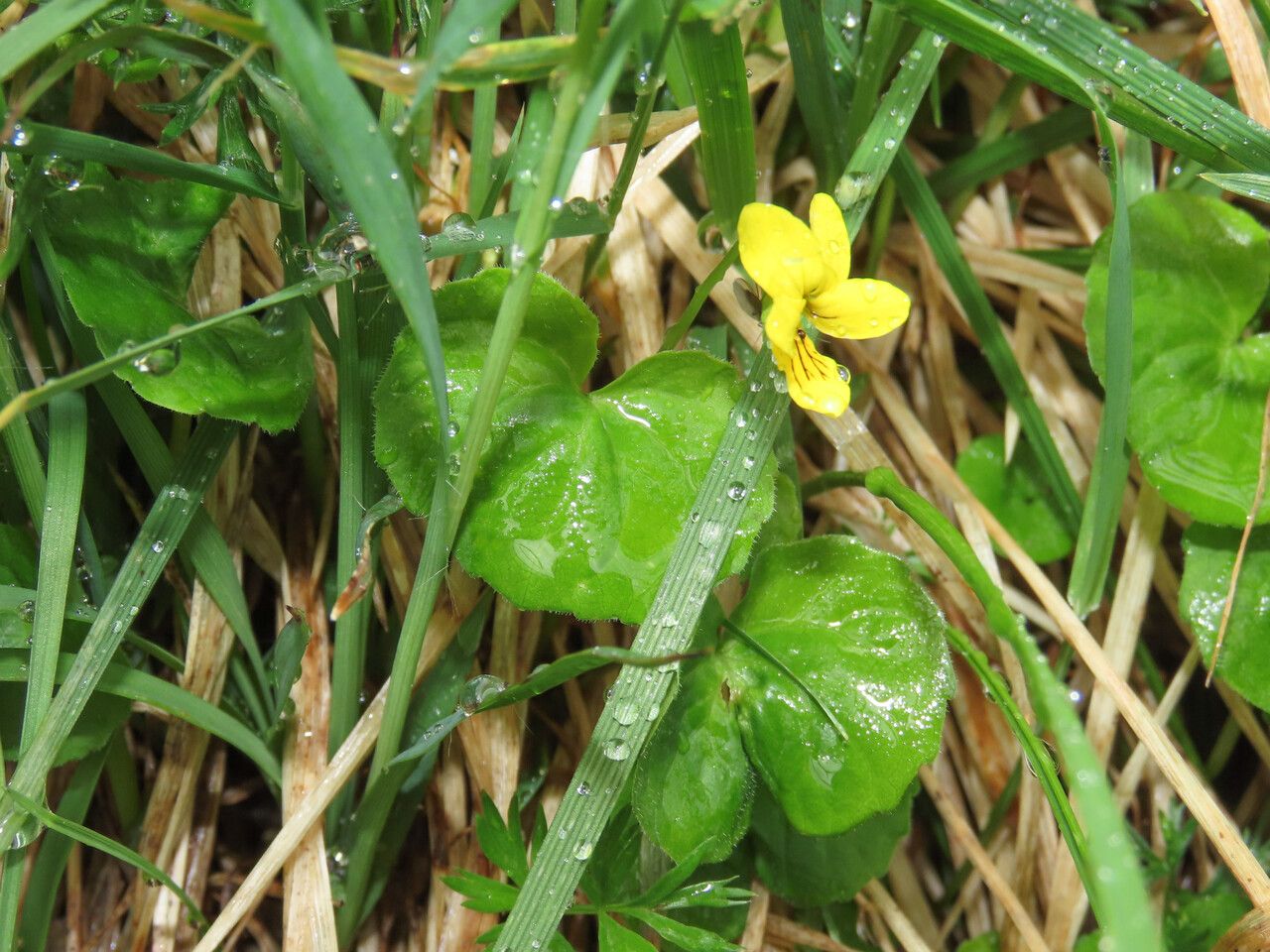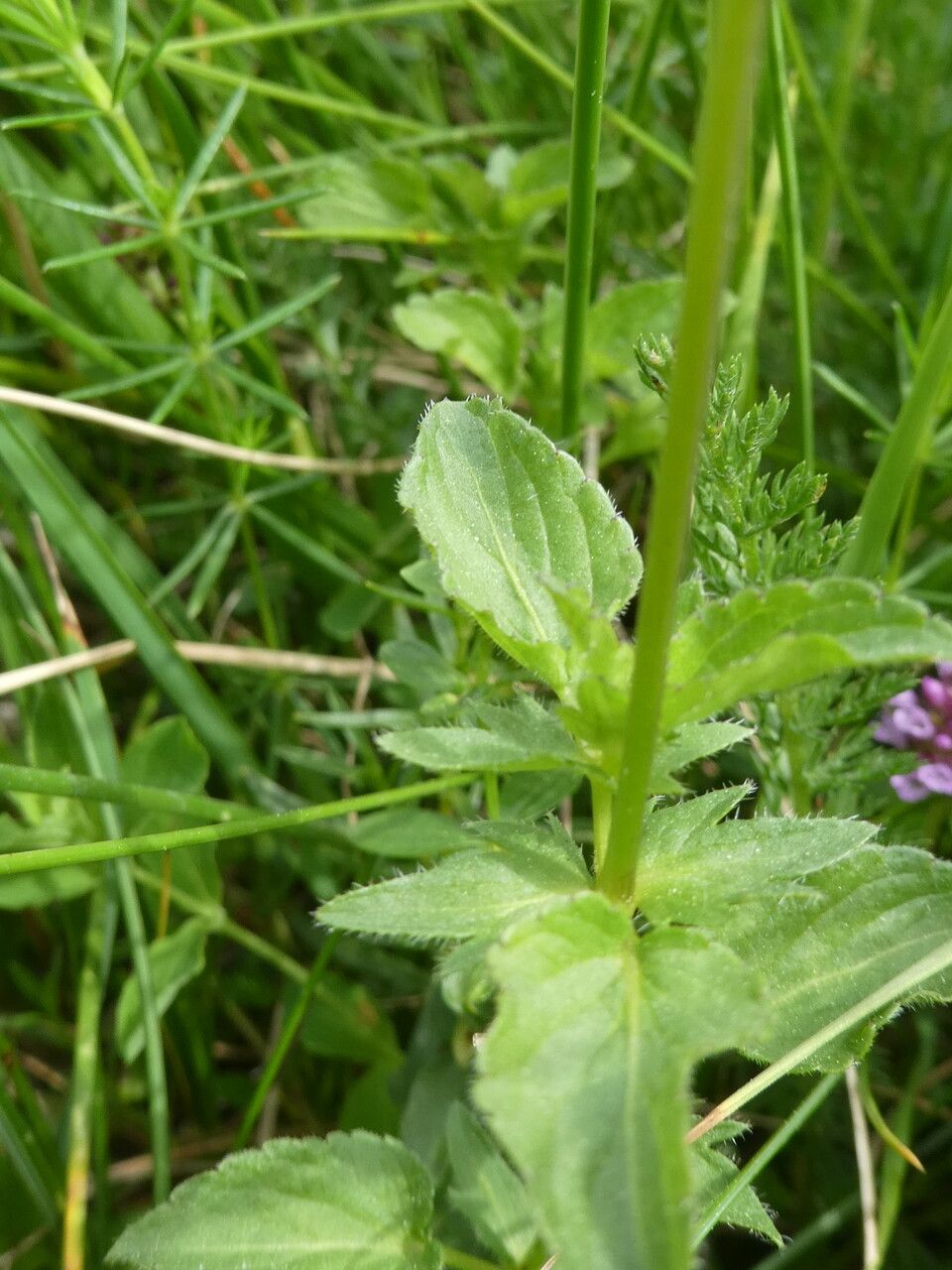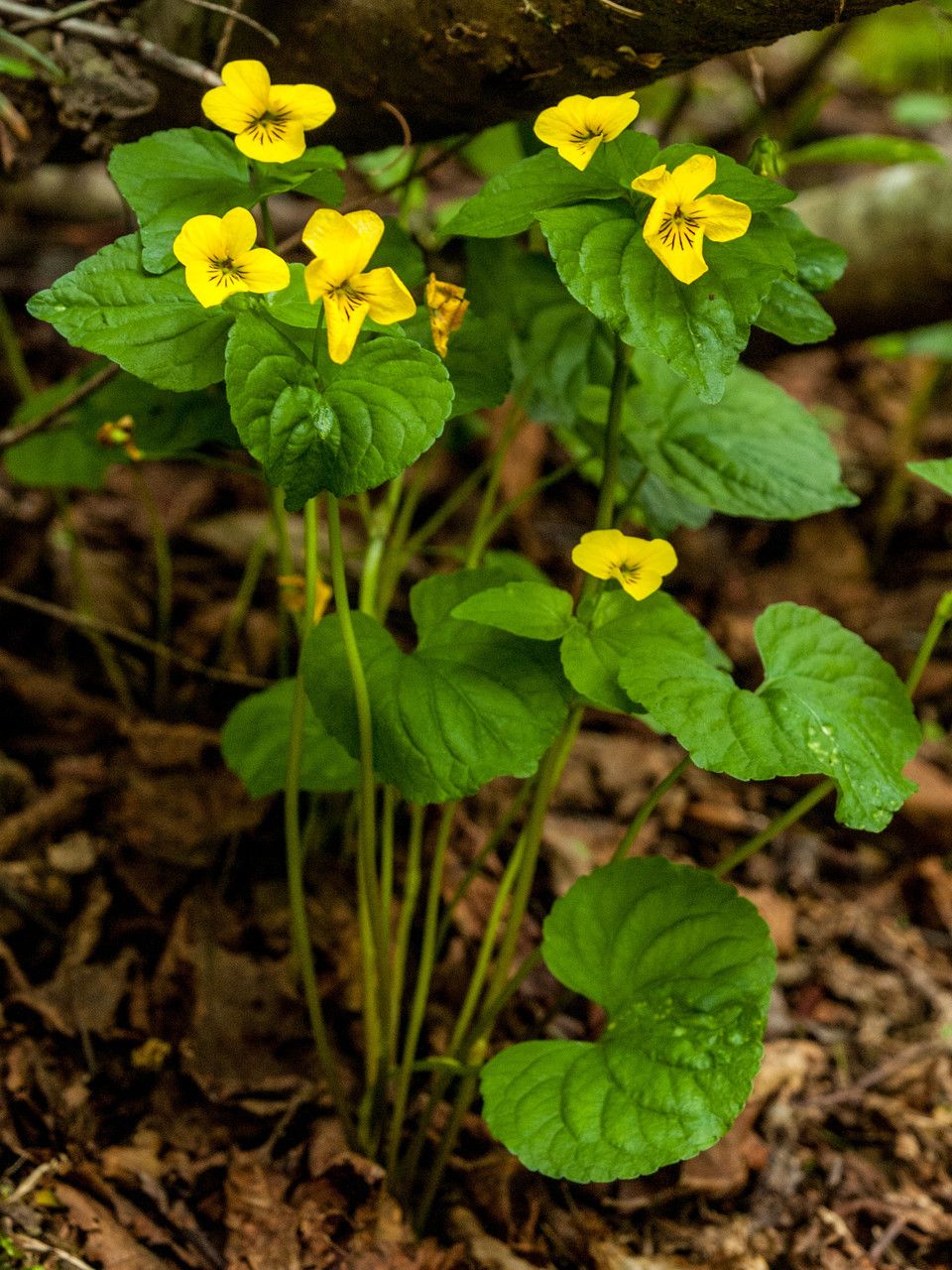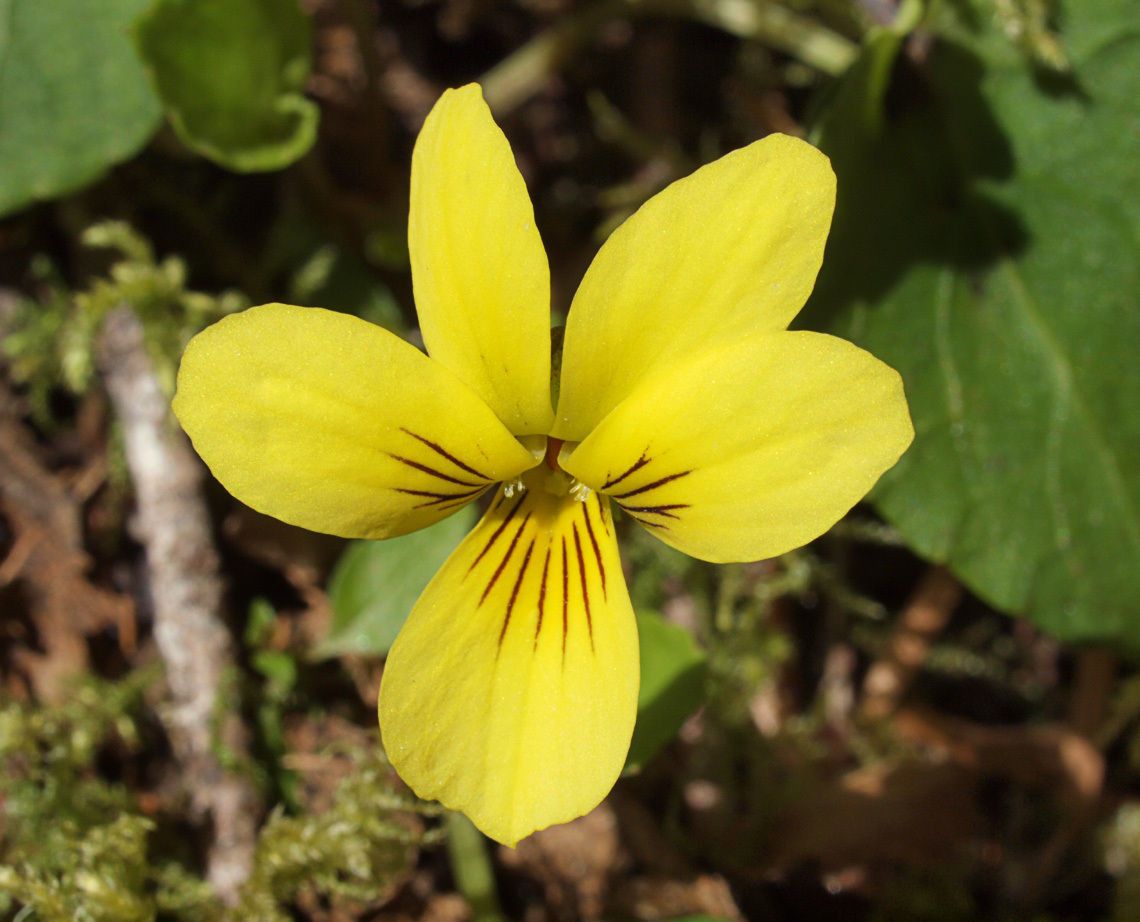
Viola orbiculata, the darkwoods violet or western roundleaf violet, is a species of flowering plant in the family Violaceae, native to the Pacific Northwest. A perennial reaching 7.5 cm (3 in), it has yellow flowers with purple markings.
Darkwoods violet is fairly disease-resistant and typically not prone to illness. Still, it can be affected by pests and diseases present in its environment. Such infections are generally mild. Regarding care, this plant needs moderate maintenance. It should be pruned regularly to maintain a neat appearance and support healthy growth. Fertilizing can also encourage flowering. Darkwoods violet is well suited to anyone with outdoor space, such as a garden or patio, and does not require extensive gardening experience. It may demand more attention when kept indoors.
How to keep Viola Orbiculata.
Light
The Darkwoods violet is indigenous to habitats like forest bottom layers or stony regions, where it is naturally shaded. While it favors semi-sunny conditions, it has the flexibility to thrive under full sun or complete shade, thus showcasing its adaptable and robust characteristics.
Water
The Darkwoods violet flourishes in humid forests and mountainous regions, needing careful attention to watering. This plant is not drought-tolerant, but too much water can lead to decay. In gardens, adjust your watering based on the weather to avoid excessive dryness. When grown in pots, water the plant thoroughly once the surface of the soil feels dry.
Temperature
The Darkwoods violet is capable of adjusting to a broad spectrum of temperature conditions, however, a mix of water and heat conditions may still restrict its distribution. It performs optimally in warm summer climates with sufficient precipitation or hydration. Persistent spells of overcast and rainy weather, together with extended heatwaves, can enhance the probability of the Darkwoods violet perishing. During the winter season, shielding the plant against the cold can bolster its chances of survival.
Fertilizer
The optimal time to fertilize Darkwoods violet is during early spring as the flowers begin to develop. Using the correct fertilizer promotes superior blossoms and supports the Darkwoods violet in generating beautiful flowers. When fertilization occurs in the early spring, it guarantees remarkable flowers throughout the season and supplies energy for periods of latent growth.
Pruning
Pruning Darkwoods violet in early spring helps promote healthy growth. To maintain the plant's shape and improve airflow, remove any dead stems and trim back any leggy growth. This reduces the risk of disease and encourages fuller foliage and more vibrant blooms, in accordance with the plant's natural growth cycle.
Botanical profile.
- Plant Type
- Herb
- Life Cycle
- Perennial
- Genus
- Viola
- Family
- Violaceae
- Hardiness Zone
- 4-8
- Mature Height
- 3 cm to 8 cm
- Mature Spread
- 10 cm to 20 cm
- Leaf Color
- Dark Green, Forest Green
- Leaf Type
- Deciduous
- Flower Color
- Yellow, Purple
- Flower Size
- 1.02 cm to 2.03 cm
- Bloom Time
- Spring
- Planting Time
- Spring, Summer
- Harvest Time
- Summer
Other names.
Reader questions.
What are the sunlight requirements for Darkwoods violet (Viola orbiculata)?
Darkwoods violet, also known by its botanical name Viola orbiculata, thrives in various sunlight conditions. For optimal growth, it requires 'Full sun', which is defined as receiving above 6 hours of sunlight daily. However, it can also grow well in 'Partial sun', meaning it needs about 3-6 hours of sunlight each day. When choosing a planting spot, it's important to observe how sunlight moves through your garden. Ensuring the right balance of light and shade will significantly contribute to the happiness and health of your Darkwoods violet.