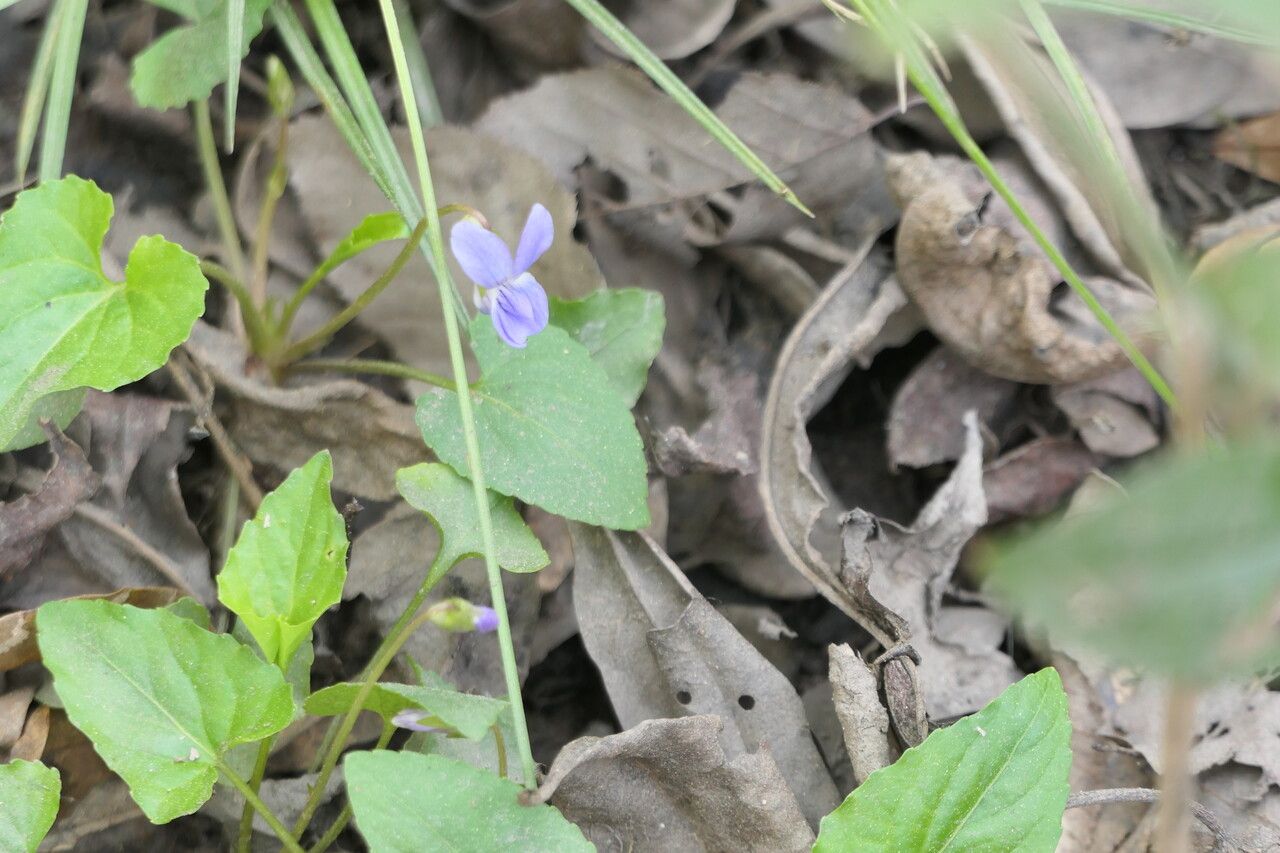
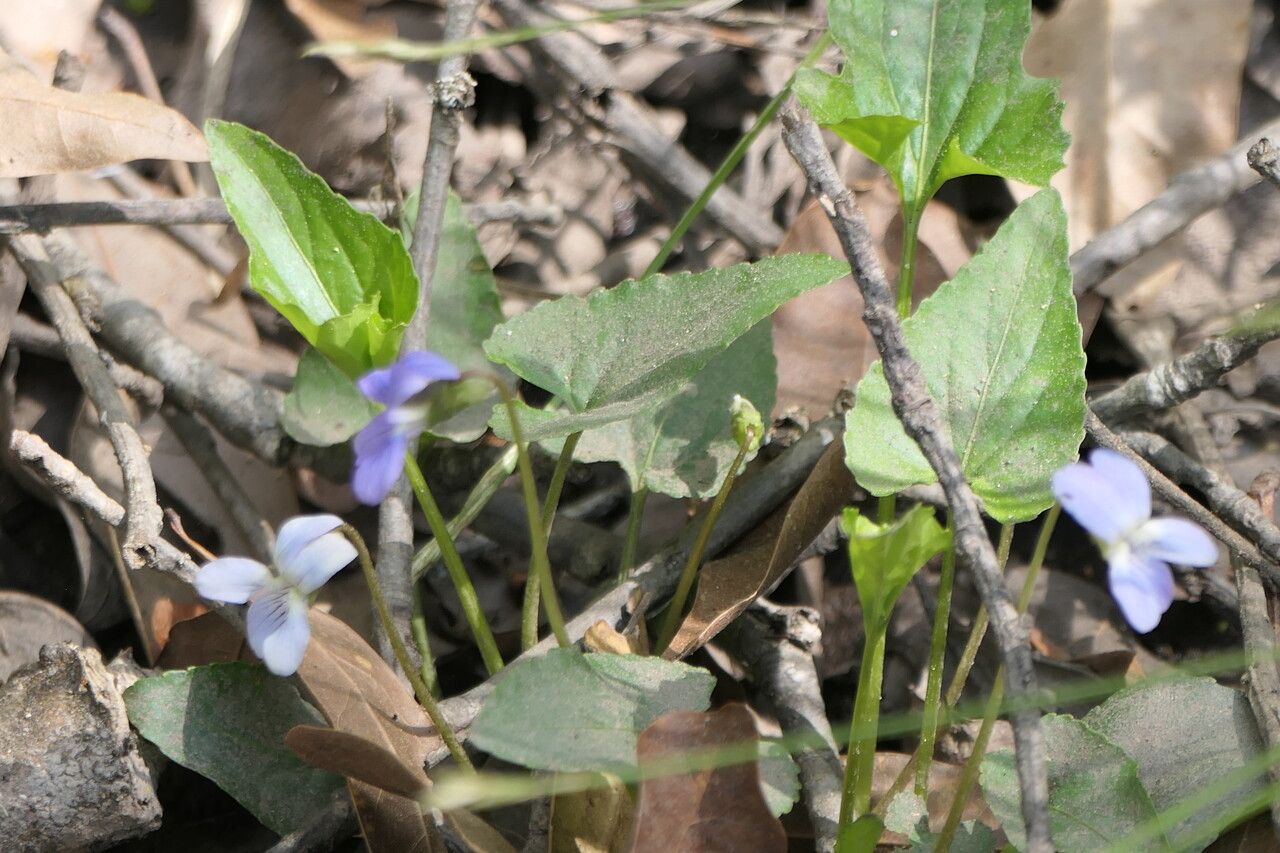
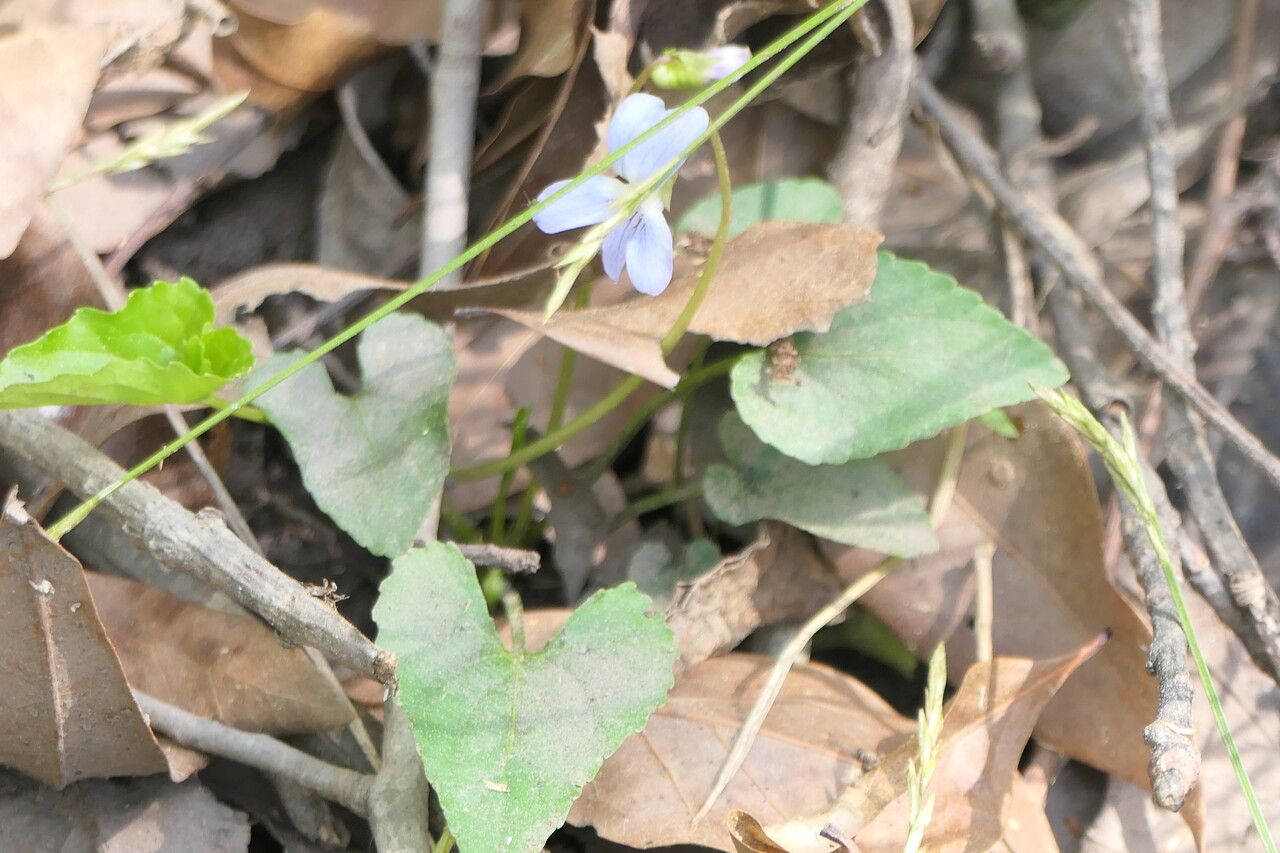
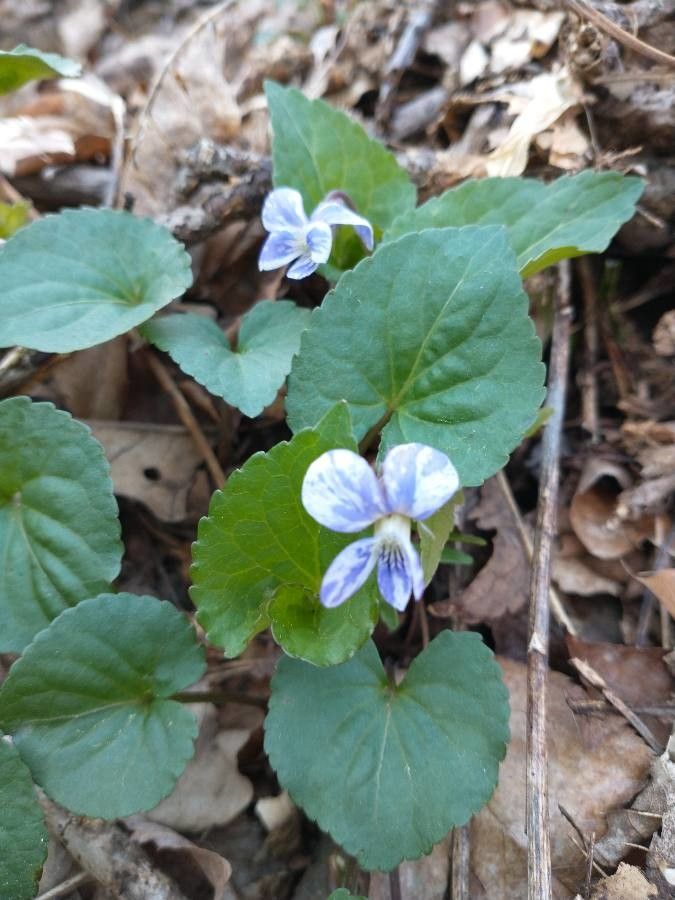
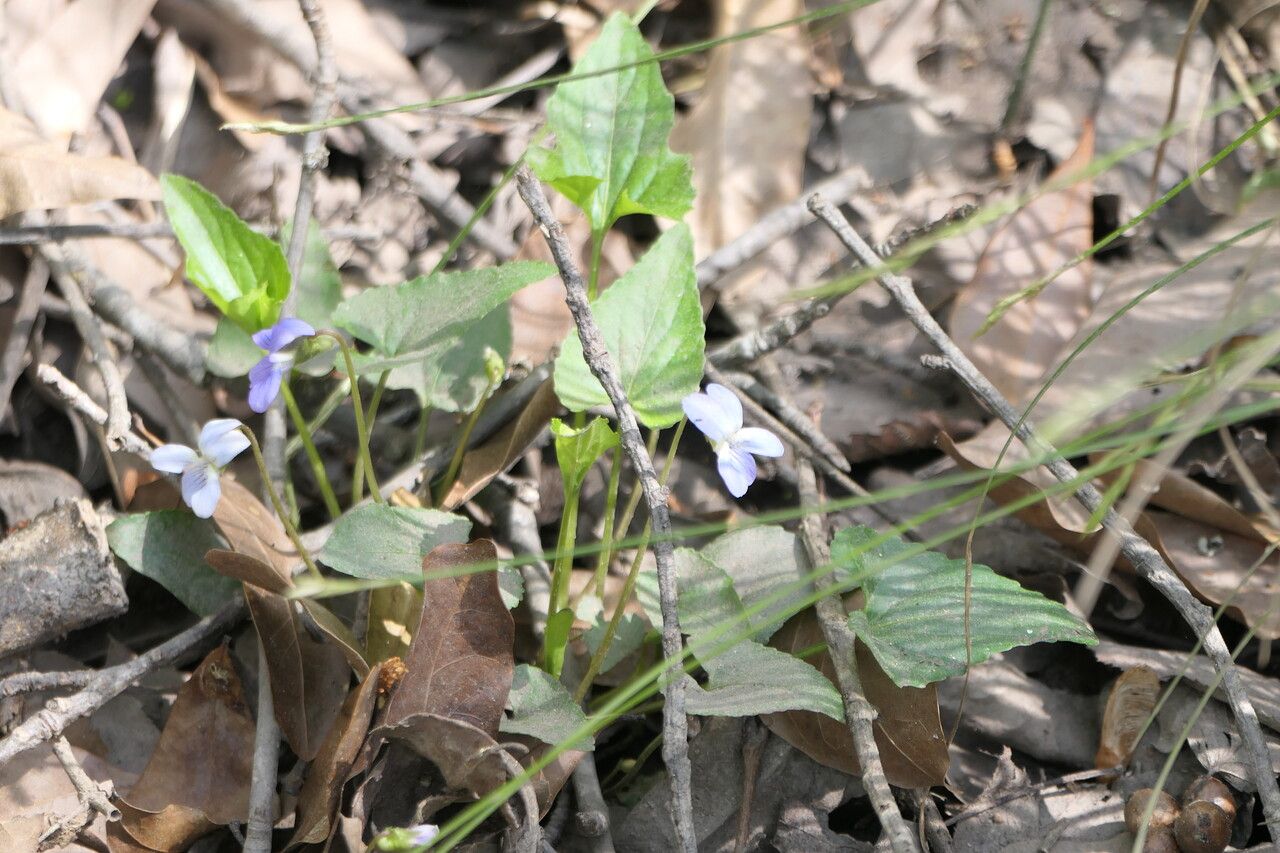
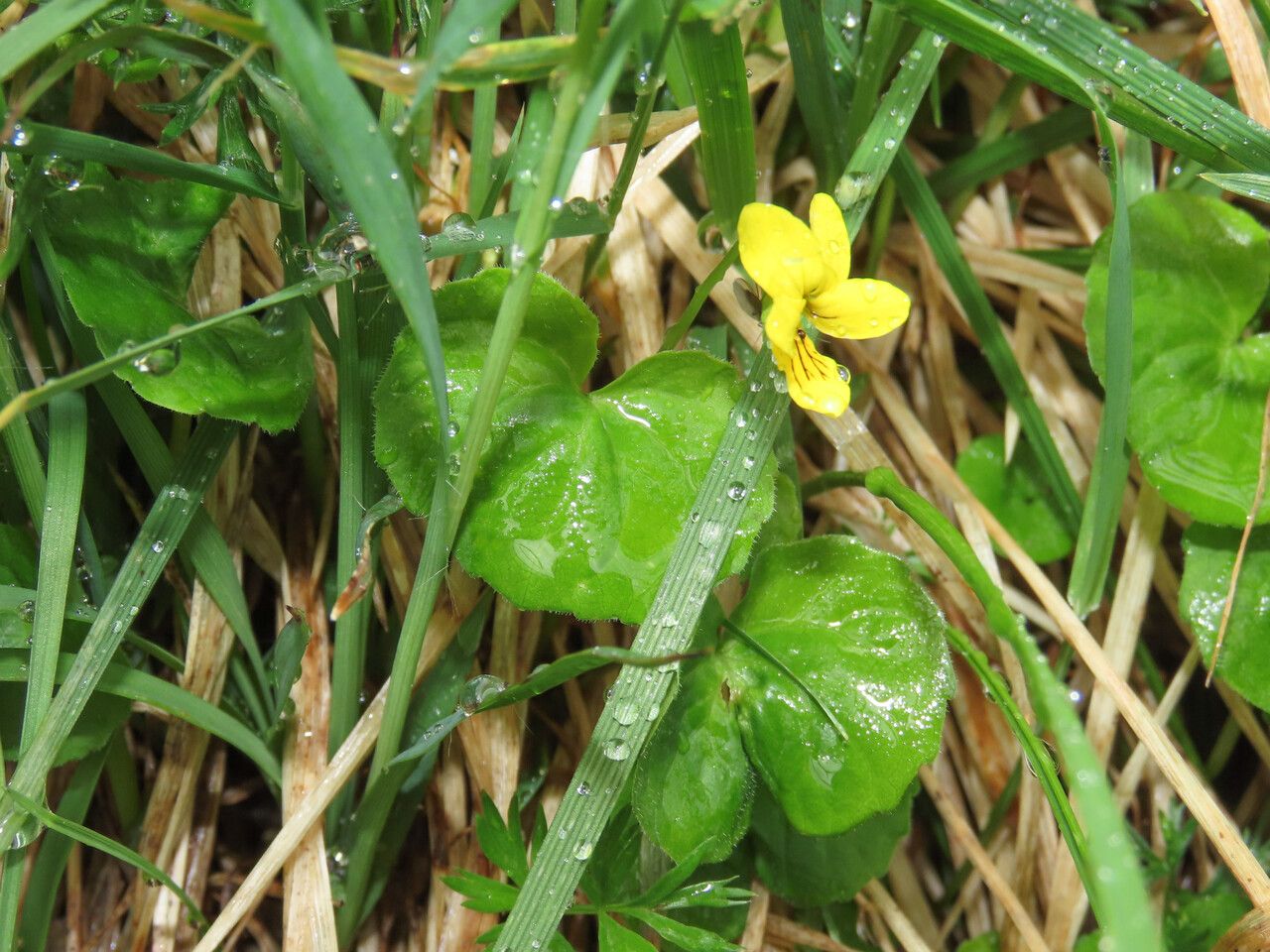
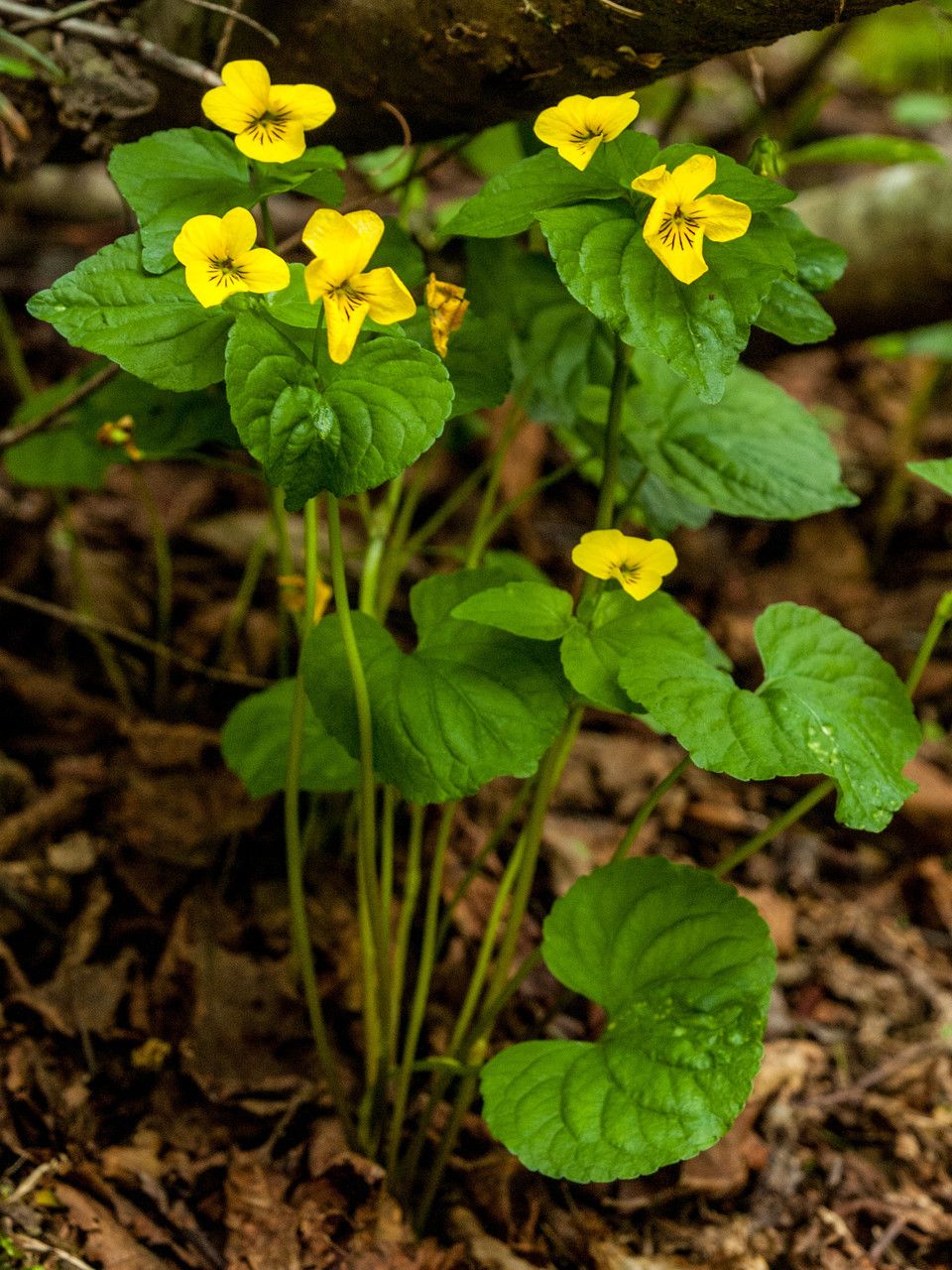
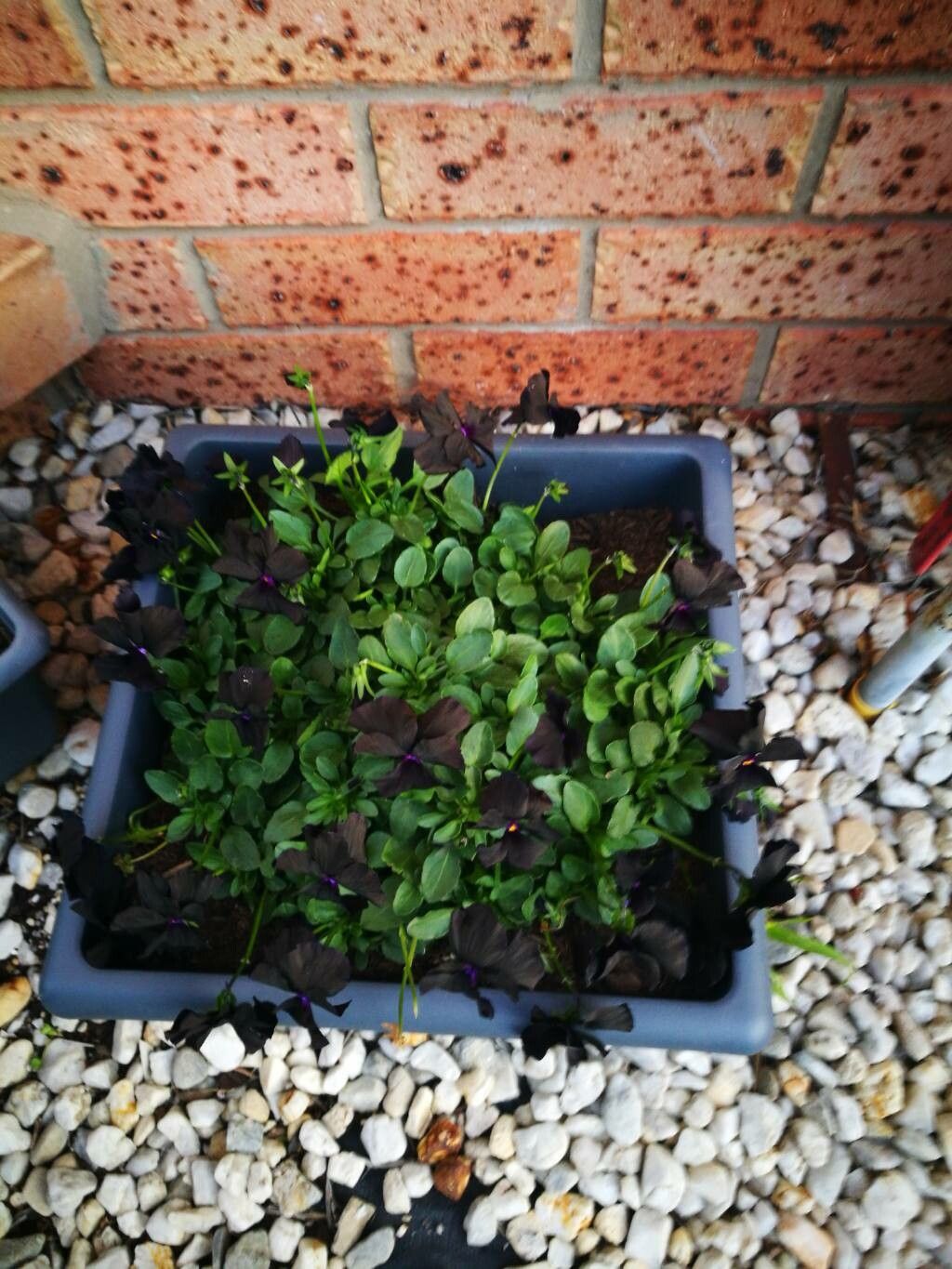
Viola cucullata, the hooded blue violet, marsh blue violet or purple violet, is a species of the genus Viola native to eastern North America, from Newfoundland west to Ontario and Minnesota, and south to Georgia. It is a recipient of the Royal Horticultural Society's Award of Garden Merit.It is a low-growing perennial herbaceous plant up to 20 cm (8 in) tall. The leaves form a basal cluster; they are simple, up to 10 cm (4 in) broad, with an entire margin and a long petiole. The flowers are violet, dark blue and occasionally white. with five petals. The fruit is a capsule 10–15 mm (3⁄8–5⁄8 in) long, which splits into three sections at maturity to release the numerous small seeds. Its habitats include wet meadows, prairies, and fields.
The marsh blue violet is fairly resistant to disease and is generally not vulnerable to illnesses. Still, it can be affected by pests and diseases that exist in its environment. Such problems are typically mild. Regarding care, this plant needs moderate maintenance. It should be pruned regularly to preserve a neat appearance and encourage healthy growth. Applying fertilizer can also aid in stimulating blooms. The marsh blue violet is appropriate for anyone with outdoor space, like a garden or patio, and does not demand extensive gardening experience. It may need more attention if grown indoors.
How to keep Viola Cucullata.
Light
The marsh blue violet grows best when it receives a generous amount of sunlight each day. Although it prospers in continuous sun, it can also tolerate settings with reduced sun exposure. Too much sun can cause wilting, while too little light can limit its growth. It does best in habitats that provide abundant daily sunlight similar to its native environment.
Water
The Marsh Blue Violet thrives in moist environments and needs regular watering each week to prevent waterlogging. It grows best outdoors, where it benefits from natural rainfall and seasonal changes in moisture. This reflects its native habitat and ensures optimal growth and health.
Temperature
The marsh blue violet is native to habitats with temperatures ranging from 41 to 95 °F (5 to 35 °C). These temperature preferences allow it to flourish in the cool conditions of spring and fall. Care adjustments may involve offering shade on hot summer days.
Fertilizer
The best time to fertilize a Marsh blue violet is in early spring, as it comes out of dormancy and starts active growth. Fertilization supplies essential nutrients for healthy development. Although Marsh blue violet has relatively low fertilizer requirements, applying fertilizer annually can boost its survival and encourage healthier, longer-lasting blooms.
Pruning
The Marsh blue violet is a small perennial plant known for its heart-shaped leaves and violet flowers. To maintain its shape and encourage blooming, it is best to prune the plant from early to late spring. During this time, remove any dead foliage as well. Thinning out overcrowded areas helps improve air circulation, which reduces the risk of disease. Regular pruning not only keeps the plant healthy but also promotes growth.
Botanical profile.
Other names.
Reader questions.
What are the sunlight requirements for Marsh blue violet?
Marsh blue violet flourishes best with ample daily sun exposure. It requires full sun, defined as above 6 hours of sunlight, but can also tolerate partial sun, receiving about 3-6 hours of sunlight. Observing how sunlight moves through your garden is crucial for choosing the right spot that provides a balance of light and shade, ensuring the plant's health. It's also versatile enough to withstand environments with less sun exposure, though excessive or insufficient light could respectively lead to wilting or inhibited growth.
What are the essential care instructions for Marsh Blue Violet?
Marsh blue violet thrives in environments with temperatures ranging from 41 to 95 °F (5 to 35 °C), preferring the cooler temperatures of spring and fall seasons. To care for it during hot summer days, providing shade is beneficial. This plant has strong cold resistance and usually does not require special frost protection in winter. However, in regions where winter temperatures may drop below -30°C, it's important to provide cold protection by covering the plant with soil or straw. Additionally, watering the plant abundantly before the first freeze in autumn, to ensure the soil remains moist entering into winter, helps prevent drought and water scarcity during the colder and early spring months.
How can artificial lighting be used for Marsh blue violet indoors?
For indoor Marsh blue violets where natural sunlight is lacking, especially in winter or less sunny spaces, artificial lighting is a beneficial alternative. LED lights are recommended because they provide specific wavelengths needed by plants. Full sun plants require 30-50W/sq ft, partial sun plants need 20-30W/sq ft, and full shade plants need 10-20W/sq ft of artificial light. Position the light source 12-36 inches above the plant to mimic the sun and keep it on for 8-12 hours daily to simulate natural daylight hours.
What should I do if the Marsh Blue Violet is exposed to low temperatures?
Marsh blue violet is cold-tolerant and should ideally be kept above -25°C during winter. If temperatures fall below -30°C, you might not notice any immediate changes, but there could be a decrease in sprouting, or the plant might not sprout at all come springtime. In the spring, it's advised to remove any parts of the plant that have failed to sprout to encourage new growth and maintain the plant’s health.
What are the signs of inadequate lighting for a Marsh blue violet?
Signs of light deficiency in Marsh blue violet include small or maturing leaves, leggy or sparse growth, faster leaf drop, slower or halted growth, lighter-colored new leaves, and symptoms such as chlorosis, sunscald, leaf curling, wilting, and leaf scorching. These issues stem from either an inadequate or an excessive amount of sunlight, affecting the plant's ability to photosynthesize and maintain proper health.
How do I care for Marsh Blue Violet during high temperatures?
During the summer, it's important to ensure that the Marsh blue violet's environment does not exceed 35°C. Exposure to temperatures above 38°C can cause the leaves to lighten in color, curl, and become susceptible to sunburn; in severe cases, the plant may wilt and dry out completely. To combat these issues, trim away sunburned and dried-up parts of the plant. Relocating the plant to a spot with shade during the midday and afternoon sun, or using a shade cloth, can prevent further damage. Additionally, watering the plant in the morning and evening helps keep the soil moist and supports the plant’s health during hot periods.
How can I improve the sunlight exposure for my Marsh blue violet?
To enhance sunlight exposure for Marsh blue violet, gradually relocate plants to sunnier areas, considering to move them weekly until achieving at least 6 hours of direct sunlight daily. For indoor plants not easily moved or too large, complement with artificial light, keeping a lamp on or investing in grow lights for at least 8 hours daily. For outdoor plants, adapt them to sunnier spots steadily to prevent sunburn. If sunlight is obstructed, prune surrounding foliage or transplant smaller plants during their dormant phase to a sunnier location with good drainage.