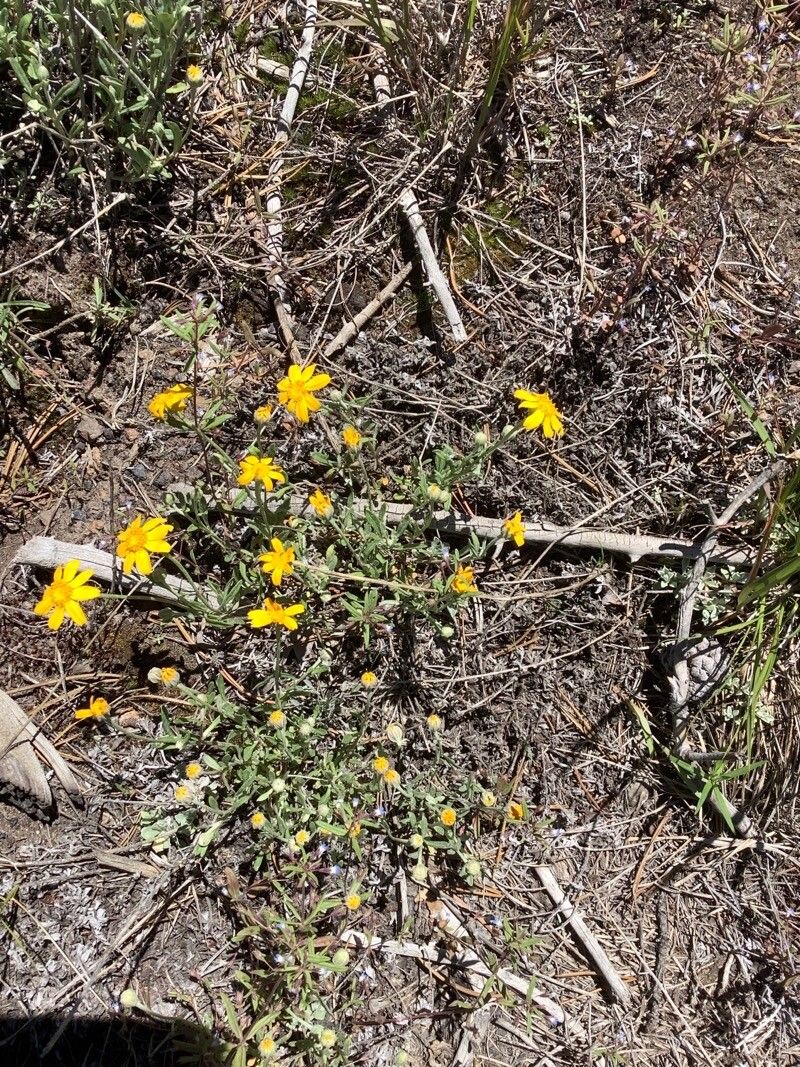
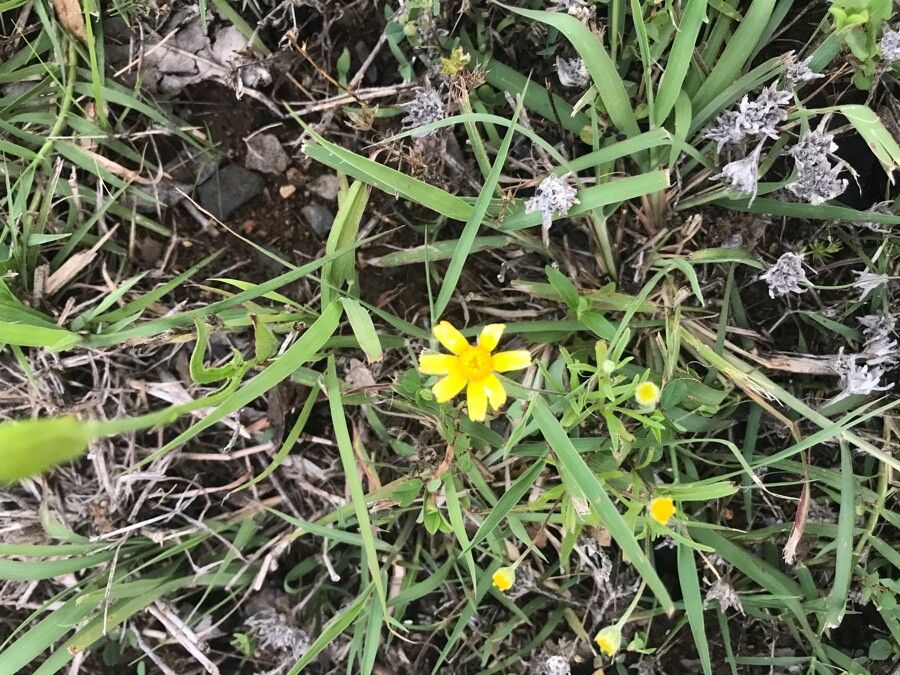
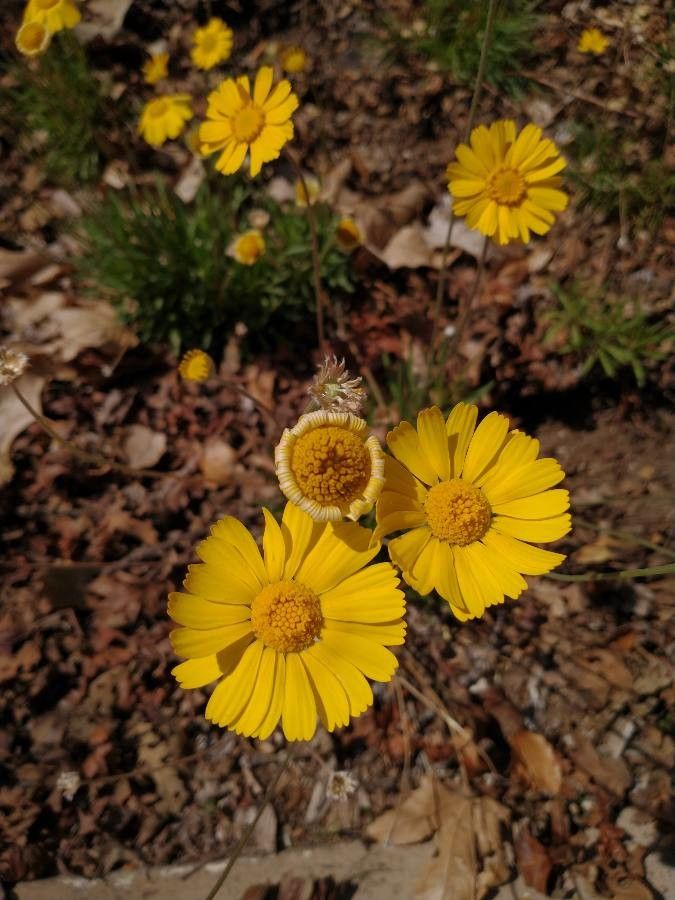
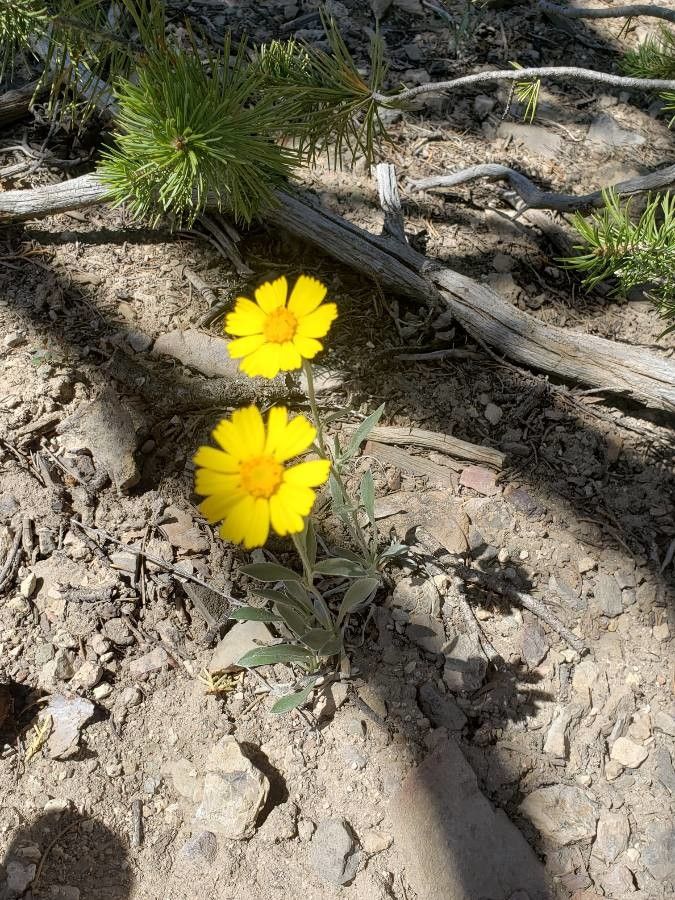
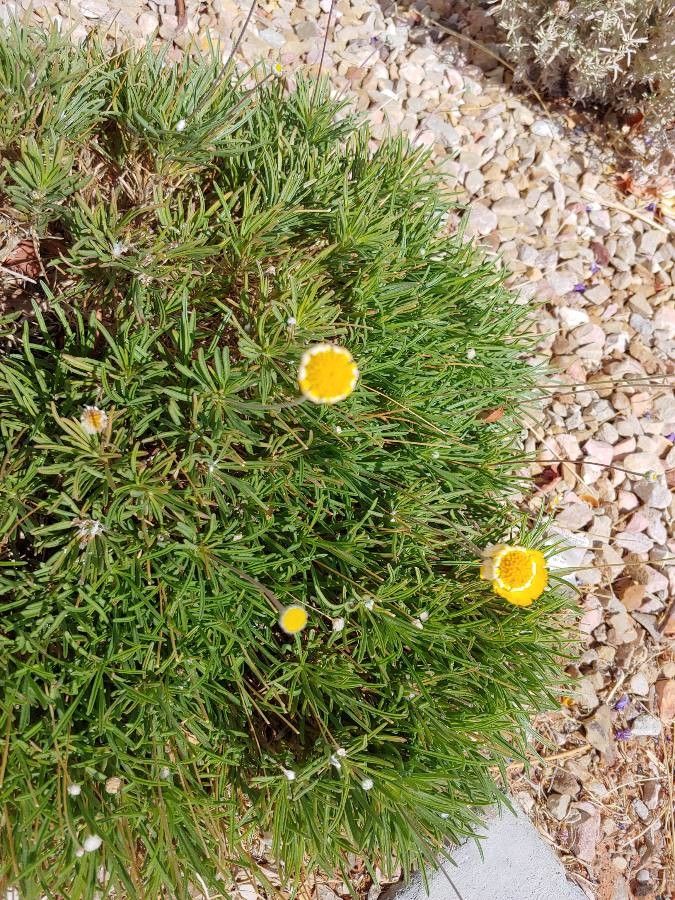
Tetraneuris linearifolia, commonly known as the narrowleaf four-nerve daisy, is a perennial herbaceous plant in the Asteraceae family. Native to North America, it thrives in diverse habitats such as prairies, meadows, and open woodlands.
This plant typically reaches a height of up to 30 cm, featuring narrow, linear leaves that range from 5 to 15 cm in length. The leaves are alternately arranged on the stem and have a smooth, hairless texture.
The flowers of Tetraneuris linearifolia are bright yellow and daisy-like, with four petals. They bloom from late spring through summer, attracting pollinators like bees, butterflies, and other insects.
Tetraneuris linearifolia is easy to grow, requiring full sun or partial shade and well-drained soil. It can be propagated through seeds or by dividing its root system.
Historically, Native Americans used this plant for medicinal purposes to treat ailments such as fever, coughs, colds, and headaches. Additionally, its bright yellow flowers are valued for their ornamental appeal, adding vibrant color to gardens during the summer months.
Fineleaf fournerved daisy has strong resistance to disease and is typically not vulnerable to illnesses. Still, it can be affected by pests and diseases found nearby. Such infections are generally mild. Regarding care, this plant demands a moderate level of attention. It should be pruned on a regular basis to preserve an attractive appearance and encourage healthy growth. Applying fertilizer can also aid in boosting its flowering. Fineleaf fournerved daisy is appropriate for anyone with outdoor areas like a garden or patio and does not need extensive gardening experience. It might need more attention if cultivated indoors.
How to keep Tetraneuris Linearifolia.
Light
Fineleaf fournerved daisy originates in bright, open habitats and flourishes in full sunlight. It can tolerate partial sun, though it favors direct sunlight for optimal development. This annual or biennial plant is noted for its sun-loving tendencies.
Water
The fineleaf fournerved daisy is well-suited to prairie environments, where it naturally endures both sporadic rainfall and periods of drought. While it prefers moderate moisture levels, it typically needs to be watered once a week to maintain this balance. Primarily an outdoor plant, the daisy thrives best when its care is attuned to seasonal rain patterns, emphasizing the importance of aligning cultivation with the natural weather conditions.
Temperature
Fineleaf fournerved daisy is native to temperate areas where temperatures generally lie between 68 and 95 °F (20-35 ℃). It prospers under those conditions and may need proactive measures during seasons when temperatures rise above or drop below that range.
Fertilizer
When the Fineleaf fournerved daisy has opened most of its blooms to full size, resume fertilizing. Around the period of peak bloom output, restart fertilizing at intervals of every three to four weeks, weather permitting. Then, once the Fineleaf fournerved daisy begins producing fewer new blooms, stop fertilizing; there is no need to feed it when the plant can no longer produce more blooms.
Pruning
The Fineleaf Fournerved Daisy features slender leaves and vibrant yellow flowers. Prune this plant from early to late spring by removing any dead stems and lightly trimming it to encourage denser growth. Be sure to avoid heavy pruning, as this can hinder flowering. Always use clean, sharp tools to maintain the plant's health and appearance.
Botanical profile.
- Plant Type
- Herb
- Life Cycle
- Annual
- Genus
- Tetraneuris
- Family
- Asteraceae
- Hardiness Zone
- 8-10
- Mature Height
- 49 cm
- Mature Spread
- 15 cm to 30 cm
- Leaf Color
- Green, Dark Green
- Leaf Type
- Evergreen
- Flower Color
- Yellow
- Flower Size
- 2.29 cm to 4.57 cm
- Bloom Time
- Mid spring, Late spring, Early summer, Mid summer
- Planting Time
- Spring, Summer
- Harvest Time
- Summer, Early fall
- Native Area
- Mexico
Other names.
Reader questions.
What climates are fineleaf fournerved daisies originally adapted to?
Fineleaf fournerved daisies are best adapted to temperate climates where temperatures typically range between 68 to 95°F (20-35°C). They thrive in such conditions but may require some care when temperatures exceed or fall below this optimal range.
Does the fineleaf fournerved daisy have cold tolerance?
Yes, the fineleaf fournerved daisy has some degree of cold tolerance. It generally does not require any additional protective measures when temperatures are above 0°C. However, if temperatures are expected to drop below 0°C, temporary measures for cold protection should be taken, such as wrapping the plant with plastic film or fabric. These protective measures should be removed once the temperature rises again.
How should you care for a fineleaf fournerved daisy in low temperatures?
In low temperatures, especially when the temperature is expected to fall below -10°C, the fineleaf fournerved daisy's leaves may start to droop. In mild cases, they can recover, but severe cases might result in the leaves wilting and eventually falling off. To protect the plant in such conditions, trim off the frost-damaged parts and wrap the plant with non-woven fabric or cloth. Constructing a wind barrier to protect it from cold winds is also advised.
What happens to fineleaf fournerved daisies in high temperatures, and how can they be protected?
During summer, when temperatures exceed 41°C, fineleaf fournerved daisies can experience lighter leaf color, dry and withered leaf tips, curling leaves, and an increased susceptibility to sunburn. To protect the plant, trim away the sunburned and dried parts. Moving the plant to a shaded location or using a shade cloth to provide protection from intense midday and afternoon sun is beneficial. Additionally, watering the plant in the morning and evening can help keep the soil moist and the plant healthy.