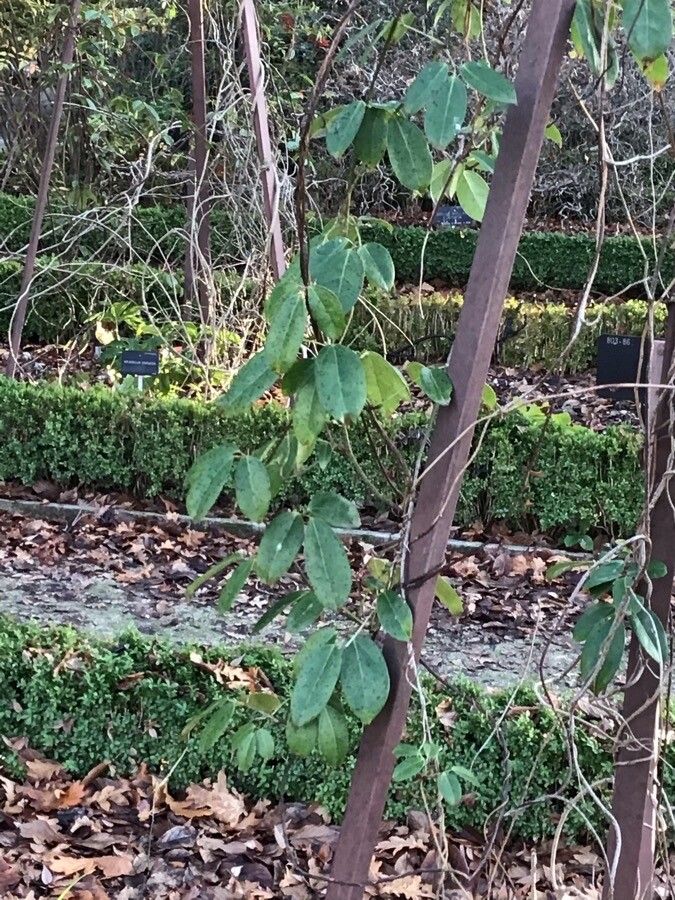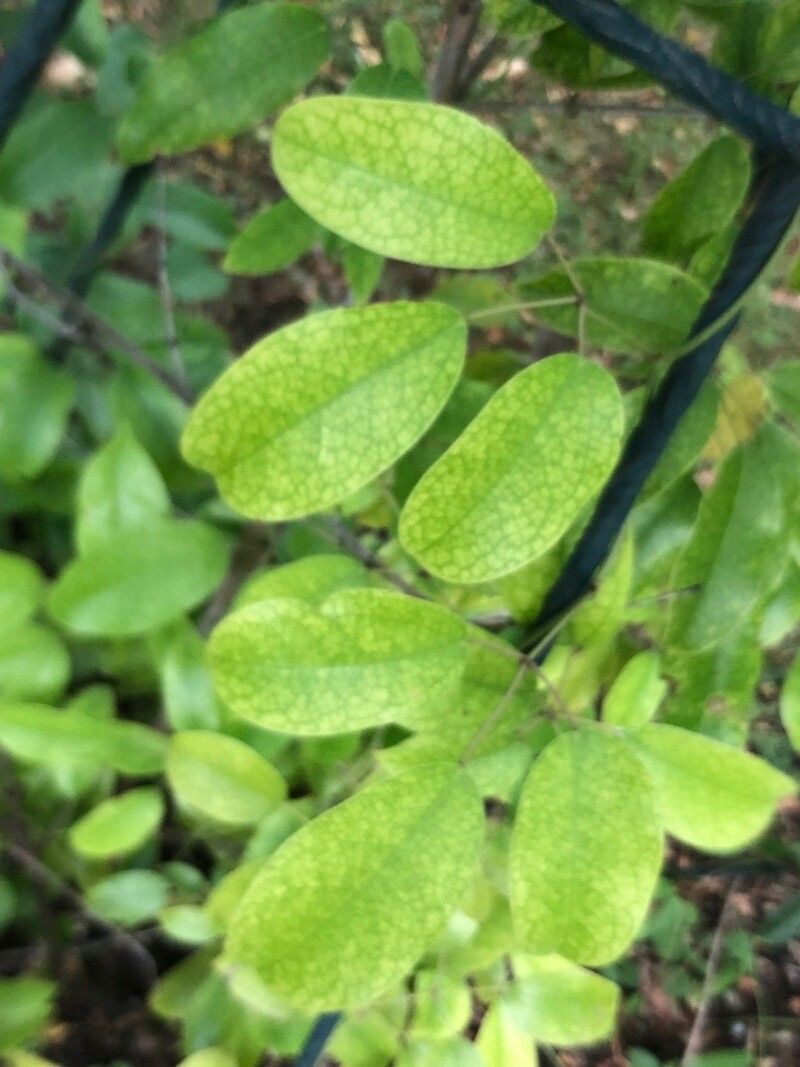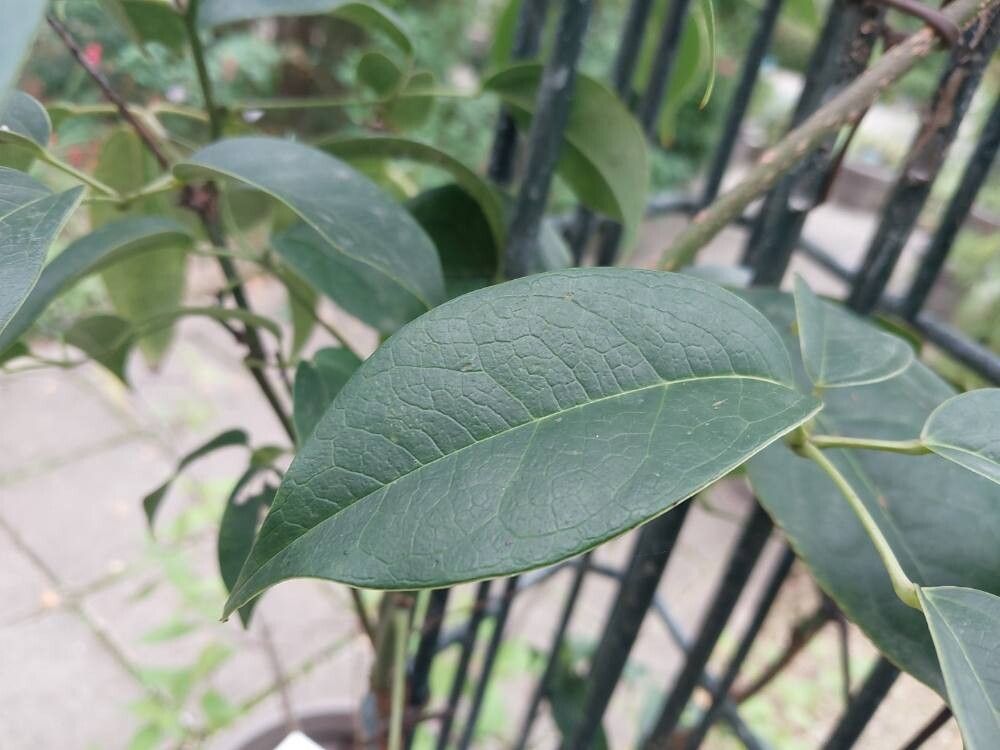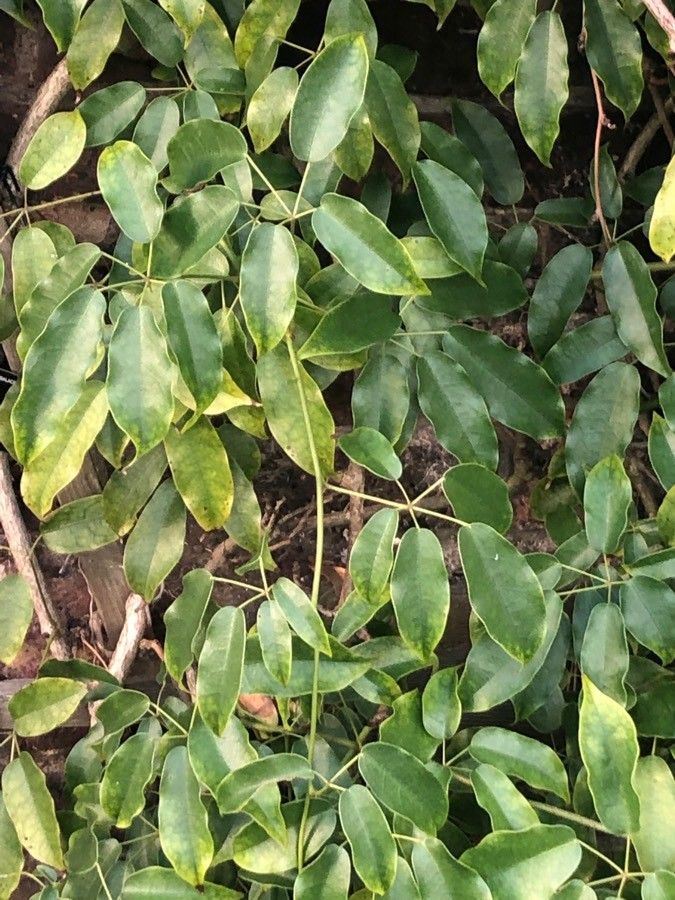
Sixleaves stauntonvine is disease-resistant and generally not susceptible to illnesses. Regarding care, this plant is fairly low-maintenance. When grown outdoors it needs only minimal watering, and larger plants typically do not require pruning. Smaller plants, however, should be pruned after they have finished blooming. Sixleaves stauntonvinet is suitable for anyone with an outdoor area, such as a garden or deck, and does not demand extensive care experience.
How to keep Stauntonia Obovatifoliola.
Light
Sixleaves stauntonvine is native to habitats like forest understories and rocky areas, where it occurs in natural shade. It prefers partial sun but can adapt to full sun or full shade, demonstrating its versatile and hardy nature.
Water
The Sixleaves Stauntonvine thrives in moderate humidity and prefers consistent moisture, although it can withstand brief droughts. For successful indoor cultivation, water it every three weeks, simulating the humidity of its native habitat—especially during its active growth season.
Temperature
Sixleaves stauntonvine comes from tropical areas, where the climate is typically warm and humid. As a result, it is adapted to high temperatures and humidity. It does not tolerate abrupt temperature changes and prefers a steady thermal environment, so it's important to avoid temperature swings indoors. It generally cannot withstand cold and requires warmer temperatures to grow. If the ambient temperature falls too low, the plant may stop growing or even die.
Fertilizer
Prefer organic fertilizers (e.g., fish emulsion, compost) rather than chemical ones for Sixleaves stauntonvine. Supply higher nitrogen and phosphorus to young plants in spring. Incorporate compost or fertilizer into the soil before or after planting. For mature plants, supplement in spring with a balanced fertilizer or one aimed at specific deficiencies. Nutrient deficiency causes small leaves, short branches, yellow or bronze foliage, acidic fruits, premature fruit drop, and splitting.
Pruning
To care for a six-leaves Staunton vine, begin by pruning it in early spring. Remove any dead or weak stems to encourage healthy growth and improve air circulation. Regular trimming helps control the plant's size and shape, preventing it from becoming invasive. Pruning also enhances flowering, so be sure to use clean, sharp tools to avoid spreading disease.
Botanical profile.
- Plant Type
- Vine
- Life Cycle
- Perennial
- Genus
- Stauntonia
- Family
- Lardizabalaceae
- Hardiness Zone
- 8-11
- Mature Height
- 6.1 m
- Mature Spread
- 30 cm to 61 cm
- Leaf Color
- Green
- Leaf Type
- Evergreen
- Flower Color
- Yellow, Green
- Flower Size
- 2.54 cm to 7.62 cm
- Bloom Time
- Mid spring, Late spring
- Planting Time
- Spring, Summer, Autumn
- Harvest Time
- Late summer, Early fall, Mid fall
Reader questions.
What are the sunlight requirements for Sixleaves Stauntonvine?
Sixleaves stauntonvine thrives in environments that mimic forest understories or rocky areas, naturally benefiting from partial to full shade. It requires about 3-6 hours of sunlight daily (partial sun), but it can also adapt to conditions of full shade, making it a flexible choice for various garden spots or indoor settings. For plants located indoors or in areas with inadequate sunlight, artificial lighting can be a beneficial alternative. Indoor plants may need artificial lights to ensure optimal growth, especially in conditions where natural light is insufficient. LED lights are recommended for their ability to provide specific wavelengths needed by plants, with full sun plants requiring 30-50W/sq ft, partial sun plants needing 20-30W/sq ft, and full shade plants needing 10-20W/sq ft of artificial light.
What symptoms might indicate insufficient light for Sixleaves Stauntonvine?
Sixleaves stauntonvine can exhibit several symptoms when experiencing insufficient light, including smaller new leaves, leggy or sparse growth, faster leaf drop, slower or halted growth, lighter-colored new leaves, chlorosis (leaves turning yellow), sunscald, leaf curling, wilting, and leaf scorching. These symptoms highlight the plant's struggle with inadequate light conditions, potentially impacting its overall health and growth. To mitigate these issues, it's crucial to provide adequate light, either by gradually introducing the plant to more sunlight or by utilizing artificial lighting solutions tailored to the plant's needs.
How can one address light-related issues for Sixleaves Stauntonvine?
To address light-related issues for Sixleaves stauntonvine, consider gradually acclimating the plant to increased sunlight if it's not receiving enough. This can be done by shifting the plant to sunnier spots each week until it gets 3-6 hours of direct sunlight daily. If the plant is large or difficult to move, artificial lighting such as desk or ceiling lamps, or professional plant grow lights, can be used for at least 8 hours daily to supplement natural light. For outdoor plants, moving them to sunnier locations gradually helps avoid sunburn. If natural light is blocked, pruning obstructions or transplanting the plant to a sunnier spot with good drainage can improve light access. Note that parts of the plant damaged by light deficiency might not recover, but new growth should be healthy with improved light conditions.