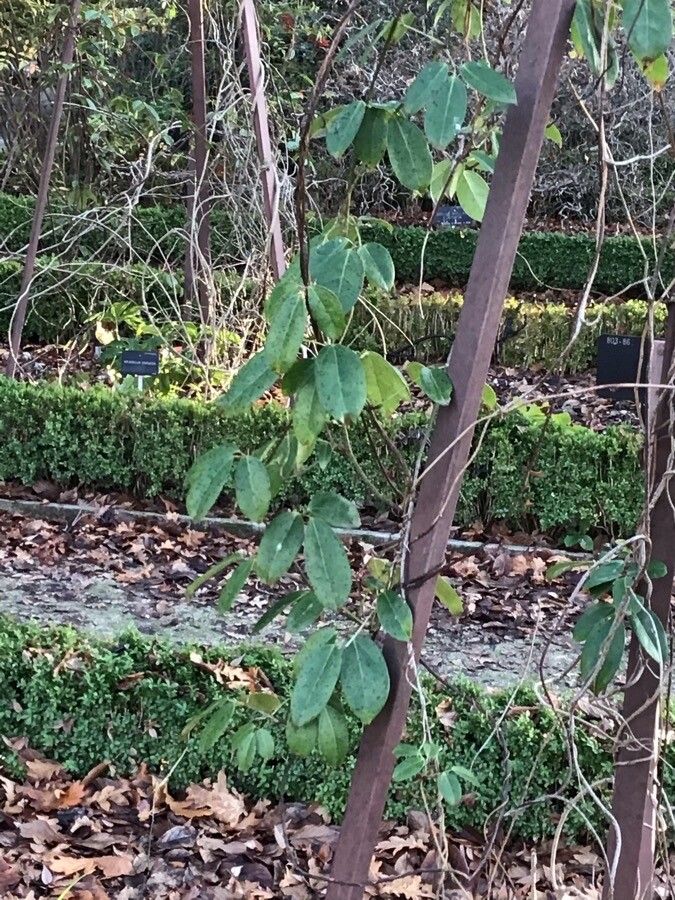
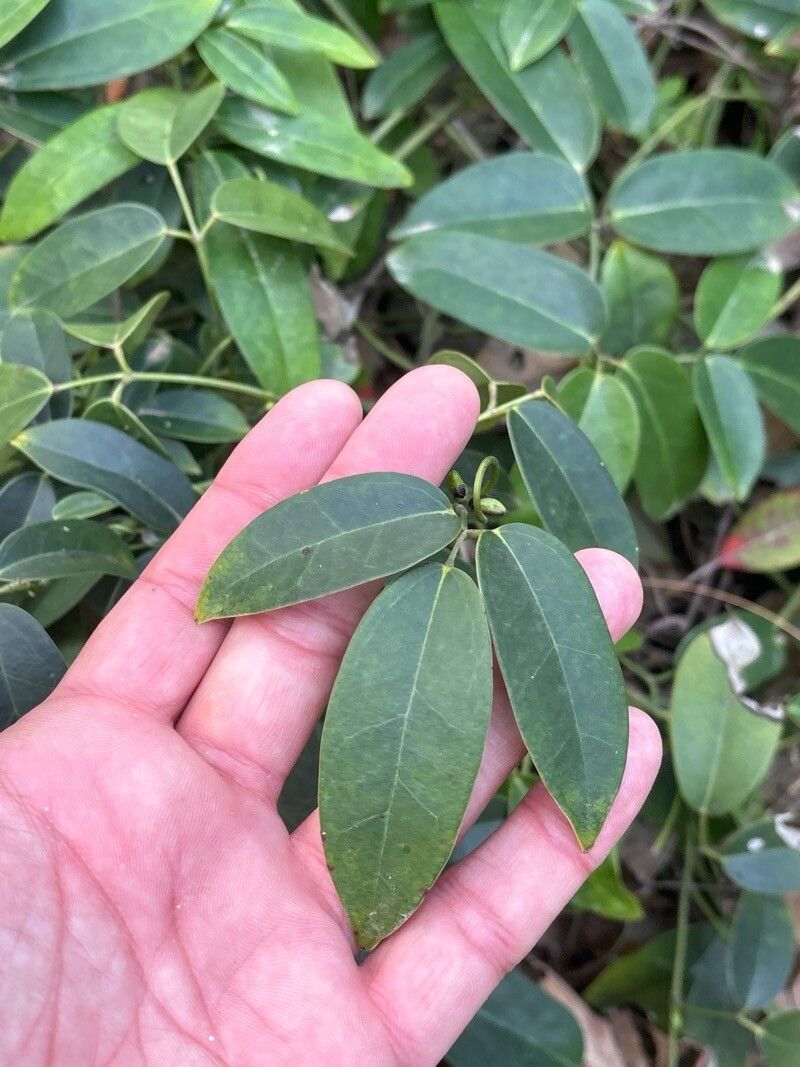
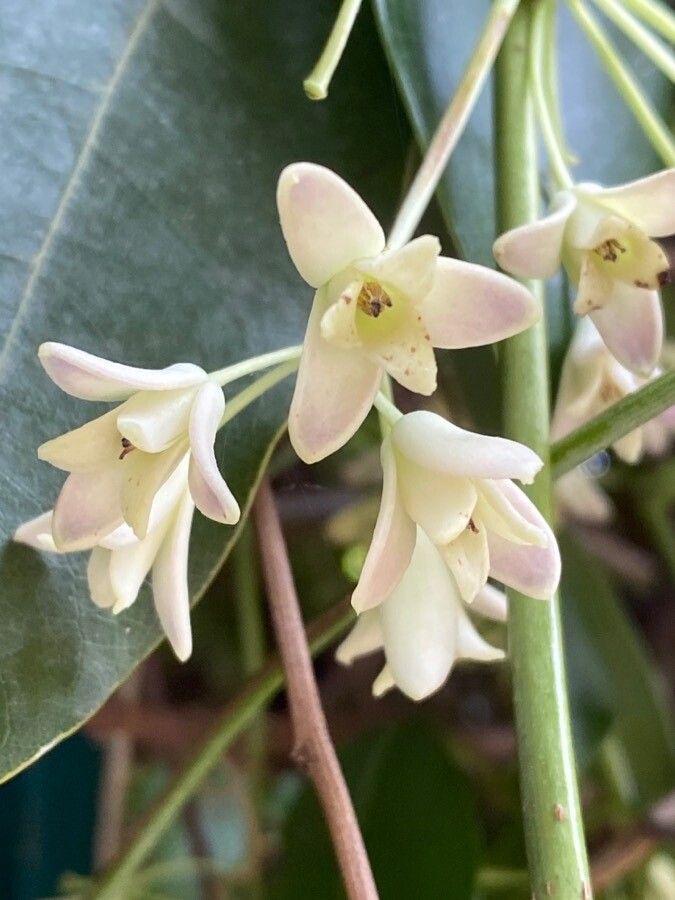
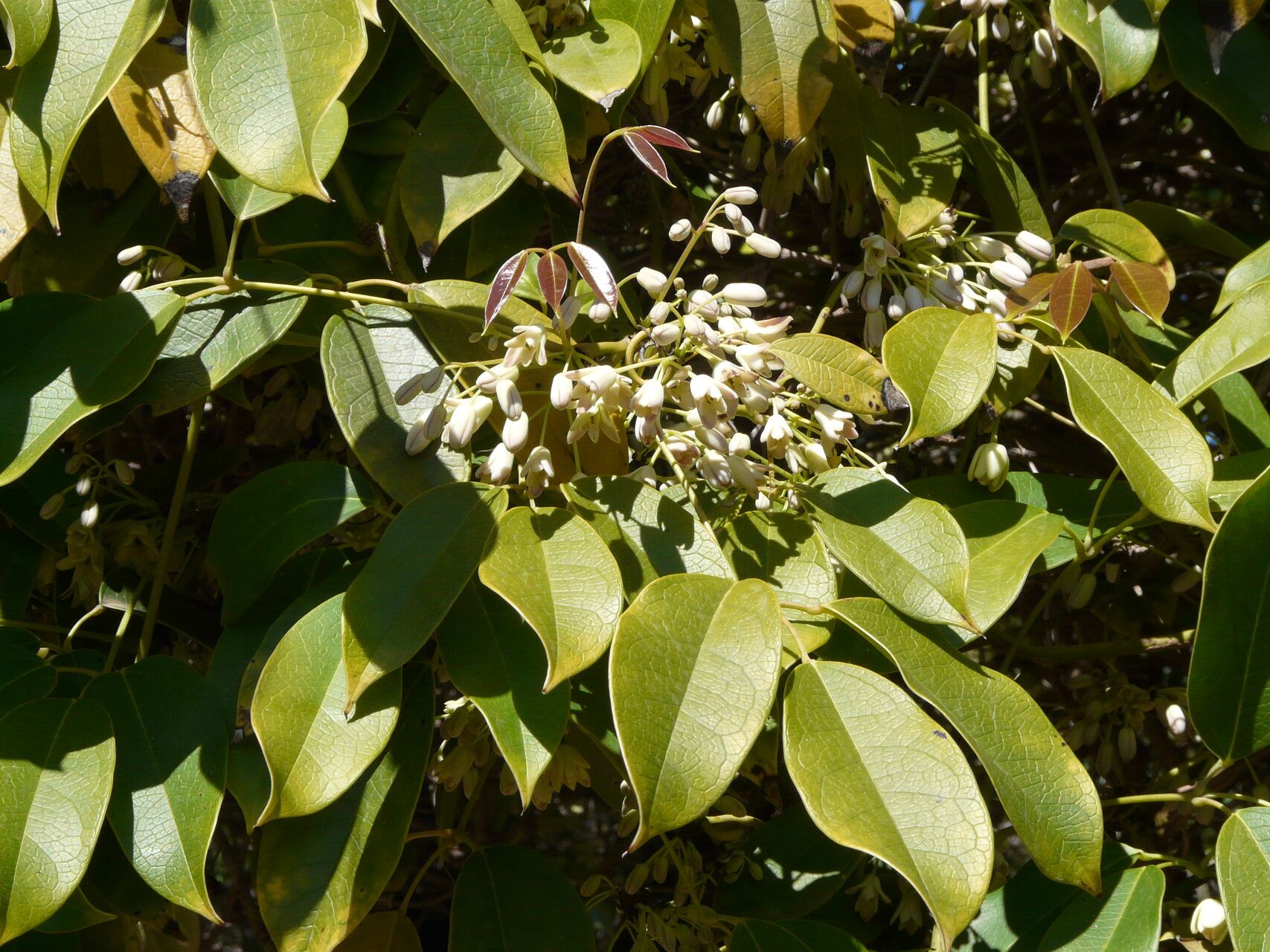
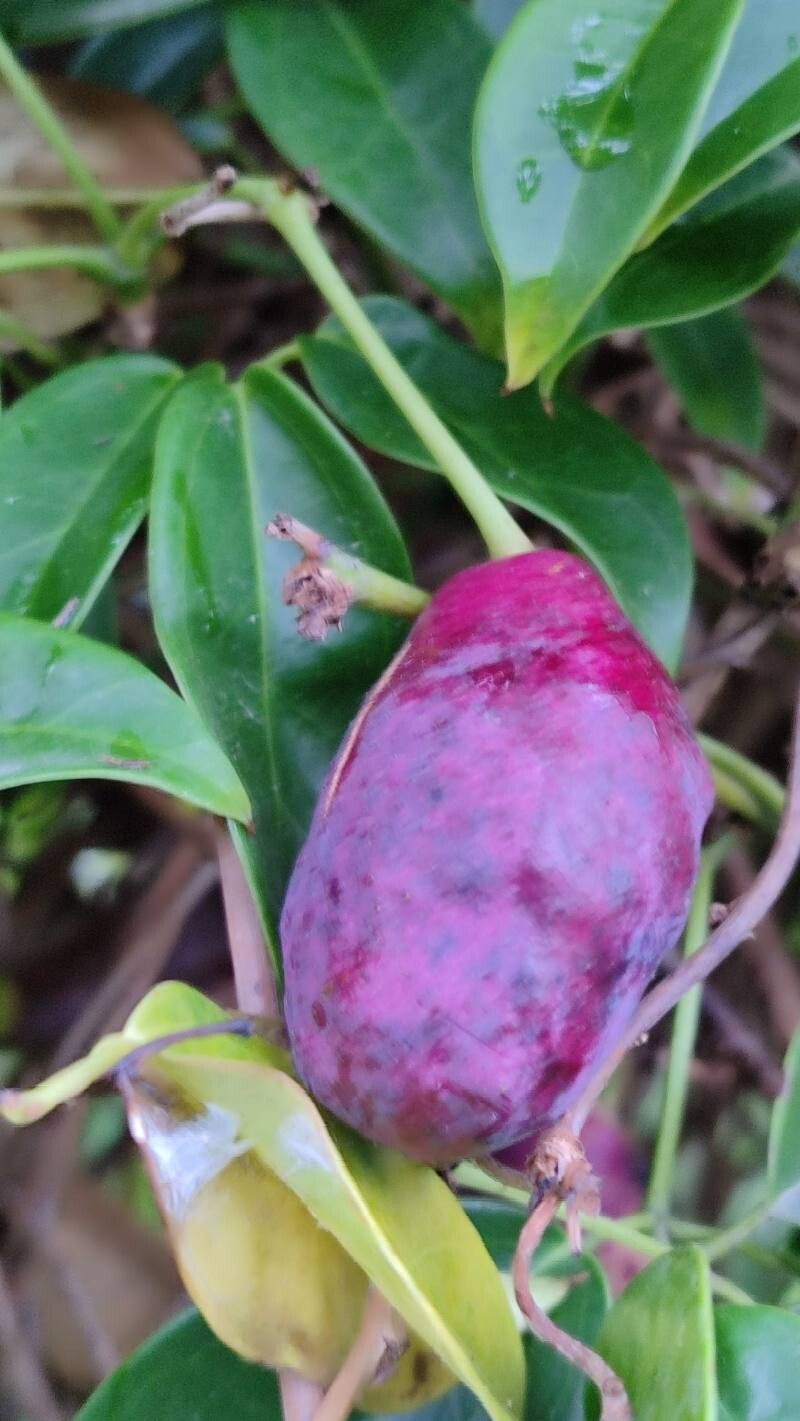
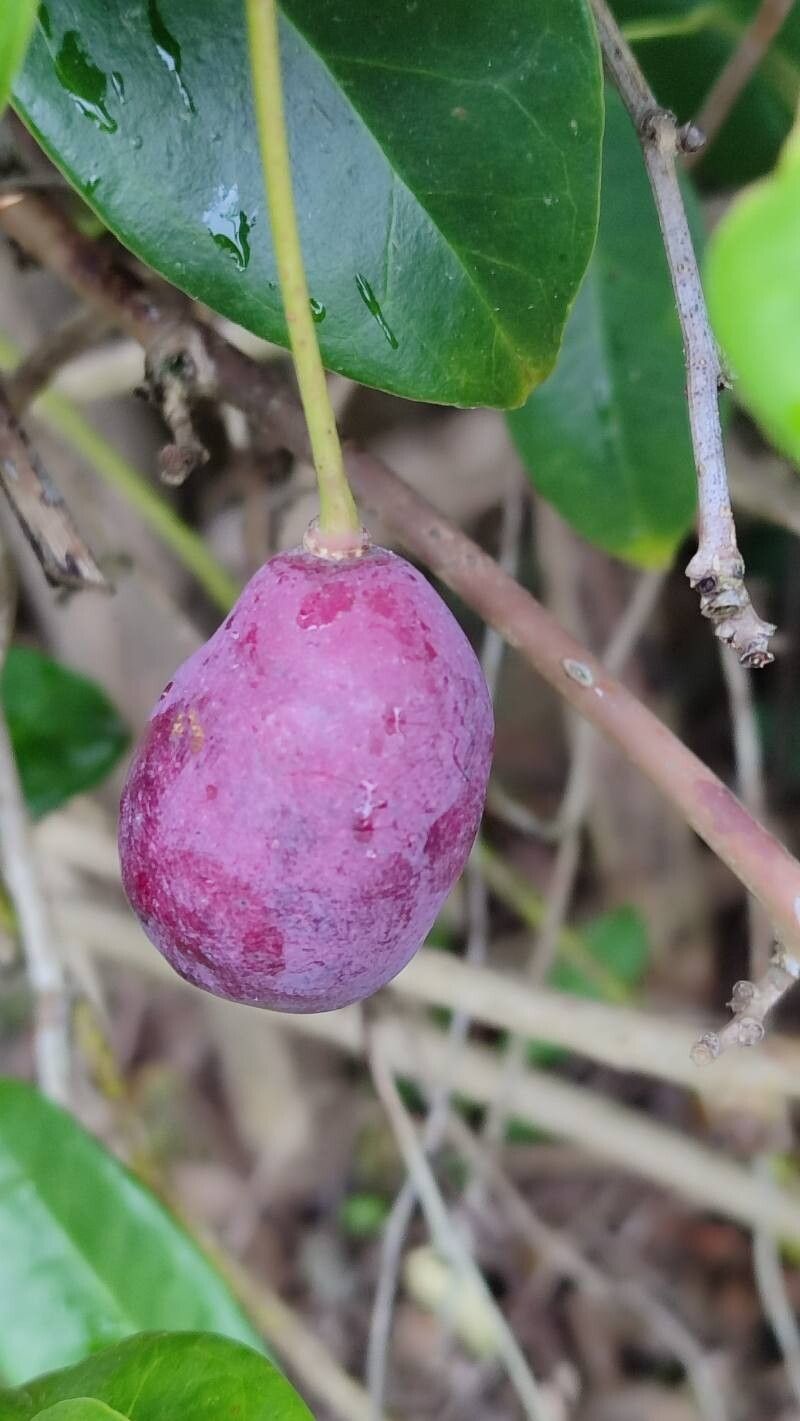
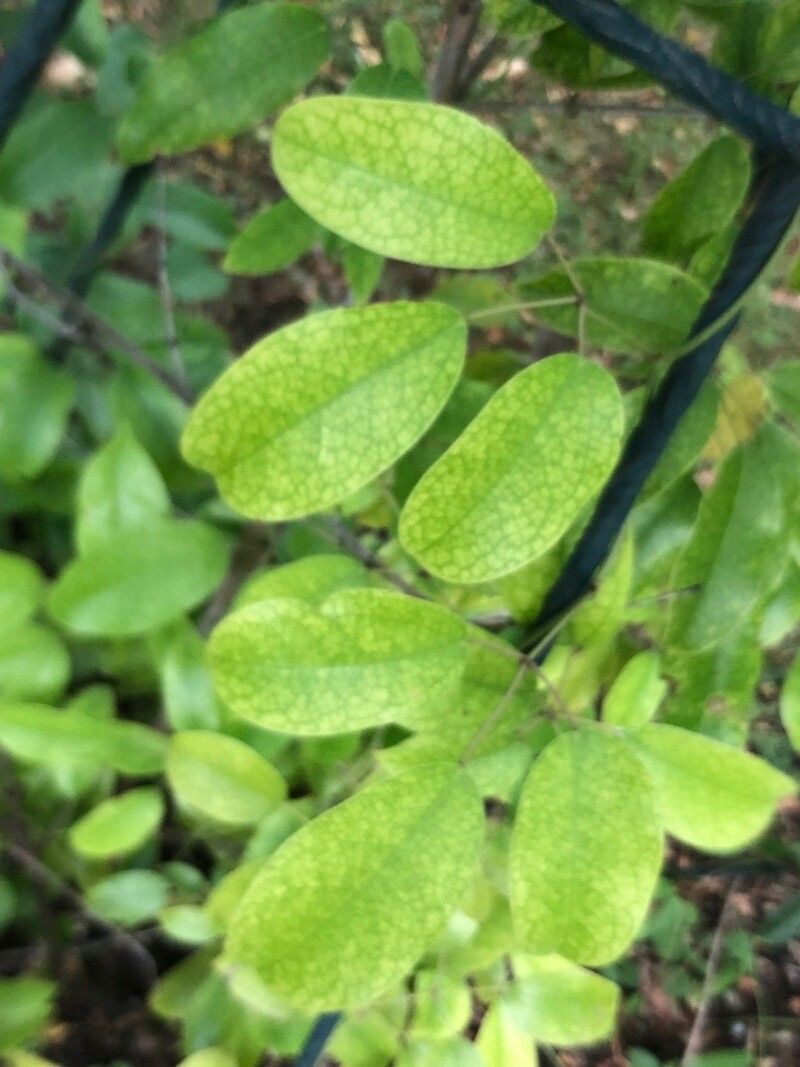
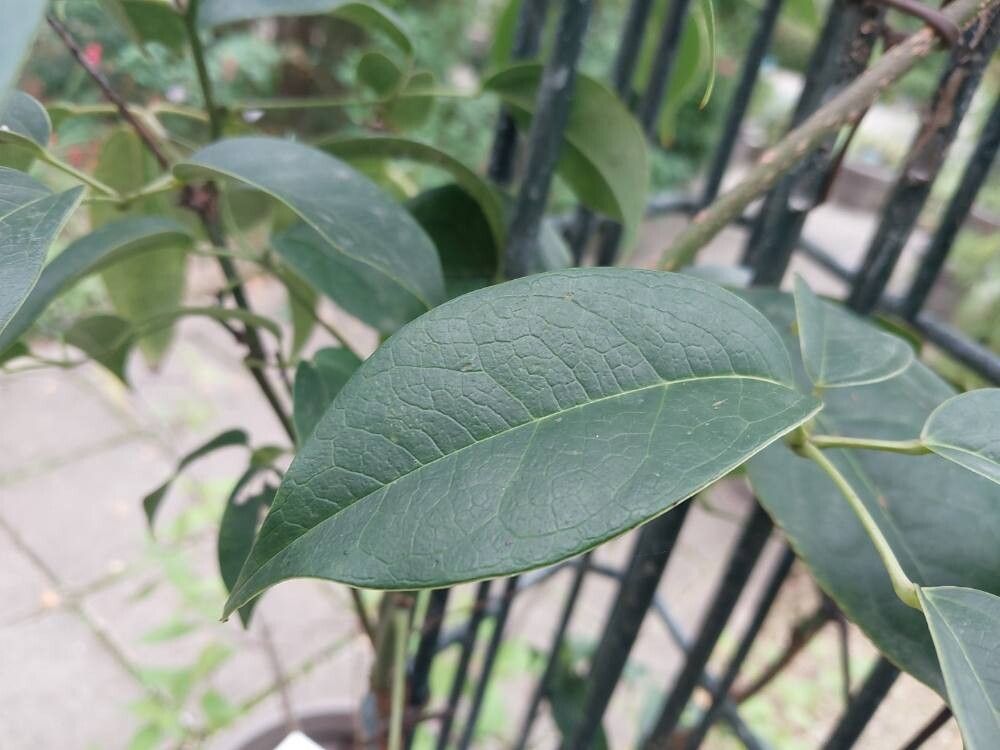
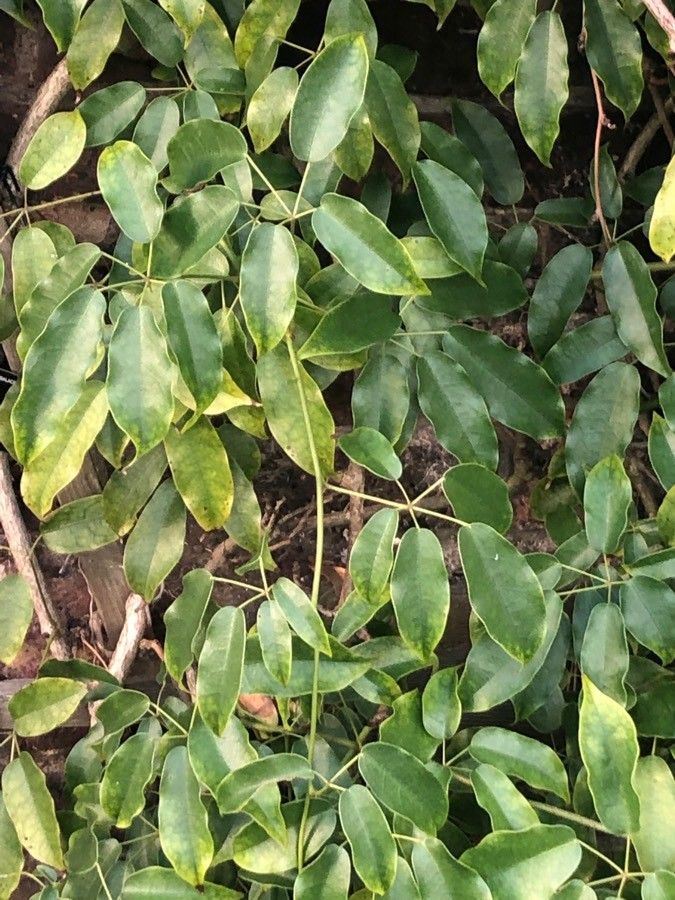
Stauntonia coriacea, commonly known as blue china vine, is an evergreen liana indigenous to temperate east Asia. The leaves have a waxy texture. It produces white monoecious flowers followed by pink-colored sausage-shaped fruits with white-colored pulp. The fruits are, technically, berries. They ripen and drop during autumn. The fruits are edible, but are not commonly used as food. It is often grown as an ornamental plant.
Sausage vine demonstrates strong disease resistance and is typically not susceptible to illnesses. For care, this plant is fairly low-maintenance. When grown outside it needs only light watering, and larger specimens usually do not require pruning. Smaller plants, however, should be trimmed after they finish blooming. Sausage vinet is appropriate for anyone who has an outdoor area, like a garden or deck, and it does not demand much horticultural experience.
How to keep Stauntonia Coriacea.
Light
The sausage vine performs best with continuous exposure to sunlight. It can also tolerate conditions with minimal light or heavy shade. Insufficient sun exposure can negatively affect the plant's health and growth, producing a paler color and reduced growth.
Water
Native to East Asia, the sausage vine thrives with consistent moisture and stable humidity. While it can withstand some drought, it prefers weekly watering to stay healthy. As an evergreen, it needs careful watering during the growing season to ensure robust growth and to prevent stress caused by dry soil.
Temperature
Sausage vine originates from habitats with temperatures ranging from 68 to 100.4°F (20 to 38℃). It performs best when temperatures are maintained within that range. To replicate its natural conditions, alter temperatures with seasonal shifts—lower them during cooler periods and increase them in hotter seasons.
Fertilizer
Use organic fertilizers (for example, fish emulsion or compost) rather than chemical fertilizers for Sausage vine. Supply young plants with higher levels of nitrogen and phosphorus in spring. Work compost or fertilizer into the soil before or after planting. For mature plants, apply a balanced fertilizer in spring or one formulated for specific deficiencies. Nutrient deficiency results in small leaves, short branches, yellow or bronze foliage, acidic fruits, early fruit drop, and splitting.
Pruning
The sausage vine is a robust climber known for its fragrant flowers and sausage-shaped fruits. To maintain its health and encourage better air circulation, it's best to prune it in early spring. During this time, remove any weak stems and overgrown vines. Regular pruning helps prevent disease and promotes more abundant flowering and fruit production. Be sure to use clean, sharp tools to make precise cuts.
Pot & Repot
Repot the sausage vine every 2-3 years in the spring, using a slightly larger, deep pot. After repotting, provide bright, indirect light and keep the soil consistently moist. Avoid overpacking the soil to ensure good aeration. With your attentive care, the sausage vine will thrive, displaying optimal growth and beauty.
Botanical profile.
- Plant Type
- Vine
- Life Cycle
- Perennial
- Genus
- Stauntonia
- Family
- Lardizabalaceae
- Hardiness Zone
- 9-11
- Mature Height
- 7.92 m
- Mature Spread
- 3.96 m
- Leaf Color
- Dark Green
- Leaf Type
- Evergreen
- Flower Color
- White
- Flower Size
- 0.10 cm
- Bloom Time
- Mid spring, Late spring
- Planting Time
- Spring, Summer, Autumn
- Harvest Time
- Late summer, Early fall, Mid fall
- Native Area
- China