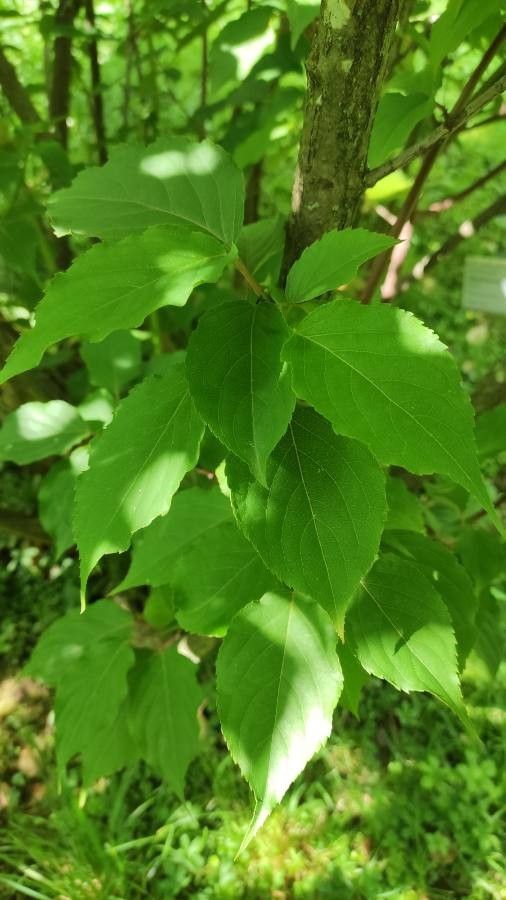
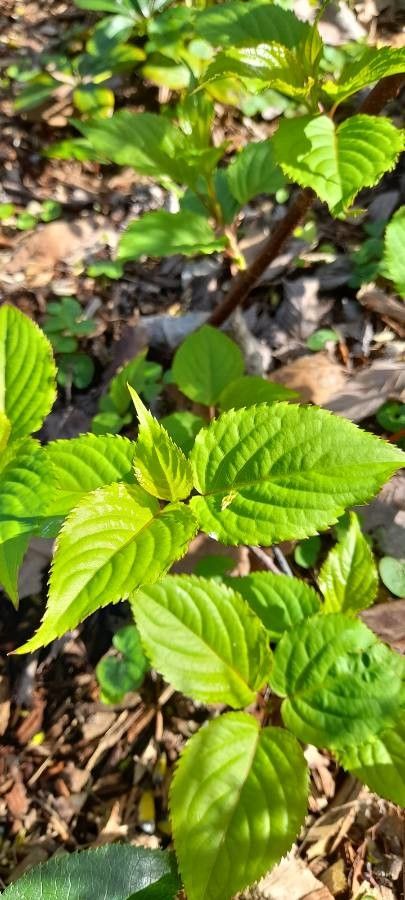
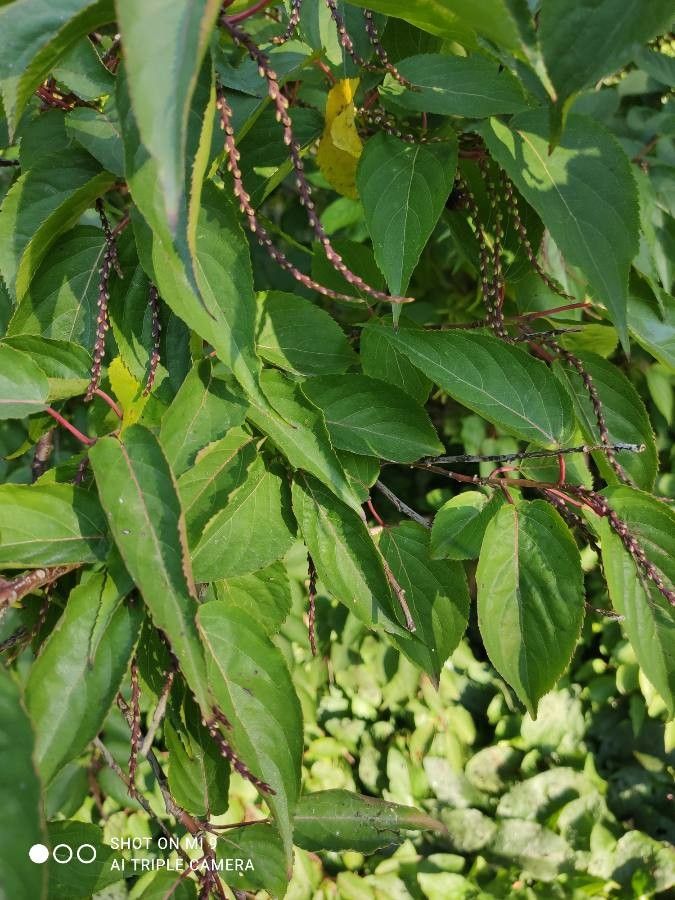
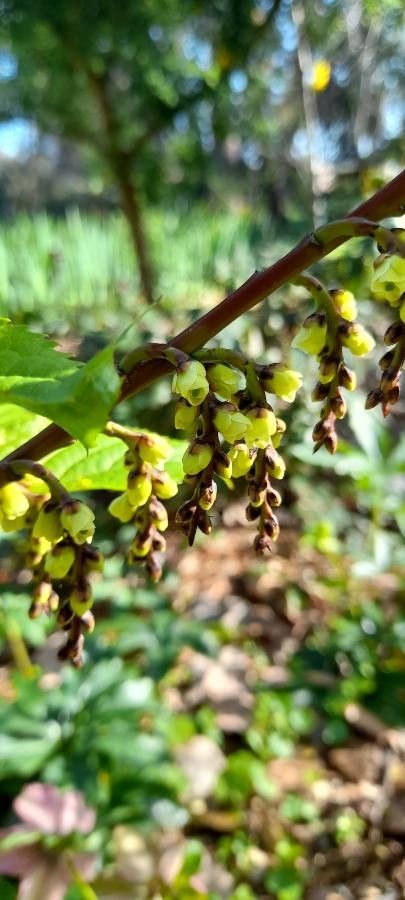
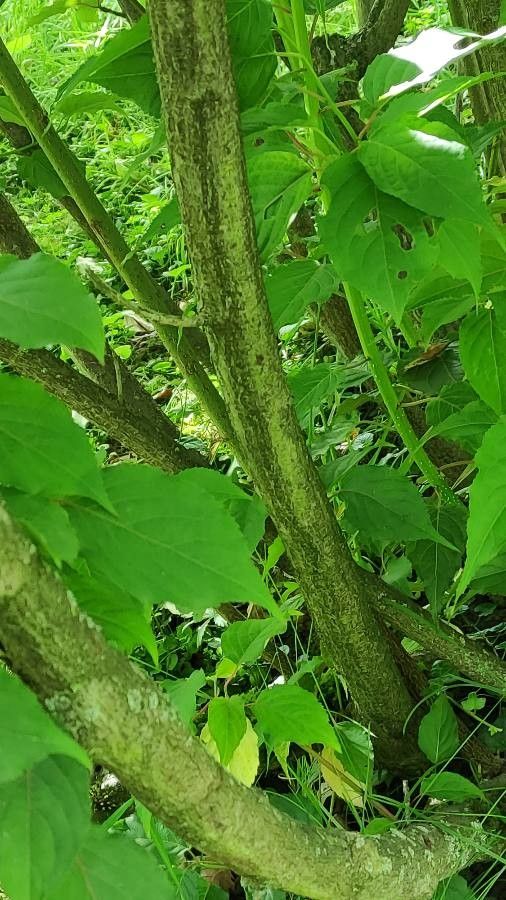
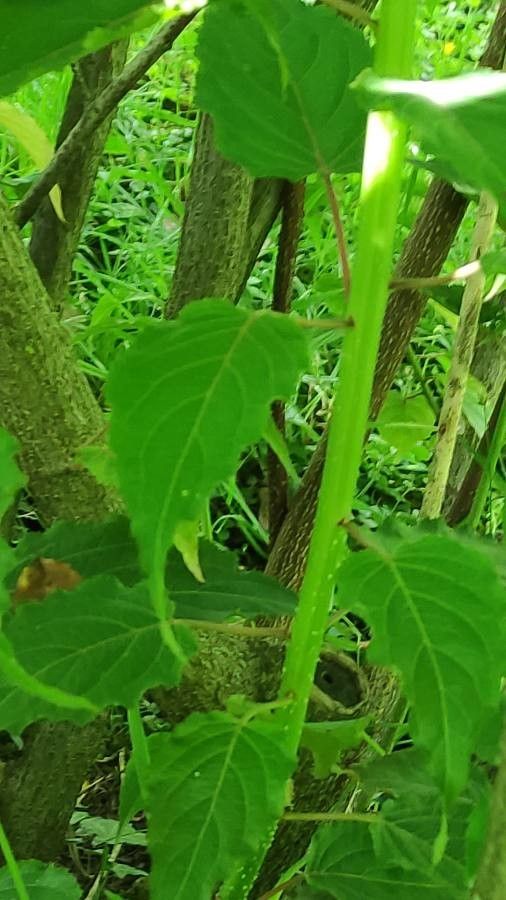
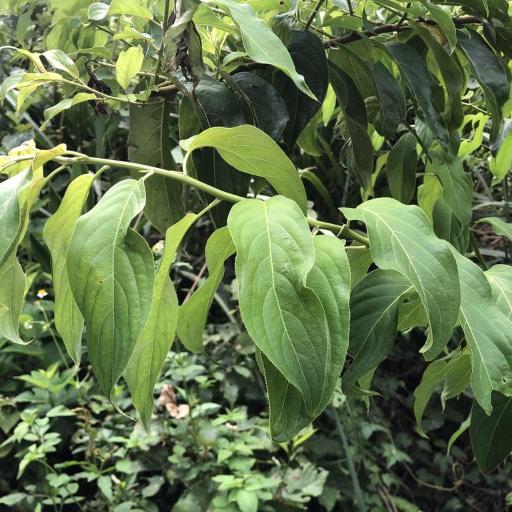
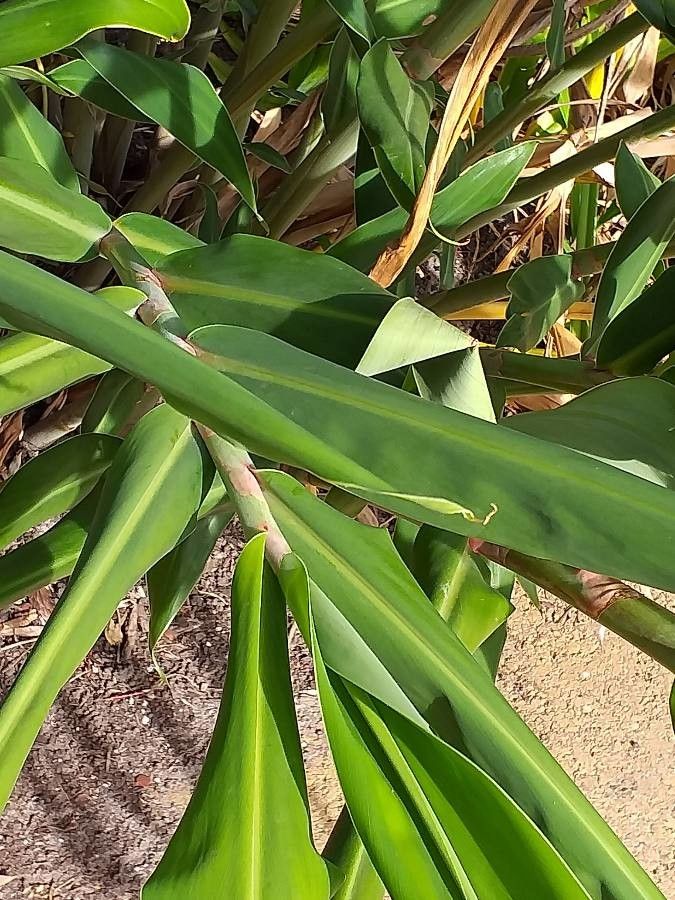
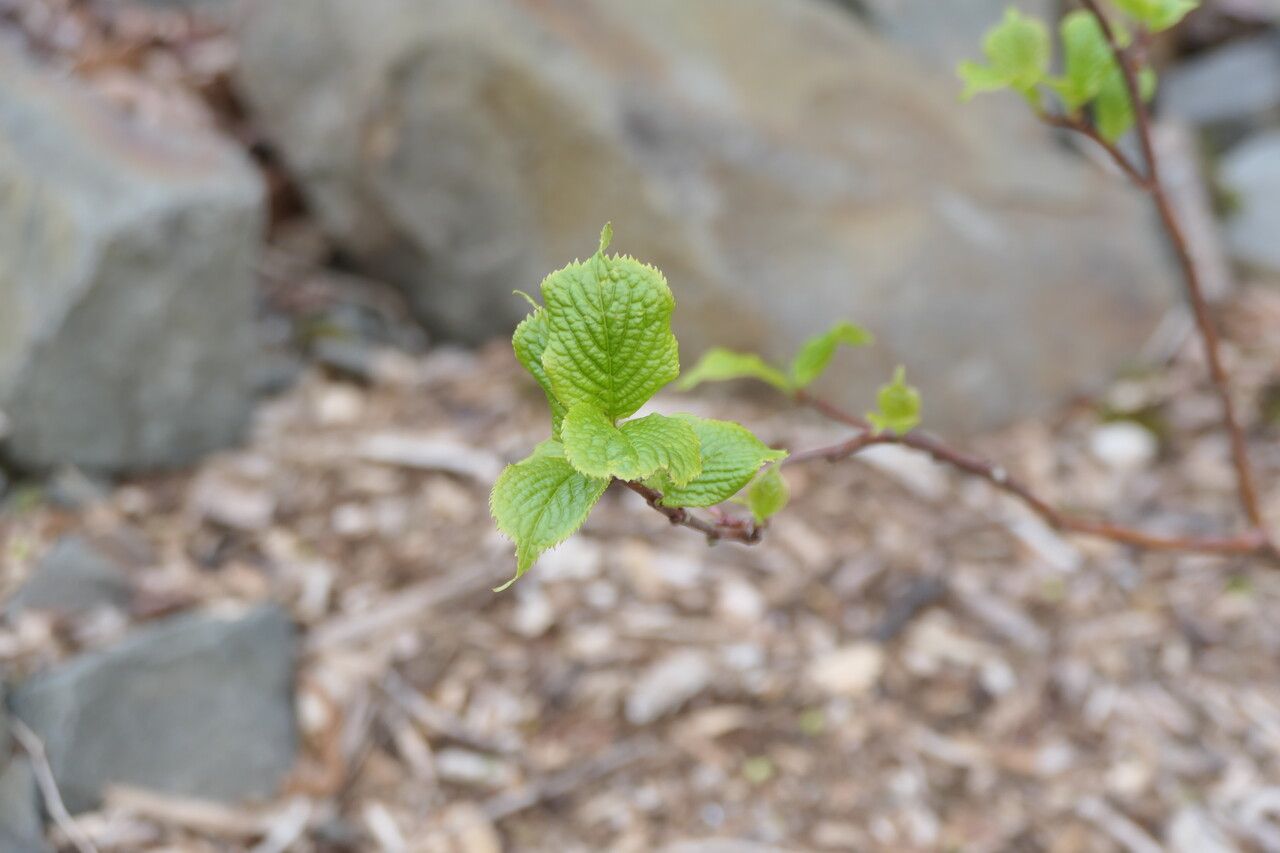
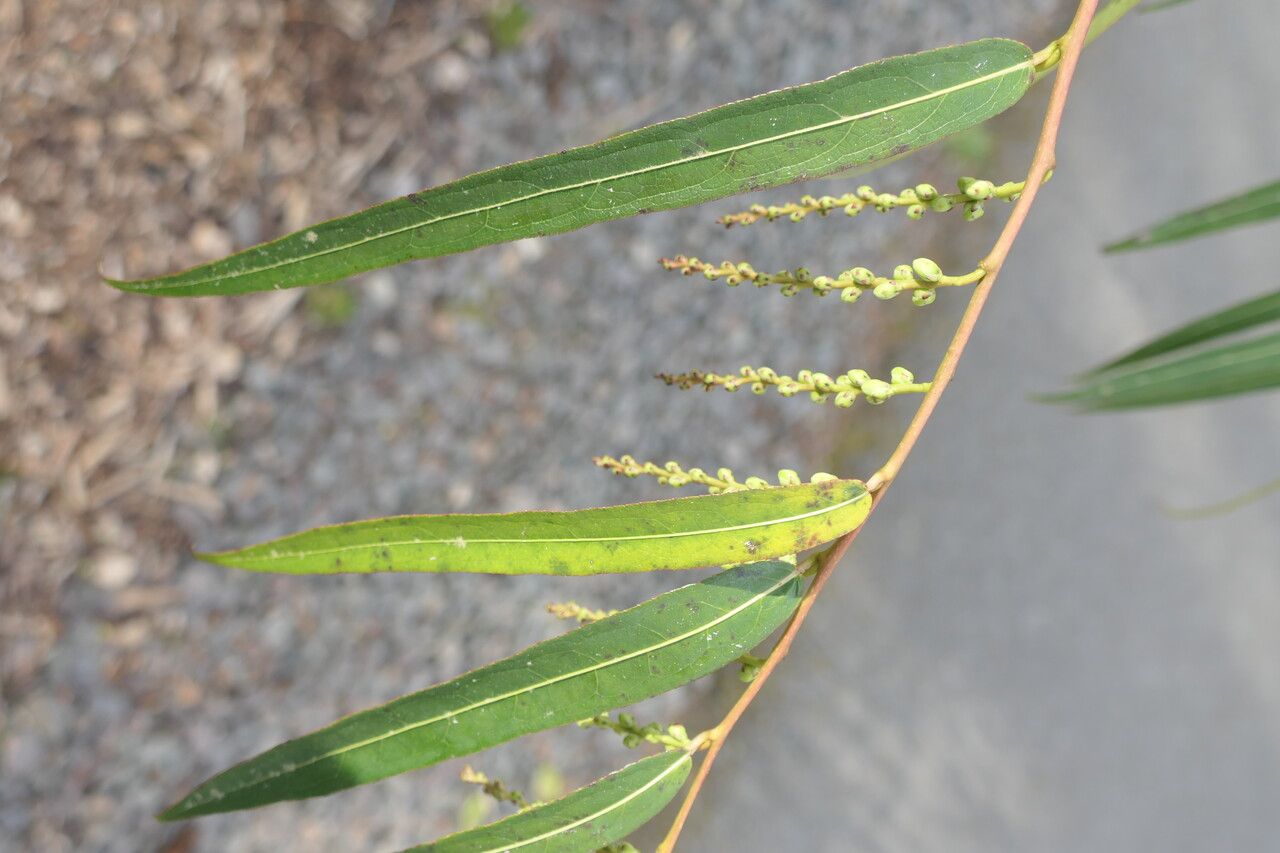
Stachyurus chinensis (中国旌节花), Chinese stachyurus, is a species of flowering plant in the family Stachyuraceae, native to China and Taiwan. It is a spreading deciduous shrub growing to 2.5 m (8 ft) tall by 4 m (13 ft) wide. Stiff, pendent racemes of bell-shaped, greenish-yellow flowers are borne on glossy, dark brown branches in winter and spring. It flowers two weeks later than the related S. praecox. The flowers are followed by simple ovate leaves which colour to pink and red before falling in autumn. The Latin specific epithet chinensis means "from China". This is the most widely distributed species of the genus, and is found throughout southern and eastern China as well as the island of Taiwan. It is also highly variable, with some populations on the mainland more closely resembling S. himalaicus. The two species may be better regarded as conspecific.This plant is cultivated as an ornamental subject in temperate parks and gardens. Although hardy, it prefers a sheltered location, and is suitable for training against a wall. It needs an acid or neutral soil. Two cultivars have gained the Royal Horticultural Society’s Award of Garden Merit: ’Celina’ (flower racemes longer than the species) ’Joy Forever’ (leaves spotted and flecked with yellow)
Chinese stachyurus is resistant to disease and typically not susceptible to illnesses. As for care, this plant is fairly low maintenance. Planted outdoors, it needs only minimal watering, and larger specimens usually do not require pruning. Smaller plants, however, should be pruned after they finish blooming. Chinese stachyurus is appropriate for anyone with an outdoor area, such as a garden or deck, and does not demand much prior care experience.
How to keep Stachyurus Chinensis.
Light
Chinese stachyurus does best in locations with moderate sunlight, but it can tolerate bright conditions. In its natural habitat it grows well under filtered light. However, too little light can impede its growth, while too much may scorch the leaves.
Water
Chinese stachyurus thrives in consistently moist soil and typically requires watering every two weeks. It's important to avoid overwatering, but once the plant is established, it shows moderate tolerance to drought. Commonly grown outdoors for its ornamental appeal, this species goes dormant during the colder months, which reduces its water needs.
Temperature
Chinese stachyurus originates from temperate environments and prefers temperatures between 50 and 90 °F (10 to 32 ℃). Seasonal adjustments may be necessary to reproduce this environment.
Fertilizer
Timing is important when fertilizing Chinese stachyurus. Apply fertilizer in early spring and continue once a month until early summer. Fertilizer aids in producing attractive blooms and supplies energy during both dormant and active growth periods.
Pruning
To ensure the optimal health of your Chinese Stachyurus, it is best to prune it in late spring, after it has finished blooming. Focus on removing any dead or crowded branches while retaining the plant's natural shape. Avoid heavy pruning to minimize stress on the plant. Regular pruning encourages flowering and promotes growth. Be sure to use clean, sharp tools for the most effective results.
Botanical profile.
- Plant Type
- Shrub
- Life Cycle
- Perennial
- Genus
- Stachyurus
- Family
- Stachyuraceae
- Hardiness Zone
- 6-7
- Mature Height
- 2.44 m
- Mature Spread
- 3.96 m
- Leaf Color
- Green, Red, Yellow, Variegated, Bronze
- Leaf Type
- Deciduous
- Flower Color
- Yellow
- Flower Size
- 0.76 cm
- Bloom Time
- Late winter, Early spring, Mid spring
- Planting Time
- Spring, Summer, Autumn, Winter
- Harvest Time
- Summer
- Native Area
- Vietnam, China
Reader questions.
What are the sunlight requirements for Chinese stachyurus?
Chinese stachyurus flourishes best in environments with moderate to full sunlight exposure. Partial sun, characterized by about 3-6 hours of sunlight, is suitable for this plant, as well as conditions of full sun, which means receiving more than 6 hours of sunlight daily. It's vital to observe how sunlight interacts with your garden throughout the day to identify areas that offer both light and shade, ensuring the optimal growth and health of your plants.
What is the native environment of Chinese stachyurus?
Chinese stachyurus, with its botanical name Stachyurus chinensis, is native to environments that possess temperate climates. It thrives best in temperatures ranging between 50 to 90 °F (10 to 32 °C). To ensure the plant grows optimally, seasonal adjustments might be necessary to closely replicate its native environmental conditions.
How does artificial lighting benefit indoor plants, and what are the best practices?
Indoor plants, including Chinese stachyurus, benefit significantly from adequate lighting, especially when natural sunlight is scarce, such as during winter or in less sunny indoor locations. Artificial lights support faster and healthier growth by compensating for the lack of natural light. LED lights are preferred due to their efficiency and effectiveness, offering specific wavelengths needed by plants. The general guidelines for artificial lighting involve choosing the right type of light, setting the correct intensity (30-50W/sq ft for full sun plants, 20-30W/sq ft for partial sun plants, and 10-20W/sq ft for full shade plants), adjusting the distance (12-36 inches above the plant), and timing the light exposure to mimic natural daylight hours, usually between 8-12 hours per day.
Is Chinese stachyurus cold-tolerant?
Yes, Chinese stachyurus exhibits a high tolerance to cold temperatures and does not require any additional frost protection measures during the winter months. Before the onset of the first freeze in autumn, it is advisable to water the plant generously. This preparation ensures the soil remains moist and enters a frozen state, thereby preventing drought and water scarcity for the plant throughout the winter and early spring periods.
What are the signs of insufficient or excessive light exposure in Chinese stachyurus?
When Chinese stachyurus is grown under conditions of insufficient light, several symptoms may surface, including smaller new leaves, leggy or sparse growth, faster leaf drop, halted new growth, and pale or irregularly colored new leaves due to a lack of chlorophyll. In contrast, excessive sunlight can lead to chlorosis, where leaves turn yellow; sunscald, presenting as bleached areas on leaves or stems; curling or twisting of leaves as a defense mechanism; wilting from increased water loss; and leaf scorching, indicated by brown, dry edges on leaves. These symptoms reflect the plant's struggle with inappropriate light levels and its effects on health and growth.
How does low temperature affect Chinese stachyurus, and what are the solutions?
While Chinese stachyurus is remarkably cold-tolerant, winter temperatures should ideally be kept above -25°C. Even though the plant may not exhibit noticeable changes during the winter, exposure to temperatures below this threshold can result in branches becoming brittle and dry by springtime, with no new shoots emerging. To address this, it is recommended to prune away any dead branches in the spring that have failed to produce new leaves.
What strategies can improve light conditions for Chinese stachyurus?
To optimize growth conditions for Chinese stachyurus, gradually transitioning your plants to receive the ideal amount of sunlight is crucial, aiming for 3-6 hours of direct sunlight daily. For indoor plants that are large or difficult to move, using artificial light sources such as desk or ceiling lamps for at least 8 hours a day, or investing in professional plant grow lights, can provide the necessary light. Outdoor plants should be moved progressively to sunnier spots to avoid shock and sunburn. Reducing obstruction is another strategy; for instance, pruning surrounding trees can enhance sunlight accessibility. Moreover, considering transplantations during the plant's dormant period can also be beneficial, transferring plants to locations with better sunlight exposure and drainage.
How does high temperature affect Chinese stachyurus, and what are the solutions?
Chinese stachyurus is not tolerant to high temperatures. When exposed to temperatures exceeding 32°C, the plant may suffer significant leaf drop. In severe instances, it might lead to the entire plant withering and dying. To mitigate these effects, trim away parts of the plant that are sunburned and dried up. Relocate the plant to a cooler area that is shaded from the midday and afternoon sun, or alternatively, use a shade cloth. Ensuring the soil is kept moist through watering in the morning and evening can also help alleviate stress from high temperatures.