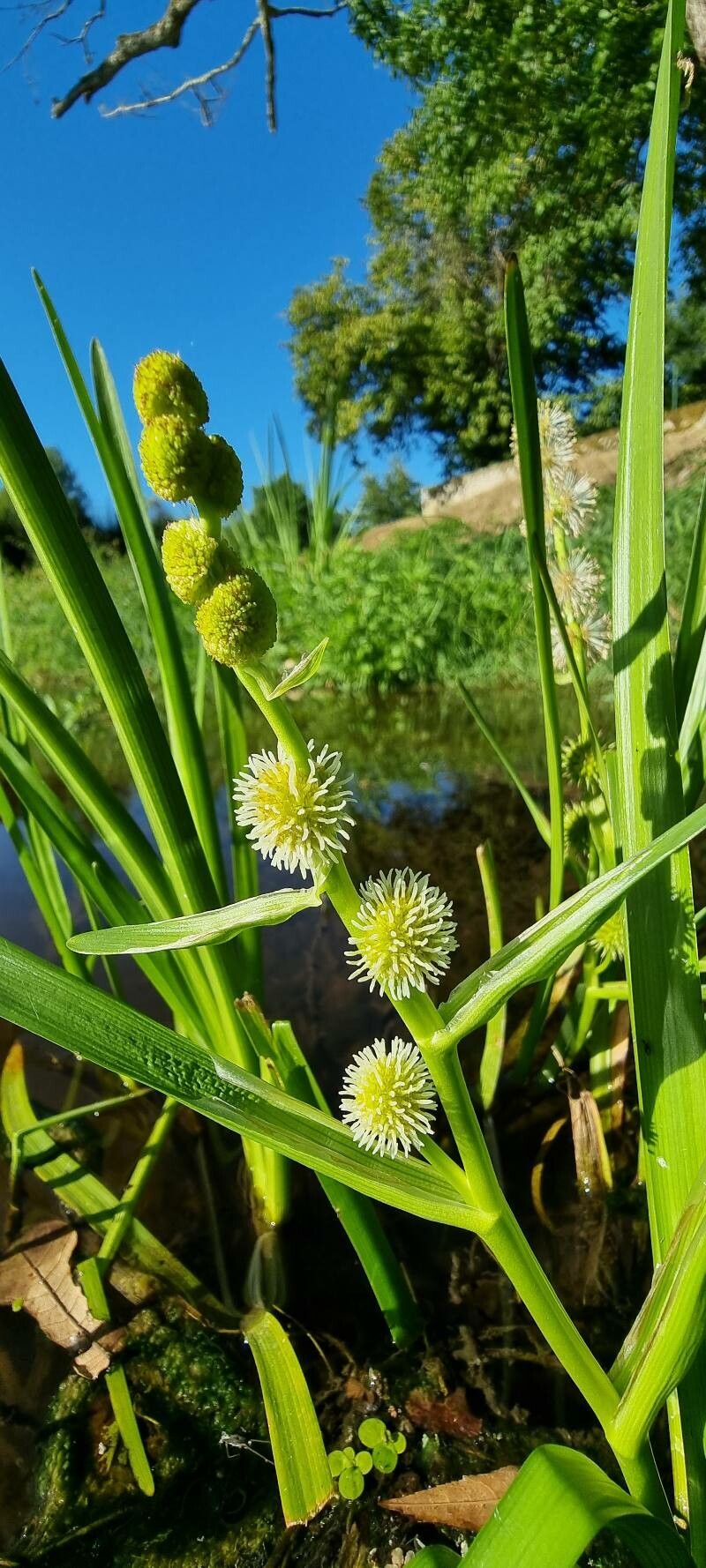
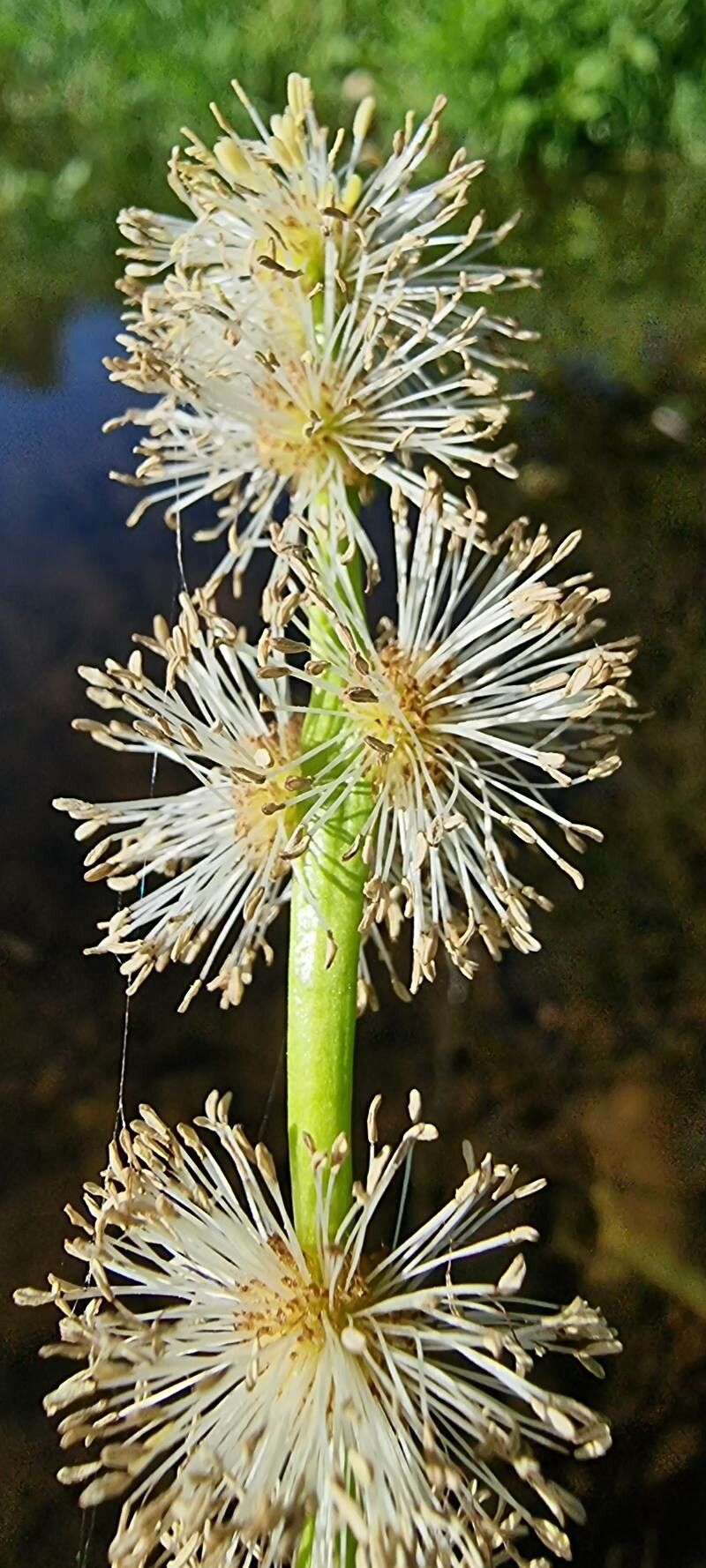
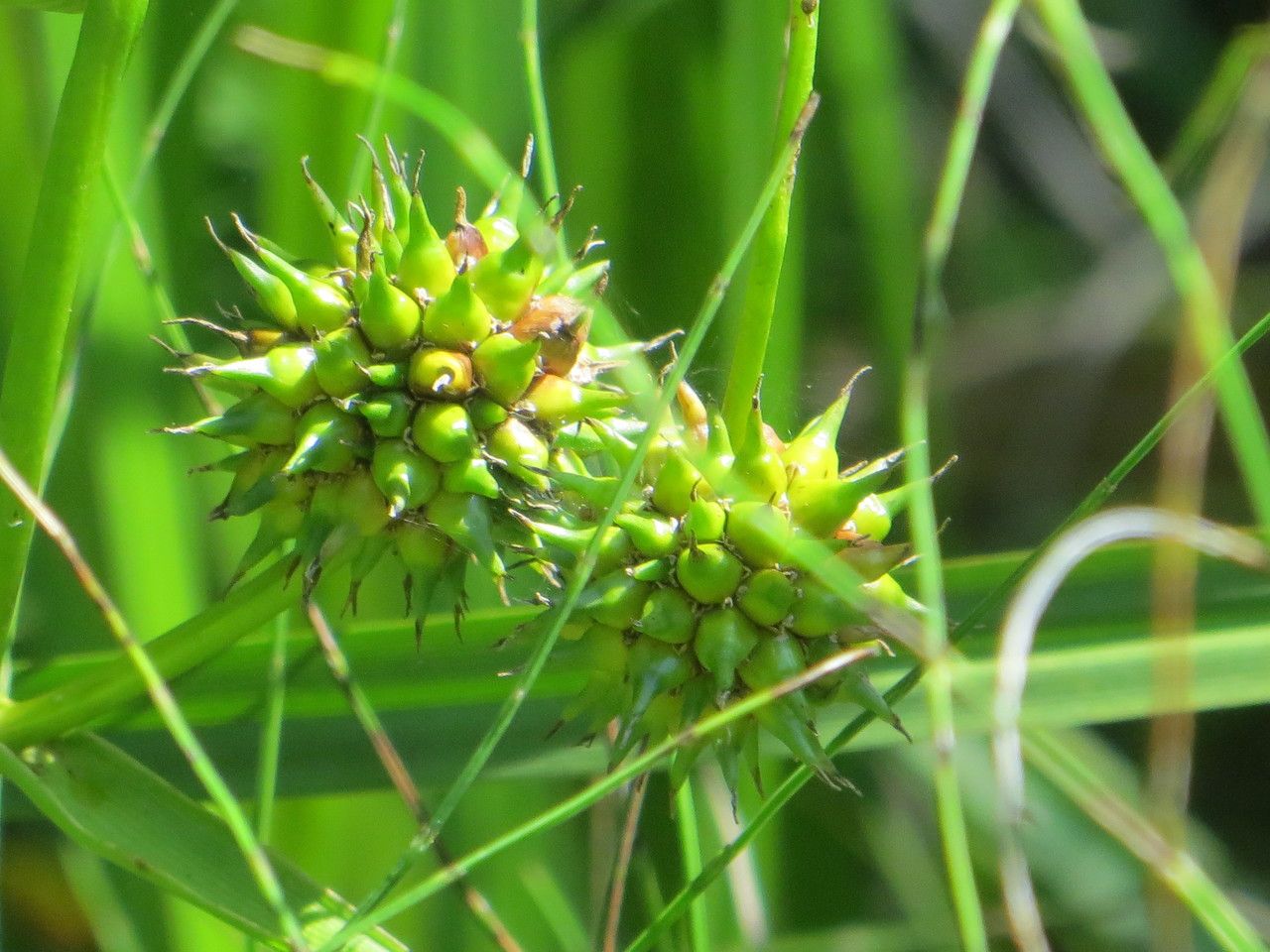
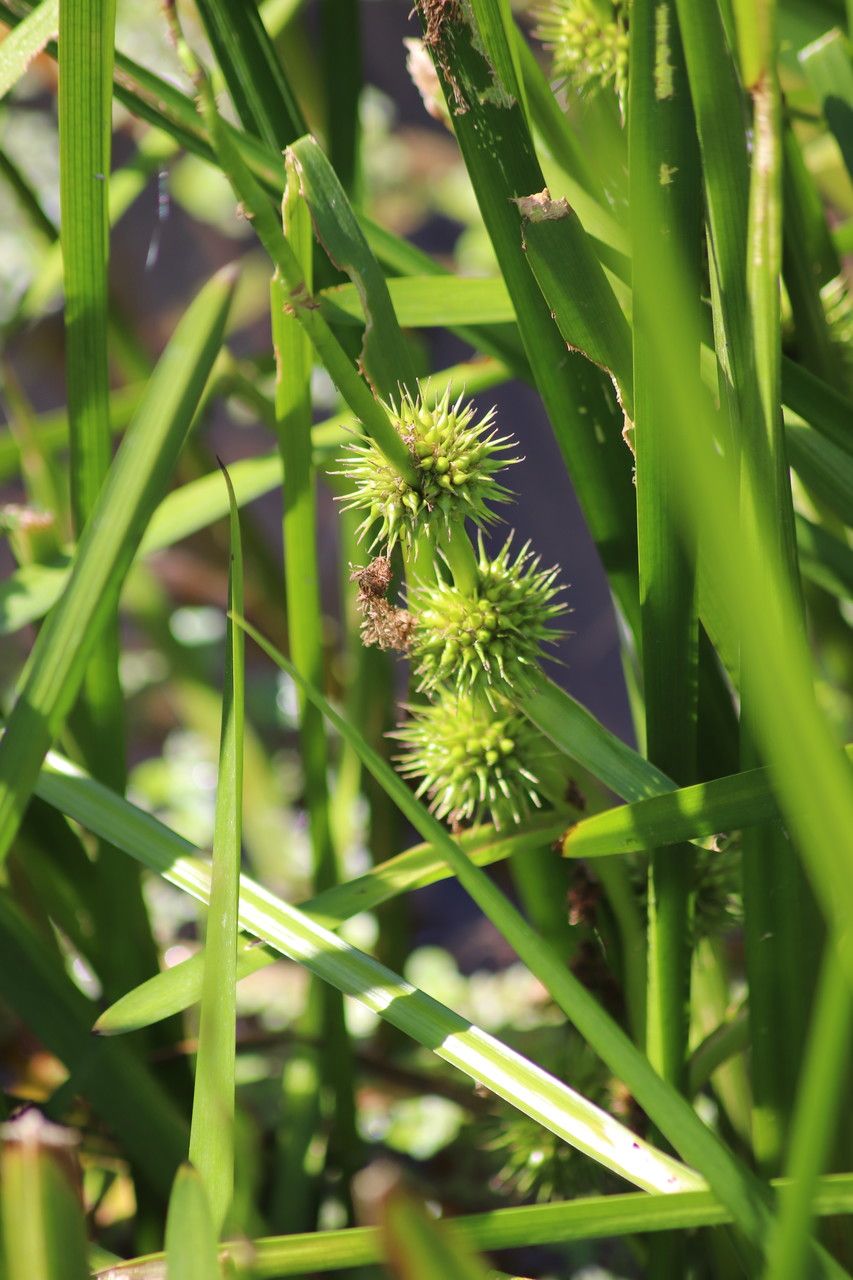
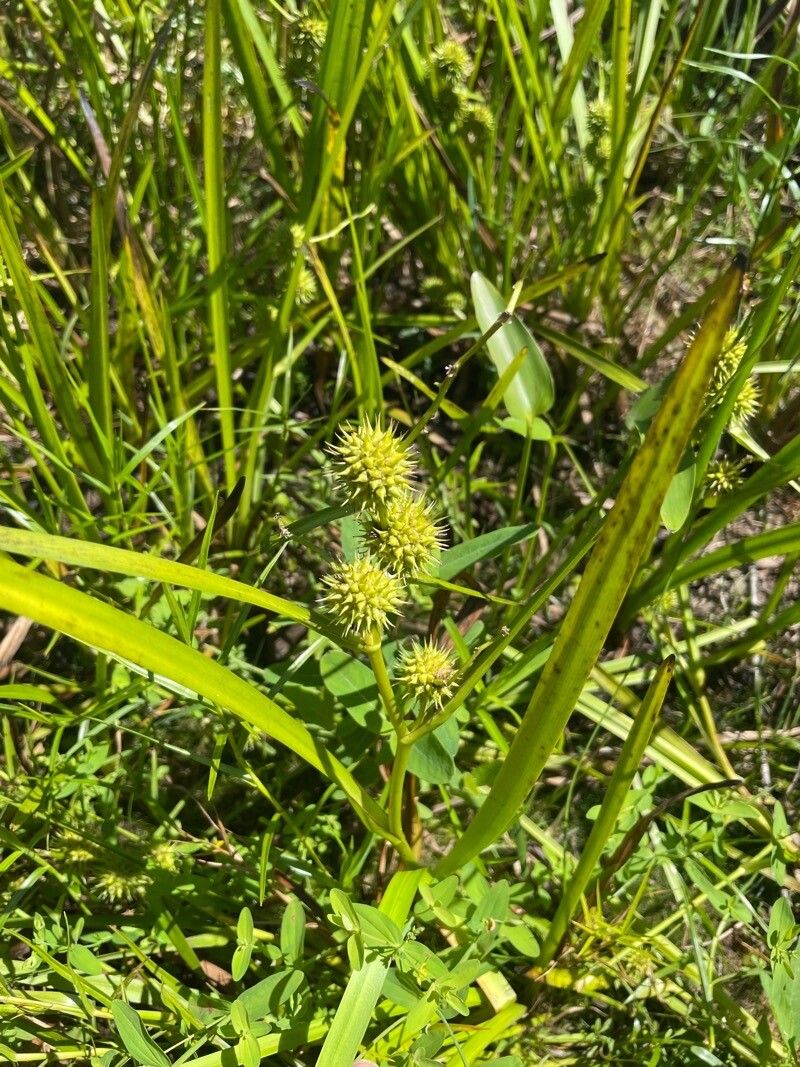
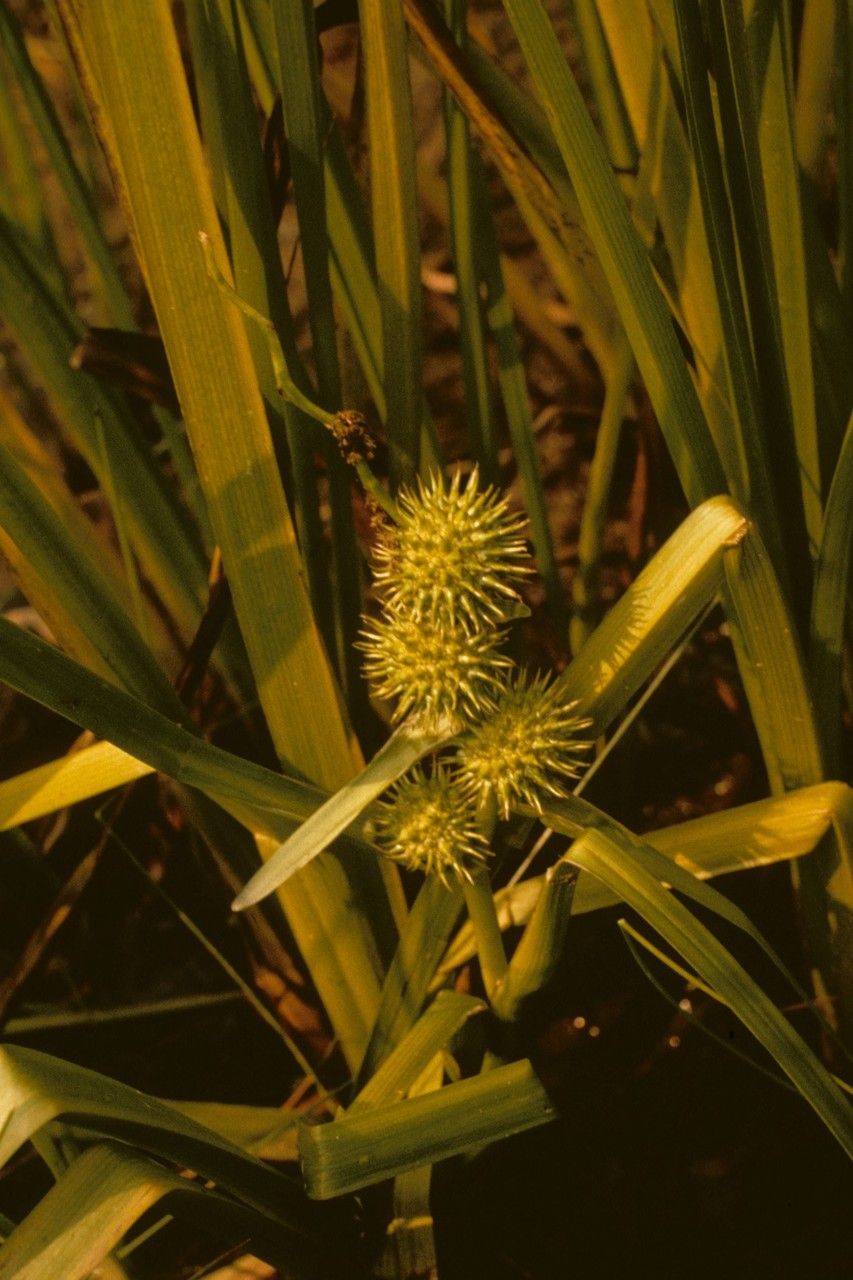
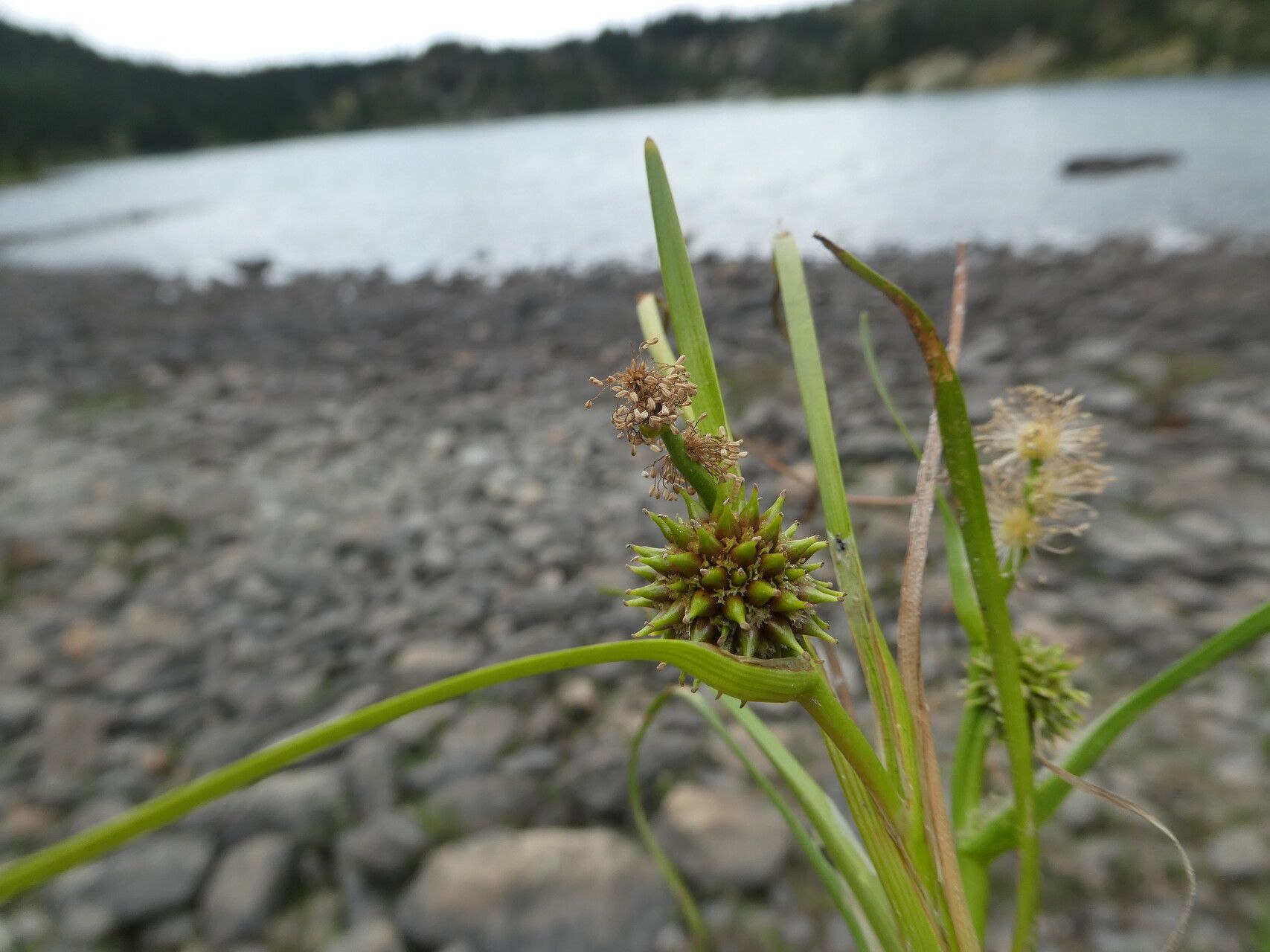
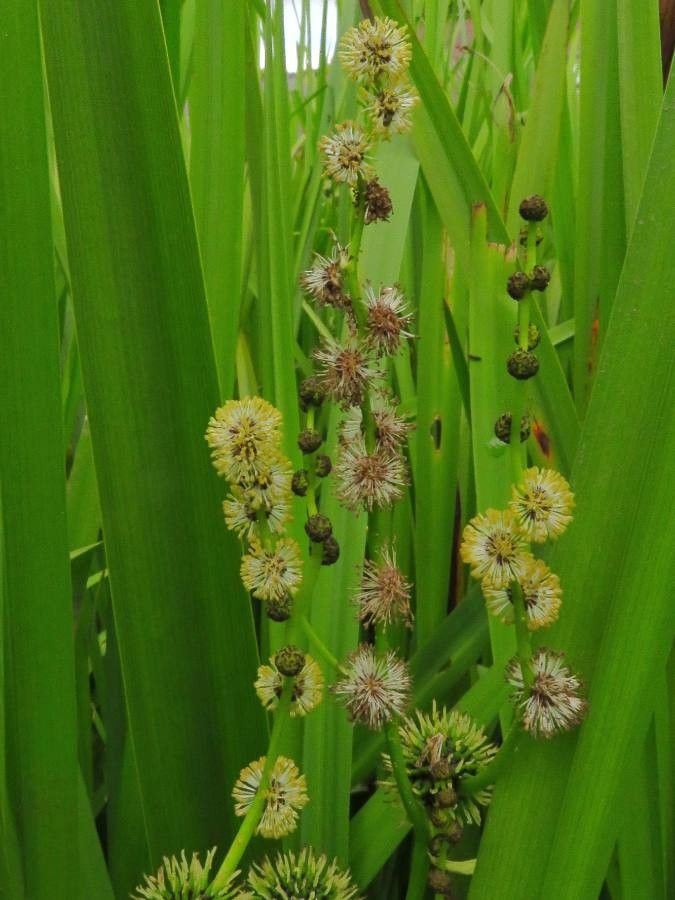
Sparganium emersum is a species of flowering plant in the cat-tail family known by the common names European bur-reed and unbranched bur-reed. It has a circumboreal distribution, occurring throughout the northern latitudes of Eurasia and North America. It is an aquatic plant, growing in shallow water bodies such as ponds and streams. It can become abundant at times. It is a perennial herb producing a floating stem up to 2 meters long. The leaves may be limp and floating or stiff and erect, emerging above the water surface. The leaves are flat and straplike, sometimes with a triangular, keeled base that can help distinguish it from the similar Sparganium angustifolium. It is monoecious, individual plants bearing both male and female inflorescences. These are spherical, the male inflorescence a ball of stamens and the female inflorescence a ball of developing fruits growing beneath the male spheres.
European bur-reed is fairly resistant to disease and is generally not prone to illnesses. However, it can be affected by pests and diseases present in its surroundings. These infections are usually mild. In terms of care, the plant requires moderate maintenance. It should be pruned regularly to maintain a neat appearance and healthy growth. Fertilizing can also help encourage flowering. European bur-reed is suitable for anyone with outdoor space, such as a garden or patio, and does not need extensive care experience. When grown indoors, it may require more attention.
How to keep Sparganium Emersum.
Light
Thriving in the full intensity of the sun's rays, the European bur-reed can tolerate conditions where light is diffuse or weakened, demonstrating its adaptability. Its native environment corresponds to locations that receive abundant sunlight. Excessive or insufficient sunlight can negatively affect the plant's healthy growth.
Water
The European bur-reed thrives in moist, marshy environments and needs consistent weekly watering. Adapted to high humidity and occasional submersion, it prefers wet soil and grows well in shallow water or saturated areas, relying on abundant water for vigorous growth.
Temperature
European bur-reed is native to temperate zones, doing well in areas with temperatures between 32 and 77 °F (0 to 25 °C). Because this species is adapted to cooler climates, it may need extra shading during hot summer months to mimic its natural conditions.
Pruning
The European bur-reed, which thrives in wetlands, benefits from regular pruning to maintain its health and appearance. Key techniques for pruning include removing dead stems in early spring and thinning out dense clusters. The best time for pruning is in the spring, as this promotes growth, improves aeration, and reduces the risk of disease, resulting in a robust plant.
Botanical profile.
- Plant Type
- Herb
- Life Cycle
- Perennial
- Genus
- Sparganium
- Family
- Typhaceae
- Hardiness Zone
- 3-6
- Mature Height
- 0.3 m to 1.83 m
- Mature Spread
- 8 cm to 15 cm
- Leaf Color
- Green, Dark Green
- Leaf Type
- Deciduous
- Flower Color
- Green, White
- Flower Size
- 10.16 cm to 20.32 cm
- Bloom Time
- Early summer, Mid summer
- Planting Time
- Spring, Summer, Autumn
- Harvest Time
- Late summer, Early fall, Mid fall
- Native Area
- Turkey, Sweden, India, Austria, Slovakia, Montenegro, Pakistan, Slovenia, Croatia, Belarus, Russia, Germany, Indonesia, Estonia, Romania, Latvia, Belgium, Portugal, Netherlands, France, Czech Republic, Bulgaria, Armenia, Poland, Ukraine, Serbia, China, Lithuania, Norway, Kyrgyzstan, Kazakhstan, Italy, Spain, Switzerland, Denmark, Myanmar, Mongolia, Japan, Finland, Albania, Ireland, United Kingdom, Hungary, Azerbaijan
Other names.
Reader questions.
How should I water my European bur-reed?
To properly care for the European bur-reed, it is recommended to use filtered water at room temperature. Tap water should be avoided as it may contain harmful particles for the plant's health. Since the bur-reed is accustomed to warmer temperatures, using cold water can be a shock to its system. It's also best to avoid watering the foliage overhead, as this can cause problems. Instead, apply the filtered room temperature water directly to the soil until it is fully saturated. This method is beneficial as it helps moisten the roots and allows them to spread throughout the soil to collect necessary nutrients.
Why should I add fertilizer to my European bur-reed?
The main structure of the European bur-reed is made up of its leaves. Fertilization is important for maintaining the health and appearance of these leaves. Proper fertilization will ensure consistent color and a healthy texture. Additionally, fertilization supports root growth and maintenance, both for existing roots and for generating new ones. This not only benefits the plant's current health, but also improves its ability to absorb nutrients from the soil in the long run.
What are the sunlight requirements for European bur-reed?
European bur-reed thrives in environments that offer full sun, meaning it requires more than 6 hours of sunlight daily. However, it can also adapt to partial sun conditions, receiving about 3-6 hours of sunlight. Observing the movement of sunlight through your garden and selecting locations that provide a balanced mixture of light and shade can significantly enhance the plant's growth and health.
What is the indigenous climate for European bur-reed?
The European bur-reed, known botanically as Sparganium emersum, thrives in temperate climates. It is indigenous to regions where temperatures range from 32 to 77 °F (0 to 25 °C), primarily thriving in cooler climates. To maintain its health during hot summer months, additional shading may be required to simulate its native climate conditions.
What should I do if I give my European bur-reed plant too much or too little water?
Both overwatering and underwatering can harm your European bur-reed, but overwatering is a more common issue. If your plant receives too much water, the stems and leaves may wilt and turn yellow. Overwatering for a long time can also cause diseases like root rot, mold, and mildew, which can kill the plant. Underwatering is less common because the European bur-reed is somewhat drought tolerant. But there is still a chance of underwatering, which can make the leaves brittle and brown. It's important to recognize the signs of overwatering early when taking care of your European bur-reed. Some diseases caused by overwatering, like root rot, may be irreversible if you wait too long. If you see early signs of overwatering, reduce your watering schedule right away. Also, check the soil drainage where your plant is growing. If the soil doesn't drain well, replace it with loose, well-draining potting mix. Alternatively, if you notice signs of under-watering, simply increase your watering frequency until those signs improve.
When should I fertilize my European bur-reed?
When you grow your European bur-reed outdoors, it will start growing new leaves in early spring. This is the signal to start fertilizing for the year. Usually, a single application of fertilizer in spring is enough. But if you want to maximize growth, you can fertilize multiple times throughout spring and early summer. In this case, feed your European bur-reed around once every month to a month and a half.
How does sunlight affect the growth of European bur-reed?
The European bur-reed is well-suited to withstand full sunlight, showcasing its ability to flourish even when light conditions vary. Originating from areas abundant in sunlight, this plant demonstrates remarkable adaptability. Nonetheless, both excessive and insufficient sunlight can adversely affect its growth, making it crucial to find an optimal balance to promote healthy development.
How does European bur-reed handle cold temperatures?
European bur-reed is highly tolerant of cold temperatures and does not require special frost protection measures during the winter. However, to aid in its survival through winter and early spring, it's recommended to water the plant generously before the first freeze in autumn. This ensures that the soil remains moist as it enters a frozen state, helping to prevent drought and water scarcity for the plant.
How frequently should I give water to my European bur-reed?
If you have your European bur-reed plant in a pot, the best way to check if it needs water is to stick your finger in the soil. If the top two to three inches feel dry, then it needs to be watered. If you have the plant planted directly in the ground, you can use the same method to test the soil. If the top few inches are dry, then it's time to water. Normally, you'll need to water this plant about once a week during the spring and early fall. However, during extremely hot weather, you may need to water it twice a week or even more. However, it's worth noting that mature and well-established European bur-reed plants can often survive without much water.
When shouldn't I put fertilizer on my European bur-reed?
During the late fall and winter, your European bur-reed goes into a dormant phase where it stops growing. During this time, it's best to avoid fertilizing it. In the spring and summer, if you choose to fertilize, gradually decrease the amount as summer approaches because the growth rate of your European bur-reed will slow down too. In general, it is not recommended to fertilize your European bur-reed during extremely hot weather or when the soil is very dry. Fertilizing it in those conditions can stress the plant and cause it to die early.
What are the artificial lighting requirements for indoor European bur-reed plants?
Indoor European bur-reed plants necessitate proper lighting to grow optimally, especially when natural sunlight is inadequate. In such cases, artificial lighting becomes essential. LED lights are recommended due to their ability to mimic natural sunlight by offering customizable wavelengths. The required intensity varies: full sun plants need 30-50W/sq ft, partial sun plants require 20-30W/sq ft, and full shade plants need 10-20W/sq ft of artificial light. The light source should be placed 12-36 inches above the plant and should remain on for 8-12 hours per day to simulate natural daylight hours effectively.
What should be done if the winter temperature drops below -35°C for European bur-reed?
Although European bur-reed is extremely cold-tolerant, it is susceptible to damage if winter temperatures fall below -35°C. In such scenarios, there may not be noticeable changes during the winter, but a decrease in sprouting or even a failure to sprout can occur in the spring. To mitigate this, it is recommended to remove any parts of the plant that have failed to sprout in the spring.