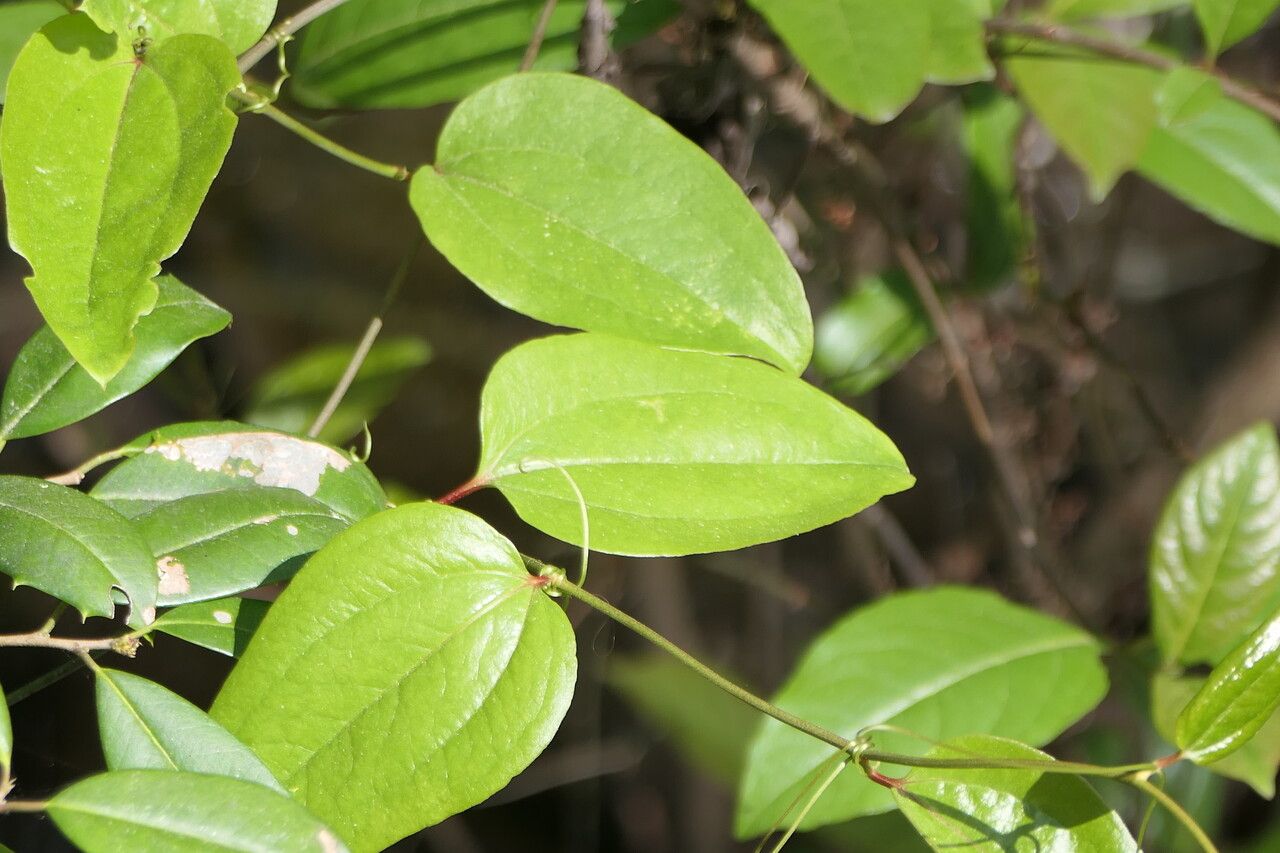
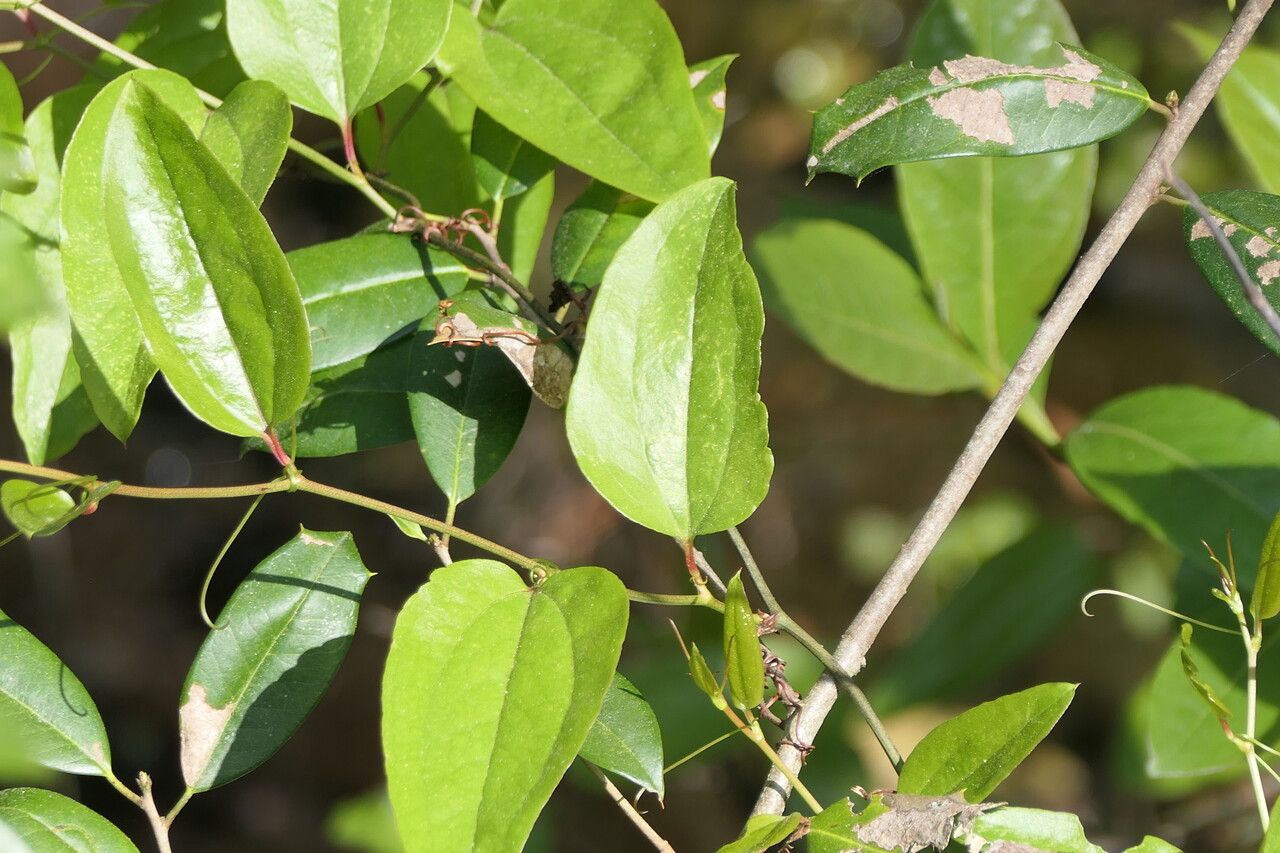
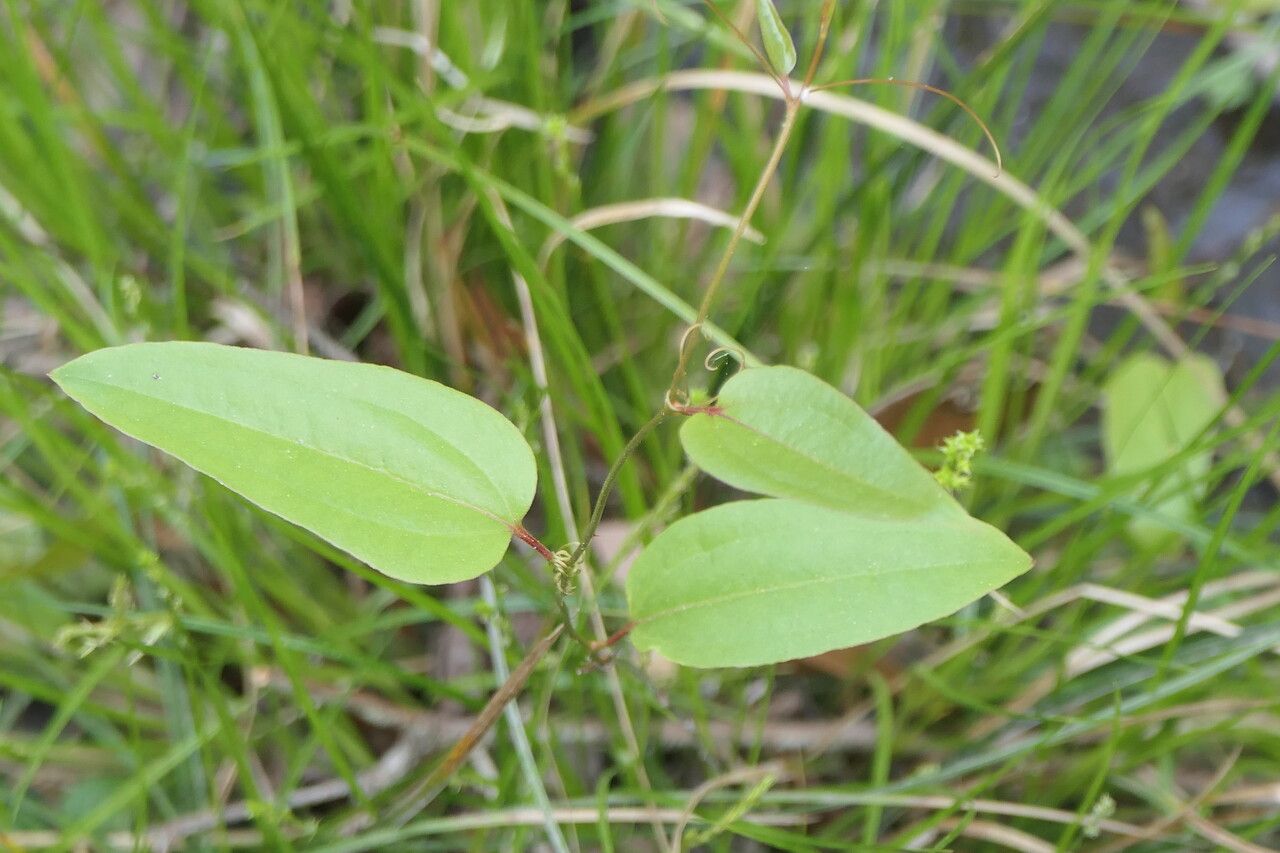
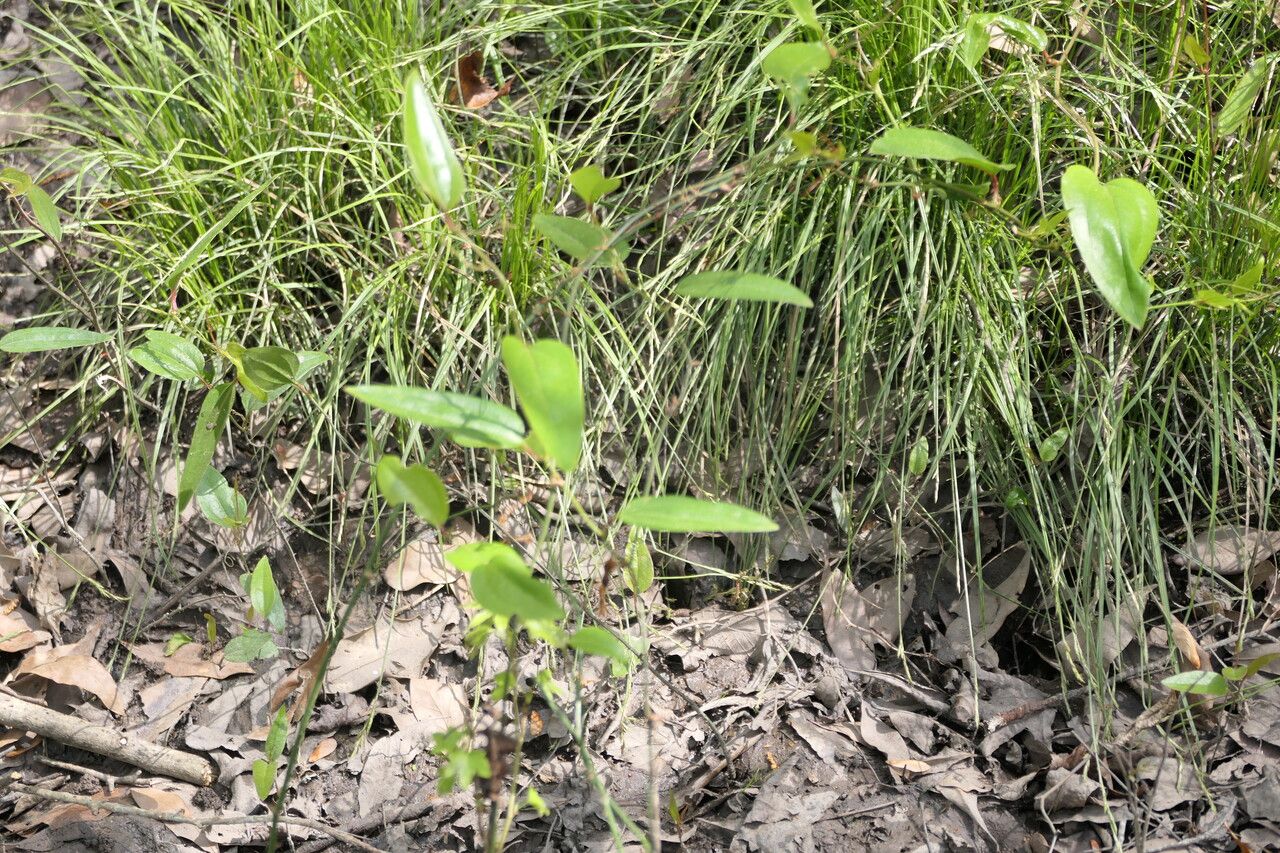
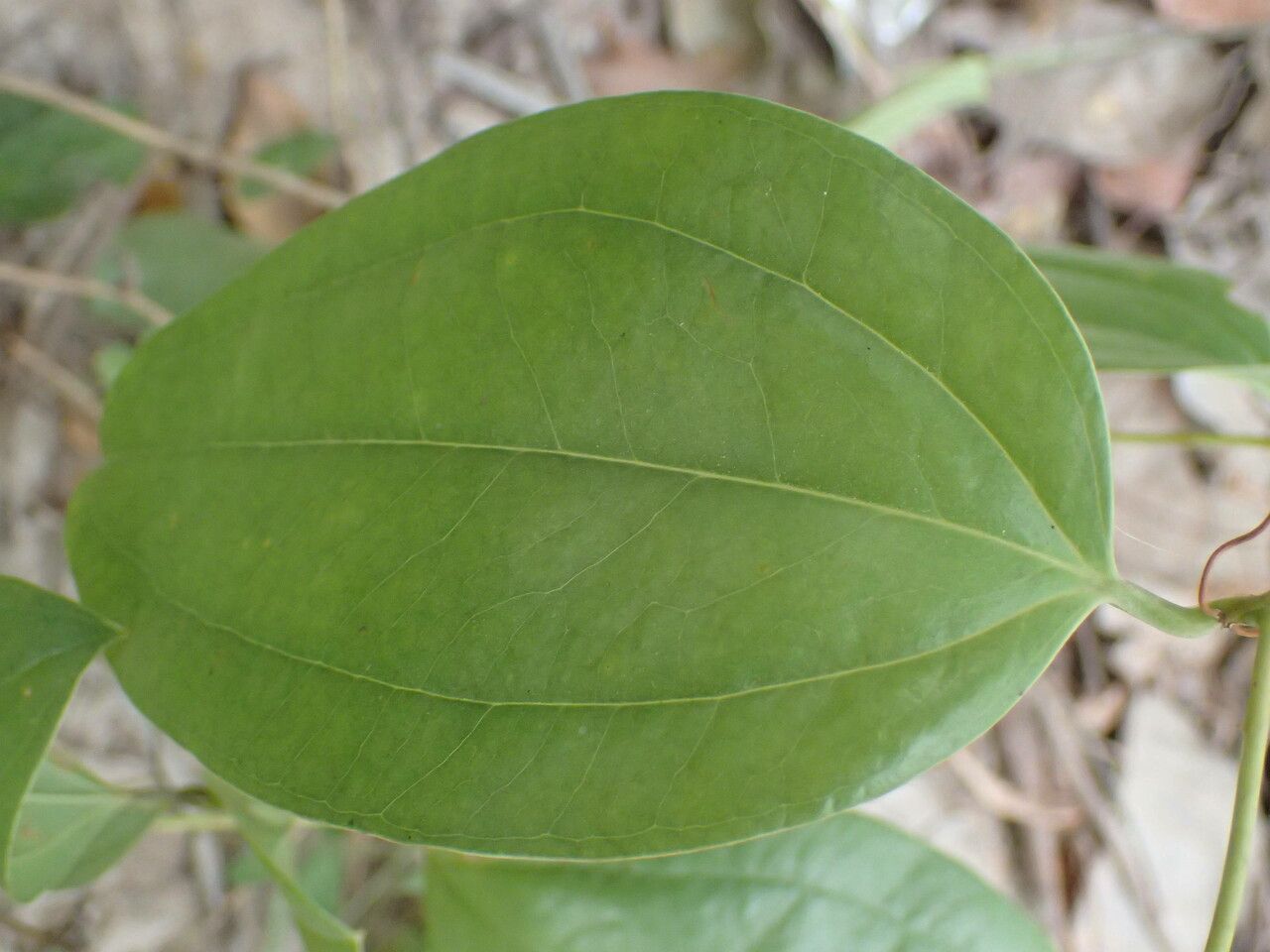
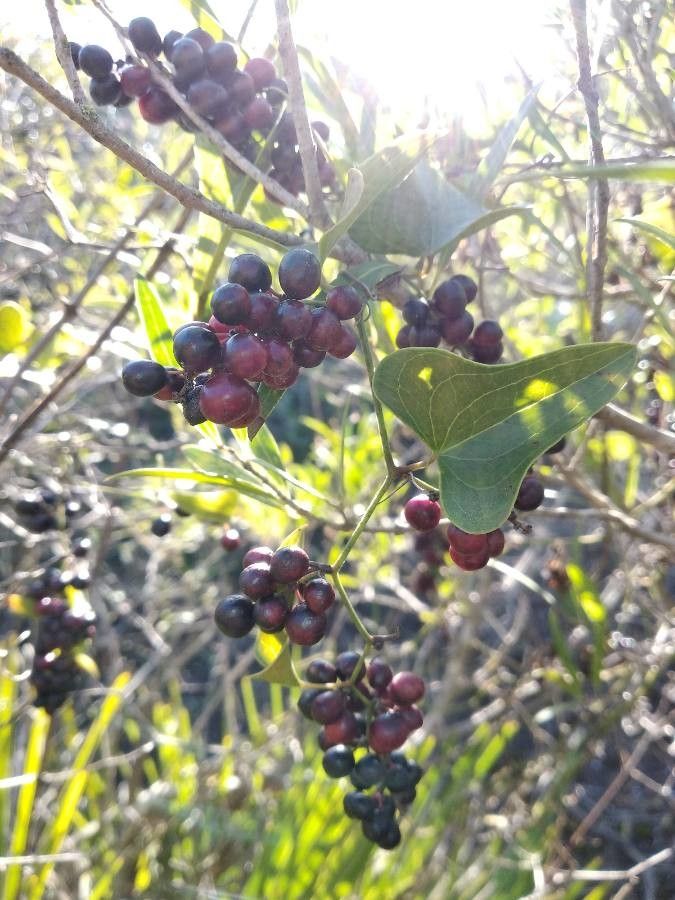
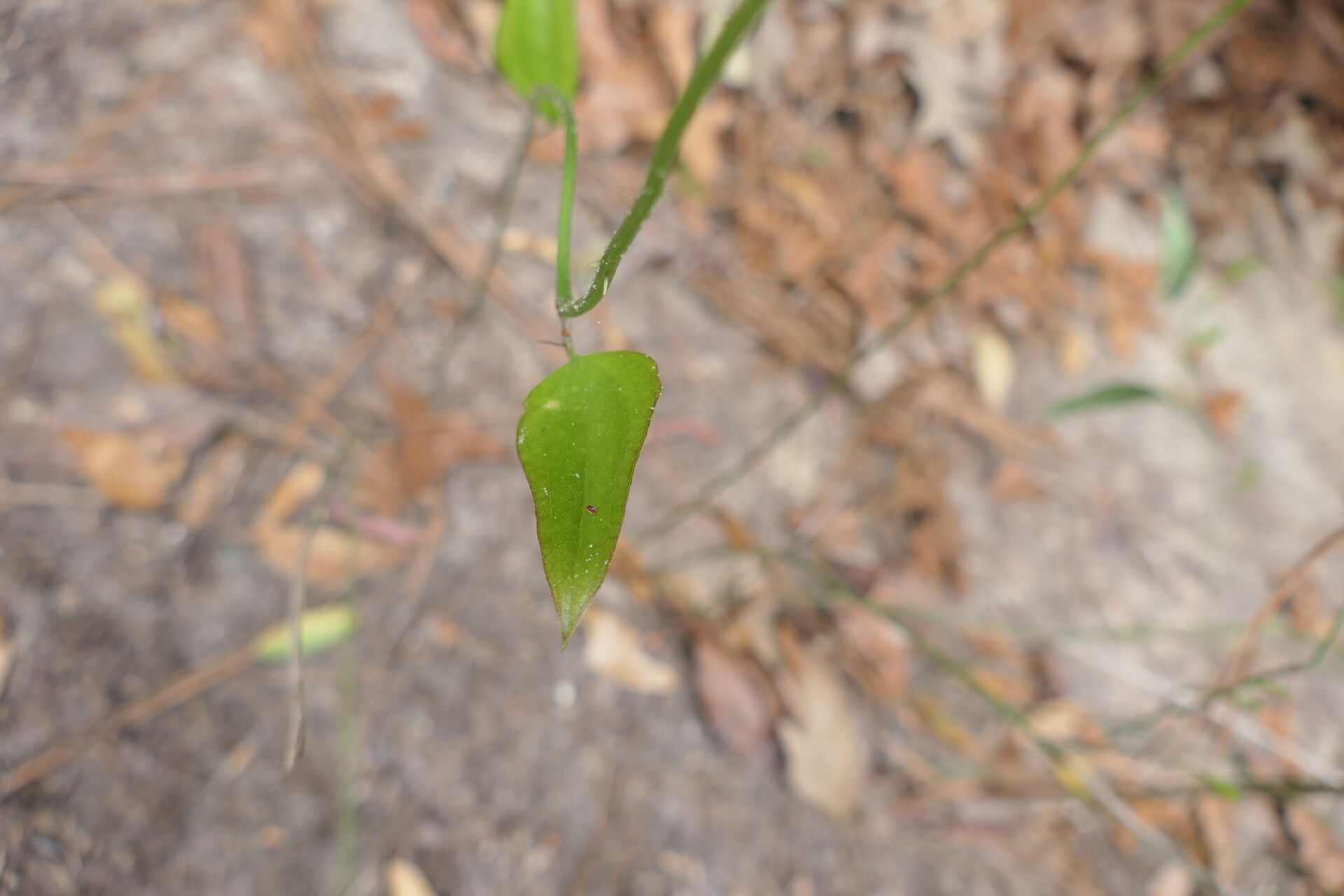
Smilax walteri, commonly known as Walter's greenbrier, is a species of flowering plant in the Smilacaceae family. Native to the southeastern United States, it thrives in diverse habitats such as forests, swamps, and riverbanks. The plant typically grows as a vine or shrub, reaching heights of up to 10 feet. Its leaves are glossy, green, and heart-shaped with pointed tips. The small, greenish-white flowers, each with six petals, bloom in the spring or early summer. By late summer or early fall, Walter's greenbrier produces small black berries.
For centuries, Native Americans have used Walter’s greenbrier for medicinal purposes, treating ailments such as arthritis, skin conditions, and digestive issues. Additionally, it has been an ingredient in traditional dishes like soups and stews.
Beyond its medicinal uses, Smilax walteri offers significant ecological benefits. Its extensive root system stabilizes soil, thereby aiding in erosion control along riverbanks.
In summary, Smilax walteri is a vital species both culturally and ecologically within its native southeastern United States range.
Botanical profile.
- Genus
- Smilax
- Family
- Smilacaceae
Other names.