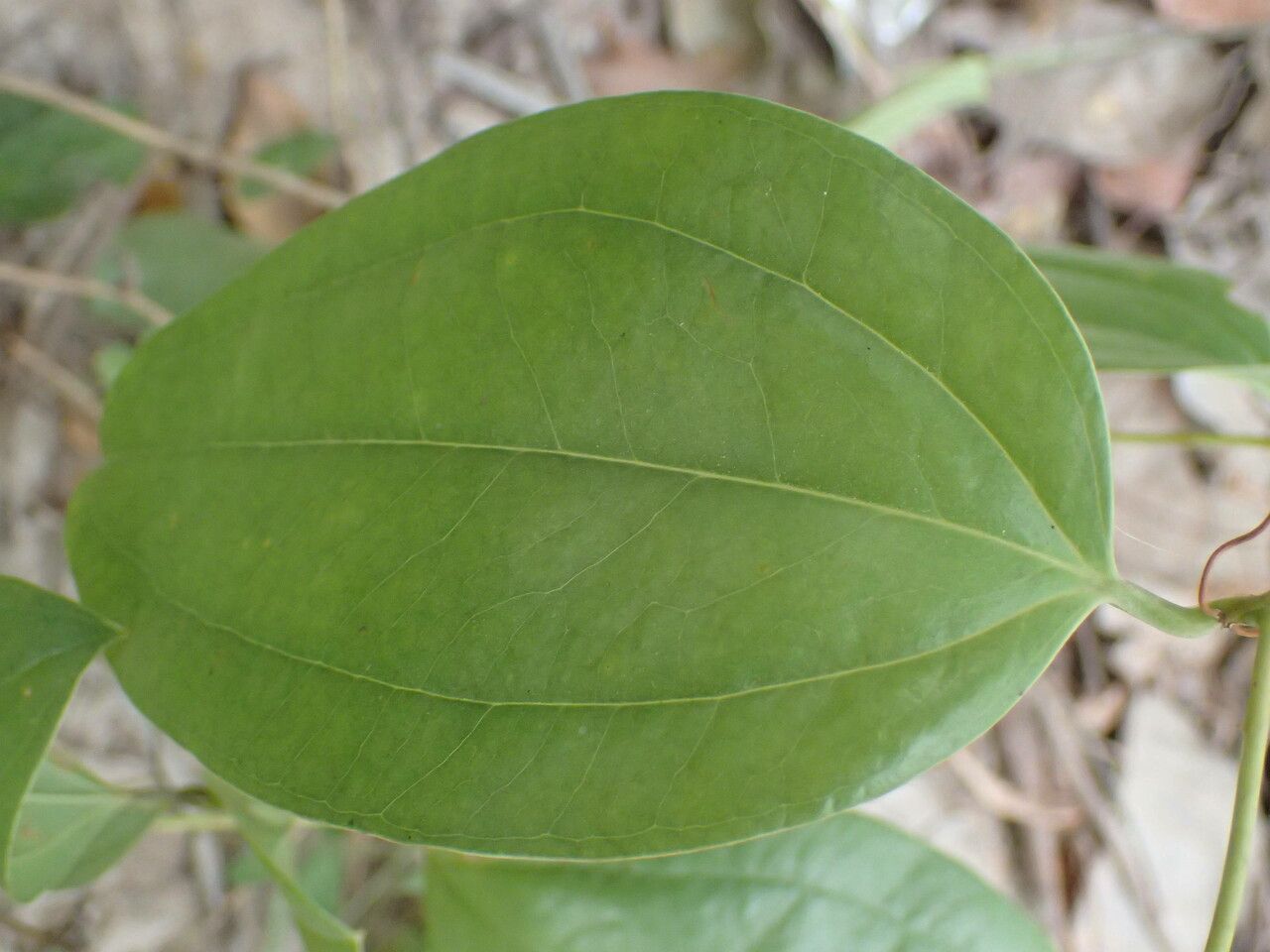
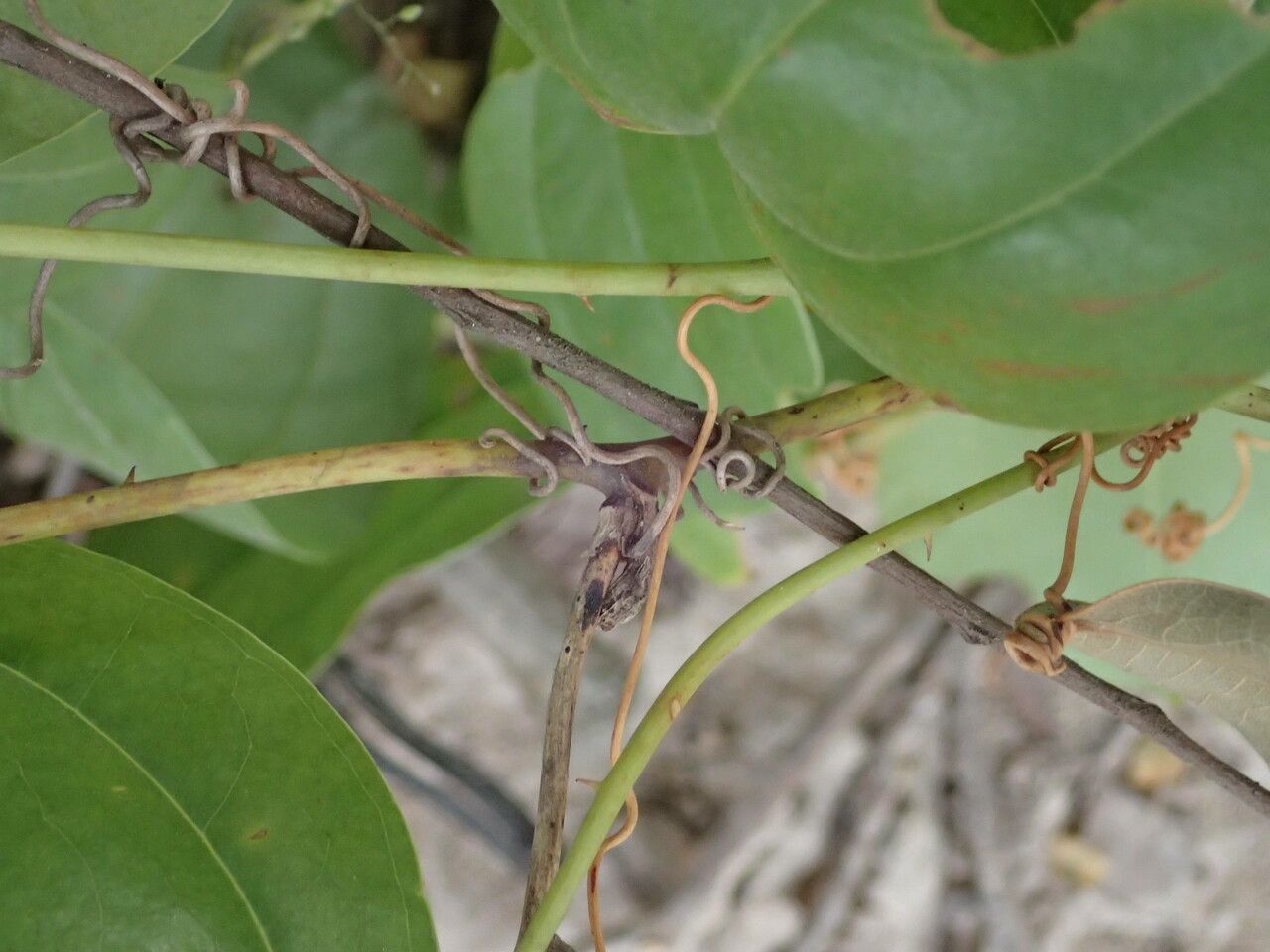
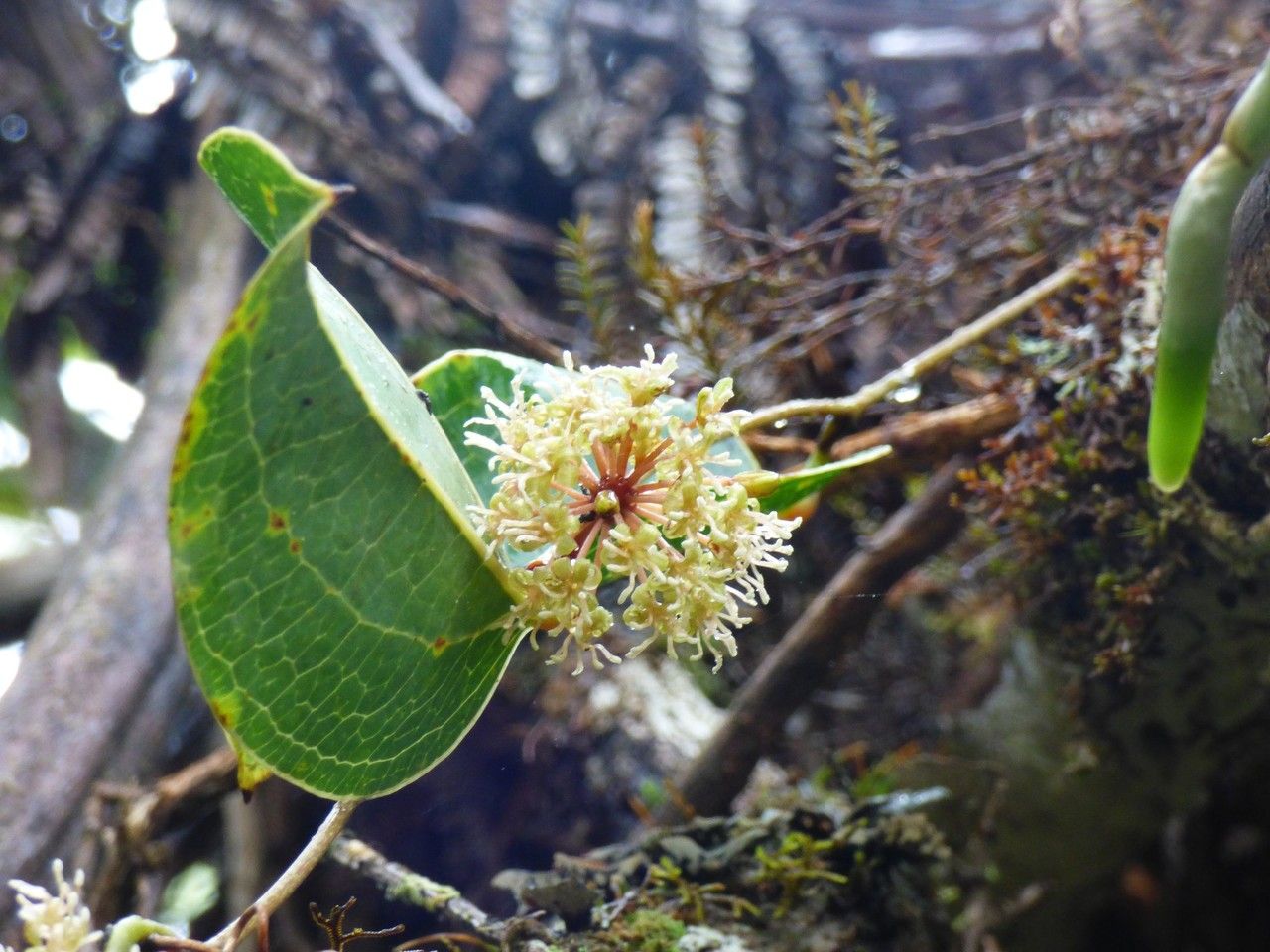
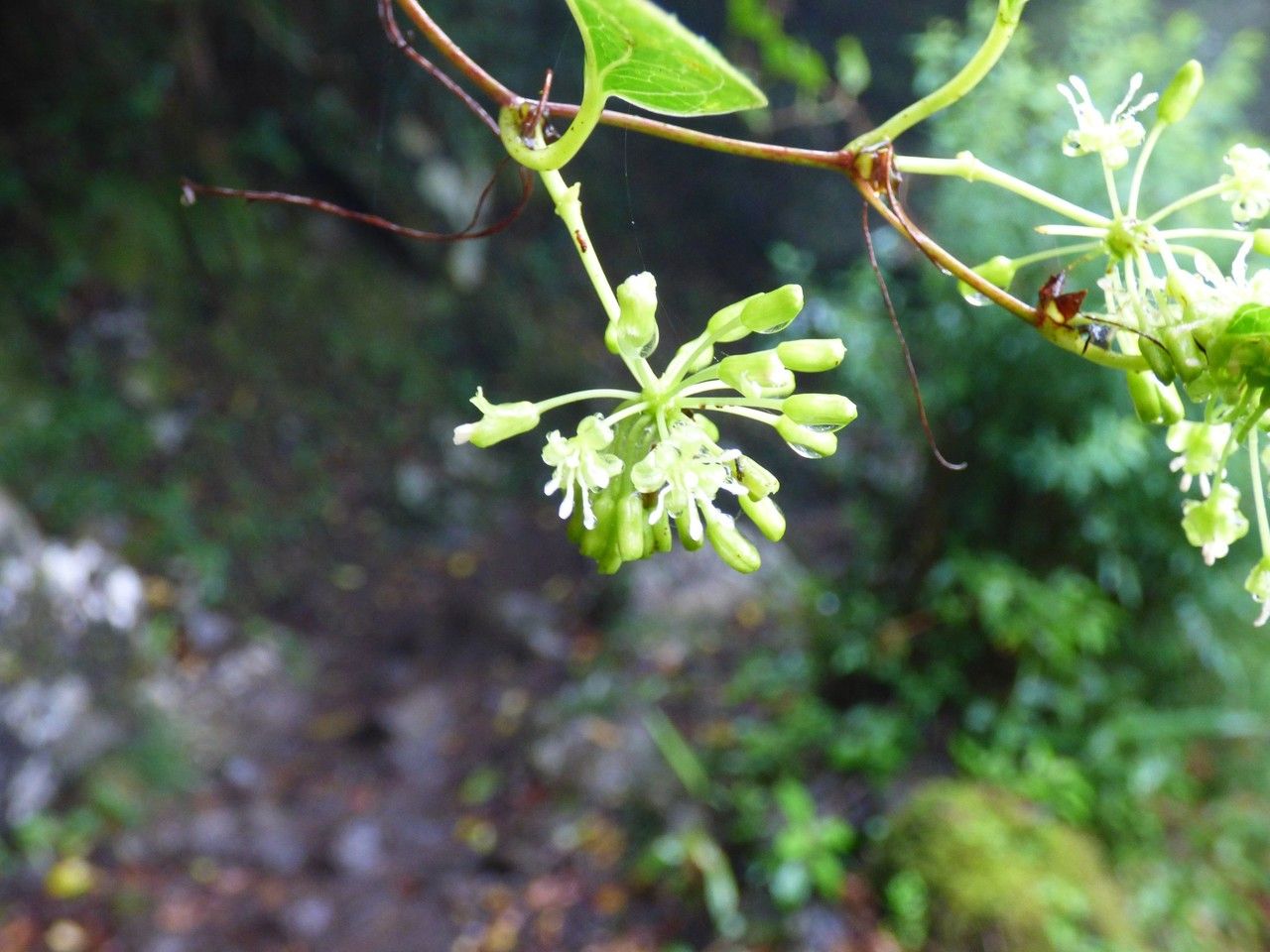
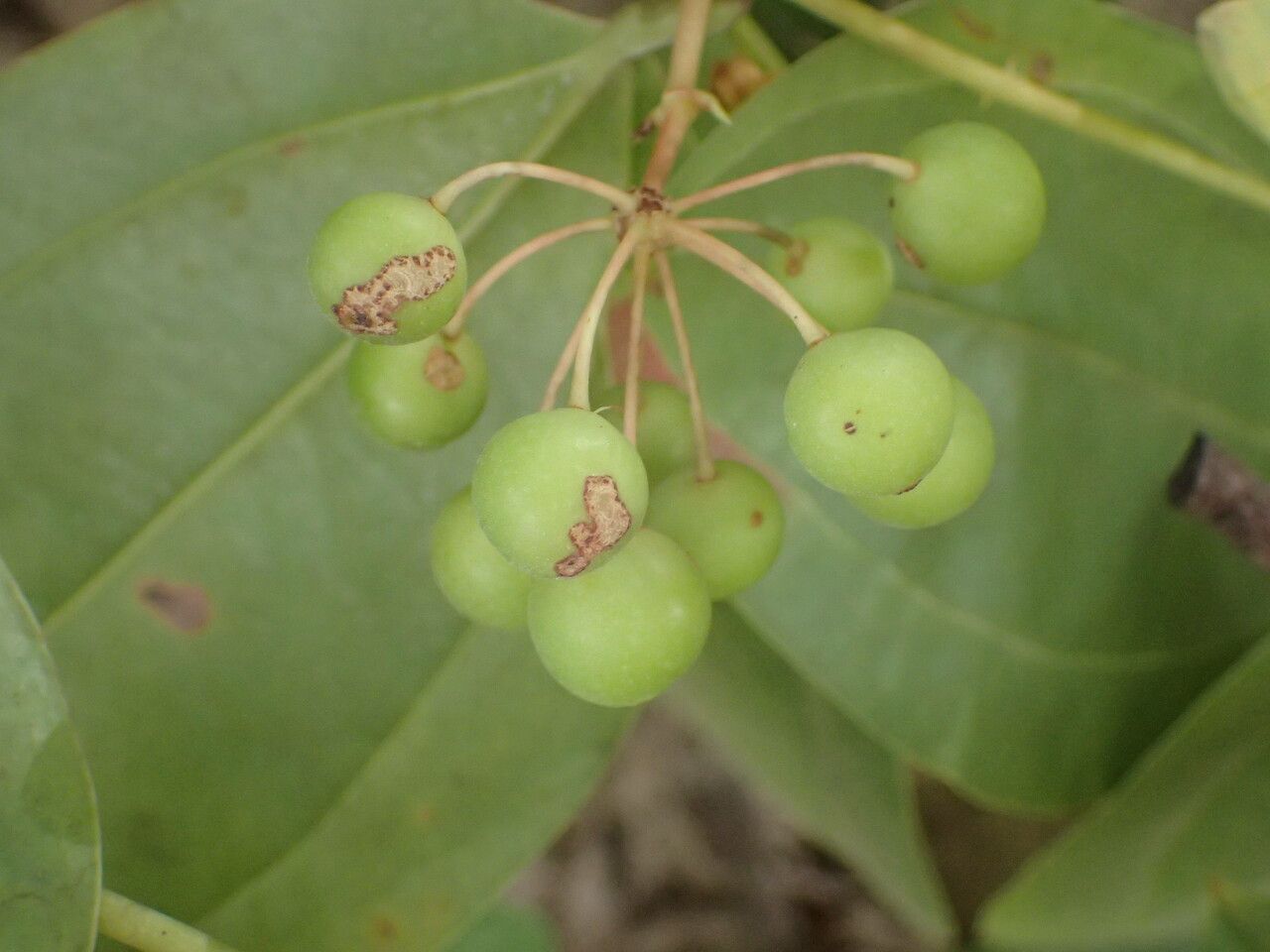
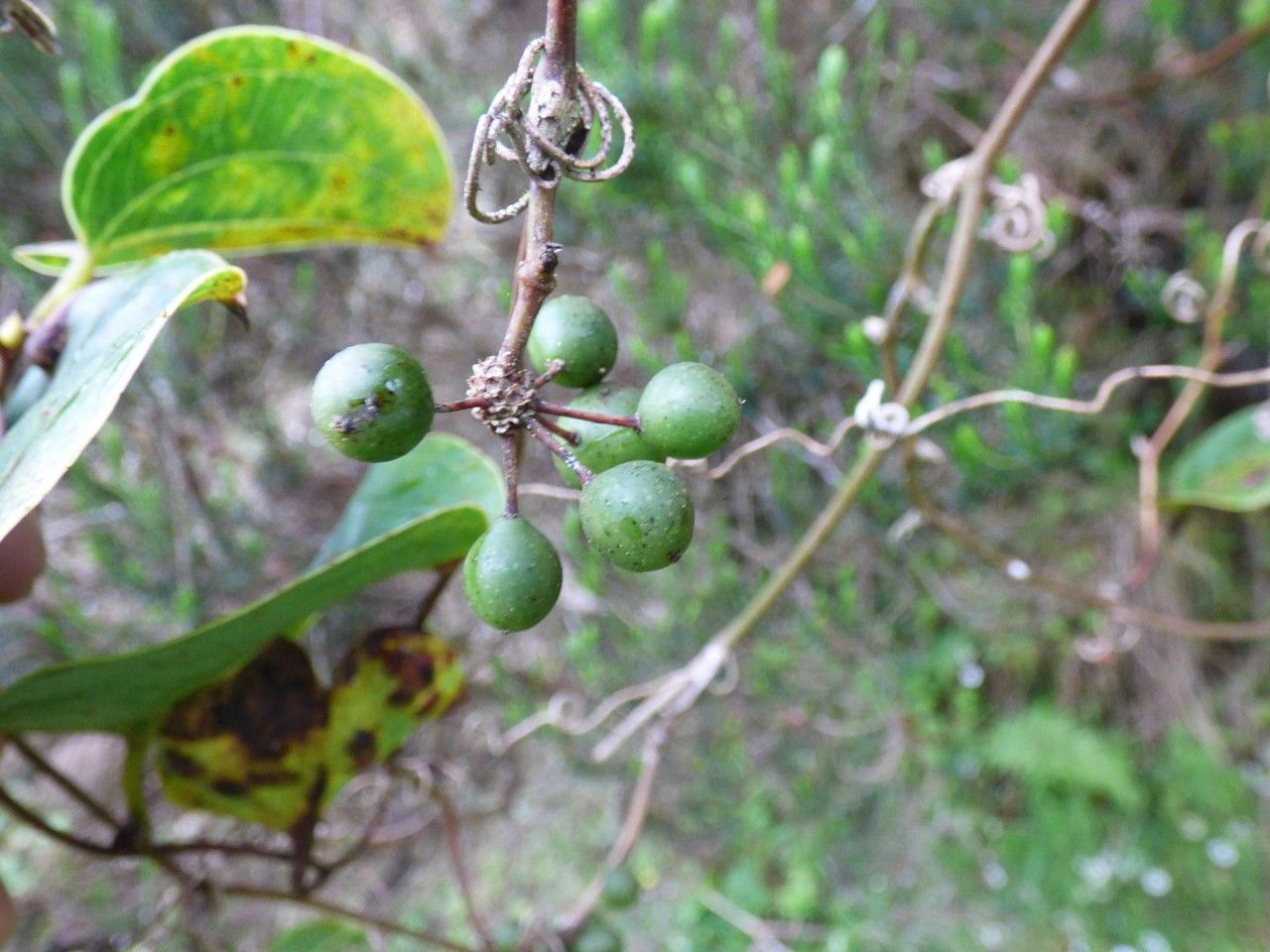
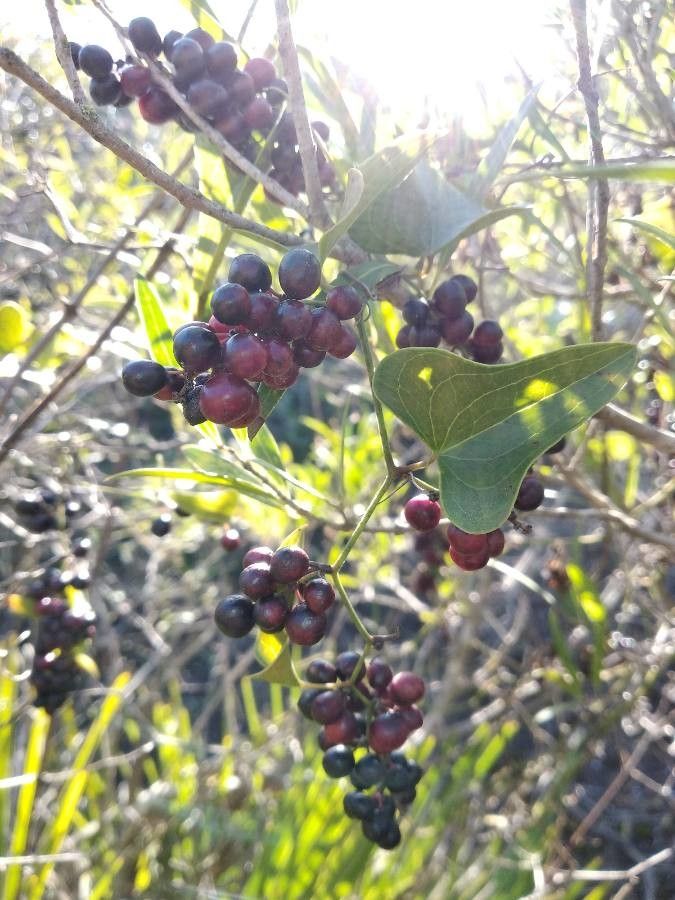
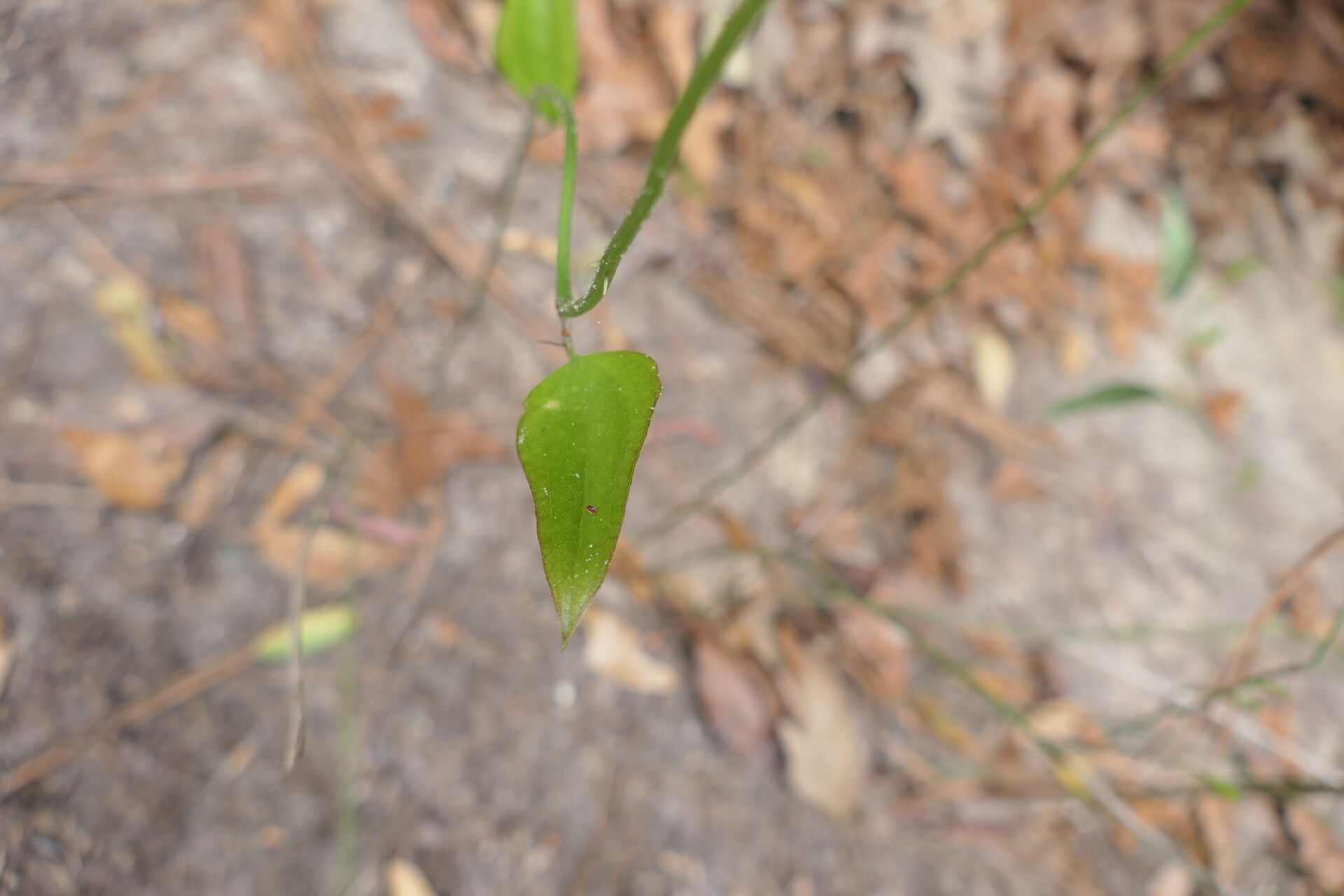
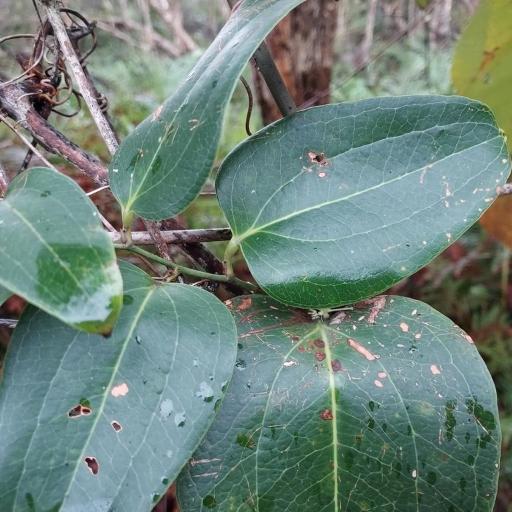
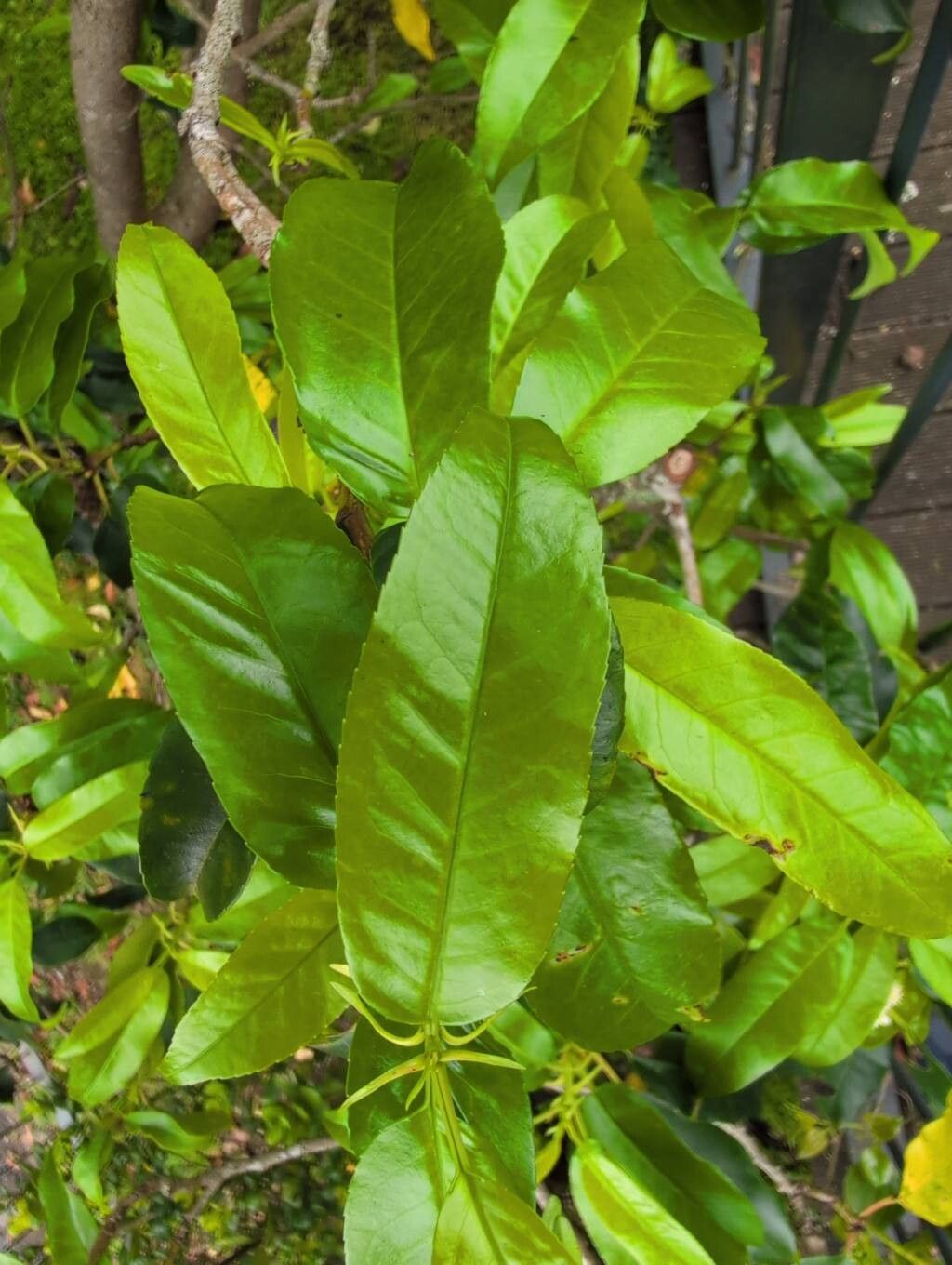
Smilax anceps is a vigorous scrambling vine or shrub, and is one of some 278 species in the genus Smilax in the family Smilacaceae. The species is widespread in Tropical Africa, Southern Africa, Réunion, Mauritius, Comoros, and Madagascar. The specific name 'anceps' is Latin for 'dangerous', a caution against the hooked prickles. Tarundia cinctipennis Stål, 1862, a hemipteran insect, is associated with this plant.It has tough, fibrous stems up to 5 m long, armed with numerous hooked prickles and pairs of coiled tendrils at the leaf petiole bases. Leaves are entire, alternate, ovate to elliptic to somewhat circular, 4–14 cm long, with a leathery texture. Petioles are 0.5-2.5 cm long, thickened, and channeled above. Inflorescences are many-flowered axillary, globose umbels, with peduncles some 3 cm long and 2 ovate bracts near the middle, and some 5 mm long. Flowers in the same inflorescence are unisexual, with perianth segments 3–5 mm long, recurved, greenish-white, yellowish or brownish. The fruit is a globose berry, 8–10 mm in diameter, turning from red to purplish to black when ripe, slightly sweet and acidulous.This species was first described and published in 1806 by Carl Ludwig von Willdenow, the early German phytogeographer in "Species Plantarum" Editio Quarto 4: 782.
Wild sarsaparilla shows strong resistance to disease and is generally not susceptible to illnesses. In terms of care, the plant is fairly low-maintenance. When grown outdoors it needs only light watering, and larger specimens typically do not require pruning. Smaller plants, however, should be pruned after they finish blooming. Wild sarsaparilla is suitable for anyone who has outdoor space, such as a garden or deck, and does not demand much gardening experience.
How to keep Smilax Anceps.
Light
Wild sarsaparilla naturally occurs in habitats like forest understories or rocky areas, where it grows in natural shade. It favors partial sun but can tolerate full sun or full shade, showing its hardy and adaptable nature.
Temperature
Wild sarsaparilla comes from tropical regions, where the climate is generally warm and humid. As a result, it is well adapted to high temperatures and humidity. It does not tolerate sudden temperature changes and prefers a stable temperature environment, so it is important to avoid temperature fluctuations indoors. It usually cannot withstand cold temperatures and requires higher temperatures for growth. If the surrounding temperature drops too low, the plant may stop growing or even die.
Fertilizer
Fertilization is essential to caring for Wild sarsaparilla. Consistent feeding during the growing season helps maintain the energy needed for its showy leaves and supports overall growth. Neglecting fertilization can lead to unhealthy leaves, reduced ornamental appeal, and stunted or weak growth that is prone to breakage.
Botanical profile.
- Plant Type
- Vine, Shrub
- Life Cycle
- Perennial
- Genus
- Smilax
- Family
- Smilacaceae
- Hardiness Zone
- 8-11
- Mature Height
- 4.88 m
- Mature Spread
- 2.13 m
- Leaf Color
- Green
- Leaf Type
- Deciduous
- Flower Color
- White, Yellow, Green, Brown
- Flower Size
- 0.25 cm to 0.51 cm
- Bloom Time
- Late spring, Early summer
- Planting Time
- Spring, Summer, Autumn
- Harvest Time
- Late summer, Early fall, Mid fall
- Native Area
- Burkina Faso, Angola, Madagascar, Rwanda, Nigeria, Kenya, Uganda, Tanzania, Zimbabwe, Guinea-Bissau, Mali, Benin, Sierra Leone, Equatorial Guinea, Cameroon, Liberia, Mozambique, Burundi, Ghana, Ethiopia, Congo, Central African Republic, Malawi, South Africa, Zambia, Sudan, Guinea, Chad, Togo, Senegal, Eswatini, Côte d'Ivoire, Congo (DRC), Gabon
Other names.