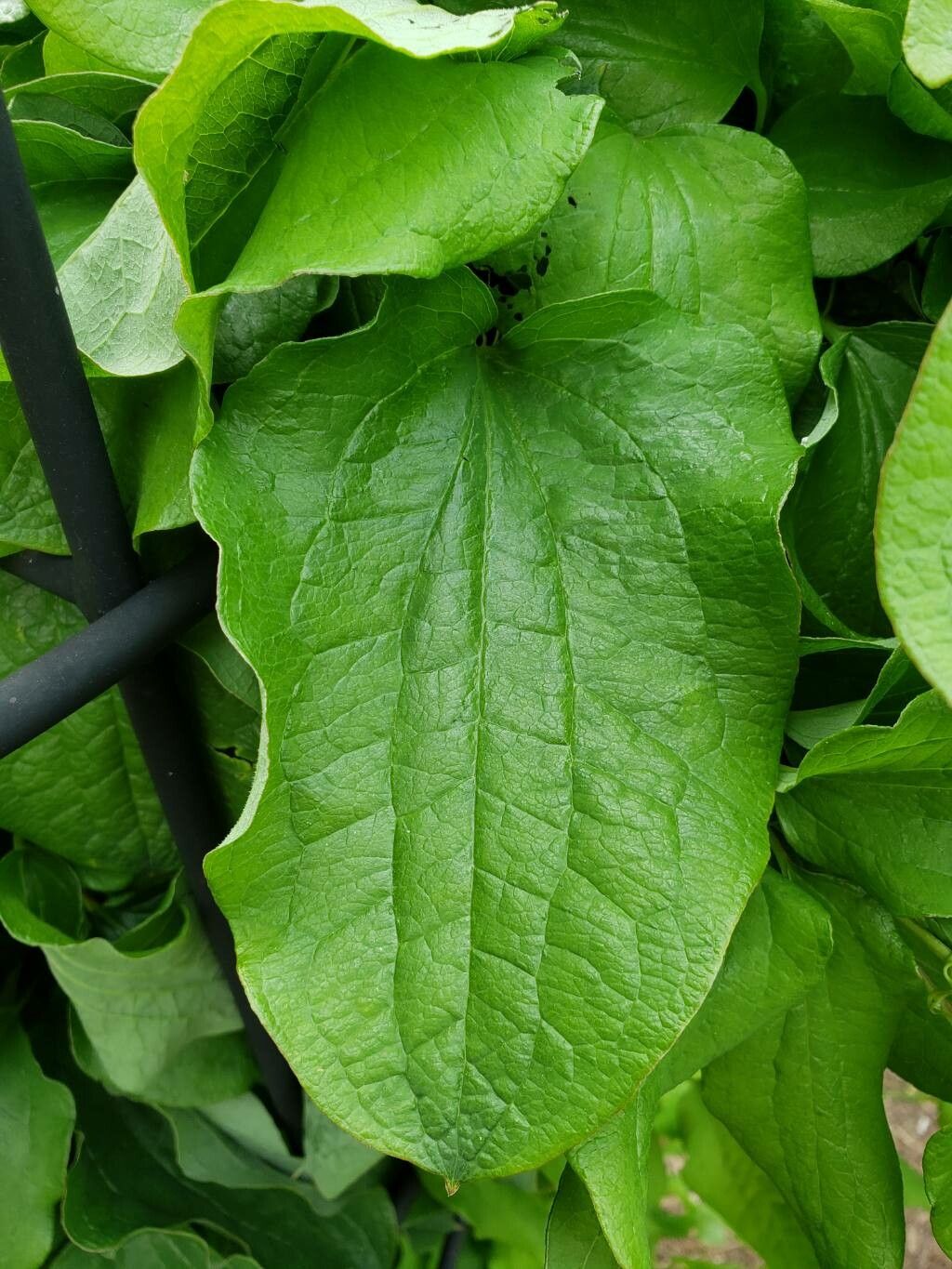
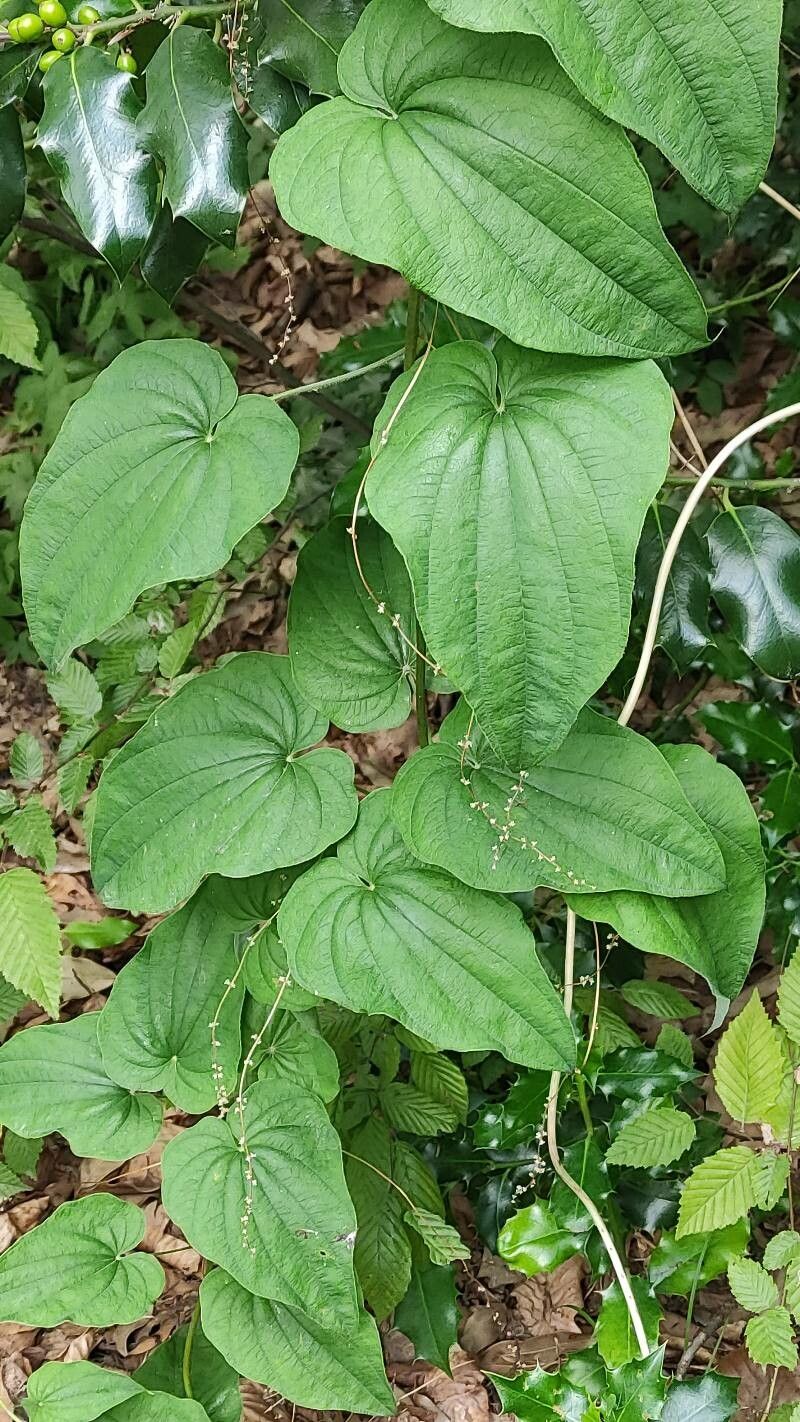
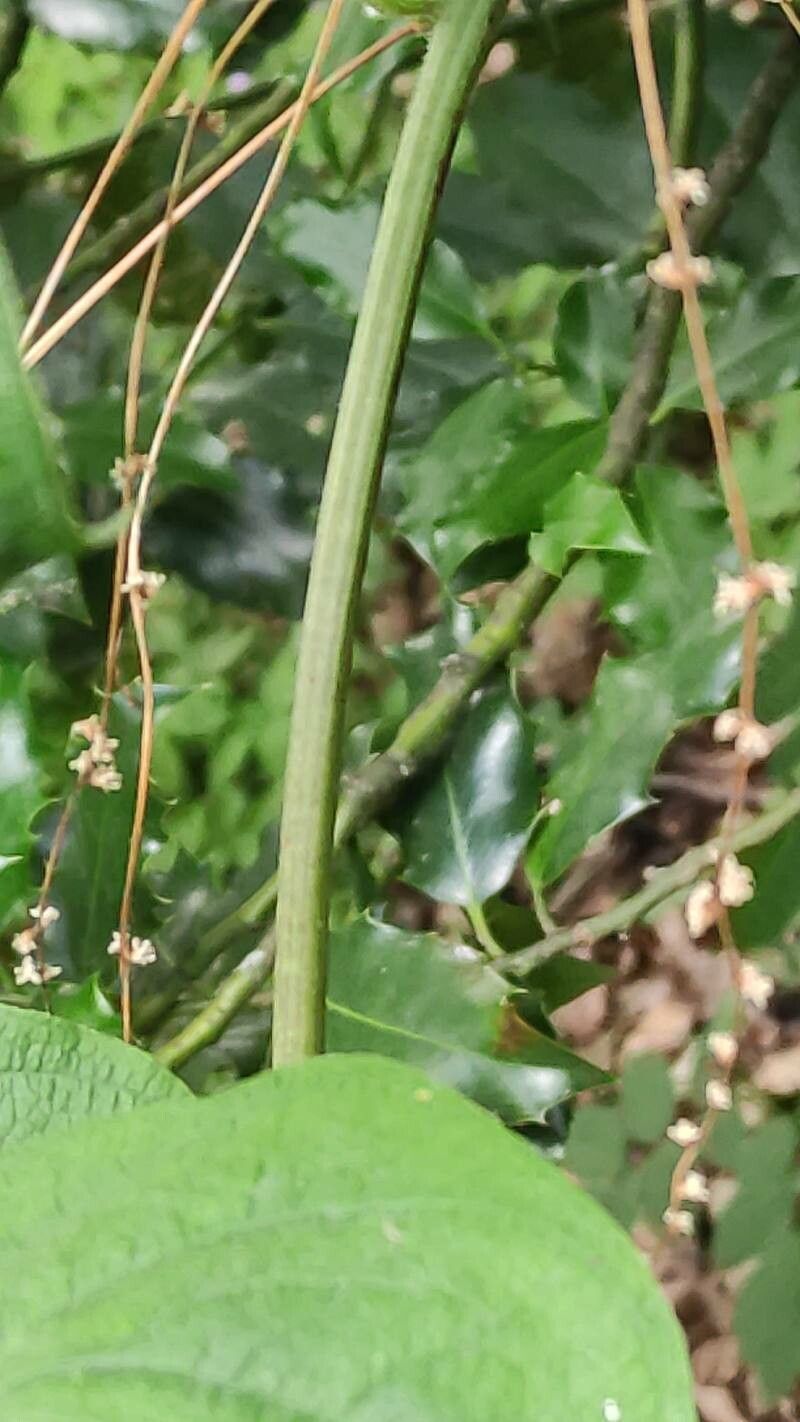
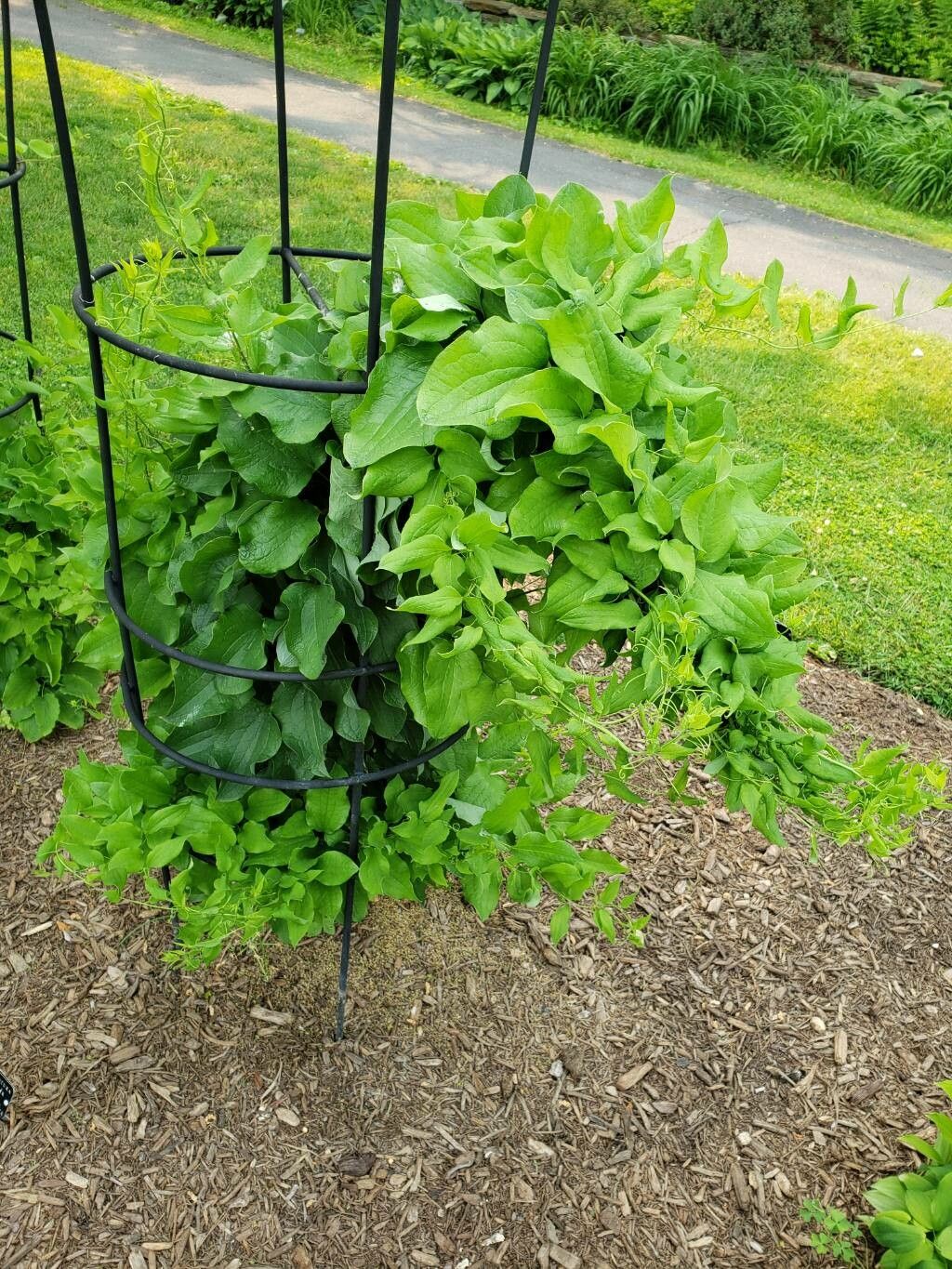
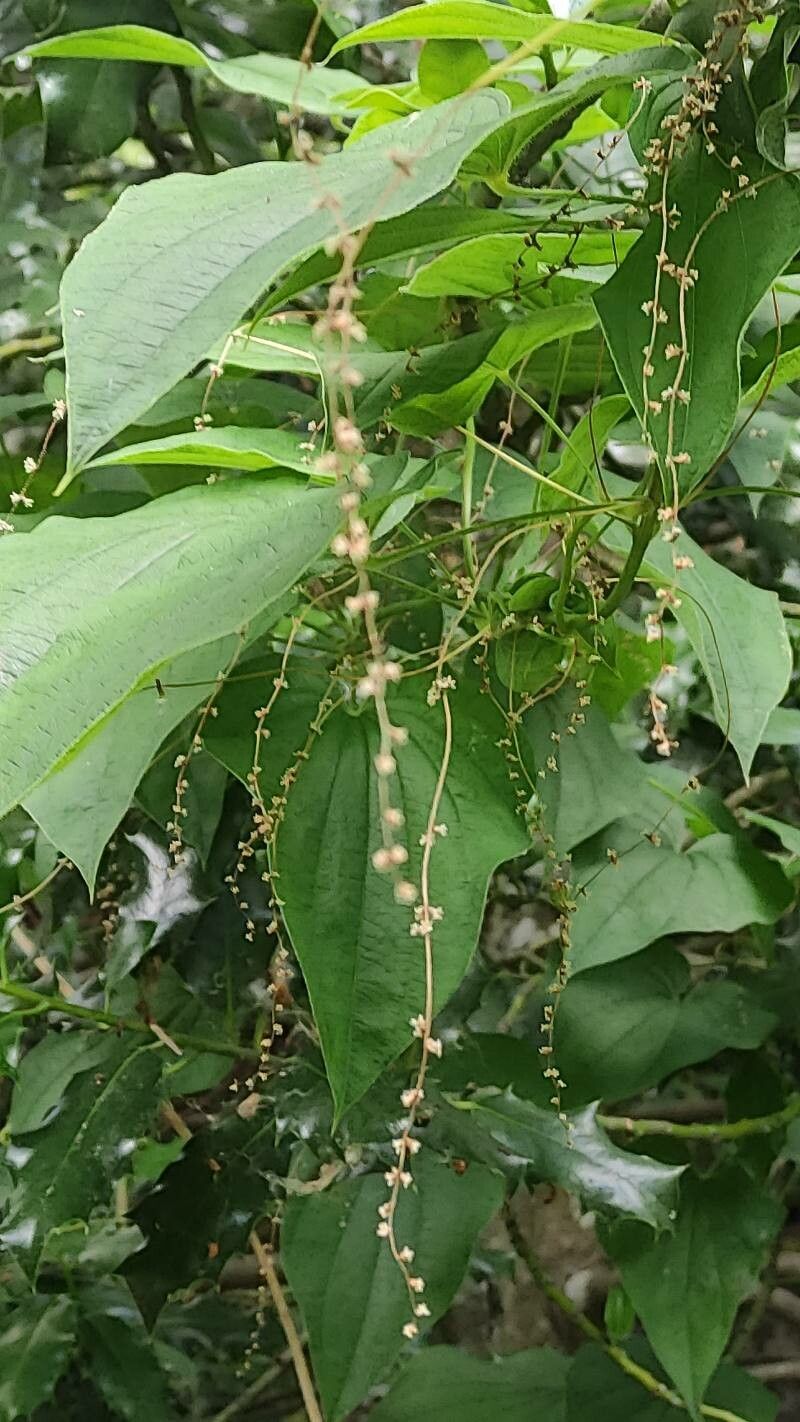
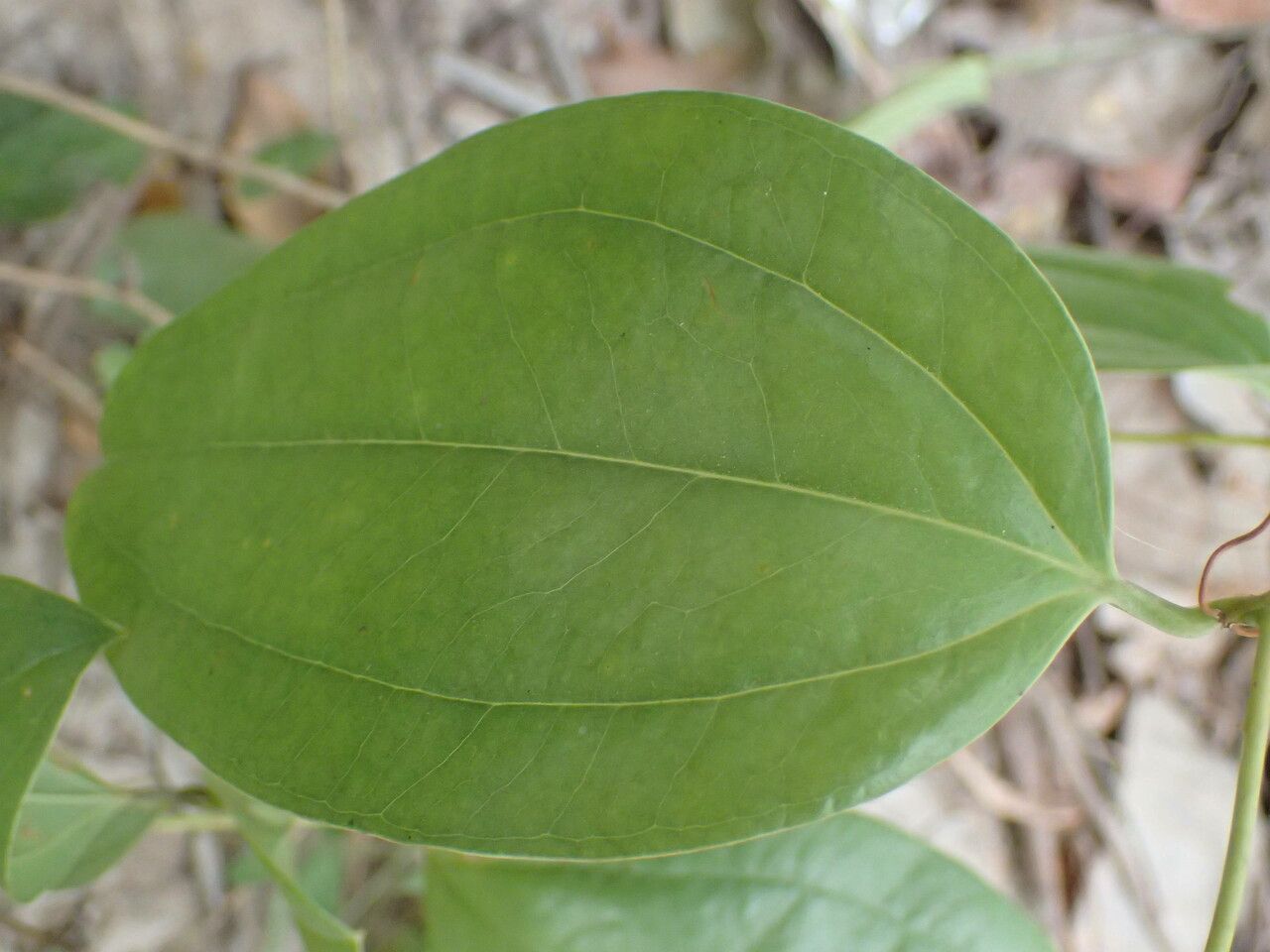
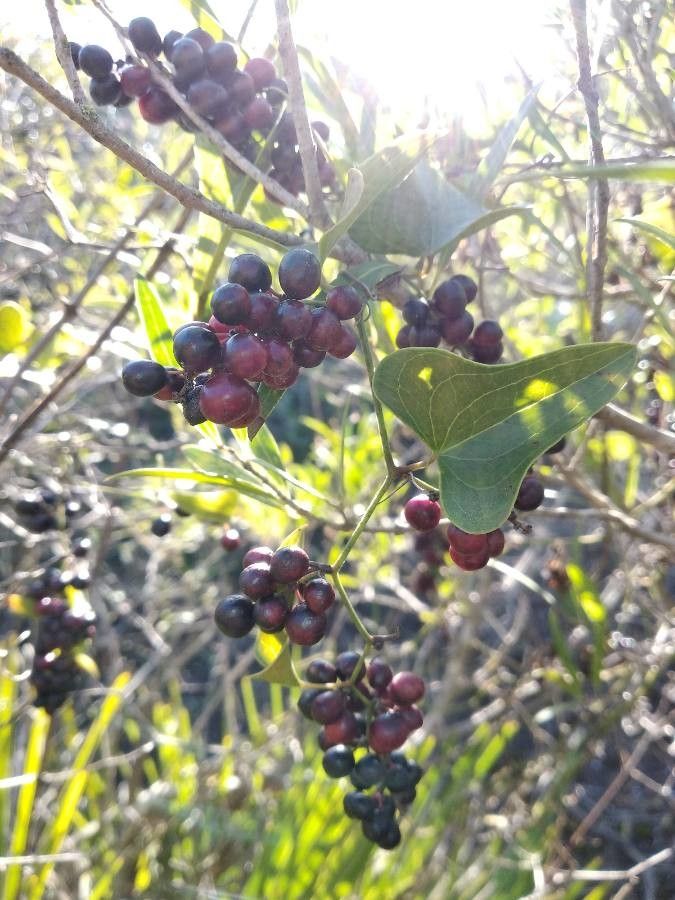
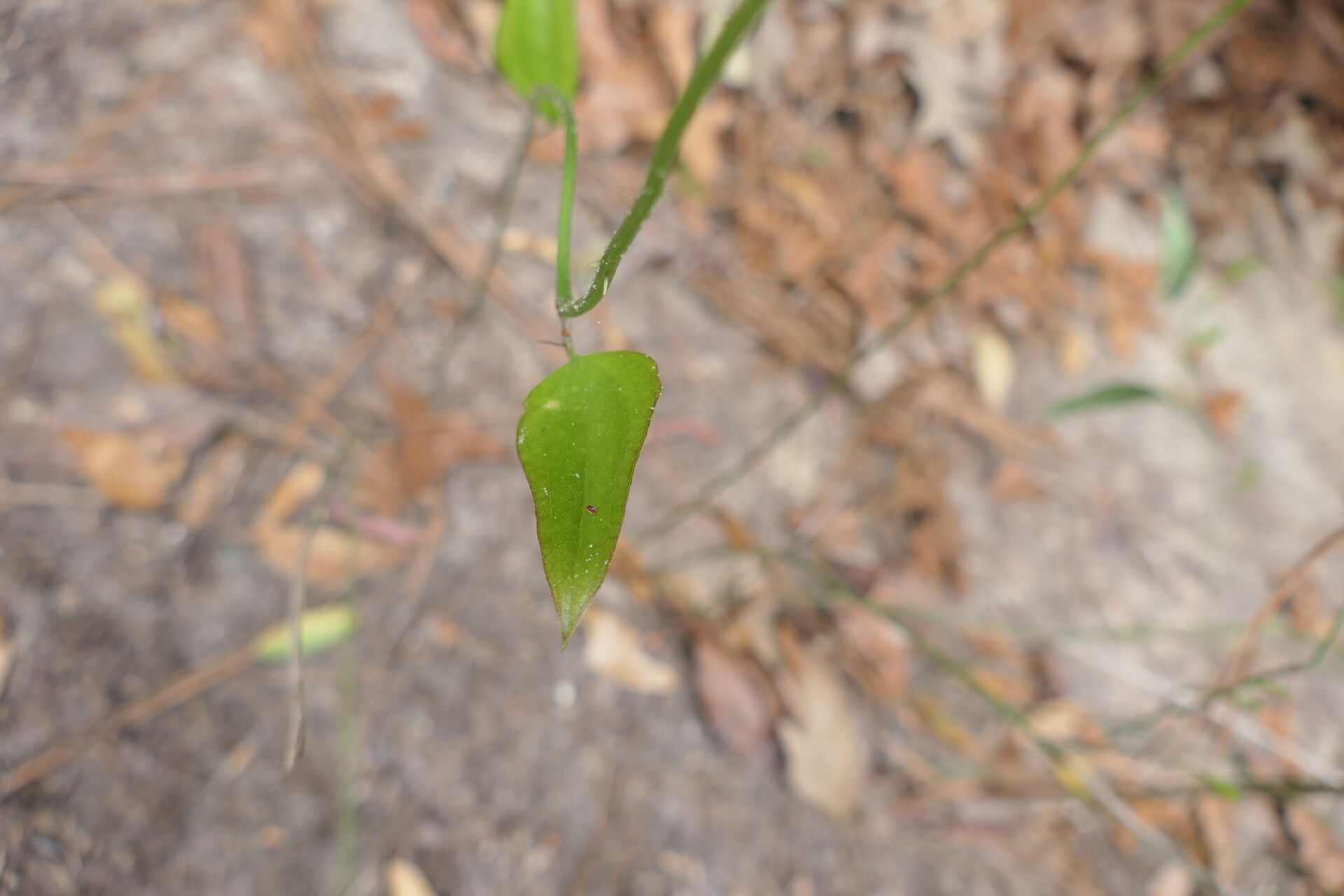
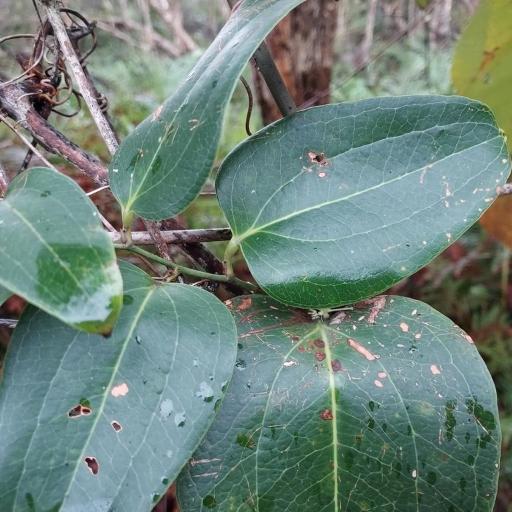
Smilax lasioneura, the Blue Ridge carrionflower, is a North American species of flowering plants in the greenbriar family. It is widespread across central Canada and the central United States, from Ontario, Manitoba and Saskatchewan south to Texas, Louisiana, and Florida.Smilax lasioneura is an erect, branching herb up to 250 cm (5 feet) tall. Flowers are small but numerous, in umbels of many flowers. Berries are round, blue to almost black.
Blue Ridge Carrionflower has good resistance to disease and is usually not susceptible to illnesses. Still, it can be vulnerable to pests and diseases present in its environment. These outbreaks are typically minor. For care, this plant requires a moderate level of maintenance. It benefits from regular pruning to keep a neat appearance and support healthy growth. Fertilizing can also encourage flowering. Blue Ridge Carrionflower is suitable for anyone with outdoor space, such as a garden or patio, and does not need extensive experience in plant care. It may demand more attention when grown indoors.
How to keep Smilax Lasioneura.
Light
Blue Ridge Carrionflower grows best when it receives plentiful sunlight all day, though it can tolerate a combination of sun and shade or even mostly shaded sites. Ample sun fosters healthy growth, but too much can hinder its development, while too little can result in weak vitality.
Water
The Blue Ridge Carrionflower flourishes in woodland environments, where it prefers soil that remains consistently moist without becoming waterlogged. While it can handle occasional dry periods and appreciates moderate humidity, it requires weekly watering to stay properly hydrated. When grown outdoors, the plant also benefits from seasonal rainfall patterns.
Temperature
Blue Ridge Carrionflower is native to habitats that typically have temperatures ranging from 32 to 95 °F (0 to 35 ℃). Because it favors that range, care should be taken to avoid exposing the plant to temperatures outside its preferred limits.
Fertilizer
One fertilizer application in spring is generally enough for Blue Ridge Carrionflower, though multiple feedings will maximize growth. Apply every month to six weeks. Fertilizing improves the leaves' appearance and function, maintaining even color and a healthy texture. It also promotes root development and nutrient uptake for long-term plant health.
Pruning
Prune Blue Ridge Carrionflower in early to late spring to encourage healthy growth and improve air circulation. Remove any dead stems and shape the plant to avoid overgrowth, enhancing its appearance. For the best results, use clean, sharp tools to make precise cuts, which will increase the plant's overall vigor.
Botanical profile.
- Plant Type
- Herb, Vine
- Life Cycle
- Perennial
- Genus
- Smilax
- Family
- Smilacaceae
- Hardiness Zone
- 3-10
- Mature Height
- 2.44 m
- Mature Spread
- 0.91 m to 2.13 m
- Leaf Color
- Green, Dark Green
- Leaf Type
- Semi-evergreen
- Flower Color
- Green
- Flower Size
- 2.54 cm
- Bloom Time
- Late spring, Early summer
- Planting Time
- Spring, Summer, Autumn
- Harvest Time
- Late summer, Early fall, Mid fall
Other names.
Reader questions.
What are the sunlight requirements for Blue Ridge Carrionflower?
Blue Ridge Carrionflower requires a substantial amount of sunlight throughout the day to thrive, with full sun exposure being above 6 hours of sunlight and partial sun or full shade around 3-6 hours. It's crucial to observe the movement of sunlight in your garden to select areas that provide the ideal balance of light for the plants. In conditions where natural sunlight is scarce, especially during winter or in less sunny areas, artificial lighting can play a crucial role in the plant's growth. Different requirements exist for the intensity of artificial light based on the plant's natural sunlight needs: full sun plants need the highest intensity, followed by partial sun, and then full shade plants, with specifics on type, distance, and duration of artificial light to best mimic natural conditions.
What is the preferred temperature range for the Blue Ridge Carrionflower?
The Blue Ridge Carrionflower is native to environments where temperatures typically range between 32 to 95°F (0 to 35°C). It thrives best within this temperature range, and care should be taken to not expose the plant to extreme temperatures outside of these limits. Despite its strong cold resistance, it's important to provide protection if winter temperatures are expected to drop below -35°C, although special frost protection measures usually aren't necessary during winter.
What are the effects of inadequate light on Blue Ridge Carrionflower, and how can they be mitigated?
Inadequate lighting can lead to several issues for Blue Ridge Carrionflower, including smaller new leaves, a leggy or sparse appearance due to stretched growth, premature leaf drop, slowed or halted growth, and discoloration indicating insufficient nutrient absorption or chlorophyll breakdown. Chlorosis, sunscald, leaf curling, wilting, and leaf scorching are other symptoms that can arise from too little or too much sunlight. To mitigate these effects indoors, gradually increase the plant's exposure to sunlight or use artificial light if necessary, ensuring at least 6 hours of light daily. Outdoors, adjust the plant's location gradually to prevent shock. Pruning or relocating plants can help reduce obstructions to sunlight exposure, ensuring healthier growth.
How can the Blue Ridge Carrionflower be protected during extreme cold?
To protect the Blue Ridge Carrionflower during extreme cold, especially when temperatures are forecasted to fall below -35°C, it is advisable to cover the plant with insulating materials such as soil or straw. Additionally, abundantly watering the plant before the first freeze in autumn can help maintain soil moisture through the winter, preventing drought and water scarcity for the plant during the colder months and early spring.
How can artificial lighting be used for Blue Ridge Carrionflower when natural sunlight is insufficient?
When natural sunlight is not sufficient for Blue Ridge Carrionflower, especially in less sunny locations or during winter, artificial lighting offers a practical solution. Choosing the right type of light, like LED, which can be customized to provide specific light wavelengths needed by the plant, is crucial. The intensity of the artificial light should match the plant's needs (30-50W/sq ft for full sun, 20-30W/sq ft for partial sun, and 10-20W/sq ft for full shade). The light source should be placed 12-36 inches above the plant to mimic natural sunlight, and the duration should mirror natural daylight hours, generally 8-12 hours per day, to promote healthy growth.
What are the symptoms of the Blue Ridge Carrionflower being exposed to temperatures below its cold tolerance and the solutions?
When exposed to temperatures below its cold tolerance threshold, specifically below -35°C, the Blue Ridge Carrionflower may show a decrease in sprouting or fail to sprout at all during spring. The solution to this issue is to wait until spring and then remove any parts of the plant that have failed to sprout, promoting healthier growth for the remaining parts of the plant.
How does the Blue Ridge Carrionflower react to high temperatures, and what are the solutions?
During the summer, if the Blue Ridge Carrionflower experiences temperatures above 35°C, its leaves may become lighter in color, curl, become prone to sunburn, and in severe cases, the entire plant may wilt and dry out. To remedy this, trim away the sunburned and dried-up parts of the plant. Moving the plant to a shaded location or using a shade cloth to protect it from midday and afternoon sun can help. Additionally, watering the plant in the morning and evening can keep the soil moist and mitigate the heat stress.