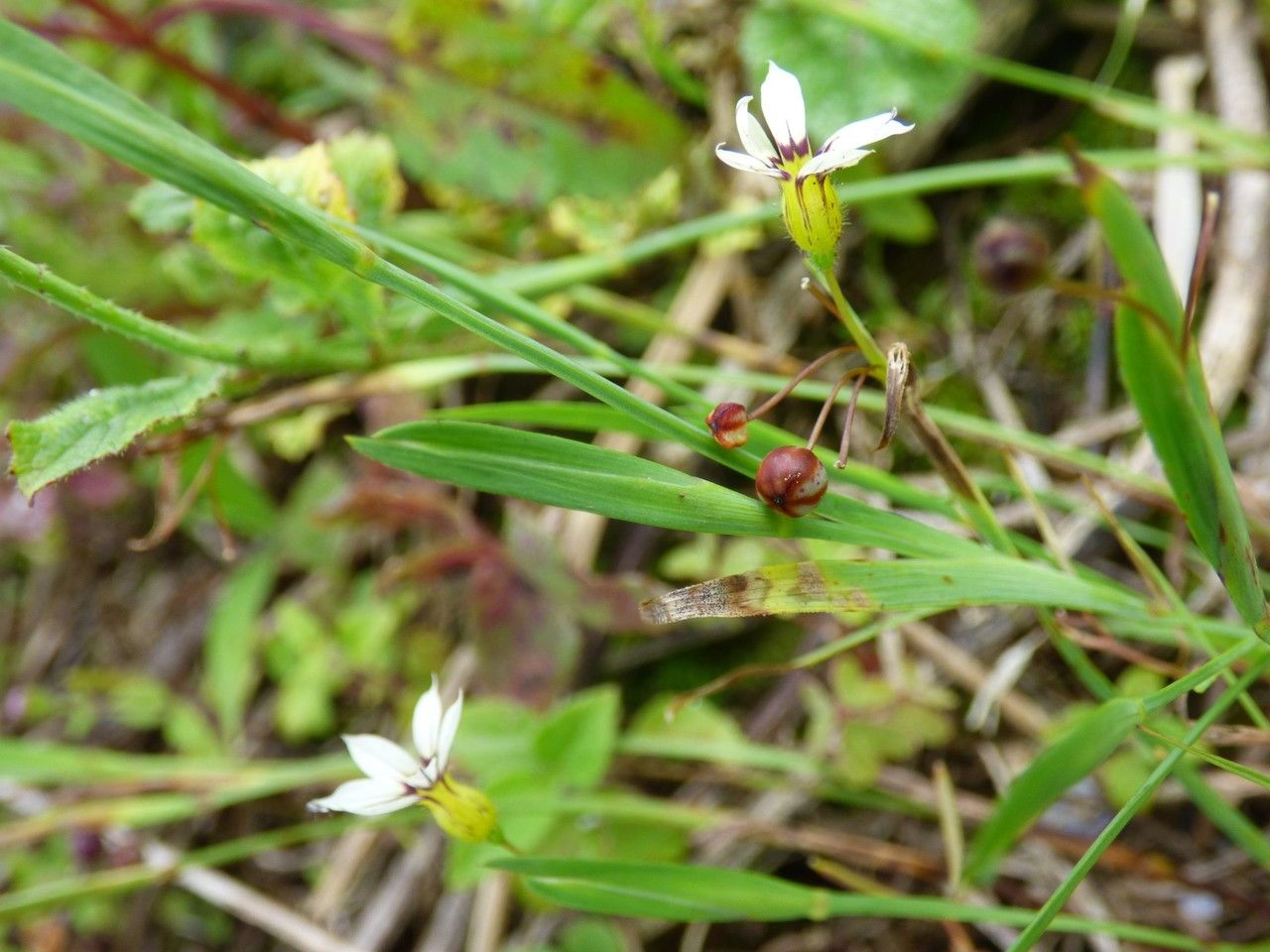
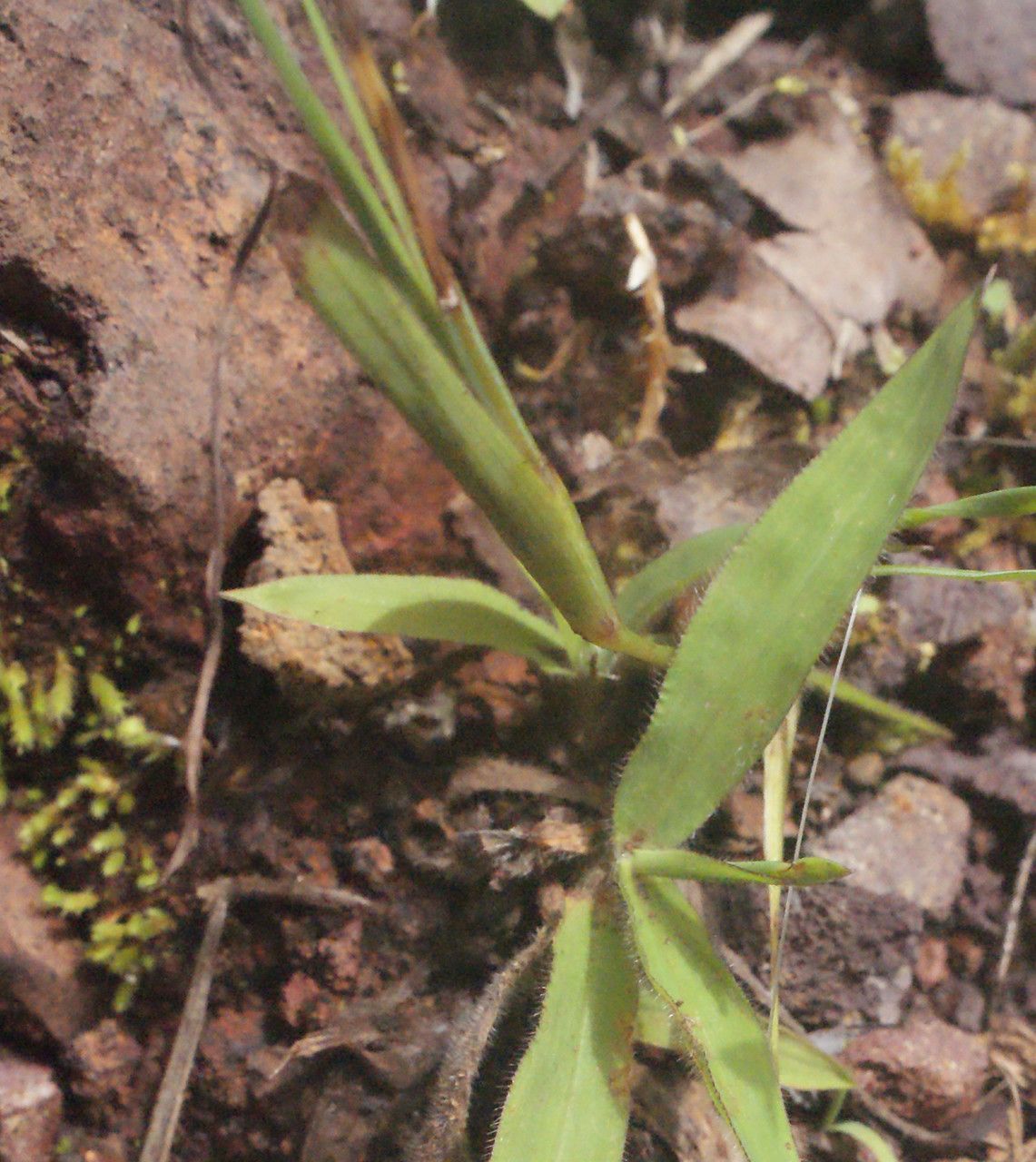
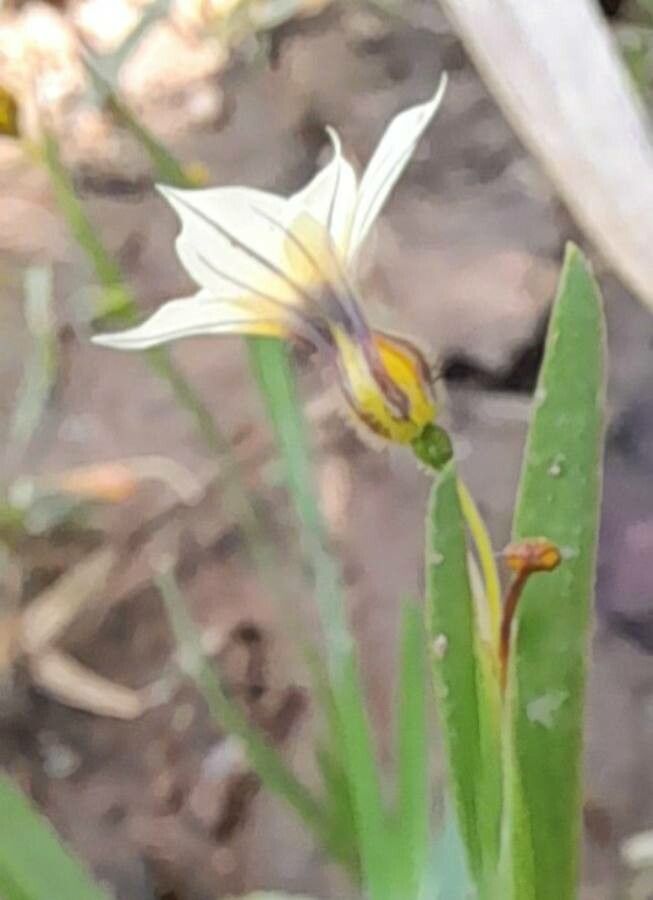
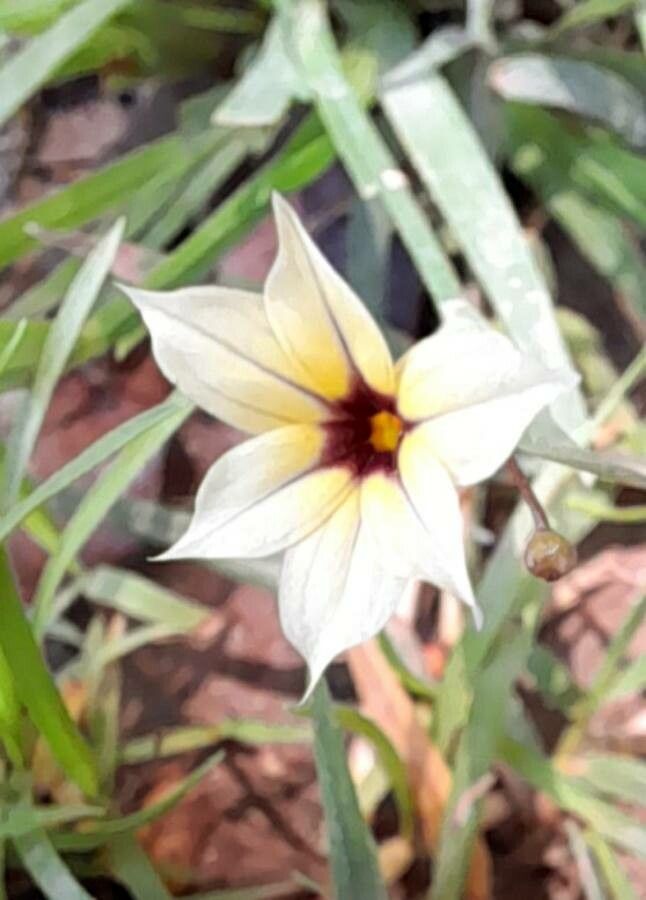
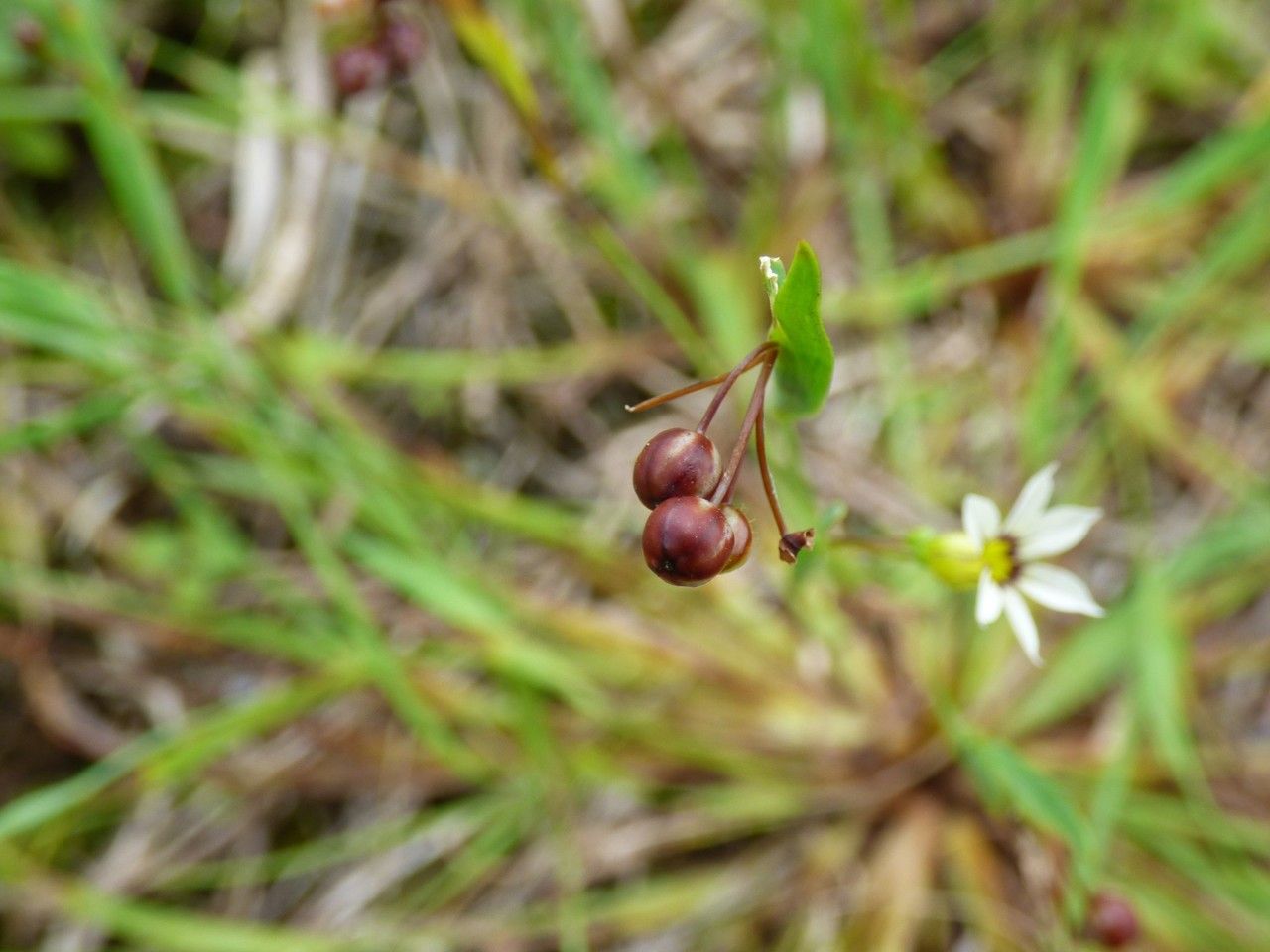
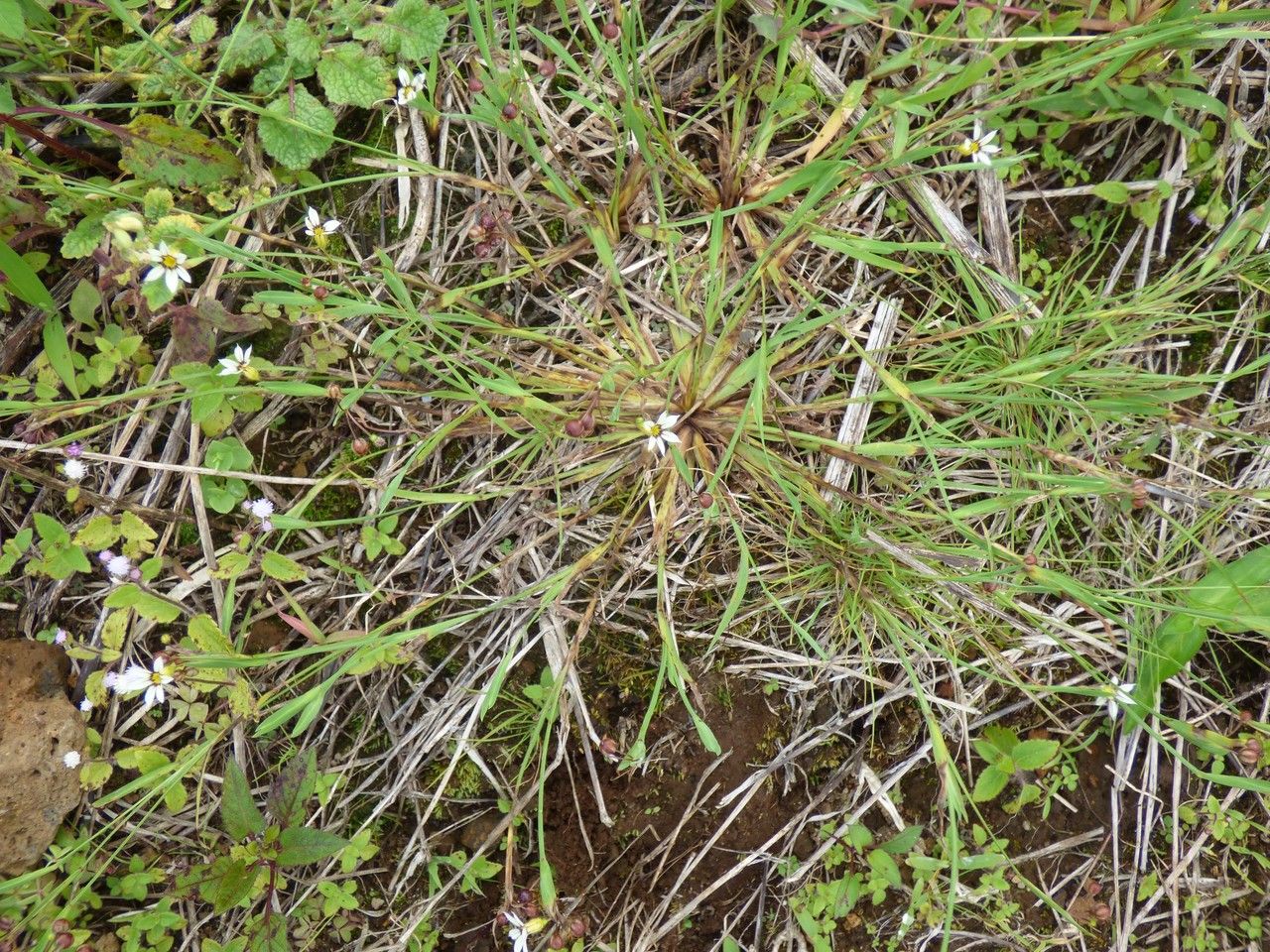
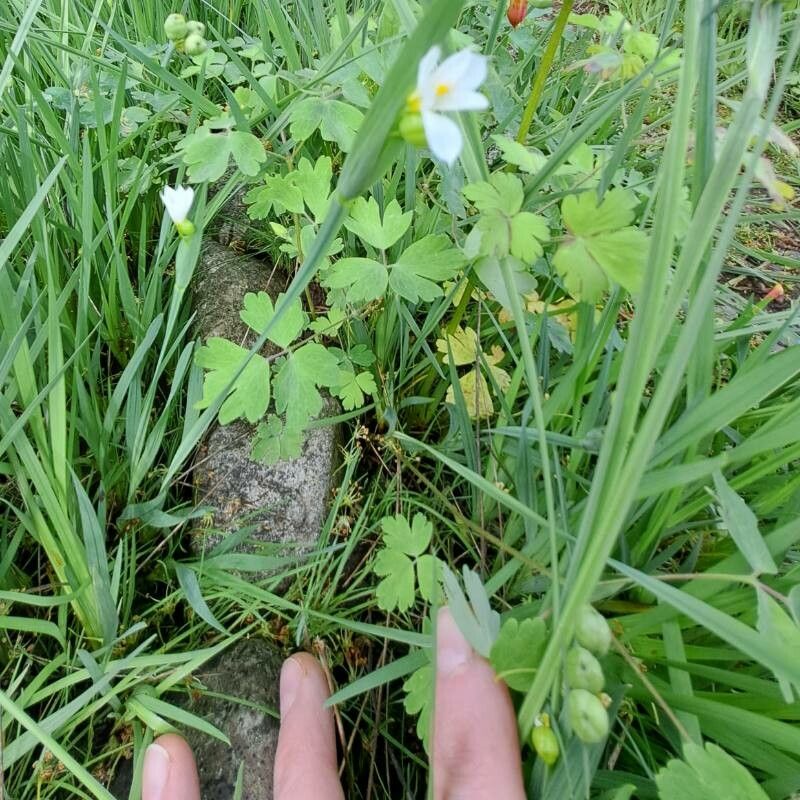
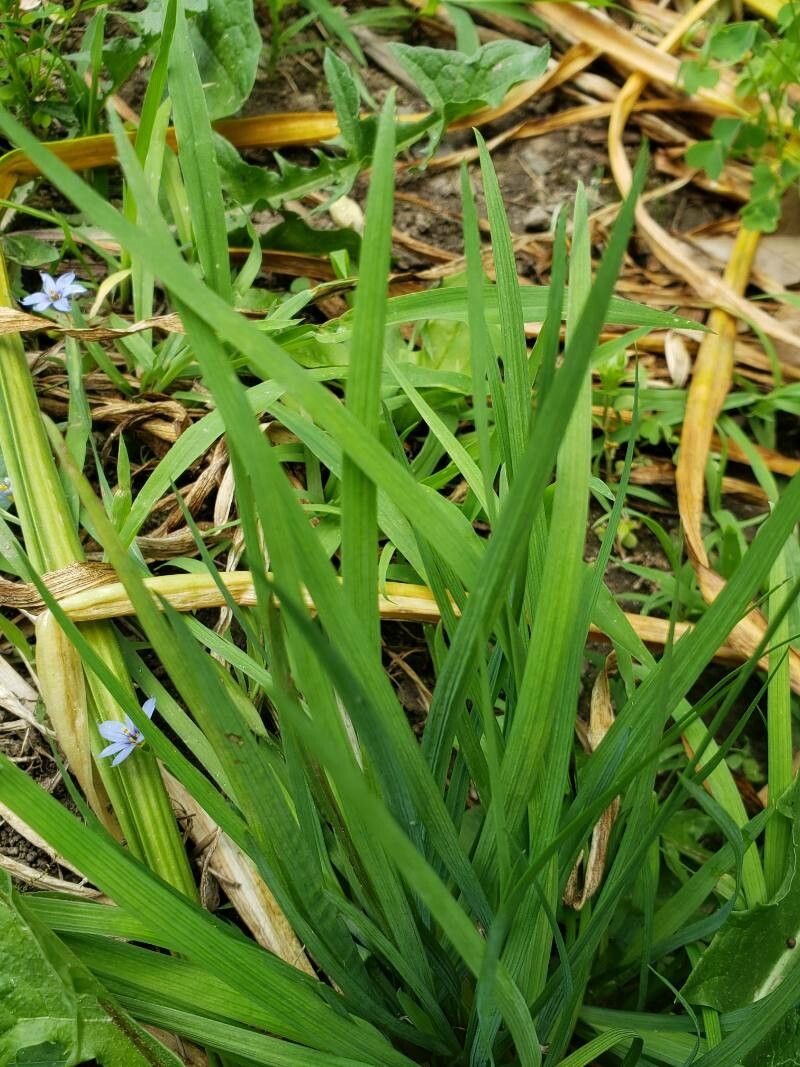
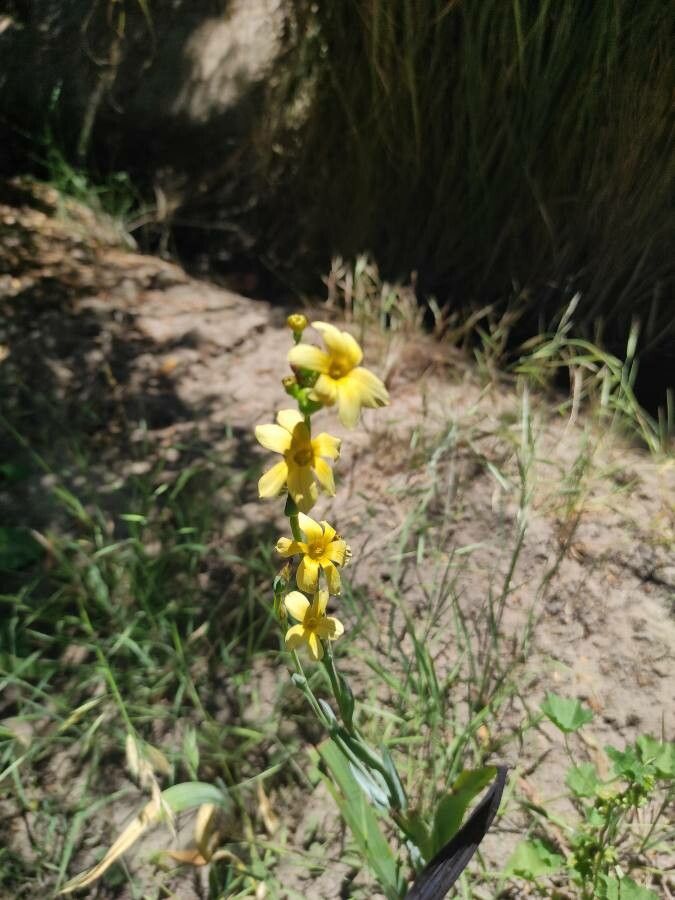
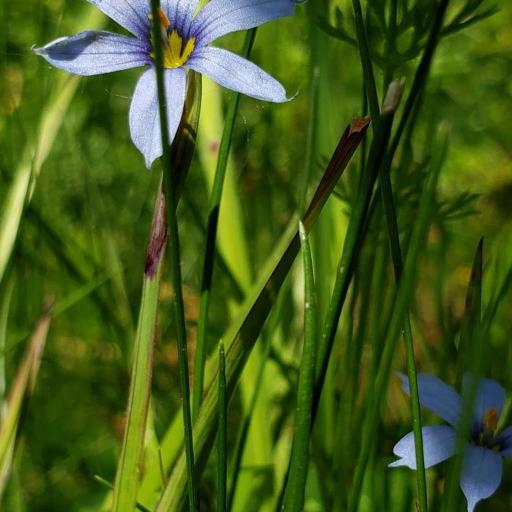
Sisyrinchium micranthum, commonly known as blue pigroot or striped rush-leaf, is a grass-like species in the iris family, Iridaceae. It is native to Mexico, Central America, and South America and widely naturalised elsewhere. The white to cream flowers are between 10 and 20 mm in diameter and have blue to purple centres. These are followed by rounded 3 to 8 mm brown capsules that enclose the dark brown seeds.
Bermuda pigroot has strong resistance to disease and is generally unlikely to develop illnesses. Still, it can be affected by pests and diseases present in its surroundings. Such infections are typically not serious. Regarding care, this plant has moderate maintenance needs. It should be pruned regularly to keep a good appearance and support healthy growth. Applying fertilizer can also encourage flowering. Bermuda pigroot is appropriate for anyone who has an outdoor area, like a garden or patio, and does not demand extensive horticultural experience. It may need additional care when cultivated indoors.
How to keep Sisyrinchium Micranthum.
Light
Bermuda pigroot does best when it gets sunlight for most of the day, similar to the light conditions in its native habitat. Both too much and too little light can harm the plant, interfering with its healthy growth and development.
Temperature
Bermuda pigroot is native to areas with temperatures between 68 and 95 °F (20 to 35 ℃). It flourishes in temperate climates and needs warmer temperatures for optimal growth. To ensure healthy growth throughout the seasons, temperature adjustments may be necessary during periods of extreme heat or cold.
Fertilizer
The best time to fertilize a Bermuda pigroot is in early spring, as it comes out of dormancy and starts active growth. Fertilizing supplies essential nutrients for healthy development. Although Bermuda pigroot requires relatively little fertilizer, an annual application can improve its survival and encourage better, longer-lasting blooms.
Pruning
Bermuda pigroot is characterized by its small blue flowers and grass-like foliage. To maintain its health, prune the plant from early to late spring. Start by removing any dead leaves and thinning out crowded growth to improve air circulation. Be cautious not to over-prune, as it's important to preserve the plant's natural structure. Additionally, make sure to sanitize your pruning tools to prevent the spread of disease.
Botanical profile.
- Plant Type
- Herb
- Life Cycle
- Perennial, Annual
- Genus
- Sisyrinchium
- Family
- Iridaceae
- Hardiness Zone
- 5-9
- Mature Height
- 20 cm
- Mature Spread
- 30 cm
- Leaf Color
- Green, Gray
- Leaf Type
- Evergreen
- Flower Color
- Lavender
- Flower Size
- 1.02 cm to 2.03 cm
- Bloom Time
- Mid spring, Late spring, Early summer
- Planting Time
- Spring, Summer, Autumn
- Harvest Time
- Summer
Other names.
Reader questions.
What are the sunlight requirements for Bermuda pigroot?
Bermuda pigroot (Sisyrinchium micranthum) thrives in locations that receive full sun, defined as above 6 hours of sunlight daily. Ensuring the right amount of light is crucial, as both over and under-exposure can harm the plant's growth. In spaces where natural sunlight is lacking, artificial lighting can serve as an effective supplement. For indoor plants, it's recommended to provide 30-50W/sq ft of artificial light for full sun plants, with the light source placed 12-36 inches above the plant, mimicking natural sunlight conditions for 8-12 hours per day. Watching how sunlight moves through your garden can help in selecting the optimal spots for planting, catering to the plant's needs for a balance of light and shade.
What is the optimal temperature range for growing Bermuda pigroot (Sisyrinchium micranthum)?
Bermuda pigroot, also known as Sisyrinchium micranthum, is native to regions with temperatures ranging from 68 to 95 °F (20 to 35 °C). It thrives best in temperate climates and requires warmer temperatures to grow optimally. To maintain healthy growth throughout the year, temperature adjustments may be necessary to mitigate the effects of extreme heat or cold. Despite its strong cold resistance, in areas where winter temperatures are expected to drop below -25°C, it is crucial to protect the plant from the cold, which can be done by covering it with soil or straw and ensuring the soil is moist before the first freeze hits.
What symptoms indicate insufficient sunlight for Bermuda pigroot, and what solutions can be applied?
Symptoms of insufficient sunlight in Bermuda pigroot include smaller new leaves, leggy or sparse growth, faster leaf drop, delayed or halted growth, and discoloration such as lighter-colored new leaves, chlorosis, sunscald, leaf curling, wilting, and leaf scorching. To address these issues indoors, gradually increase the plant's exposure to sunlight or use artificial lighting, ensuring at least 6 hours of light daily. For outdoor plants, finding the best spot with adequate sunlight and avoiding sudden changes in light exposure is key. Minimizing obstructions, such as pruning blocking trees or transplanting to sunnier locations, can also help outdoor and ground-planted Bermuda pigroots. Remember, while parts of the plant that suffered might not recover, new growth after enhancing light exposure should be healthy.
How does Bermuda pigroot react to low temperatures?
Bermuda pigroot is notably cold-tolerant, flourishing best when temperatures stay above 20°C (68°F), and it should remain above 0°C during winter. In environments where temperatures plunge below -25°C, the plant might not exhibit noticeable changes during the winter, but there could be a decline in sprouting, or in some cases, no sprouting at all come springtime. To mitigate these effects, it's recommended to remove any parts of the plant that fail to sprout once spring arrives.
What should be done if Bermuda pigroot experiences high temperature?
During the summer months, Bermuda pigroot should ideally be kept below 35°C (95°F) to prevent heat stress. If temperatures soar above 38°C, the plant's leaves may lighten in color, become prone to curling, suffer from sunburn, and in severe instances, the entire plant may wilt and dry up. To care for a heat-stressed plant, trim away the sunburned and dried parts. Relocating the plant to a shaded area during midday and afternoon sun, or using a shade cloth, can offer relief. Additionally, watering the plant in the morning and evening helps keep the soil adequately moist, supporting the plant's recovery and continued health.