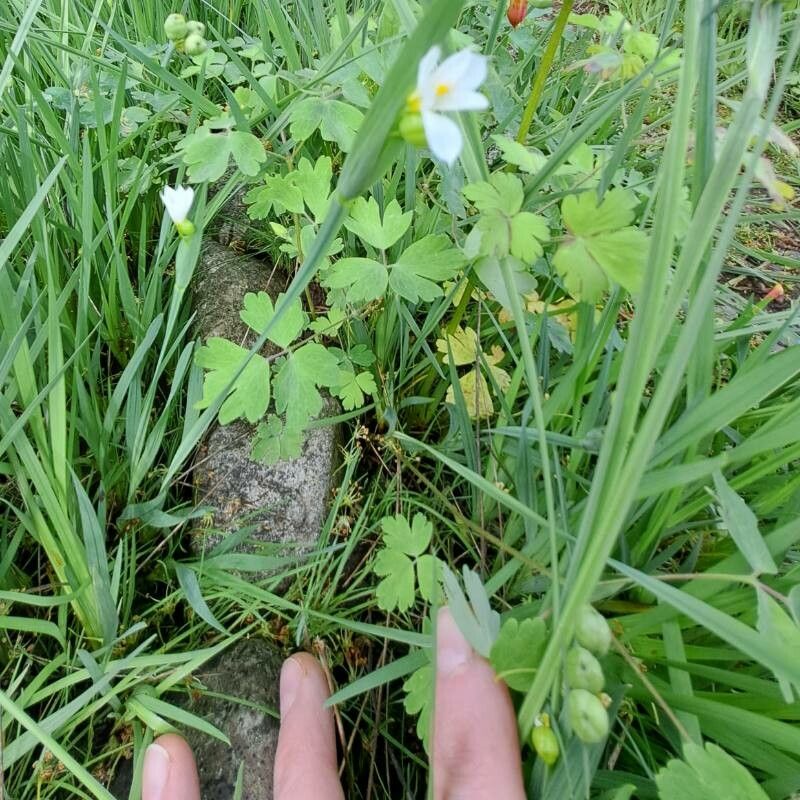
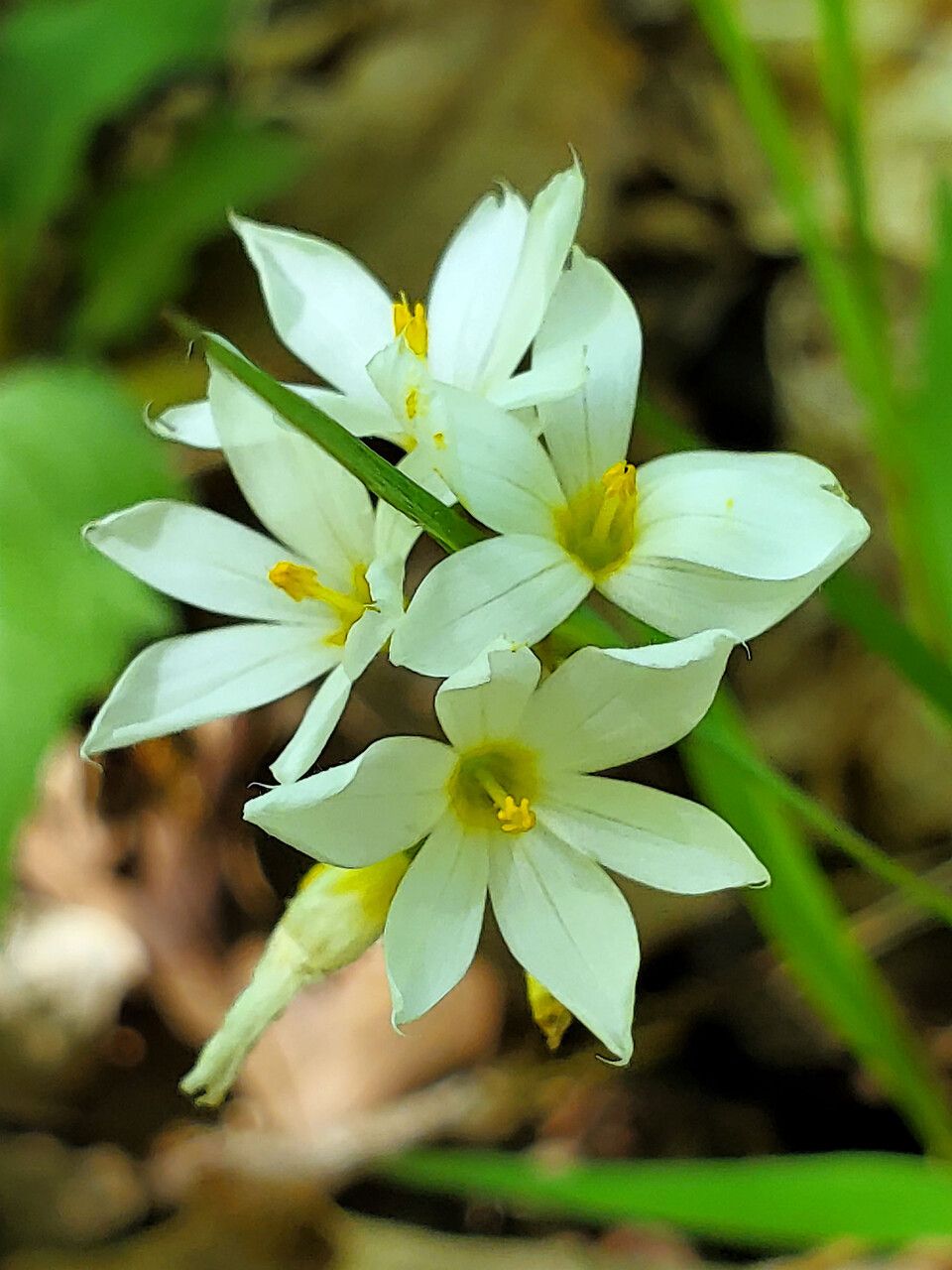
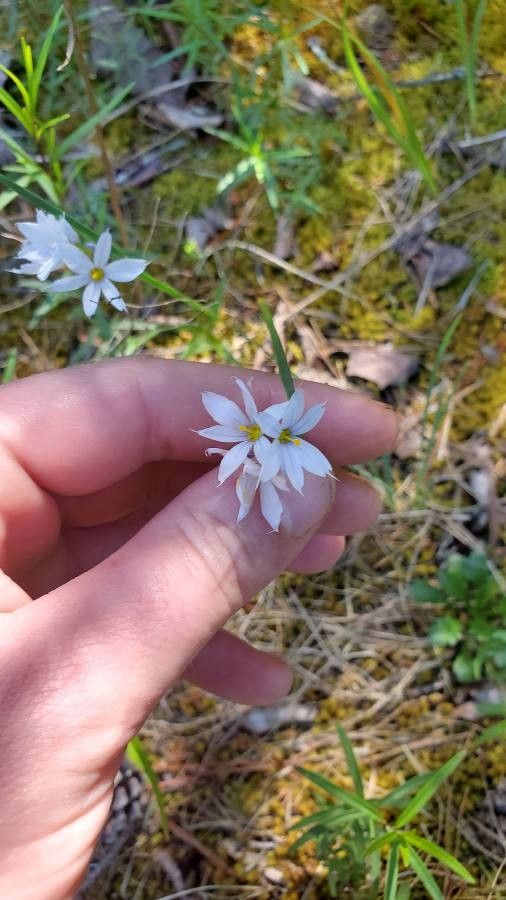
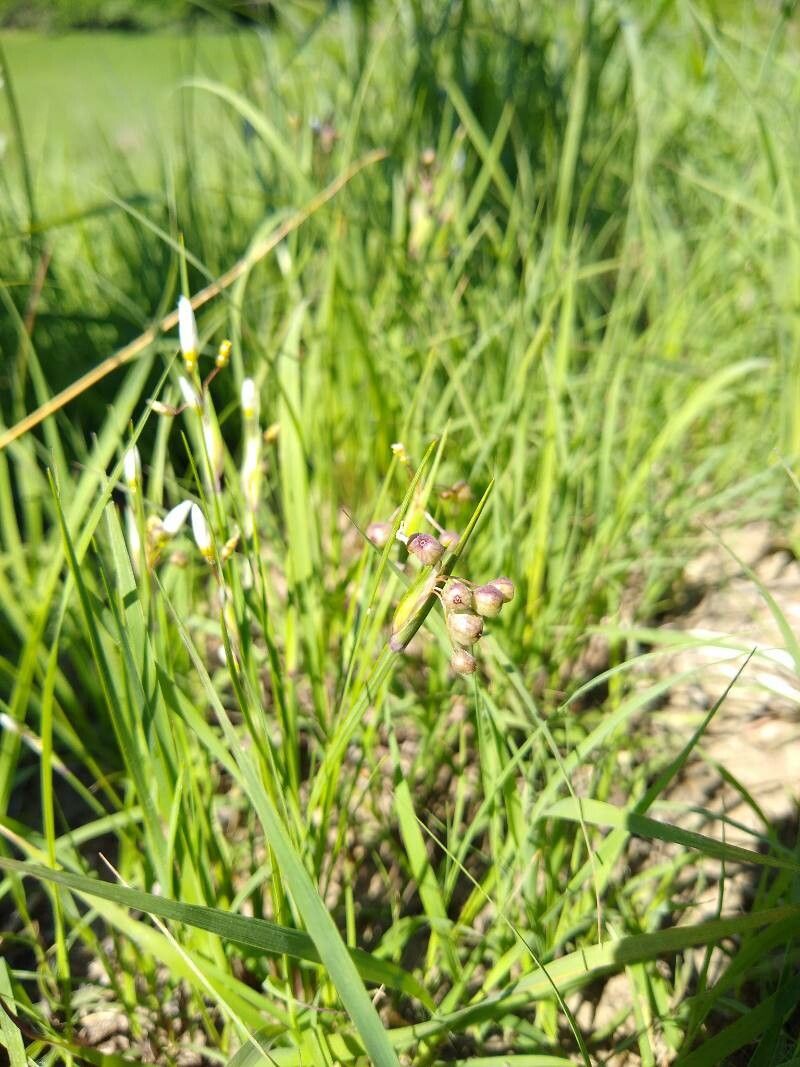
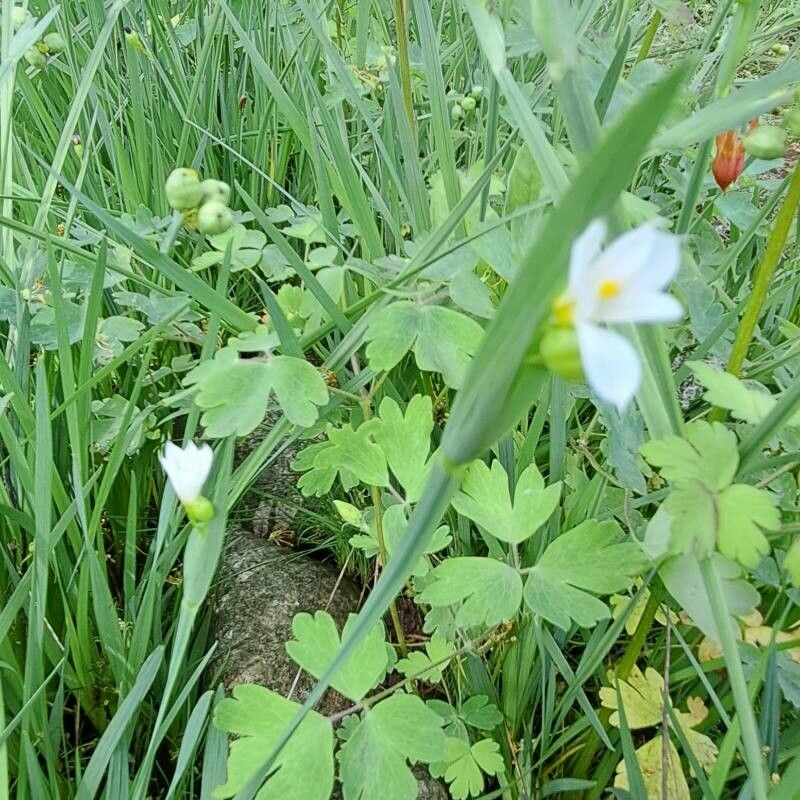
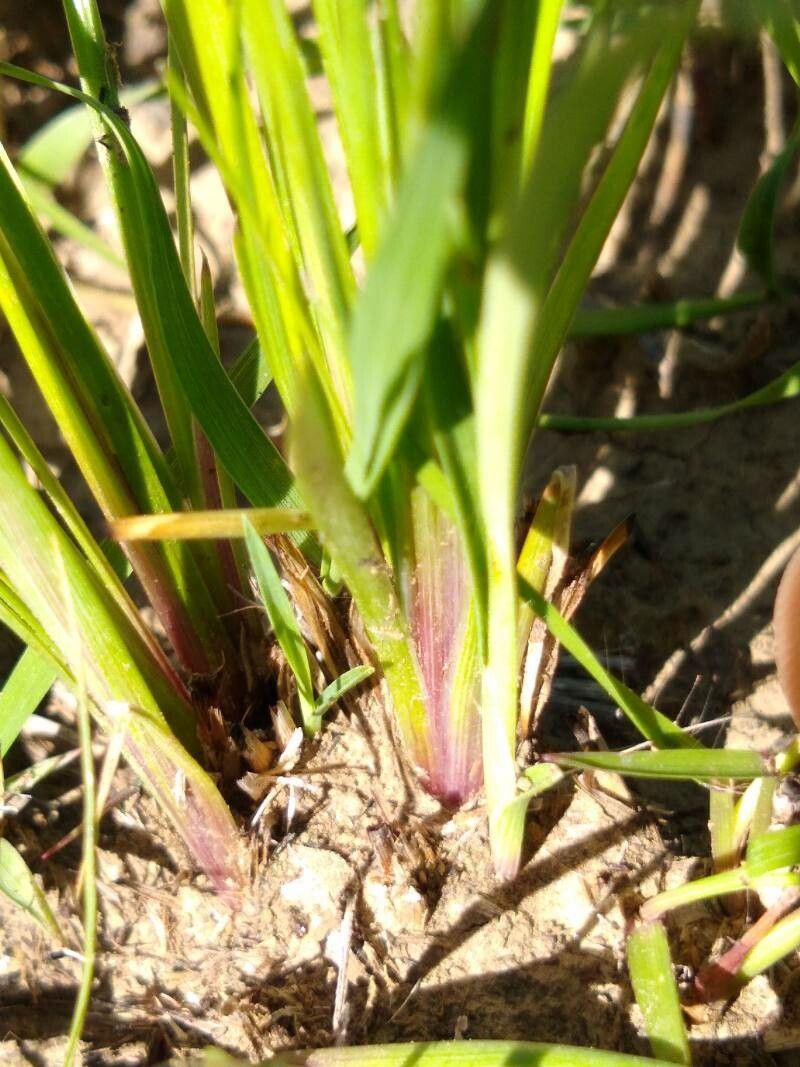
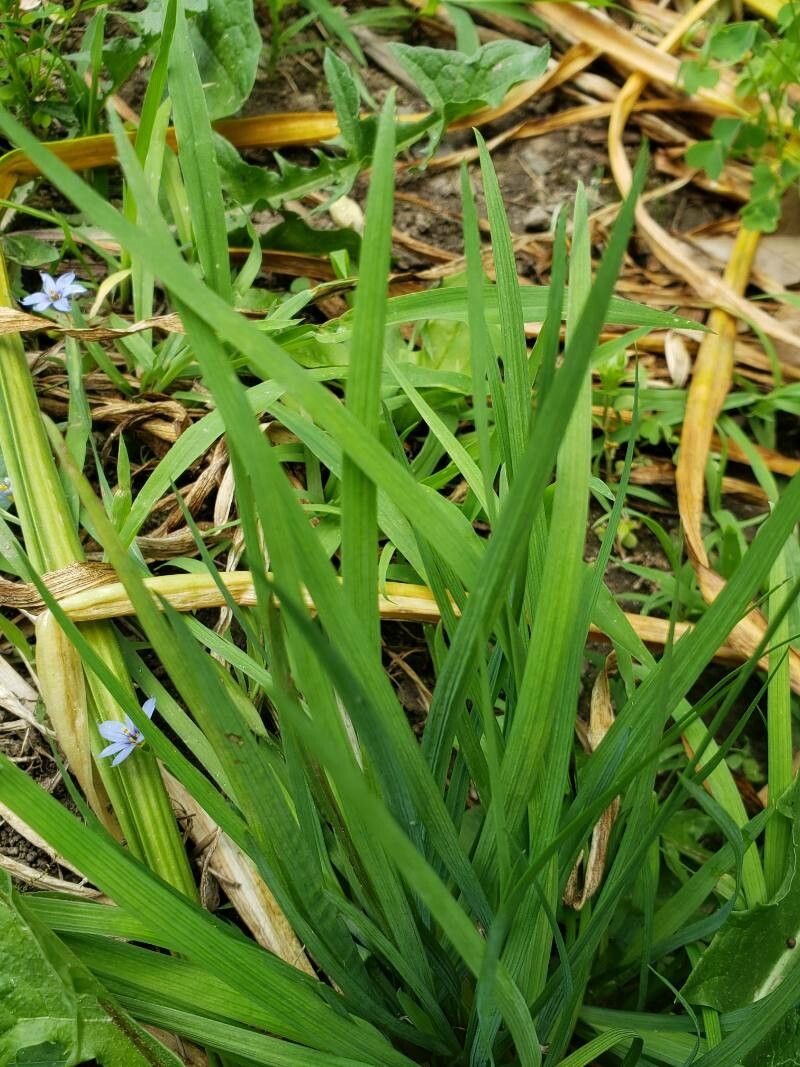
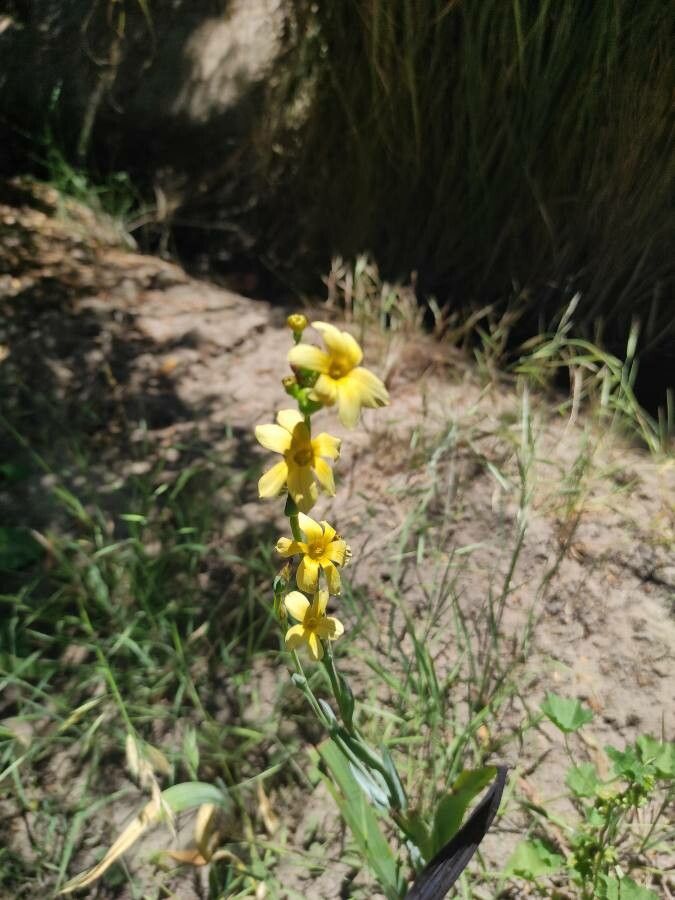
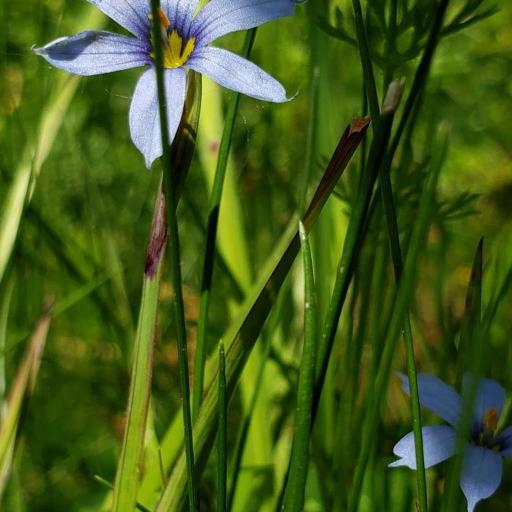
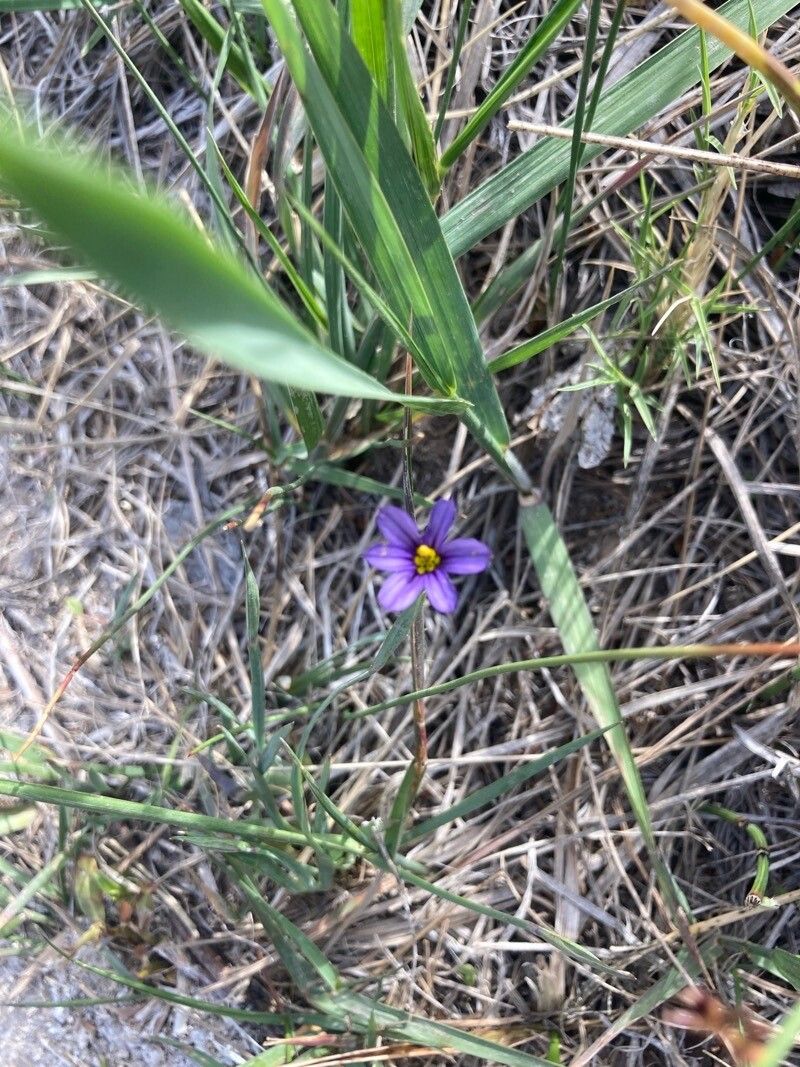
Sisyrinchium albidum, commonly known as white blue-eyed grass, is a species of flowering plant in the family Iridaceae. The stem of Sisyrinchium albidum is commonly pale grey and threadlike, measuring 0.2 to 0.5 m high and 0.5 to 1 mm wide. Similarly, its narrow, stiff leaves are 0.5 to 1 mm wide. Its twinned spathes (by which it is characterized, along with its leaves) are green and purple-tinged and 1.5 to 2 cm high. The outer part of the flower, including the petals, is white to violet and 8–10 mm long. Its fruits are 2–4 mm long and a pale yellow-green. It is found mostly in eastern North America.
White blue-eyed grass has good resistance to diseases and is generally not prone to them. Nevertheless, it can be vulnerable to pests and diseases present in its environment. These infections are normally not serious. As for care, this plant requires a moderate level of maintenance. It should be pruned regularly to keep a neat appearance and support healthy growth. Fertilizing can also help encourage flowering. White blue-eyed grass is suitable for anyone with outdoor space, such as a garden or patio, and does not demand extensive care experience. It may need more attention when grown indoors.
How to keep Sisyrinchium Albidum.
Light
White blue-eyed grass grows best with plenty of sunlight for healthy development. It favors abundant sun throughout its various growth stages. Native to sunny habitats, it can also withstand lower light levels. Too much or too little light can adversely affect its growth.
Water
White blue-eyed grass flourishes in moist meadows and open woods, where it prefers well-drained soil that remains consistently damp. To avoid waterlogging the roots, water the plant once a week. During the growing season, natural rainfall typically provides adequate hydration, encouraging healthy growth and a lovely display of delicate flowers.
Temperature
White blue-eyed grass is native to regions where temperatures range from 41 to 95 °F (5 to 35 °C). It does well in mild climates year-round, but giving it extra protection in winter can prevent damage from unpredictable weather.
Fertilizer
The best time to fertilize White blue-eyed grass is in early spring, as it emerges from dormancy and starts active growth. Fertilization supplies essential nutrients for healthy development. Although White blue-eyed grass has relatively low fertilizer requirements, an annual application can improve its survival and encourage better, longer-lasting flowers.
Pruning
To improve the health and appearance of white blue-eyed grass, prune it in early spring or late winter. This will help remove dead foliage and encourage new growth. Additionally, trim the flower stalks after they have bloomed to prevent the plant from self-seeding. Regular pruning increases the plant's density and vigor, leading to more prolific blooming and enhancing its overall health.
Botanical profile.
- Plant Type
- Herb
- Life Cycle
- Perennial
- Genus
- Sisyrinchium
- Family
- Iridaceae
- Hardiness Zone
- 4-9
- Mature Height
- 30 cm to 46 cm
- Mature Spread
- 8 cm to 15 cm
- Leaf Color
- Green
- Leaf Type
- Evergreen
- Flower Color
- White
- Flower Size
- 2.54 cm
- Bloom Time
- Mid spring, Late spring
- Planting Time
- Spring
- Harvest Time
- Early summer, Mid summer
Other names.
Reader questions.
What are the sunlight requirements for White blue-eyed grass?
White blue-eyed grass, or Sisyrinchium albidum, needs a significant amount of sunlight to thrive, preferring full sun conditions of above 6 hours of sunlight a day. It can also tolerate partial sun, receiving about 3-6 hours of sunlight daily. Originating from habitats with abundant sunlight, it can endure less sunny conditions to a certain extent. However, both too much and too little light can negatively impact its growth. It's crucial to observe how sunlight moves through your garden and choose spots that provide a balance of light and shade, ensuring the plants' well-being.
What is the indigenous temperature range for White blue-eyed grass?
White blue-eyed grass is indigenous to areas that offer a temperature range of 41 to 95 °F (5 to 35 °C). It is well adapted to mild climates and can grow year-round in such conditions. Although the plant possesses strong cold resistance, it benefits from extra shelter during winter to avoid damage from unpredictable weather conditions.
How do artificial lighting options support indoor growth of White blue-eyed grass?
For indoor plants like White blue-eyed grass, especially in conditions where natural sunlight is limited, artificial lighting can be a vital solution. LED lights are a popular choice because they can be customized to provide specific wavelengths needed by plants. The requirements for artificial light vary depending on plant needs: full sun plants need 30-50W/sq ft, partial sun plants need 20-30W/sq ft, and full shade plants need 10-20W/sq ft. The artificial light should be placed 12-36 inches above the plant to mimic natural sunlight, and the duration should imitate natural daylight hours, generally 8-12 hours a day.
What are the recommended cold protection measures for White blue-eyed grass?
For White blue-eyed grass, special frost protection measures are typically not necessary due to its strong cold resistance. However, if winter temperatures are expected to drop below -30°C, it's crucial to provide cold protection. This can be done by covering the plant with protective materials such as soil or straw. Watering the plant abundantly before the first freeze in autumn is also recommended to ensure the soil remains moist and enters a frozen state, helping to prevent drought and water scarcity during the winter and early spring.
What are common symptoms of inadequate light exposure in White blue-eyed grass?
Inadequate light exposure in White blue-eyed grass can lead to several symptoms. These include smaller new leaves, leggy or sparse growth, faster leaf drop, slower or halted new growth, lighter-colored new leaves indicating a lack of chlorophyll, and chlorosis, where leaves turn yellow. Excessive sunlight can cause sunscald, leaf curling as a defense against water loss, wilting from increased transpiration, and leaf scorching characterized by brown, dry edges. Understanding these symptoms can help in adjusting the plant's exposure to light effectively.
How does low temperature affect White blue-eyed grass, and what are the solutions?
White blue-eyed grass is cold-tolerant and thrives best when temperatures are above 5°C. During winter, it should be kept above -25°C. Exposure to temperatures below -30°C may not present immediate visible changes, but there can be a decrease in sprouting or even a lack of sprouting during the following spring. If some parts of the plant fail to sprout in spring, it is recommended to remove those parts.
How can I manage light exposure for White blue-eyed grass to ensure its health?
Managing light exposure for White blue-eyed grass involves several strategies. Indoors, gradually move plants to sunnier locations until they receive at least 6 hours of direct sunlight, use south-facing windows, and keep curtains open during the day. Consider artificial light sources if necessary, ensuring they're on for at least 8 hours daily. Outdoors, acclimate plants to sunnier spots gradually to prevent sunburn. If sunlight is obstructed, prune branches or move plants to sunnier locations. Affected parts may not recover, but new growth will be healthy with proper light exposure.
How does high temperature affect White blue-eyed grass, and what should be done?
During summer, it's essential to keep White blue-eyed grass below 35°C, as temperatures exceeding 38°C can cause the leaves to lighten in color, become prone to curling, and make the plant susceptible to sunburn. In severe cases, the entire plant may wilt and become dry. To manage this, trim away sunburned and dried-up parts, and move the plant to a shaded location or use a shade cloth to protect it from the midday and afternoon sun. Ensuring the soil remains moist by watering the plant in the morning and evening is also beneficial.