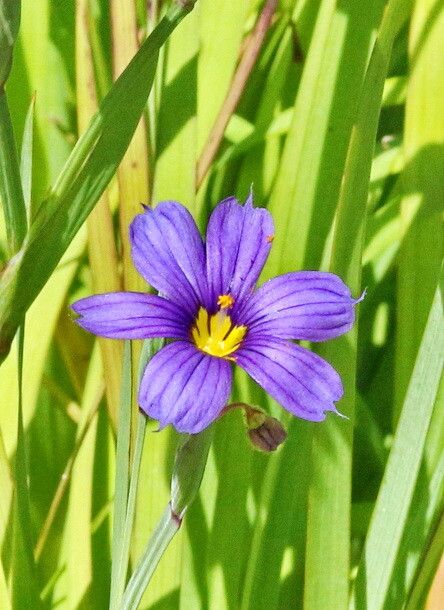
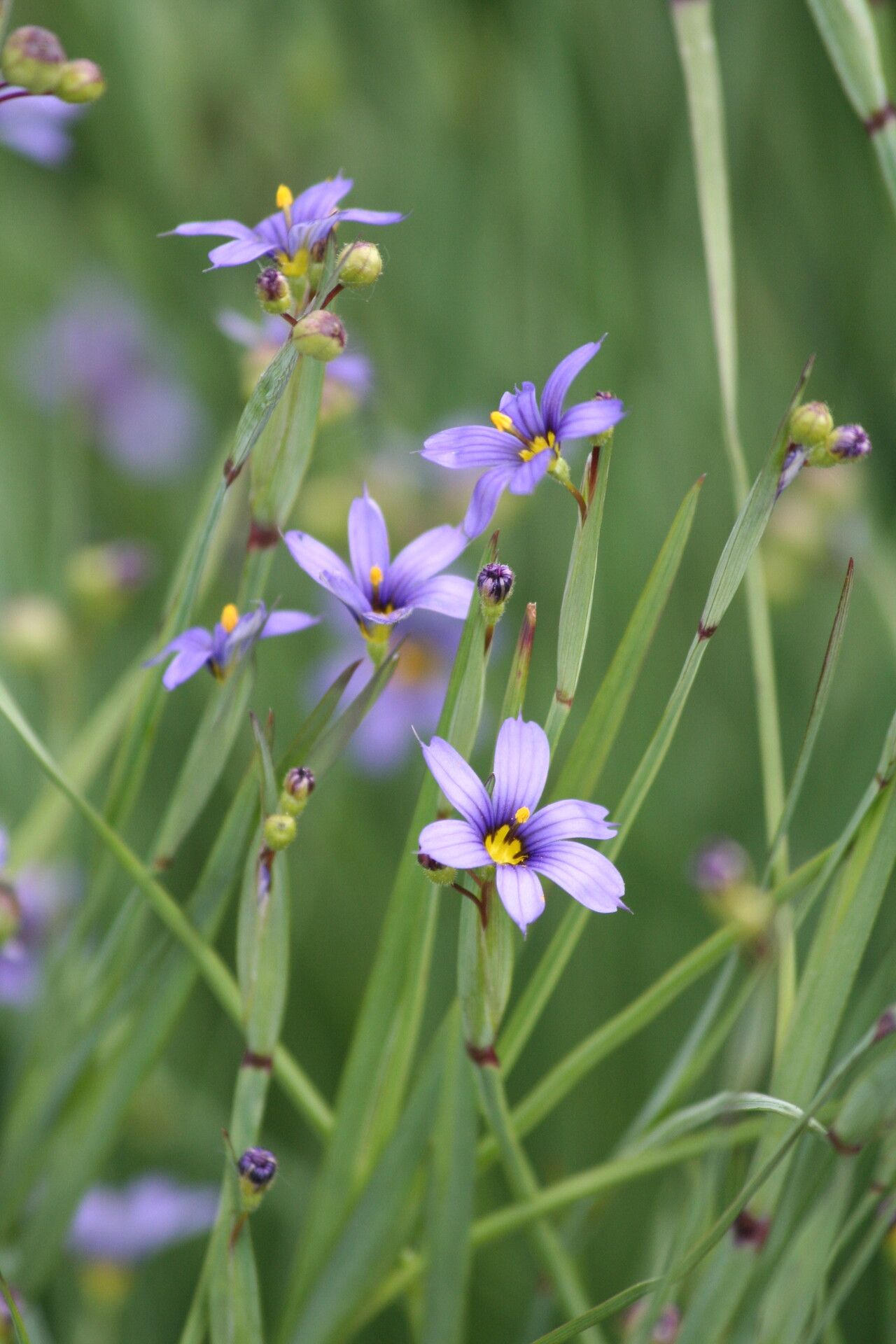
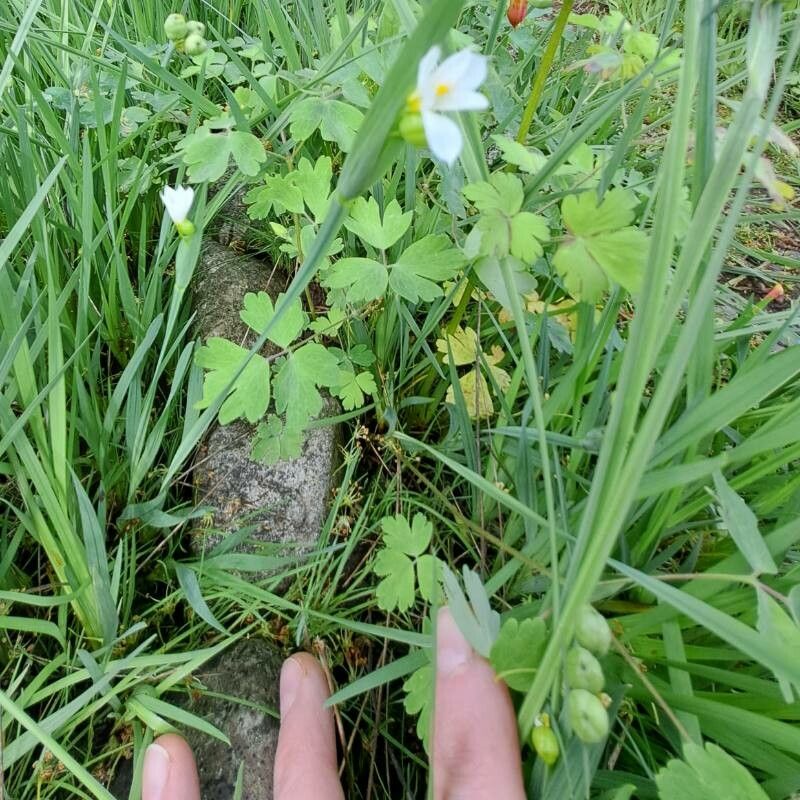
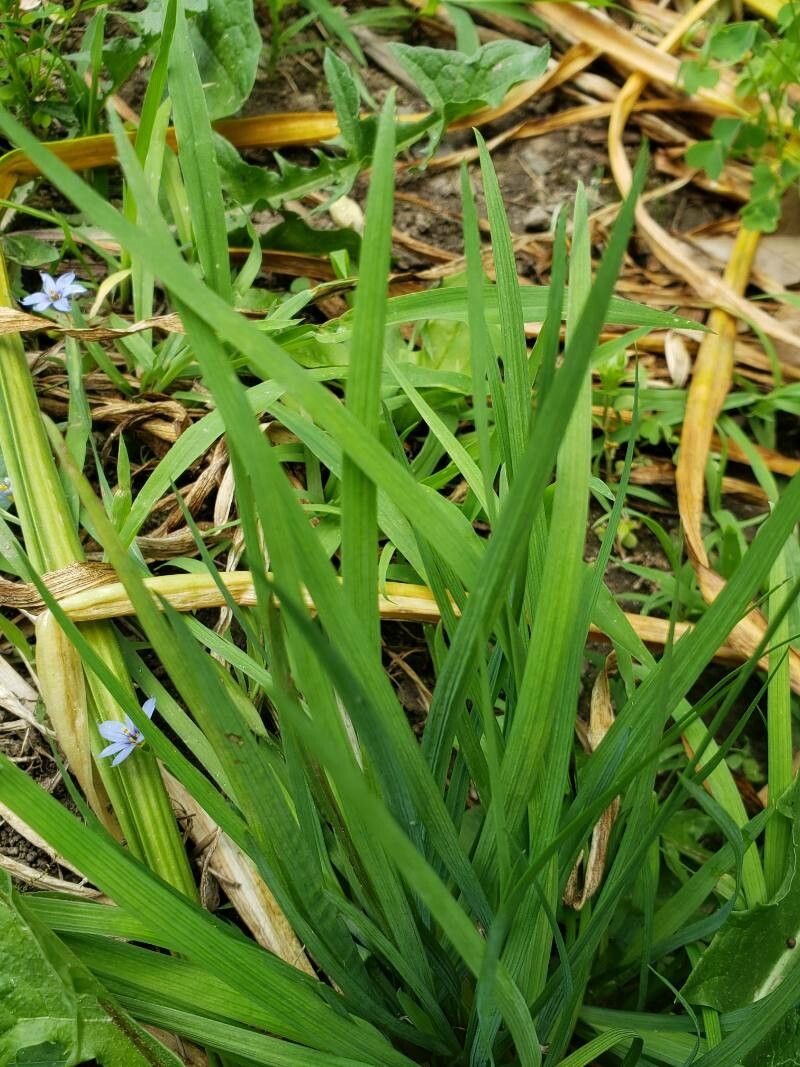
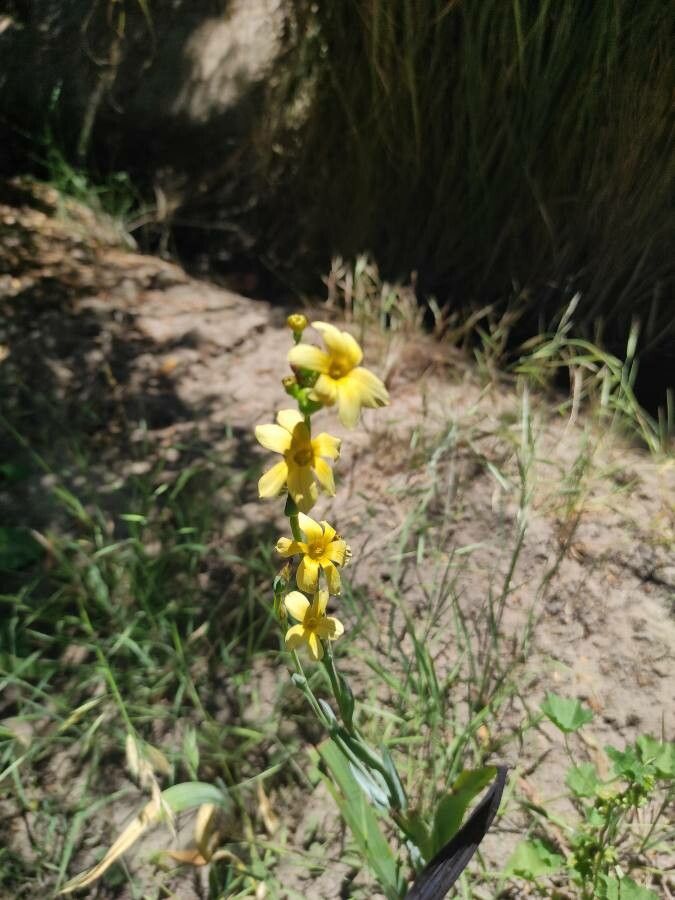
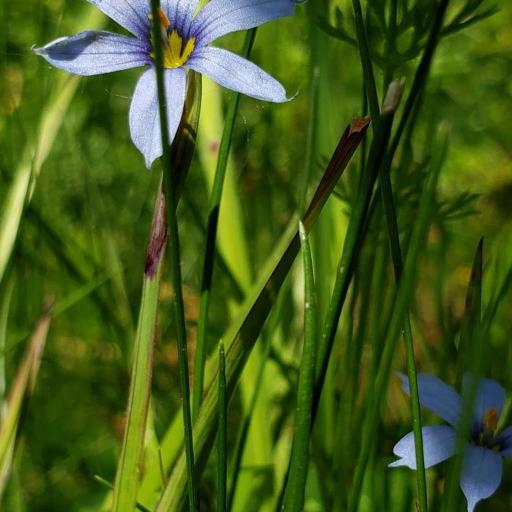
Sisyrinchium bermudiana, known as Bermudiana or, along with other members of the genus, as blue-eyed grass, is a flower of the genus Sisyrinchium (of the iris family) that is indigenous to the Atlantic archipelago, and British Overseas Territory, of Bermuda. The plant appears and blooms in the spring. It has been used as a totemic flower by Bermudians, and appears in art, jewellery, banknotes and elsewhere. Long believed to be limited to Bermuda, the plant has also been found around Lough Erne and Lough Melvin in County Fermanagh, Northern Ireland, where it is known as feilistrín gorm, or blue-eyed grass.
Blue pigroot is fairly disease-resistant and typically not susceptible to illnesses. However, it can be affected by pests and diseases present in its environment, though these problems are usually mild. Regarding care, this plant needs moderate maintenance. It should be pruned regularly to preserve a neat appearance and healthy growth. Fertilizing can also help encourage flowering. Blue pigroot is appropriate for anyone with outdoor space, like a garden or patio, and does not demand extensive care experience. It may need more attention when cultivated indoors.
How to keep Sisyrinchium Bermudiana.
Light
Blue pigroot is a perennial herbaceous plant that prefers sunny sites and is native to open areas, commonly found in meadows and grasslands. It favors full sun but can withstand partial sun exposure.
Temperature
Blue pigroot is fairly adaptable to temperature, able to tolerate higher heat and greater temperature swings. In hot weather, attention should be paid to watering and providing suitable shade to prevent sunburn. However, Blue pigroot has relatively poor cold tolerance; it can endure some chill, but excessively cold conditions can cause frost damage.
Fertilizer
Usually one fertilizer application in spring is enough for Blue pigroot, though several feedings can boost growth. Feed once every month to a month and a half. Fertilizing improves the leaves' appearance and function, helping maintain uniform color and a healthy texture. It also encourages root development and nutrient uptake, supporting long-term plant health.
Pruning
To promote the growth and appearance of blue pigroot, it's important to prune the plant in early spring. Start by removing dead foliage and spent blooms. This not only enhances the plant's aesthetics but also encourages healthier growth. Regularly cut back any invasive shoots to prevent overcrowding. This practice improves air circulation, reduces the risk of disease, and helps ensure a vibrant display of flowers throughout the growing season.
Botanical profile.
- Plant Type
- Herb
- Life Cycle
- Perennial
- Genus
- Sisyrinchium
- Family
- Iridaceae
- Hardiness Zone
- 5-9
- Mature Height
- 15 cm to 30 cm
- Mature Spread
- 10 cm to 20 cm
- Leaf Color
- Green
- Leaf Type
- Deciduous
- Flower Color
- Blue, Violet
- Flower Size
- 1.02 cm to 2.03 cm
- Bloom Time
- Mid spring, Late spring, Early summer
- Planting Time
- Spring, Summer, Autumn
- Harvest Time
- Summer
Other names.