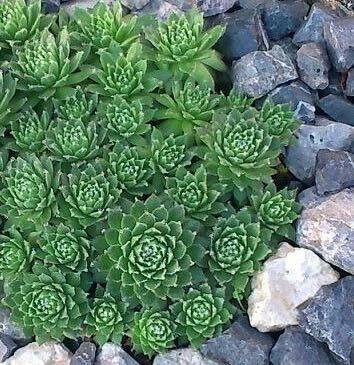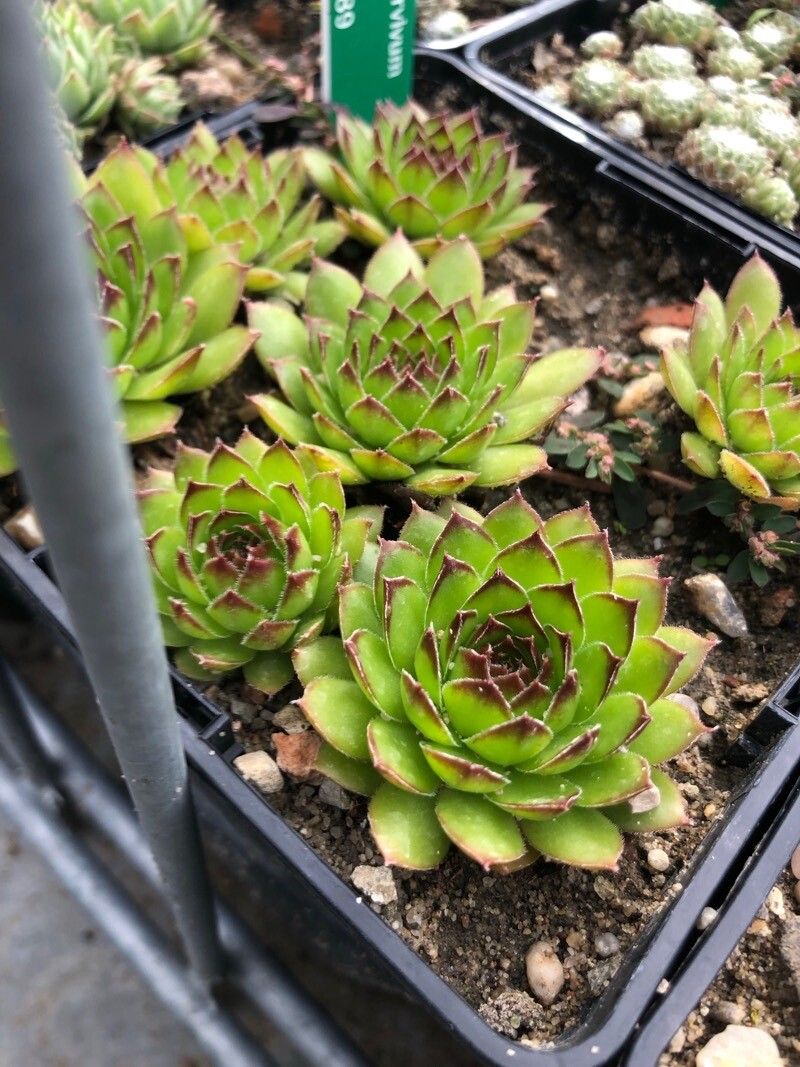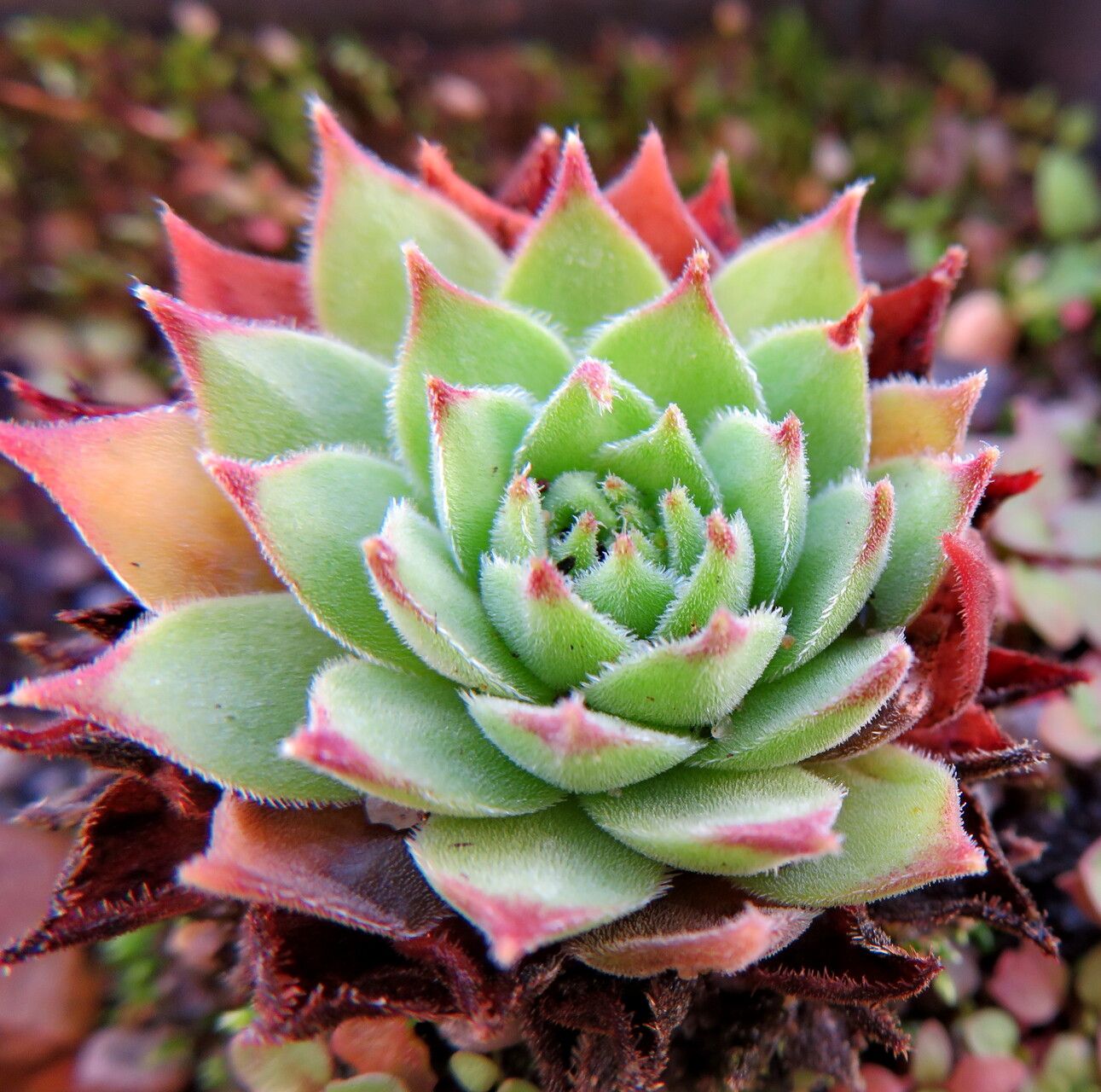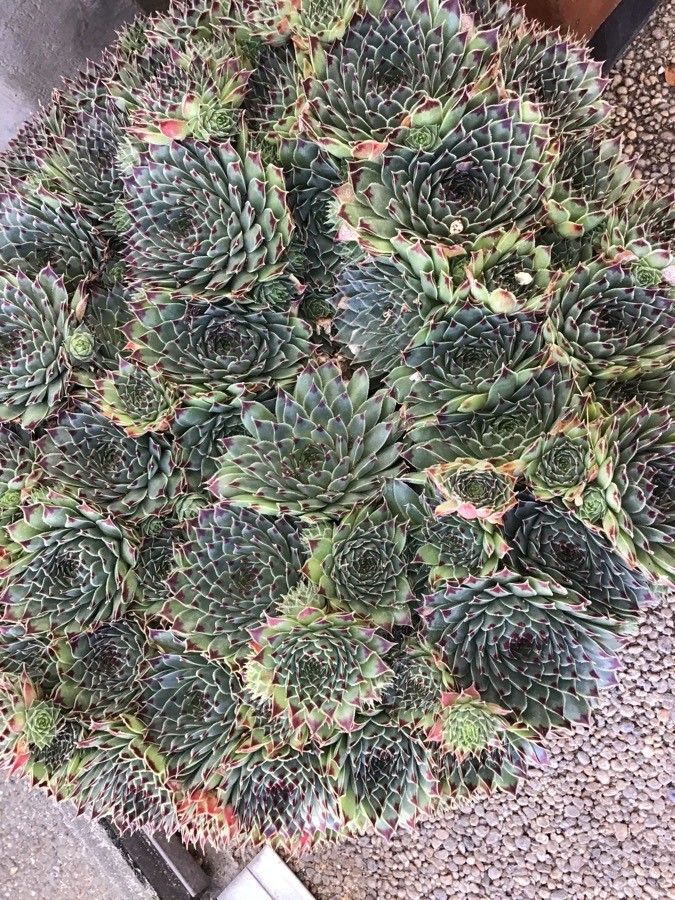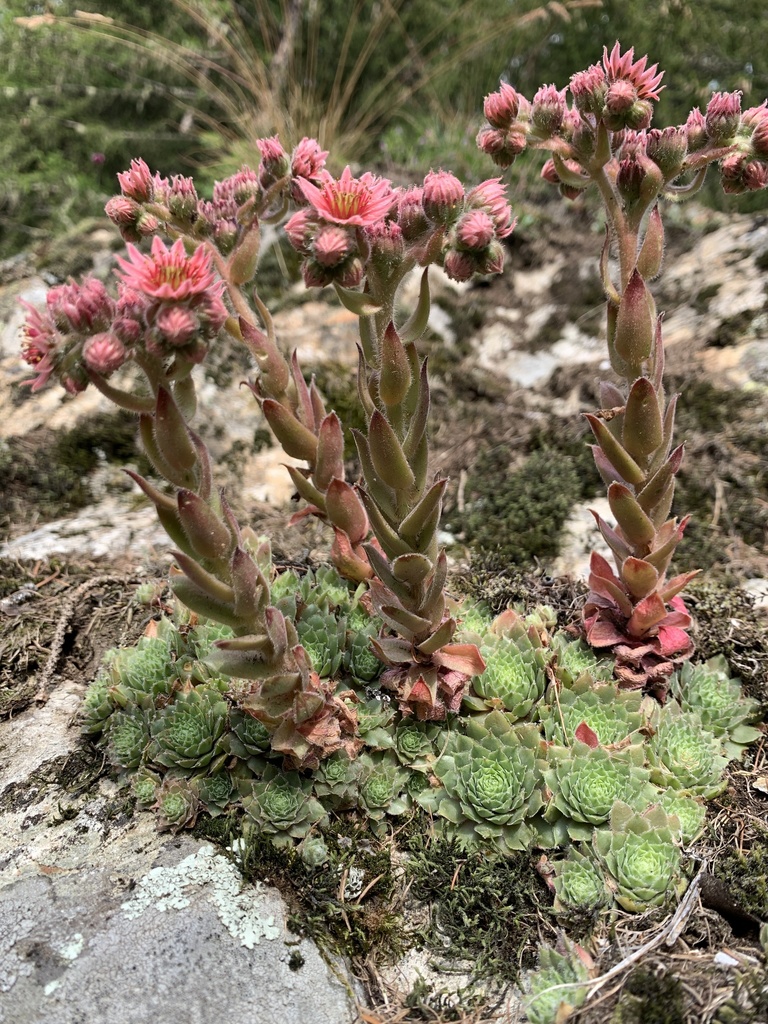
Sempervivum tectorum, commonly known as the common houseleek or roof houseleek, is a succulent plant that belongs to the Crassulaceae family. This perennial plant grows in compact rosettes and produces offsets, often referred to as "chicks," around its base. The fleshy green leaves have pointed tips and form tight rosettes that can reach up to 15 cm in diameter.
Native to Europe, the common houseleek has been cultivated for centuries for its medicinal properties. Traditionally, it has been used as an herbal remedy for various ailments, such as burns, cuts, insect bites, and stings, due to its anti-inflammatory properties.
Besides its medicinal uses, Sempervivum tectorum is also popular as an ornamental plant because of its attractive appearance. It can be grown in rock gardens or containers, where its unique shape adds texture and interest.
This small succulent plant, primarily composed of foliage, has become one of the most popular plants sold in recent years. Its elegant shape resembles a blooming lotus, offering a dignified appearance. The leaves are richly colored and varied, with distinct purple-red tips that make it stand out. This plant is ideal for small to medium-sized pots or as part of a combination arrangement. FUN FACT · FROM THE LIBRARY
The common houseleek prefers well-drained soil with full sun exposure but can also tolerate partial shade. It requires minimal watering and should be protected from excessive moisture during the winter months when it goes dormant.
Overall, Sempervivum tectorum is an easy-to-grow succulent that enhances both indoor and outdoor spaces while offering potential health benefits through traditional herbal remedies.
The common houseleek is a plant surrounded by fascinating lore. According to rumors, when this plant was first discovered, it was found growing on a rooftop. People of that era believed it had the power to withstand lightning storms. As a result, they began planting it on their own roofs. The species name "tectorum" reflects this history, as it means "of the roof." This is why the plant is commonly referred to as the common houseleek.
Common houseleek has moderate disease resistance and is more sensitive to humidity. It becomes vulnerable to disease when humidity is high and tends to develop root rot during dormancy. In terms of care, Common houseleek is drought-tolerant but requires more water in the growing season. Watering should be greatly reduced or stopped entirely during the dormant period. Common houseleek is appropriate for those with some growing experience, though it can be challenging to care for, particularly in dormancy. It is especially suitable for people who can dedicate time to its care during the winter months.
How to keep Sempervivum Tectorum.
Light
The typical houseleek flourishes ideally in circumstances where it is subjected to plenty of daylight every day, similar to the environmental conditions of its original habitat. Throughout different developmental phases, constant sunlight promotes its robust growth. While it can tolerate some degree of sun filtering, inadequate light can impede its progress. On the other hand, too much exposure to sunlight can be harmful.
Water
The common houseleek is perfectly adapted to rocky, dry environments, thanks to its excellent drought tolerance. It only needs watering once every three weeks. This plant thrives in well-drained soil and retains moisture efficiently, making it an ideal choice for rock gardens, particularly during seasons with unpredictable rainfall.
Humidity
This plant will thrive in moderate humidity, which is probably the level in your home. However, misting it a few times a week can be very beneficial. Make sure the room has good ventilation.
Temperature
The common houseleek, originally from the mountainous areas of Southern Europe, can withstand temperatures down to 0℉ (-18℃). Nevertheless, it thrives best in temperatures between 60 and 95℉ (15 to 35℃). In the hotter periods, it can be placed outside to enjoy direct sunlight. Conversely, during colder seasons, it needs to be housed indoors where temperatures do not drop under 45℉ (7℃).
Fertilizer
A light application of fertilizer 1-2 times yearly during its growth period is ample for the Common houseleek. Refrain from fertilizing during the winter and summer seasons when it is in a dormant state. For plants that have been repotted, lessen the amount of fertilizer used and wait a few months post-repotting before applying any. Regular fertilization contributes to robust growth and promotes blossoming.
Pruning
To help common houseleek maintain its shape, prune any redundant or overly dense branches in the spring and autumn using tools like knives or scissors. For propagation, cut 5-6 leaf stems, apply sulfur powder to the wound, and allow them to heal before planting. Keep the soil slightly moist during this process.
Pot & Repot
Choose a container slightly bigger than the current one, with excellent drainage, for repotting the Common houseleek. Utilize a gritty succulent or cactus mix that provides good drainage. Gently take out the plant from its previous pot, clear away extra soil, and replant it at the same level. To let any root injuries recover, delay watering it for a few days. Repot it during the spring or autumn, and place it in a well-lit location.
Toxicity
Hens and chicks plants are not known to contain any toxic substances and are safe to plant around people and pets. The thick leaves and young shoots are edible, though they have a slightly sour taste. The water stored within the plant is a common non-toxic substitute for aloe vera to relieve skin irritation.
Further reading →
The toxicity and danger assessments provided are for reference only. We do not assure their accuracy, so it's crucial not to depend on them. Seek professional advice when necessary for accurate guidance.
Botanical profile.
- Plant Type
- Succulent, Herb
- Life Cycle
- Perennial
- Genus
- Sempervivum
- Family
- Crassulaceae
- Hardiness Zone
- 3-9
- Mature Height
- 15 cm to 49 cm
- Mature Spread
- 6 cm to 30 cm
- Leaf Color
- Green, Red, Blue, Purple, Yellow, Gray
- Leaf Type
- Evergreen
- Flower Color
- Purple, Pink, Red, Yellow
- Flower Size
- 5.08 cm to 6.35 cm
- Bloom Time
- Early summer, Mid summer
- Planting Time
- Spring, Autumn
- Harvest Time
- Mid summer
- Native Area
- Mountainous and stony areas of Southern and Central Europe and North Africa
Other names.
Reader questions.
When Should I Water My Common Houseleek?
Watering the common houseleek (Sempervivum tectorum) is essential for its growth and health. Indications that your common houseleek needs water include slightly shriveled or wrinkled leaves, a change in leaf color to a less vibrant hue or reddish patches, dying bottom leaves, and dry soil. Overwatering can cause root rot and fungal diseases, so avoid watering if the soil or leaves appear wet. Common houseleek is a succulent that can endure drought, but chronic underwatering can be detrimental, causing the plant to drop leaves or even perish. Therefore, understanding the balance in watering is critical for its care.
Why should I put fertilizer on my Common houseleek plant?
Adding fertilizer to Common houseleek helps provide nutrients to the growing medium. While it does store water and nutrients, applying plant food during the growing season supports healthy growth. Fertilizing can also encourage mature specimens to produce blooms during this time.
What are the sunlight requirements for common houseleek?
Common houseleek (Sempervivum tectorum) thrives under full sun conditions, requiring above 6 hours of sunlight daily for optimal growth. It can also grow under partial sun, which entails about 3 to 6 hours of sunlight. It's essential to observe the movement of sunlight through your garden to find the ideal location that provides a perfect balance of light and shade, ensuring the plants' happiness and healthy growth.
What is the native region and temperature tolerance of the Common Houseleek?
Native to the mountainous regions of Southern Europe, the Common Houseleek is capable of tolerating a wide range of temperatures. It can withstand temperatures as low as 0°F (-18°C), but it typically prefers a warmer climate that ranges between 60°F to 95°F (15°C to 35°C). During the warmer seasons, it is beneficial to move the plant outdoors to receive full sunlight. However, in cooler months, it's important to keep it indoors in areas where temperatures do not fall below 45°F (7°C). The winter season is the growing period for the Common Houseleek, and thus, maintaining temperatures above 0°C is crucial for optimal growth. When outdoor temperatures plunge below -30°C, bringing the plant indoors to a well-lit area is advisable. The watering needs of the plant should be adjusted according to the temperature, increasing with higher temperatures and decreasing as it nears -30°C. For outdoor overwintering, place the plant in a sheltered area with plenty of sunlight, and consider setting up a temporary greenhouse for protection against consistently low temperatures, ensuring the plant remains adequately moist.
How Should I Water My Common Houseleek?
Watering a common houseleek correctly involves specific techniques and considerations. Bottom-watering by placing the pot in a tray or saucer filled with water allows roots to absorb moisture without oversaturating the soil surface, minimizing the risk of fungal diseases. If using a watering can, opt for one with a narrow spout to target the base of the plant, ensuring the foliage remains dry to prevent fungal diseases. This method encourages efficient watering at the root level, crucial for the plant's health.
When should I fertilize my Common houseleek?
Common houseleek only requires a small amount of fertilizer during the growing season. It is recommended to fertilize the plant 1-2 times per year, specifically in the spring and autumn. Avoid fertilizing during the dormant seasons of winter and summer. Take caution when dealing with repotted plants, as you should decrease the fertilizer quantity. Additionally, it is advisable to wait a few months after repotting before beginning to apply fertilizer.
How does sunlight affect the growth of common houseleek?
The common houseleek performs best when it's exposed to ample sunlight daily, similar to its native environment. Different growth stages benefit from unobstructed sunlight, which promotes healthy development. While the plant can tolerate some shading, insufficient light may hinder its growth. On the other hand, too much direct sunlight can cause damage. During periods of insufficient natural light, especially in winter or less sunny spaces, artificial lighting can be a vital solution to provide the required light intensity for optimal growth. Proper artificial lighting involves choosing the right type of light, determining the appropriate distance from the plant, and setting the correct duration to mimic natural daylight hours.
What are the symptoms of temperature stress in Common Houseleek and how can they be addressed?
Common Houseleek shows different symptoms based on the stress of low or high temperatures. For low temperature stress, it's not tolerant of extremely cold conditions, thriving best between 0°C and 35°C. Exposure to temperatures below -35°C can lead to water-soaked necrosis and wilting of the leaves. Frost damage might not show immediately but can lead to significant wilting and leaf drop after a week. The solution is to trim off frostbitten areas and move the plant to a warmer indoor space or a makeshift greenhouse for cold protection, ensuring it receives ample sunlight near a south-facing window and maintaining good airflow to prevent decay. In cases of high temperature stress, the Common Houseleek should be kept below 35°C as temperatures above 38°C can induce a dormant state, making it prone to rot in humid conditions. The remedial measures include removing any dry or rotten parts, moving the plant to a partially shaded area, especially during the peak sun of midday and afternoon, and halting watering until cooler weather prevails.
How Much Water Does Common Houseleek Really Need?
Common houseleek requires careful watering to ensure optimal health. Considering factors such as pot size, root depth, and plant size are vital. With a shallow root system, the goal is to moisten the root zone without waterlogging the soil. Typically, watering once every 1-2 weeks is adequate, depending on environmental conditions. Signs of proper hydration include plump, firm, and vibrant leaves. Overwatering or underwatering can adversely affect the plant, causing root rot or withered leaves, respectively. It's crucial to maintain well-drained soil and allow the top inch of soil to dry between waterings.
When should I not add fertilizer to my Common houseleek?
Common houseleek, like many other plants, goes into a period of dormancy. During this time, it's best to avoid applying fertilizer. The plant stops growing in both the summer and winter, so that's when you should refrain from fertilizing. Additionally, it's recommended to wait a couple of months after repotting in the spring before resuming fertilizer applications.
What are the symptoms of light deficiency and excessive sunlight exposure in common houseleek?
Common houseleek may exhibit various symptoms due to suboptimal lighting conditions. Symptoms of light deficiency include leggy or sparse growth, lighter-colored new leaves, smaller leaves, and overall weak appearance. Excessive sunlight exposure can cause chlorosis (leaves turning yellow), sunscald (damage from intense light), leaf curling (as a defense mechanism), wilting, and leaf scorching. These symptoms either indicate a lack of sufficient light for proper chlorophyll and nutrient production or damage from too much direct sunlight.
What Kind of Water is Best for Common Houseleek?
For common houseleek, using rainwater or distilled water is best to avoid harmful elements like chlorine or fluoride, which may exist in tap water. If tap water is the only option, it should be allowed to sit out to dechlorinate before use. Common houseleek is sensitive to excessive chlorine, fluoride, and certain minerals found in hard water, which can inhibit growth or damage the plant. Letting tap water sit uncovered for 24 hours before use can evaporate the chlorine. Lukewarm water is preferred to avoid shocking the plant.