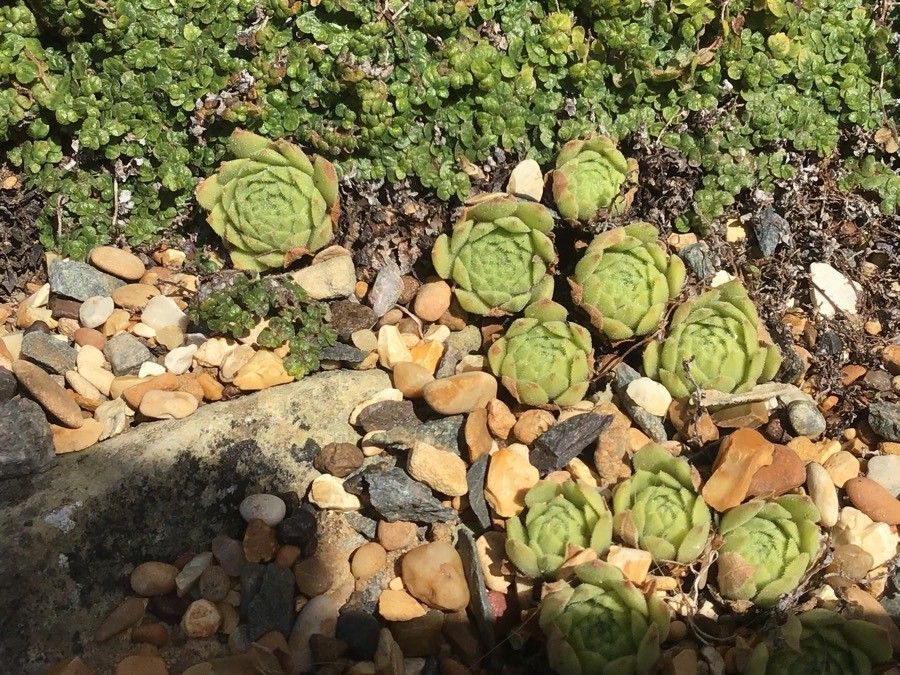
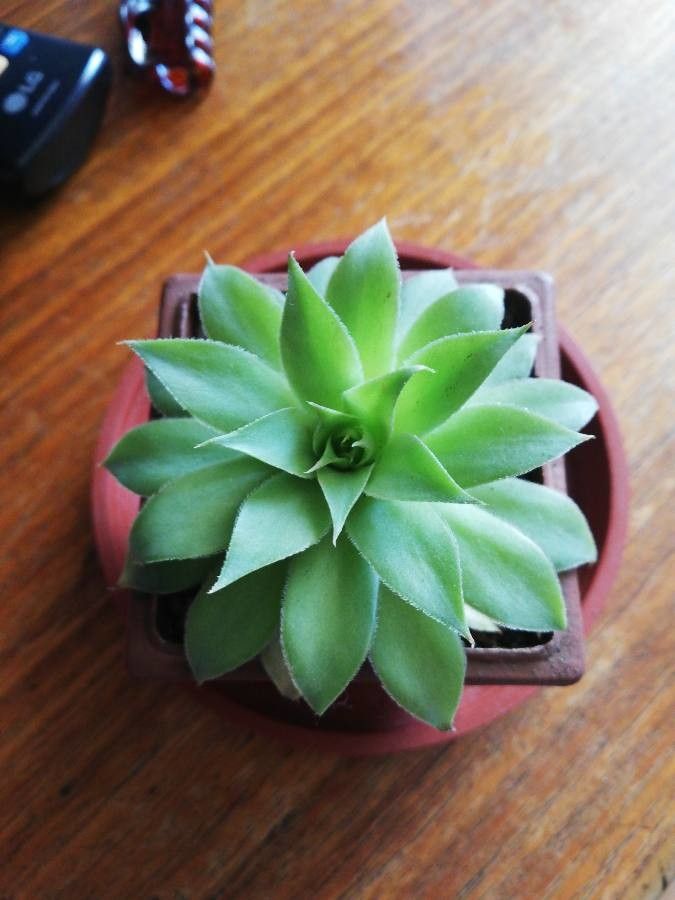
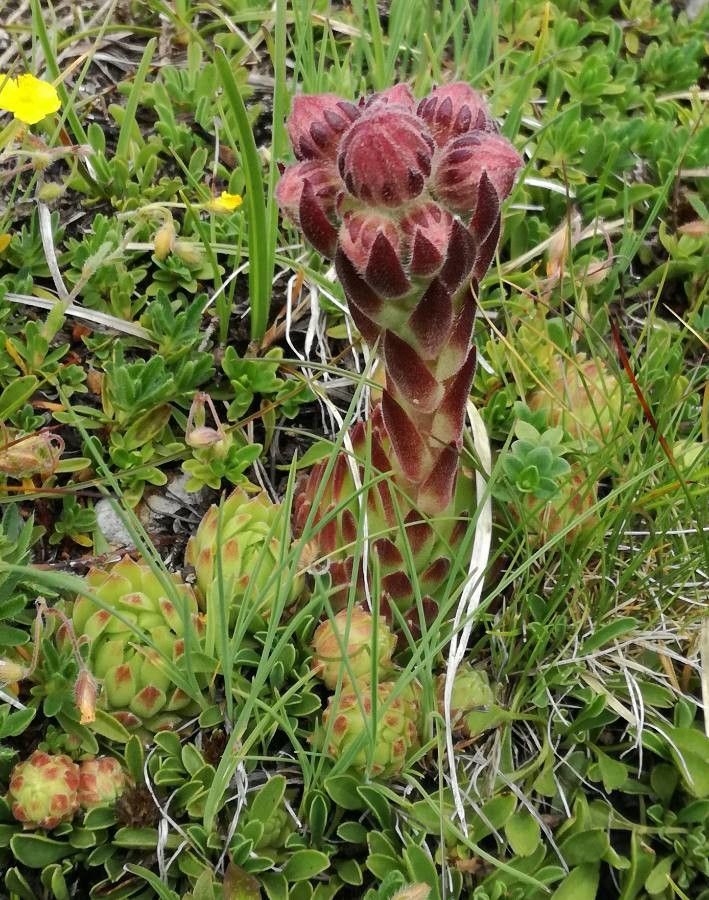
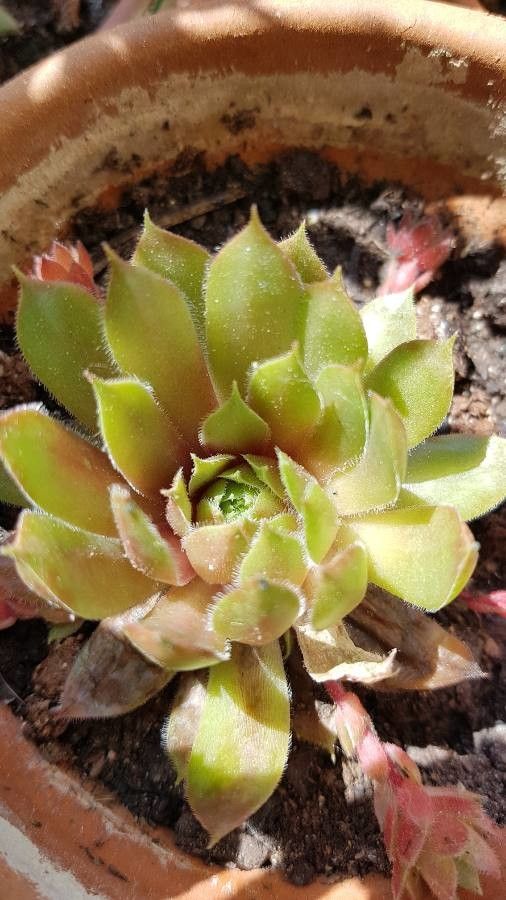
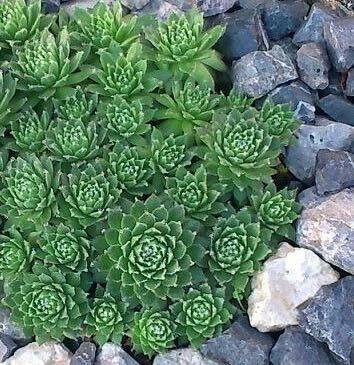
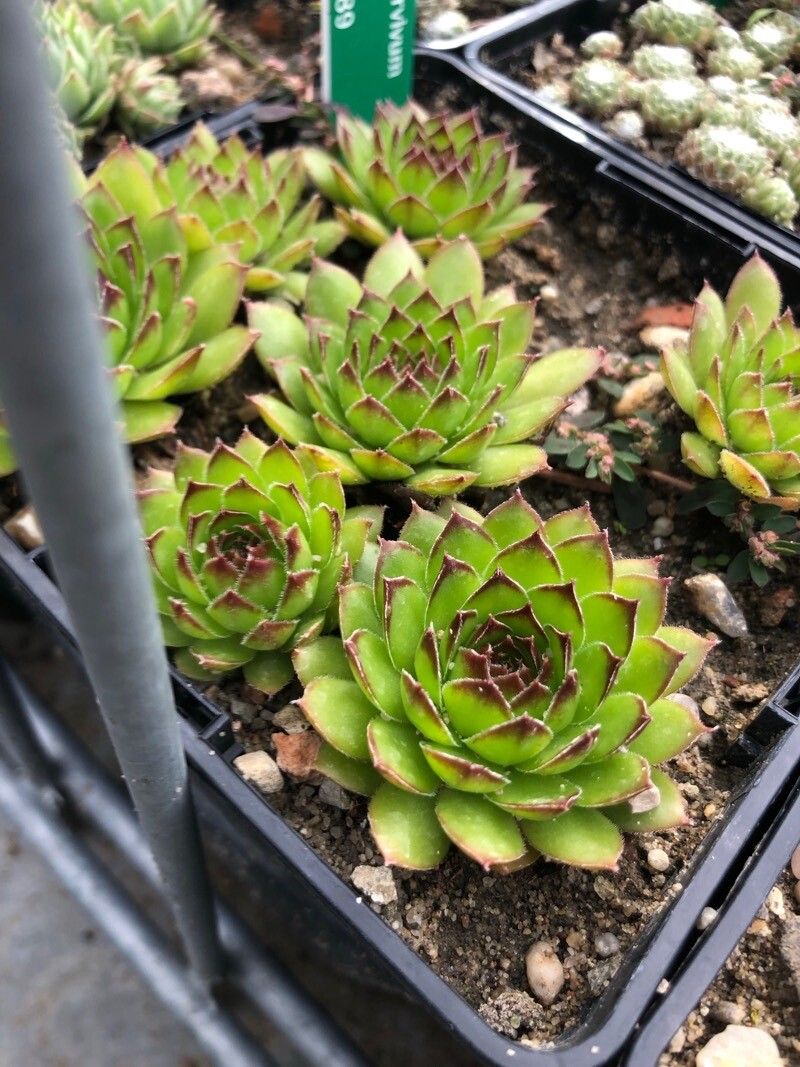
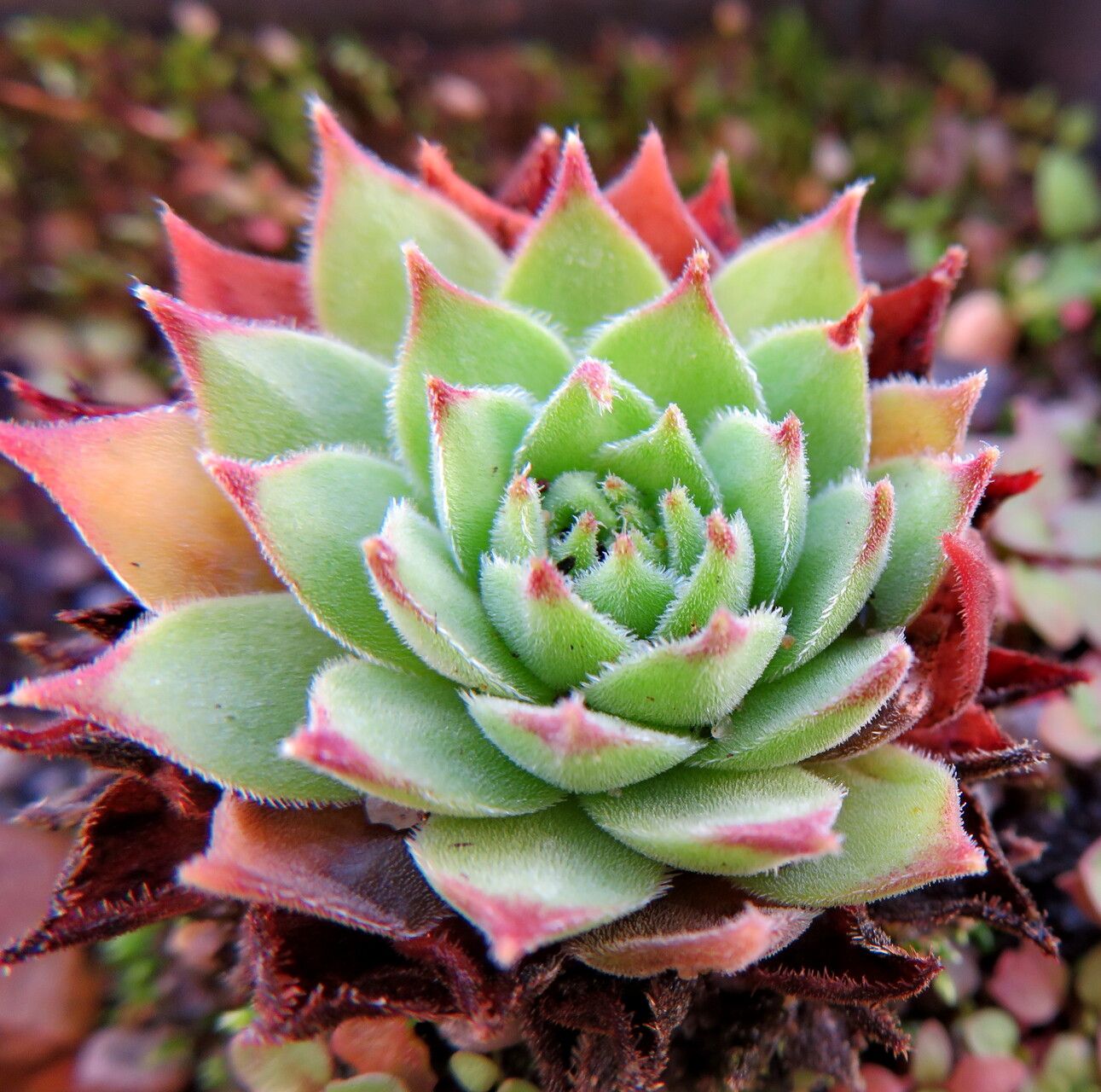
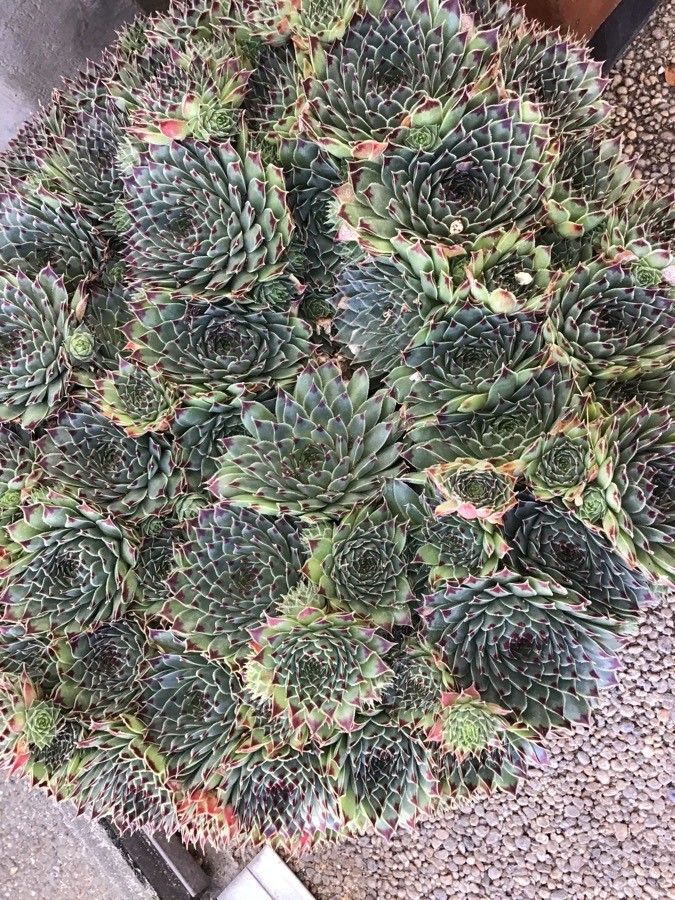
Sempervivum dolomiticum, commonly known as the Dolomite Houseleek, is a perennial succulent plant that belongs to the Crassulaceae family. It is native to the Dolomite Mountains in Italy and can also be found in other parts of Europe. The plant forms rosettes of fleshy leaves that are green with reddish tips and covered with fine hairs. These leaves are arranged in a spiral pattern and end in pointed tips. The rosettes can grow up to 10 cm in diameter. During the summer months, Sempervivum dolomiticum produces small pink or white flowers on tall stems, which attract bees and other pollinators. This plant is drought-tolerant and prefers well-draining soil with full sun exposure or partial shade. It can be grown both indoors and outdoors, making it an ideal choice for rock gardens, container gardens, or even hanging baskets. Sempervivum dolomiticum requires minimal care once established but should be protected from excessive moisture during the winter months when it becomes dormant. Overall, Sempervivum dolomiticum is an attractive succulent that adds beauty to any garden while requiring minimal maintenance, making it an excellent choice for both novice and experienced gardeners alike!
Dolomitic houseleek has moderate resistance to disease and is more sensitive to humidity. It becomes vulnerable to illness when humidity is high and is prone to root rot while dormant. Regarding care, Dolomitic houseleek tolerates drought but requires increased watering during the active growing season. Watering should be sharply reduced or stopped entirely during dormancy. Dolomitic houseleek is best for growers with some experience, since it can be challenging to maintain, especially during dormancy. It is particularly appropriate for those who can dedicate time to its care over the winter months.
How to keep Sempervivum Dolomiticum.
Light
Originating from arid areas, the Dolomitic houseleek performs best in full sun; its natural habitat features intense sunlight and very little shade. It can also tolerate partial sun, providing some flexibility in its growth.
Temperature
Although Dolomitic houseleek can tolerate some heat, it mainly thrives and grows in cooler seasons and becomes dormant during the summer. In very hot summer weather, shade should be provided to avoid scorching from intense sunlight. Watering should be cut back or stopped during the hottest period to prevent root rot. Dolomitic houseleek shows vigorous growth in winter and spring, and it will continue to grow steadily as long as temperatures do not fall too low.
Fertilizer
Dolomitic houseleek needs only light fertilizer applications once or twice a year during the growing season. Do not fertilize in winter or summer while it is dormant. Cut back on fertilizer for plants that have been repotted and wait a couple of months after repotting before applying fertilizer. Fertilizing promotes healthy growth and helps encourage blooms.
Pot & Repot
When repotting Dolomitic houseleek, pick a pot slightly larger than the current one that has good drainage. Use a gritty, well-draining succulent or cactus mix. Carefully lift the plant from its old pot, remove excess soil, and plant it at the same depth. Wait a few days before watering to allow any root damage to heal. Repot in spring or fall and place the plant in a brightly lit spot.
Botanical profile.
- Plant Type
- Succulent, Herb
- Life Cycle
- Perennial
- Genus
- Sempervivum
- Family
- Crassulaceae
- Hardiness Zone
- 4-9
- Mature Height
- 5 cm to 10 cm
- Mature Spread
- 8 cm to 15 cm
- Leaf Color
- Green, Light Green
- Leaf Type
- Evergreen
- Flower Color
- Pink
- Flower Size
- 1.02 cm to 2.03 cm
- Bloom Time
- Early summer, Mid summer
- Planting Time
- Spring, Summer
- Harvest Time
- Mid summer, Late summer
- Native Area
- Croatia, Italy
Other names.