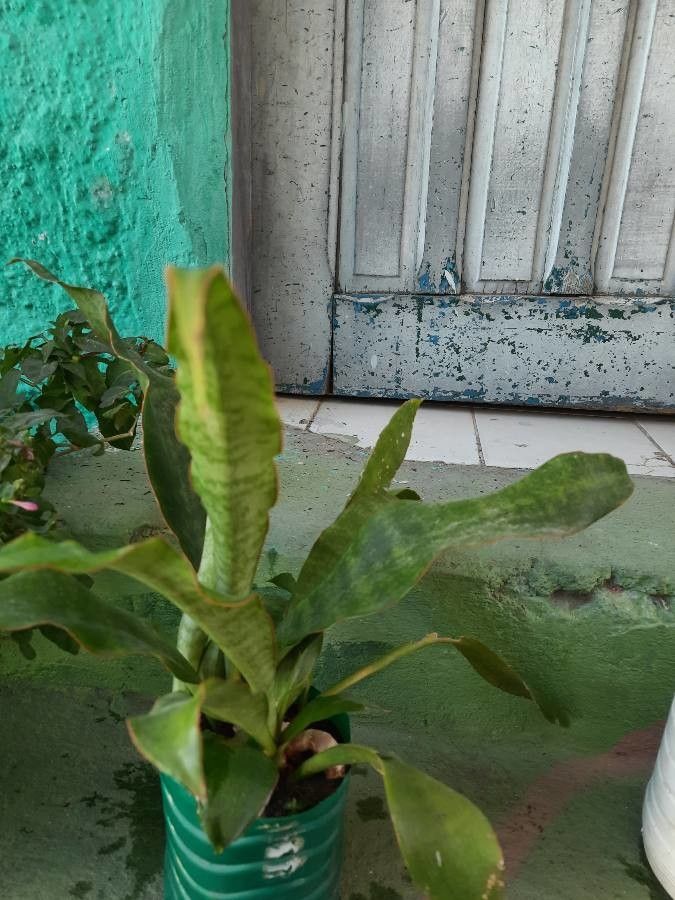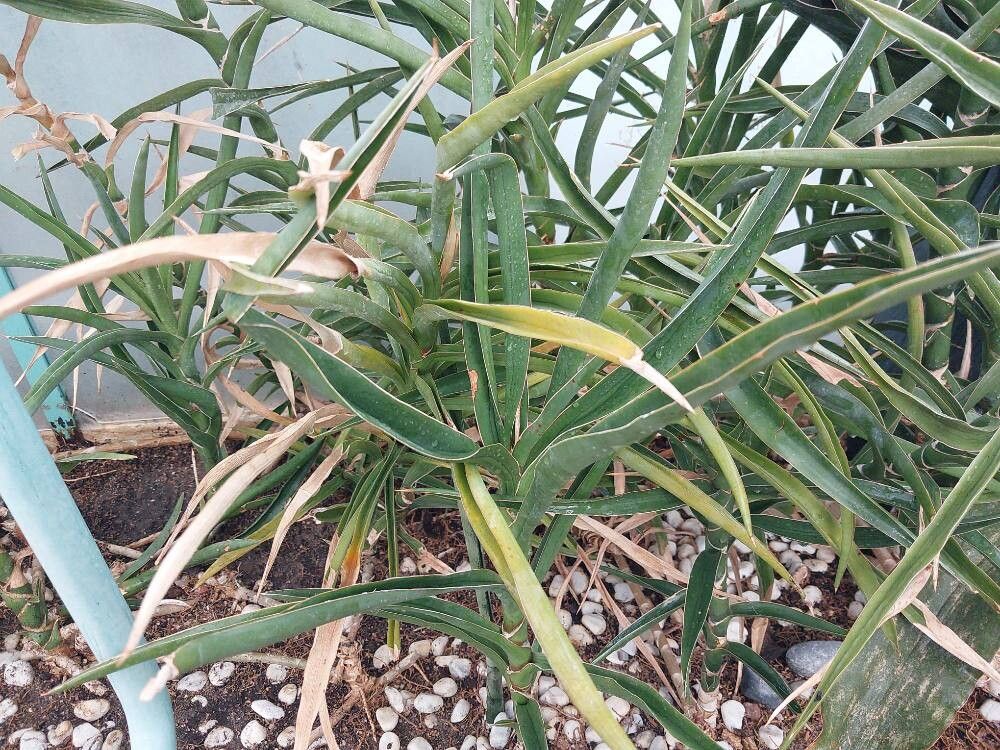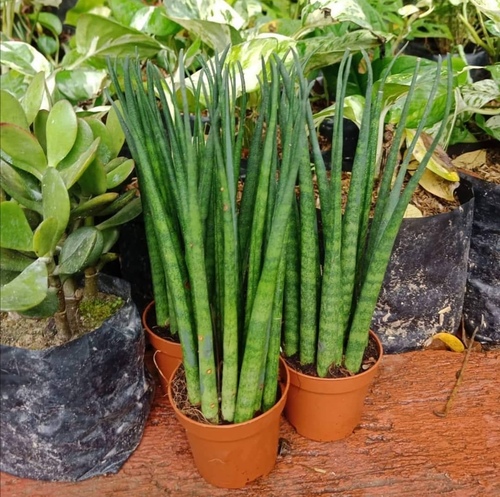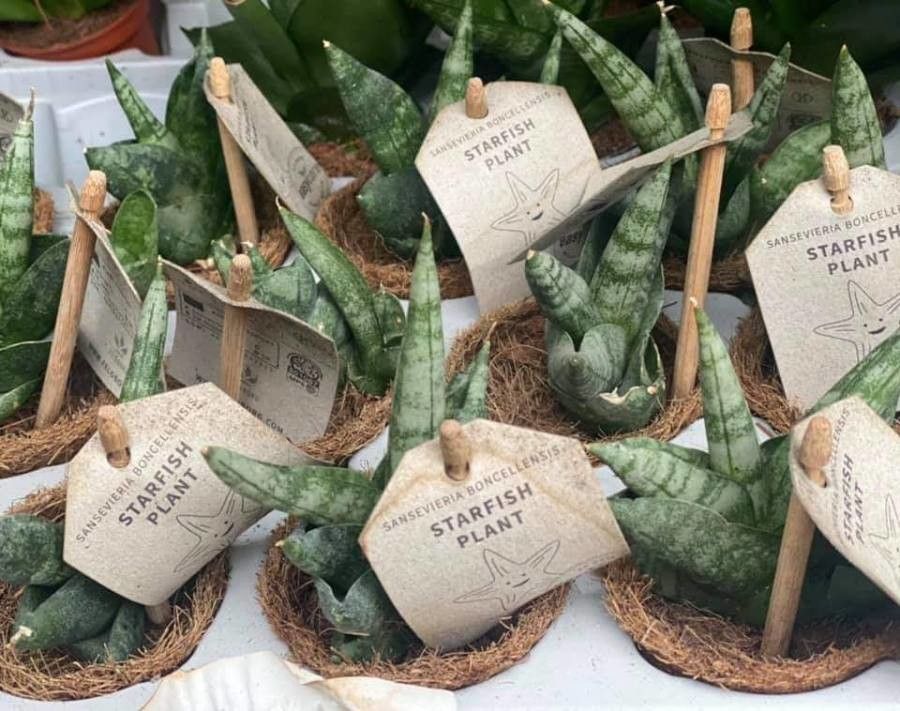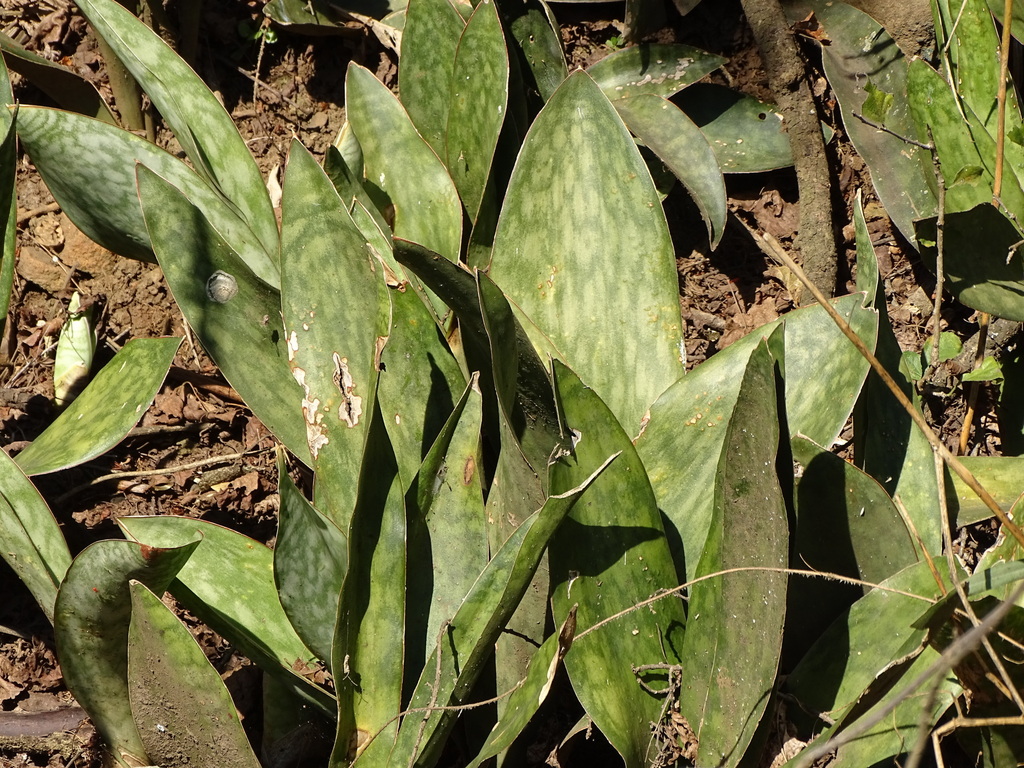
Sansevieria hyacinthoides is an evergreen, perennial herb, with its handsome robust, flat, dark green and fibrous leaves that attact game. Its rhizomes are sturdy, fibrous and bright orange. The leaves are erect, borne in pairs of 5–12 in loose clusters, arising from the ground, broadly lanceolate to ovate, dark green with paler markings, and margins red. The flowers are stalkless, white, cream-coloured or greenish white to pale mauve; borne in clusters, fairly scented, opening at night. Sansevieria hyacinthoides flowers in September to May. The fruit is an orange berry. ansevieria hyacinthoides occurs naturally in bushveld, among rocks in the shade of trees, in the Eastern Cape, KwaZulu-Natal, Mpumalanga, Swaziland, Limpopo Province, North-West, Botswana and Namibia.
Iguanatail has moderate disease resistance but is more sensitive to high humidity and overwatering. It becomes particularly prone to disease when it receives little light and is kept too wet. In terms of care, Iguanatail is drought-tolerant and can go long periods without water. It needs minimal fertilizer and only occasional pruning. This makes it appropriate for plant owners of any experience level, especially those who prefer to spend less time on plant care or who may be away from home for extended periods. It’s a good option for people who don’t want to invest a lot of time in maintenance yet still want an easy-to-care-for plant.
How to keep Sansevieria Hyacinthoides.
Light
Iguanatail is native to habitats with dappled light, such as the understory of forests or rocky areas that provide natural shade. It prefers partial sun but can also tolerate full sun.
Water
Iguanatail is a drought-tolerant succulent native to arid regions, known for its ability to store water. It requires minimal watering, approximately every two weeks, and thrives indoors where the temperature is stable. This reduces the risk of overwatering, which can lead to root rot.
Humidity
This plant prefers dry conditions, so don't mist it. However, watering it less often can also thrive in higher humidity.
Temperature
Iguanatail does best in warm conditions and needs higher temperatures during the growing season to support growth and metabolic processes. It prefers abundant sunlight, proper moisture levels, and good air circulation. However, it can be harmed by excessively low temperatures and by overwatering. It is therefore important to maintain a balance and to avoid both excessively high temperatures and very dry conditions.
Fertilizer
For Iguanatail, apply light doses of fertilizer one to two times a year during the growing season. Avoid fertilizing in winter and summer when the plant is dormant. Reduce fertilizer for repotted plants and wait a couple of months after repotting before fertilizing. Fertilizing promotes healthy growth and encourages blooms.
Pruning
The iguana tail plant grows quickly. To maintain its aesthetic appeal and make room for new growth, promptly prune any yellow or dry leaves.
Pot & Repot
When repotting Iguanatail, choose a pot slightly larger than the current one that has good drainage. Use a gritty, well-draining cactus or succulent mix. Gently remove the plant from its old pot, brush off extra soil, and place it at the same depth in the new pot. Wait a few days before watering to let any root damage heal. Repot in spring or fall, and situate the plant in a brightly lit spot.
Toxicity
All parts of Sansevieria hyacinthoides are toxic, due to the presence of chemicals called saponins. Saponins can cause gastrointestinal discomfort as well as nausea, vomiting, and diarrhea in humans and pets, although the symptoms are much milder for humans.
Further reading →
The toxicity and danger assessments provided are for reference only. We do not assure their accuracy, so it's crucial not to depend on them. Seek professional advice when necessary for accurate guidance.
Botanical profile.
- Plant Type
- Succulent
- Life Cycle
- Perennial
- Genus
- Sansevieria
- Family
- Asparagaceae
- Hardiness Zone
- 10-12
- Mature Height
- 61 cm to 91 cm
- Mature Spread
- 61 cm to 91 cm
- Leaf Color
- Dark Green, Forest Green
- Leaf Type
- Evergreen
- Flower Color
- White
- Flower Size
- 1.02 cm to 2.03 cm
- Bloom Time
- Summer
- Planting Time
- Spring, Summer, Autumn
- Harvest Time
- Late summer, Early fall, Mid fall
- Native Area
- Malawi, Mozambique, South Africa, Zambia, Namibia, Kenya, Tanzania, Zimbabwe
Other names.
Reader questions.
What are the sunlight requirements for Iguanatail?
Iguanatail (Sansevieria hyacinthoides) thrives in conditions where it can receive various amounts of sunlight. For full sun exposure, it needs above 6 hours of sunlight, which is ideal for its growth and health. If it's placed in an area with partial sun, it should receive about 3-6 hours of sunlight. It's important to observe how sunlight moves through your garden, aiming to find locations that offer a harmonious balance of light and shade to ensure the plants remain happy and healthy.
What is the common name of Sansevieria hyacinthoides?
The common name for Sansevieria hyacinthoides is Iguanatail.