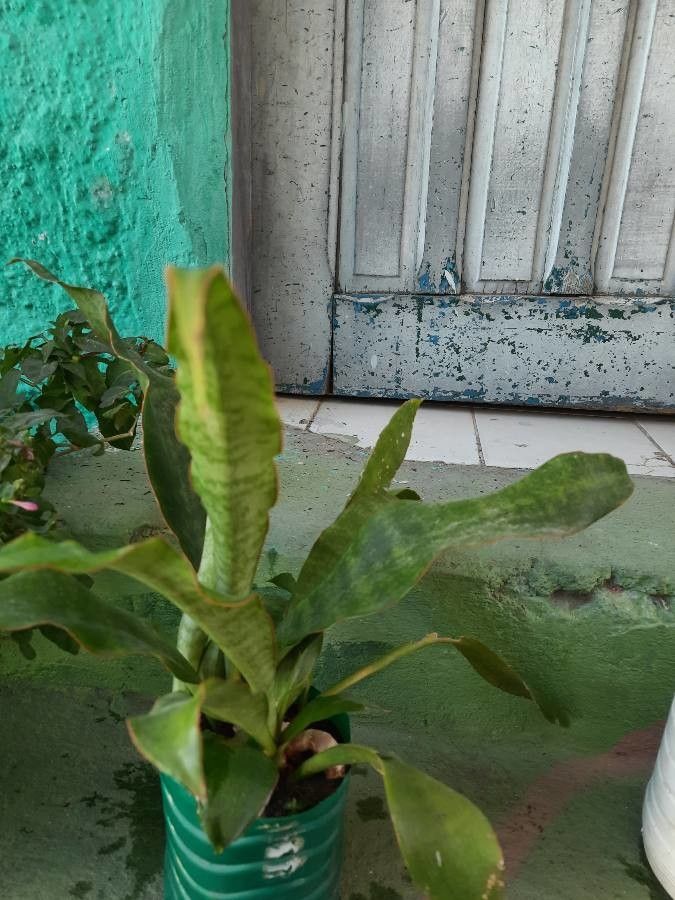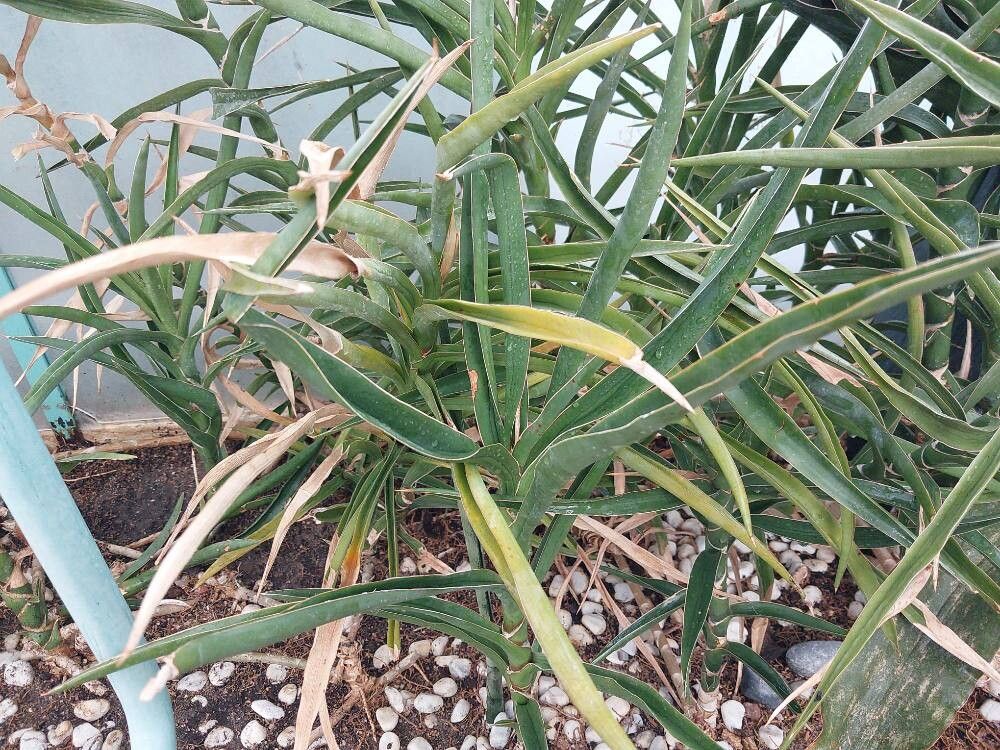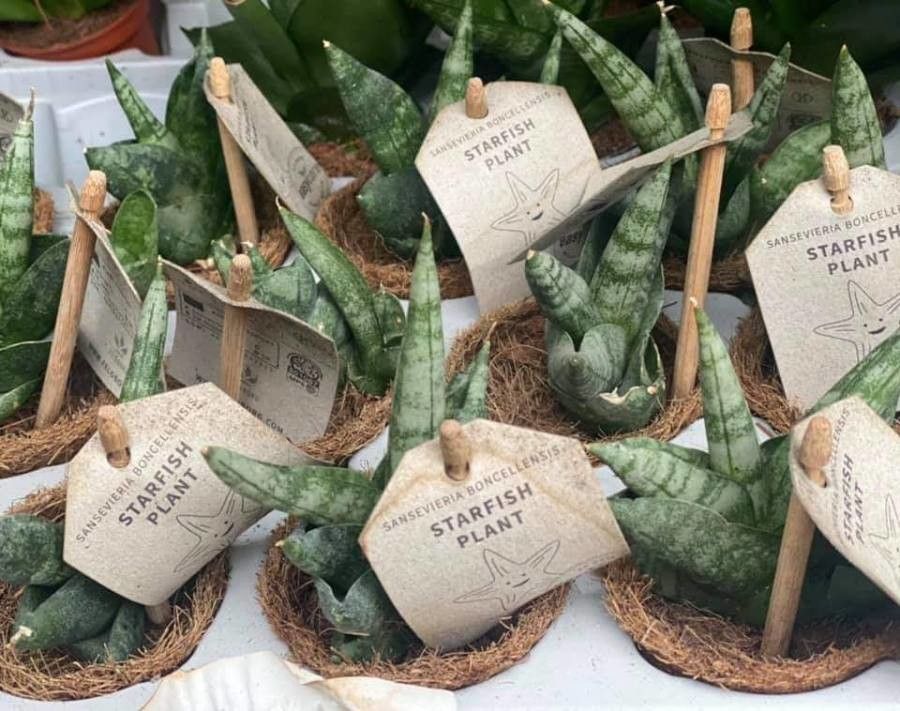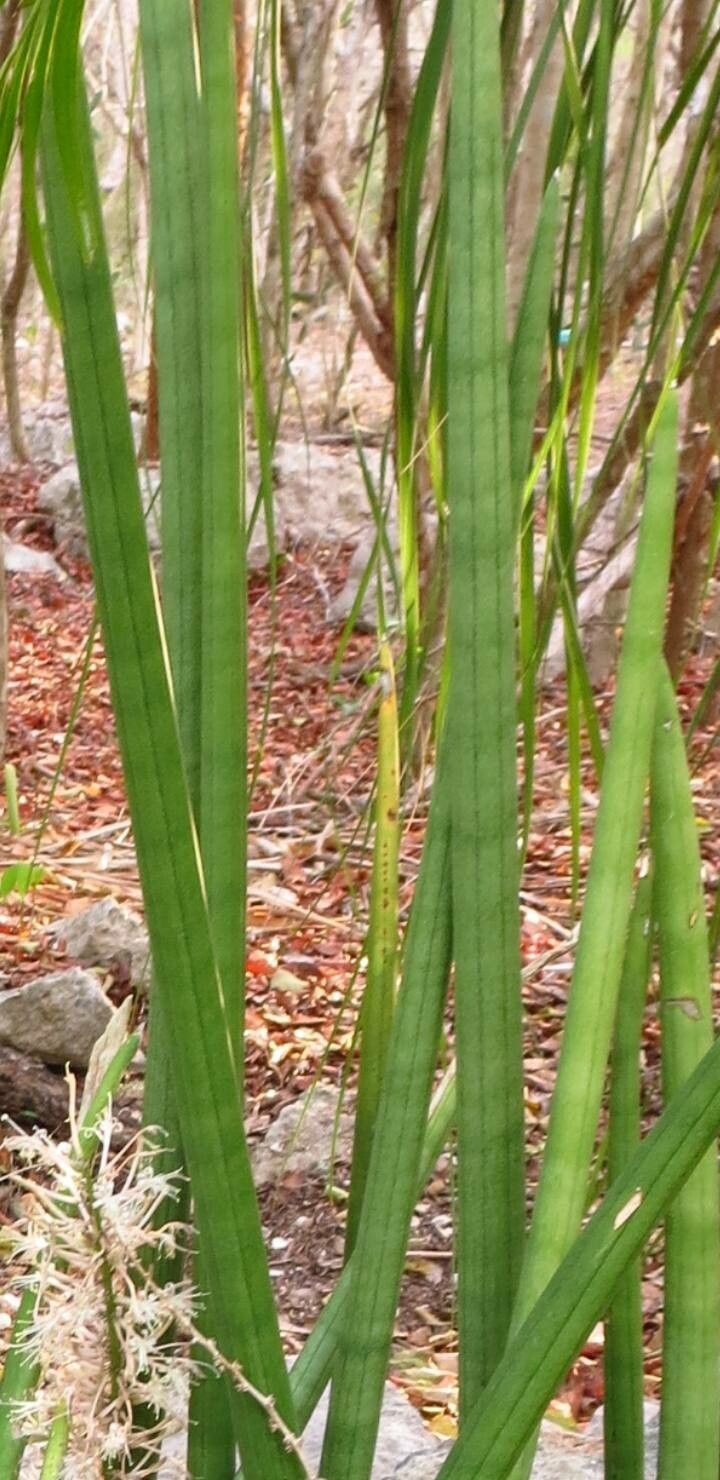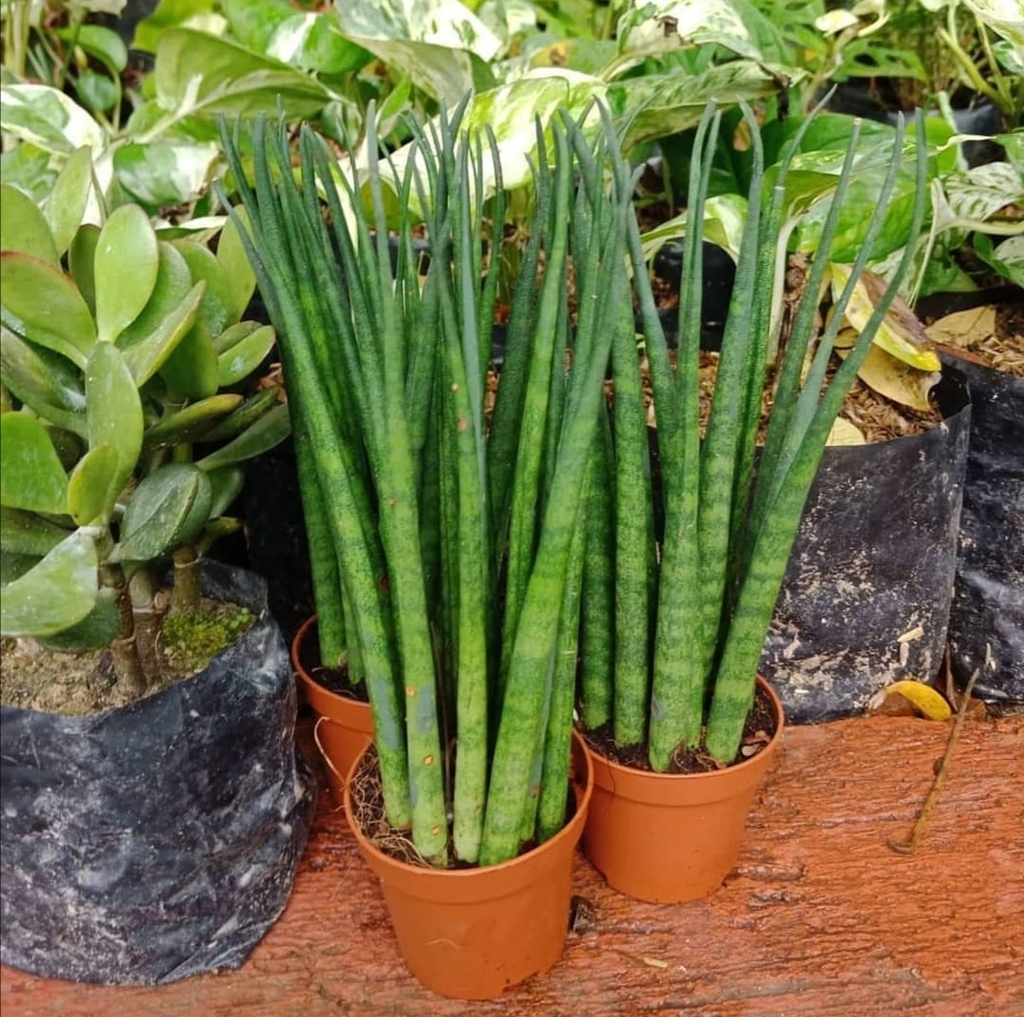
Sansevieria bacularis, also known as the cylindrical snake plant, is a flowering species from the family Asparagaceae. Native to tropical West Africa, this versatile plant can reach heights of up to 3 feet. Its long, cylindrical leaves exhibit a green-grey hue with pointed tips, growing in a rosette pattern from an underground rhizome.
This houseplant is notably easy to care for, thriving in low-light conditions and requiring minimal watering. Additionally, Sansevieria bacularis is known for its air-purifying properties, making it an excellent choice for enhancing indoor air quality.
In its natural habitat, Sansevieria bacularis produces small white flowers on long stalks during the summer months. However, it rarely blooms indoors as a houseplant.
Overall, Sansevieria bacularis is an attractive, low-maintenance plant that beautifies any indoor space while offering the added benefit of purifying the air.
Sansevieria bacularis 'Mikado' has moderate disease resistance but is relatively sensitive to humidity and overwatering. It becomes more prone to disease if it is kept in low light and overwatered. Regarding care, Sansevieria bacularis 'Mikado' is drought-tolerant and can endure long intervals without watering. It needs little fertilizer and only occasional pruning. These characteristics make it suitable for people at any experience level, especially those who prefer to spend less time on plant care and who may occasionally be away from home for extended periods. It is a good option for anyone who does not want to devote much time to maintenance but still wants an easy-to-care-for plant.
How to keep Sansevieria Bacularis.
Light
Sansevieria bacularis 'Mikado' comes from habitats with dappled light, such as forest understories or rocky locations that provide natural shade. It prefers partial sun but can also tolerate full sun.
Water
The Sansevieria bacularis 'Mikado' is native to arid regions and is known for its high drought tolerance, as it can store water efficiently. To avoid overwatering, it should be watered once a week. Commonly grown indoors for its air-purifying qualities, this plant thrives in well-draining soil, which helps prevent root rot.
Humidity
This plant prefers dry conditions, so don't mist it. However, watering it less often can also thrive in higher humidity.
Temperature
Sansevieria bacularis 'Mikado' grows best in warm conditions and needs higher temperatures during the growing season to support growth and metabolic activity. It prefers abundant sunlight, proper moisture levels, and good air circulation. Nonetheless, it can be damaged by very low temperatures and by overwatering. It's also important to maintain balance and avoid excessively high temperatures or overly dry conditions.
Fertilizer
For Sansevieria bacularis 'Mikado', light applications of fertilizer once or twice a year during the growing season are adequate. Do not fertilize in winter or during summer dormancy. Reduce feeding for recently repotted plants and wait a couple of months after repotting before applying fertilizer. Fertilizing helps maintain healthy growth and can encourage flowering.
Pruning
Sansevieria bacularis 'Mikado' features tall, cylindrical leaves and is very low-maintenance. To keep it healthy, prune in early spring to remove any damaged leaves. Make sure to use clean tools for precise cuts. Be careful not to over-prune, as the plant stores water in its leaves. With the right amount of watering and sunlight, you can ensure optimal growth.
Pot & Repot
When you repot Sansevieria bacularis 'Mikado', pick a pot a bit larger than the current one that has good drainage. Use a gritty, well-draining succulent or cactus mix. Gently remove the plant from its old pot, brush off excess soil, and replant it at the same depth. Wait several days before watering so any root damage can heal. Repot in spring or fall and place it in a brightly lit spot.
Toxicity
Snake plant is moderately toxic to people, dogs, and cats. If they ingest the plant, humans may suffer short-term symptoms including mouth pain, salivation, and some nausea. In rare instances, it can produce a dermatological reaction but is mainly toxic only if ingested. In cats and dogs, ingestion can cause excessive salivation, pain, nausea, vomiting, and diarrhea.
Further reading →
The toxicity and danger assessments provided are for reference only. We do not assure their accuracy, so it's crucial not to depend on them. Seek professional advice when necessary for accurate guidance.
Botanical profile.
- Plant Type
- Succulent
- Life Cycle
- Perennial
- Genus
- Sansevieria
- Family
- Asparagaceae
- Hardiness Zone
- 10-12
- Mature Height
- 1.83 m
- Mature Spread
- 49 cm
- Leaf Color
- Green
- Leaf Type
- Evergreen
- Flower Color
- White
- Flower Size
- 1.02 cm to 2.03 cm
- Bloom Time
- Summer
- Planting Time
- Spring, Summer, Autumn
- Harvest Time
- Late summer, Early fall, Mid fall
- Native Area
- Tropical West Africa