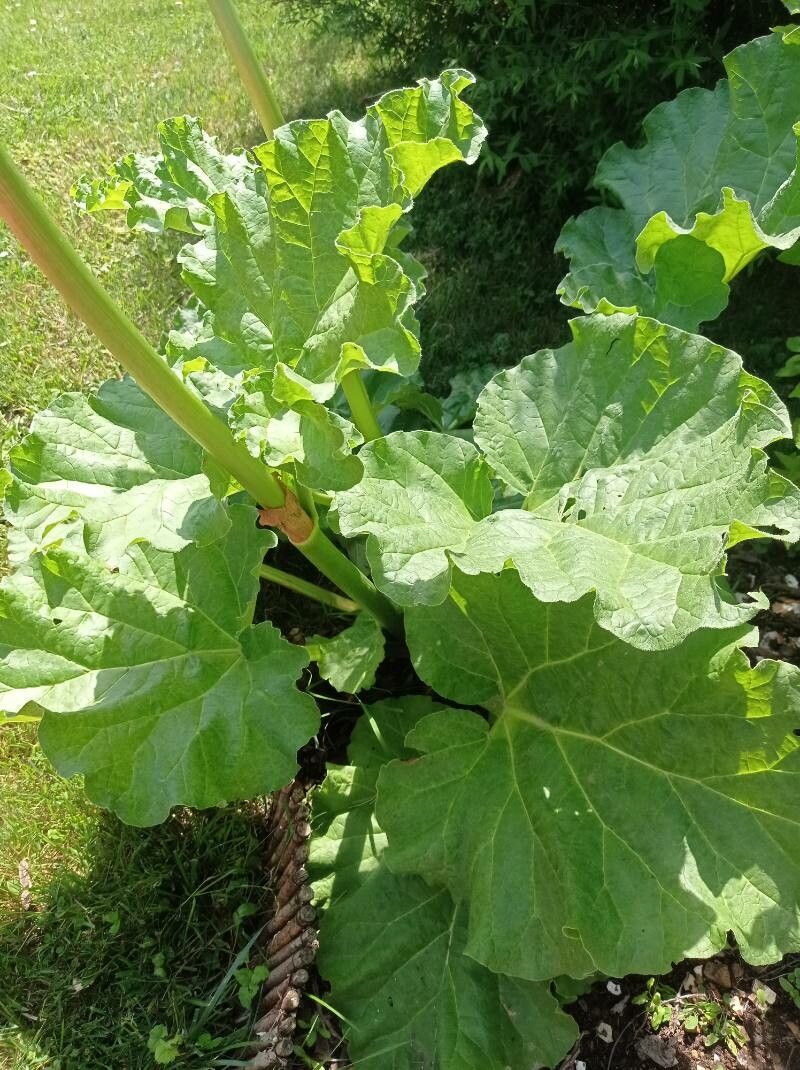
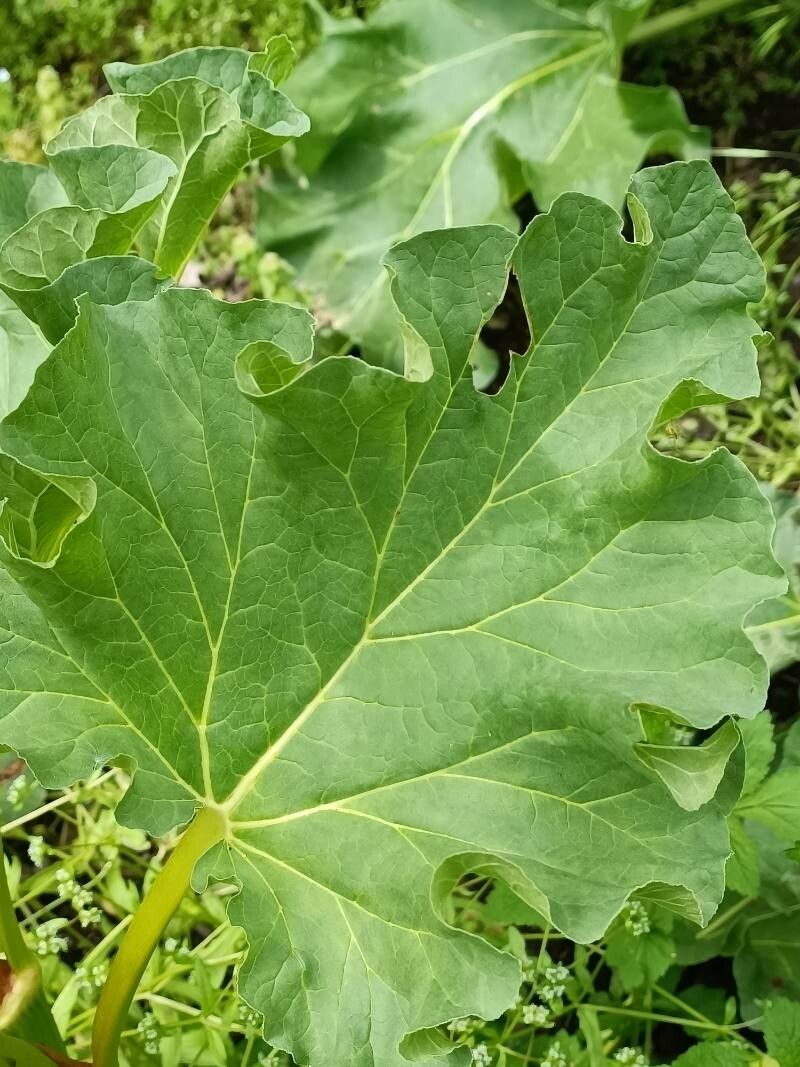
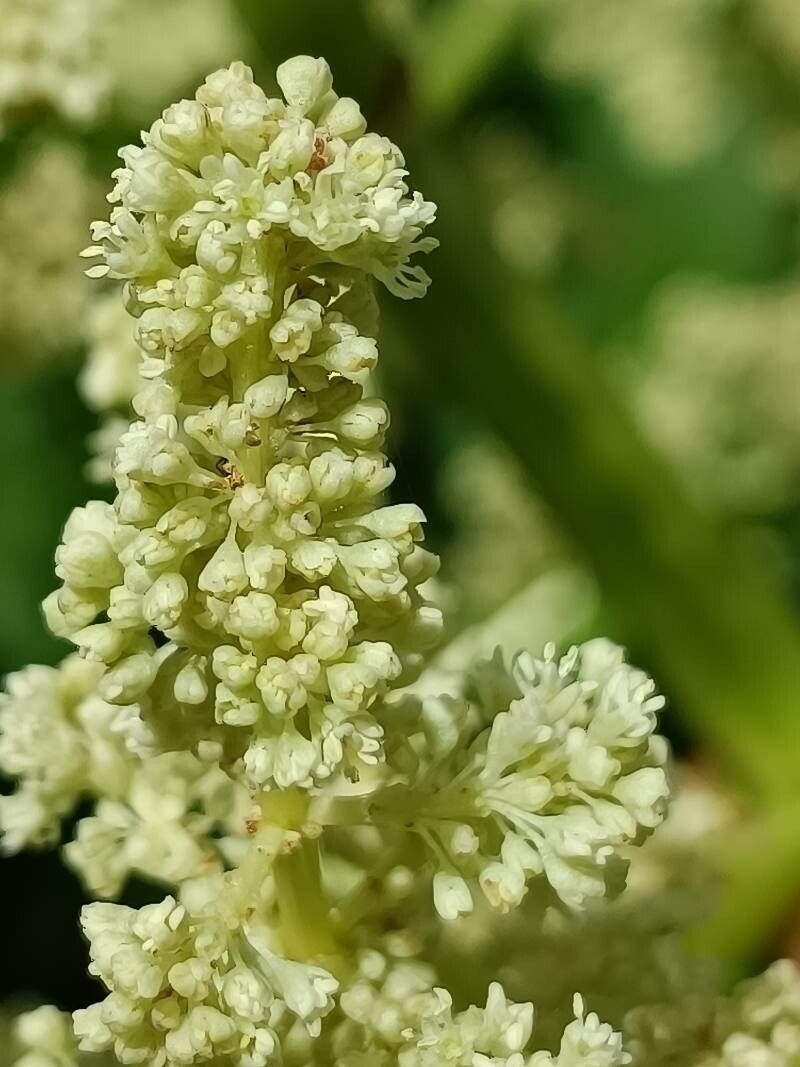
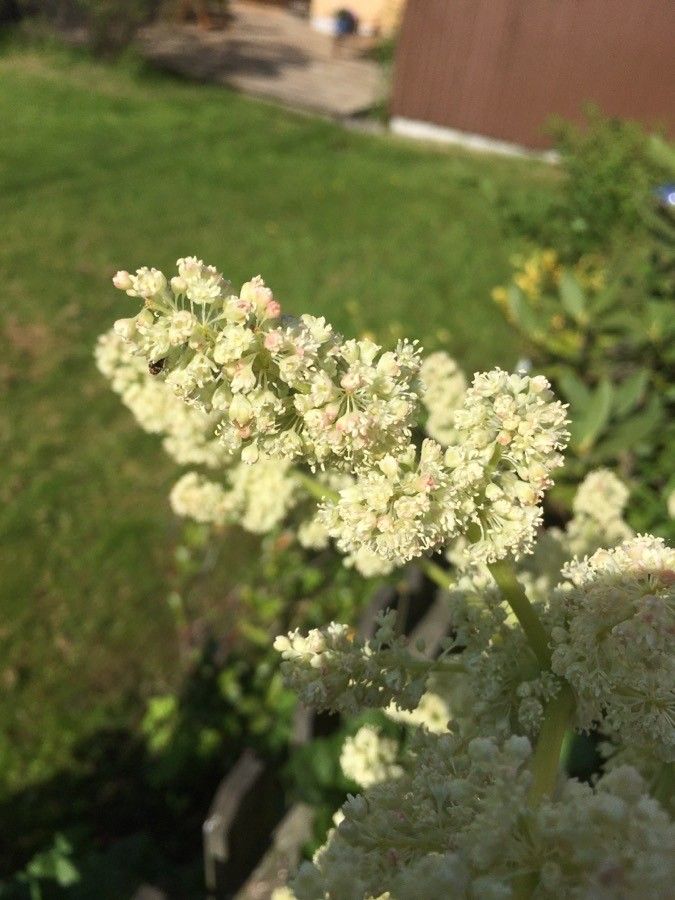
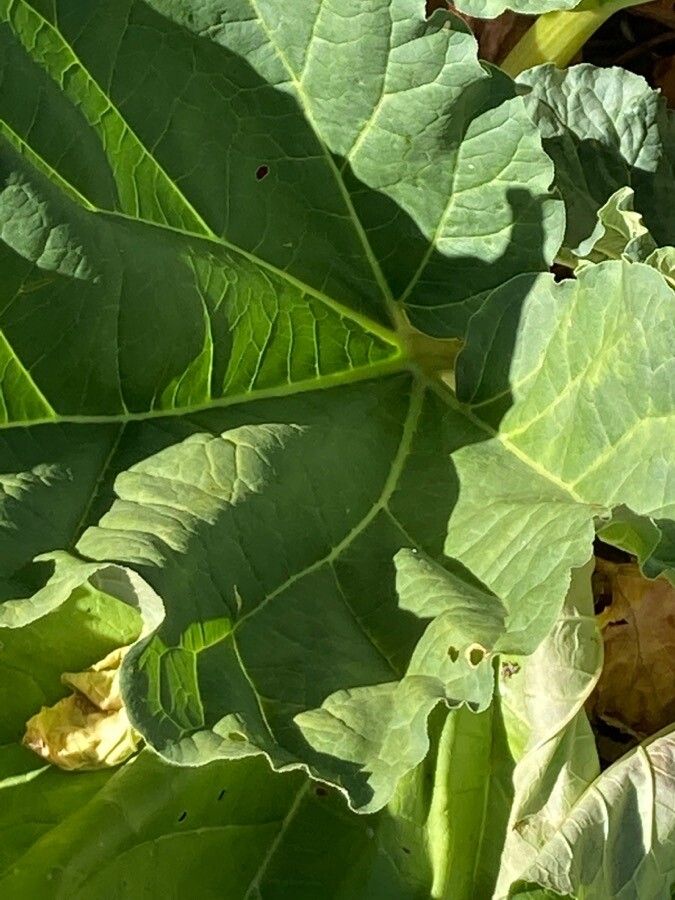
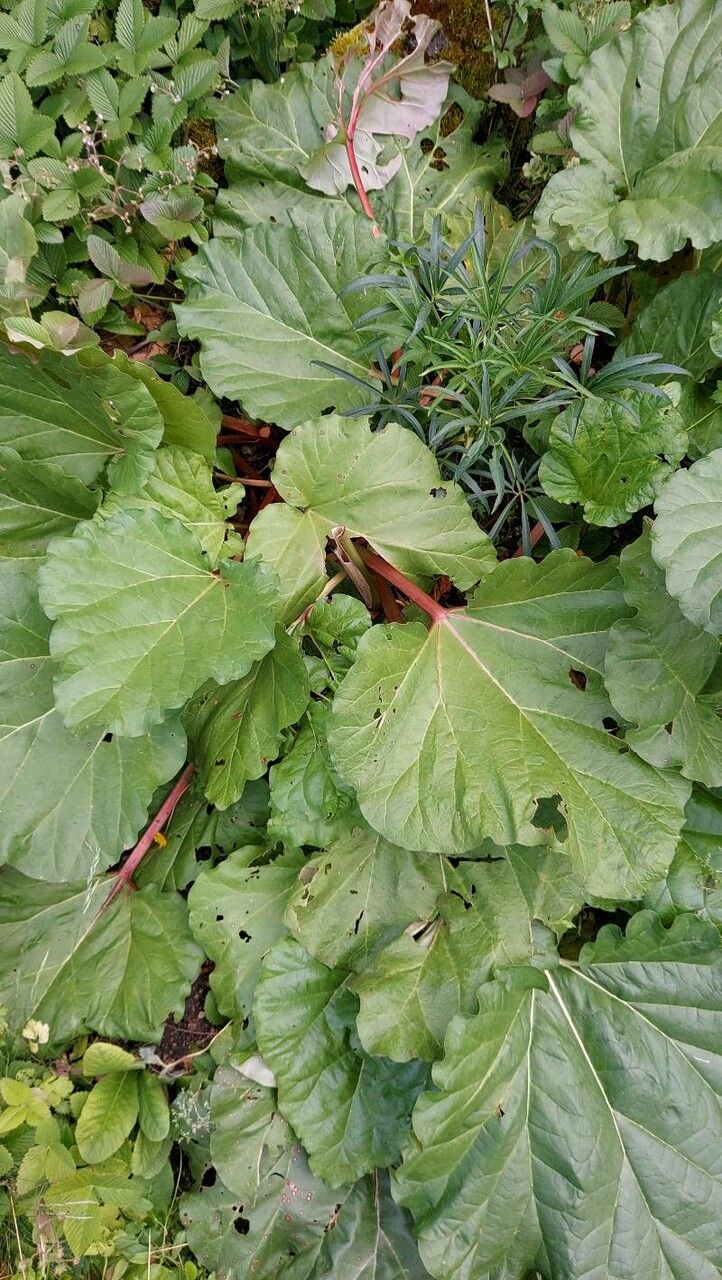
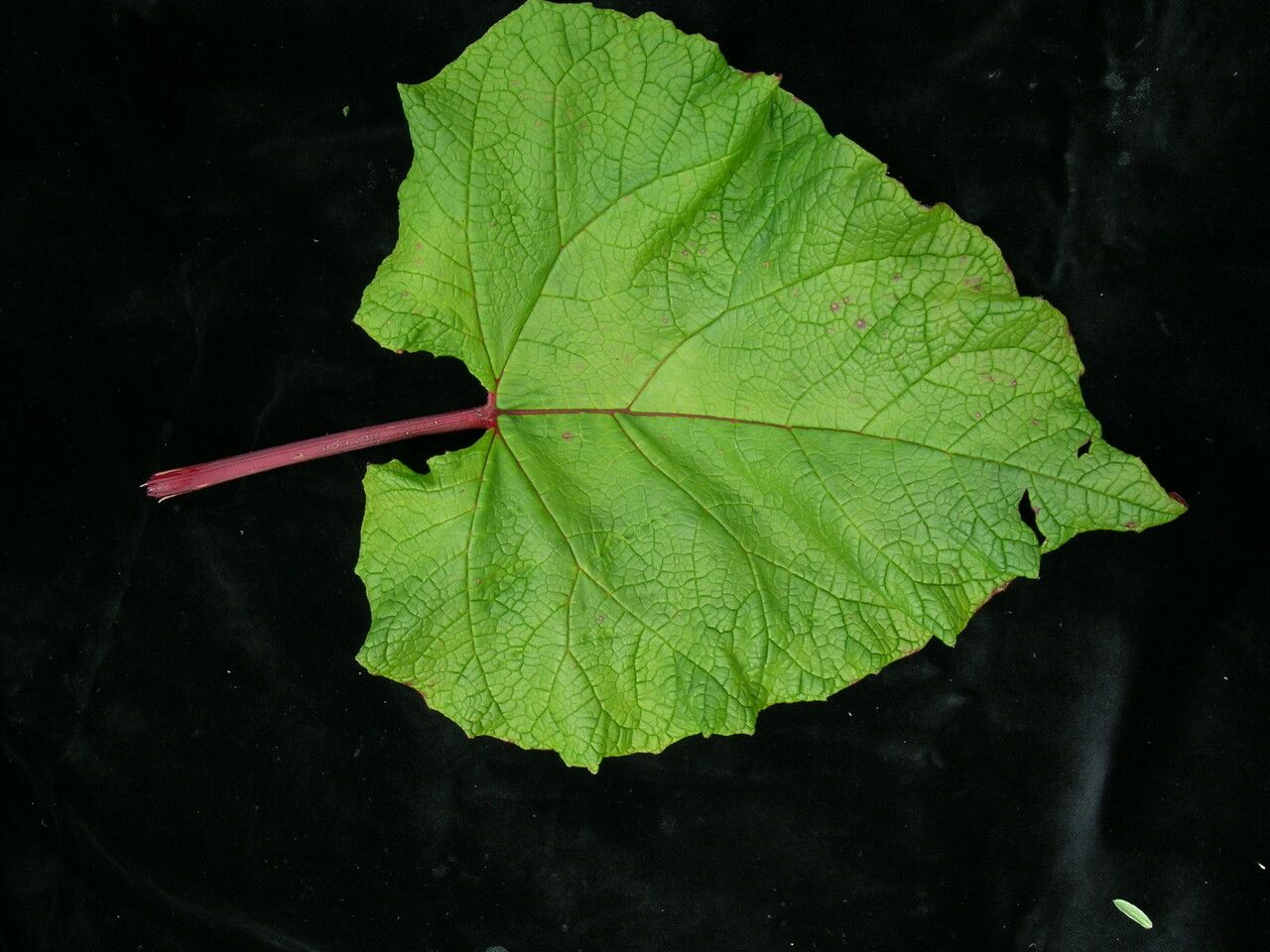
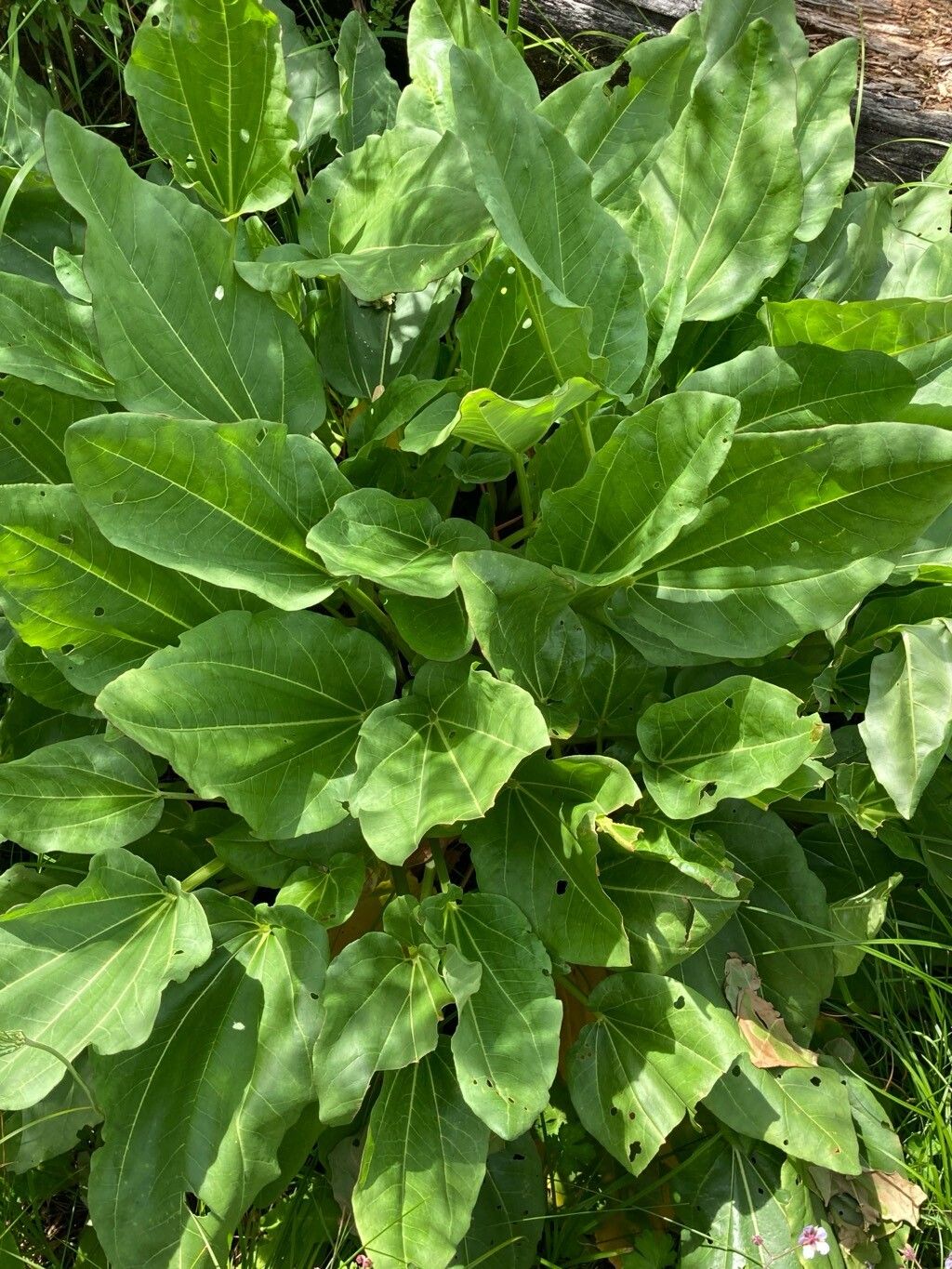
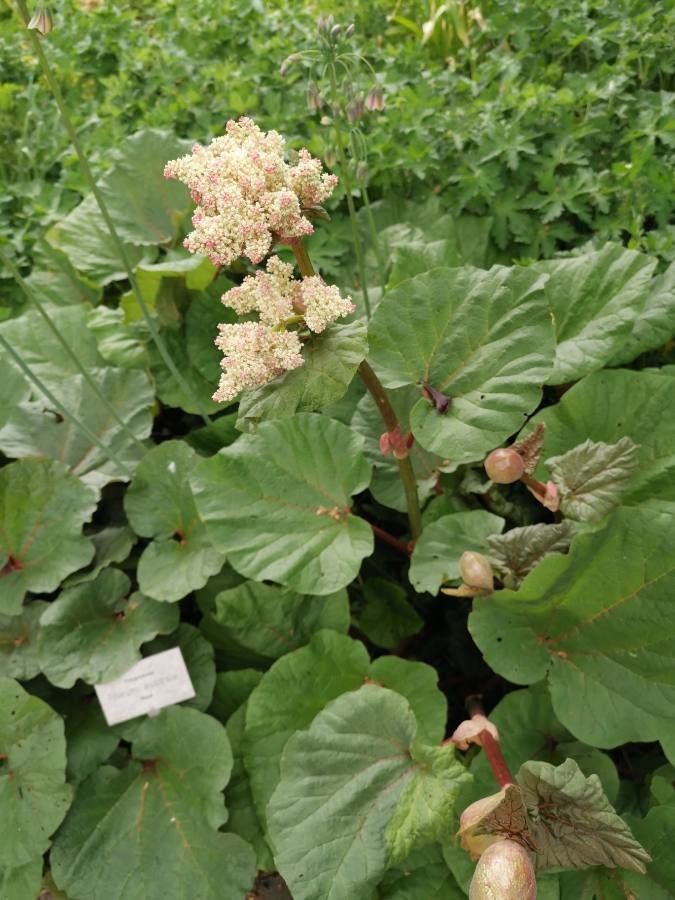
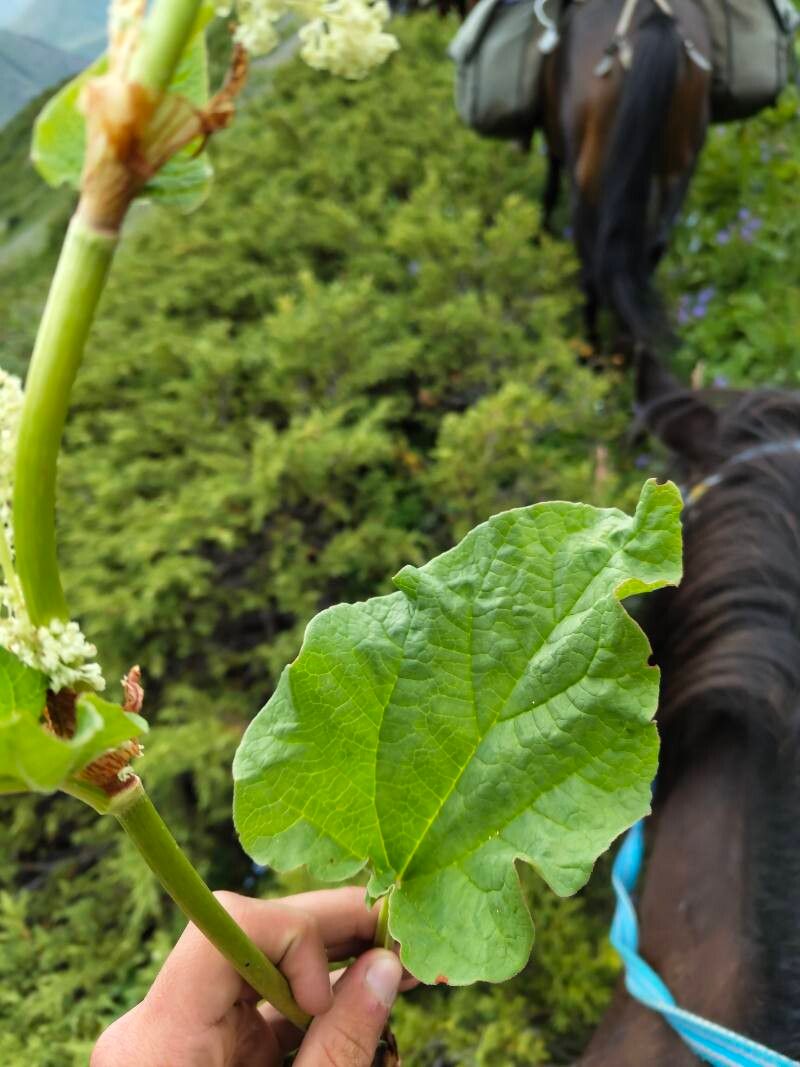
Rhubarb is the fleshy, edible stalks (petioles) of species and hybrids (culinary rhubarb) of Rheum in the family Polygonaceae, which are cooked and used for food. The whole plant – a herbaceous perennial growing from short, thick rhizomes – is also called rhubarb. Historically, different plants have been called "rhubarb" in English. The large, triangular leaves contain high levels of oxalic acid and anthrone glycosides, making them inedible. The small flowers are grouped in large compound leafy greenish-white to rose-red inflorescences. The precise origin of culinary rhubarb is unknown. The species Rheum rhabarbarum (syn. R. undulatum) and R. rhaponticum were grown in Europe before the 18th century and used for medicinal purposes. By the early 18th century, these two species and a possible hybrid of unknown origin, R. × hybridum, were grown as vegetable crops in England and Scandinavia. They readily hybridize, and culinary rhubarb was developed by selecting open-pollinated seed, so its precise origin is almost impossible to determine. In appearance, samples of culinary rhubarb vary on a continuum between R. rhaponticum and R. rhabarbarum. However, modern rhubarb cultivars are tetraploids with 2n = 44, in contrast to 2n = 22 for the wild species.Although rhubarb is a vegetable, it is often put to the same culinary uses as fruits. The leaf stalks can be used raw, when they have a crisp texture (similar to celery, although it is in a different family), but are most commonly cooked with sugar and used in pies, crumbles and other desserts. They have a strong, tart taste. Many cultivars have been developed for human consumption, most of which are recognised as Rheum × hybridum by the Royal Horticultural Society.
Rhubarb has moderate resistance to disease but can be vulnerable to problems like leaf spot. Its vulnerability to insect pests varies by variety, though most varieties are not very resistant to pests. Regarding care, Rhubarb requires regular watering and fertilization, along with routine removal of yellow leaves. It is important to manage pests and diseases when they appear and to harvest the plant promptly. Rhubarb is suitable for people who can spare some time and energy for regular maintenance.
How to keep Rheum Ux Hybridum.
Light
Rhubarb comes from areas with plenty of sunlight, for example open fields and sunny meadows. It favors full sun but can also withstand partial sun.
Water
Rhubarb thrives in moist conditions, much like its natural habitat, and needs weekly watering for optimal growth. Being a deciduous plant, rhubarb sheds its leaves during dry seasons to conserve water—a remarkable adaptation to its environment.
Temperature
For Rhubarb, moderate temperatures are best, similar to what people generally find comfortable. It does well in conditions that are neither overly hot nor excessively cold. The main concern with high temperatures is the risk of sunburn, so providing some shade in summer is recommended to prevent excessive heat. When temperatures fall, Rhubarb becomes dormant. If you want it to grow continuously, you need to keep winter temperatures higher. Frost can damage the plant and should be avoided.
Fertilizer
To maximize the yield and flavor of rhubarb, provide adequate nitrogen throughout the entire growth period, including before planting and up to harvest. Plants that are well watered and properly fertilized produce plentiful, healthy leaves and reduce bitterness. Enrich the soil with organic matter such as compost or manure prior to planting, preferably 2 to 8 weeks beforehand.
Pruning
To help rhubarb thrive, it's important to carefully prune it. This involves removing dead leaves and cutting back flower stalks from early to late spring. Pruning directs energy toward the stalks, enhances growth, improves air circulation, lowers the risk of disease, and promotes healthier plants with better yields.
Botanical profile.
- Plant Type
- Herb
- Life Cycle
- Perennial
- Genus
- Rheum
- Family
- Polygonaceae
- Hardiness Zone
- 5-9
- Mature Height
- 0.91 m to 1.52 m
- Mature Spread
- 0.91 m to 1.52 m
- Leaf Color
- Green, Dark Green
- Leaf Type
- Deciduous
- Flower Color
- White
- Flower Size
- 0.25 cm to 0.51 cm
- Bloom Time
- Mid spring, Late spring
- Planting Time
- Spring, Autumn
- Harvest Time
- Early summer, Mid summer
Other names.