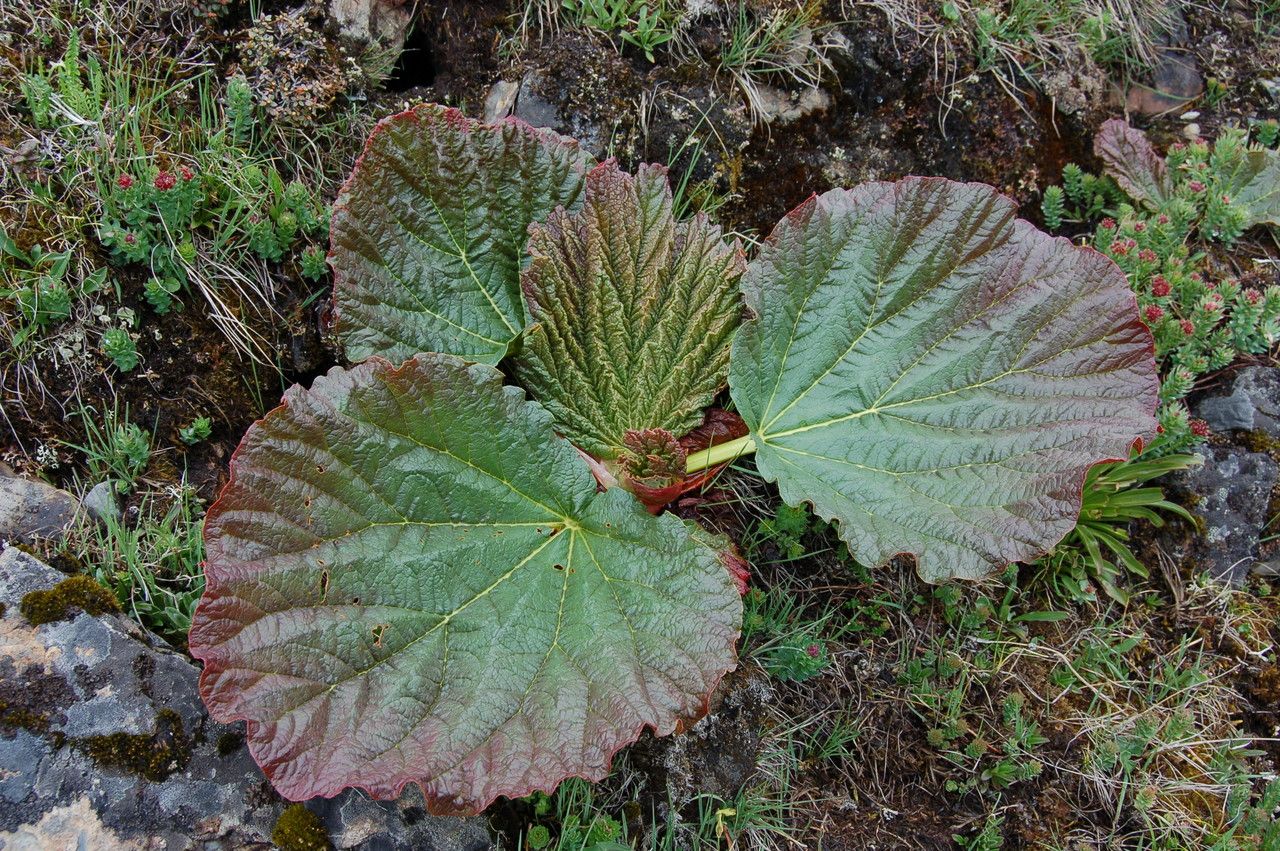
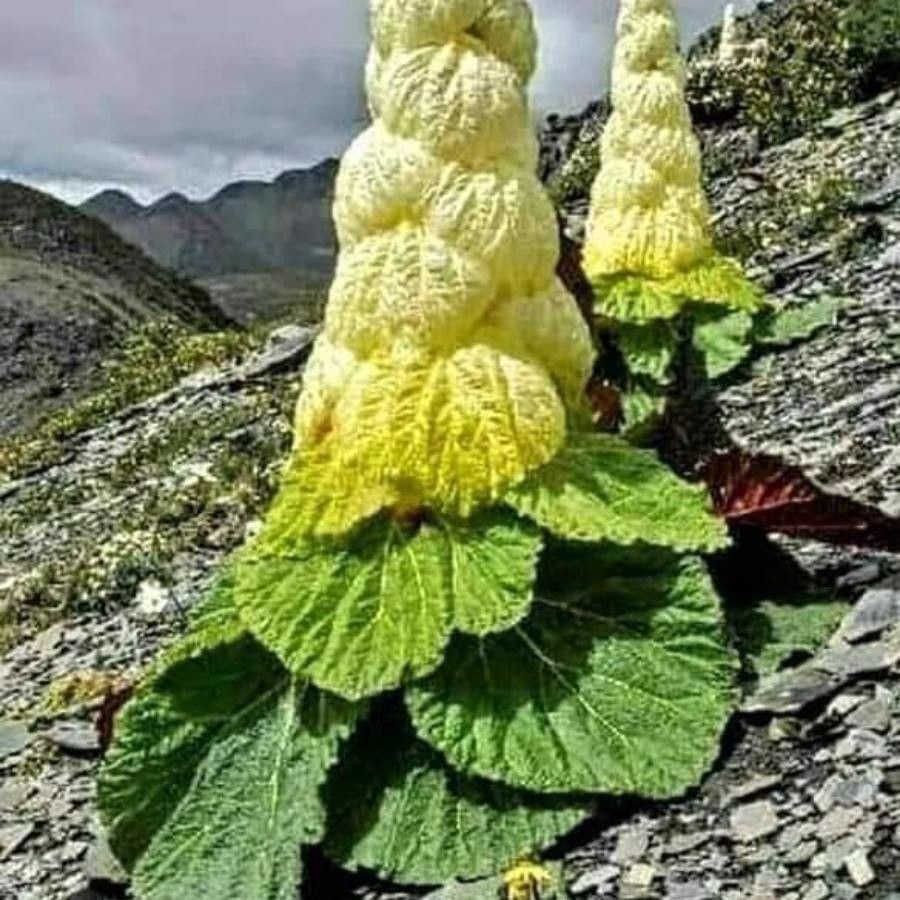
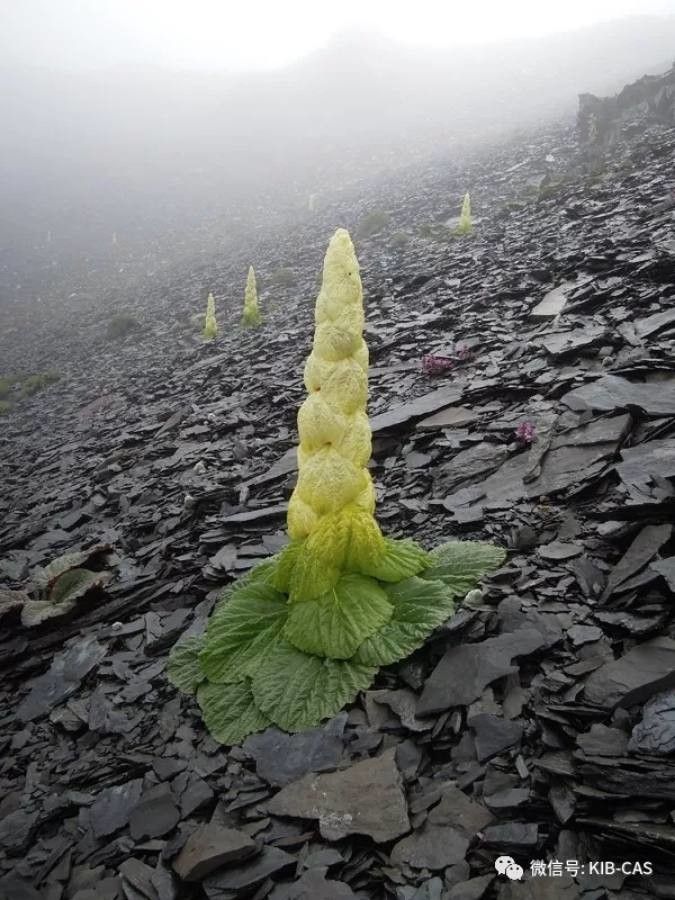
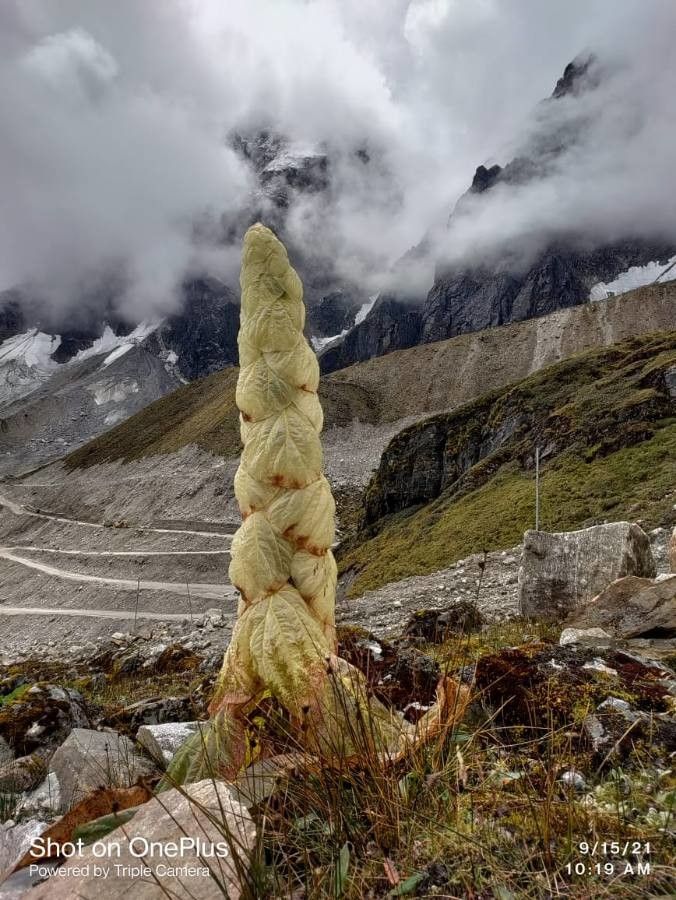
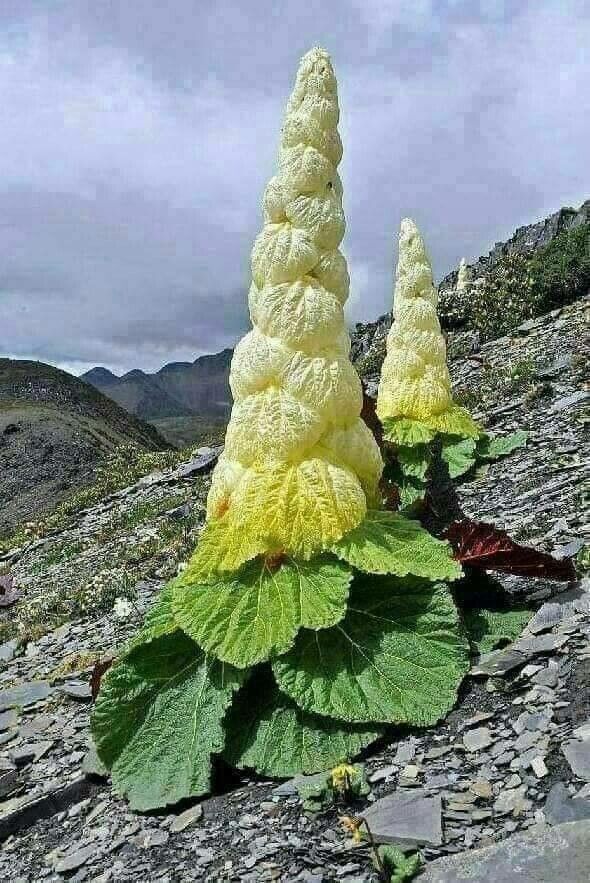
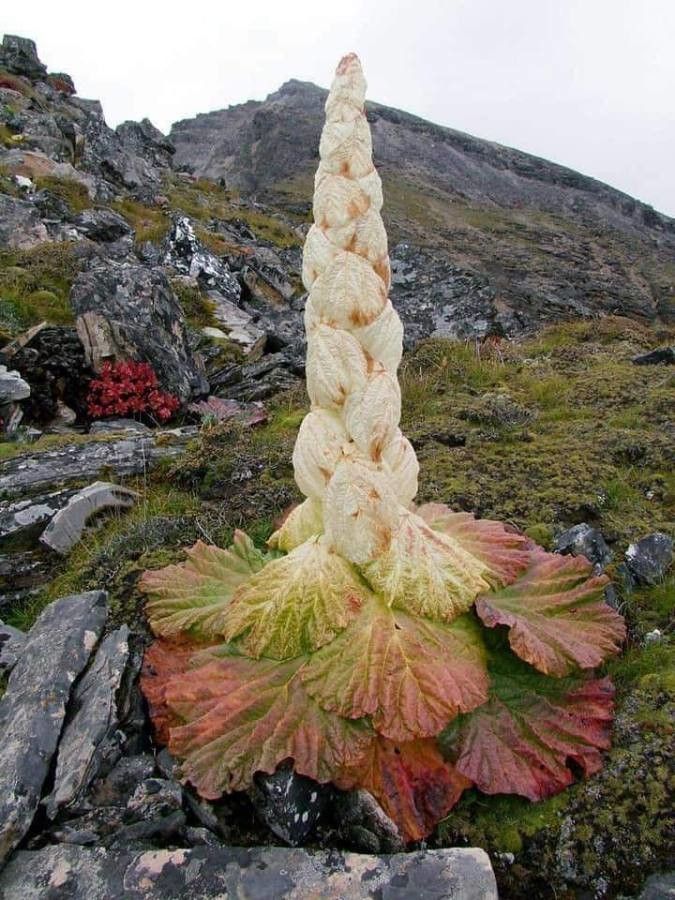
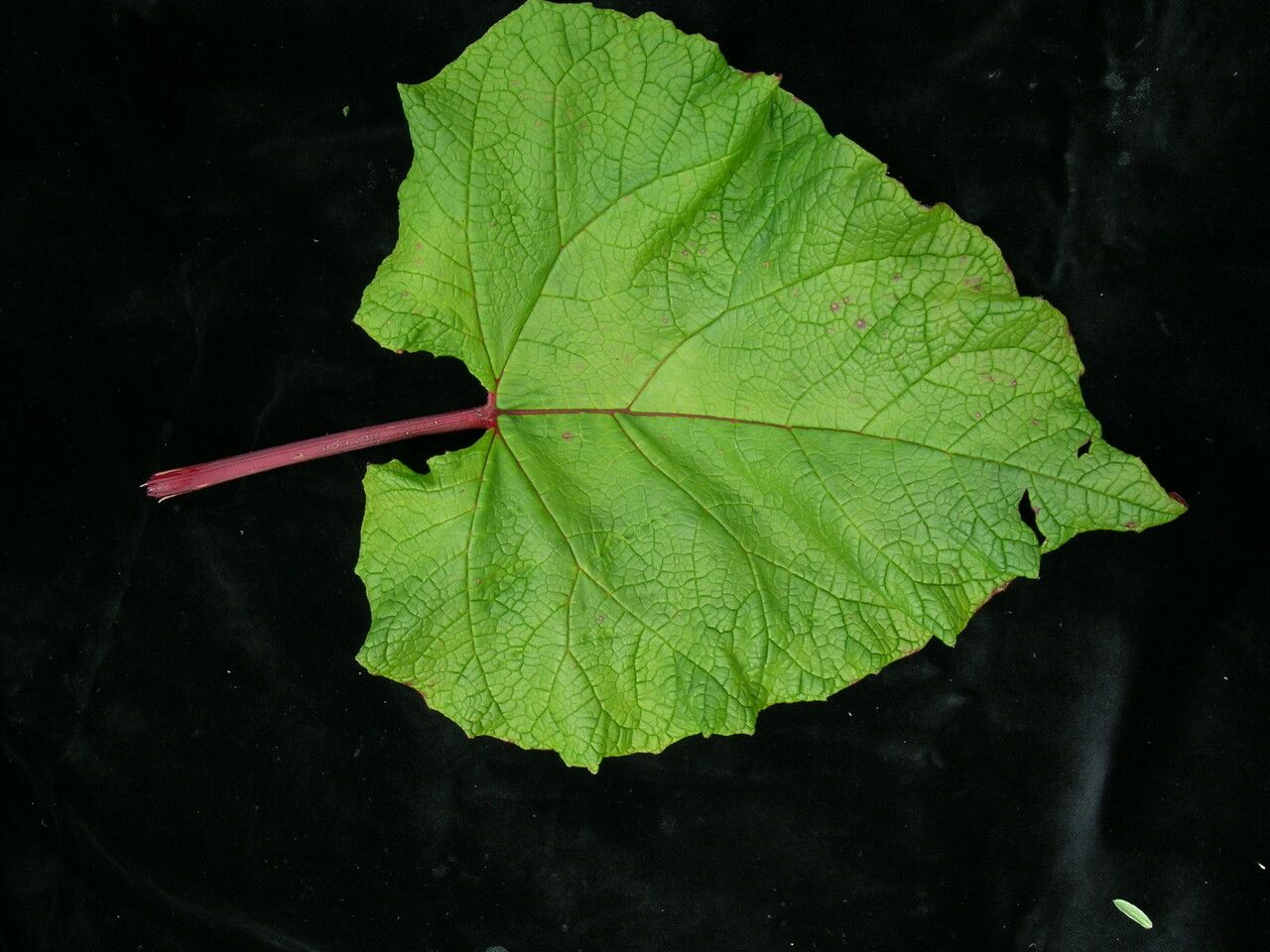
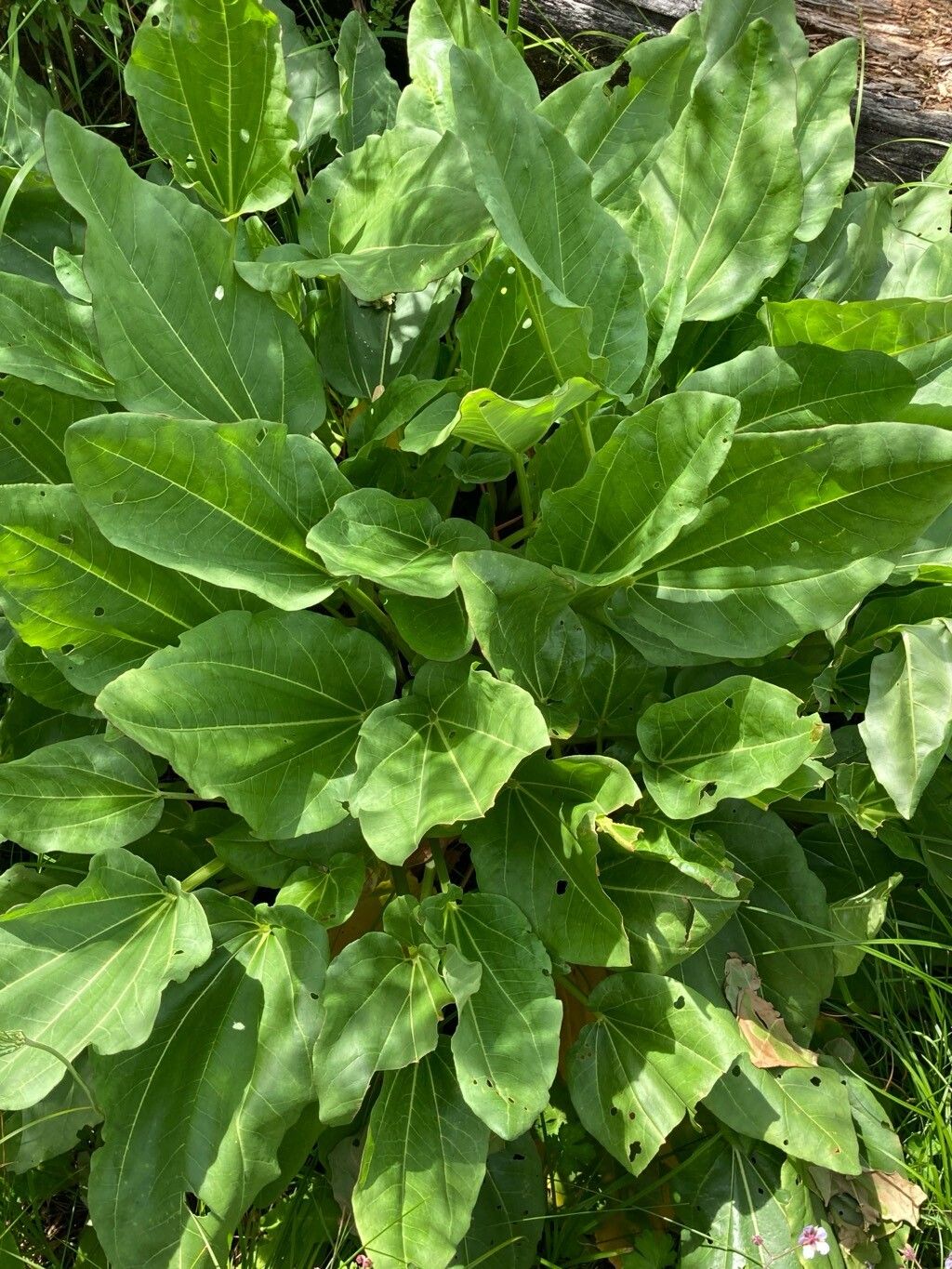
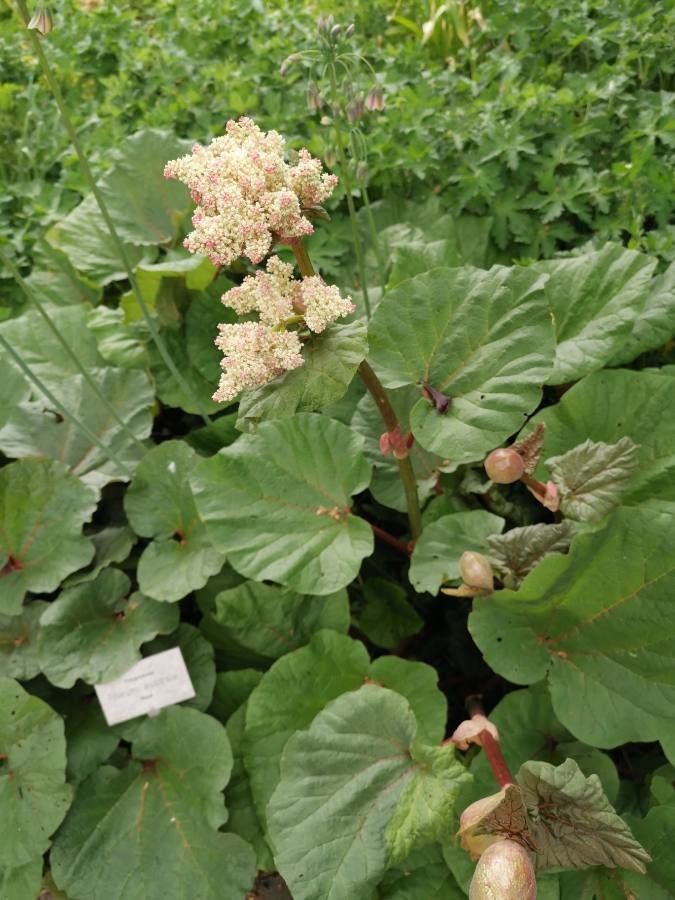
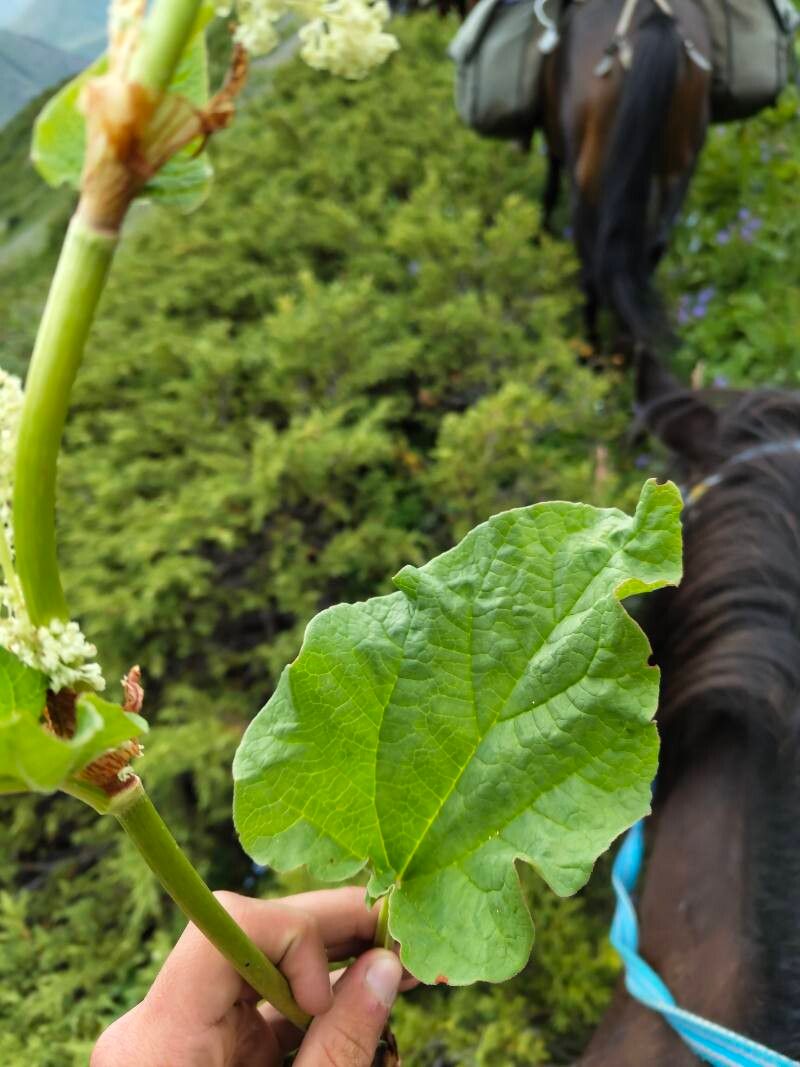
Rheum nobile, the Sikkim rhubarb or noble rhubarb or पदमचाल, is a giant herbaceous plant native to the Himalaya, from northeastern Afghanistan, east through northern Pakistan and India, Nepal, Sikkim (in India), Bhutan, and Tibet to Myanmar, occurring in the alpine zone at 4000–4800 m altitude.It is an extraordinary species of rhubarb (genus Rheum). At 1–2 m tall, the monocarpic inflorescences of R. nobile tower above the other shrubs and low herbs in its habitat, and it is visible across valleys a mile away.R. nobile is often called a glasshouse plant because of its outer curtain of translucent bracts which pass visible light, creating a greenhouse effect, while blocking ultraviolet radiation. These are likely defenses against the increased UV-B exposure and extreme cold in its high altitude range.
Sikkim rhubarb is fairly disease-resistant and generally does not suffer from illnesses. However, it can be vulnerable to pests and diseases present in its environment. These problems are usually not serious. In terms of care, this plant has moderate maintenance needs. It should be pruned regularly to maintain a neat appearance and support healthy growth. Fertilizing can also help encourage flowering. Sikkim rhubarb is suitable for anyone with outdoor space, such as a garden or patio, and does not require extensive gardening experience. It may need more attention if grown indoors.
How to keep Rheum Nobile.
Light
Sikkim rhubarb naturally grows in places like forest understories and rocky locations, where it gets natural shade. It prefers partial sun but can tolerate full sun or full shade, demonstrating its versatility and hardiness.
Water
Sikkim rhubarb, a plant native to the high-altitude regions of the Himalayas, requires weekly watering and flourishes in well-drained soil that retains consistent moisture. This hardy outdoor plant, often found in alpine gardens, stores water in its thick leaves. This adaptation allows it to withstand temperature fluctuations and unpredictable rainfall.
Fertilizer
For Sikkim rhubarb, the main time to fertilize is in early spring when the flowers are forming. The appropriate fertilizer promotes better blooms and helps Sikkim rhubarb produce attractive flowers. Fertilizing in early spring ensures excellent flowers during the season and supplies energy for dormant growth phases.
Pruning
Sikkim rhubarb, known for its tall and translucent bracts, thrives in high-altitude regions. To maintain and encourage healthy growth, it is important to prune it from early to late spring. During this time, remove any dead stems and cut back the stalks after they bloom. This practice not only promotes healthy growth but also reduces the risk of disease and improves the plant's structure and ecological value.
Botanical profile.
- Plant Type
- Herb
- Life Cycle
- Perennial
- Genus
- Rheum
- Family
- Polygonaceae
- Hardiness Zone
- 5-8
- Mature Height
- 0.91 m to 1.52 m
- Mature Spread
- 46 cm to 61 cm
- Leaf Color
- Green, Yellow Green
- Leaf Type
- Deciduous
- Flower Color
- White
- Flower Size
- 2.54 cm
- Bloom Time
- Early summer, Mid summer
- Planting Time
- Spring
- Harvest Time
- Late summer, Early fall
- Native Area
- Nepal, Afghanistan, India, Myanmar, Bhutan, Pakistan, China
Reader questions.
What are the sunlight requirements for Sikkim rhubarb?
Sikkim rhubarb (Rheum nobile) thrives under specific sunlight conditions to ensure its growth and happiness. It requires 'full sun' exposure, which means it needs above 6 hours of sunlight daily. Alternatively, it can also grow under 'partial sun' which refers to about 3-6 hours of sunlight per day. It is essential to observe how sunlight moves through your garden throughout the day to select the ideal location that provides a balance of light and shade suitable for the Sikkim rhubarb.
Is there any special advice for planting Sikkim rhubarb to ensure its happiness?
Yes, there is a piece of special advice for planting Sikkim rhubarb (Rheum nobile) to ensure its happiness. It is crucial to watch the way sunlight moves through your garden over the day. Choosing spots that provide the perfect balance of light and shade is key. This careful selection helps in catering to the specific sunlight requirements of the Sikkim rhubarb, contributing significantly to its growth and overall happiness.