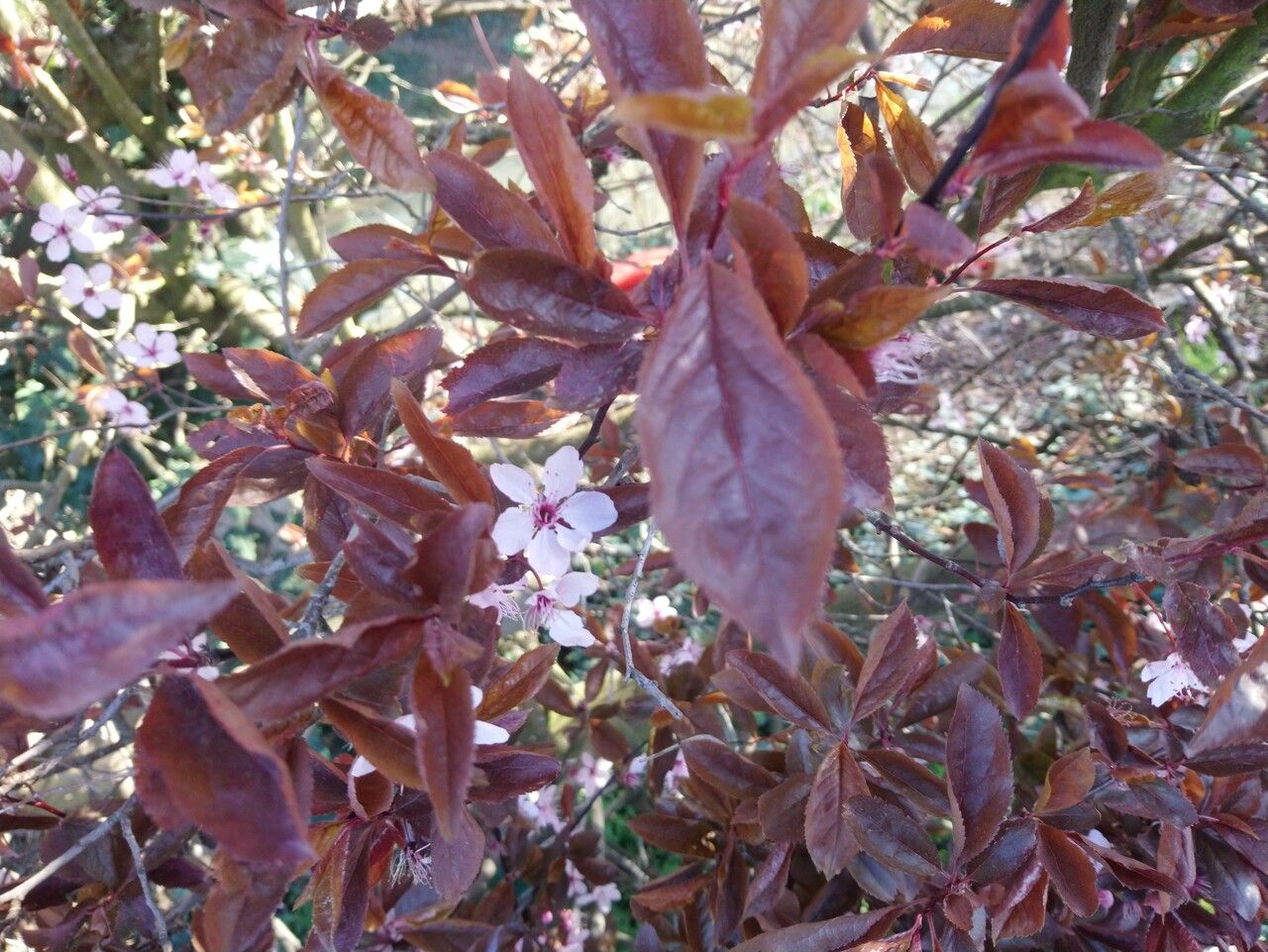
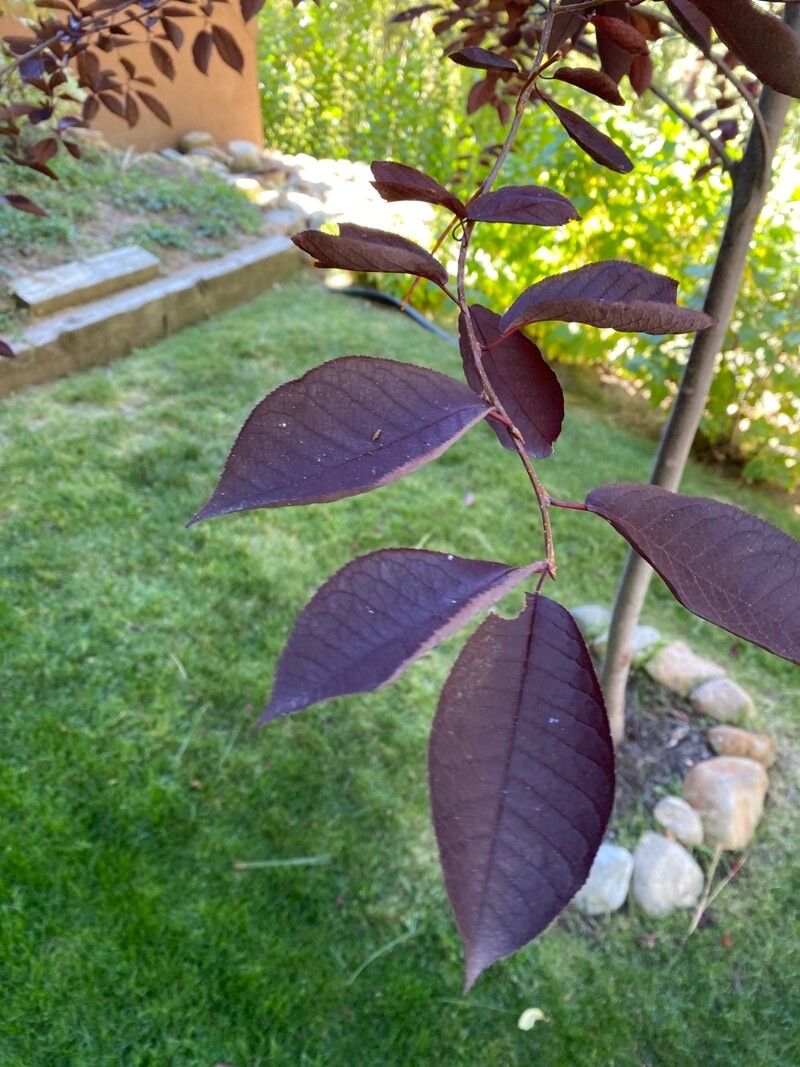
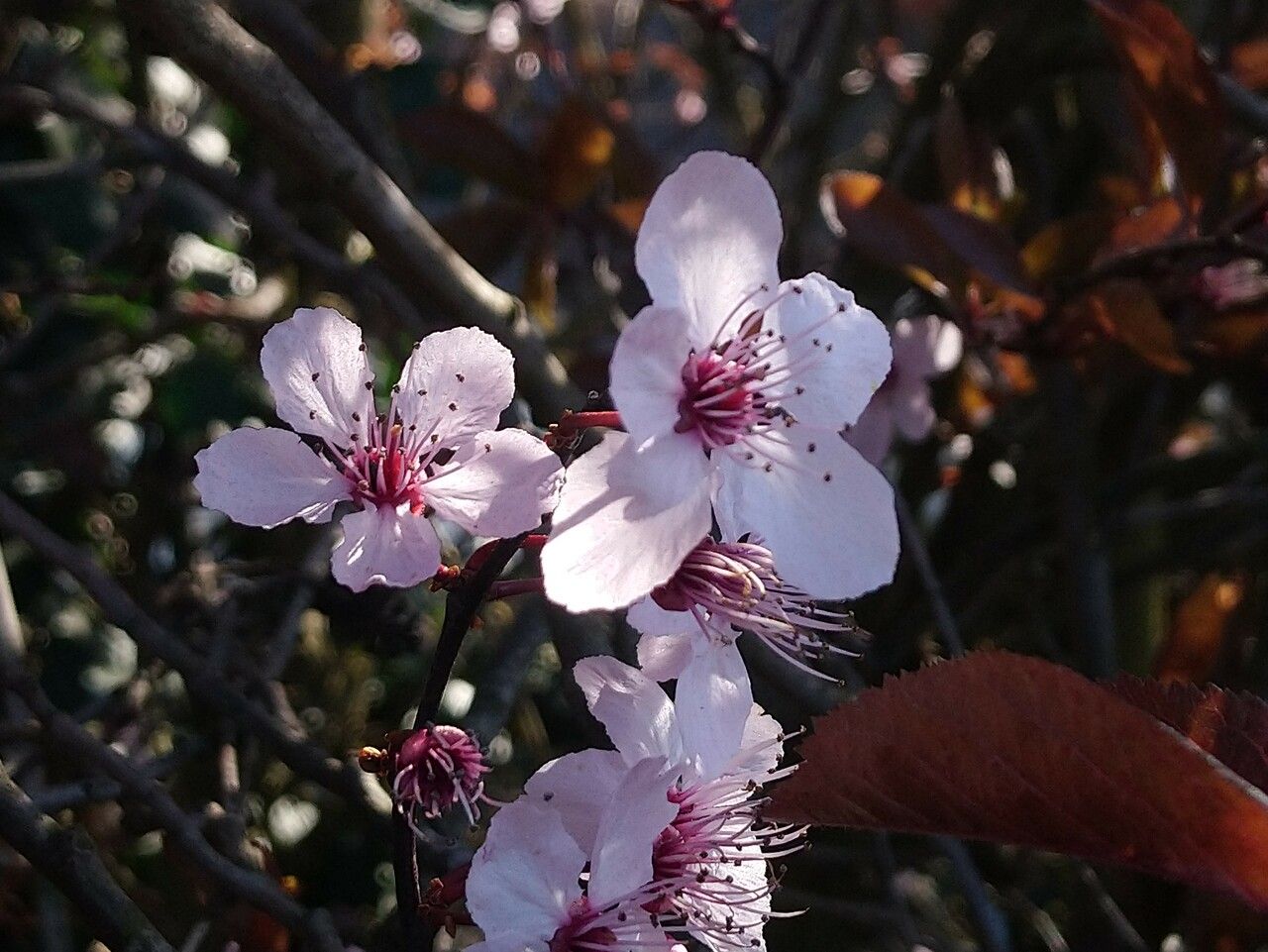
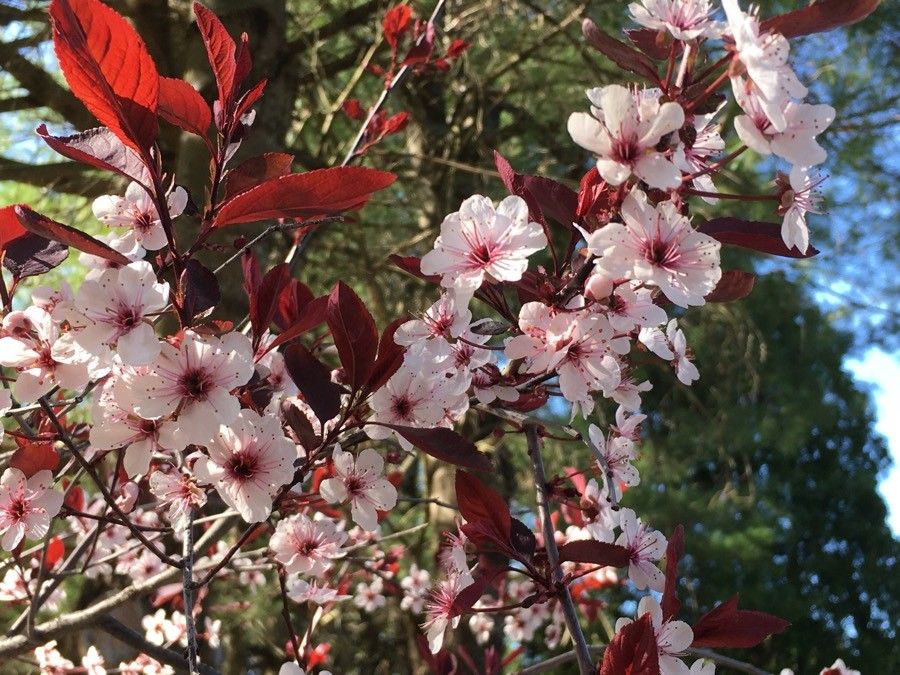
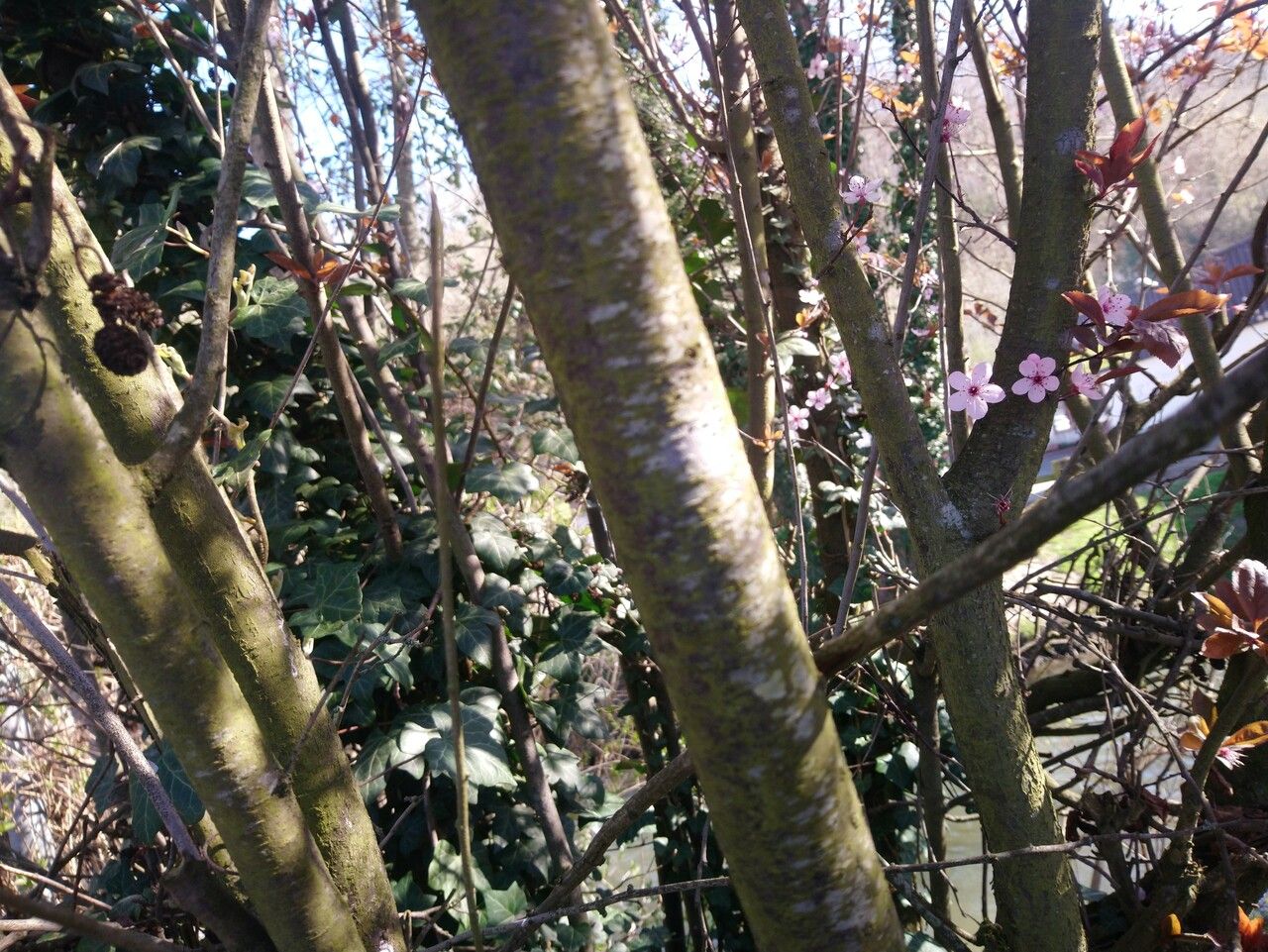
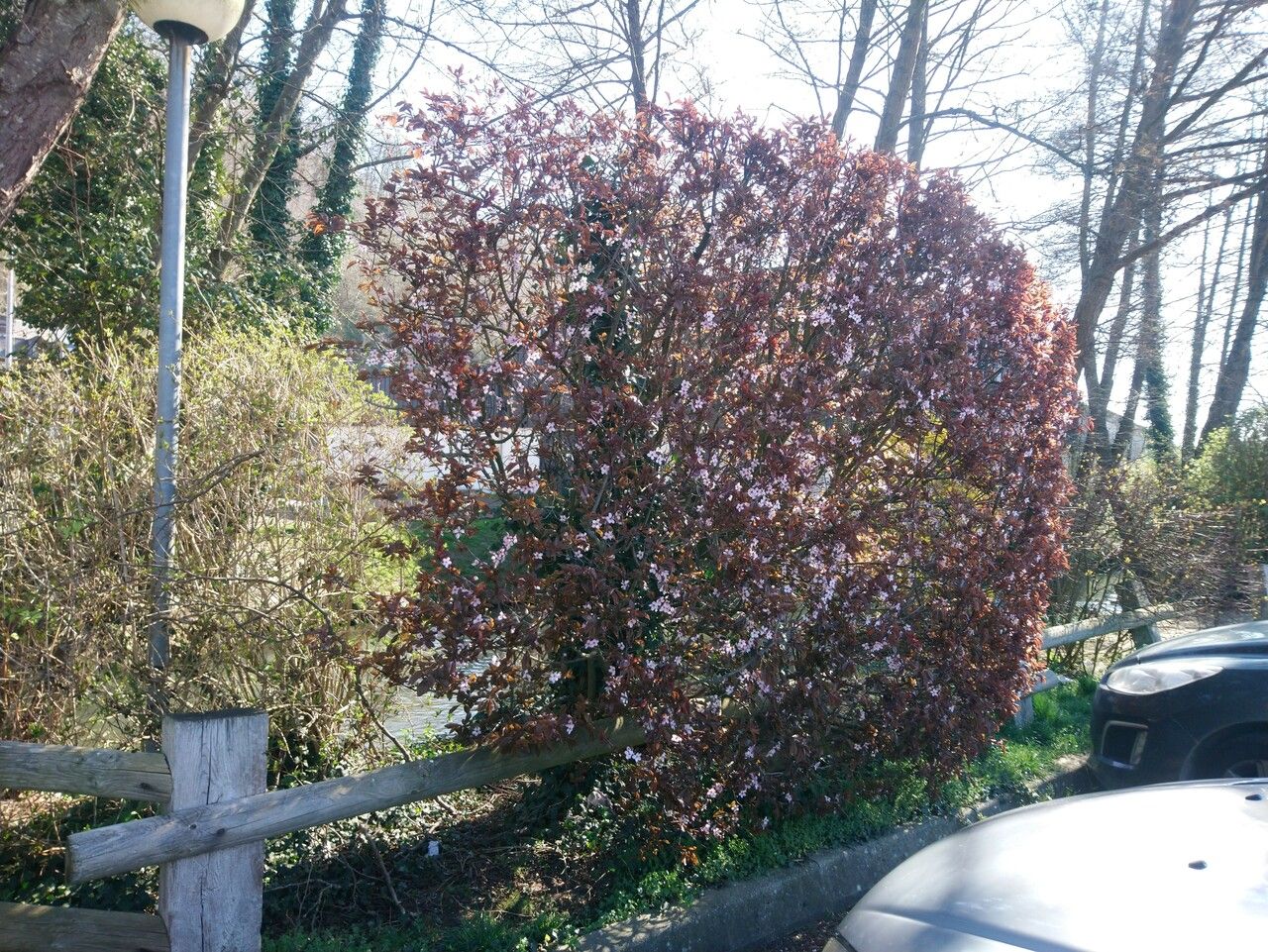
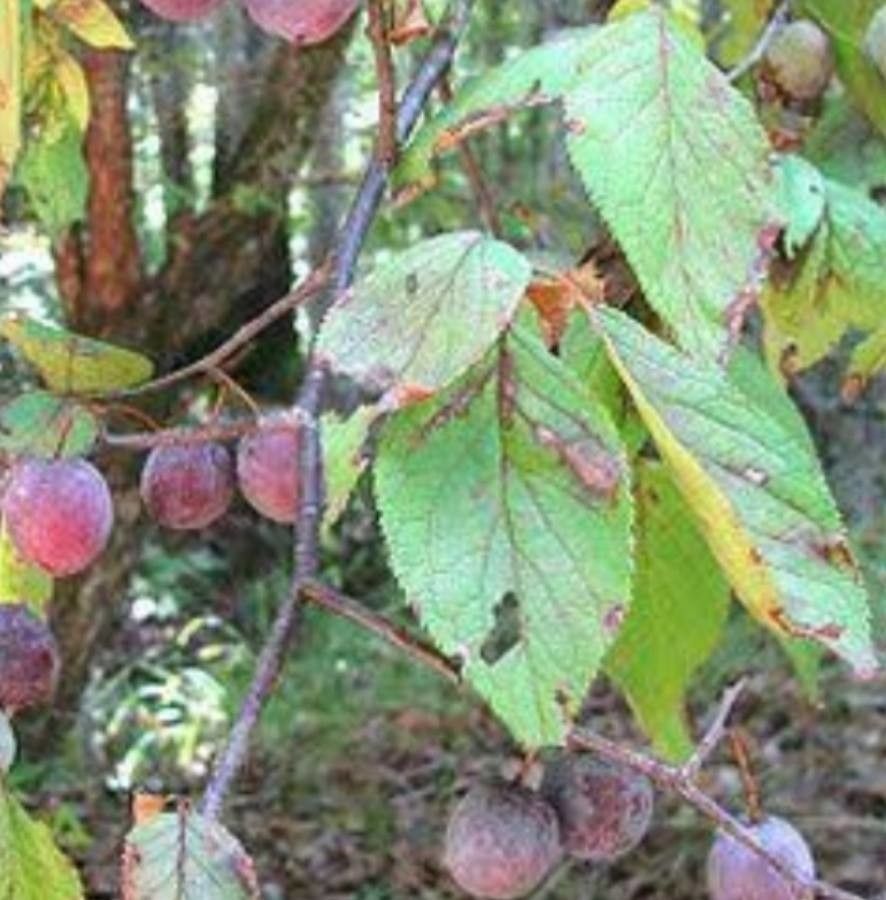
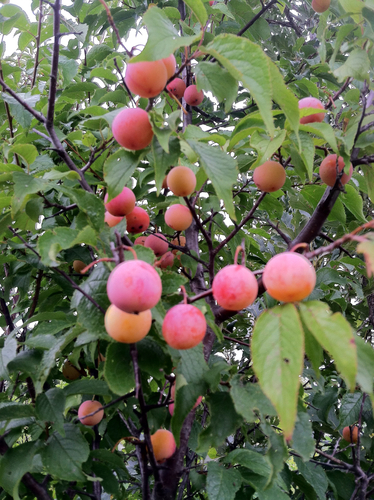
Prunus × cistena, the purple leaf sand cherry or dwarf red-leaf plum, is a hybrid species of Prunus, the result of a cross between Prunus cerasifera (cherry plum or myrobalan plum) and Prunus pumila (sand cherry). A leggy bush or shrubby tree, it typically reaches a height of 1.5–2.5 meters and has a useful life of 10–20 years. The fruits are edible, if strong-tasting. Some people make jams or preserves from them. It is not advisable to eat the pits. Frost-tolerant, purple leaf sand cherries can be grown up to USDA Hardiness Zone 2a. Commercial specimens are typically grafted to a rootstock from any of a number of other species, which will influence their growth form and final height. There are also a limited selection of cultivars available. Prunus × cistena was developed by Niels Ebbesen Hansen in 1910. In 1993 it won the Royal Horticultural Society's Award of Garden Merit.
Purple-Leaf Sand Cherry is resistant to disease and generally not susceptible to illnesses. For care, this plant is fairly low-maintenance. Planted outdoors it needs only minimal watering, and larger plants normally do not require pruning. Smaller plants, however, should be pruned after they have bloomed. Purple-Leaf Sand Cherry is suitable for anyone with an outdoor area, such as a garden or deck, and does not demand extensive care experience.
How to keep Prunus Ux Cistena.
Light
Purple-Leaf Sand Cherry comes from open habitats, like sunny meadows and forest edges, where light is plentiful. It performs best in Full Sun but will also tolerate Partial Sun, showing good adaptability to different sunlight conditions.
Water
The Purple-Leaf Sand Cherry thrives best with balanced moisture and moderate humidity. For optimal health, it should be watered weekly. As a deciduous plant, it sheds its leaves during dry spells to reduce water loss and better endure low-water conditions.
Humidity
This plant will thrive in moderate humidity, which is probably the level in your home. However, misting it a few times a week can be very beneficial. Make sure the room has good ventilation.
Temperature
The Purple-Leaf Sand Cherry is very adaptable to different climates, handling both hot summers and cold winters. Still, it has a preferred temperature range for healthy growth. If temperatures become too high, the plant can suffer from heat and humidity stress, which may kill it. In locations where temperatures approach the lower limit of its cold tolerance, providing insulation is necessary to protect the plant.
Fertilizer
The timing of fertilization is important for Purple-Leaf Sand Cherry. Apply fertilizer in early spring and continue monthly through early summer. Fertilizer promotes attractive blooms and supplies energy during both dormant and active growth periods.
Pruning
Purple-Leaf Sand Cherry is known for its striking purple foliage and beautiful blooms. To maintain its health and appearance, it's best to prune in early spring. Start by removing any dead branches and thinning out dense areas to improve air circulation. Cutting back older stems will also encourage new growth. Regular pruning not only promotes healthier growth but also enhances the plant's ornamental appeal.
Botanical profile.
- Plant Type
- Tree, Shrub
- Life Cycle
- Perennial
- Genus
- Prunus
- Family
- Rosaceae
- Hardiness Zone
- 3-7
- Mature Height
- 1.83 m to 3.05 m
- Mature Spread
- 1.22 m to 1.83 m
- Leaf Color
- Gold, Yellow, Purple
- Leaf Type
- Deciduous
- Flower Color
- Pink, White
- Flower Size
- 2.54 cm
- Bloom Time
- Early spring, Mid spring
- Planting Time
- Summer
- Harvest Time
- Mid summer, Late summer
Other names.