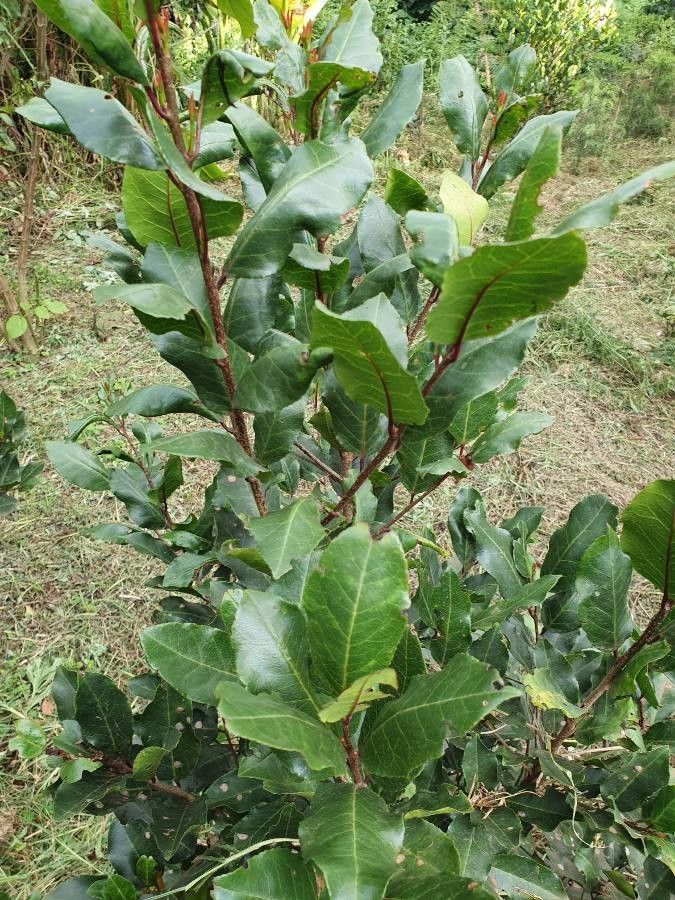
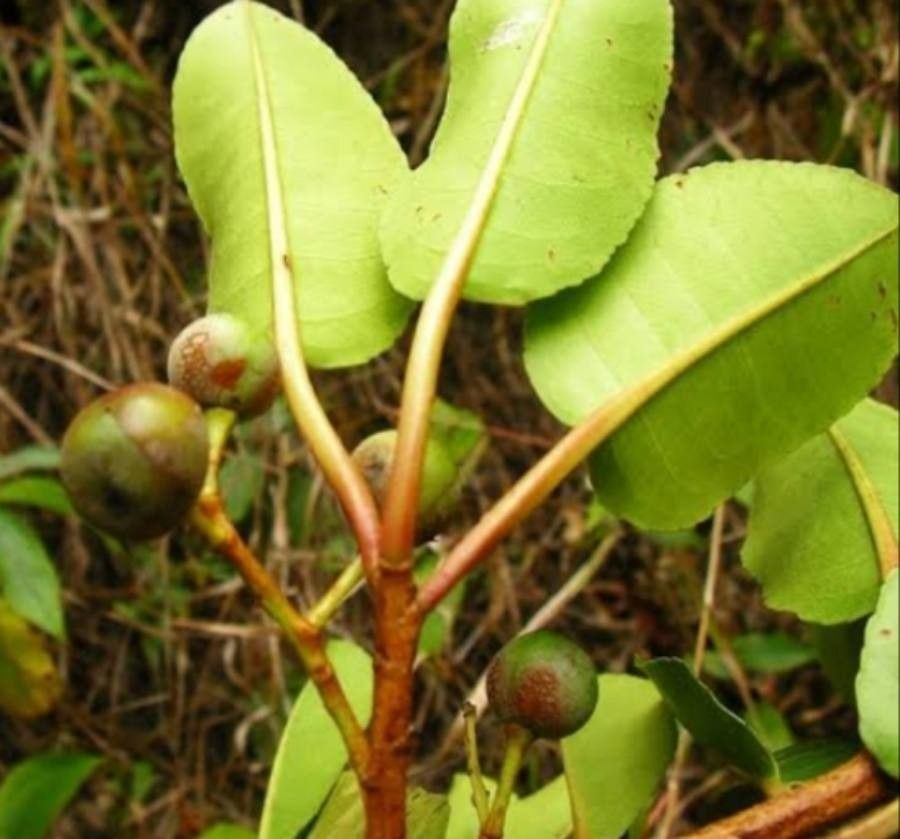
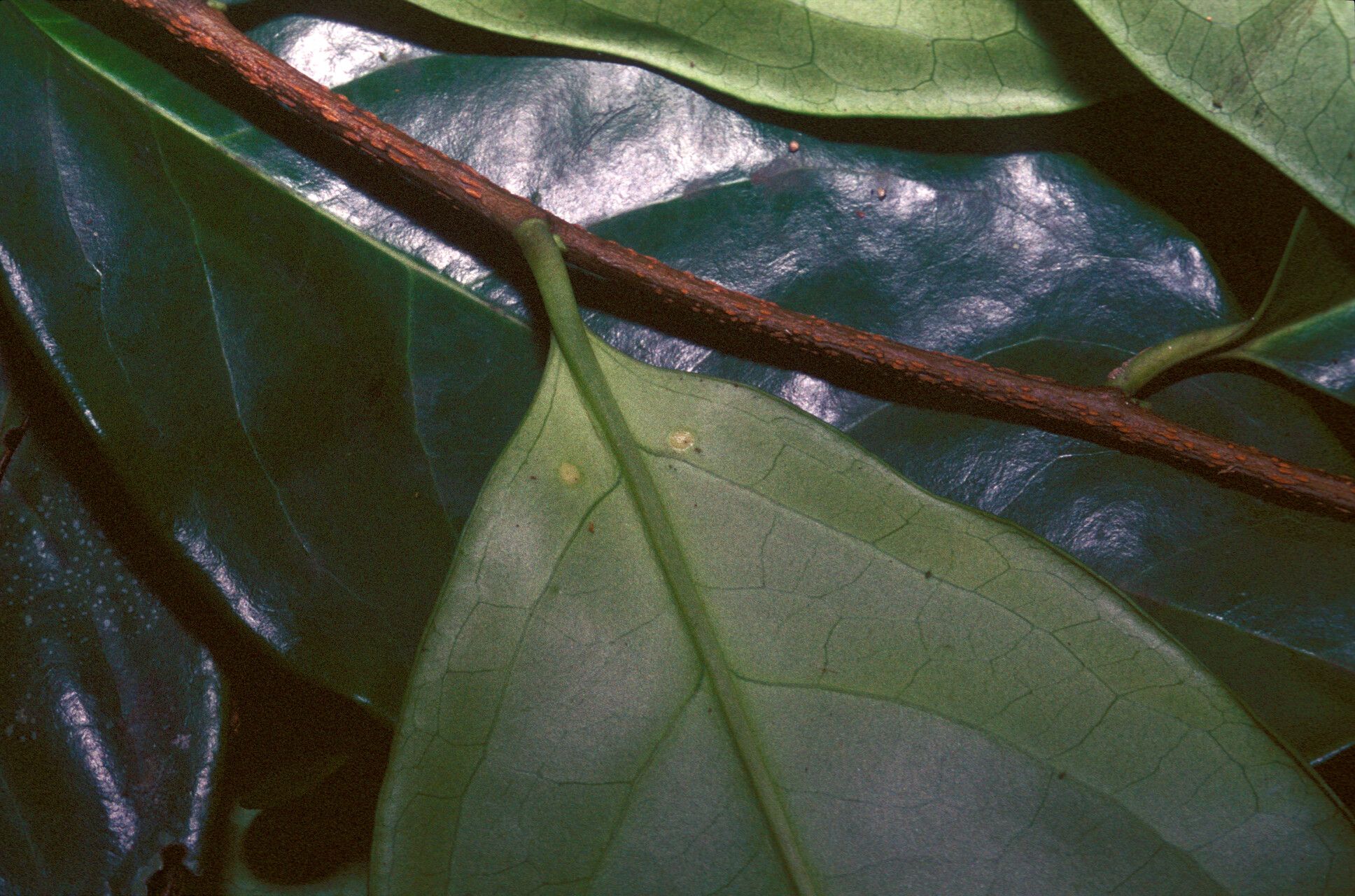
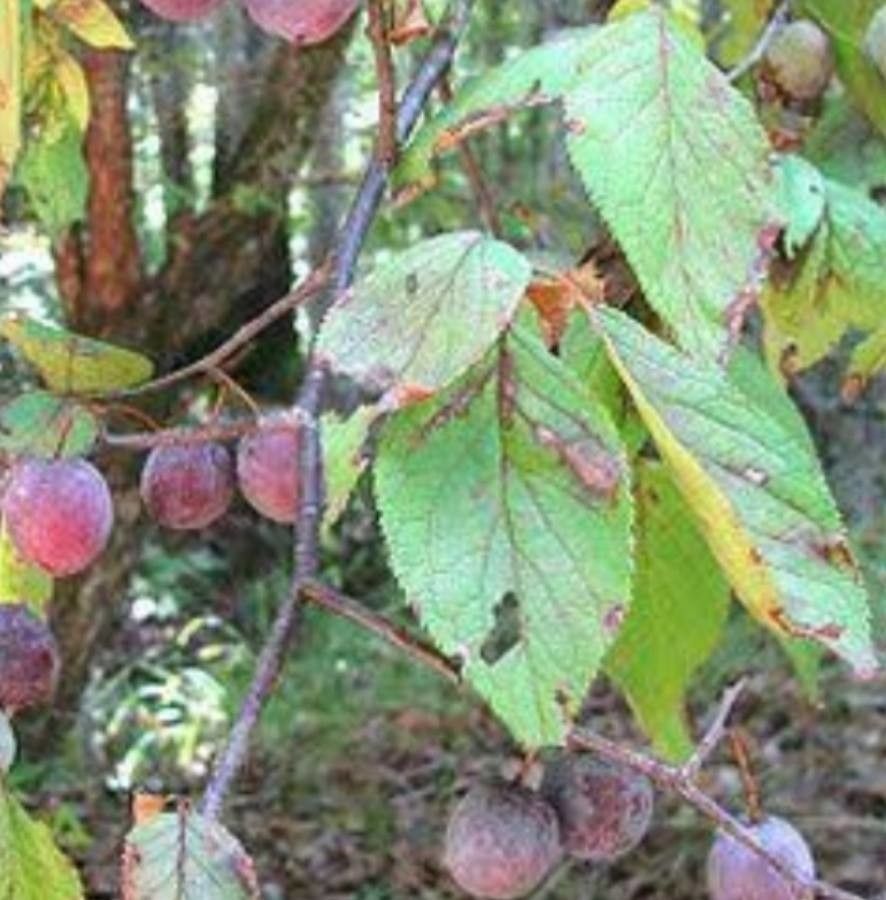
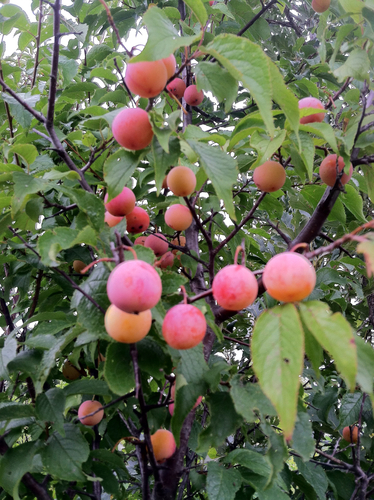
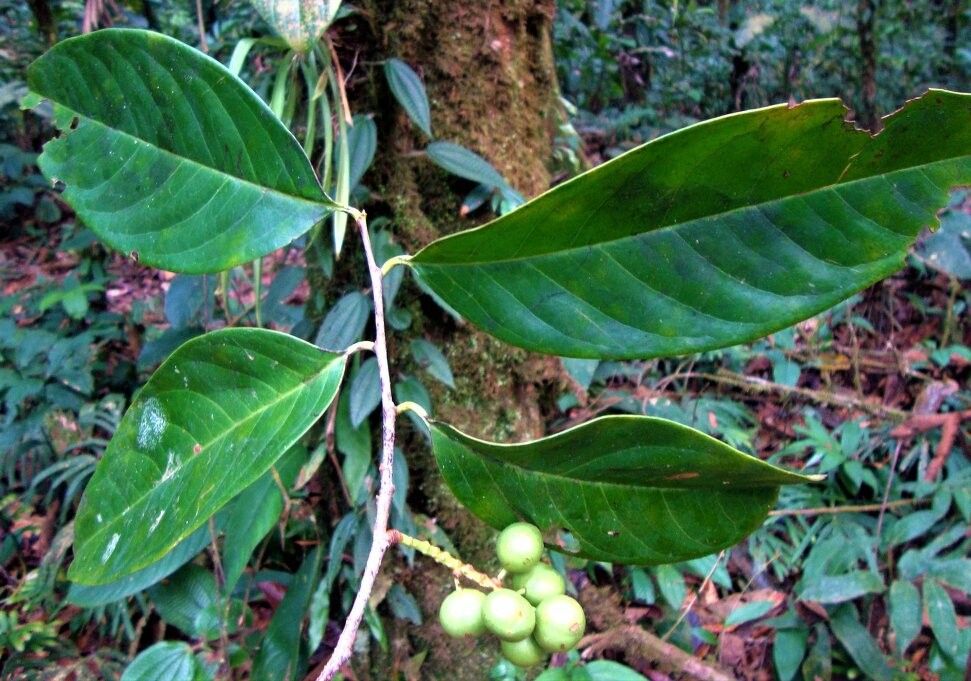
Prunus africana, the African cherry, has a wide distribution in Africa, occurring in montane regions of central and southern Africa and on the islands of Bioko, São-Tomé, Grande Comore, and Madagascar. It can be found at 900–3,400 m (3,000–10,000 ft) above sea level. It is a canopy tree 30–40 m in height, and is the tallest member of Prunus. Large-diameter trees have impressive, spreading crowns. It requires a moist climate, 900–3,400 mm (35–130 in) annual rainfall, and is moderately frost-tolerant. P. africana appears to be a light-demanding, secondary-forest species. The bark is black to brown, corrugated or fissured, and scaly, fissuring in a characteristic rectangular pattern. The leaves are alternate, simple, 8–20 cm (3.1–7.9 in) long, elliptical, bluntly or acutely pointed, glabrous, and dark green above, pale green below, with mildly serrated margins. A central vein is depressed on top, prominent on the bottom. The 2 cm (0.8 in) petiole is pink or red. The flowers are androgynous, 10-20 stamens, insect-pollinated, 3–8 cm (1–3 in), greenish white or buff, and are distributed in 70 mm (2.8 in) axillary racemes. The plant flowers October through May. The fruit is a drupe, red to brown, 7–13 mm (0.3–0.5 in), wider than long, two-lobed, with a seed in each lobe. It grows in bunches ripening September through November, several months after pollination.
Botanical profile.
- Genus
- Prunus
- Family
- Rosaceae
Other names.