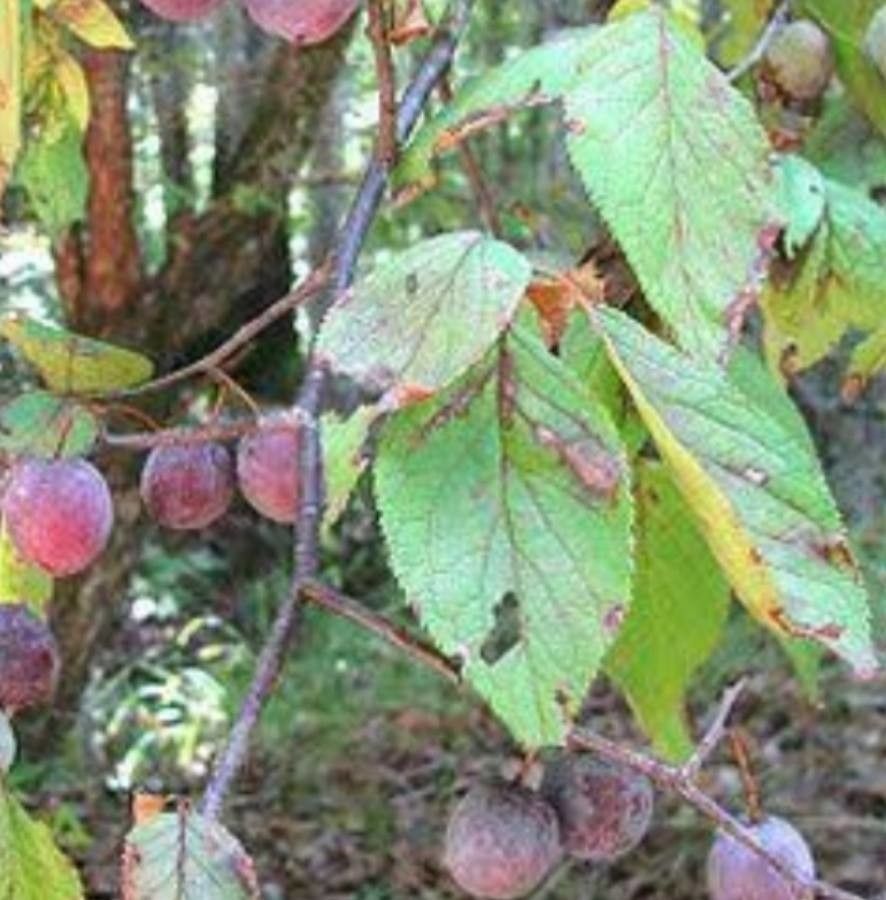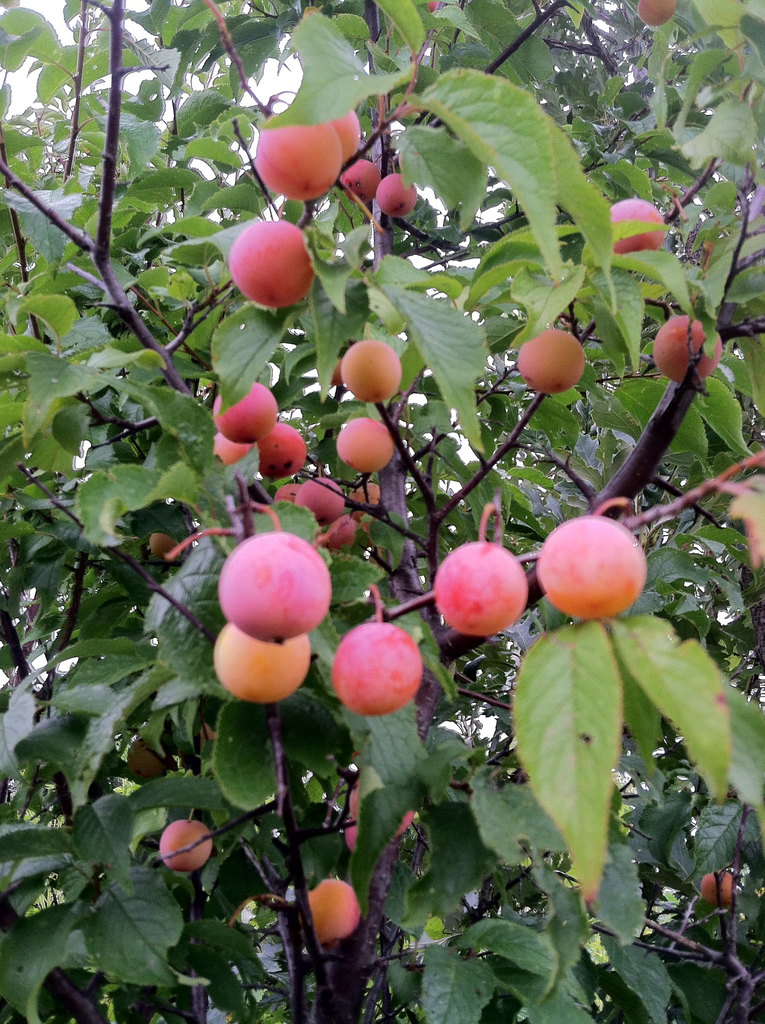
Prunus americana, commonly called the American plum, wild plum, or Marshall's large yellow sweet plum, is a species of Prunus native to North America from Saskatchewan and Idaho south to New Mexico and east to Québec, Maine and Florida.Prunus americana has often been planted outside its native range and sometimes escapes cultivation. It is commonly confused with the Canada plum (Prunus nigra), although the fruit is smaller and rounder and bright red as opposed to yellow. Many cultivated varieties have been derived from this species. It forms an excellent stock upon which to graft the domestic plum.
The American plum is often mistaken for the Canada plum (Prunus nigra), although its fruit is smaller, rounder, and bright red, unlike the yellow fruit of the Canada plum. This species, native to North America, is fittingly named the American plum.
The American plum has strong disease resistance and is generally not prone to illnesses. Regarding care, this plant is relatively low-maintenance. When planted outdoors it needs minimal watering, and larger plants typically do not require pruning. Smaller plants, however, should be pruned after they have finished blooming. The American plum is suitable for anyone who has outdoor space, such as a garden or deck, and it does not demand much care experience.
How to keep Prunus Americana.
Light
The american plum needs ample sunlight to thrive. This provides the light for photosynthesis, which is essential for its growth and health. However, the species can tolerate lower light levels. Insufficient sunlight can limit growth, while too much exposure may lead to dehydration.
Water
The American plum is well-adapted to varying moisture levels and shows a moderate tolerance to drought. To maintain optimal health, water the plant every 1-2 weeks, being careful not to overwater or underwater it. Thriving best when grown outdoors, the American plum benefits from seasonal rainfall, which supports its growth and flowering in the spring.
Humidity
This plant will thrive in moderate humidity, which is probably the level in your home. However, misting it a few times a week can be very beneficial. Make sure the room has good ventilation.
Temperature
The American plum prefers temperatures from 59 to 100 ℉ (15 to 38 ℃), flourishing in temperate conditions. In summer, temperatures above 100 ℉ (38 ℃) can cause heat stress, so it is recommended to give shade and ample water. In winter, the plant tolerates temperatures down to -22 ℉ (-30 ℃), showing cold hardiness.
Fertilizer
The American plum plant needs adequate nutrients to produce fruit optimally. Apply fertilizer in early spring to encourage new growth and flower/bloom development. Regular feeding keeps the plant healthy, produces more delicious fruit, and prevents nutrient-deficiency problems like yellowing leaves and poor fruit production.
Pruning
The American plum is a deciduous shrub cherished for its small plums and spring blossoms. To maintain its health, prune the shrub in late winter to remove any dead or crossing branches, which will promote growth and improve air circulation. Additionally, thinning out crowded stems can enhance both fruit production and the shrub's overall health. For specific guidance tailored to your region, consult your local extension service.
Pot & Repot
When repotting American plum, select a pot 1-2 inches (2.5–5.1 cm) larger with ample drainage. Use a well-draining potting mix. Repot in spring or fall, ensuring the root ball is slightly lower than the rim of the flower pot. Water thoroughly after repotting and place in a warm spot with indirect sunlight.
Botanical profile.
- Plant Type
- Tree, Shrub
- Life Cycle
- Perennial
- Genus
- Prunus
- Family
- Rosaceae
- Hardiness Zone
- 8-11
- Mature Height
- 4.57 m
- Mature Spread
- 4.57 m to 7.62 m
- Leaf Color
- Green
- Leaf Type
- Deciduous
- Flower Color
- White
- Flower Size
- 2.03 cm
- Bloom Time
- Mid spring, Late spring
- Planting Time
- Spring, Autumn
- Harvest Time
- Mid summer