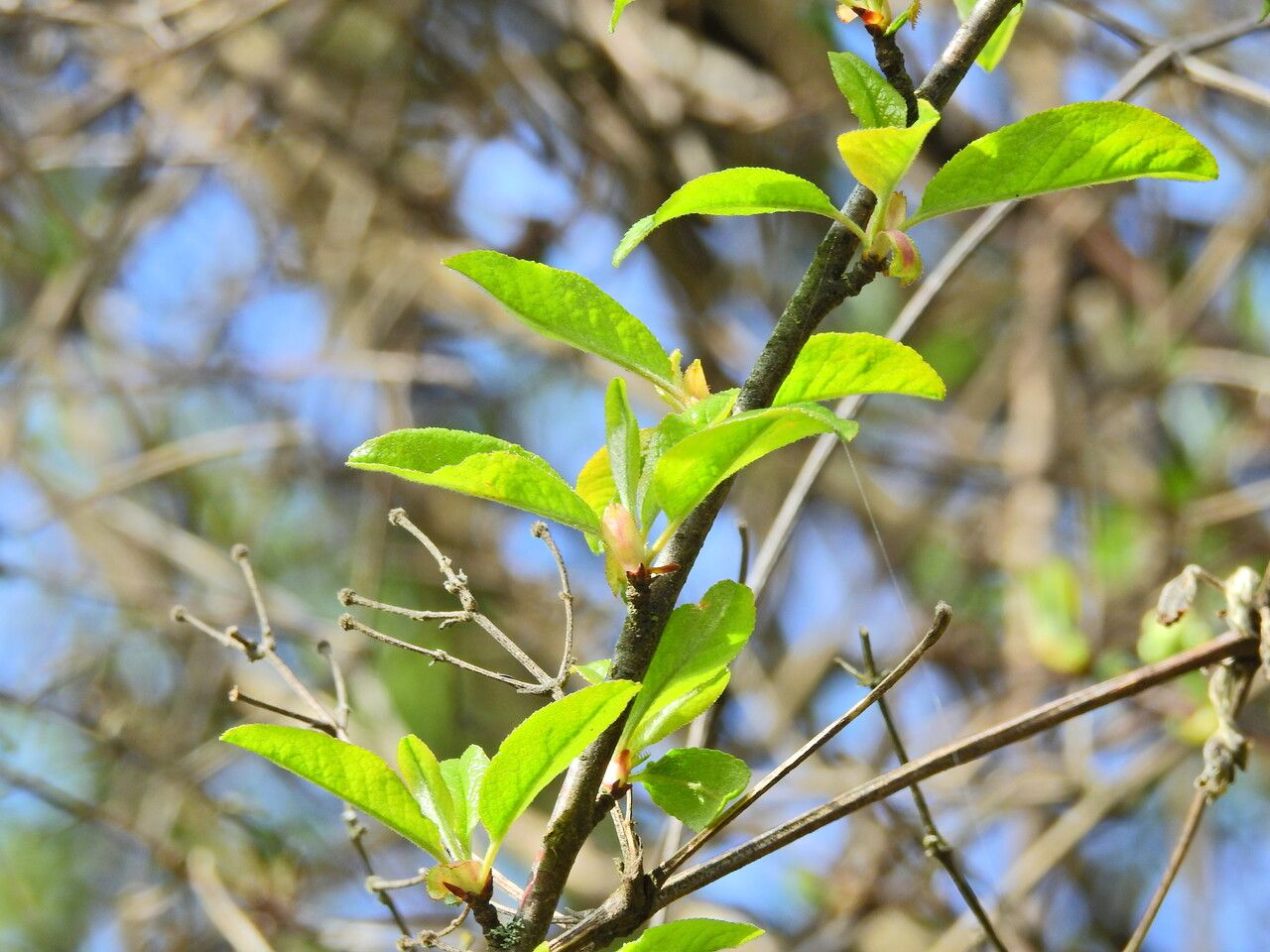
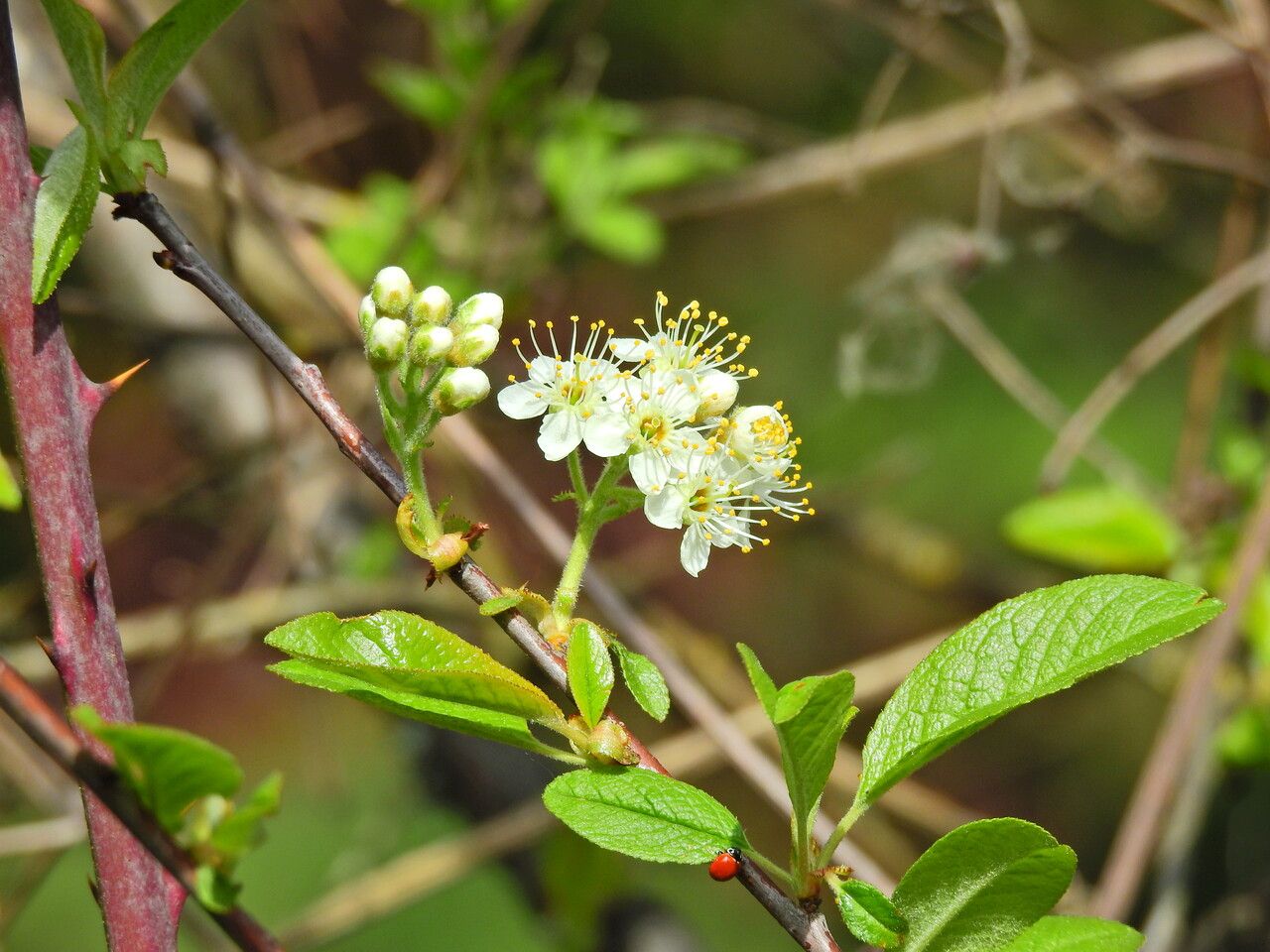
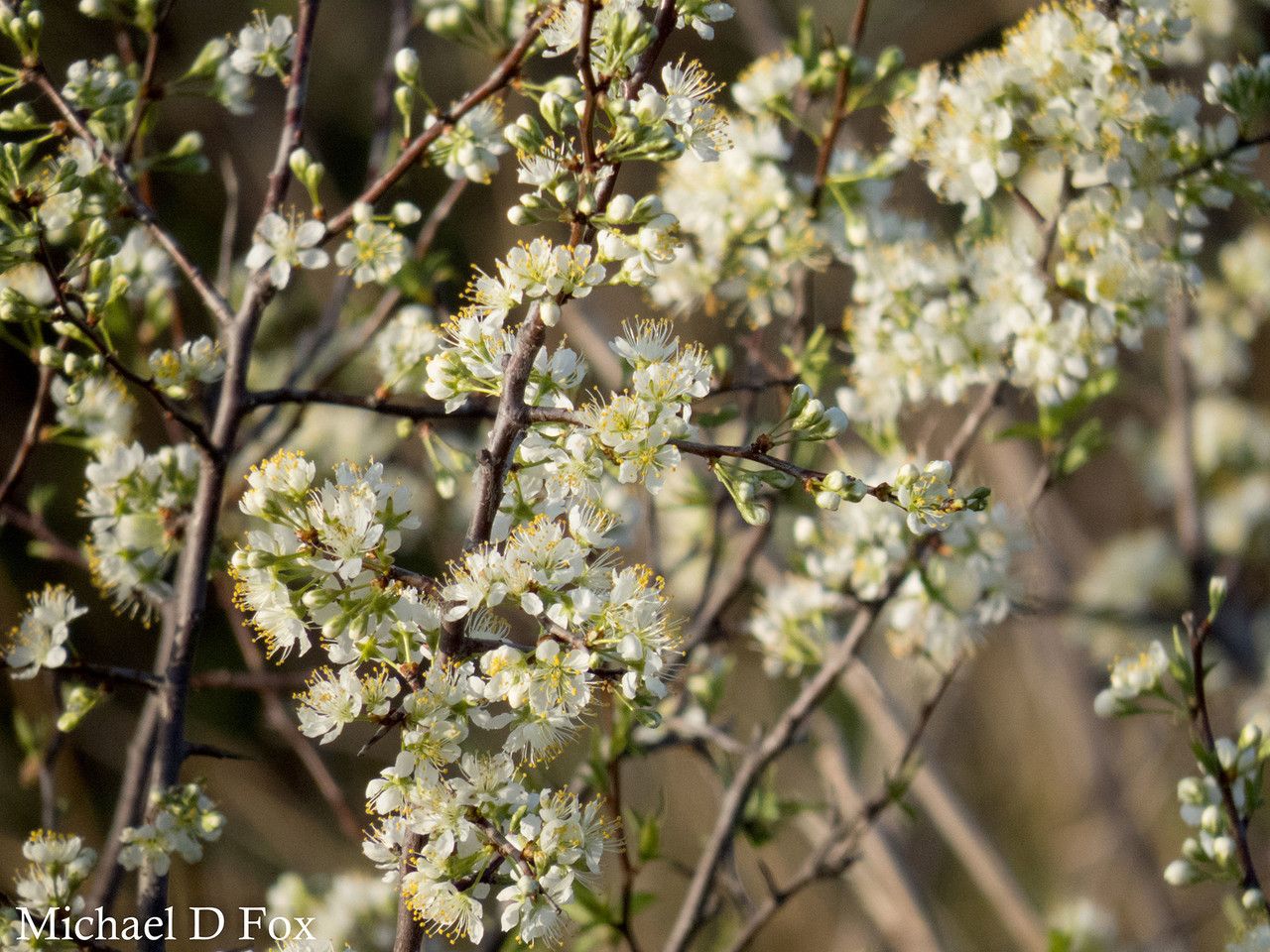
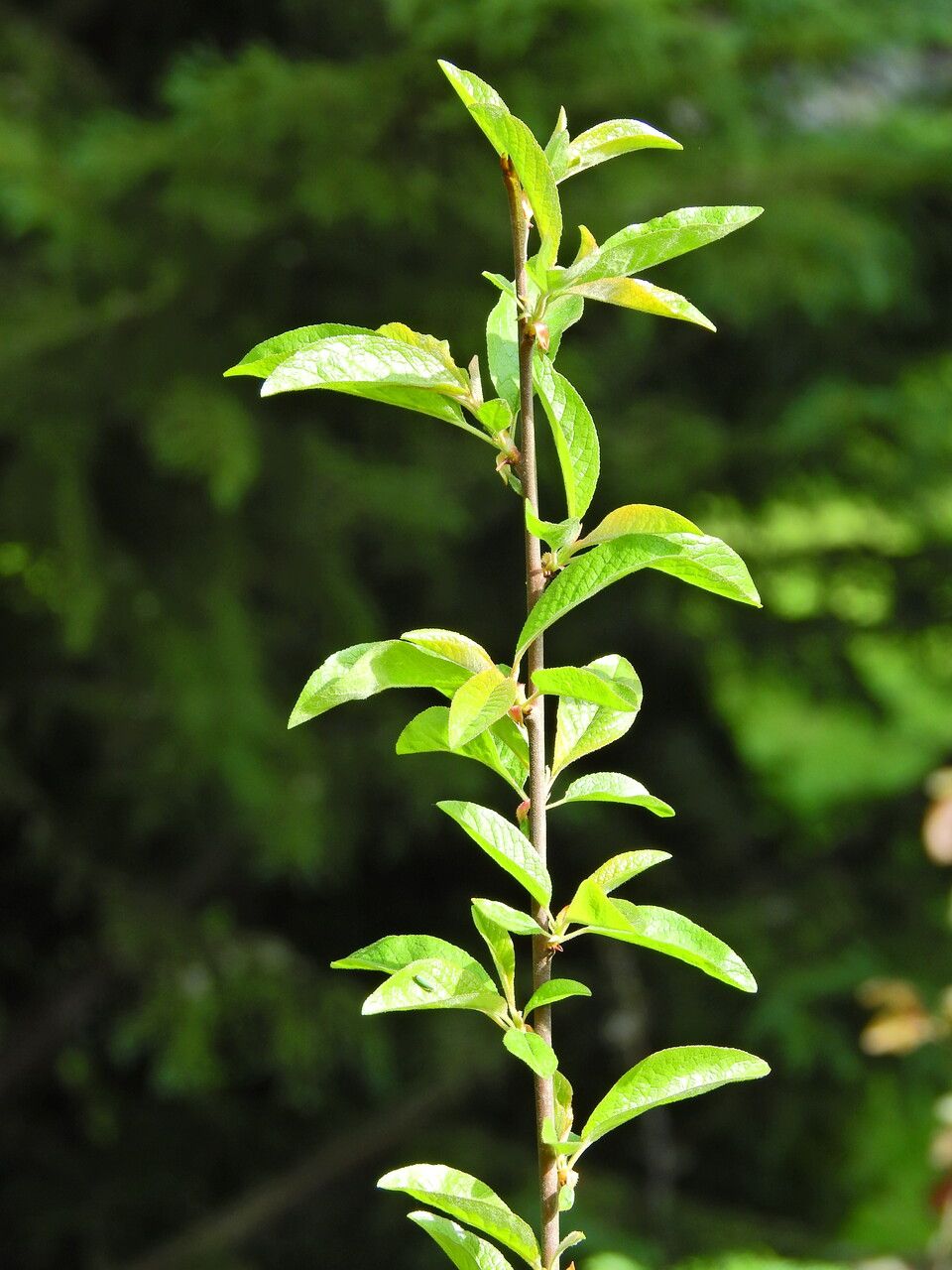
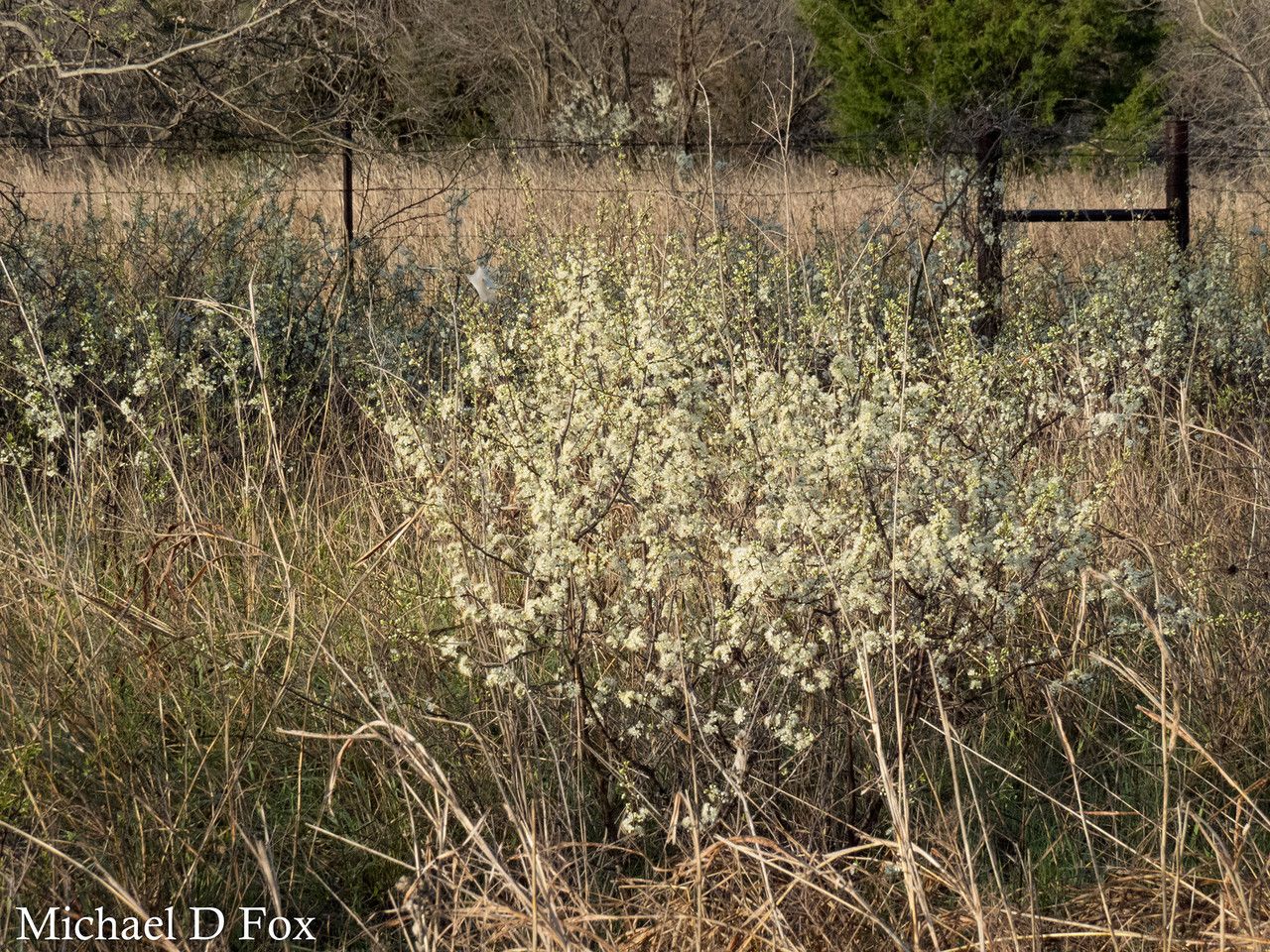
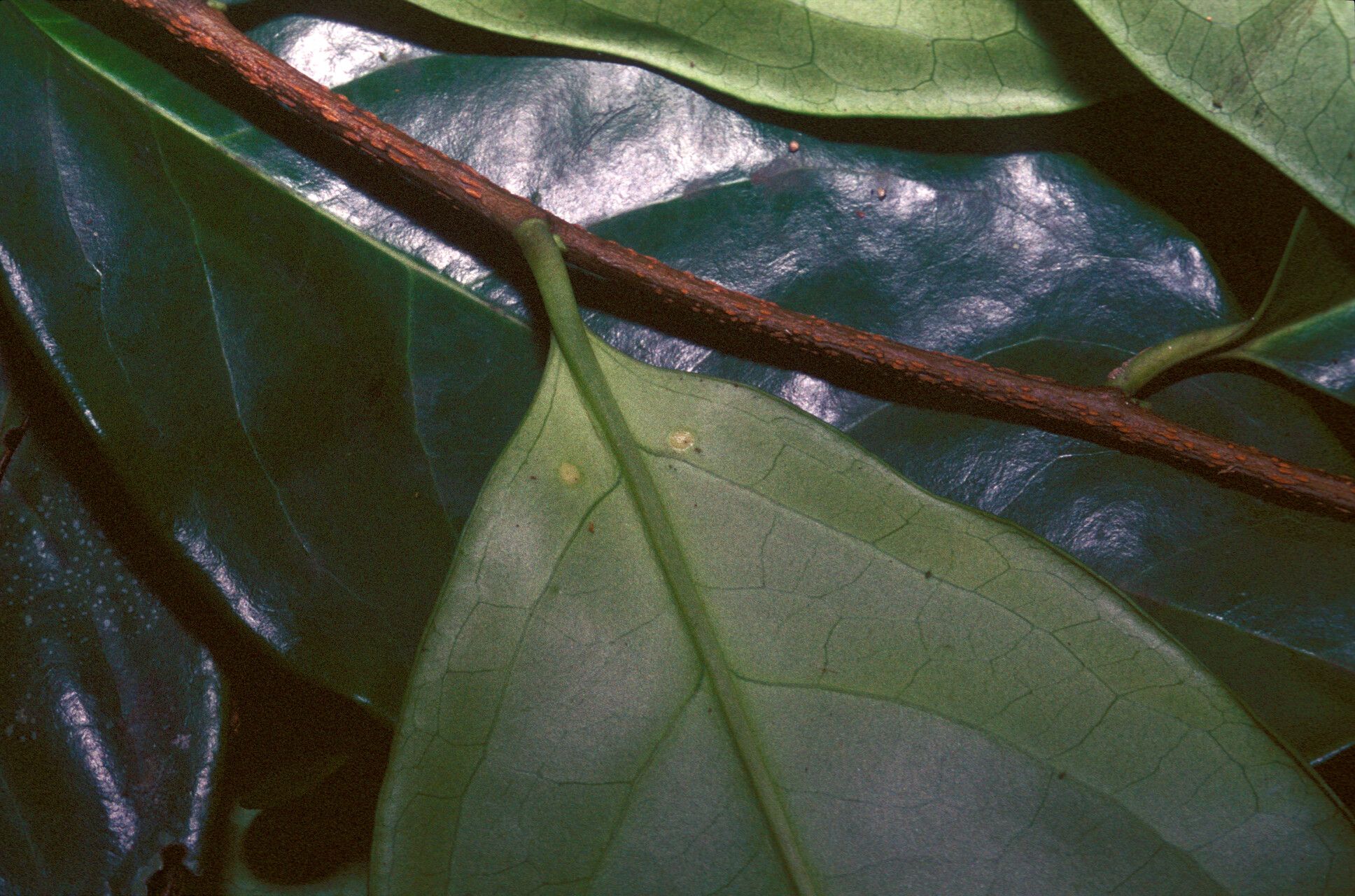
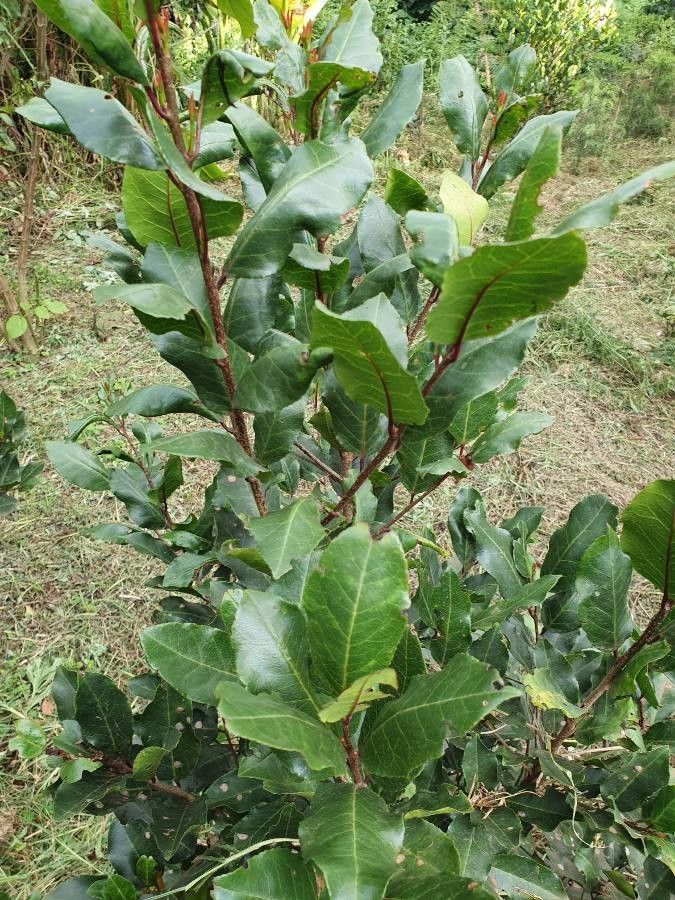
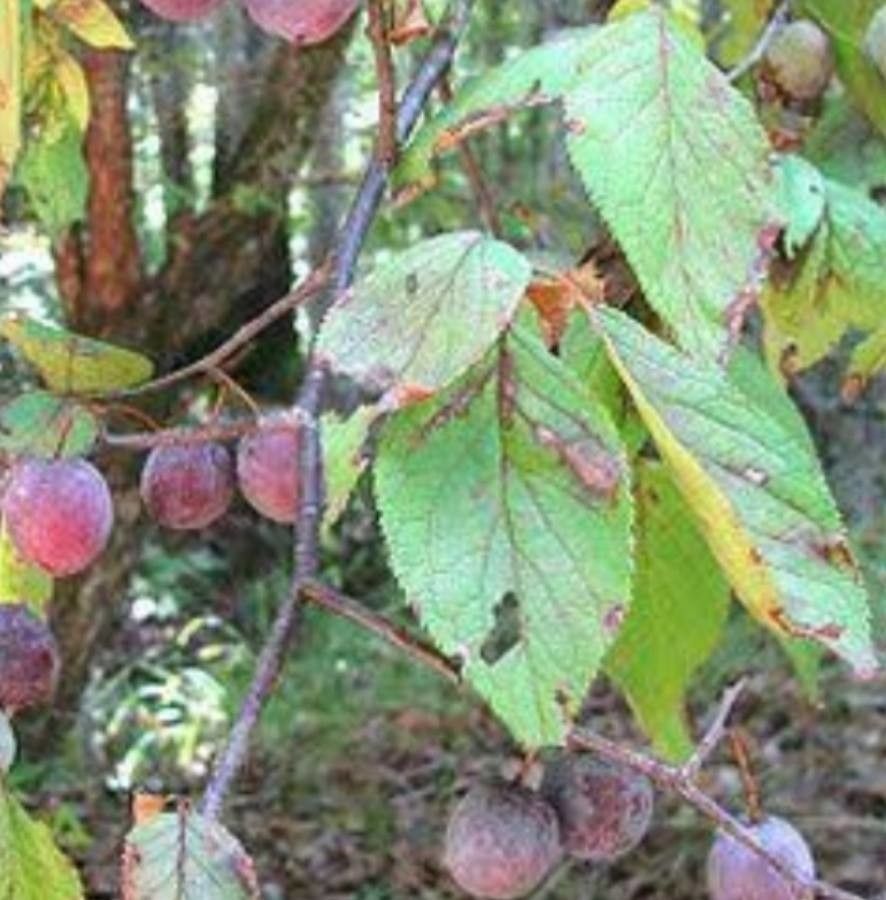
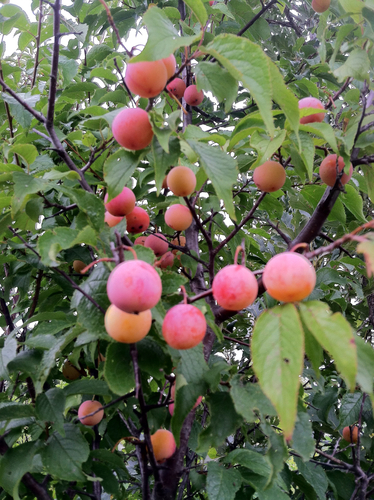
Prunus rivularis, commonly known as the creek plum or wild goose plum, is a deciduous shrub or small tree native to the southeastern United States. Typically reaching a height of 10 to 20 feet, it has a spreading habit with multiple stems. The oval-shaped leaves are dark green and turn yellow in the fall. In early spring, white or pink flowers appear before the leaves emerge. The small, red fruit, which has a sour taste, ripens from August to September.
Prunus rivularis prefers moist soils along streams or other water sources but can tolerate drier conditions once established. Its extensive root system makes it effective for erosion control along stream banks, helping to stabilize the soil.
This plant holds cultural significance for some Native American tribes, who used it for medicinal purposes such as treating coughs and colds, as well as in ceremonial practices.
Overall, Prunus rivularis offers both ornamental value with its spring blossoms and fall foliage, and serves an important ecological role in stabilizing stream banks.
Creek plum has strong disease resistance and is generally not susceptible to illnesses. Regarding care, this plant is fairly low-maintenance. Planted outdoors, it needs only minimal watering, and larger specimens usually do not require pruning. Smaller plants, however, should be pruned after they finish blooming. Creek plum is suitable for anyone with outdoor space, such as a garden or deck, and does not demand much care experience.
How to keep Prunus Rivularis.
Light
Creek plum comes from open habitats, like sunny meadows and the edges of forests, where plenty of light is available. It does best in Full Sun but can also tolerate Partial Sun, adapting well to a range of sunlight conditions.
Water
Water your creek plum once before it begins to bud in mid-spring, and then continue watering it monthly until fall. Make sure to water thoroughly each time until the excess water drains away. After watering, loosen the soil and remove any weeds around the plant. Stop watering in autumn and winter to prevent frost damage.
Temperature
Creek plum shows strong adaptability to different climate conditions, from hot summers to cold winters. Nonetheless, it has a preferred temperature range for growth. If temperatures become too high, the plant is vulnerable to heat and humidity stress, which can cause its death. In places where temperatures come close to the lower limit of its cold tolerance, it is necessary to use insulation measures to protect the plant.
Fertilizer
The Creek plum needs adequate nutrients for best fruit production. Apply fertilizer in early spring to support new growth and bloom development. Regular feeding keeps the plant healthy, produces more flavorful fruit, and prevents nutrient-deficiency problems like yellowing leaves and poor fruit yields.
Pruning
Creek plum is a hardy shrub with multiple stems, known for its beautiful spring flowers and edible fruit. For best results, prune it in early spring to shape the plant, remove dead wood, and improve air circulation. Proper pruning not only increases fruit yield but also enhances the overall health of the plant. Make sure to use clean, sharp tools for optimal healing.
Botanical profile.
- Plant Type
- Tree
- Life Cycle
- Perennial
- Genus
- Prunus
- Family
- Rosaceae
- Hardiness Zone
- 5-9
- Mature Height
- 0.91 m to 1.83 m
- Mature Spread
- 3.05 m to 3.96 m
- Leaf Color
- Dark Green, Forest Green
- Leaf Type
- Deciduous
- Flower Color
- White
- Flower Size
- 1.02 cm to 2.03 cm
- Bloom Time
- Early spring, Mid spring
- Planting Time
- Spring, Summer, Autumn
- Harvest Time
- Mid summer, Late summer, Early fall
Other names.
Reader questions.
What are the sunlight requirements for Creek plum (Prunus rivularis)?
The Creek plum (Prunus rivularis) has specific sunlight requirements to thrive. For full sun exposure, it requires more than 6 hours of direct sunlight daily. In conditions of partial sun, it should receive about 3-6 hours of sunlight. It's important to observe the movement of sunlight through your garden to find spots that offer an ideal balance of light and shade. This ensures that your Creek plum plants remain happy and healthy.