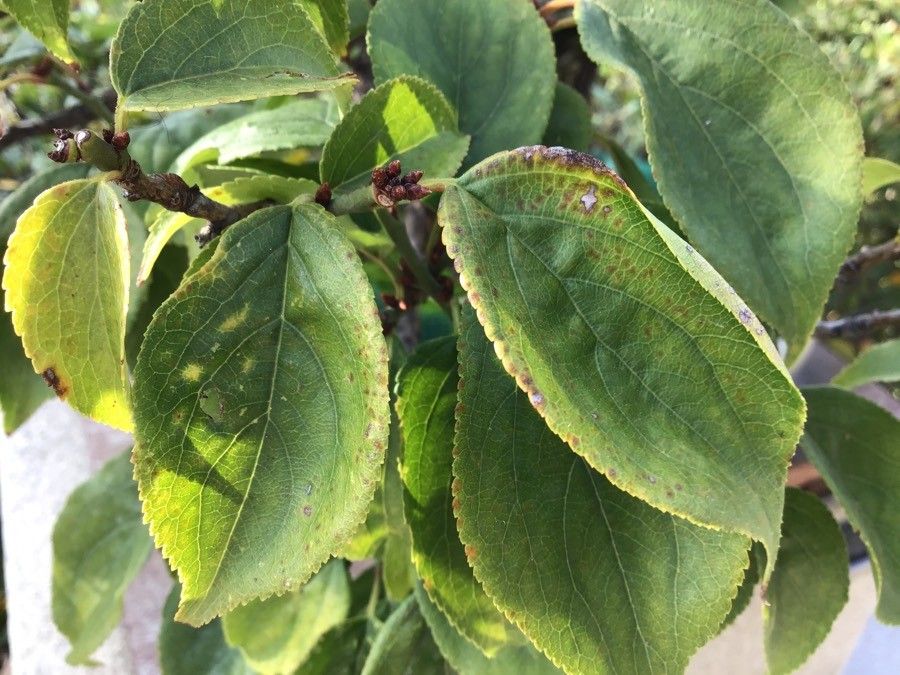
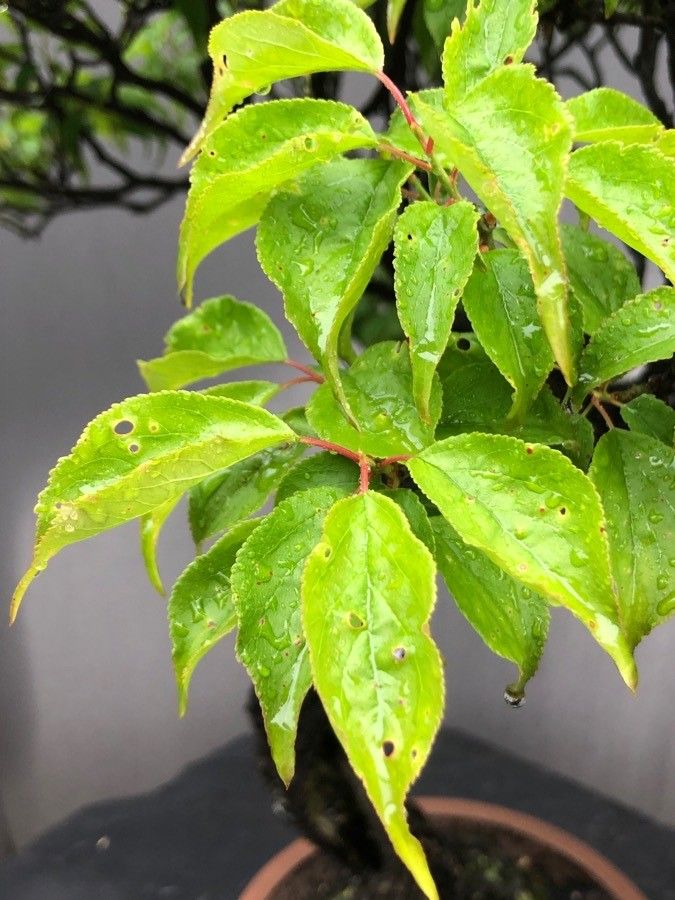
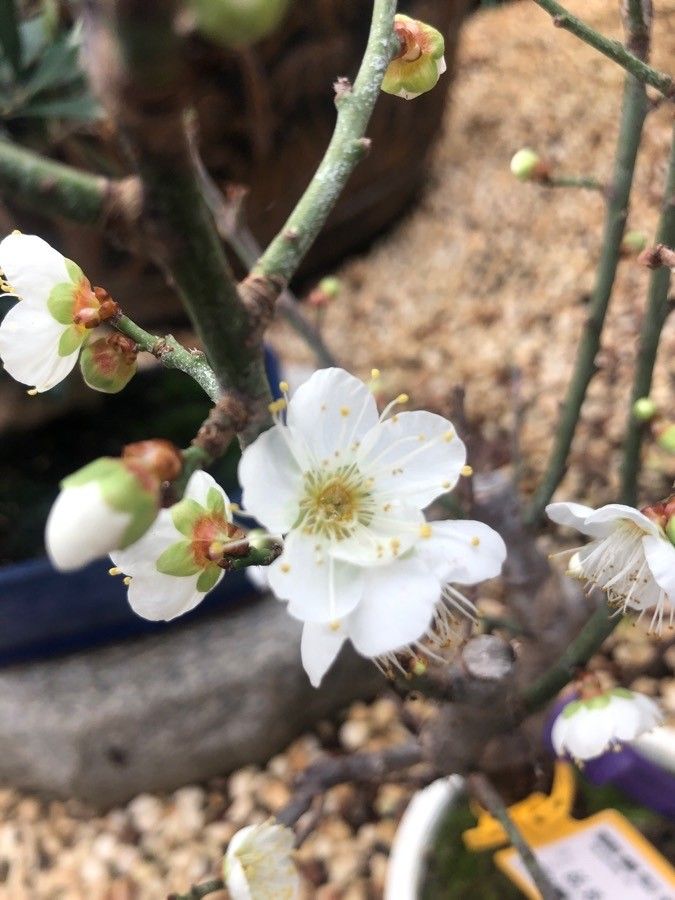
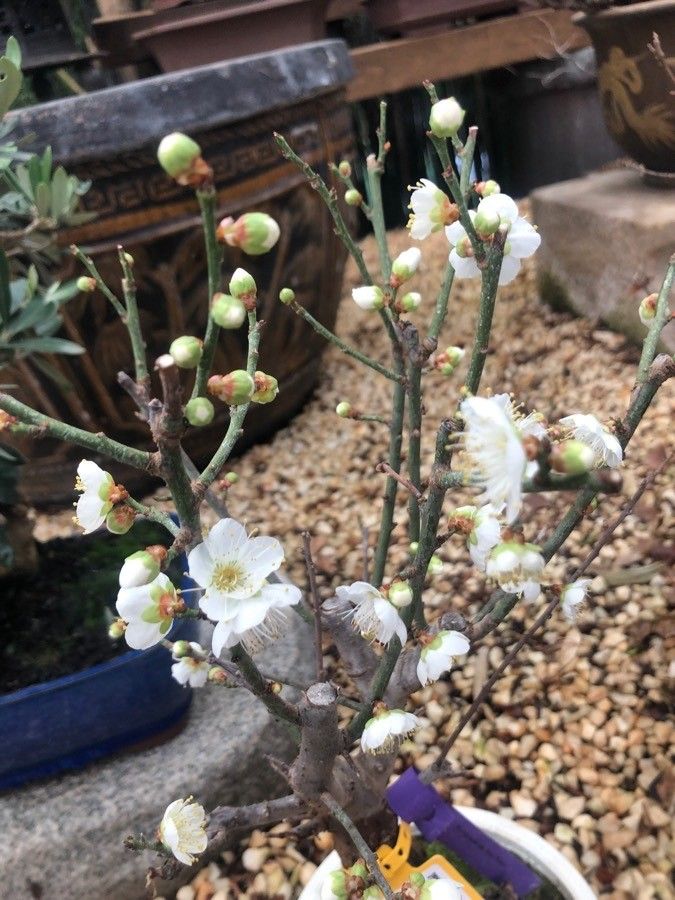
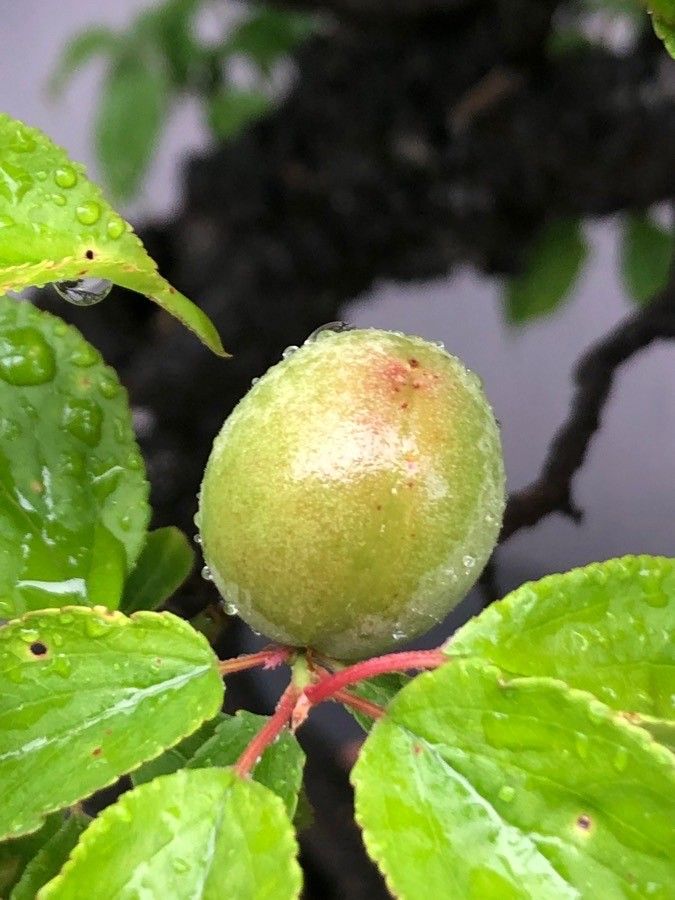
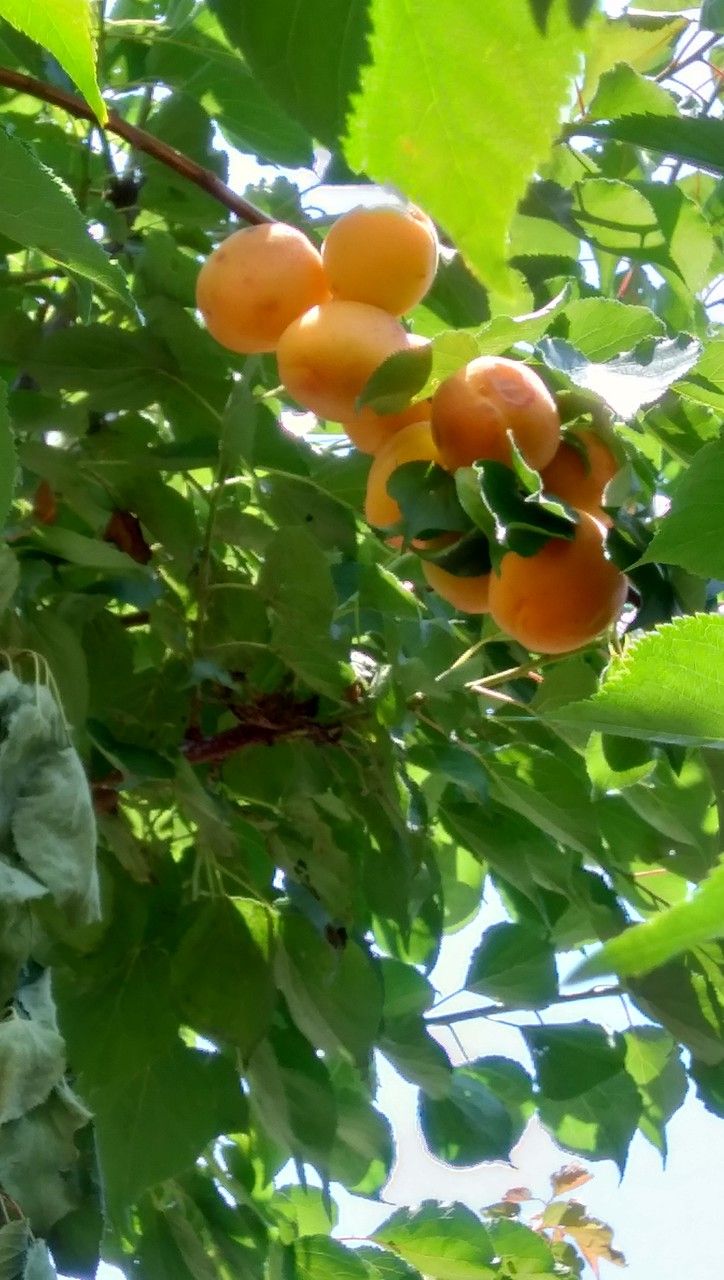
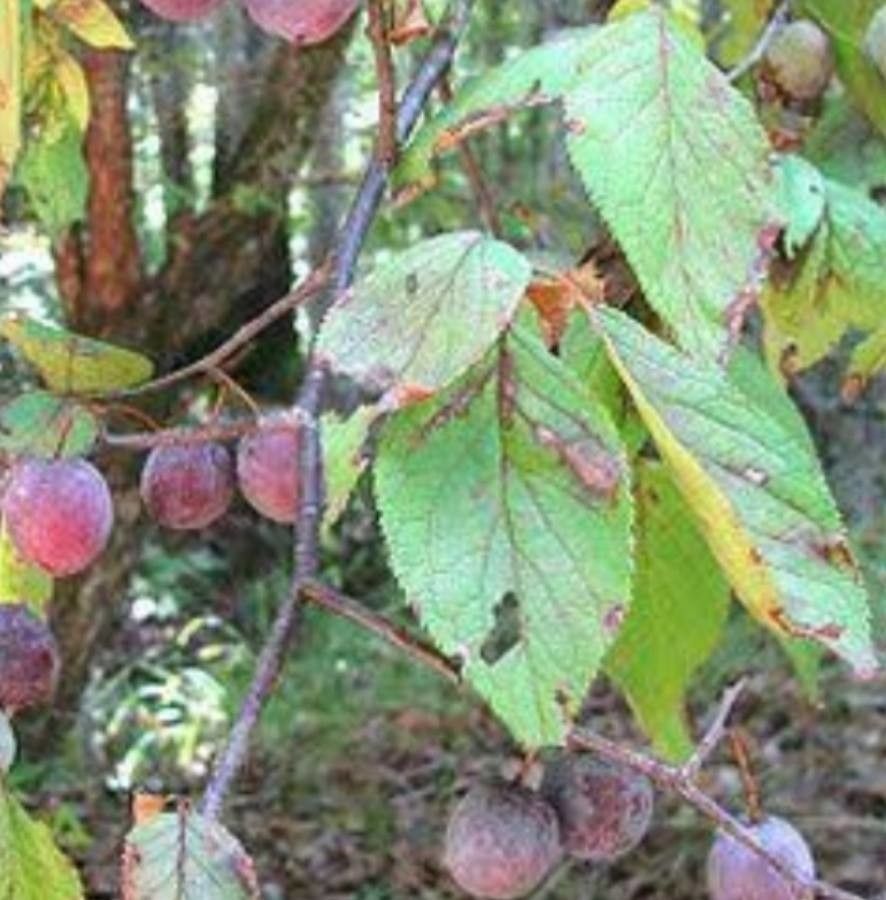
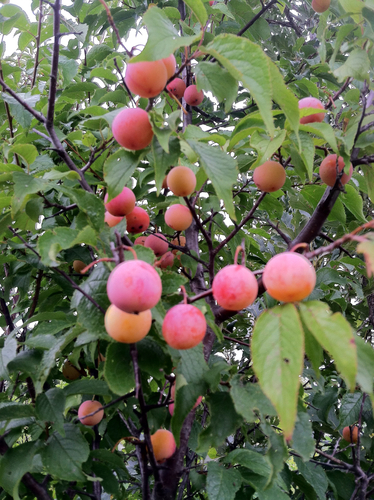
Prunus mume is an East Asian and Southeast Asian tree species classified in the Armeniaca section of the genus Prunus subgenus Prunus. Its common names include Chinese plum, Japanese plum, and Japanese apricot. The flower, long a beloved subject in the traditional painting and poetry of East Asia and Vietnam, is usually called plum blossom. This distinct tree species is related to both the plum and apricot trees. Although generally referred to as a plum in English, it is more closely related to the apricot. In East Asian cuisine (Chinese, Japanese and Korean) and Vietnamese cuisine, the fruit of the tree is used in juices, as a flavouring for alcohol, as a pickle and in sauces. It is also used in traditional medicine. The tree's flowering in late winter and early spring is highly regarded as a seasonal symbol. Prunus mume should not be confused with Prunus salicina, a related species also grown in China, Japan, Korea and Vietnam. Another tree, Prunus japonica, is also a separate species despite having a Latin name similar to Prunus mume's common name.
The Japanese apricot, belonging to the genus Prunus, is a type of stone fruit similar to cherries, peaches, apricots, and almonds. Although commonly referred to as the Japanese apricot, this fruit actually originated in China. In Japan, it is known as "mume," which means plum, and is highly cherished, with at least 300 named cultivars.
Japanese apricot is resistant to many diseases and is generally not prone to illness. In terms of care, this plant is fairly low-maintenance. When planted outdoors it needs only minimal watering, and larger plants typically do not require pruning. Smaller plants, however, should be pruned after they have finished blooming. Japanese apricot is suitable for anyone who has an outdoor area, such as a garden or a deck, and does not demand much gardening experience.
How to keep Prunus Mume.
Light
Japanese apricot grows best when it receives direct, unblocked sunlight. It can still survive if it gets somewhat less sunlight. However, its native habitat leads it to prefer abundant light. Too much or too little exposure can harm the plant.
Water
The Japanese apricot grows best in moist, well-drained soils and has a moderate tolerance to drought. To keep the soil moist without causing waterlogging, water the plant every two weeks. While it is usually grown outdoors and benefits from natural rainfall, its watering needs decrease during the cooler months when the plant is dormant.
Humidity
This plant will thrive in moderate humidity, which is probably the level in your home. However, misting it a few times a week can be very beneficial. Make sure the room has good ventilation.
Temperature
The Japanese apricot is native to areas with mild climates and prefers temperatures between 41 and 95 °F (5 to 35 ℃). In colder seasons, it is advisable to place a protective covering around the Japanese apricot to offset temperature drops.
Fertilizer
The Japanese apricot plant needs adequate nutrients to produce fruit well. Apply fertilizer in early spring to support new growth and flower development. Regular feeding keeps the plant healthy, promotes more delicious fruit, and prevents nutrient deficiency problems such as yellowing leaves and poor fruit production.
Pruning
The Japanese apricot, cherished for its fragrant blossoms, thrives with late winter pruning to improve both its health and flowering. Important techniques include removing dead wood, thinning branches to promote air circulation, and shaping the tree. To prevent disease, always use sterilized tools. Annual pruning helps maintain the tree's aesthetic appeal and structural integrity.
Pot & Repot
Repot your Japanese apricot every 2-3 years in early spring to promote root expansion and recovery. Use a large container with good drainage, and place it in a location with ample sunlight. After repotting, make sure the soil stays moist to encourage healthy growth, which is essential for strong blossoming.
Botanical profile.
- Plant Type
- Tree, Shrub
- Life Cycle
- Perennial
- Genus
- Prunus
- Family
- Rosaceae
- Hardiness Zone
- 5-9
- Mature Height
- 3.96 m to 10.06 m
- Mature Spread
- 6.1 m
- Leaf Color
- Green
- Leaf Type
- Deciduous
- Flower Color
- Pink, White
- Flower Size
- 2.03 cm to 2.54 cm
- Bloom Time
- Early spring, Mid fall, Late fall, Winter
- Planting Time
- Spring, Autumn
- Harvest Time
- Late spring, Early summer, Mid summer
- Native Area
- Myanmar, Japan, Vietnam, Laos
Other names.
Reader questions.
What's the easiest way to water my Japanese apricot tree?
To promote excellent root development, make sure to put a garden hose at the base of the plant and avoid directly spraying the leaves. If the plant is outdoors and exposed to direct sunlight, the leaves will require more watering. You can use bubblers or soaker hoses to moisten the roots, either for individual plants or for the entire garden or bed when adding or removing plants. After watering, remember to drain any excess water and wait for the soil to dry before watering again. It's also important to water at ground level to prevent diseases. On a sunny day, you can spray the entire bush with water. Whether the Japanese apricot is potted or in-ground, it prefers deep watering instead of light sprinkling.
Why should I put fertilizer on my Japanese apricot tree?
Fertilizing a Japanese apricot is important for several reasons. Firstly, it helps the tree produce beautiful blooms. To ensure excellent flowers in early spring, it is recommended to fertilize at that time. Additionally, fertilizer provides the tree with ample energy to store in the ground during its dormant phases. By giving the tree extra nutrients during fall planting or late spring, it will have more energy to use when active growth resumes.
What are the sunlight requirements for Japanese apricot?
The Japanese apricot requires full sun, meaning it thrives best with more than 6 hours of sunlight daily. It can also tolerate partial sun, receiving about 3-6 hours of sunlight. To ensure the plant's happiness, it's crucial to observe how sunlight moves through your garden and select locations that offer a good balance of light and shade.
What is the native environment of the Japanese apricot?
The Japanese apricot, or Prunus mume, is native to environments with mild temperatures, thriving in a range between 41 to 95 °F (5 to 35 °C). It shows strong cold resistance but prefers conditions that are not too extreme.
What should I do if I give the Japanese apricot tree too much or too little water?
An overwatered Japanese apricot can display symptoms of yellowing, dropping leaves, and wilting. The plant may also appear dull and unhealthy, with mushy stems. To address these issues, it is advisable to adjust your watering schedule. Conversely, wilting could also indicate under watering, which can cause crispy and dry leaves. If the soil is dry and simply watering is not sufficient, thoroughly hydrate the plant. While enough water can help the Japanese apricot recover, the damaged root system may result in dryness and yellowing of leaves a few days later. Once the plant returns to its normal state, the yellowing of leaves will cease. When growing a Japanese apricot indoors, always check the moisture levels and avoid overwatering. Look out for black spots as an indicator of excessive water, and allow the soil to dry by refraining from watering for a few days. Overwatering can lead to root rot, so transferring the plant to a different pot is recommended if discolored and slimy roots are detected. It is crucial to prevent root rot by avoiding excessively soggy soil. When planting a Japanese apricot outdoors, ensure that the soil is adequately hydrated. If the soil feels too dry when checked with your fingers, it may indicate underwatering. Therefore, providing sufficient water is necessary for the plant's recovery.
When should I fertilize my Japanese apricot to get the best results?
To effectively fertilize Japanese apricot, timing is crucial. Applying fertilizer too early, while the Japanese apricot is still dormant, is ineffective and results in wasted product that is washed away by rainwater, causing pollution. The first application of fertilizer should be done in early spring, followed by monthly fertilizations until early summer.
How important is sunlight for the growth of Japanese apricot?
Sunlight is essential for the growth of the Japanese apricot, which prospers under the unobstructed radiance of the sun. While it can survive with less sunlight, its native environment predisposes it towards a preference for ample light. Both excessive and insufficient sunlight exposure can have adverse effects on the plant.
How should Japanese apricot be protected during cold seasons?
During colder seasons, it's advised to protect the Japanese apricot if temperatures are expected to drop significantly. Wrapping the trunk and branches with non-woven fabric or cloth can safeguard the plant against cold. Additionally, watering the plant abundantly before the first freeze in autumn helps the soil stay moist and prevents drought and water scarcity during winter and early spring. This method is particularly important if winter temperatures are anticipated to drop below -25°C.
How frequently should I give water to my Japanese apricot?
The key to watering Japanese apricots is to provide deep and infrequent watering. If they are planted in pots, it's important to soak them in a gallon of water each time as the water storage in pots is limited and the soil dries out quickly. In cold regions, watering is needed every 3 to 5 days. It's best to water them early in the morning when the soil is dry, both outdoors and indoors. To determine if watering is needed, check the soil inside the pot. If the top 2-3 inches of soil is dry, it's time for a full watering. On hot days, check the moisture daily as the heat can quickly dry out the soil. If you have a garden, irrigation of the soil is also necessary. In hot climates, watering once a week is sufficient. Only water when you notice about 2 to 3 inches of soil becoming too dry. Avoid adding water if there has been a lot of rainfall to prevent root rot. Japanese apricots mainly grow during spring and fall, so when they're outdoors, add mulch about 3 to 4 inches deep to conserve water. Sandy soil drains faster, so it may require more frequent watering. On the other hand, clay soil should be watered less frequently to avoid root rot, allowing it to dry out for 2-3 days. It's helpful to mark the date on the calendar whenever you water and to pay attention to the leaves drooping, which can indicate if you're a day late on watering.
When is it not a good idea to add fertilizer to my Japanese apricot?
To ensure proper blooming, it is important to avoid using fertilizer with excessive nitrogen on Japanese apricot. Such fertilizers may cause excessive leaf growth but few blooms. Instead, opt for a fertilizer with a lower nitrogen content compared to other nutrients. Additionally, refrain from fertilizing the tree/shrub after early autumn as this can lead to excessive growth just before winter. It is also not recommended to fertilize during hot and dry periods, as the dry soil is less effective in delivering nutrients and the growth stimulated by fertilizer may require additional water that may not be available. It is best to apply fertilizer earlier in the season when temperatures are cooler. Lastly, exercise caution when applying fertilizer to nearby plants or lawns as Japanese apricot can absorb the nutrients unintentionally, resulting in an overdose of fertilizer.
What should I know about using artificial lighting for Japanese apricot?
For indoor Japanese apricot plants, adequate lighting is critical, especially when natural sunlight is scarce, like during winter or in less sunny areas. Artificial lights, particularly LED lights customized to provide specific wavelengths, can significantly promote healthier growth. For full sun plants, aim for 30-50W/sq ft of light, for partial sun plants 20-30W/sq ft, and for full shade plants 10-20W/sq ft. The light source should be placed 12-36 inches above the plant and be kept on for 8-12 hours daily to mimic natural daylight hours.
What are the crucial symptoms to look out for in Japanese apricot due to temperature changes?
For the Japanese apricot, critical symptoms to monitor include the plant's response to low and high temperatures. At temperatures below -25°C, you might not notice immediate changes, but by spring, branches may become brittle and dry with no new shoots. During high temperatures, specifically above 38°C, leaves may lighten in color, tips might dry and wither, and the plant could become more susceptible to sunburn.