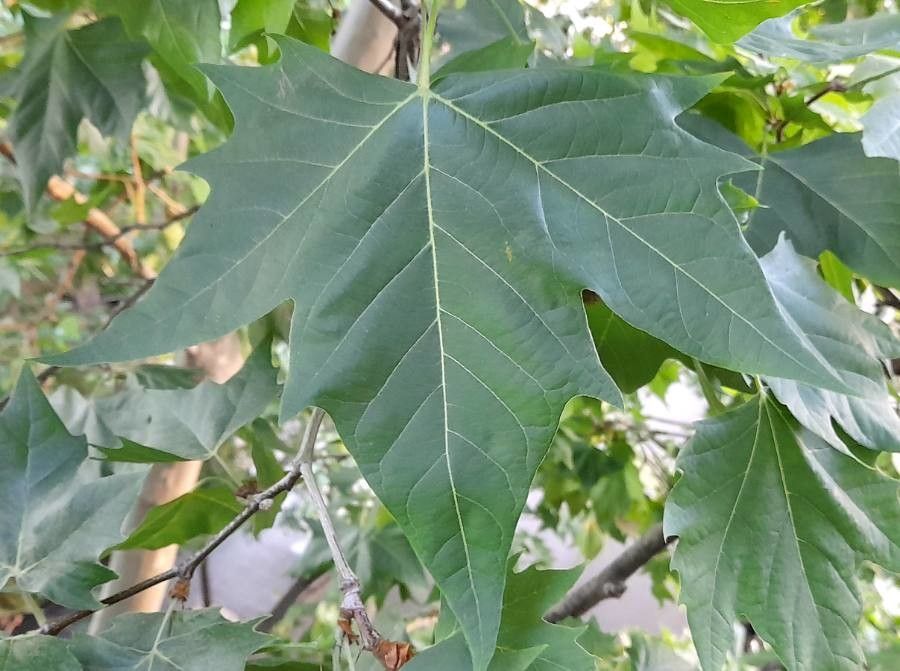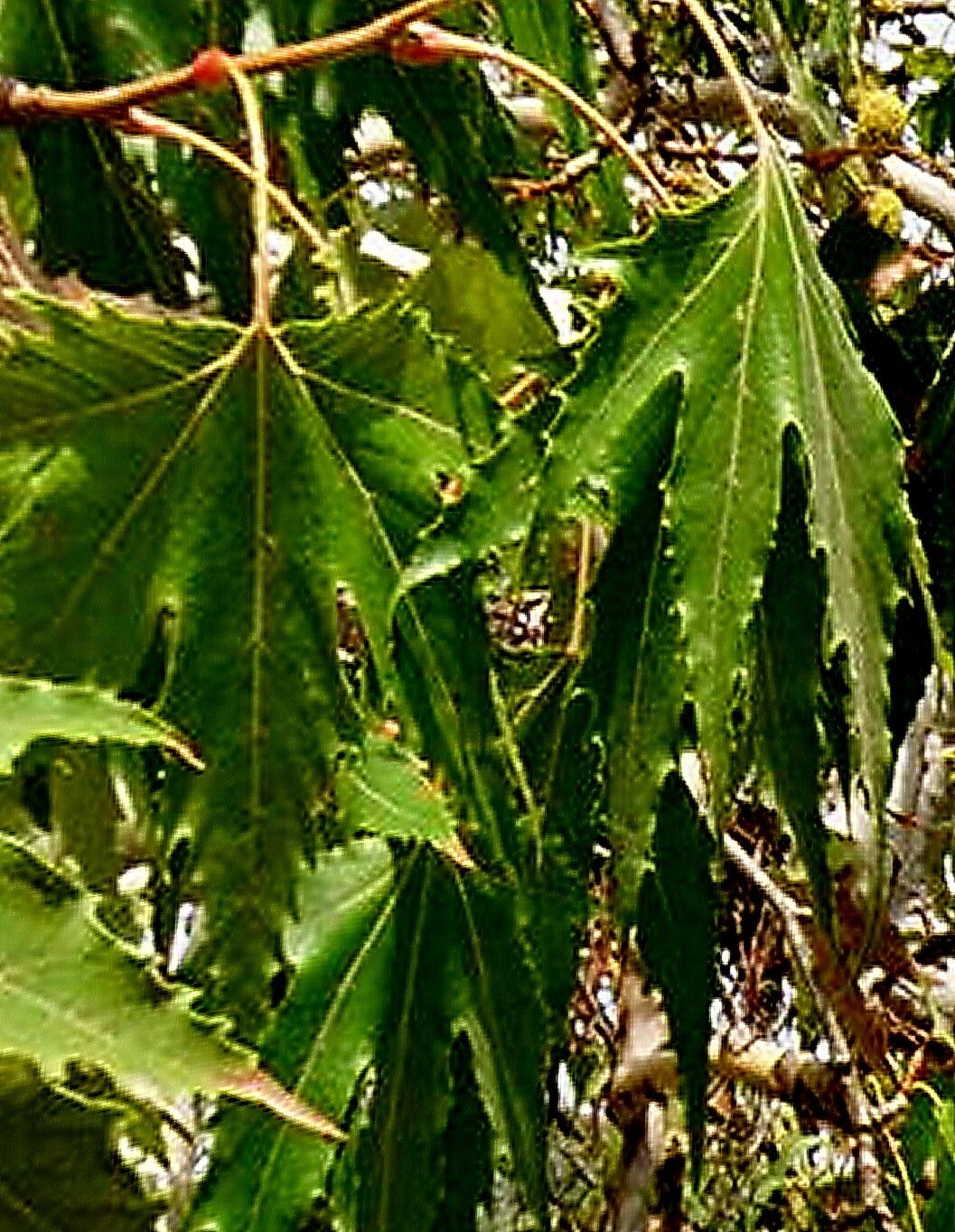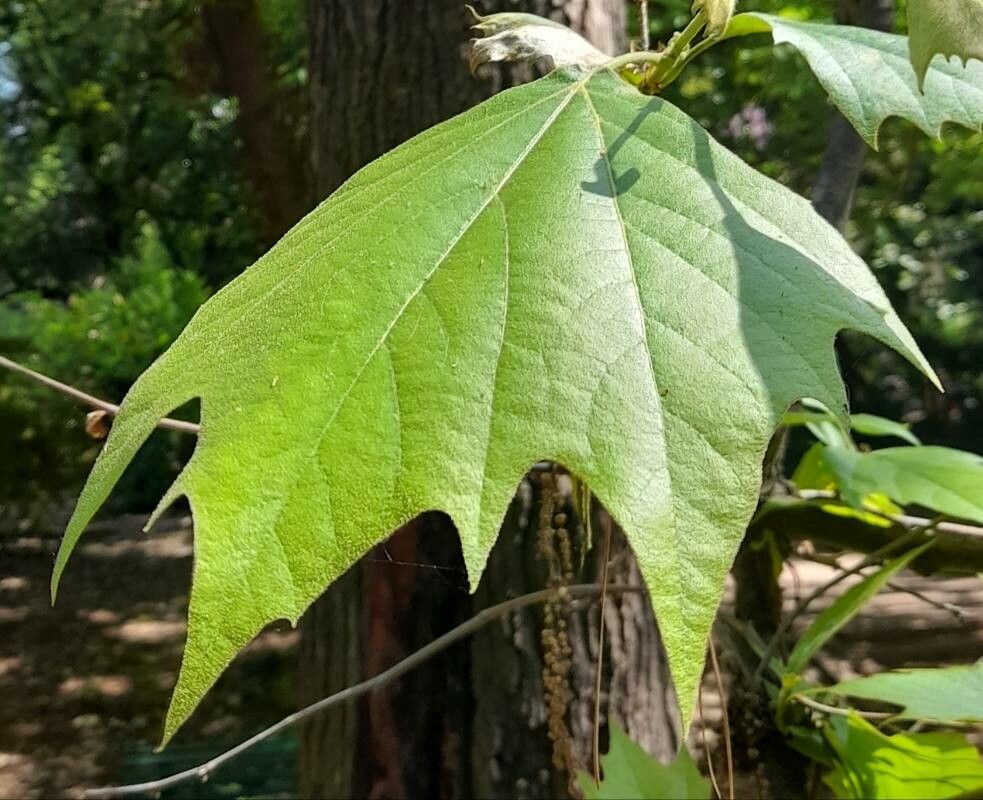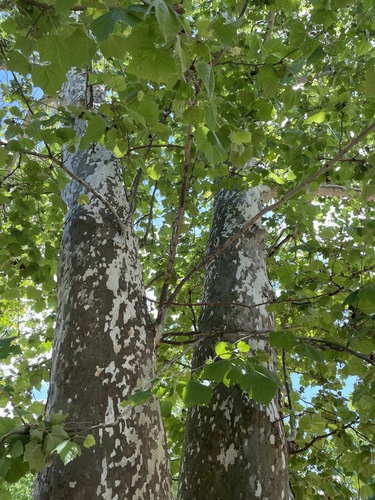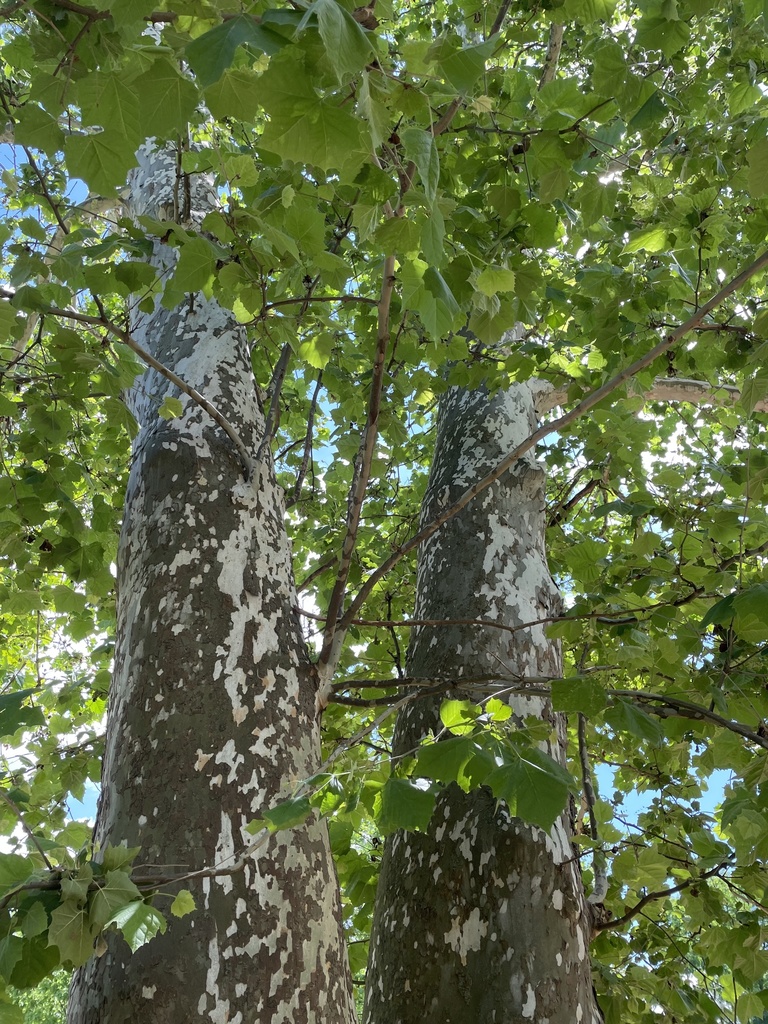
Platanus occidentalis, commonly known as the American sycamore, is a large deciduous tree native to North America. It can grow up to 30-40 meters tall and features a broad, spreading crown with distinctive mottled bark that peels off in patches, revealing white or greenish-white inner bark. The leaves are large, lobed, and rough-textured, reaching up to 25 centimeters in length. In the spring, the tree produces small flowers that develop into round fruit clusters, which persist throughout the winter months.
The American sycamore is commonly found along riverbanks, floodplains, and other wetland areas, where it plays a crucial role in stabilizing soil erosion due to its extensive root system. It also provides habitat for various wildlife species, such as birds and mammals.
The wood of Platanus occidentalis is highly valued for its strength and durability, making it popular for use in furniture making, flooring, and veneer production, among other applications.
Overall, Platanus occidentalis is an important species both ecologically and economically. Its various uses make it an essential part of North America's natural heritage.
American sycamore is resistant to disease and is generally not susceptible to illnesses. In terms of care, this plant is fairly low-maintenance. When grown outdoors it needs minimal watering, and larger specimens usually do not require pruning. Smaller plants, however, should be pruned after they finish blooming. American sycamore is suitable for anyone with an outdoor area, such as a garden or deck, and does not demand much plant-care experience.
How to keep Platanus Occidentalis.
Light
The American sycamore does best in full, intense sunlight but can also withstand locations with moderate shade. The plant's vigor and overall health rely heavily on plentiful light. Its original habitat and ecological niche align with this sun tolerance. However, both too little and too much sun can stress the plant, impacting its growth and well-being.
Water
The American sycamore flourishes in moist environments and requires consistent watering every one to two weeks to prevent drying out. Although it can withstand moderate drought conditions, it thrives best with plenty of moisture. Being a large deciduous tree, the American sycamore also needs ample space for its extensive root system to access water effectively.
Temperature
The american sycamore needs a temperate environment, preferring temperatures of 41 to 95 ℉ (5 to 35 ℃). It can survive at lower temperatures but is prone to frost damage in colder areas. In summer it can tolerate higher heat up to 95℉ (35℃), but requires consistent moisture. In fall, it is recommended to gradually reduce watering to encourage dormancy.
Fertilizer
Apply fertilizer to your American sycamore in early spring to encourage healthy growth. Regular feeding improves overall vigor, producing robust growth, increased tolerance of difficult conditions, and better resistance to diseases and pests. Follow a consistent fertilization schedule for your American sycamore to achieve foliage that is vibrant, richly colored, and lush in appearance.
Pruning
The American sycamore is a fast-growing tree known for its broad, lobed leaves and distinctive mottled bark. To manage its size, improve air circulation, and remove weak branches, it is best to prune this tree in early spring, focusing primarily on thinning. It's essential to sanitize your tools properly to prevent diseases and keep the tree healthy and looking its best.
Toxicity
Typically, sycamore trees only require pruning after limbs have been broken. Pruning the damaged limbs back to the collar is necessary. When you notice any branches that are dead or sick, you should clip them off. Only very seldom, when a branch grows radically erect, producing a tight crotch with the trunk, would you need to perform corrective pruning.
Further reading →
The toxicity and danger assessments provided are for reference only. We do not assure their accuracy, so it's crucial not to depend on them. Seek professional advice when necessary for accurate guidance.
Botanical profile.
- Plant Type
- Tree
- Life Cycle
- Perennial
- Genus
- Platanus
- Family
- Platanaceae
- Hardiness Zone
- 4-9
- Mature Height
- 29.87 m to 39.93 m
- Mature Spread
- 29.87 m
- Leaf Color
- Green, Yellow, Brown
- Leaf Type
- Deciduous
- Flower Color
- Yellow, Green, Red
- Flower Size
- 2.54 cm
- Bloom Time
- Mid spring, Late spring
- Planting Time
- Spring, Autumn
- Harvest Time
- Mid summer, Late summer, Early fall
- Native Area
- Mexico
Other names.
Reader questions.
When should I water my American Sycamore?
The ideal time to water your American Sycamore is when you notice the soil's dryness at a depth of 1 to 2 inches, signaled by dry or crispy leaves, yellowing or browning foliage, and during its pre-flowering stage. Additionally, increased water demand occurs under warm temperatures and high sunlight exposure. Be cautious of over-watering when the soil is moist to avoid risks like root rot and under-watering when the soil has been dry for too long, which can lead to wilting or even death of the plant.
Why should I put fertilizer on my American sycamore tree?
Maintaining the overall health of your American sycamore, regardless of the variety, can be achieved through regular fertilization. By providing the proper nutrients, your tree will experience increased growth and resilience to difficult conditions. This will also aid in its ability to fight off diseases and pests. It's important to note that the foliage of your American sycamore is a particularly attractive feature, making it worth your effort to preserve. To achieve this, establish a consistent fertilization schedule tailored to your specific tree. This will result in vibrant leaves with deep color and a lush appearance.
What are the sun requirements for American Sycamore?
American Sycamore requires full sun exposure for optimal growth, characterized by more than 6 hours of sunlight daily. It can also tolerate partial sun, which means about 3-6 hours of sunlight. Observing how sunlight moves through your garden helps in choosing the right spots that provide a balance of light and shade, ensuring the well-being of your plants.
What are the essential care instructions for an American Sycamore?
The American Sycamore, scientifically known as Platanus occidentalis, thrives in a temperate environment. Its preferred temperature range is between 41 to 95°F (5 to 35°C). Although it possesses strong cold resistance, it is susceptible to frost damage in colder climates. To support its growth, maintain consistent moisture, especially during summer's high temperatures, which can reach up to 95°F (35°C). In preparation for winter, reduce watering gradually to encourage dormancy. However, if temperatures are expected to plummet below -30°C, it's crucial to protect the plant. Wrapping its trunk and branches with non-woven fabric or cloth can offer necessary insulation. Additionally, watering the tree generously before the first freeze helps keep the soil moist, preventing drought and water scarcity during winter and early spring.
How should I water my American Sycamore?
Water your American Sycamore by ensuring well-drained soil conditions and adapting to its moderate moisture tolerance. Utilize watering techniques such as the Soak & Dry method, which simulates natural rainfall absorption, or a slow trickling water technique that encourages deep root penetration. Employ tools like a soil moisture meter for accurate moisture levels. Avoid watering directly on the trunk or foliage, and ensure the watering focuses on the ground around the trunk, extending out to the drip line.
When should I fertilize my American sycamore tree?
To properly fertilize your American sycamore, it is recommended to do so in late winter or early spring. This will provide the tree with the necessary nutrients for healthy growth once the weather warms up. If you live in a warm climate region, it can also be beneficial to fertilize again in early fall. This helps add nutrients to the soil for the following growing season and strengthens the tree, making it more resilient to winter cold and preventing damage to the foliage. Fertilizing earlier in the season ensures that new branches have enough time to grow and withstand the cold winter.
How does sunlight affect the American Sycamore?
The American Sycamore thrives best under the full intensity of sun rays but can also endure moderate shadow. Its vitality and overall health greatly rely on sufficient light exposure, which is intrinsic to its natural habitat. However, both insufficient and excessive sunlight can stress the plant, impacting its growth and health. During low light conditions, especially in winter or less sunny spaces, artificial lighting such as LED lights can be used to promote healthier growth by providing 30-50W/sq ft for full sun plants, 20-30W/sq ft for partial sun plants, and 10-20W/sq ft for full shade plants.
How do I care for an American Sycamore in low temperature conditions?
The American Sycamore can tolerate cold conditions and is most comfortable when the temperature remains above 5°C (41°F). During the winter months, it's important to ensure that the temperature does not fall below -25°C to -30°C. At temperatures lower than -30°C, the tree may not show immediate signs of distress, but by spring, the branches could become brittle, dry, and may fail to produce new shoots. To combat this, prune any dead branches at the start of spring to encourage healthy growth and recovery from the cold.
How much water does American Sycamore really need?
American Sycamore requires a moderate amount of water, with the specific amount depending on factors like pot size and root depth. Generally, a mature plant in a large pot needs approximately 2 to 3 liters of water per session. Ensure the soil is evenly moist but not waterlogged, and adjust the watering amount based on the plant's moisture levels. Proper hydration is indicated by lush green leaves and sturdy stems, while over or under-watering can lead to various health issues.
When is not a good time to put fertilizer on my American sycamore tree?
To ensure the health of your American sycamore, it is important to be mindful of when to fertilize. First and foremost, avoid fertilizing during the winter months when the tree is dormant and does not require nourishment. It is also advisable to refrain from fertilizing in late spring and throughout summer, as the hotter and drier weather during this time can have a detrimental impact on the tree's response to fertilization. To prevent any potential issues, it is best to stick to a fertilization schedule that focuses on feeding in early spring and early fall.
What symptoms indicate light problems in American Sycamore?
Symptoms of light issues in American Sycamore include smaller new leaves, leggy or sparse growth, faster leaf drop, delayed or halted new growth, and lighter-colored or yellowing leaves. Overexposure symptoms can also manifest as chlorosis, sunscald, leaf curling, wilting, and leaf scorching. These indicators suggest the plant is either not receiving enough light or is exposed to too much sunlight, impacting its photosynthesis process and overall health.
What should I do if my American Sycamore is exposed to high temperatures?
American Sycamores are best kept below 35°C (95°F) during the hot summer months. Exposure to temperatures above 38°C (100.4°F) can cause the leaves to lighten in color, with tips becoming dry, withered, and more susceptible to sunburn. To mitigate heat stress, trim away the sunburned and dried-up parts. Relocate the plant to a shaded area, or employ a shade cloth to shield it from the intense midday and afternoon sun. Additionally, ensure the soil stays moist by watering the plant in the morning and evening.