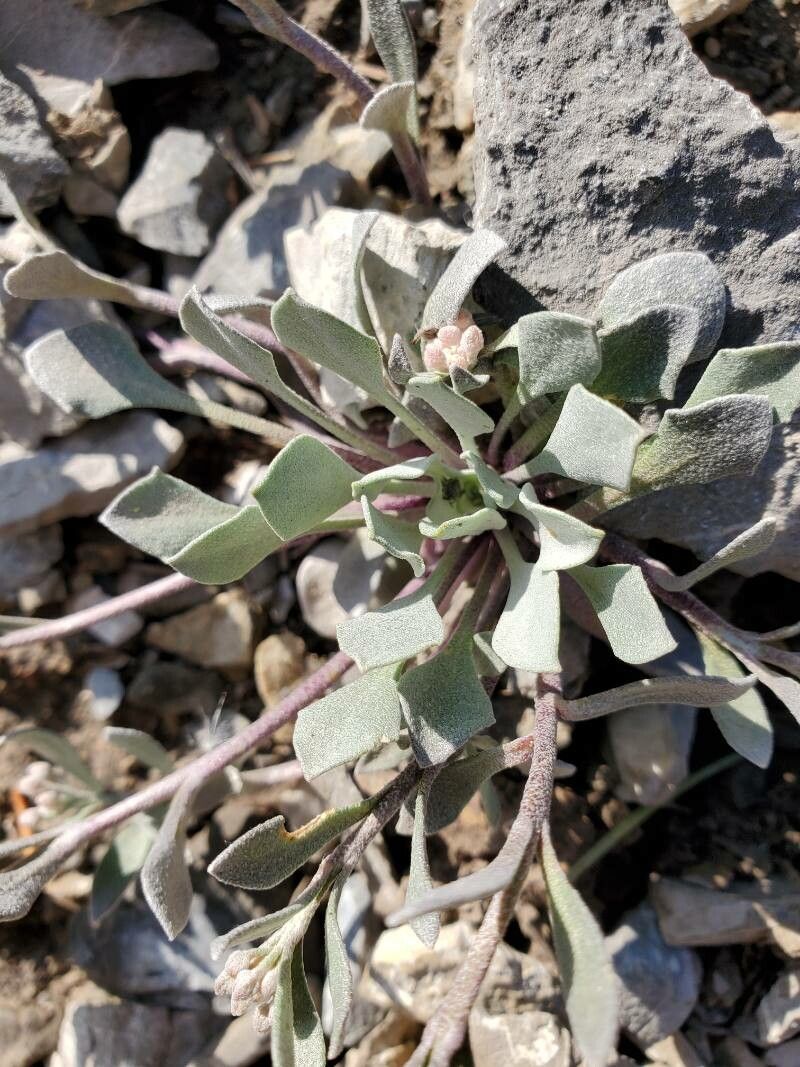
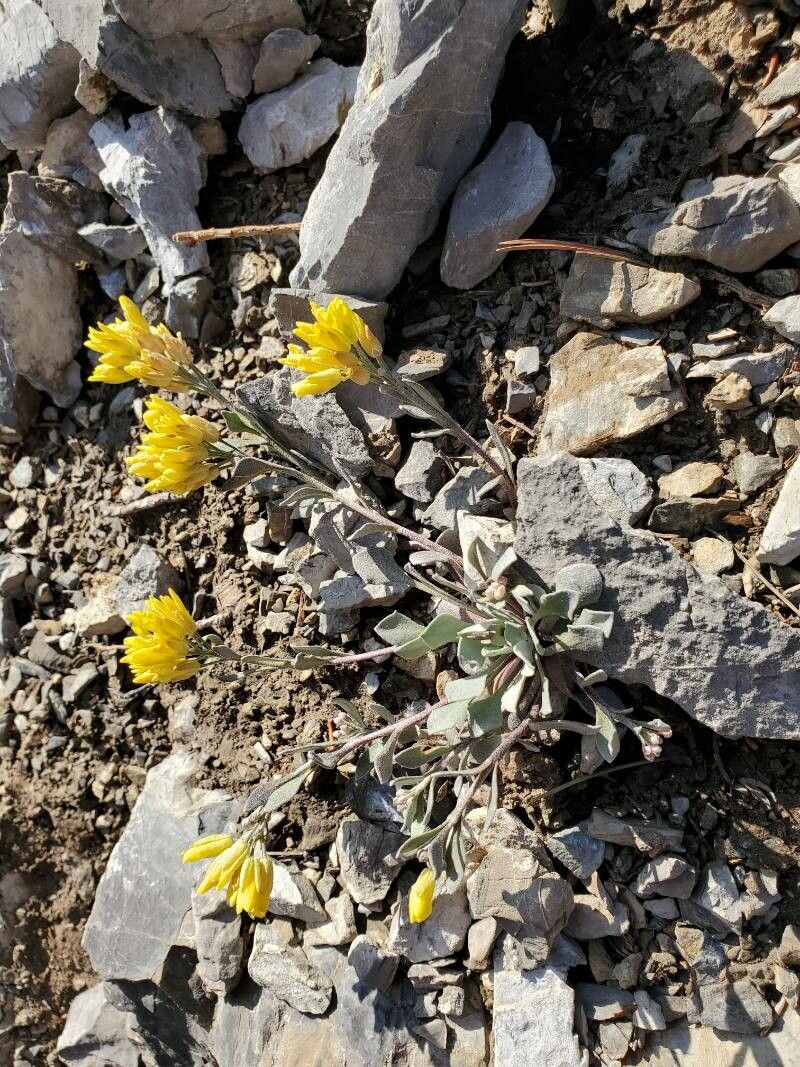
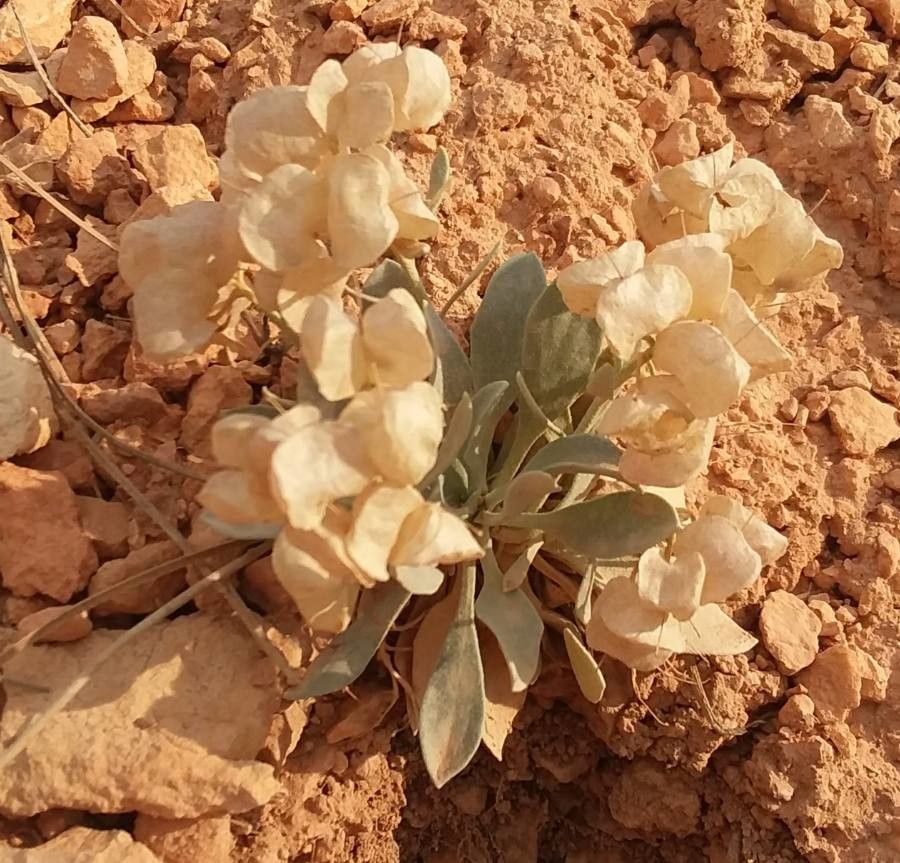
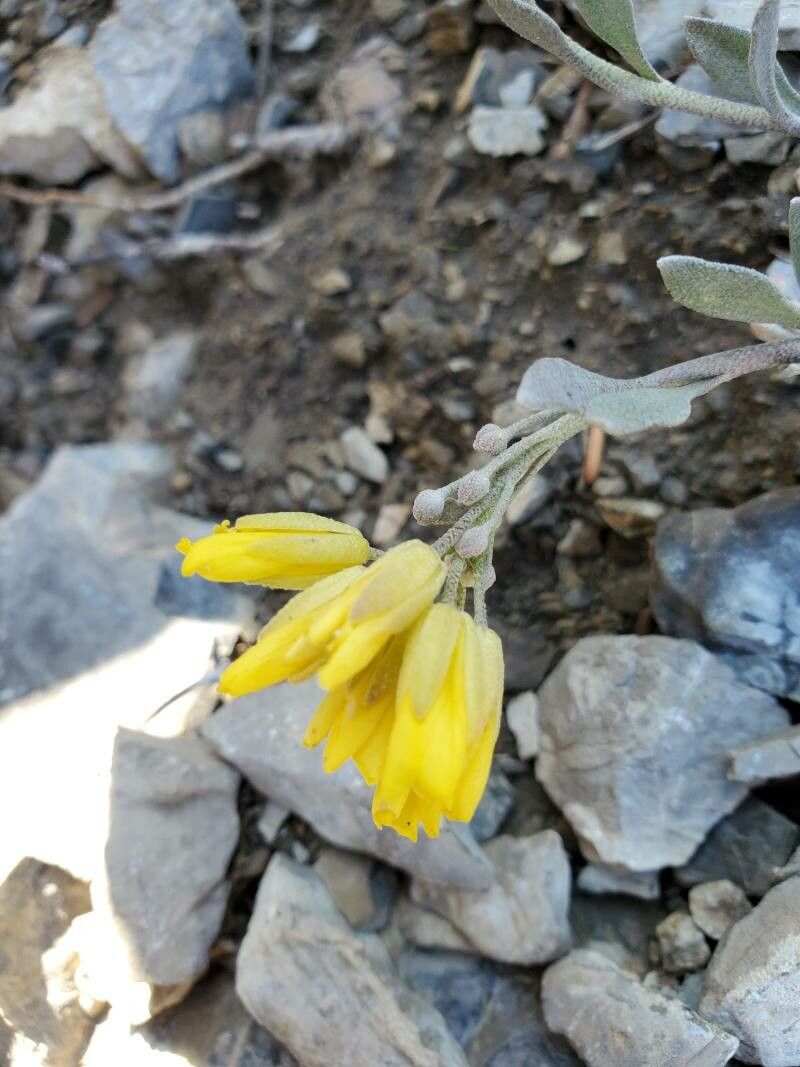
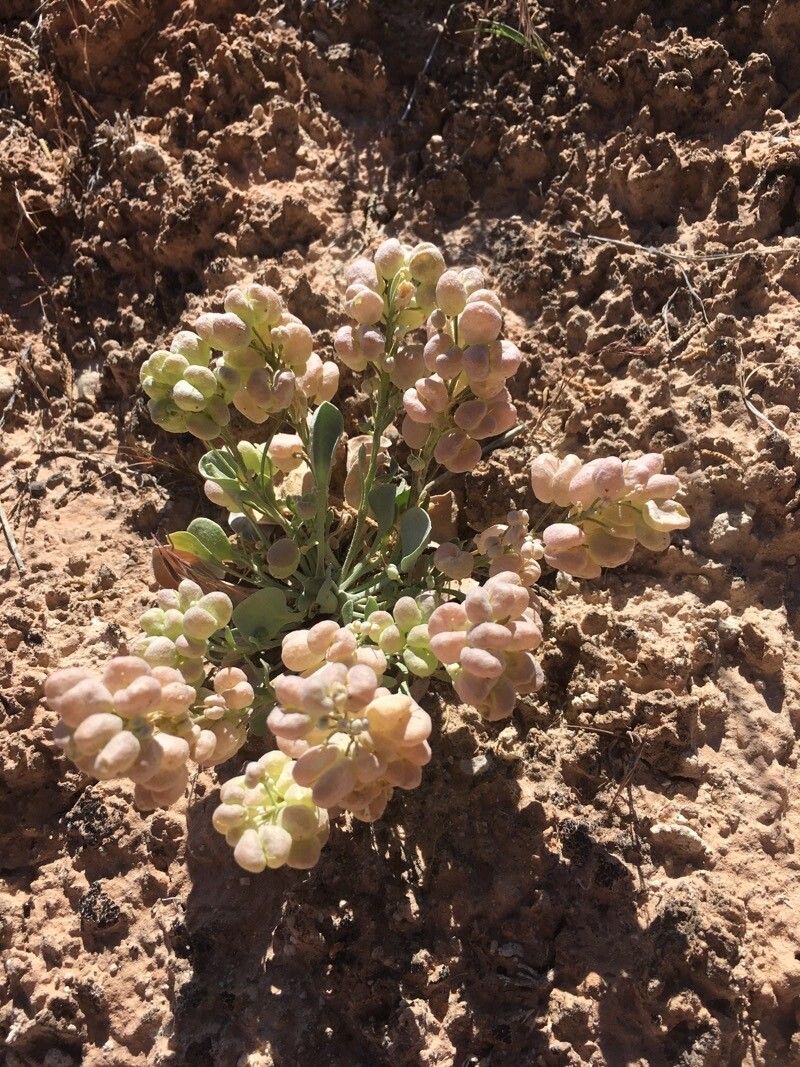
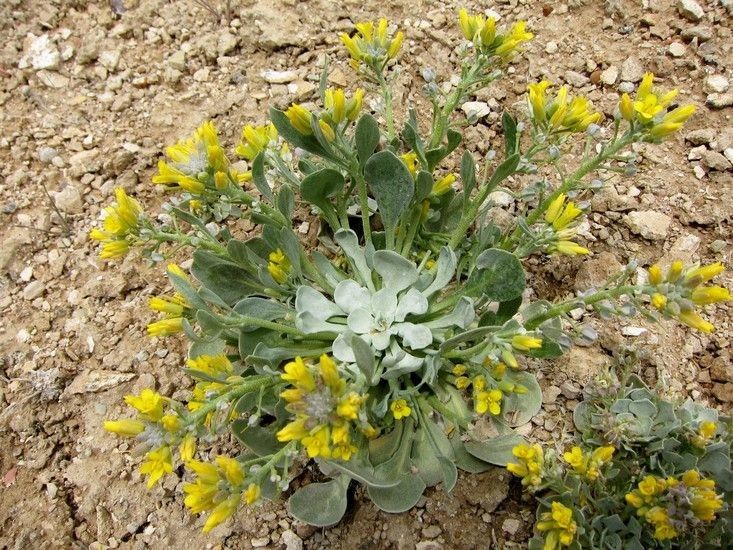
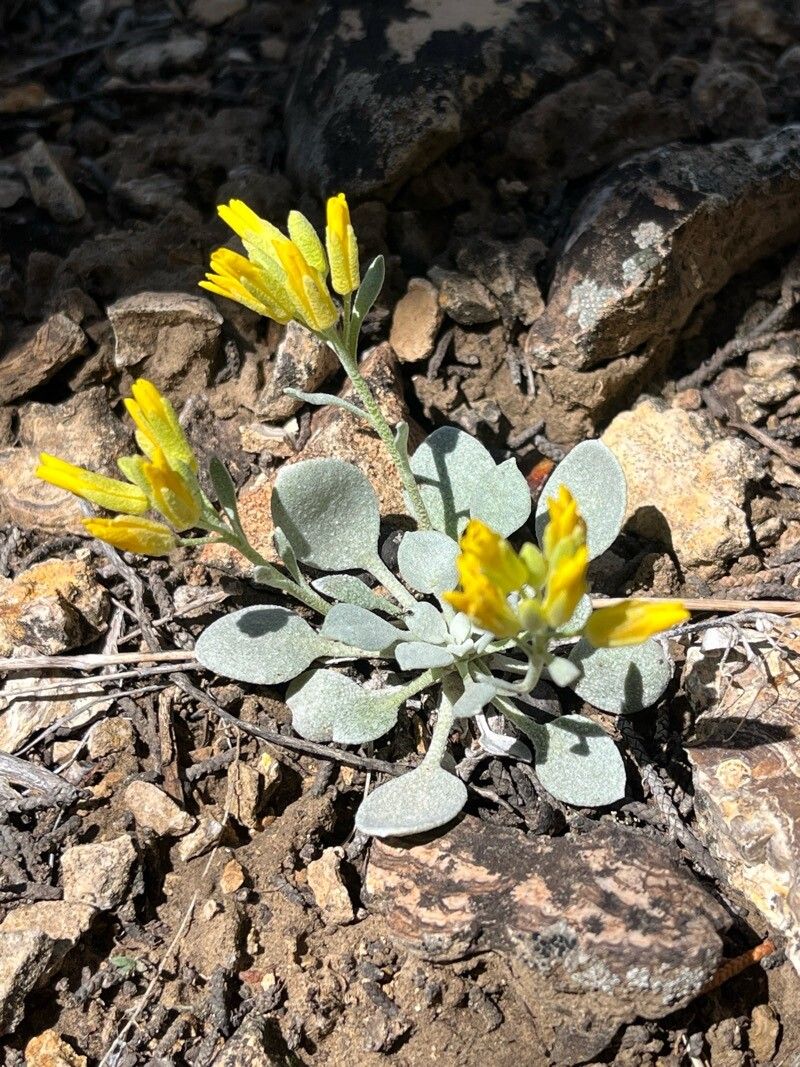
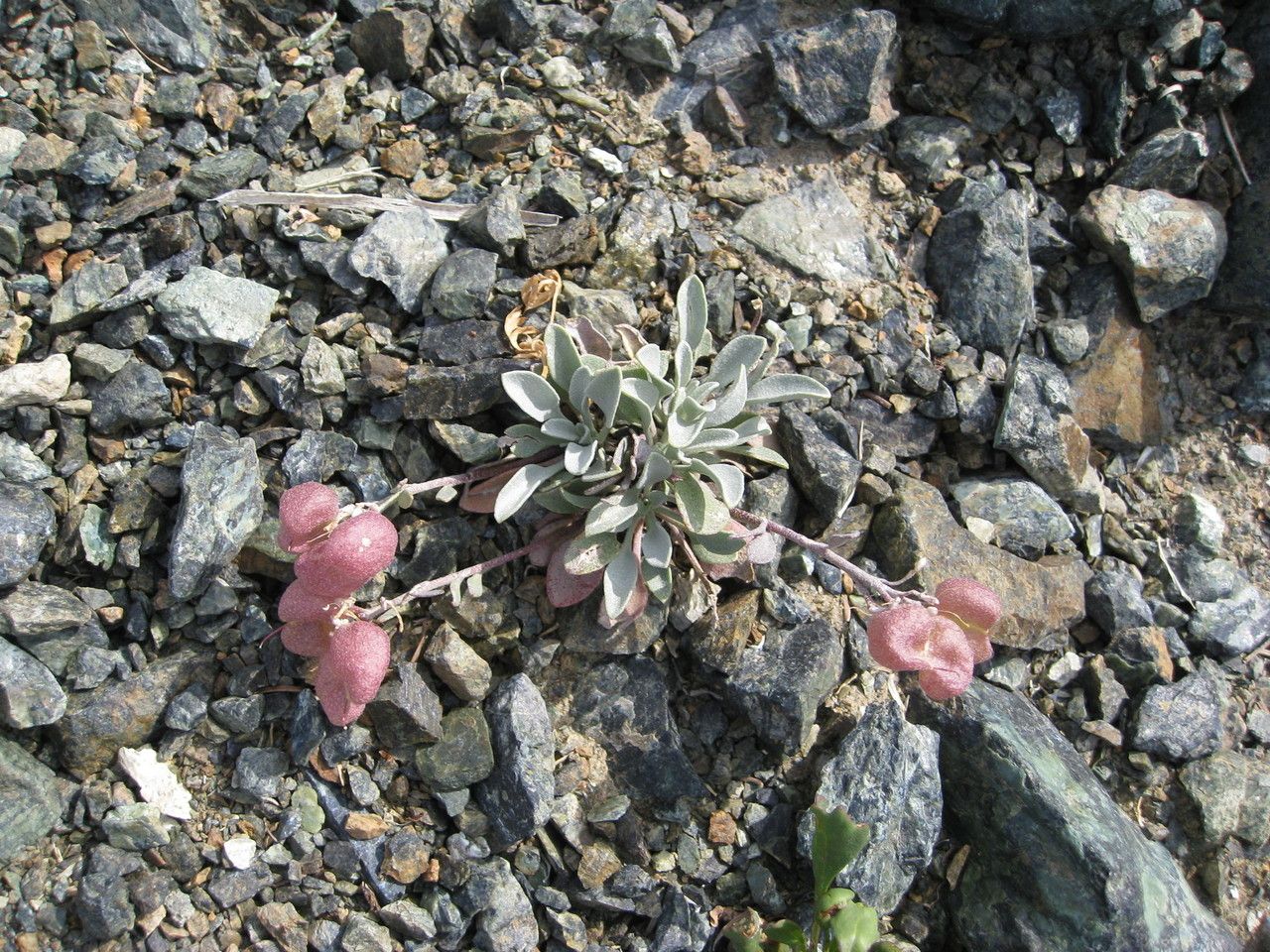
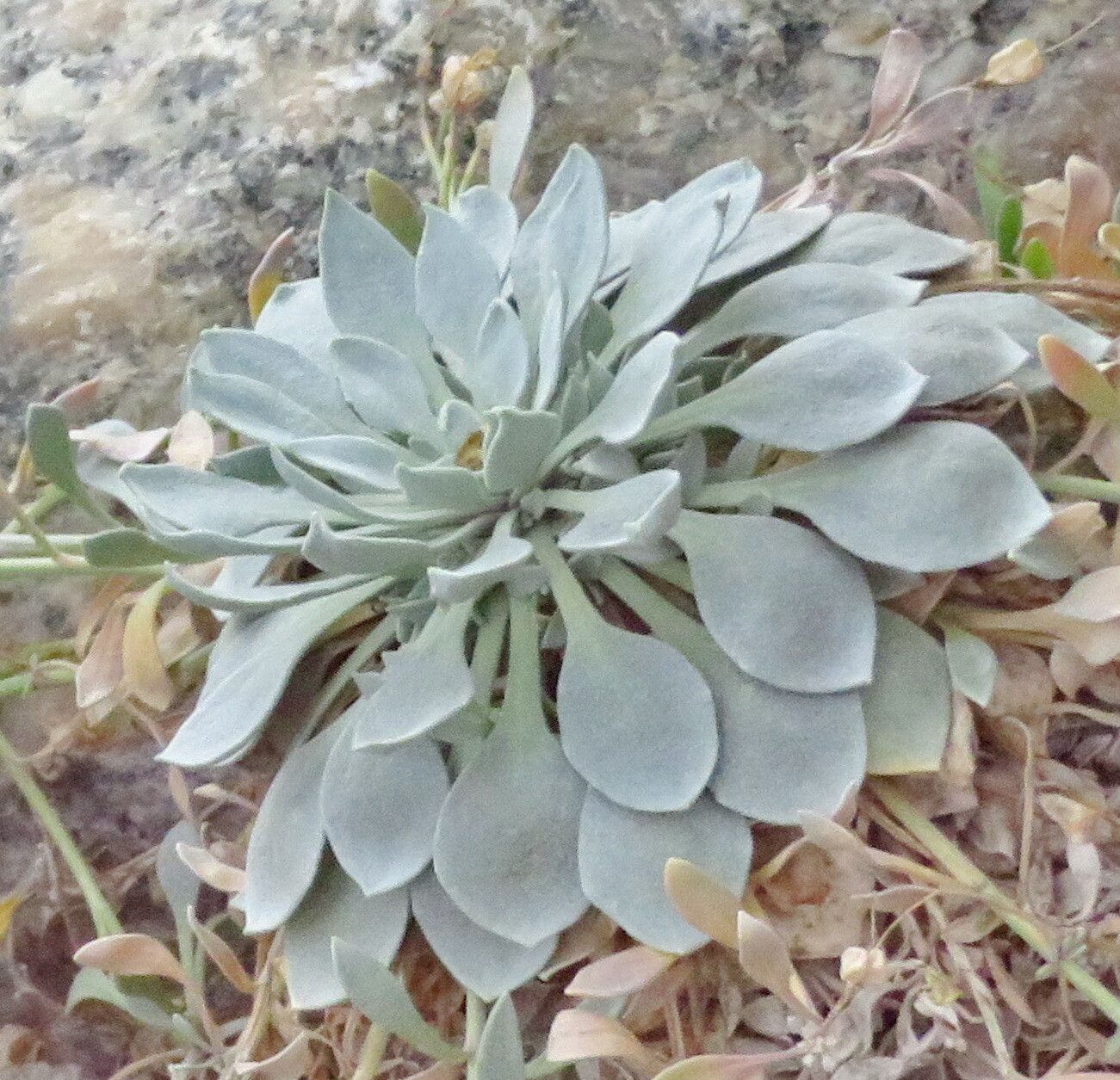
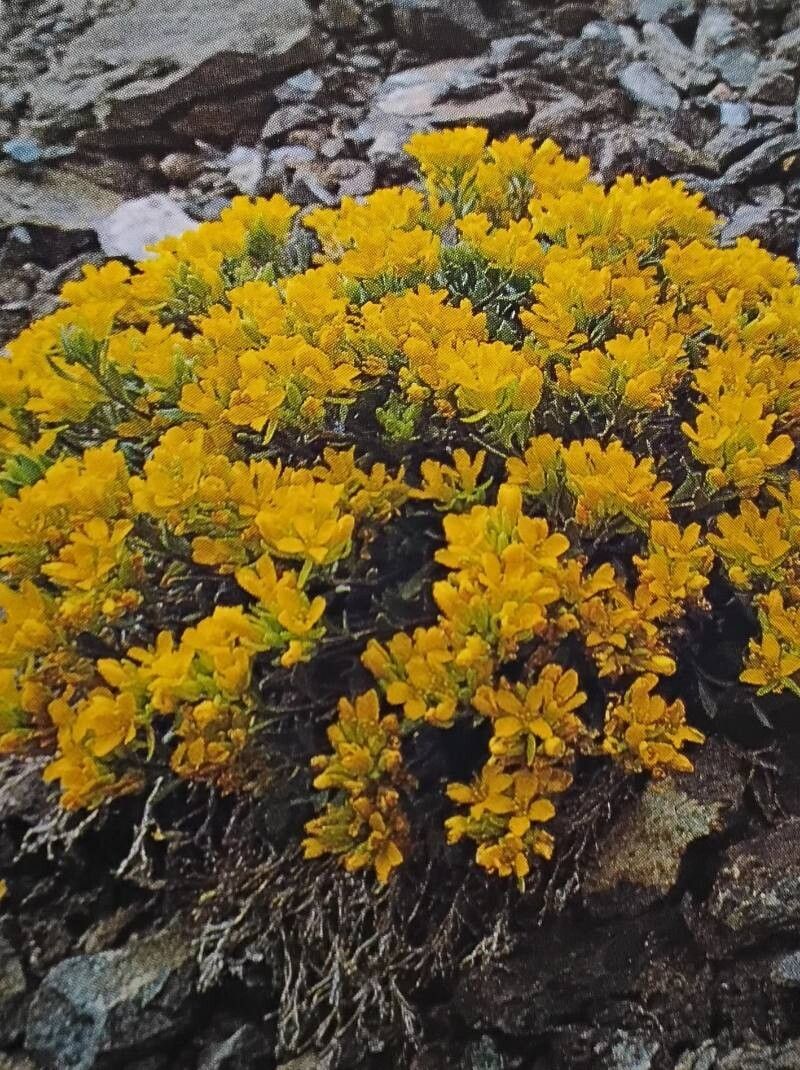
Physaria chambersii is a species of flowering plant in the family Brassicaceae known by the common name Chambers' twinpod. It is native to the southwestern United States, where it grows in desert woodland and plateau habitat. It is a perennial herb growing from a taproot and producing a clumpy rosette of stems up to 15 centimeters long, growing erect and falling over in fruit. The plant is covered in a silver-white coat of hairs. The leaves in the rosette are rounded to oval, up to 6 centimeters long by 2 wide, and smaller, spoon-shaped leaves are located along the stems. The inflorescence is a raceme of four-petalled golden yellow flowers. The fruit is an inflated pod which may be over a centimeter long. It is notched and divided into two chambers, each containing 4 seeds.
Chambers' twinpod has good disease resistance and generally does not tend to develop illnesses. However, it can be susceptible to pests and diseases present in its environment. These infections are typically not serious. In terms of care, this plant needs moderate maintenance. It requires regular pruning to keep a neat appearance and healthy growth. Fertilizing can also aid in encouraging flowering. Chambers' twinpod is suitable for anyone with outdoor space, such as a garden or patio, and does not demand extensive care experience. It may need more attention when grown indoors.
How to keep Physaria Chambersii.
Light
Chambers' twinpod is a perennial herbaceous plant that likes sunny spots and comes from open habitats, commonly growing in meadows and grasslands. It prefers full sun but can also tolerate partial sun.
Temperature
Chambers' twinpod can tolerate a broad range of temperatures, but its distribution may still be restricted by particular combinations of water and heat. It performs best in warm summer climates with sufficient rainfall or watering. Extended stretches of cloudy, rainy weather or prolonged high temperatures can increase the likelihood of Chambers' twinpod dying. In winter, protecting it from cold can improve its chances of survival.
Fertilizer
The best time to fertilize a Chambers' twinpod is in early spring, when it is coming out of dormancy and beginning active growth. Fertilization supplies essential nutrients needed for healthy development. Although Chambers' twinpod has relatively low fertilizer requirements, applying fertilizer annually can improve its survival and encourage better, longer-lasting blooms.
Pruning
Chambers' twinpod is distinguished by its unique twin-podded fruits and silver-gray leaves. To keep the plant healthy, it's best to prune it in early spring. This helps by removing damaged stems, maintaining its shape, and encouraging healthy growth. Pruning also enhances flowering and improves air circulation, which reduces the risk of fungal infections.
Botanical profile.
- Plant Type
- Herb
- Life Cycle
- Perennial
- Genus
- Physaria
- Family
- Brassicaceae
- Hardiness Zone
- 4-8
- Mature Height
- 5 cm to 15 cm
- Mature Spread
- 10 cm to 20 cm
- Leaf Color
- Silver, Gray
- Leaf Type
- Deciduous
- Flower Color
- Yellow
- Flower Size
- 0.51 cm to 1.02 cm
- Bloom Time
- Early spring, Mid spring
- Planting Time
- Spring, Summer
- Harvest Time
- Late spring, Early summer
Other names.