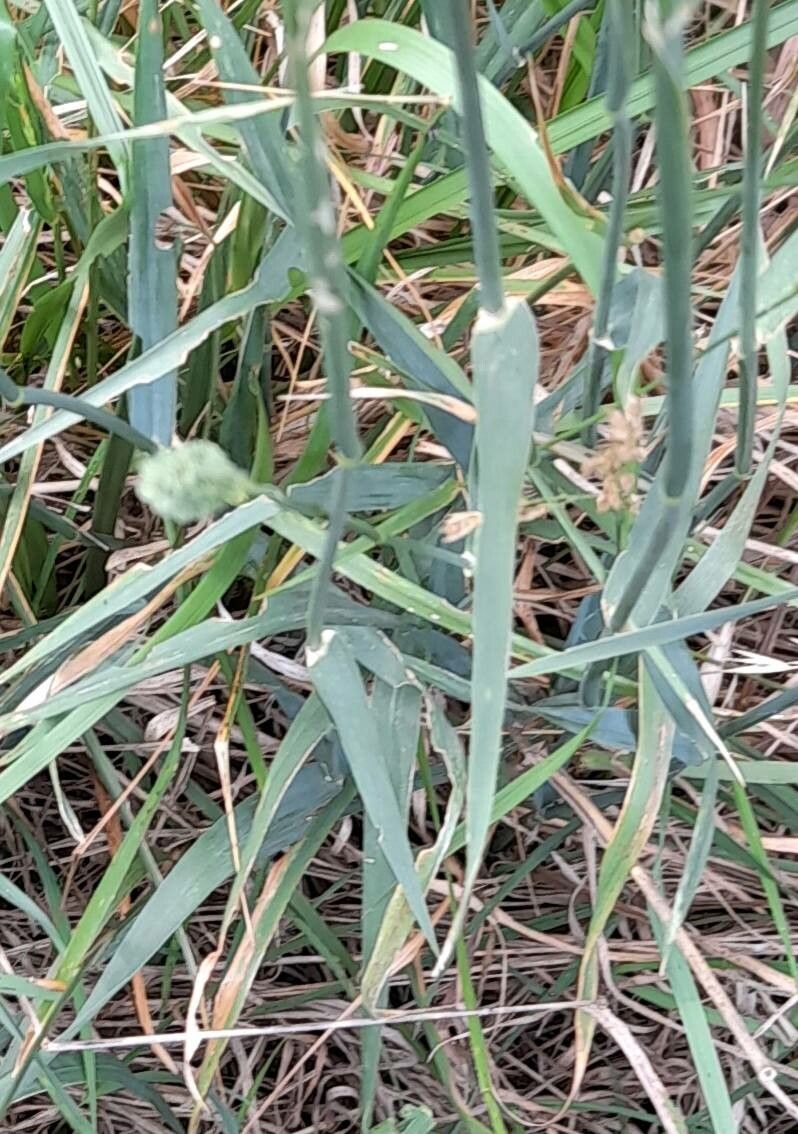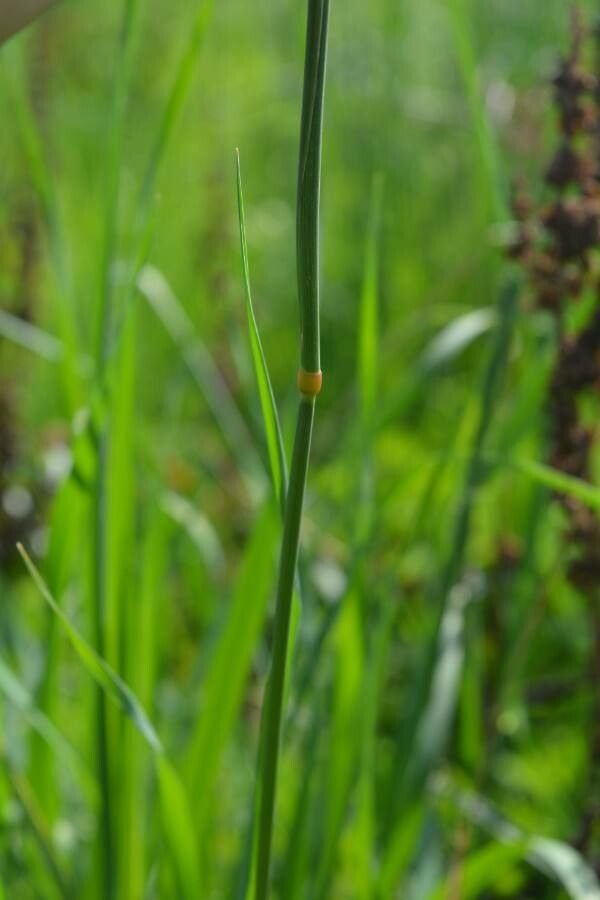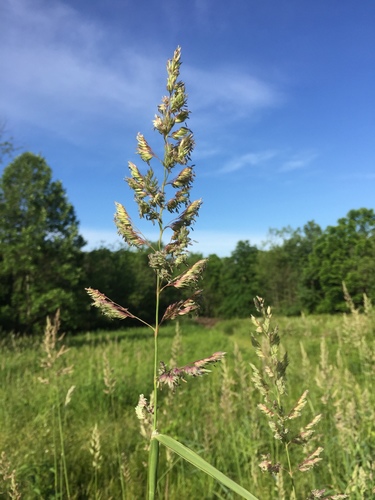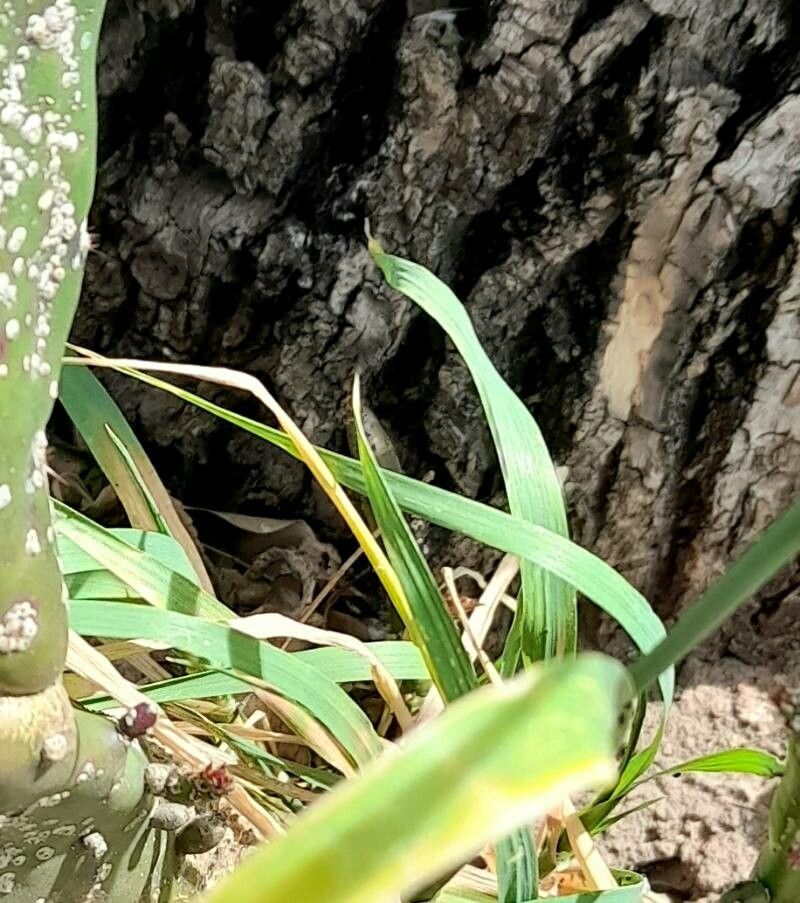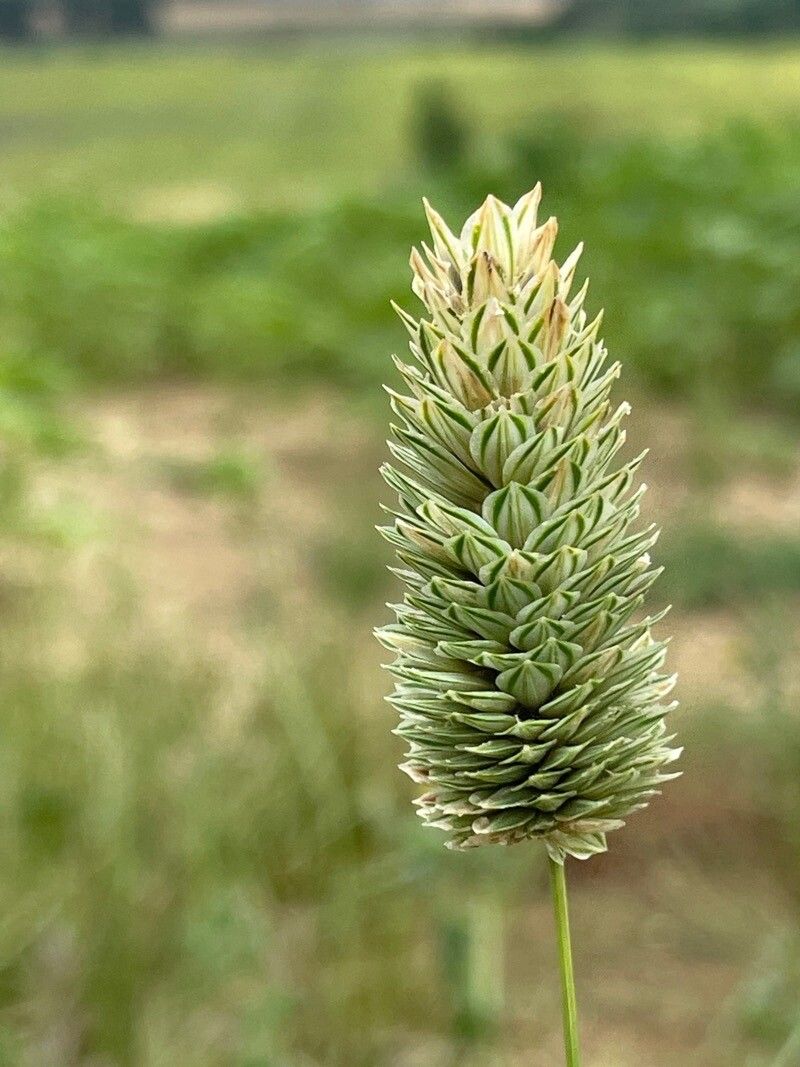
Phalaris brachystachys, the confused canary-grass or shortspike canarygrass, is an annual grass with growth habits and cultural requirements similar to Phalaris aquatica. It is native to the Mediterranean region. It grows most actively during the spring and fall, while resting during the heat of midsummer and the short cool days of winter. It also must be protected from heavy freezes. Some Phalaris species contain gramine, which can cause brain damage, other organ damage, central nervous system damage and death in sheep.While at least one strain showed an extremely strong occurrence of N,N-DMT as the sole alkaloid, other strains indicated the presence of 5-MeO-DMT as well. Strongly positive human bioassays have been reported using some clones.
Confused canary grass is resistant to disease and is generally not susceptible to illnesses. In terms of care, this plant is fairly low-maintenance. When grown outdoors it needs only minimal watering, and larger plants typically do not require pruning; smaller plants, however, should be pruned after they have bloomed. Confused canary grass is suitable for anyone with an outdoor space, such as a garden or deck, and does not require much care experience.
How to keep Phalaris Brachystachys.
Light
Confused canary grass comes from bright, open environments and thrives in full sun. It can tolerate partial sun but prefers direct sunlight for optimal growth. This plant, which can be annual or biennial, is known for its sun-loving nature.
Water
Confused canary grass flourishes in consistently moist environments, where regular watering is necessary to keep the soil damp, though it's important to avoid waterlogging. While it can handle short periods of dryness, it does best with a weekly watering routine. When grown outdoors, this grass responds well to rainwater, making it a perfect choice for regions with sufficient rainfall.
Temperature
Confused canary grass can adapt to a wide range of temperatures, yet its distribution may still be restricted by various combinations of water and heat. It performs best in warm summer climates with adequate rainfall or watering. Extended periods of cloudy, rainy weather and prolonged high temperatures raise the likelihood of Confused canary grass dying. In winter, proper protection from cold can improve the plant's survival rate.
Pruning
Confused canary grass is characterized by its short, dense flower heads and robust growth. The best time to prune it is from early to late spring. During this period, focus on removing any damaged stems and thinning the plant to improve air circulation. Regular pruning not only promotes the grass's health but also prevents it from becoming invasive, ensuring that it remains vigorous and well-shaped.
Botanical profile.
- Plant Type
- Grass
- Life Cycle
- Annual
- Genus
- Phalaris
- Family
- Poaceae
- Hardiness Zone
- 5-13
- Mature Height
- 61 cm
- Mature Spread
- 20 cm to 40 cm
- Leaf Color
- Green
- Leaf Type
- Semi-evergreen
- Flower Color
- White, Yellow
- Flower Size
- 0.76 cm to 1.78 cm
- Bloom Time
- Late spring, Early summer
- Planting Time
- Spring, Summer
- Harvest Time
- Mid summer, Late summer
- Native Area
- Libya, Turkey, Tunisia, Montenegro, Cyprus, Greece, Morocco, Serbia, Lebanon, Iraq, Portugal, Syria, Italy, Spain, Iran, Albania, Azerbaijan, Algeria, France
Other names.
Reader questions.
What are the sunlight requirements for Confused Canary Grass?
Confused Canary Grass thrives in environments that offer full sun, requiring above 6 hours of sunlight. It can also tolerate partial sun to full shade, which means about 3 to 6 hours of sunlight. It's essential to observe how sunlight moves through your garden to find the perfect spots for your plants, ensuring they're exposed to the ideal balance of light and shade for their growth.
What are the temperature conditions for growing Confused Canary Grass?
Confused Canary Grass, or Phalaris brachystachys, is adaptable to a wide range of temperature conditions, thriving best in warm climates with adequate rainfall or watering during the summer. It possesses strong cold resistance, meaning special frost protection measures aren't typically necessary. However, when winter temperatures are expected to fall below -25°C, the plant should be protected by covering it with materials such as soil or straw. Additionally, to assist with winter survival and spring growth, watering the plant abundantly before the first freeze in autumn to maintain soil moisture is recommended.
How do indoor plants benefit from artificial lighting?
Indoor plants, including Confused Canary Grass, require adequate lighting, especially when natural sunlight is insufficient, like in winter or less sunny spaces. Artificial lighting, such as LED lights, is crucial for promoting faster, healthier growth. These lights can be customized to provide specific wavelengths needed by the plants. For optimal growth, full sun plants should receive 30-50W/sq ft of artificial light, partial sun plants 20-30W/sq ft, and full shade plants 10-20W/sq ft. The light source should be placed 12-36 inches above the plant, mimicking natural sunlight's distance, and plants generally need 8-12 hours of light per day.
How should I care for Confused Canary Grass in low temperature conditions?
Confused Canary Grass thrives best above 20°C and should be kept above 0°C during winter months. Despite its cold tolerance, if temperatures drop below -25°C, the grass may experience reduced sprouting in spring, or may not sprout at all. In such cases, it's suggested to remove any parts of the plant that have failed to sprout as part of the spring care routine.
What are the symptoms of light deficiency in Confused Canary Grass?
Symptoms of light deficiency in Confused Canary Grass include small leaves, leggy or sparse growth, faster leaf drop, slower or no new growth, lighter-colored new leaves, chlorosis (leaves losing their green color and turning yellow), sunscald (damage from intense sunlight exposure), leaf curling (a defense mechanism to reduce surface area exposed to sunlight, minimizing water loss and damage), wilting (loss of turgor pressure causing leaves and stems to droop), and leaf scorching (brown, dry, and crispy edges on leaves due to excessive sunlight).
What are the symptoms and solutions for Confused Canary Grass in high temperature conditions?
During the summer, it's crucial to ensure the Confused Canary Grass does not exceed 41°C. Should temperatures surpass 45°C, symptoms such as lighter leaf coloration, leaf curling, susceptibility to sunburn, and, in severe cases, complete wilting and drying might occur. To mitigate these effects, remove sunburned or dried parts of the plant. Relocate the grass to a shaded area or utilize shade cloth to protect it from midday and afternoon sun. Additionally, maintaining soil moisture by watering the plant in the morning and evening can help alleviate stress from high temperatures.
How can the growth of Confused Canary Grass be optimized indoors?
To optimize growth indoors, gradually move the Confused Canary Grass to a sunnier location each week until it gets at least 6 hours of direct sunlight daily. Use a south-facing window and keep curtains open during the day for maximum sunlight. If the plant is large or not easily movable, consider using artificial light, keeping a desk or ceiling lamp on for at least 8 hours daily, or invest in professional plant grow lights for ample light.
What outdoor solutions can help improve sunlight exposure for Confused Canary Grass?
Outdoors, gradually relocate your plants to spots with better sunlight exposure, allowing them to adapt by moving them to a sunnier location each week. Avoid sudden changes in light intensity to prevent sunburn. Note that parts of the plant affected by insufficient sunlight may not recover, but new growth will be healthy after improving light exposure.
What are the solutions for ground-planted Confused Canary Grass with insufficient sunlight?
For ground-planted Confused Canary Grass, start by reducing obstructions like tree branches to allow more sunlight to reach the plants. If feasible, transplanting during the plant's dormant period (usually late winter or early spring) to a location with ample sunlight and good drainage can significantly improve growth conditions. Carefully move the plant, ensuring the roots and soil ball remain intact during the process.