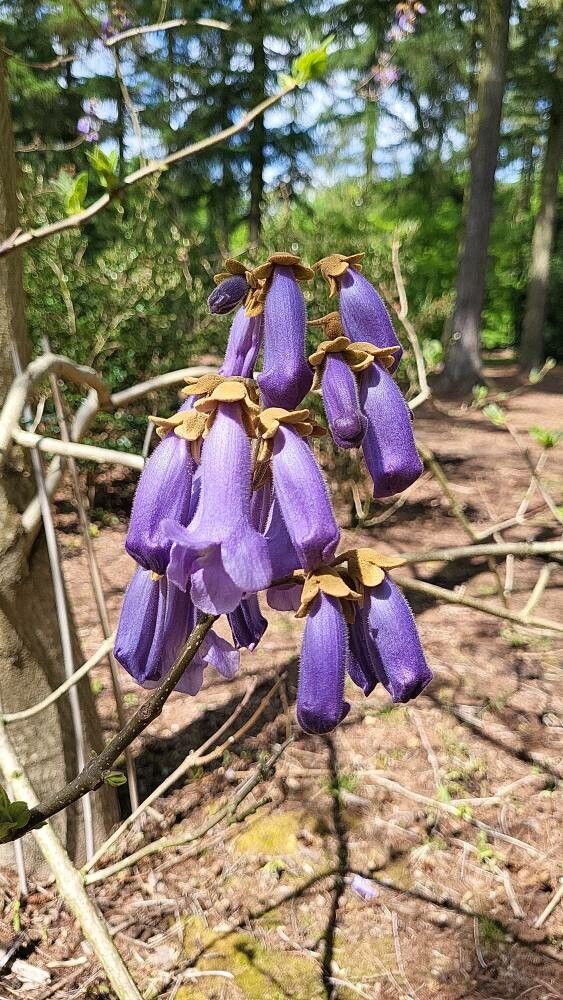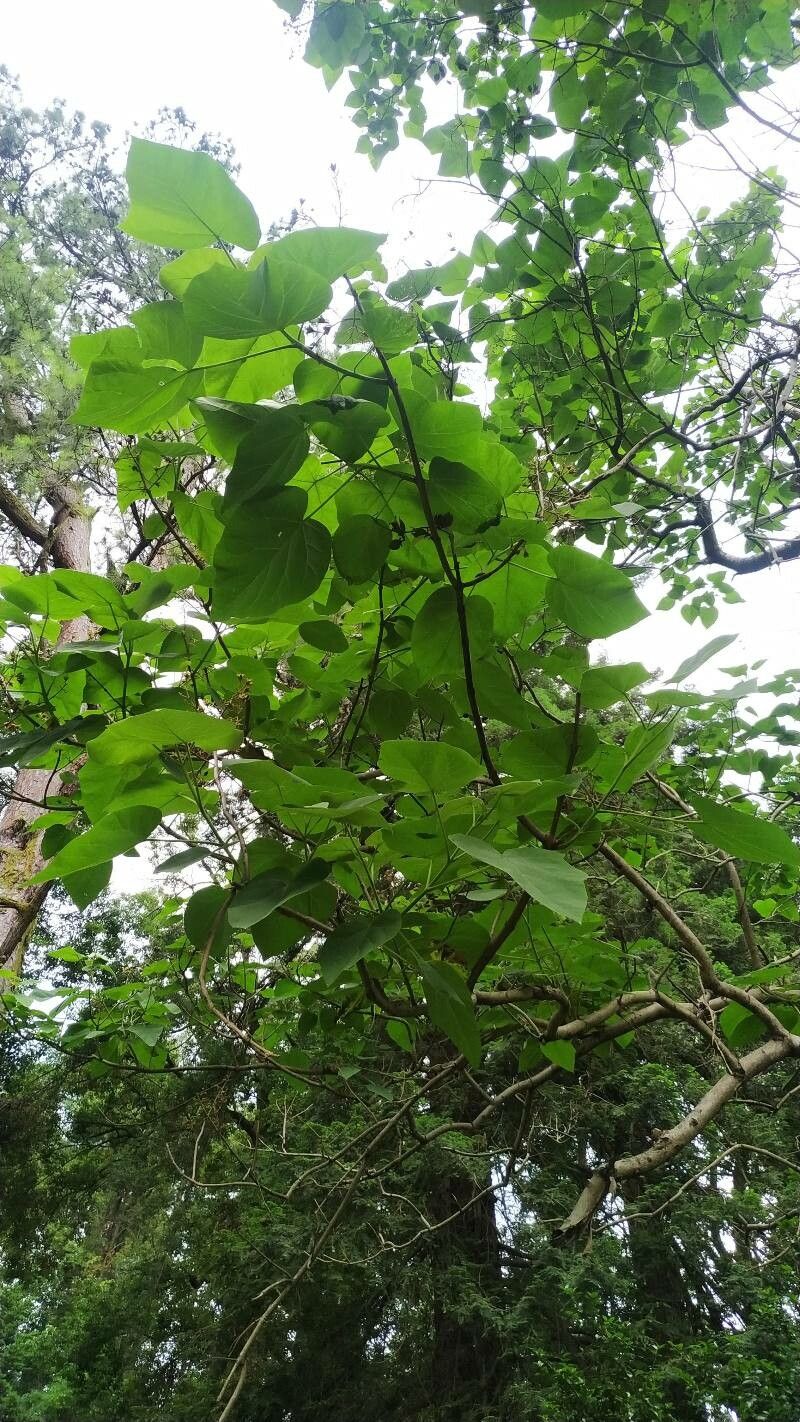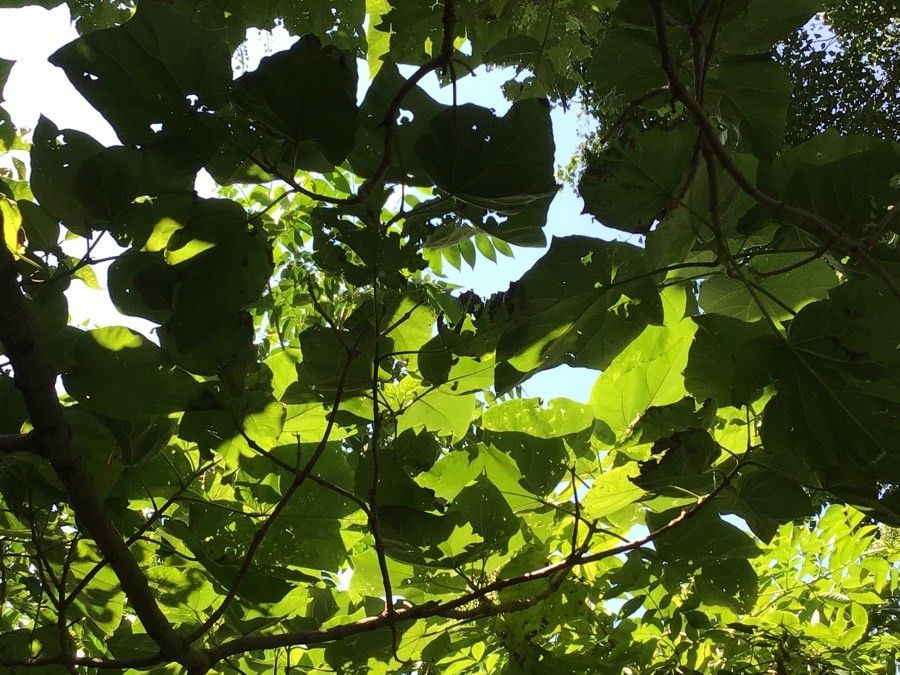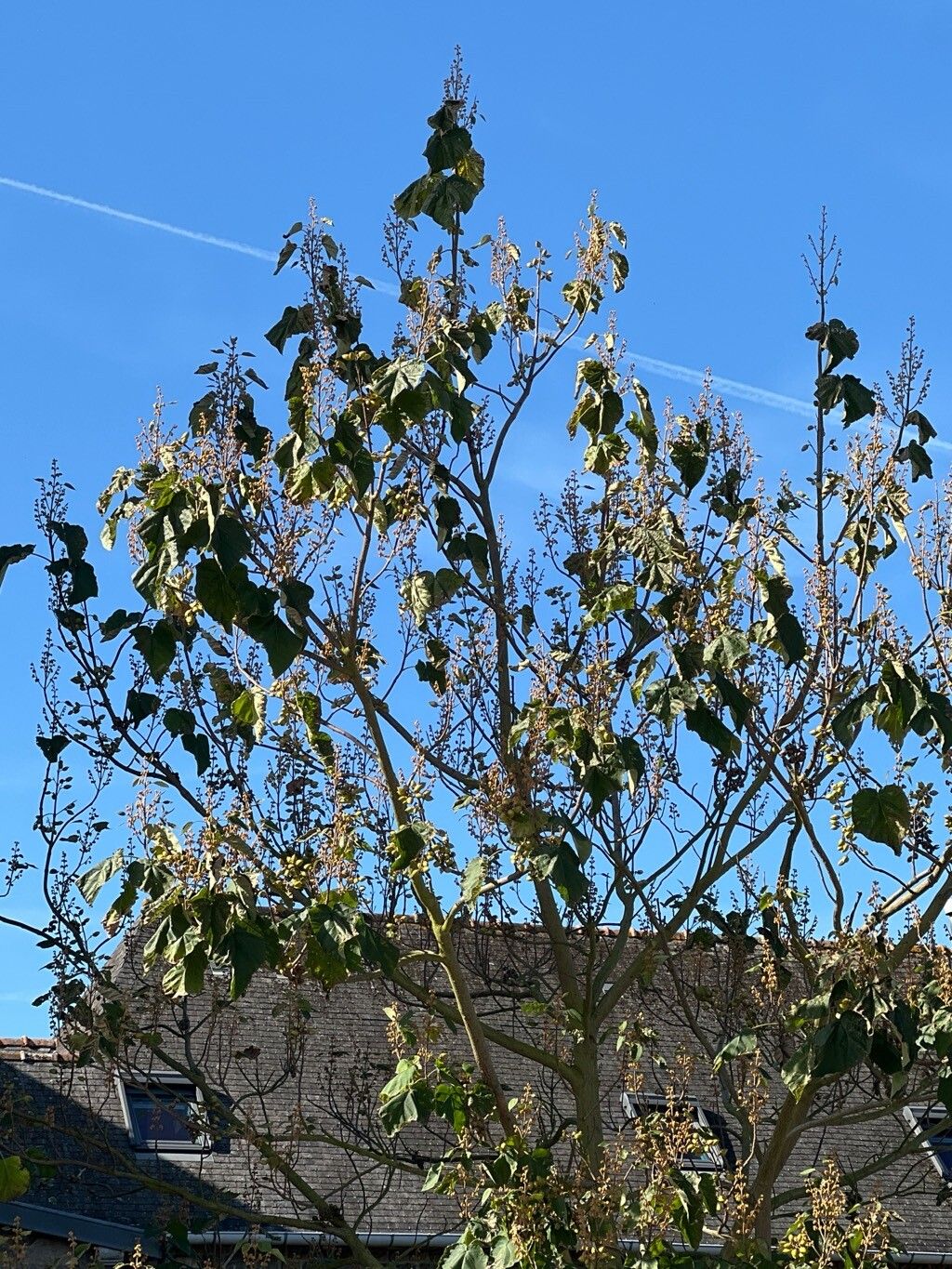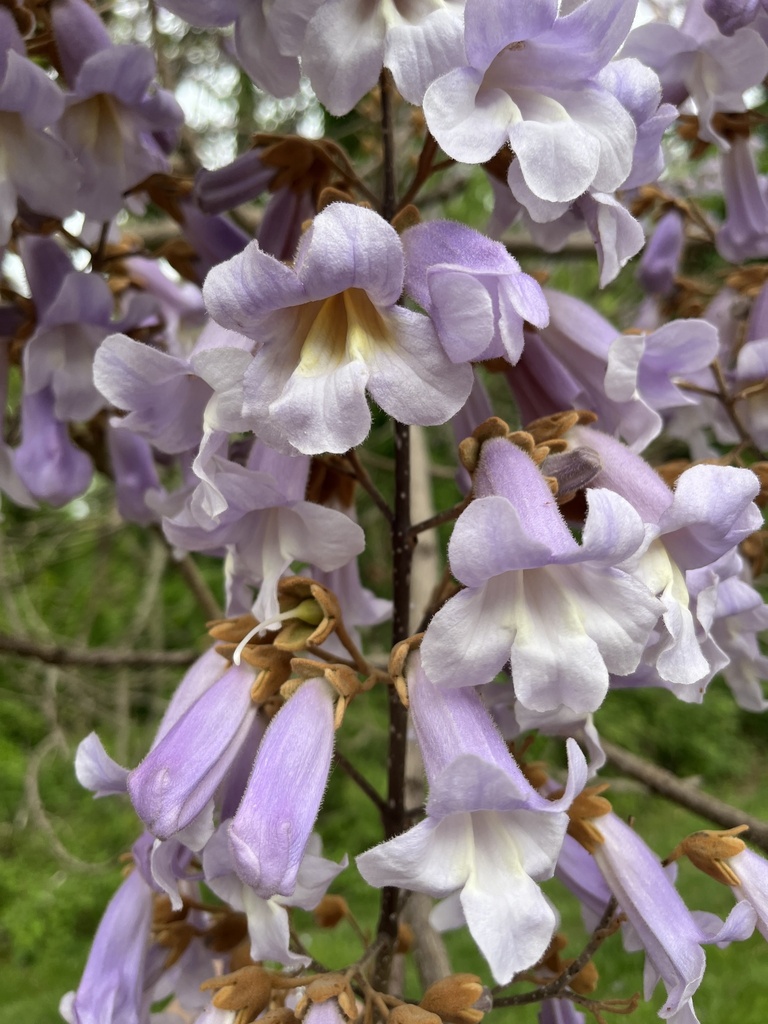
Paulownia tomentosa, commonly known as the Empress Tree or Princess Tree, is a fast-growing deciduous species native to China. Renowned for its ornamental appeal and valuable wood, which is both lightweight and strong, this tree has gained widespread cultivation. It can reach heights of up to 20 meters with a spread of 15 meters, featuring large, heart-shaped leaves covered in soft hairs. In the spring, it produces clusters of fragrant lavender-blue flowers that attract bees and butterflies.
The Empress Tree is adaptable to a variety of soil types but thrives best in well-drained soils under full sun or partial shade. It is often used in reforestation projects due to its ability to quickly colonize degraded land while providing valuable timber. However, in regions outside its native habitat, the tree can become invasive because of its rapid growth and prolific seed production.
In traditional Japanese customs, a Paulownia tomentosa, commonly known as the princess tree, was planted when a baby girl was born. As she grew up and eventually got married, the tree would be harvested and crafted into wooden furniture, which would then be given to her as part of her dowry. This furniture was intended to accompany her throughout her life. Since every daughter is cherished as her father's little princess and the tree grows alongside her, it became known as the princess tree.
The Princess tree has strong resistance to disease and is generally not prone to illnesses. In terms of care, this plant is fairly low-maintenance. Planted outdoors it needs minimal watering, and larger specimens typically do not require pruning; however, smaller plants should be pruned after they finish blooming. The Princess tree is suitable for anyone with outdoor space, such as a garden or a deck, and does not demand much prior plant-care experience.
How to keep Paulownia Tomentosa.
Light
The princess tree does best with a higher level of sunlight during the day, though it can persist in somewhat lower light. Its natural habitat is characterized by abundant light. During its various stages of growth it requires ample sunlight. Very intense light can scorch the leaves, whereas too little light can limit its growth and flowering.
Water
The empress tree flourishes in humid subtropical areas and can withstand short periods of drought. It thrives with moderate moisture and should be watered every one to two weeks. Being a deciduous plant, its leaf-shedding cycle is synchronized with water availability, which helps it survive through changing seasonal moisture conditions.
Humidity
This plant will thrive in moderate humidity, which is probably the level in your home. However, misting it a few times a week can be very beneficial. Make sure the room has good ventilation.
Temperature
The princess tree tree is native to China, where it grows in a temperate climate with average temperatures of 5 to 32 ℃ (41 to 90 ℉). It favors moderate temperatures and can withstand occasional fluctuations. In colder months it copes with lower temperatures by becoming dormant, and in warmer months it responds to higher temperatures by increasing its transpiration rate.
Fertilizer
Fertilize your Princess tree in early spring to encourage healthy growth. Regular feeding improves overall health, producing vigorous growth, increased toughness in harsh conditions, and enhanced resistance to diseases and pests. Keep a consistent fertilization routine for your Princess tree to maintain vibrant leaves with rich color and a lush look.
Pruning
The Empress tree is a fast-growing deciduous tree known for its large leaves and beautiful violet flowers. To keep the tree healthy, prune it in early spring. Focus on removing dead branches, thinning crowded areas, and shaping the tree to improve air circulation and light penetration. Always use clean, sharp tools to prevent disease, and follow best practices from reputable sources when pruning.
Toxicity
Neither toxic to humans nor animals, they are safe for consumption. In fact, certain regions will harvest them in order to ensure that there are food supplies accessible for the livestock that forages there.
Further reading →
The toxicity and danger assessments provided are for reference only. We do not assure their accuracy, so it's crucial not to depend on them. Seek professional advice when necessary for accurate guidance.
Botanical profile.
- Plant Type
- Tree
- Life Cycle
- Perennial
- Genus
- Paulownia
- Family
- Paulowniaceae
- Hardiness Zone
- 5-8
- Mature Height
- 10.06 m to 24.99 m
- Mature Spread
- 9.14 m to 11.89 m
- Leaf Color
- Green
- Leaf Type
- Deciduous
- Flower Color
- Lavender
- Flower Size
- 1.52 cm to 2.03 cm
- Bloom Time
- Mid spring, Late spring
- Planting Time
- Spring, Autumn
- Harvest Time
- Mid summer
- Native Area
- South Korea, Japan, China
Other names.
Reader questions.
When should I water my Empress Tree?
It's crucial to water your Empress Tree when the top one inch of the soil feels dry, a condition often detected through physical examination of the soil's moisture content. Observing the Empress Tree's leaves for signs of wilting, curling, or drying out can also indicate the need for more water. Additionally, if the plant exhibits a lack of vigor or poor growth, it may signal the need for watering. Environmental factors such as temperature, humidity, and light also play a significant role in determining the tree's watering requirements, with higher temperatures or low humidity potentially speeding up soil drying. Over or under-watering can lead to problems such as root rot or dehydration, both of which can significantly impact the Empress Tree's growth and health.
Why should I put fertilizer on my Empress tree?
No matter what type of Empress tree you have, regular fertilization is crucial for maintaining its overall health. Providing the right nutrients promotes stronger growth, making your tree more resistant to challenging conditions and better able to combat diseases and pests. Since the foliage is a key feature of your Empress tree's attractiveness, it's important to ensure its preservation. This involves implementing a consistent fertilization routine tailored to your specific Empress tree, which will encourage the development of vibrant, lush leaves.
What are the sunlight requirements for an Empress Tree?
The Empress Tree, or Paulownia tomentosa, performs best under conditions of full sun, which means it requires more than 6 hours of sunlight daily. However, it can also tolerate partial sun, needing about 3-6 hours of sunlight. It's essential to observe the movement of sunlight in your garden to find spots that offer a harmonious balance of light and shade, ensuring the optimal growth and happiness of your Empress Tree.
What is the origin and preferred climate of the Empress tree?
The Empress tree, scientifically known as Paulownia tomentosa, originates from China. It thrives in a temperate climate with average temperatures ranging from 5 to 32°C (41 to 90°F). This tree prefers moderate temperatures and can tolerate occasional fluctuations. During colder months, it can become dormant to adjust to lower temperatures, while in warmer months, it increases transpiration rates to cope with higher temperatures.
How should I water my Empress Tree?
Watering your Empress Tree correctly involves ensuring the roots have sufficient air circulation and avoiding soil compaction and water saturation. Techniques include using a watering can with a long spout to direct water to the base of the plant and employing a soaker hose for slow, deep watering that minimizes evaporation. It's important to avoid watering the tree's foliage to prevent fungal diseases. Tools like a moisture meter can help in adjusting your watering schedule, ensuring the soil's moisture levels are optimal but not excessive. Empress Trees thrive in loamy, well-draining soil, which aids in efficient water usage.
When should I fertilize my Empress tree?
To properly fertilize your Empress tree, start by doing it in late winter or early spring. This will give the tree the necessary nutrients for healthy growth once the weather warms up. Additionally, if you live in a warm climate region, it's helpful to give your tree another round of fertilizer in early fall. This will provide extra nutrients for the upcoming growing season and make your tree more resilient to winter cold, preventing foliage damage. By fertilizing earlier, you'll also give the new branches enough time to grow strong to withstand the cold winter.
What are the essential care instructions for an Empress Tree in terms of sunlight?
The Empress Tree thrives in environments rich in sunlight throughout its various growth phases. This species is native to light-abundant habitats and needs a significant amount of sunlight each day for ideal growth. Although it can endure less than ideal conditions, too much light might lead to leaf scorch, and insufficient light can impede its growth and flowering. For indoor plants, artificial lighting can be critical, especially when natural sunlight is insufficient. LED lights are recommended for their ability to provide specific wavelengths needed by plants. The intensity of artificial light required varies depending on the plant's needs: full sun plants need 30-50W/sq ft, partial sun plants need 20-30W/sq ft, and full shade plants need 10-20W/sq ft. The appropriate distance between the plant and the light source should be 12-36 inches, and the duration of light exposure should mimic natural daylight hours, usually 8-12 hours per day.
How does the Empress tree adapt to cold weather and what measures should be taken for frost protection?
The Empress tree has a strong resistance to cold, usually negating the need for special frost protection measures during winter. However, if winter temperatures are expected to fall below its cold tolerance limit, it's important to provide protection to prevent damage. Wrapping the trunk and branches with non-woven fabric or cloth and watering the plant abundantly before the first freeze in autumn are recommended practices. These measures help ensure the soil remains moist and enters a frozen state, preventing drought and water scarcity for the tree during winter and early spring.
How much water does Empress Tree really need?
The Empress Tree requires a moderate amount of water, especially during its youth, with the need decreasing as it matures. The specific amount varies but generally, water should be applied until the topsoil is damp (not soggy) and has penetrated deep enough to reach the roots. It's essential for the soil to dry out between waterings. A full canopy of large, shiny leaves indicates adequate hydration, whereas wilting or color changes in the leaves can suggest improper watering levels. Overwatering and under-watering can lead to root rot and stunted growth respectively, hence the importance of balancing water application.
When should I not use fertilizer on my Empress tree?
To ensure optimal growth and health of your Empress tree, it is important to consider when not to fertilize it. Firstly, avoid fertilizing it during the early and mid-winter months as the tree will be dormant and not require any feeding. Additionally, it is best to refrain from fertilizing during the late spring and summer when the weather tends to be hotter and dryer. Fertilizing during this time can have adverse effects on the tree. To prevent any potential issues, it is recommended to follow a fertilization schedule that involves feeding only in early spring and early fall.
What symptoms indicate insufficient or excessive sunlight in an Empress Tree?
Symptoms of insufficient sunlight in an Empress tree include small leaves, leggy or sparse growth, faster leaf drop, slower or no new growth, and lighter-colored new leaves. Conversely, excessive sunlight can cause chlorosis (leaves turning yellow), sunscald, leaf curling, wilting, and leaf scorching. These symptoms reflect the plant's struggle to adapt to its lighting conditions, whether it's due to too little or too much light. Monitoring these signs closely can help you adjust the plant's environment to ensure it receives the right amount of sunlight.
What are the symptoms of the Empress tree being exposed to low temperatures?
Empress trees are cold-tolerant and perform best when temperatures remain above their minimum growth threshold. Despite their tolerance, prolonged exposure to temperatures below their cold tolerance limit won't show noticeable changes during winter. However, by springtime, branches may become brittle, dry, and fail to produce new shoots.