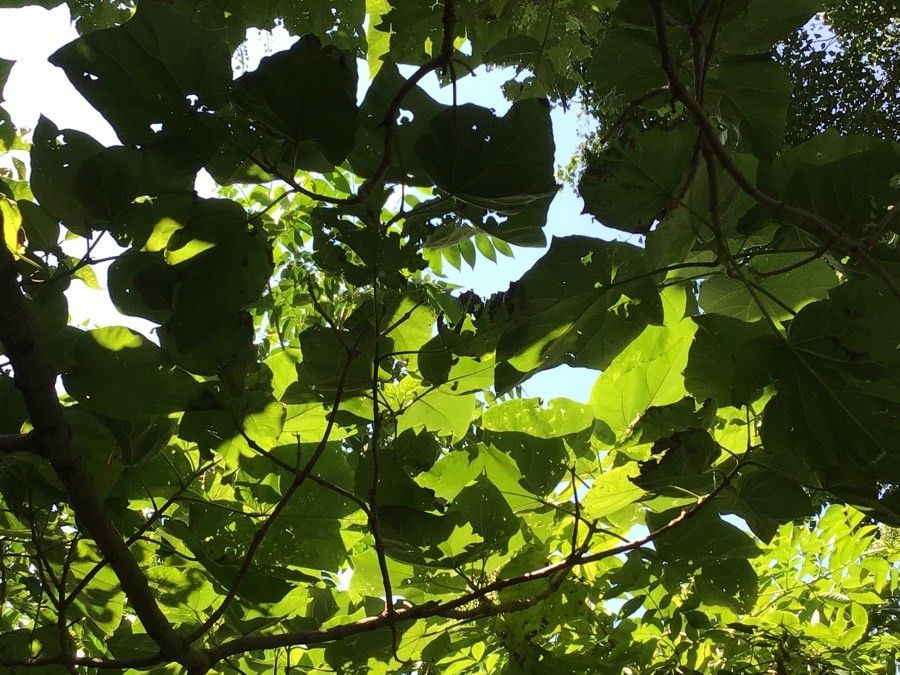
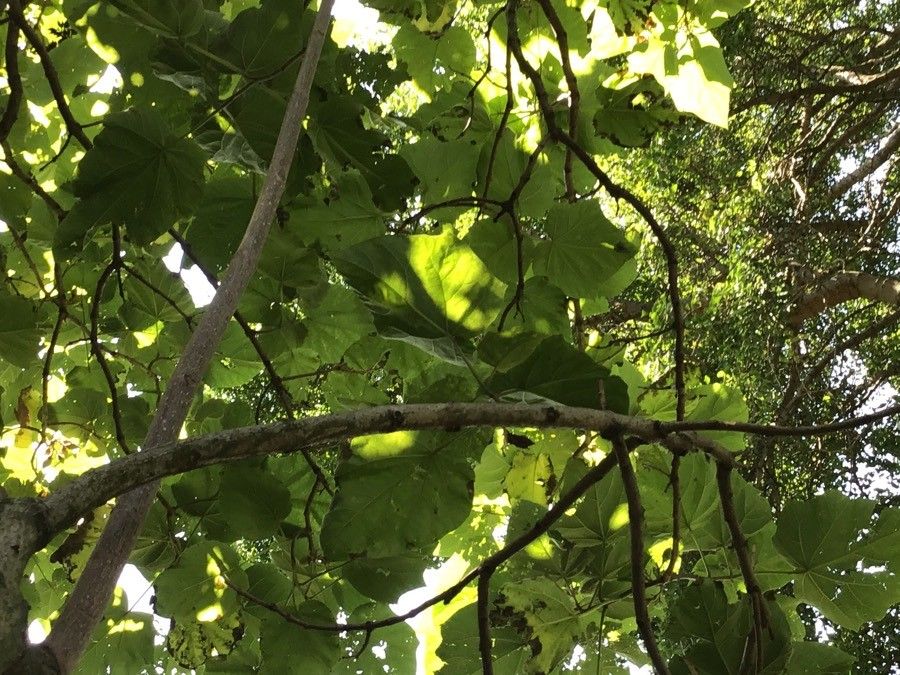
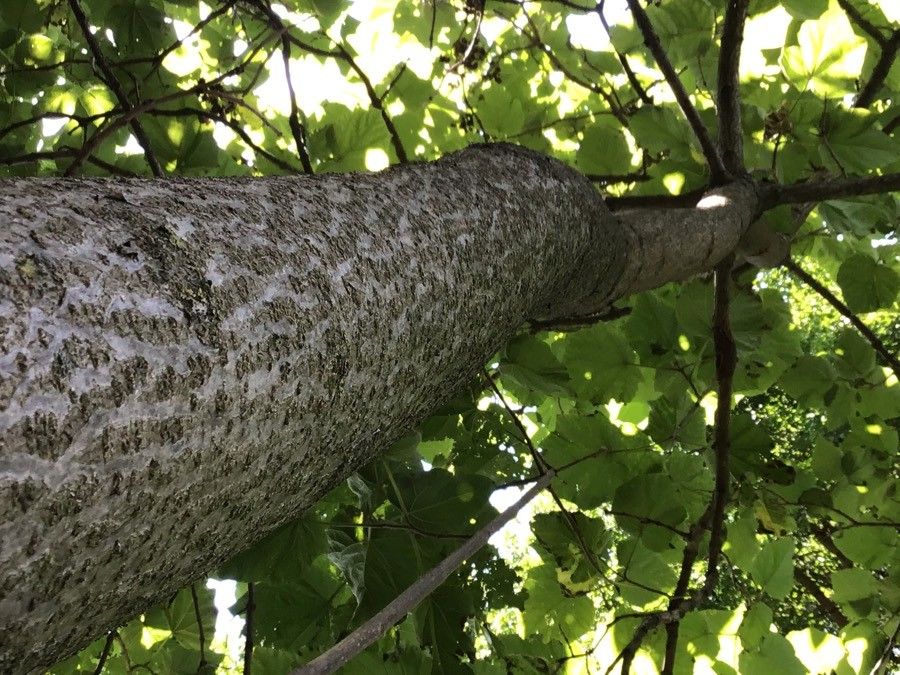
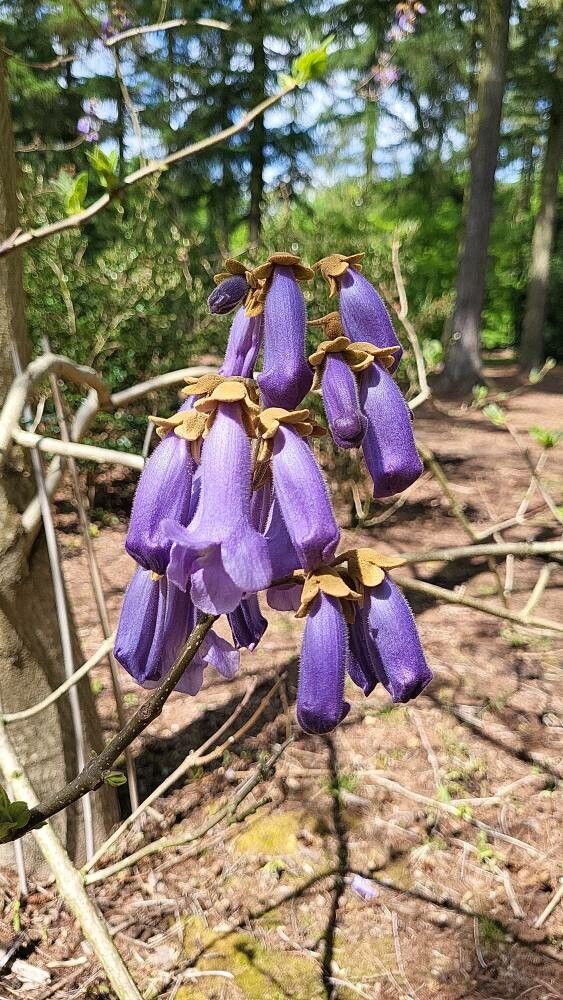
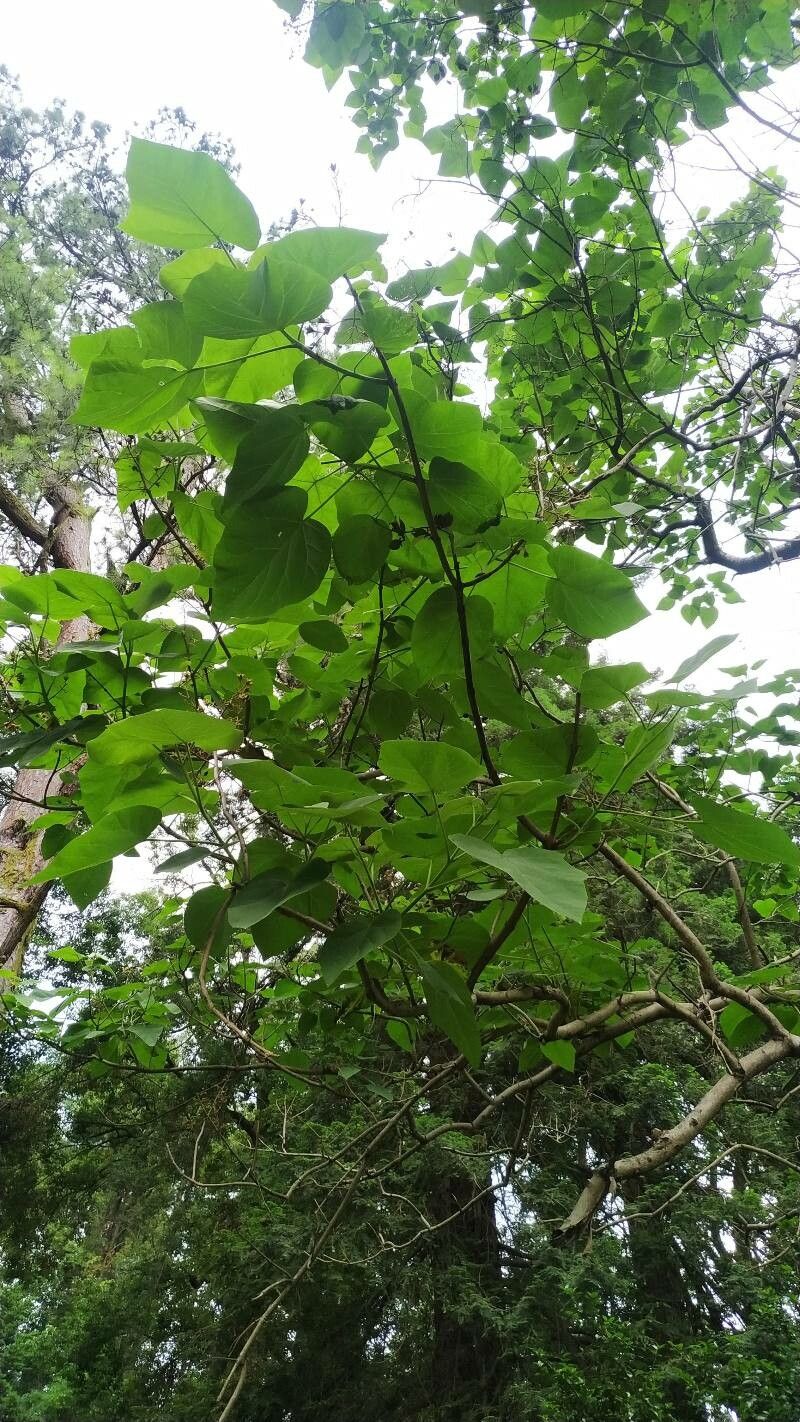
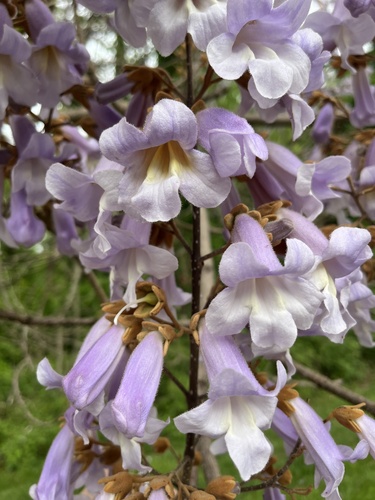
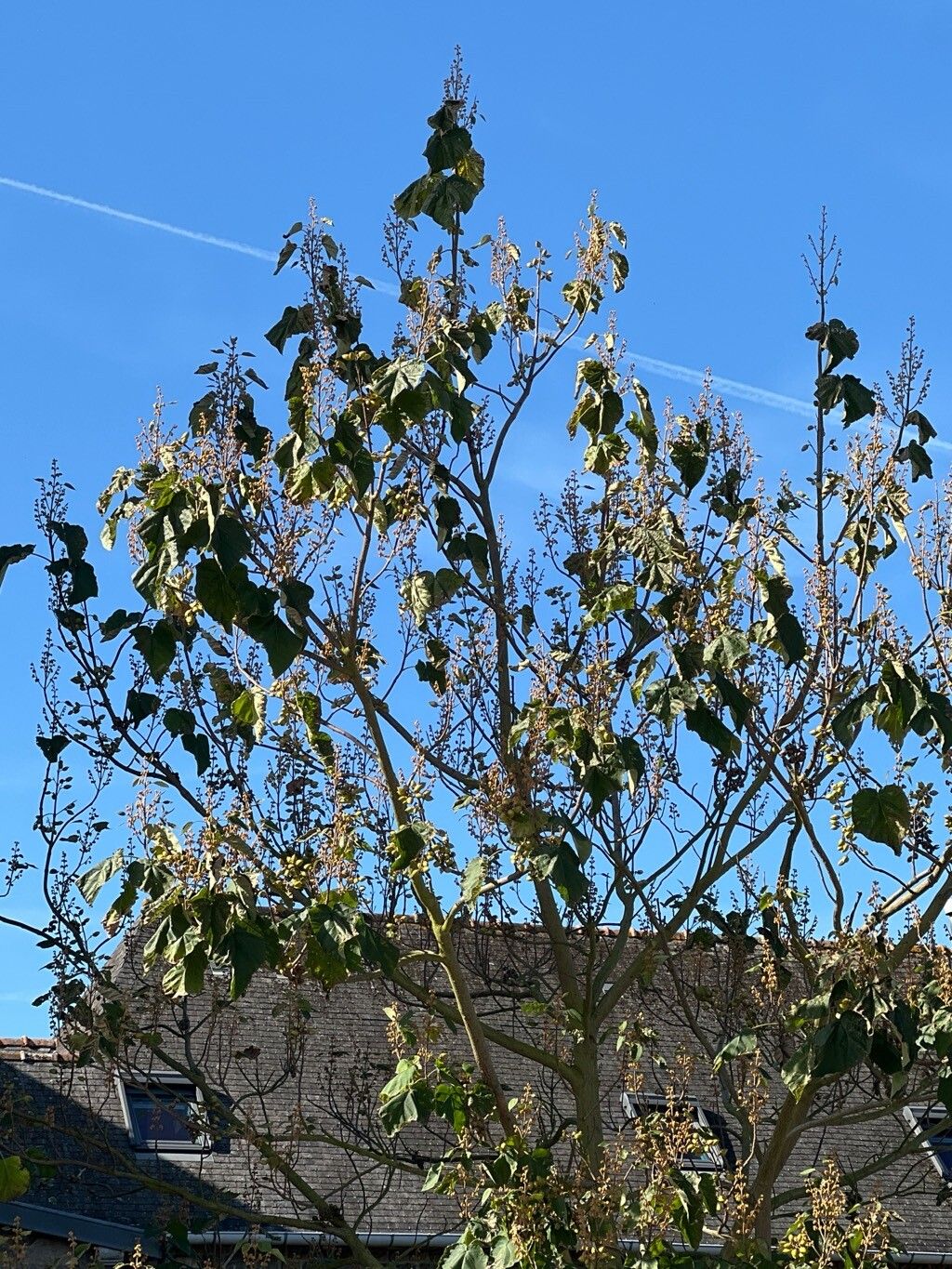
Paulownia kawakamii, commonly known as the sapphire dragon tree, is a tree species in the family Paulowniaceae.
The tree is native to Taiwan, eastern China, and Japan. It is deciduous and bears many large violet flowers in early spring before the leaves appear. Paulownia kawakamii is an IUCN Red List critically endangered plant species, that is threatened by habitat destruction in its native range.
The Sapphire dragon tree is disease-resistant and generally not susceptible to illnesses. In terms of care, this plant is fairly low-maintenance. When grown outdoors it needs only light watering, and larger specimens typically do not require pruning. Smaller plants, however, should be pruned after they have bloomed. The Sapphire dragon treet is suitable for anyone with an outdoor area, such as a garden or deck, and does not demand extensive care experience.
How to keep Paulownia Kawakamii.
Light
The Sapphire dragon tree comes from open habitats, such as sunny meadows and edges of forests, which provide plenty of light. It does best in full sun but can also tolerate partial sun, adapting well to different sunlight conditions.
Water
The Sapphire Dragon Tree is a deciduous tree native to humid areas, where it flourishes in moisture-rich environments. Despite its preference for moisture, it is also tolerant of drought. This tree maintains a balance between water intake and evaporation, typically requiring watering every 1-2 weeks. During dry seasons, it sheds its leaves to conserve water, highlighting its adaptive traits.
Temperature
Sapphire dragon tree shows strong adaptability to different climate conditions, whether facing scorching summers or cold winters. Nonetheless, it has an optimal temperature range for growth. If temperatures rise too high, the plant is susceptible to heat and humidity stress, which can lead to its death. In areas where temperatures approach the lower limit of its cold tolerance, it is important to use insulation measures to protect the plant.
Fertilizer
The timing of fertilizing a Sapphire dragon tree is important. Apply fertilizer in early spring and continue once a month until early summer. Fertilizer aids in producing attractive blooms and supplies energy during both dormant and active growth periods.
Pruning
The Sapphire Dragon Tree is known for its large, heart-shaped leaves and rapid growth. To maintain its health and beauty, it is important to prune the tree in early spring. This encourages new growth, removes damaged wood, and improves air circulation. Regular pruning not only enhances the tree's appearance but also supports healthy development. By using proper techniques and timing, you can ensure that your Sapphire Dragon Tree thrives.
Botanical profile.
- Plant Type
- Tree
- Life Cycle
- Perennial
- Genus
- Paulownia
- Family
- Paulowniaceae
- Hardiness Zone
- 9-11
- Mature Height
- 10.06 m
- Mature Spread
- 6.1 m
- Leaf Color
- Light Green, Forest Green
- Leaf Type
- Deciduous
- Flower Color
- Lavender
- Flower Size
- 4.06 cm to 6.35 cm
- Bloom Time
- Early spring, Mid spring
- Planting Time
- Spring, Summer, Autumn
- Harvest Time
- Summer
- Native Area
- China
Other names.
Reader questions.
What is the Sapphire Dragon Tree?
The Sapphire Dragon Tree, known scientifically as Paulownia kawakamii, is a distinct plant species. Unfortunately, the provided data lacks details on its essentials, symptoms of problems, and additional information. To fully appreciate and care for a Sapphire Dragon Tree, specific knowledge about its needs and characteristics would be beneficial.