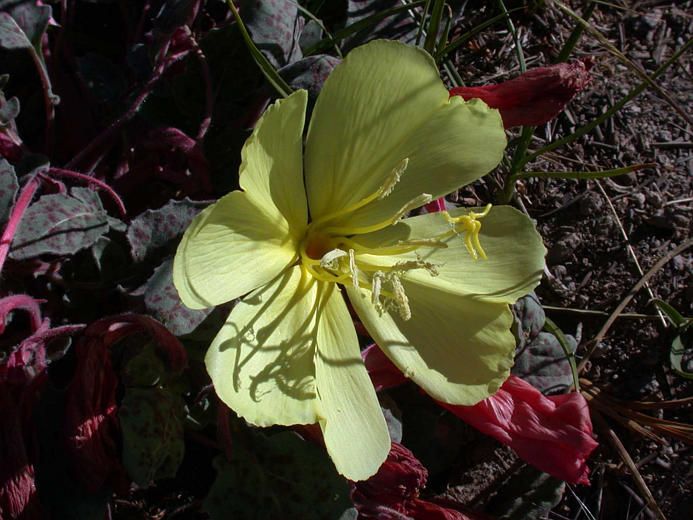
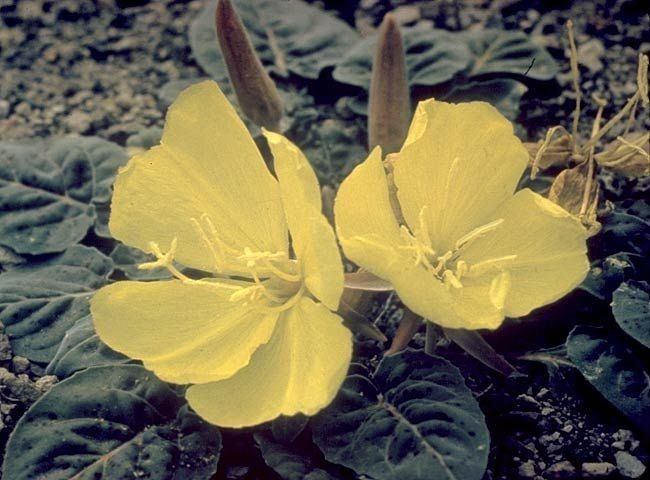
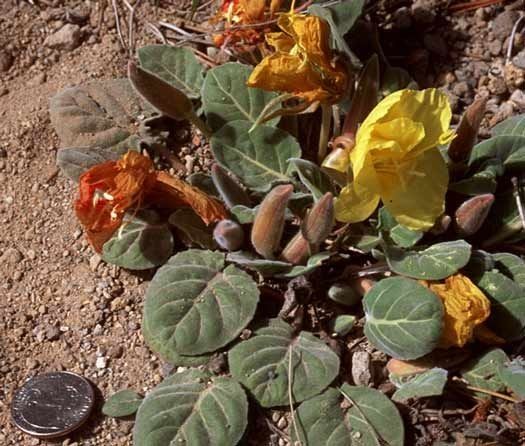
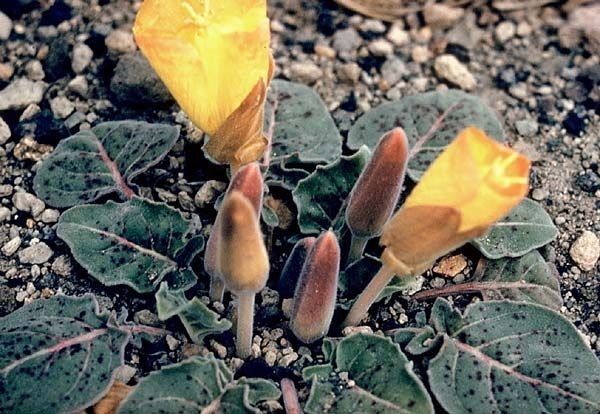
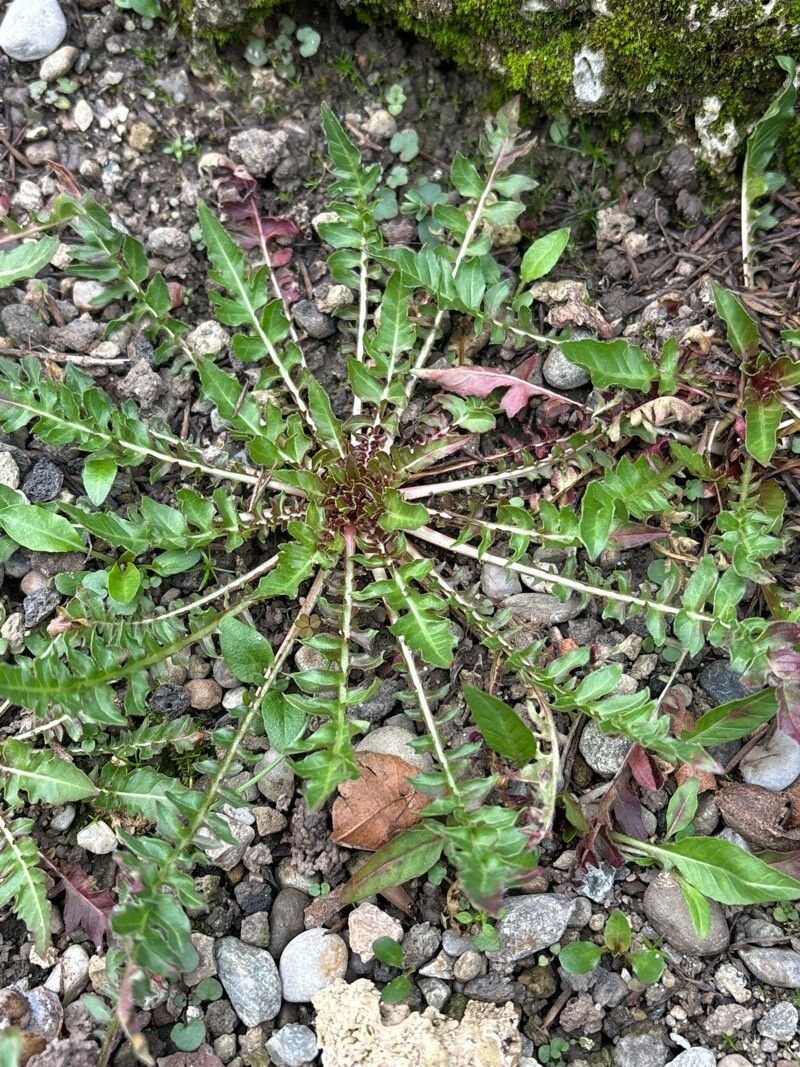
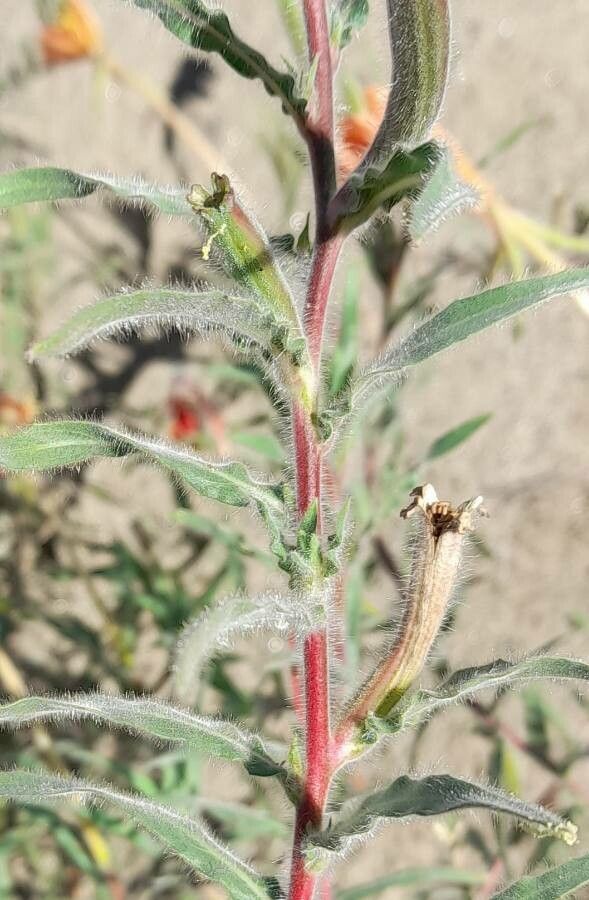
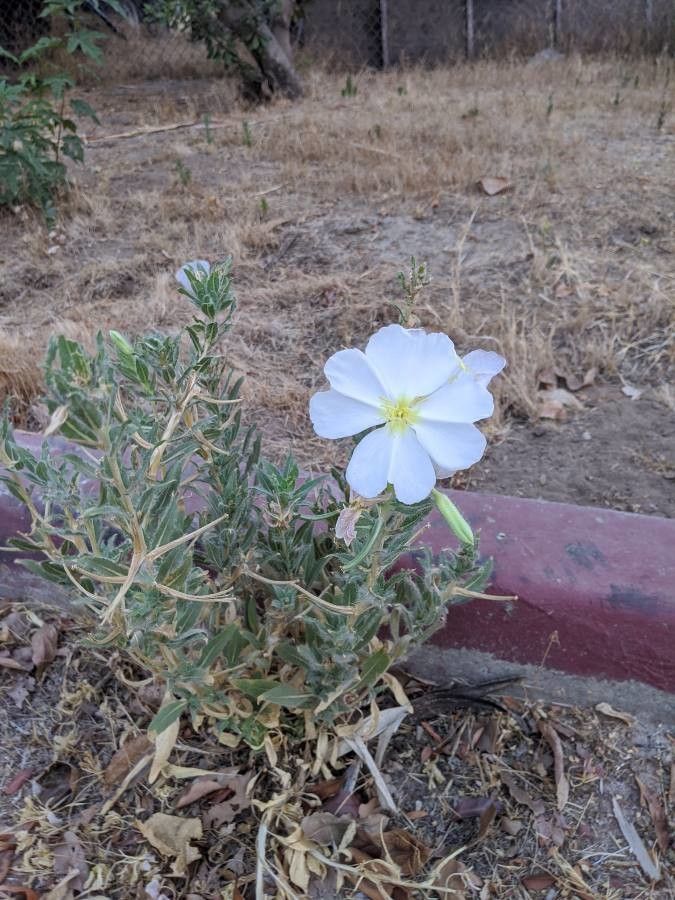
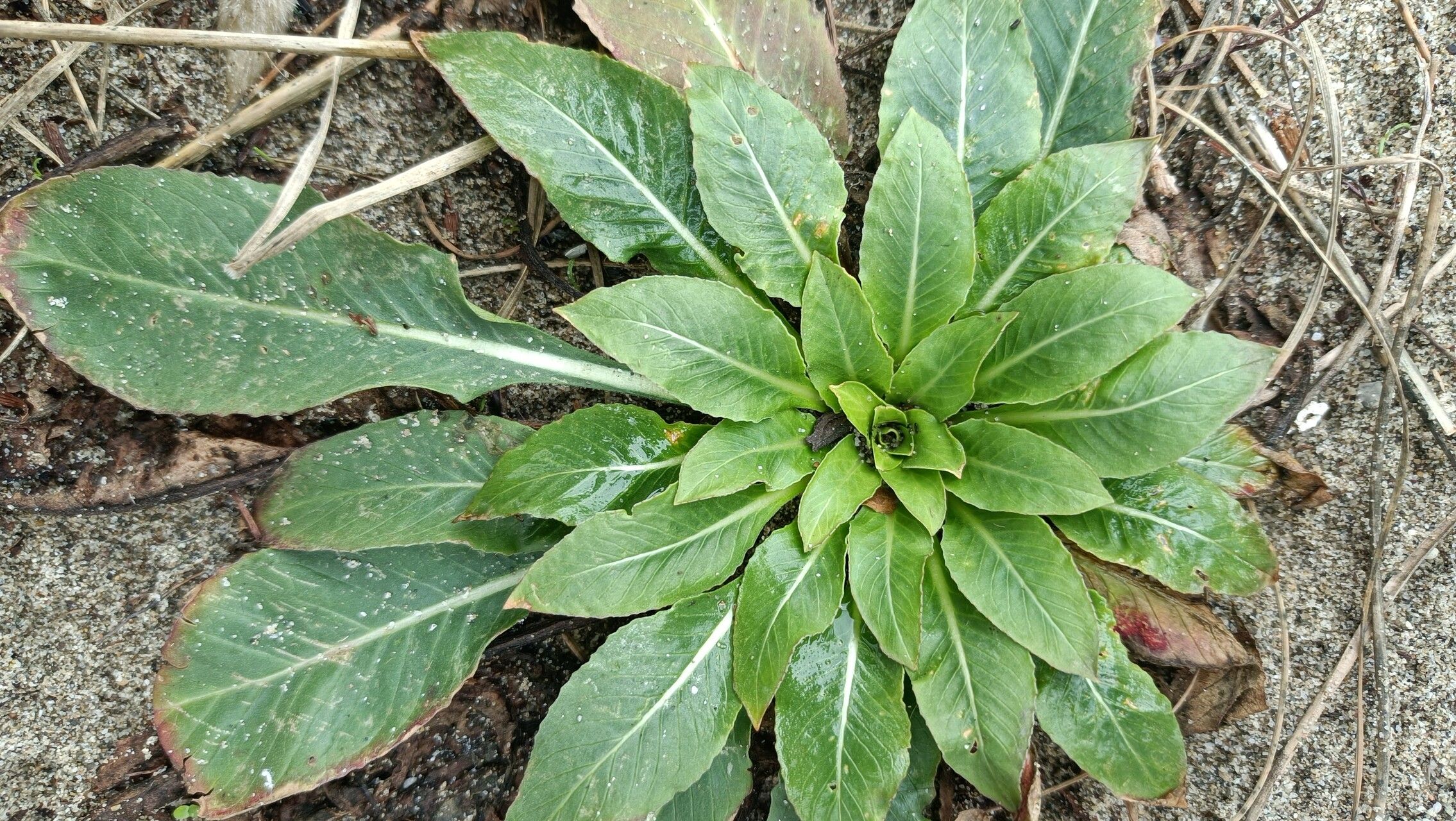
Oenothera xylocarpa is a species of flowering plant in the evening primrose family known by the common name woodyfruit evening primrose. It is native to the Sierra Nevada of California, its range extending just into western Nevada. It grows in coniferous forest and meadow habitat, often in soils rich in pumice and other gravel. It is a perennial herb growing from a thick taproot and producing a flat, dense rosette of hairy, gray-green leaves. There is no stem. The showy flowers appear amidst the leaves. Each has four petals which may be nearly 4 centimeters long, bright yellow in color, fading pink to red with age. The fruit is a straight, curving, or twisting capsule which may be up to 9 centimeters long.
Woodyfruit evening primrose has strong resistance to disease and is generally not prone to illnesses. However, it can be vulnerable to pests and diseases present in its environment. These infections are usually not severe. Regarding care, this plant needs moderate maintenance. It should be pruned regularly to preserve a good appearance and support healthy growth. Fertilizing can also encourage flowering. Woodyfruit evening primrose is appropriate for anyone with an outdoor area, such as a garden or patio, and does not require a lot of care experience. It may need more attention if grown indoors.
How to keep Oenothera Xylocarpa.
Light
The Woodyfruit evening primrose is a perennial herb that prefers sunny environments but can also thrive in partially sunny conditions. This plant, which originates from open habitats such as meadows and grasslands, loves the sun.
Temperature
The Woodyfruit evening primrose can acclimatize to an extensive variety of temperature conditions, but its dispersal might still be confined by various combinations of water and heat conditions. It flourishes optimally in hot climates throughout the summertime with sufficient rain or hydration. Extended periods of overcast and rainy weather, along with long-lasting intense temperatures, can heighten the prospects of Woodyfruit evening primrose perishing. In the winter season, appropriate shielding from low temperatures can enhance the survival chances of this plant.
Fertilizer
The optimum period to nourish a Woodyfruit evening primrose is at the beginning of spring, as it leaves its dormant state and starts to grow actively. Fertilizing supplies essential nutrients for robust growth. Although the Woodyfruit evening primrose doesn't require much fertilization, providing it yearly can improve its survival rate and produce more durable and superior flowers.
Botanical profile.
- Plant Type
- Herb
- Life Cycle
- Perennial
- Genus
- Oenothera
- Family
- Onagraceae
- Hardiness Zone
- 6-9
- Mature Height
- 30 cm to 49 cm
- Mature Spread
- 20 cm to 30 cm
- Leaf Color
- Green, Light Green
- Leaf Type
- Deciduous
- Flower Color
- Yellow
- Flower Size
- 3.05 cm to 5.08 cm
- Bloom Time
- Early summer, Mid summer
- Planting Time
- Spring, Summer, Autumn
- Harvest Time
- Late summer, Early fall
Other names.