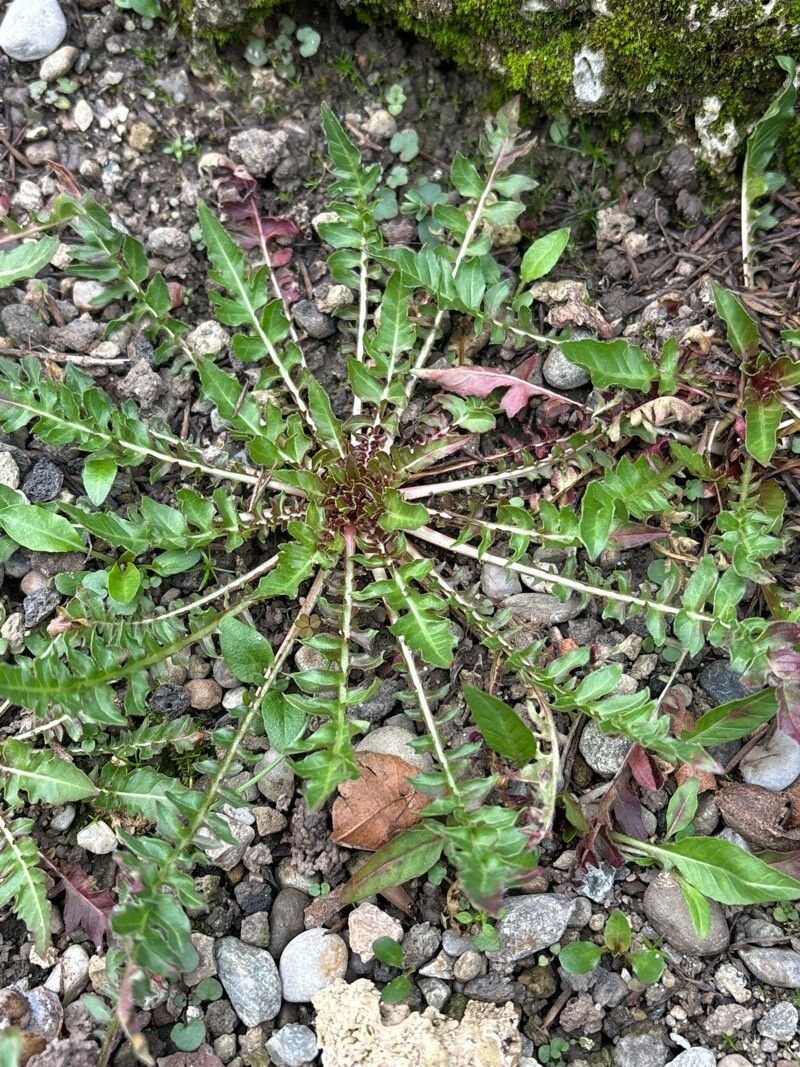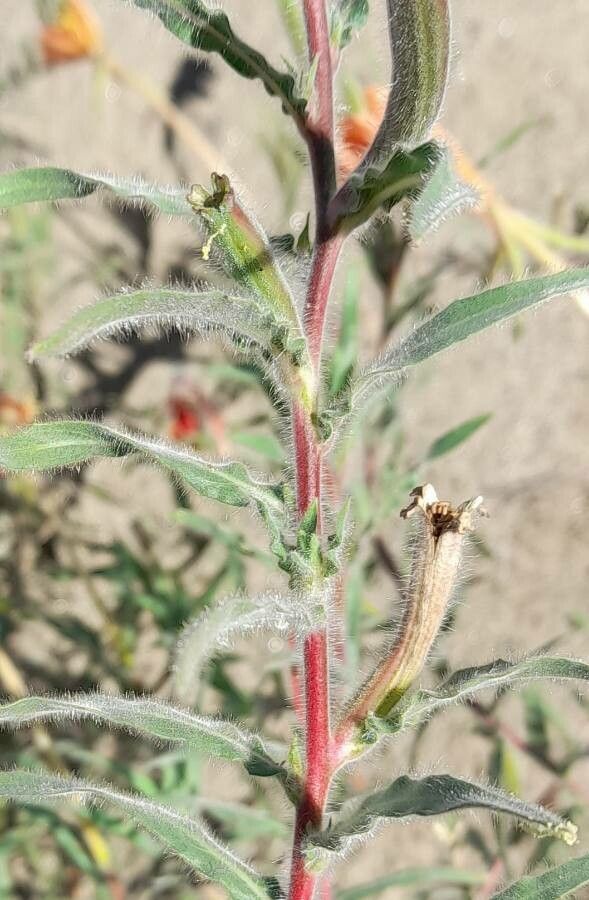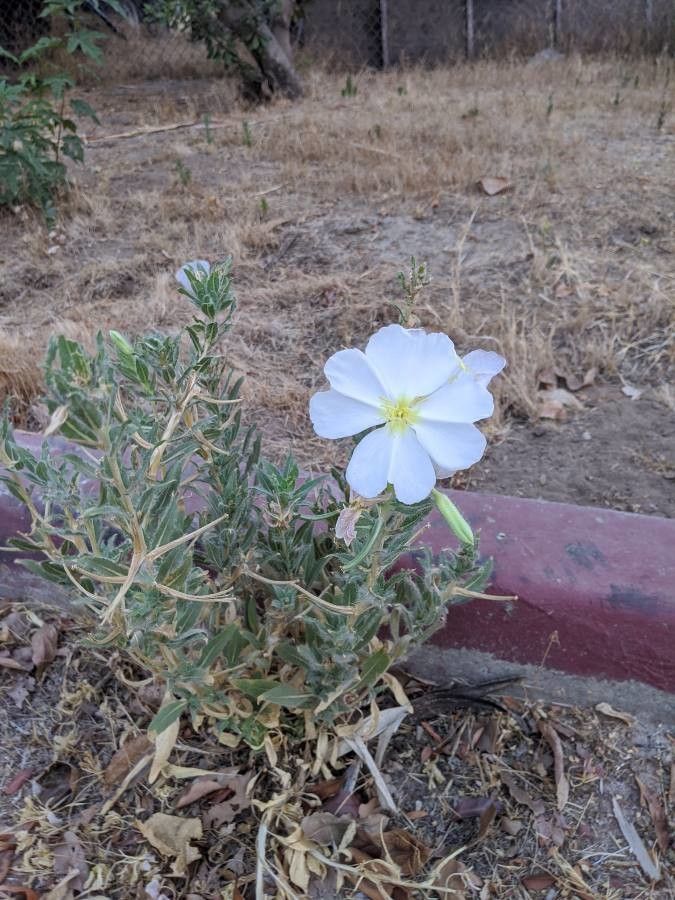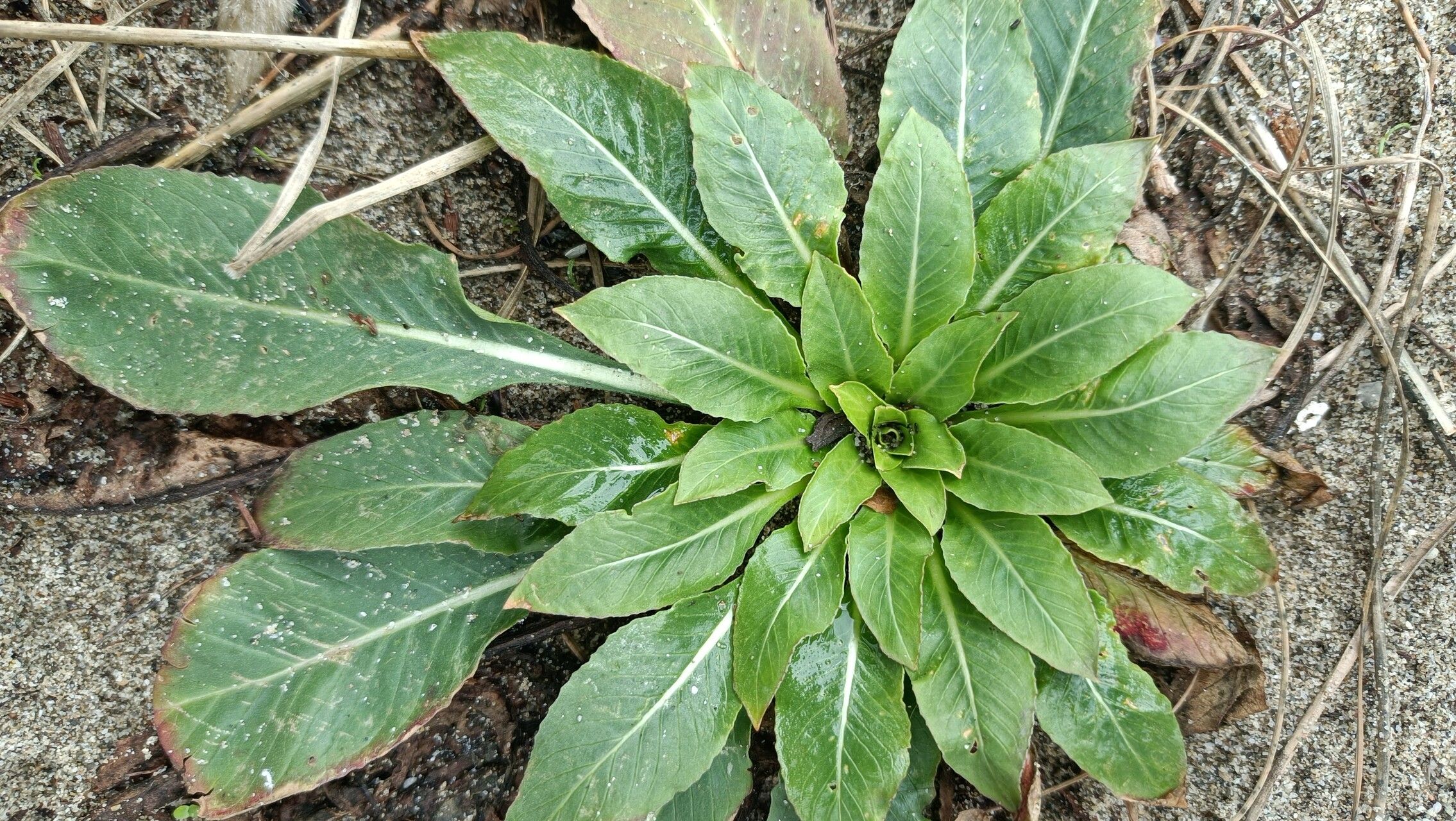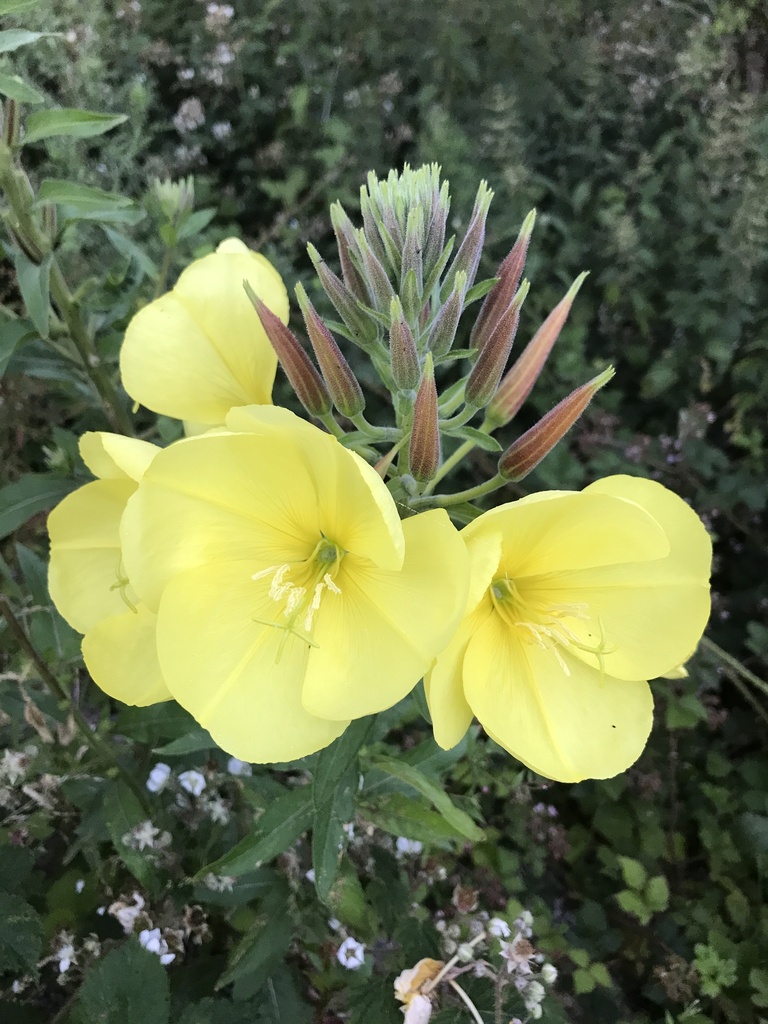
Oenothera glazioviana is a species of flowering plant in the evening primrose family known by the common names large-flowered evening-primrose and redsepal evening primrose. Oenothera lamarckiana was formerly believed to be a different species, but is now regarded as a synonym of Oe. glazioviana. The plant can be found in scattered locations worldwide, mostly as an introduced species. It originated in Brazil. It has long been cultivated as an ornamental plant. In some locations it has become an invasive species.
Large-flower evening-primrose is fairly resistant to disease and typically not very susceptible to illnesses. Still, it can be affected by pests and diseases present in its environment. Such infections tend to be mild. Regarding care, this plant needs moderate maintenance. It should be pruned regularly to keep a neat appearance and support healthy growth. Applying fertilizer can also help encourage flowering. Large-flower evening-primrose is suitable for anyone with outdoor space, like a garden or patio, and does not demand extensive care experience. It may need more attention if grown indoors.
How to keep Oenothera Glazioviana.
Light
The large-flowered evening-primrose prefers spots that receive strong sunlight for most of the day. It can, however, tolerate locations where the sun’s rays are somewhat diffused. These preferences reflect the ample sun exposure of its native habitat. Excessive shade or very low light can hinder its optimal growth and health.
Water
The large-flower evening-primrose prefers well-drained soil and consistent moisture, while avoiding waterlogging. Although it can tolerate moderate drought, it thrives with steady humidity. Watering it weekly ensures optimal hydration, making the large-flower evening-primrose a resilient outdoor herbaceous plant well-suited for gardens with varying moisture conditions.
Temperature
The large-flower evening-primrose is native to temperate regions and favors a fairly warm climate. It grows best at temperatures between 68 to 95 °F (20 to 35 °C). During cooler seasons, consider moving the plant indoors or using a suitable thermal blanket to maintain its preferred temperature.
Fertilizer
Large-flower evening-primrose requires regular fertilizing to encourage flowering but does not tolerate too much. It needs small, frequent applications of fertilizer throughout its life cycle, especially during peak active growth and while it is flowering. You should continue feeding your Large-flower evening-primrose until it stops blooming.
Pruning
The large-flower evening primrose benefits from careful pruning between early and late spring. To encourage airflow and new growth, remove spent flowers and any damaged stems. Cutting the plant back to a third of its height promotes fullness. Regular pruning helps maintain its shape, while using clean tools prevents disease and enhances both blooming and overall plant health.
Toxicity
Oenothera glazioviana has no toxic effects reported.
Further reading →
The toxicity and danger assessments provided are for reference only. We do not assure their accuracy, so it's crucial not to depend on them. Seek professional advice when necessary for accurate guidance.
Botanical profile.
- Plant Type
- Herb
- Life Cycle
- Biennial, Annual, Perennial
- Genus
- Oenothera
- Family
- Onagraceae
- Hardiness Zone
- 4-9
- Mature Height
- 0.61 m to 1.52 m
- Mature Spread
- 61 cm
- Leaf Color
- Green
- Leaf Type
- Deciduous
- Flower Color
- Yellow
- Flower Size
- 4.06 cm to 5.08 cm
- Bloom Time
- Early summer, Mid summer
- Planting Time
- Spring, Summer
- Harvest Time
- Mid summer
- Native Area
- Central to southwestern United States
Other names.
Reader questions.
How should I water my Large-flower evening-primrose plant?
When watering the Large-flower evening-primrose, it is important to use filtered water that is at room temperature. Tap water can contain harmful particles, so it is better to use filtered water. Additionally, the water should be at room temperature or slightly warmer because the plant is used to a warm environment and cold water can be a shock to its system. It is also recommended to avoid overhead watering for this plant as it can cause problems with the foliage. Instead, you should simply apply the filtered room temperature water directly to the soil until it is completely soaked. This will benefit the plant by moisturizing the roots and helping them spread through the soil to collect the necessary nutrients.
Why is it necessary to fertilize my Large-flower evening-primrose?
Properly fertilizing flowering plants like Large-flower evening-primrose is crucial for their vigorous growth and brilliant blooming. These plants are known for blooming profusely, which means they need plenty of fertilizer to maintain their nutrient levels for optimal growth. Nitrogen plays a key role in promoting early-season vegetative growth and keeping the foliage green through photosynthesis and chlorophyll production. Phosphorus is essential for enhancing flower formation, strengthening the stems, and aiding in the capture and conversion of sunlight into usable energy for growth. Lastly, potassium is responsible for facilitating the movement of water, nutrients, and sugars within the plants, transferring them from the roots to the shoots. Additionally, potassium promotes root growth and enhances the plants' ability to tolerate drought during the summer.
What are the sunlight requirements for large-flower evening-primrose?
The large-flower evening-primrose thrives in areas with prominent sunlight throughout the day but can also tolerate moderate sun exposure. This mirrors the plant's natural habitat, which benefits from ample solar exposure. For optimal growth and well-being, it's crucial that the plant is not placed in too much shade or severely dimmed light conditions. It requires full sun, meaning above 6 hours of sunlight daily, or partial sun, about 3-6 hours of sunlight. It's important to observe how sunlight moves through your garden to select spots ensuring a healthy balance of light and shade.
What is the native climate of the Large-flower evening-primrose?
The Large-flower evening-primrose, botanically known as Oenothera glazioviana, is native to temperate zones and flourishes in a fairly warm climate. It thrives optimally in temperatures ranging from 68°F to 95°F (20°C to 35°C). During the cooler seasons, it's advisable to bring the plant indoors or protect it with a suitable thermal blanket to maintain these preferred temperatures.
What do I do if I give my Large-flower evening-primrose too much or too little water?
Overwatering and underwatering can harm the health of your Large-flower evening-primrose, but overwatering is more common. When this plant gets too much water, its stems and leaves may wilt and turn yellow. Overwatering can also cause root rot, mold, and mildew, which can kill the plant. Underwatering is less likely as the Large-flower evening-primrose can tolerate drought. However, it can still happen and result in brittle, brown leaves. It's important to notice signs of overwatering early. Diseases caused by overwatering, like root rot, may be irreversible if ignored. Reduce watering immediately when you see early signs. Check the soil drainage and replace it with well-draining potting mix if needed. If you notice signs of underwatering, increase watering until the signs disappear.
When should I fertilize my Large-flower evening-primrose?
Large-flower evening-primrose has a consistent appetite for fertilizer but it prefers smaller, lighter doses. It requires regular fertilization throughout its entire life cycle, particularly during periods of active growth and flowering. You should continue feeding the Large-flower evening-primrose until it stops blooming. Container-grown plants need to be fertilized more often compared to those planted in the ground, as the root zone is smaller and nutrients are limited.
How can artificial lighting be used for indoor plants?
Artificial lighting is essential for indoor plants, especially when natural sunlight is not sufficient. It aids in promoting faster and healthier growth. LED lights are highly recommended because they can be tailored to provide specific wavelengths needed by plants. Full sun plants require 30-50W/sq ft, partial sun plants need 20-30W/sq ft, and full shade plants need 10-20W/sq ft of artificial light. The light source should be placed 12-36 inches above the plant to mimic natural sunlight, and plants typically need 8-12 hours of light per day to mimic natural daylight hours.
Does the Large-flower evening-primrose require special frost protection?
The Large-flower evening-primrose exhibits strong cold resistance, making special frost protection measures generally unnecessary during winter. However, in conditions where winter temperatures are expected to plummet below -30°C, cold protection becomes crucial. Covering the plant with soil or straw and watering it abundantly before the first freeze in autumn to keep the soil moist can provide essential protection. This pre-freeze watering helps guard against drought and water scarcity throughout the winter and the early spring.
How frequently should I water my Large-flower evening-primrose?
If your Large-flower evening-primrose is in a pot, the best way to determine if it needs water is by checking the moisture level of the soil. Simply stick your finger in the soil and if the top 2-3 inches are dry, it's time to water. The same method can be used if you have your plant outdoors in the ground. Once again, if the top few inches of soil have dried out, it's time to give it some water. Usually, during the spring and early fall, watering once a week is sufficient. However, in extremely hot weather, you may need to water twice a week or even more. It's worth noting that mature and well-established Large-flower evening-primroses have a remarkable ability to withstand drought.
When is the best time to not fertilize my Large-flower evening-primrose?
Sometimes fertilizer can harm Large-flower evening-primrose instead of helping it, especially if the plant is already stressed for other reasons. It is best to avoid fertilizing if the plant is struggling with diseases such as downy mildew, powdery mildew, gray mold, or leaf spot, or if it has insect problems like aphids, spider mites, or whiteflies. Adding fertilizer in these cases will weaken the plant's defenses, leaving it more susceptible to other pests or diseases. It is also important to avoid fertilizing when the soil surface has become hardened or too dry, as this can cause fertilizer burn on the roots. Instead, water the potting soil to moisten it slightly before applying fertilizer. During the hottest part of the summer, Large-flower evening-primrose may go dormant until temperatures cool down. When growth slows, it is best to hold off on fertilizing until growth resumes.
What are the common symptoms of light deficiency in large-flower evening-primrose?
When large-flower evening-primrose is exposed to inadequate light, it may show signs of light deficiency. Symptoms include smaller new leaves, leggy or sparse growth, faster leaf drop, slowed or halted growth, lighter-colored new leaves, chlorosis (yellowing leaves), sunscald, leaf curling, wilting, and leaf scorching. These symptoms reflect the plant's struggle to adapt to low light conditions, which can hinder its growth and overall health.
How does low temperature affect the Large-flower evening-primrose and what are the solutions?
While the Large-flower evening-primrose is cold-tolerant, thriving best above 20°C and needing to be kept above 0°C in winter, temperatures falling below -30°C can significantly affect it. Although there might not be noticeable changes during winter, these low temperatures may lead to a decreased sprouting rate or no sprouting at all come springtime. To address this issue, it is recommended to remove any parts of the plant that have failed to sprout in the spring.